Professor Sungheon Gene Kim holds a faculty position at the Weill Cornell Medicine Graduate School of Medical Sciences within the Department of Radiology . His research focuses on quantitative MRI methodology for oncological applications , particularly in breast cancer and head and neck cancer . Kim's lab develops advanced dynamic contrast-enhanced MRI (DCE-MRI) and diffusion MRI (dMRI) techniques to assess tumor microenvironment and treatment response . Key research areas include: Tumor vascular properties via 3D UTE-GRASP MRI Cellular microstructural analysis through POMACE framework Adipose-tissue cancer interaction via MR spectroscopic imaging His lab has received continuous funding from the National Cancer Institute (R01CA219964, UG3/UH3CA228699, R01CA160620). Recent publications demonstrate technical advancements in ultrafast MRI reconstruction , deep learning-enhanced perfusion analysis , and multi-parametric tumor characterization . Collaborations with the National Institutes of Health Quantitative Imaging Network have produced novel cellular water exchange rate measurements that correlate with patient survival outcomes .
J. Stewart Aitchison is a Professor at the University of Toronto's Department of Electrical & Computer Engineering, holding the Nortel Chair in Emerging Technology. He serves as Associate Scientific Director for the Network Centre of Excellence, IC-IMPACTS, fostering Canada-India research collaborations. Aitchison co-founded ChipCare Corporation, developing portable HIV monitoring systems, and previously directed the Emerging Communications Technology Institute. He received a BSc (1984) and PhD (1987) in Physics from Heriot-Watt University, UK, followed by a postdoctoral position at Bellcore. His research focuses on: Nonlinear optics and plasmonics for optical signal processing Micro/nano-scale photonic devices and integrated circuits Optical biosensors for healthcare applications (e.g., HIV monitoring) Algal biofilm photobioreactors for sustainable energy His 250+ publications emphasize semiconductor waveguides, quantum optics, and lab-on-chip systems, with recent work advancing polarization management, entanglement generation, and point-of-care diagnostics. Awards & Fellowships: Fellow of Royal Society of Canada, Royal Society of Edinburgh, AAAS, OSA, and Institute of Physics Professional Engineering Ontario Research Medal (2016) IEEE Photonics Society Distinguished Lecturer (2016-2017) University of Toronto Inventor of the Year (2012) NSERC Synergy Award (2006) He leads the Aitchison Group, supervising over 60 PhD/Master's students in photonics and microfabrication. His team collaborates globally and utilizes the Toronto Nanofabrication Centre. ChipCare, his spin-off, secured $7M+ funding for blood-testing platforms enhancing healthcare in remote communities.
Mahdi Soltanolkotabi is a Professor in the Departments of Electrical and Computer Engineering, Computer Science, and Industrial and Systems Engineering at the University of Southern California's Viterbi School of Engineering. He serves as the inaugural Director of the USC Center on AI Foundations for Science (AIF4S). His academic journey includes a Ph.D. in Electrical Engineering from Stanford University (2014) under Emmanuel Candes, followed by a postdoctoral position at UC Berkeley's AMPLAB mentored by Ben Recht and Martin Wainwright. Dr. Soltanolkotabi's research spans both theoretical and applied dimensions of data science. On the theoretical side, he develops mathematical foundations for modern data science, focusing on generative AI, deep learning, machine learning, signal processing, and computational imaging. His work draws upon nonconvex optimization, high-dimensional probability, statistical estimation, empirical processes, and learning theory. On the applied side, he develops reliable AI systems for healthcare and scientific applications, collaborating with physicians and domain scientists to enhance AI reliability, develop new architectures, and create rigorous evaluation frameworks. His recent publications demonstrate strong focus on medical AI applications, image reconstruction, and theoretical foundations of deep learning. His work bridges the gap between theoretical guarantees and practical implementations, particularly in medical imaging where reliability is critical. His research group has made significant contributions to understanding the behavior of nonconvex optimization algorithms in high-dimensional settings. David and Lucile Packard Fellow Information Theory Society Best Paper Award NIH Director's new innovator award Sloan Research Fellowship NSF Career award Airforce Office of Research Young Investigator award (AFOSR-YIP) Viterbi school of engineering junior faculty research award Faculty awards from Google and Amazon Dr. Soltanolkotabi has received multiple research grants including Amazon Research Awards for projects on "Artificial intelligence for fast and portable medical imaging" and "Reliable AI for Generation of Medical Reports from MRI Scans." He actively collaborates with medical professionals and leads educational outreach initiatives with local schools through USC's Viterbi Adopt-a-School program. His work demonstrates a strong commitment to translating theoretical advances into practical healthcare solutions while maintaining rigorous mathematical foundations.
Jean-François Masson is a Full Professor in the Department of Chemistry at the Faculty of Arts and Sciences, Université de Montréal. He directs research in instrumentation, surface chemistry, and plasmonic materials, developing innovative biosensors for medical diagnostics and analysis. His work bridges analytical chemistry, nanotechnology, and artificial intelligence to create portable diagnostic devices. Position: Full Professor, Department of Chemistry Institution: Université de Montréal Research Focus: Plasmonic biosensors, surface chemistry, medical diagnostics Contact: jf.masson@umontreal.ca | 514 343-7342 Masson earned his BSc in Chemistry from Université de Sherbrooke in 2001, followed by a PhD in Analytical Chemistry from Arizona State University in 2005. He completed postdoctoral training at Georgia Tech before joining Université de Montréal's Chemistry Department in 2007. His research focuses on developing spectroscopic instruments for biomolecule analysis in medical samples through biosensors. He studies nano- and microstructure properties to enhance instrument sensitivity and surface chemistries to improve analysis selectivity in biological fluids. His plasmonic technology uses surface plasmon resonance at the intersection of analytical chemistry, nanotechnology, and artificial intelligence, employing gold thin films on chips that change color to detect the presence of antibodies like those for COVID-19. His publication trends show a consistent focus on surface plasmon resonance applications, with increasing emphasis on portable diagnostic devices, clinical applications, and integration with artificial intelligence. His work spans fundamental plasmonic material science to practical medical diagnostics, particularly in chemotherapy monitoring and infectious disease detection. 7 patents filed or granted for innovations in instrumentation, surface chemistry, and plasmonic materials License granted to Rose Street Labs (2005) Numerous research grants from NSERC, FRQNT, CIHR, and other major funding agencies Professor Masson has supervised over 20 graduate students (PhD and MSc) since joining Université de Montréal. His research has attracted significant funding, including multiple NSERC Discovery Grants, FRQNT team projects, and collaborations with hospitals for clinical validation of his diagnostic technologies. He leads several major research initiatives including projects on plasmonic optophysiology, chemical biology of sugars, and portable sensors for inflammation markers. His research is conducted through multiple units including the Thin Film Physics and Technology Research Group (GCM), the Neural Signaling and Circuitry Research Group (SNC), and the Interdisciplinary Research Center on Brain and Learning (CIRCA). He also contributes to the Oncopole, a research, development, and investment hub accelerating cancer fight efforts.
Lili Qiu is a Professor in the Department of Computer Science at The University of Texas at Austin, where she has been a faculty member since January 2005. She is an active member of the Wireless Networking and Communications Group (WNCG) and has made significant contributions to the field of networking research. Dr. Qiu previously spent 2001-2004 as a researcher at Microsoft Research in Redmond, WA, before joining UT Austin. Dr. Qiu's research spans Internet and wireless networking with a current focus on wireless network management and content distribution in mobile networks. Her work extends into diverse applications including acoustic imaging, metasurface applications, healthcare sensing technologies, and AI systems. She has pioneered research in areas such as acoustic motion tracking, passive RFID sensing, and wireless network optimization. Her research demonstrates a consistent pattern of innovation that bridges theoretical networking concepts with practical real-world applications, particularly in mobile and wireless systems. Her extensive publication record shows a clear evolution from fundamental networking research to increasingly interdisciplinary work that combines wireless systems with healthcare applications, AI, and novel sensing technologies. Recent publications demonstrate growing integration of machine learning techniques with traditional networking problems, as well as expansion into healthcare applications like Parkinson's disease modeling and non-invasive glucose monitoring. ACM Fellow IEEE Fellow National Academy of Inventors (NAI) Fellow ACM Distinguished Scientist NSF CAREER award Google Faculty Research Award Best paper award at ACM MobiSys'18 Best paper award at IEEE ICNP'17 Dr. Qiu has supervised numerous students, including a PhD dissertation that won the SIGMOBILE best dissertation award in 2020. She has served in significant leadership roles including chair of ACM SIGMOBILE, General co-chair for ACM MobiCom 2025, and various conference chair positions for IEEE ICNP, ACM CoNEXT, and other major networking conferences. Her research has been supported by substantial grants from NSF, Google, and other organizations, enabling her to lead cross-disciplinary research teams. As a member of the Wireless Networking and Communications Group at UT Austin, Dr. Qiu leads research efforts that combine networking expertise with innovations in sensing technologies, metasurfaces, and AI systems. Her lab has produced numerous influential results in mobile networking, wireless sensing, and network management, with applications spanning healthcare, consumer electronics, and communication infrastructure.
Luis Merino Cabañas is a Professor at the Universidad Pablo de Olavide , affiliated with the Deporte e Informática department and leading the SRL Service Robotics Laboratory . His research focuses on robotics, systems engineering, and automation, with a specialization in human-robot interaction and path planning. Education : PhD in Systems Engineering from the Universidad de Sevilla (2007), where his thesis explored cooperative perception techniques for multiple unmanned aerial vehicles in forest fire detection. Research Trends : Recent work (2023–2025) emphasizes 3D path planning, sensor fusion (LiDAR, radar, inertial systems), neural distance fields for safe navigation, and socially aware robotics. His studies integrate AI, genetic programming, and multi-modal perception for applications in construction, healthcare, and GNSS-denied environments. Labs & Teams : He leads the SRL Service Robotics Laboratory , contributing to projects like the Skyeye team and BIM2ROS integration for construction robotics.
Alexandros Kontogiannis is a research fellow at the University of Cambridge, Department of Engineering, specializing in fluid dynamics and applied mathematics. His work combines Bayesian inference, machine learning, and physics-informed algorithms to solve inverse problems in magnetic resonance velocimetry (MRV) and fluid-structure interaction. EPSRC National Fellow in Fluid Dynamics Member of Energy, Fluids and Turbomachinery Division Research Focus: Development of digital twin frameworks that integrate MRV data with Navier-Stokes equations to reconstruct flowfields, infer rheological parameters in non-Newtonian fluids, and estimate hidden quantities like pressure and wall shear stress. Key innovations include: Physics-informed compressed sensing for sparse MRV data Simultaneous boundary shape and flowfield estimation Bayesian turbulence model parameter learning Scientific Awards: ASME Fluids Engineering Division Graduate Student Scholar (2021) Technical Chamber of Greece (TEE) Award (2018) Limmat Foundation Academic Excellence (2017) Mentzelopoulos Scholarship for international studies (2017) Greek State Scholarships Foundation Award (2012) Key Contributions: Algorithms for 3D flow reconstruction with adaptive discretization, viscous signed distance field regularization, and multi-objective aerodynamic shape optimization. His methodologies enable 27x reductions in MRI scanning time while maintaining diagnostic accuracy.
Dr. Ramsey Faragher is a Senior Research Associate at the Computer Laboratory , University of Cambridge, and a Bye-Fellow at Queens' College. His work focuses on infrastructure-free indoor positioning systems, sensor fusion, and improvements to smartphone sensing capabilities. Academic Affiliation : University of Cambridge (Computer Laboratory) Professional Roles : Bye-Fellow at Queens' College, Senior Research Associate His research spans multiple disciplines within computer science and engineering, emphasizing innovative navigation solutions and signal processing techniques. Key areas include GNSS robustness, wireless security, and machine learning applications for positioning systems. Recent publications highlight advancements in supercorrelation for automotive GNSS, sensor data calibration, and motion-compensated signal processing. Articles frequently address challenges such as spoofing mitigation, urban navigation, and infrastructure-free localization. Scientific Recognition Fellow of the Royal Institute of Navigation Chartered Physicist (CPhys)
Peter Homolka is an Associate Professor at the Center for Medical Physics and Biomedical Engineering, Medical University of Vienna. His work focuses on medical imaging optimization, radiation dosimetry, and the application of additive manufacturing in developing advanced phantoms for radiology and ultrasound. He has contributed extensively to CT imaging, mammography, and pediatric radiology. University: Medical University of Vienna Department: Center for Medical Physics and Biomedical Engineering Homolka's research spans X-ray attenuation analysis, image quality assessment, and the development of tissue-mimicking materials for phantoms. He has explored dual-energy mammography, ultra-low-dose CT applications, and techniques for enhancing diagnostic accuracy while minimizing radiation exposure. His recent publications highlight trends in 3D printing for anthropomorphic phantoms, dose optimization in CT and mammography, and comparative studies in emergency radiology. These works emphasize radiation safety, material science, and clinical imaging protocols. Homolka's projects include collaborations with international bodies like the IAEA, focusing on pediatric imaging standards and multi-center studies. His contributions to phantom design and dosimetry metrics have advanced quality assurance in radiology.
Roberto Garello is a Tenured Associate Professor at the Department of Electronics and Telecommunications (DET) of Politecnico di Torino . He specializes in Communication Systems , Satellite Networks , and Channel Coding , with a focus on 5G/6G Technologies and Non-Terrestrial Networks . His work aligns with the School of Master’s Programmes and Lifelong Learning . Research Interests: Satellite communications systems, Direct-to-Satellite IoT constellations, Mega-constellation services in space, and physical layer advancements for 5G/6G. Teaching: Offers courses like Information Theory for Data Science , Communication and Network Systems , and Space Exploration and Resources , while supervising Applied Signal Processing Laboratory . Projects: Leads initiatives such as DitDSSS (satellite localization), RESTART (future telecommunications), and TESL@ (ICT energy efficiency). Scientific Awards: Received Best Paper Awards at CTRQ 2010 and COCORA 2013. Students: Supervises PhD candidates including Alessandro Compagnoni, Agbotiname Lucky Imoize, and Riccardo Tuninato, focusing on topics like Wireless Communication, Machine Learning, and Non-Terrestrial Networks. Publications: His recent work explores OTFS vs. OFDM, spectrum sensing algorithms, MIMO with cylindrical arrays, and 5G NTN synchronization, reflecting trends in satellite IoT and machine learning integration.
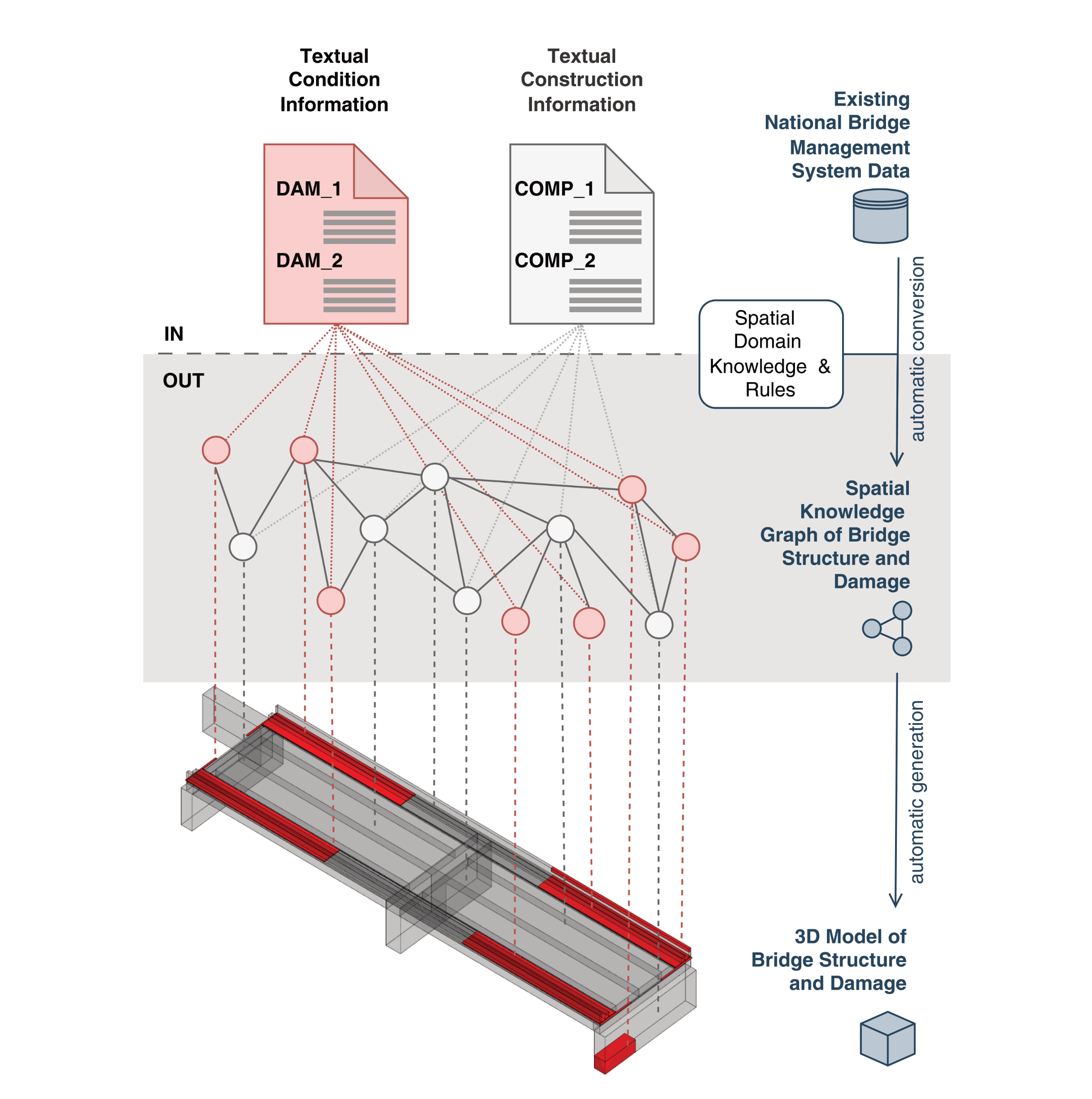
Prof. Dr. Jakob Beetz serves as a University Professor at RWTH Aachen University's Faculty of Architecture, leading the Design Computation (DC) research group. His work addresses critical challenges in sustainable built environments through digital innovation, focusing on integrating knowledge, information, and data across disciplines to reduce the sector's energy and material consumption—which accounts for over one-third of global totals—while advancing climate goals under the European Green Deal. His research spans Building Information Modeling (BIM), digital twins, and artificial intelligence, with emphasis on graph-based data federation, semantic web technologies, and large language models in construction. Key interests include evidence-based planning, parametric design optimization, building physics simulation, and networked knowledge modeling. Recent projects explore federated digital twin ecosystems for infrastructure management, intelligent damage assessment systems, and AI-driven solutions for wood structure preservation, directly contributing to sustainable development targets. Analysis of his 2024-2025 publications reveals a cohesive trajectory toward decentralized data environments and AI integration in Architecture, Engineering, and Construction (AEC). His work bridges theoretical foundations in knowledge representation with practical applications in bridge maintenance, road infrastructure, and timber construction, demonstrating consistent innovation in spatial data querying, federated issue management, and ontology-based process modeling. Prof. Beetz actively supervises PhD candidates, as evidenced by DC.Promotions 2024, and drives international collaboration through events like the Forum Construction Informatics 2025 and CIB W78 conferences. His research group engages with industry standards including Industry Foundation Classes (IFC) and Common Data Environments (CDEs), emphasizing open data principles and interoperability to transform construction workflows.
Xuming He is an Associate Professor at the School of Information Science and Technology (SIST), ShanghaiTech University, where he leads the PLUS Lab. His research spans computer vision and machine learning with a focus on developing algorithms that operate effectively under limited supervision and evolving data conditions. His core research interests include weakly-supervised and few-shot learning for scenarios with sparse annotations, continual learning frameworks for knowledge retention during sequential task acquisition, semantic segmentation techniques for scene understanding, and multimodal vision-language representations. He emphasizes interpretable machine learning to build transparent AI systems capable of human-understandable reasoning, addressing critical challenges in model trustworthiness and deployment reliability. Recent publications reveal strong trends toward novel class discovery in long-tailed recognition scenarios, physics-informed generative modeling for scientific applications, and robust segmentation under distribution shifts. His work increasingly integrates large language models for multimodal reasoning while maintaining focus on efficiency in resource-constrained environments like robotic grasping and medical imaging analysis. He actively mentors students, having supervised Qian He to PhD completion and Chuanyang Hu to Master's degree in 2023. He welcomes prospective graduate students through ShanghaiTech's Computer Science & Technology program and offers undergraduate research projects requiring minimum six-month commitments. The PLUS Lab under his direction drives innovation in learning under supervision constraints, with recent work spanning medical tumor analysis, cross-view geolocation, photonic computing, and semiconductor design verification. The lab's research bridges theoretical advances with practical applications across healthcare, robotics, and scientific discovery domains.
Dr. Magdalena Schreter-Fleischhacker works at the Technical University of Munich within the Professorship of Simulation for Additive Manufacturing . Her research focuses on physics-based computational modeling of coupled liquid-powder-gas dynamics in metal additive manufacturing, including melt pool dynamics and powder-gas interactions . She specializes in multi-phase flow modeling using cut-element and diffuse interface methods with continuous/discontinuous Galerkin schemes . She also develops constitutive models for quasi-brittle materials like 3D printed concrete and rock, incorporating anisotropy , gradient-enhanced damage mechanics , and micropolar continua . Her computational work leverages matrix-free algorithms and parallel computing , with significant contributions to the deal.II finite element library . Research Interests Physics-based computational modeling of coupled liquid-powder-gas dynamics in additive manufacturing Multi-phase flow simulation using sharp/diffuse interface methods Advanced constitutive modeling for quasi-brittle materials (rock, soils, 3D printed concrete) High-performance computing and matrix-free algorithms Notable Contributions Development of consistent diffuse-interface models for melt-vapor dynamics Improvements to continuum surface flux models in additive manufacturing Formulation of gradient-enhanced damage-plasticity models for geological materials Principal contributor to the deal.II library (version 9.6) Supervised Student Projects Johannes Resch (2024): DG-based thermo-hydrodynamic melt pool simulations Julian Brotz (2024): DEM-FEM coupling for fluid-powder interaction Andreas Ritthaler (2024): Matrix-free cutDG formulation for complex flows Tinh Vo (2023): Laser modeling for melt pool simulations Scientific Awards ERC Starting Grant recipient
Lorenz Dörschel is an Adjunct Professor (Lehrbeauftragter) at the Institute of Automatic Control at RWTH Aachen University. He holds the academic title PD Dr.-Ing. habil, signifying post-doctoral research qualifications. His position is part-time, focusing on advanced control theory and applications. His primary research interests include: Control of distributed parameter systems (e.g., fluid dynamics, thermal processes) Model predictive control for industrial and automotive systems Parameter space methods for robust controller design Model reduction techniques for complex nonlinear systems Dörschel's recent publications (2018-2024) demonstrate broad applications across biomedical engineering, renewable energy, automotive systems, and industrial automation. His work consistently integrates mathematical rigor with practical implementations, emphasizing advanced control methodologies like nonlinear MPC, Lyapunov-based design, and Bayesian optimization. A recurring theme is the development of computationally efficient control strategies for distributed parameter systems. No scientific awards, student advising relationships, or research grants are documented in the available information.
Dr. Kenneth Bader is an Associate Professor in the Department of Radiology at the University of Chicago's Pritzker School of Medicine. He leads the Biomedical Acoustics Development and Engineering Research Laboratory (BADER Lab), focusing on translating therapeutic ultrasound into clinical applications for non-invasive treatment of cardiovascular and cancerous diseases. His work bridges physics, engineering, and medicine, with emphasis on developing innovative ultrasound-based therapies. Education: B.S. in Physics from Grand Valley State University (2005), Ph.D. in Physics from the University of Mississippi (2011) Current Funding: Principal Investigator on two major NIH R01 grants (R01EB035230 and R01HL133334) totaling nearly a decade of continuous research support Lab Affiliation: BADER Lab (baderlab.uchicago.edu) Dr. Bader's research centers on acoustic cavitation and histotripsy for combinatorial ablation and enhanced drug delivery strategies targeting pathologies resistant to standard interventions. He develops multi-modal imaging approaches combining diagnostic ultrasound and magnetic resonance imaging to assess bubble activity and resultant tissue changes. His work spans fundamental bubble dynamics modeling to translational applications in thrombosis and cancer treatment. Key areas include chronic thrombus ablation, histotripsy-enhanced drug delivery, sonochemical reactions for cancer therapy, and MR-guided transurethral prostate ablation. His publication record demonstrates consistent productivity with over 40 publications since 2012, showing an upward trajectory with 25 publications in the last five years (2020-2025). His work appears in high-impact journals including IEEE Transactions on Ultrasonics, Ferroelectrics, and Frequency Control; Physics in Medicine & Biology; and Journal of Ultrasound in Medicine. His research shows strong interdisciplinary collaboration across engineering, physics, radiology, and vascular medicine. Dr. Bader serves as Principal Investigator on two major NIH-funded projects: Imaging Feedback for Histotripsy Renal Tumor Ablation (2024-2028) and Treatment of chronic venous thrombosis with histotripsy and thrombolytics (2017-2028). These projects represent significant sustained funding for developing ultrasound-based therapies for cancer and vascular diseases. His work has generated substantial interest in the scientific community, with multiple publications receiving over 50 citations, particularly his foundational work on bubble dynamics in histotripsy. The BADER Lab represents a hub for ultrasound research at the University of Chicago, developing both theoretical models and practical applications of therapeutic ultrasound. The lab focuses on translating laboratory discoveries into clinical practice, with particular emphasis on making treatments more effective while minimizing invasiveness. Current work includes developing AI approaches for ultrasound image analysis, novel transducer designs, and combination therapies that leverage both mechanical and biochemical effects of ultrasound.