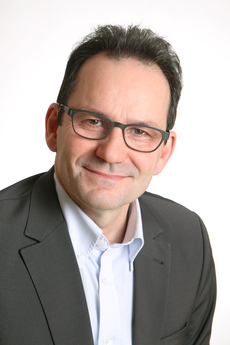
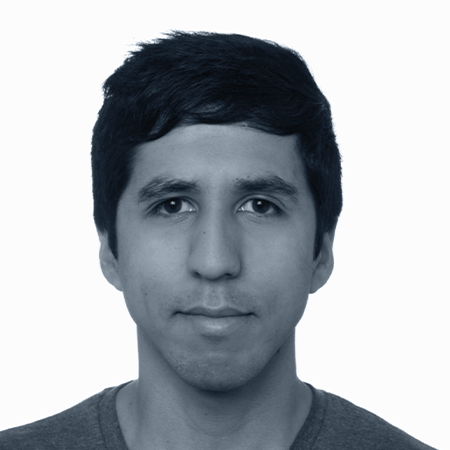
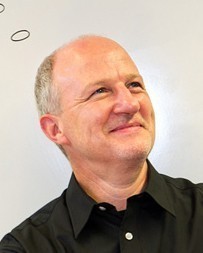
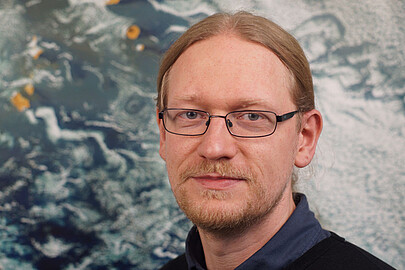
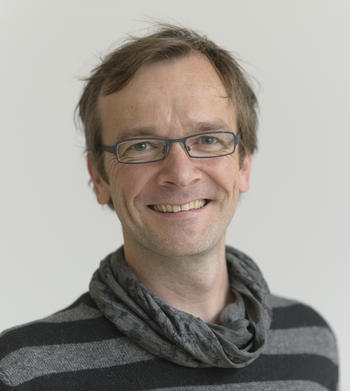
Prof. Dr. Willy Dörfler is a full professor at the Institute for Applied and Numerical Mathematics within the Faculty of Mathematics at Karlsruhe Institute of Technology (KIT). He leads the research group on Numerical Methods for Partial Differential Equations and teaches advanced courses including Adaptive Finite Element Methods and Modeling and Simulation of Li-Ion Batteries . His work focuses on numerical analysis, scientific computing, and multi-physics simulations. His research spans Partial differential equations with adaptive discretization Wave propagation and space-time methods Battery modeling with chemo-mechanical coupling Lattice Boltzmann techniques for fluid dynamics Applications in mechanics, optics, and electrochemistry as evidenced by his 15 most recent publications. These works emphasize finite element methods, discontinuous Galerkin approaches, and high-performance computing for complex systems. Contact: willy.doerfler@kit.edu | Office hours: Mondays 14:30–15:30 during lecture periods
Prof. Dr. Rudolf Scherer is a faculty member at the Department of Mathematics, Karlsruhe Institute of Technology (KIT). He specializes in Numerical Analysis , Applied Mathematics , and Mathematical Modeling , with a focus on Ordinary and Partial Differential Equations and Fractional Differential Equations . His research spans geometric integration, symplectic methods, and computational techniques for physical systems. Affiliation: Institute for Applied and Numerical Mathematics, KIT Research Interests: Numerical Analysis, ODE/PDEs, Fractional Calculus, Symplectic Integration His work includes collaborations with institutions such as the Chinese Academy of Sciences, Tsinghua University, and Kuwait University, with extended stays across multiple years. Publications highlight applications in stochastic Hamiltonian systems , Maxwell’s equations , and Protter-Morawetz problems for mixed-type PDEs.
Prof. Dr. Olaf Deutschmann is a Full Professor (W3) at Karlsruhe Institute of Technology (KIT) since 2006, holding the Chair in Chemical Technology at the Institute for Chemical Technology and Polymer Chemistry. He also serves as Director of the Steinbeis Transfer Center Reactive Flows, head of the Enermat Lab (KIT-EIFER collaboration), and leads the Modeling and Simulation Division at KIT's Institute for Catalysis Research and Technology. His academic lineage includes habilitation at University of Heidelberg (2001) and PhD in Chemistry (1996). Education: Habilitation (2001): University of Heidelberg PhD (1996): University of Heidelberg MS Physics (1991): Otto von Guericke University Magdeburg Research Focus: His work bridges heterogeneous catalysis , combustion science , and energy conversion technologies . Key areas include soot formation/oxidation in engines, NOx emission control, laser diagnostics for combustion (LIF, LII), and multi-phase flow modeling. He pioneered techniques for correlating carbon nanostructure with reactivity in particulate filters. Scientific Recognition: 2018 Fellow of The Combustion Institute, 2004 DECHEMA Award, and 1996 DFG Research Fellowship. He has held leadership roles in major initiatives like NFDI4Cat (National Research Data Infrastructure) and coordinated KIT's DFG Collaborative Research Centre on turbulent chemically reacting flows. Publications Trends: Recent works focus on NOx storage/reduction catalysts , soot nanostructure characterization , and multi-species tomographic combustion imaging . His group integrates experimental diagnostics with detailed kinetic modeling for emission control applications. Professional Affiliations: Adjunct member of KIT's Chemical and Process Engineering department, coordinator of DFG SFB/TRR150, and co-speaker for NFDI4Cat. Previously served as Vice Dean of KIT's Faculty of Chemistry and Biosciences (2008-2011).
Felipe Gonzalez Cornejo is a Researcher at the Chair for Computational Analysis of Technical Systems (CATS) at RWTH Aachen University, affiliated since 2019 (PhD student until 2023, postdoc thereafter) and a member of NHR4CES's Simulation and Data Lab Fluids since 2023. Education: Bachelor's and Master's in Mechanical Engineering, University of Santiago of Chile (Usach) His research develops numerical methods for extrusion-based additive manufacturing, focusing on Computational Fluid Dynamics (CFD) for free-surface flows and non-Newtonian fluids, stabilized finite-element formulations, adaptive mesh techniques, and moving-domain simulations. He integrates High-Performance Computing (HPC) to model thermofluid flow, phase change, and thermoplastic behavior in Fused Deposition Modeling (FDM). No scientific awards were mentioned. He offers thesis supervision on FDM simulation topics: Multi-filament deposition and porosity estimation Nozzle geometry optimization via model order reduction Mesh-update techniques for moving multi-domain simulations HPC tools including load rebalancing and adaptive mesh refinement He collaborates across CATS work groups: production engineering, fluid-structure interaction, and INTERESST.
Prof. Dr. Heiko Rieger is a full Professor in the Department of Theoretical Physics at Saarland University , within the Faculty of Natural Sciences and Technology . He leads a research group focused on theoretical biophysics, statistical physics, and computational physics, with significant involvement in the Collaborative Research Center SFB 1027, which investigates the physical principles of biological functioning. His research interests lie primarily in non-equilibrium systems , encompassing a broad range of phenomena including: The biophysics of killing , particularly how cytotoxic T cells eliminate infected or cancerous cells. Tumor growth dynamics , vascularization, interstitial fluid flow, and drug delivery. Active matter , collective behavior of self-propelled particles, and pattern formation. Stochastic search processes and optimization strategies in biological and physical contexts. Quantum phase transitions , relaxation, and thermalization in isolated quantum systems. Imbibition and fluid flow in nano-porous media. His recent publications (2024–2025) demonstrate a strong trend toward interdisciplinary modeling at the interface of physics and biology. Key themes include non-reciprocal interactions in flocking and active matter, stochastic thermodynamics in particle-field systems, collective chemotactic search , and crosstalk in cytoskeletal components during cell migration. His work combines analytical theory with computational simulations, often in collaboration with experimental groups. Prof. Rieger actively supervises a team of postdoctoral researchers and PhD students, contributing to the training of the next generation of theoretical physicists. His group members include Astik Haldar, Anil Kumar Dasanna, Marc Thome, Atul Tanaji Mohite, Jiwon Choi, Barbara Schmidt, Johannes Sicks, Marwa Hijazi, and Ivan Hornak. His research is supported through institutional affiliations and collaborative grants, notably within SFB 1027. He has no listed scientific awards in the provided text, but his extensive publication record in high-impact journals such as Physical Review Letters , Nature Communications , Biophysical Journal , and European Physical Journal underscores his scientific impact. The Rieger group is based at Campus E2.6, Room 4.17, Saarbrücken, and is part of a vibrant theoretical physics community at Saarland University.
Prof. Dr. Jens Freudenberger is a renowned Professor and Department Head in Metal Physics at the Institute for Materials Science (Institut für Werkstoffwissenschaft), Technische Universität Bergakademie Freiberg , while holding a part-time position at IFW Dresden . His work bridges fundamental metallurgy and advanced functional material development. Key Research Interests : Alloy design, deformation mechanisms, metallography, powder-in-tube processing, and high-conductivity/high-strength materials. Publication Trends : Focus on high-entropy alloys, phase transformations, cryogenic deformation, and biomedical/metamagnetic materials. Recent studies highlight atomic-scale insights in multi-component systems and thermomechanical processing of shape-memory alloys. Scientific Awards : Innovation Award of the Deutscher Kupferinstitut (DKI, 2007) Georg-Sachs-Preis of the Deutsche Gesellschaft für Materialkunde (DGM, 2009) Leadership & Collaboration : Leads metal physics research at IFW Dresden, collaborating extensively on superconductivity, magnetocaloric effects, and biomedical alloys.
Maryline Moulin is a prominent geophysics researcher specializing in plate tectonics, continental margin evolution, and integrated seismic analysis. She has led major oceanographic campaigns including PAMELA-MOZ05/03 and MAGIC projects, focusing on passive margins in the South Atlantic and East African regions. 2003 PhD from University of Western Brittany 2016 Project Leader for PAMELA campaigns Key collaborator in 15+ international seismic studies Her research spans diverse methodologies: Wide-angle seismic (OBS) profiling Multi-channel seismic (MCS) interpretation Gravity and magnetic anomaly analysis 3D structural modeling (Placa3D) Seismo-stratigraphic analysis Recent publications (2023-2025) reveal patterns in: Proto-oceanic crust formation Passive margin segmentation Quaternary contourite systems Transform margin tectonics Deep crustal architecture
Prof. Dr. Björn Maronga is a Professor of Boundary Layer Meteorology at the Institute of Meteorology and Climatology within the Faculty of Mathematics and Physics at Leibniz Universität Hannover. His office is located at Herrenhäuser Straße 2, 30419 Hannover (Building 4105, Room F126). He holds multiple administrative roles including chair of the Meteorology Examination Board, BAföG representative, and practical training coordinator for Meteorology, as well as representing professors on the selection commission and faculty council. Prof. Maronga's research focuses on boundary layer meteorology and urban climate modeling, with particular expertise in Large-Eddy Simulations (LES) using the PALM model system. His work spans from fundamental atmospheric physics to practical urban climate applications. He investigates urban heat islands, radiation fog dynamics, land-atmosphere interactions, and the development of high-resolution urban climate models. His research group is deeply involved in the [UC]² national research program focused on developing building-resolving atmospheric models for entire city regions. Analysis of his recent publications reveals a strong trend toward increasingly sophisticated urban climate modeling techniques. His work with the PALM model system has evolved from basic boundary layer studies to comprehensive urban climate simulations incorporating chemistry, detailed radiative transfer, and land-surface interactions. Recent research emphasizes practical applications for urban planning, climate adaptation, and thermal comfort assessment. His collaborative network spans numerous international institutions, with particular focus on European research partnerships. Prof. Maronga is actively involved in several significant research projects including the MOSAIK initiative for model-based city planning under climate change and the ISOBAR project studying Arctic boundary layer processes. His work has contributed substantially to the development and validation of the PALM model system, which has become a leading tool for high-resolution urban climate simulations worldwide. He has supervised numerous PhD students and postdoctoral researchers who have contributed to the extensive publication record associated with the PALM modeling framework.
Tobias Kasper Skovborg Ritschel serves as Assistant Professor (Tenure Track) in the Department of Applied Mathematics and Computer Science (DTU Compute) at the Technical University of Denmark. His research bridges theoretical advances in control systems with practical implementation across energy systems, bioreactors, epidemiology, and medical applications. Ritschel directs a productive research program focusing on computational methods for complex dynamical systems with rigorous thermodynamic foundations. His educational background demonstrates deep technical training: PhD in Applied Mathematics (2015-2018), Technical University of Denmark MSc in Mathematical Modeling and Computation (2013-2015), Technical University of Denmark BSc in Mathematics and Technology (2010-2013), Technical University of Denmark Ritschel's research expertise spans multiple domains of control theory and mathematical modeling. His core competencies include stochastic adaptive control, model predictive control, and optimal control frameworks applied to nonlinear dynamical systems. He specializes in numerical methods for differential equations (stochastic, partial, delay, and differential-algebraic) with computational implementations in MATLAB, C/C++, and Python. His application areas demonstrate remarkable breadth: from oil reservoir management and nuclear power systems to bioreactor operations, epidemiological modeling, and diabetes management technologies. Analysis of his publication trajectory reveals a strategic evolution from foundational work on thermodynamically rigorous reservoir simulation toward increasingly diverse applications. Early publications (2017-2019) focused on oil and gas applications with rigorous phase equilibrium modeling, while recent work (2020-2024) addresses pressing societal challenges including pandemic response strategies, power grid flexibility for renewable integration, and biomedical control systems. This demonstrates his ability to transfer core methodological expertise across disparate application domains while maintaining mathematical rigor. Dr. Ritschel actively supervises numerous students across all academic levels, with recent BSc projects focusing on molten salt reactors and demand-side flexibility in power systems. His teaching portfolio includes advanced graduate courses in stochastic adaptive control, dynamical systems, and time series analysis. He maintains strong industry connections through EU-funded projects including COCOP (Horizon 2020) and OPTION (Innovation Fund Denmark).
Professor Andreas Kronenburg serves as Institute Director and Dean of Studies at the Institute for Reactive Currents (WASTE) at the University of Stuttgart. With a background in mechanical engineering from RWTH Aachen and a PhD in Combustion Engineering from the University of Sydney, he has established himself as a leading researcher in combustion science. His career includes significant positions at Imperial College London where he served as Governor's Lecturer in Thermofluids (2000-2007) and Reader in Combustion (2007-2008) before joining the University of Stuttgart in 2009. Professor Kronenburg's educational background includes: RWTH Aachen, Mechanical Engineering (1989-1994) Universidad Politécnica de Madrid, Study Abroad (1992-1993) University of California at Davis, Study Abroad (1992-1993) University of Sydney, PhD in Combustion Engineering (1995-1998) His research focuses on advanced combustion modeling, particularly turbulent reactive flows, spray combustion, and nanoparticle dynamics. Kronenburg has made significant contributions to Large Eddy Simulation (LES) techniques, Conditional Moment Closure (CMC) methods, and particle-based modeling approaches. His work spans fundamental combustion science and practical applications in energy systems, with recent emphasis on sustainable fuels including hydrogen, ammonia, and biomass conversion. His research group develops sophisticated computational models that address challenges in predicting complex combustion phenomena with high accuracy. Analysis of his recent publications (2023-2026) reveals a strong focus on emerging energy technologies, particularly hydrogen and ammonia combustion for decarbonization, advanced particle dynamics in combustion systems, and computational methods for efficient simulation of complex reacting flows. His work demonstrates consistent innovation in modeling techniques while addressing practical engineering challenges in sustainable energy systems. Professor Kronenburg's scientific achievements have been recognized with numerous prestigious awards: Fellow of the Combustion Institute (2019) Distinguished Paper Award of the Combustion Institute (2013) Hinshelwood Prize for meritorious work of a young researcher (2006) Two Sudgen Awards for significant contributions to combustion science (2005, 2006) Best paper award at the Australian Symposium on Combustion (1997) Springorum Commemorative Medal for academic excellence (1994) With over 3,300 citations across 164 publications and an h-index of 33, Professor Kronenburg maintains an active research program with significant impact. His work has received support from organizations like the German Research Foundation (DFG), and he collaborates extensively with international institutions including Imperial College London and the University of Sydney. The computational resources available to his research group through bwGrid and HLRS enable large-scale simulations that advance the understanding of complex combustion phenomena. The Institute for Reactive Currents under Professor Kronenburg's leadership focuses on cutting-edge research in combustion science and engineering. The institute develops advanced computational models for predicting combustion behavior in various applications, from traditional energy systems to emerging sustainable technologies. With expertise in both fundamental combustion processes and practical engineering applications, the institute contributes significantly to addressing current challenges in energy conversion and environmental protection.
Prof. Dr. Henning Rust is a Professor of Statistical Meteorology at the Department of Geosciences, Freie Universität Berlin, and head of the Statistical Meteorology Group. He co-speaks the Hans-Ertel-Centre for Weather Research, funded by the German Weather Service (DWD), and contributes to national and international climate projects like MiKlip and BINGO. His work bridges statistical modeling, extreme event analysis, and climate risk communication. PhD in Theoretical Physics (2007, University of Potsdam) Diplom in Physics (2001, Albert-Ludwigs-Universität Freiburg) BSc with Honours in Physics (1998, Brock University, Canada) Research Interests focus on stochastic precipitation models , extreme convective events , statistical downscaling , and forecast verification . He specializes in time series analysis and long-range dependence in climatological data. His recent publications analyze decadal climate predictability, compound extremes (e.g., ozone-weather interactions), and citizen science applications in weather education. Notable works include skill score decomposition for Atlantic climate phases and flexible IDF curve modeling for urban hydrology. Awards include a summa cum laude PhD and the Distinguished Graduation Student Award for Physics. He supervises PhD and Master’s students on topics like windstorm risk modeling and precipitation extremes . Additional roles: German Meteorological Society (executive board) , MiKlip steering committee , and climate communication via self-built weather station projects.