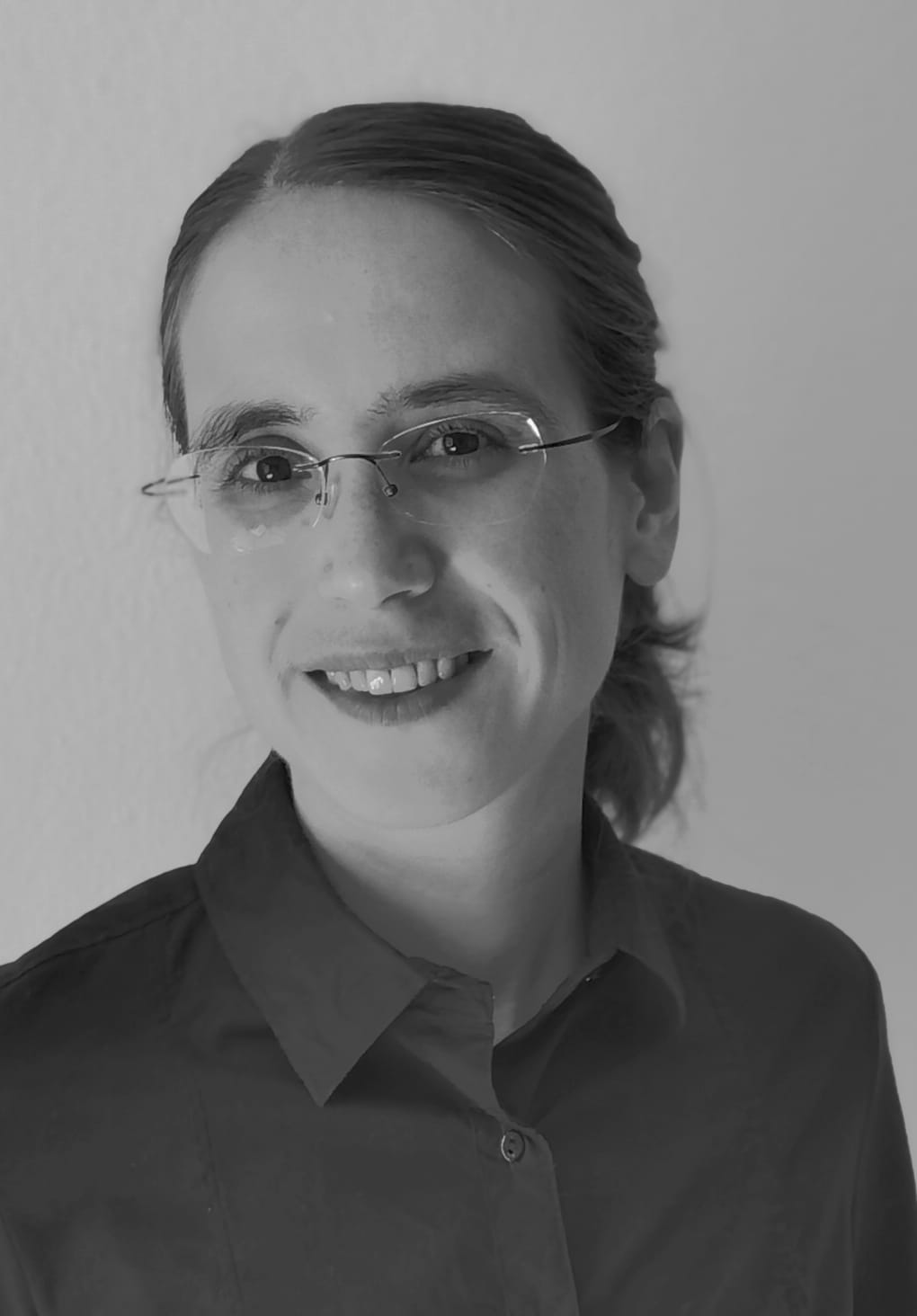
Katharina Hopf is a Researcher at the Weierstrass Institute in Berlin, where she leads the junior group Multi-species Balance Laws . She also supervises Master thesis projects in analysis and partial differential equations at Humboldt University of Berlin . Research Interests: Analytical aspects of nonlinear evolution PDEs Cross-diffusion and reaction-diffusion systems Interface phenomena and singularities Entropy tools and variational methods Metric gradient flows and mixed-type PDE systems Recent Publications focus on gradient flows, cross-diffusion models, and singularities in PDEs, with applications in viscoelastic phase separation, energy-reaction-diffusion systems, and fluid dynamics. Interdisciplinary work includes modeling reactive gas mixtures in porous media. Scientific Awards: 2020 Faculty Thesis Prize for Mathematics (University of Warwick)
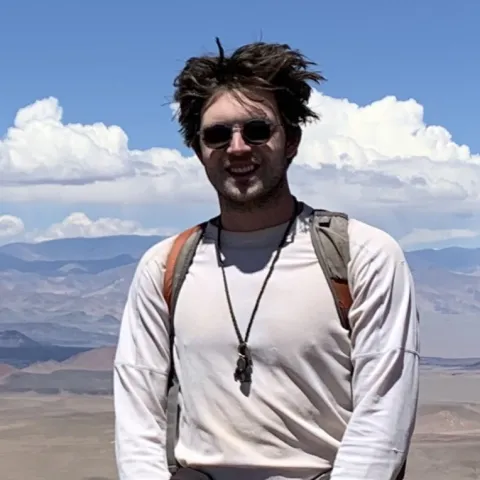
Dr. Mitchell McMillan is a Postdoctoral Fellow at Georgia Institute of Technology, specializing in geodynamic processes that shape Earth's mountain belts and planetary surfaces. His research integrates thermodynamic modeling with field observations across three distinct domains: Subduction zone fluid dynamics and lower crustal density transformations Wind erosion mechanisms in hyperarid terrestrial and Martian environments Hydrodynamic modeling of fluvial erosion processes His computational work on streambank erosion modeling has produced globally applicable tools available via GitHub, while his recent Earth and Planetary Science Letters publication proposes novel mechanisms for lithospheric foundering. Current projects investigate weak-crust dripping dynamics in the Central Andes and their surface expressions. Key research themes: Crustal metamorphism-driven buoyancy changes Rayleigh-Taylor instability in continental lithosphere Wind erosion quantification in extreme environments Multi-scalar geomorphological modeling
Ezequiel Medici is an Adjunct Assistant Professor at the Department of Mechanical and Aerospace Engineering, Michigan Technological University. His work bridges numerical and experimental research across multiple disciplines. Research Focus: Modeling phase change and heat/mass transport in porous media and cryogenic systems. Key Applications: PEM fuel cells, volcanic eruption dynamics, cryogenic propellant management, and industrial fluid transport. Publications Trends highlight expertise in: Multi-scale modeling (continuum and pore-network approaches) Cryogenic fluid behavior (liquid hydrogen, supersonic jets) Geophysical shock wave propagation Industrial applications (diapers, heat pipes, oil recovery)
Dr. Svetlana Tkachenko is a Post-Doctoral Research Fellow at the University of New South Wales (UNSW) Faculty of Engineering, Department of Mechanical Engineering. She specializes in computational fluid dynamics and heat transfer modeling with applications in renewable energy systems, building ventilation, and automotive aerodynamics. Her work bridges theoretical modeling with practical industrial applications through collaborations with various industry partners. Education: PhD in Mechanical Engineering, UNSW, Australia (2018) Dr. Tkachenko's research focuses on numerical modeling of fluid flow and heat transfer in renewable energy systems, particularly photovoltaic technologies and building-integrated applications. Her work spans passive cooling techniques for solar panels, building ventilation systems, and thermal management in automotive applications. She employs computational fluid dynamics (CFD), multi-phase modeling, and machine learning techniques to optimize system performance and energy efficiency. Her research has significant implications for improving the efficiency of solar energy systems and building thermal performance. An analysis of her recent publications reveals a consistent focus on heat transfer enhancement in photovoltaic systems, particularly through passive cooling techniques. Her work demonstrates increasing sophistication in modeling approaches, incorporating machine learning for weather data analysis and spectral modeling of PV surfaces. The research trajectory shows progression from fundamental fluid dynamics studies toward practical applications with industry partners. Scientific Recognition: Finalist, 2022 GUD Excellence Awards at the Royal Automobile Club of Victoria in Melbourne for collaboration with Disc Brakes Australia on thermodynamic simulations in brake rotor development Dr. Tkachenko actively supervises research students, currently mentoring two thesis students in renewable energy topics and one in disk brake modeling. She has contributed technical advice to numerous undergraduate and postgraduate theses on topics including photovoltaic cooling, building ventilation, and automotive aerodynamics. She serves as a Chief Investigator on an Australian Renewable Energy Agency (ARENA) grant titled 'Research boost for solar panel efficiency and cost reduction' (2020-2023). Her industry collaborations include partnerships with Disc Brakes Australia, 5B, and international collaborators in France and the UK. Dr. Tkachenko's research group utilizes advanced computational resources including ANSYS, OpenFOAM, and high-performance computing facilities at UNSW's Katana and NCI's Gadi. Her work on smart coatings for PV systems involves collaboration with A&B Smart Materials, an Oxford University-based venture developing novel materials for the photovoltaic industry.
Bertrand CariSSIMO is a Lecturer at École des Ponts ParisTech (ENPC), affiliated with the Center for Teaching and Research in Atmospheric Environment (CEREA), a joint lab with EDF R&D. His research focuses on micro-meteorological measurements and numerical modeling for urban climate applications, including pollution dispersion around industrial sites and wind farms. He holds an Engineer degree from the School of Hydraulics, Grenoble; a PhD from Princeton University; and a HDR (Habilitation à Diriger des Recherches). Key research interests include: urban climate dynamics, pollutant dispersion in complex environments, CFD modeling for atmospheric flows, and radiative/convective thermal exchanges in urban settings. His work integrates advanced numerical methods, such as time-staggered schemes for variable density flows, and employs tools like Code_Saturne and MUNICH street network models. Recent studies highlight innovations in parameterizing tree effects in street canyons, low-wind dispersion mechanisms, and thermal modeling of city centers. His interdisciplinary approach combines technical modeling with participatory urban quality assessments.
Benoît Goyeau is a researcher at the Mathematics and Computer Science for Complexity and Systems laboratory. His work focuses on fluid dynamics, porous media flow, thermal convection, and mathematical modeling of transport phenomena. He has contributed extensively to understanding interfacial fluid-porous medium interactions, boundary layer dynamics, and multiphase flow systems. Recent research emphasizes compressible flow modeling, membrane fouling mechanisms, and stability analysis of natural convection in porous-fluid systems. His research integrates experimental approaches with computational fluid dynamics, addressing challenges in heat transfer, mass transport, and material science. Key contributions include advancements in jump boundary condition theories for fluid-porous interfaces and pore network modeling of shear-thinning fluid behavior. Collaborations span multi-institutional teams, with frequent co-authorships on topics like thermosolutal convection and interfacial momentum transfer. Publications highlight innovations in porous media mechanics, including ATR-FTIR analysis of biomolecule interactions and experimental studies on convective flow structuring. His work bridges theoretical models with practical applications in energy systems, biomedical engineering, and materials characterization.
Jacquelyn Michelle Noronha-Hostler serves as Associate Professor in the Department of Physics at the University of Illinois Urbana-Champaign and holds a parallel appointment as Associate Professor at the National Center for Supercomputing Applications (NCSA), demonstrating her dual expertise in theoretical nuclear physics and high-performance computational methods. Her research program leverages supercomputing infrastructure to model extreme states of matter created in relativistic nuclear collisions. Her primary research domains encompass Quantum Chromodynamics (QCD), relativistic hydrodynamics, heavy-ion collision dynamics, and quark-gluon plasma characterization. She specializes in developing computational frameworks for smoothed particle hydrodynamics to investigate collective flow phenomena, conservation laws for quantum numbers (baryon number, strangeness, charge), and precision signatures of phase transitions in nuclear matter. Her work bridges theoretical predictions with experimental data from facilities like the Relativistic Heavy Ion Collider and Large Hadron Collider. Analysis of her 2025 publications reveals three dominant research thrusts: (1) precision studies of collectivity using exotic isotopes like neon-20 in small collision systems, (2) Bayesian statistical approaches to locate the QCD critical point through holographic duality methods, and (3) jet quenching phenomena in quark-gluon plasma characterized by nuclear modification factors and elliptic flow. These efforts consistently involve large international collaborations, as evidenced by multi-institutional authorship across her 124 total research outputs. No scientific awards were documented in the provided materials. While student advising details are absent from the scraped content, her active grant-funded research program (implied by NCSA affiliation and computational focus) likely supports graduate researchers. Specific grant mechanisms remain unmentioned in the available text. Her NCSA appointment indicates leadership within computational physics teams utilizing supercomputing resources for nuclear theory simulations. Though specific laboratory names aren't provided, her work inherently connects to the Blue Waters and Delta supercomputing initiatives at NCSA, where she contributes to developing hydrodynamic frameworks like v-USPhydro for relativistic collision modeling.
Dr. YAN Wentao is an Associate Professor at the Department of Mechanical Engineering, National University of Singapore (NUS), where he joined in August 2018. He holds a PhD from Tsinghua University (2017) and a Bachelor's degree from the same institution (2012). Prior to NUS, he was a postdoctoral fellow at Northwestern University and a guest researcher at the National Institute of Standards and Technology. His research focuses on Additive Manufacturing and Computational Mechanics , specifically developing multi-scale models for process-structure-property relationships in metal 3D printing. His work integrates experimental validation with high-fidelity simulations to optimize manufacturing processes. Analysis of his 15 most recent publications (2016-2021) reveals a strong emphasis on: Powder dynamics and defect mechanisms in laser/electron beam processes Multi-physics modeling of melt pool behavior and microstructure evolution Data-driven approaches for process optimization and quality control Novel applications in functional materials and composites Awards include: 9 awards in the 2022 AM-Bench Simulation Challenges Materials Research Letters Impact Award (2022) He has supervised doctoral students to graduation, including Dr. Chen Fan. Leads the Yan Research Group at NUS, which collaborates internationally and has hosted visiting scholars like Dr. Shinji Sakane.
Carmela Bernardo is a Research Fellow in the Department of Engineering at Università degli Studi del Sannio (UNISANNIO). Her academic work focuses on opinion dynamics, consensus algorithms, and multi-agent systems within the field of control theory. She teaches 'LEARNING FOR DYNAMICS AND CONTROL' for the Master's Degree program in Electronics Engineering for Automation and Sensing, with office hours held on Wednesdays from 10:00 to 12:00 at PalaUNISANNIO. Dr. Bernardo's research centers on mathematical modeling of social dynamics, particularly exploring the Hegselmann-Krause opinion dynamics model and bounded confidence frameworks. Her work investigates how confidence thresholds affect opinion clustering, develops mixed logical dynamical models for opinion evolution, and examines consensus achievement in systems with stubborn agents. She has made significant contributions to understanding finite-time convergence in asymmetric models and the synchronization properties of Kuramoto oscillators under bounded confidence constraints. Her publication record demonstrates a clear progression from theoretical foundations to practical applications, with recent work including comprehensive surveys that synthesize knowledge in bounded confidence opinion dynamics. The most recent publications show expansion into experimental verification of theoretical models and applications to complex real-world scenarios. Dr. Bernardo maintains an active collaboration network with researchers including Francesco Vasca, Claudio Altafini, and Trisha Srivastava. Her work appears in high-impact journals such as AUTOMATICA, IEEE TRANSACTIONS ON AUTOMATIC CONTROL, and NATURE COMMUNICATIONS, reflecting the interdisciplinary nature of her research that bridges control theory with social dynamics.
David Stanford is a Professor in the Department of Statistical and Actuarial Sciences at the University of Western Ontario. He earned his Ph.D. from Carleton University in 1981. His office is located in WSC 211 and he can be contacted via phone (519-661-2111 x83612) or email. Research Focus: Dr. Stanford's research spans several interconnected domains including: Queueing Theory : Specializing in multi-server systems, priority queues, and service optimization Actuarial Science : Risk modeling, ruin theory, and insurance mathematics Healthcare Operations : Applying stochastic models to transplant systems and patient flow Environmental Modeling : Forest fire prediction using compound Poisson processes His work frequently combines theoretical stochastic processes with practical applications in healthcare and environmental systems. Publication Trends: Analysis of recent publications shows a strong focus on queueing theory applications in healthcare systems, particularly modeling patient flow and organ transplant logistics. His actuarial research emphasizes advanced ruin probability calculations and risk process modeling. Environmental applications feature stochastic approaches to natural disaster prediction.
Zuleima T. Karpyn is a Professor of Petroleum and Natural Gas Engineering and Associate Dean for Graduate Education and Research at the College of Earth and Mineral Sciences, The Pennsylvania State University . She holds the Donohue Family Professorship and has received prestigious awards including the NSF CAREER Award and multiple Fulbright U.S. Scholar Awards . Education: Ph.D., Petroleum and Natural Gas Engineering, Penn State (2005) M.S., Petroleum and Natural Gas Engineering, Penn State (2001) B.S., Chemical Engineering, Universidad Central de Venezuela (1997) Dr. Karpyn's research focuses on multi-phase flow in porous media , digital rock physics , and fluid-rock interactions . Her work addresses critical challenges in carbon sequestration , unconventional reservoir characterization , and enhanced oil recovery through advanced imaging and computational modeling techniques. Recent publications highlight her expertise in X-ray computed tomography and wettability alteration in carbonate rocks. Her research team has pioneered studies on underground hydrogen storage and nanoporous shale transport mechanisms . Scientific Awards: 2024 Fulbright U.S. Scholar Award 2023 SPE Regional Reservoir Description and Dynamics Award 2018-2019 Big Ten Academic Leadership Fellow 2008 NSF CAREER Award Dr. Karpyn has served as Associate Editor for several journals including the Society of Petroleum Engineers Journal and Transport in Porous Media . She leads research projects on CO₂ storage pathways , deep-learning image analysis , and chemically tuned waterflooding .
Vidar Skogvoll serves as a Senior Lecturer at the Centre for Teaching and Learning in Science (KURT) within the Department of Physics at the University of Oslo's Faculty of Mathematics and Natural Sciences. His work bridges computational physics research and innovative science education methodologies, with particular focus on integrating generative artificial intelligence into academic instruction. He maintains active roles in both the Interface Dynamics in Geophysical Flows (EarthFlows) research group and the Center for Computing in Science Education (CCSE). Skogvoll's research spans computational physics (specializing in topological defects and phase field crystal modeling) and AI-enhanced education . His ComFiT library represents significant contributions to open-source scientific software, while his educational projects explore scaffolding techniques for student use of large language models. He actively develops resources through llmteaching.com and comfitlib.com , and produces educational content through dual podcast platforms focusing on science pedagogy and popular science. His publication record demonstrates consistent output in high-impact physics journals including Physical Review B, Journal of Mechanics and Physics of Solids, and Modeling and Simulation in Materials Science and Engineering. The research exhibits strong methodological continuity in computational approaches to material defects while showing recent expansion into AI applications for education. Key thematic threads include topological defect dynamics, phase field modeling, and computational methodology development. Notable recognitions include: Third place in Norwegian Physics Olympiad (2011) The King's watch awarded by Trondheim Katedralskole (2011) Skogvoll leads multiple educational initiatives including the development of AI-integrated teaching materials and maintains an active blog on AI in education with recent 2025 publications. His podcast work ( Real læring and Under kappa ) extends his science communication efforts to broader audiences. He teaches core physics courses including Mechanics, Oscillations and Waves, Thermodynamics, and Mathematical Methods in Physics, demonstrating comprehensive engagement with the department's educational mission.
Alessandro Zarri is a Researcher at the Laboratory of Fluid Mechanics and Acoustics (LMFA - UMR 5509) in Lyon, France. His work focuses on multi-physical, multi-phase, and multi-scale fluid flows , with applications in turbulence modeling, aeroacoustics, and environmental fluid dynamics. Research interests include: Experimental and numerical analysis of fluid instabilities Acoustics in compressible shear flows Particle transport in complex flows Development of measurement techniques like PIV and LDV For collaboration or inquiries, contact via email: alessandro.zarri@univ-lyon1.fr
Christophe Bogey is a Researcher affiliated with the Fluid Mechanics and Acoustics Laboratory (LMFA - UMR 5509) at Université de Lyon and École Centrale de Lyon . His work focuses on aeroacoustics, particularly the noise generated by rotating machines and compressible shear flows. Research interests include: Computational Fluid Dynamics (CFD) simulations Multi-physical and multi-phase flows Active noise control in fluid dynamics Turbulence and instability analysis The laboratory specializes in experimental and numerical studies of fluid mechanics and acoustics, with applications to turbomachinery, environmental flows, and microfluidics. No specific awards or student advisement details were found in the provided texts.
Justine Giez is a Researcher at the Laboratory of Fluid Mechanics and Acoustics (LMFA) in Lyon, France. She is affiliated with the Turbulence & Instabilities (TI) team, focusing on fundamental and applied research in fluid dynamics. Research Interests: Turbulence and modeling Flow instability analysis Geophysical and astrophysical fluid dynamics Multi-physical, multi-phase, and multi-scale flow phenomena Key Technical Expertise: The TI team explores aerodynamic instabilities, nonlinear flow behavior, and advanced numerical/experimental developments in fluid mechanics.