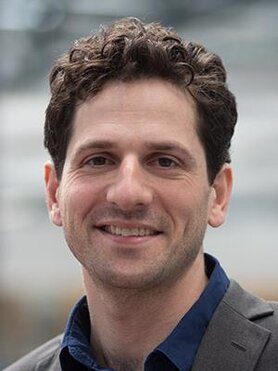
Prof. Juan Hernandez Tamames is a Full Professor in the Department of Radiology & Nuclear Medicine at Erasmus MC. His research focuses on advanced MRI techniques, neurodegenerative disorders, and medical imaging innovations. He has contributed to over 158 peer-reviewed publications, emphasizing translational applications of imaging technologies in clinical diagnosis. Research Interests: His work centers on Functional MRI for neurological disorders Development of MRI-based diagnostic models AI-driven image analysis Cardiovascular and oncological imaging applications Recent Research Trends: His 2025 publications highlight innovations in Quantitative MRI for early Parkinsonism diagnosis Phase contrast imaging accuracy improvements 3D MRI acquisition protocols Synthetic CT generation for radiotherapy AI-based brain tumor prediction Collaborations: Active collaborations with institutions globally, focusing on multi-disciplinary imaging solutions.
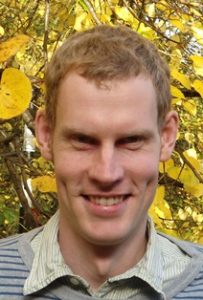
Zjenja Doubrovski is an Assistant Professor at the Faculty of Industrial Design Engineering, Delft University of Technology. They hold an MSc in Integrated Product Design (Cum Laude, 2010) and a PhD in Additive Manufacturing (2016). Their research focuses on multi-material Additive Manufacturing (AM), meta-materials, and bio-inspired design, with applications in mechatronics and robotics. They collaborate closely with the 3D printing industry and supervise graduation projects expanding this field. Education includes teaching courses like Computational Fabrication , Computer-Aided Design , and Digital Materials . Awards include the 2023 Best Paper Honourable Mention and the 2013 Best Young Presenter Award at eCAADE. Research interests span soft robotics, 4D printing, sustainable materials, and biohybrid systems. Their work bridges design methodologies with advanced manufacturing technologies, emphasizing innovation and practical collaboration. Research Highlights: Biomimetic composites, smart mechanics, and living materials for carbon absorption. Key Collaborations: Industry partnerships for AM applications, EU-funded projects on sustainable design.
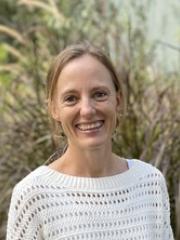
Marianne Gjestvold Omang is an Adjunct Professor at the Rosseland Centre for Solar Physics, University of Oslo. Her research focuses on shock physics, numerical simulations using Smoothed Particle Hydrodynamics (SPH), and multiphase systems. She holds a Cand. Scient in Astronomy (1994) and a PhD in Astronomy (2005), both from the University of Oslo. Her work emphasizes shock interactions with reactive particles, combustion models, and computational methods for fluid dynamics. Recent publications include studies on shock-induced cloud ignition, low-temperature particle ignition, and cylindrical geometry simulations. She collaborates on projects involving shock tube facilities and particle dynamics, contributing to advancements in SPH methodology and multi-phase flow analysis. Publications span experimental and numerical investigations, with a focus on shock wave phenomena, MHD applications, and algorithmic improvements in computational physics. No scientific awards are explicitly listed, but her extensive contributions to computational astrophysics are notable.
Anton A. Darhuber is a Full Professor in the Department of Applied Physics at Eindhoven University of Technology (TU/e), leading the Micro- and Nanoscale Flows research group within the Fluids and Flows section. He also holds a Full Professor position at EIRES Research. His work spans fundamental fluid physics at micro- and nanoscales with applications in semiconductor manufacturing, printing technologies, and energy systems. Research Interests: Darhuber specializes in surfactant-driven flows , plasma-liquid interactions , thermo/solutocapillary phenomena , and thin film dynamics . His lab investigates how liquids interact with solids across nanometer-to-millimeter scales, focusing on pattern formation, defect mitigation in lithography, and evaporative processes. Key application areas include immersion lithography, inkjet printing, and enhanced oil recovery. Research Trends: Recent publications reveal a strong emphasis on plasma-induced liquid flows (2024-2025), where electrical properties dictate flow direction in saline solutions, and phase separation in meniscus-guided deposition (2025) for polymer thin films. His group combines experimental techniques with computational modeling to address challenges in watermark defect formation and coffee-stain effects. Supervision & Grants: Darhuber actively supervises doctoral candidates (e.g., Sajjad Karimnejad, R.A.J. de Bruijn) and master's students. He leads major projects including FIP2.0: Complex Fluids on Complex Substrates (2020-2026), Defeng: Defect Engineering in Thin Films (2019-2025), and HVCLD: High Velocity Contact Line Dynamics (2022-2029), securing third-tier and first-tier funding from industrial and academic sources. Research Infrastructure: The Micro- and Nanoscale Flows group operates advanced facilities for microfluidic experimentation, plasma-liquid interaction studies, and high-speed imaging of interfacial phenomena. Collaborations span semiconductor industry partners (ASML), academic institutions (Princeton University), and EU-funded consortia focused on sustainable manufacturing.
Dr. Yong Huang is a Professor in Mechanical & Aerospace Engineering, Biomedical Engineering, and Materials Science and Engineering at the University of Florida. His research focuses on advanced manufacturing techniques for biomedical and energy applications, including 3D bioprinting, material processing, and microphysiological systems. He holds a Ph.D. in Mechanical Engineering from Georgia Institute of Technology (2002). Education: PhD in Mechanical Engineering, Georgia Institute of Technology (2002). Research interests include: three-dimensional printing of biomaterials, design of engineered living systems, and understanding material behavior during manufacturing. He has pioneered methods like nanoclay suspension-based printing and embedded bioprinting for perfusable tissues. Awards: ASME Blackall Award (2005), SME Outstanding Young Engineer (2006), NSF CAREER Award (2008), and ASME Fellow status. His recent work emphasizes translational biomedical applications, such as lung organoid cultures for disease modeling and drug delivery systems. Key contributions include innovations in additive manufacturing for healthcare, including 3D-printed titanium implants with enhanced bioactivity, and laser-induced forward transfer for precise material deposition. His lab develops bioprinting technologies addressing vascularization challenges in tissue engineering.
Daniel Duke is a Senior Lecturer in the Department of Mechanical & Aerospace Engineering at Monash University (Clayton Campus). He leads two active Australian Research Council (ARC) Projects focused on developing synchrotron x-ray diagnostics for studying cavitation, liquid atomization, and medical sprays. His expertise includes fluid mechanics, aerosol science, and high-performance computing tools. Education : PhD in Mechanical Engineering (Monash University, 2013) External Roles : Former ARC DECRA Fellow and Fulbright Scholar; Postdoctoral Appointee and Visiting Scholar at Argonne National Laboratory (2011–2017). Research Focus : Duke specializes in turbulent multi-phase flows and medical spray optimization. His work emphasizes environmentally friendly propellants for metered dose inhalers (pMDIs), leveraging synchrotron diagnostics and computational fluid dynamics. Key areas include cavitation mechanisms, droplet control, and sustainable inhaler design. Recent Projects : Engineering optimal particle maturation in multicomponent sprays (2025–2028), Cavitation in Ionic Liquids (2023–2026), and Low-GWP pMDI sprays (2020–2024). These projects address both technical and sustainability challenges in medical aerosol systems. Awards : Bill Melbourne Medal (2013), Argonne 'Pace Setter' Award (2016), and William R. Marshall Prize (2014). Grants : ARC funding for three major projects totaling over AUD 5M. Labs & Activities : Active in synchrotron-based research at ANSTO. Collaborates with industry partners (e.g., Suresonix Pty Ltd) and leads international workshops on aerosol science and sustainable technologies.
Dr. Christopher Westbrook is an Associate Professor in Meteorology at the University of Reading's Department of Meteorology. He specializes in cloud physics, ice microphysics, and remote sensing using advanced radar and lidar technologies. His research focuses on understanding ice particle dynamics, electromagnetic scattering, and the application of multi-wavelength radar data to study cloud microphysics. He leads projects at the Chilbolton Observatory, leveraging state-of-the-art instruments to investigate precipitation processes and atmospheric phenomena. His academic contributions include advancing methodologies for ice particle fall speed parametrization, radar signal processing, and the analysis of ice crystal aggregation. He supervises multiple PhD students, including Matt Feist, Emma Hopkin, and Will Keat, who explore topics like turbulence in convective clouds and mixed-phase cloud dynamics. Westbrook is an Associate Fellow of the Royal Meteorological Society and actively contributes to academic editing and conference organization. Key research interests include ice formation in supercooled clouds, the development of novel radar technologies, and the interpretation of polarimetric data. His work bridges theoretical models with observational data from field campaigns, enhancing understanding of atmospheric processes critical to climate and weather prediction.
Thomas Flint is a Lecturer in Computational Modelling for Metallurgy within the Department of Materials Engineering. His research focuses on developing high-fidelity mathematical frameworks to model heat and mass transfer, microstructural evolution during high-energy density processes such as welding and additive manufacturing. Key areas include thermal-fluid dynamics, phase-field fracture, and laser/material interaction simulations. Education: Doctor of Engineering (2016) from an unspecified institution, supervised by Dr. J. Francis. His doctoral thesis, Novel Approaches for the Modelling of Heat Flow in Advanced Welding Processes , laid foundational work for his current research. Research Interests: Advanced welding processes, additive manufacturing, computational fluid dynamics, and phase-field modeling. His work contributes to UN Sustainable Development Goals through innovations in materials processing efficiency and sustainability. Notable Achievements: Recipient of the Donald Julius Groen Prize (2021) for contributions to engineering research. He has developed open-source simulation tools like LaserbeamFoam and beamWeldFoam , which are widely used in thermal and state-transition modeling. Collaborations: Active in international research networks, with contributions to conferences like the ASME Pressure Vessels and Piping Conference. His work spans collaborations with institutions focused on materials science, computational engineering, and manufacturing technologies. Labs/Teams: Leads development of computational tools for thermal process simulation, integrating advanced numerical methods with industrial applications in aerospace and manufacturing sectors.
Jack King is a Royal Society University Research Fellow at the University of Manchester's School of Engineering, specializing in Mechanical and Aerospace Engineering. He holds a PhD from the University of Edinburgh and a Bachelor's in Engineering from the University of Cambridge. His research focuses on developing novel numerical methods for complex fluid flows, particularly combustion simulations for clean energy technologies. Key areas include high-order/mesh-free methods (e.g., LABFM/SPH), free surface flows, reacting flows, fluid instabilities, and non-Newtonian fluids. He has been awarded the Dame Kathleen Ollerenshaw Fellowship (2022) and the Royal Society University Research Fellowship (2023). His work spans collaborations in fluid dynamics, with publications addressing viscoelastic flows, breaking waves, and high-order simulations. He is part of the Fluids Research Group, actively involved in projects on turbulent flows and computational fluid dynamics.
Catherine Lindsay Anderson is Professor and Chair of the Department of Biological & Environmental Engineering at Cornell University's College of Agriculture and Life Sciences. She serves as interim Director of the Cornell Energy Systems Institute and was previously the Kathy Dwyer Marble and Curt Marble Faculty Director for Energy with the Cornell Atkinson Center for Sustainability. Dr. Anderson also holds the position of House Professor Dean at William Keeton House. Her educational background includes a B.Sc.(Engineering) and M.S. in Environmental Engineering from University of Guelph (Canada) and a Ph.D. in Applied Mathematics from the University of Western Ontario (Canada). Dr. Anderson's research focuses on energy system decarbonization at the interface of environmental and systems engineering, electric power systems, applied optimization and decision science. Her work investigates operational methods for more effective integration of renewable energy technologies, addressing the complex interactions among energy, food and water systems. The lab takes an interdisciplinary approach, combining engineering, economics and mathematics to understand the interactive forces of systems and markets. Current research areas include analysis of grid transitions, climate impacts on power system reliability, and scalable optimization for decision making under uncertainty. Her recent publications demonstrate a strong focus on energy system vulnerabilities in zero-emission grids, identification of pressure points in modern power systems, and rethinking electricity access metrics with a focus on energy justice, particularly in Latin America. Her work spans technical power systems analysis, climate impacts on grid reliability, and socio-technical aspects of energy transitions. 2021 Energy Systems Integration Group (ESIG) Award of Excellence for Contributions to Energy Systems Optimization IEEE Senior Member Grade (since 2019) 2016 College of Engineering Award for Research Excellence, Cornell University 2015 NSF CAREER Award 2012 Norman R. Scott Sesquicentennial Faculty Fellowship in Energy Systems Engineering 2010 College of Engineering Excellence in Teaching Award Dr. Anderson has advised numerous graduate students who have gone on to prestigious positions, including Assistant Professors at University of Connecticut, Pitzer College, and Texas A&M University, as well as research scientists at the National Renewable Energy Laboratory. Her lab team is committed to impactful research while fostering an inclusive and equitable environment. Current research includes USDA-funded work on agricultural-to-energy transitions in New York State, examining the nexus of energy, water, and climate.
Andrea Giusti is a Senior Lecturer in Thermofluids at the Department of Mechanical Engineering, Imperial College London. His research focuses on multi-physics reacting flows, integrating electromagnetic interactions and nanomaterials to enhance sustainability in energy, transportation, and aerospace sectors. He leads a research group developing numerical methods for multi-scale analysis, including molecular dynamics and quantum mechanics, alongside climate resilience models for wildfire risk assessment using data-assimilation techniques. Giusti holds editorial and committee roles, including Editor-in-Chief of the International Journal of Spray and Combustion Dynamics , Committee Member of the British Section of the Combustion Institute (CIBS), and Bye-Fellow at Fitzwilliam College, Cambridge. His research interests span thermofluids engineering, combustion dynamics, and interdisciplinary applications in physical chemistry and aerospace engineering. Recent publications emphasize electrostatic field control of droplet trajectories, reactive molecular dynamics modeling of hydrocarbon combustion, and hybrid frameworks for wildfire propagation. His work bridges computational modeling with experimental validation, addressing challenges in low-emission combustion systems and nanotechnology-driven energy solutions. Awards: No scientific awards explicitly mentioned. Grants/Advising: Details not provided in the text. Labs/Teams: Leads a multi-physics reacting flows research group at Imperial College.
Dr. Nicola Browne is a Senior Lecturer in Marine Ecology at the School of the Environment, University of Queensland. Her research focuses on marginal reef systems, sediment dynamics, and climate change impacts on coral communities. She investigates geomorphological processes, turbidity gradients, and reef resilience using field-based techniques and remote sensing data. Her work spans Australian coral reefs, Malaysian Borneo, and the Indian Ocean, examining carbonate budgets, bioerosion rates, and coral-algal phase shifts. Dr. Browne collaborates extensively on multi-institutional projects addressing coastal management and living shoreline opportunities. Her research interests include developing predictive models for reef stability under climate change, understanding sediment flux in turbid environments, and documenting coral adaptations to extreme conditions. She utilizes MODIS satellite data, sediment budgeting, and geochemical proxies to reconstruct environmental histories and forecast ecosystem responses.
Prof Bryan Webber is a Professor at the Department of Physics, University of Cambridge, associated with the Cavendish Laboratory. His research focuses on high-energy physics, particle theory, and computational methods in physics. Specializes in QCD, Monte Carlo event generators, dark matter spectra, and collider phenomenology. Key research areas include: Monte Carlo simulation techniques for particle detectors Parton shower algorithms and QCD evolution Dark matter production mechanisms Polarization effects in parton distributions Electroweak instanton processes Recent work emphasizes precision calculations for LHC physics, including Higgs boson production, top quark asymmetry, and black hole signatures at colliders. His contributions include the Herwig++ event generator and the MC@NLO framework. Active in international collaborations like the European Strategy for Particle Physics. Publications span over 30 years, with a focus on theoretical precision tools for experimental particle physics. No awards explicitly listed in the provided texts, though his academic role indicates significant recognition in the field. Advising and grants details not explicitly detailed, but his research activities suggest involvement in major particle physics initiatives. Laboratory affiliations include the Cavendish Laboratory, a world-leading center for experimental and theoretical physics research.
Manuel Torrilhon serves as Professor and head of the Research Lab for Applied and Computational Mathematics (ACoM) at RWTH Aachen University, where he has held a full professorship since 2010. He currently leads the Department of Mathematics as its elected Speaker for the 2024-2026 term, overseeing academic strategy and research initiatives within the Faculty of Mathematics, Computer Science and Natural Sciences. His academic foundation includes: Diplom-Ingenieur in Engineering Physics from TU Berlin (1994-1999) PhD in Applied Mathematics from ETH Zurich (2004) Postdoctoral research at HKUST (2004/05) and Princeton University (2005/06) Research Assistant Professor at ETH Zurich (2007-2010) Professor Torrilhon's research pioneers mathematical modeling in continuum physics and kinetic gas theory , with seminal contributions to the Boltzmann equation, rarefied gas dynamics, and magnetohydrodynamics. His work develops advanced numerical methods for nonlinear hyperbolic systems , particularly entropy-stable high-order schemes and multi-scale time integrators. The ACoM lab under his direction bridges theoretical mathematics with engineering applications through computational frameworks like fenicsR13 for moment equation solvers. His methodologies enable high-fidelity simulations of micro-flows, plasma instabilities, and electron transport phenomena critical to aerospace and materials science. Analysis of his 2025-2024 publications reveals dominant trends in entropy-conservative numerical schemes for kinetic equations, multirate time integration for stiff systems, and moment-method extensions to polytropic gases and shallow flows. These works consistently address computational challenges in rarefaction effects, non-equilibrium thermodynamics, and high-enthalpy regimes, demonstrating cross-cutting applications from microfluidics to plasma physics. Scientific recognition includes: EURYI Award (Pre-ERC) from European Science Foundation (2006) As director of ACoM, Professor Torrilhon secures research funding for computational mathematics projects and mentors graduate students in numerical analysis and kinetic theory. His lab maintains strong collaborations with engineering departments for applied validation of mathematical models, particularly in micro-flow devices and plasma containment systems. Current grants focus on adaptive solvers for multi-scale kinetic problems and inverse methods for electron probe microanalysis. The Research Lab for Applied and Computational Mathematics (ACoM) operates as an interdisciplinary hub developing open-source computational tools like fenicsR13. The team specializes in tensor-based numerical methods for moment equations, with ongoing projects in X-ray emission modeling, Richtmyer-Meshkov instability simulations, and thermodynamically consistent electrolyte solvers. ACoM maintains strategic partnerships with aerospace research institutes for hypersonic flow validation and with materials science centers for nanoscale transport studies.
James Percival is a Senior Teaching Fellow in the Department of Earth Science & Engineering at Imperial College London, part of the Faculty of Engineering. His research focuses on computational methods for fluid dynamics, environmental engineering, and porous media flow. He is affiliated with the Applied Modelling and Computation Group and the Novel Reservoir Modelling and Simulation (NORMS) initiative. His work emphasizes numerical simulations using advanced techniques like discontinuous Galerkin methods and adaptive unstructured meshes. Key research areas include hydro-morphodynamics, multiphase flow modeling, and reservoir engineering. His publications highlight contributions to fluid dynamics, atmospheric modeling (e.g., ATHAM-Fluidity), and environmental applications such as pipeline scour analysis. Percival’s methodologies prioritize high-resolution simulations and mesh optimization for complex geophysical and industrial challenges. His articles reflect a trend toward integrating computational efficiency with accuracy in modeling phenomena like viscous fingering, interfacial flows, and extreme weather events. Despite significant contributions, no awards or grants are explicitly noted in the provided texts.