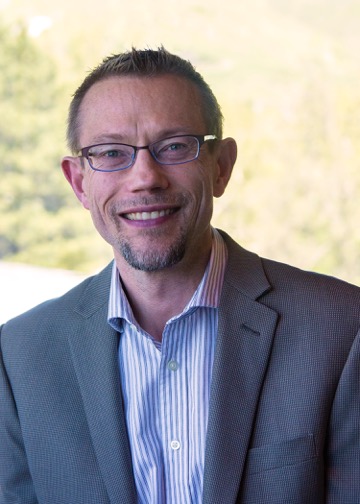
Tim Q. Duong, Ph.D., is a Professor at Albert Einstein College of Medicine, affiliated with the Departments of Radiology, Biochemistry, Ophthalmology & Visual Sciences, and Neuroscience. His research focuses on medical imaging, MRI, image analysis, machine learning, and predictive modeling for studying diseases like COVID-19 , neurodegeneration (Alzheimer's, multiple sclerosis), brain injuries , and breast cancer . Develops AI-driven MRI techniques for early disease detection Investigates neuroplasticity in glaucoma and diabetic retinopathy Leads grants from NIH and National Eye Institute Research Trends : Recent publications emphasize AI integration in medical imaging, long-term effects of SARS-CoV-2, and advanced MRI applications for ocular and neurological disorders. Grants include multiple R01 awards for diabetic retinopathy and glaucoma studies. Training Opportunities : Actively recruits postdocs, research coordinators, and faculty. Offers research positions for graduate, medical, and high school students, including Regeneron Scholar programs. Labs & Teams : Leads the Duong Lab at Montefiore Medical Center, focusing on translational research for clinical imaging solutions.
Harri Lähdesmäki is an Associate Professor (tenured) at the Department of Computer Science, Aalto University, where he leads the Computational Systems Biology research group. His work focuses on probabilistic machine learning and deep generative models with applications in biomedicine and molecular biology. Key Research Interests: Probabilistic machine learning, deep generative models, computational biology, bioinformatics, longitudinal data modeling Contact: harri.lahdesmaki@aalto.fi | Konemiehentie 2, 02150 Espoo, Finland His recent publications highlight advancements in: Gaussian process priors for scalable deep generative models Single-cell analysis of immune repertoires in leukemia and diabetes Probabilistic deconvolution methods for RNA-seq data Epigenetic analysis using hidden Markov and mixed models Transformer-based survival prediction and missing data handling Harri’s work integrates mechanistic modeling with Bayesian inference, particularly applied to immunology, cancer biology, and early disease prediction.
Karoline Faust is an Associate Professor at KU Leuven, affiliated with the Laboratory of Molecular Bacteriology (Rega Institute) and the Faculty of Medicine . She contributes to the iSi Health and Leuven One Health institutes, and serves on senior academic councils. Her research spans microbial systems biology, focusing on community dynamics and network analysis. Education: PhD in bioinformatics (2010, KU Leuven) Affiliations: KU Leuven, ISME Journal editorial board, Belgian Society for Microbiology Her research investigates microbial community dynamics , systems biology approaches to microbiomes, and bioinformatics tool development . She specializes in modeling human gut microbiota , synthetic microbial communities , and environmental microbiomes (e.g., microplastic impacts on Daphnia microbiomes). Her work integrates metabolic modeling , network analysis , and experimental systems to understand microbial interactions. Recent publications highlight her contributions to microbial network inference , 16S rRNA sequencing protocols , microfluidics , and ecological modeling of microbiomes. She develops tools like manta , miaSim , and CoNet to analyze community structures. Teaching: Karoline co-teaches courses in microbiology, bioinformatics, and network analysis at KU Leuven, and has contributed to international workshops on microbial network inference. Scientific Engagement: She serves as Senior Editor at ISME Journal and Secretary of the Belgian Society for Microbiology .
Rex Ying is an Assistant Professor in the Department of Computer Science at Yale University's School of Engineering & Applied Science. He leads research in graph neural networks, geometric representation learning, and explainable AI, with applications spanning physical simulations, biology, knowledge graphs, and recommender systems. His lab actively recruits PhD students interested in geometric deep learning, graph neural networks, and trustworthy AI. Dr. Ying received his PhD in Computer Science from Stanford University under Jure Leskovec, with a thesis titled "Towards Expressive and Scalable Deep Representation Learning for Graphs." Prior to that, he graduated from Duke University in 2016 with highest distinction, majoring in Computer Science and Mathematics. His research focuses on three interconnected areas: advancing graph neural network architectures for improved expressiveness, scalability, and interpretability; innovating in geometric representation learning for data with diverse characteristics; and developing real-world applications across scientific domains. He has pioneered influential algorithms including GraphSAGE, PinSAGE, and GNNExplainer, and developed the first billion-scale graph embedding services at Pinterest as well as graph-based anomaly detection algorithms at Amazon. His recent publication trends show a strong focus on hyperbolic geometry for foundation models, non-Euclidean representation learning, and multimodal applications in computational biology. The research demonstrates increasing integration of geometric deep learning with large language models and foundation model architectures. KDD 2022 Dissertation Award 2019 Baidu Scholarship in Artificial Intelligence Dr. Ying actively serves the research community as a committee member for major conferences including AAAI, ICML, NeurIPS, ICLR, KDD, and WebConf for over seven years, and as area chair for LoG 2022. He co-leads the open-source PyTorch Geometric project and has organized numerous workshops on graph learning. His industry collaborations include Pinterest, Amazon, Facebook AI Research, DeepMind, Siemens, SLAC National Accelerator Laboratory, and Saudi Aramco. He teaches "Deep Learning for Graph-Structured Data" at Yale and mentors students in developing cutting-edge graph learning algorithms. His research lab collaborates with both academic institutions and industry partners to advance the state-of-the-art in graph representation learning, with particular emphasis on geometric deep learning and its applications to scientific discovery and real-world systems.
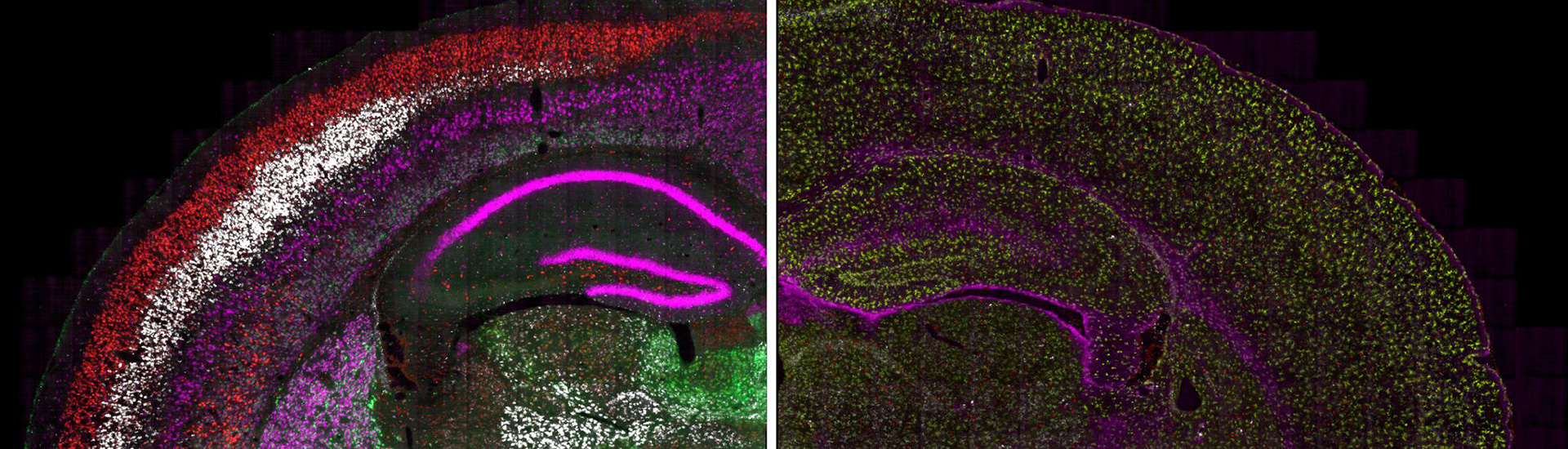
Long Cai is a Professor at the California Institute of Technology, affiliated with the Biology and Biological Engineering department. He pioneered the field of spatial genomics and co-developed transformative technologies such as seqFISH and MEMOIR. Research Interests: His work focuses on decoding biological systems through spatial genomics, integrating molecular imaging with computational analysis to uncover cellular organization in tissues. Key areas include developmental biology, neuroscience, kidney regeneration, and cancer biology. Publications: Recent studies highlight applications of spatial transcriptomics in kidney disease, brain nuclear architecture, and multi-omics tissue mapping. His research emphasizes creating high-resolution atlases of cellular dynamics. Scientific Awards: NIH Director’s Pioneer Award (2022) Labs & Collaborations: He leads the Cai Lab, which develops cutting-edge imaging tools in collaboration with the Elowitz Lab and other interdisciplinary teams.
Xiuwei Zhang is the J.Z. Liang Early-Career Assistant Professor in the School of Computational Science and Engineering (SCoSE) at Georgia Institute of Technology, part of the College of Computing. Her research focuses on computational biology and bioinformatics, particularly in developing machine learning methods for analyzing single-cell omics data, including multi-modal, temporal, and spatial data integration. She leads a lab that designs tools like scDART , scMoMaT , and scMultiSim , which address challenges in multi-omics integration, lineage reconstruction, and simulation. Before joining Georgia Tech, she held postdoctoral positions at UC Berkeley (Nir Yosef’s group), the European Bioinformatics Institute (EBI), and École Polytechnique Fédérale de Lausanne (EPFL). She earned her PhD in computer science from EPFL under Bernard Moret. Her Erdős number is 3, reflecting her collaborative work across computational fields. Her research spans four key areas: multi-batch/single-cell data integration, temporal analysis of cell differentiation, spatial-temporal omics dynamics, and simulation tools for benchmarking methods. She has received prestigious awards, including the NSF CAREER Award (2022) and NIH MIRA (2021). She actively participates in conferences (RECOMB, ISMB) and serves on editorial boards (Journal of Computational Biology). Her group’s recent work includes the scMultiSim simulator (2025), which generates multi-omics spatial data, and LinRace (2023), reconstructing cell lineage histories. She mentors over 15 students and collaborates internationally on projects like the InQuBATE Workshop on Single-Cell Transcriptomics.
Professor Guy Williams is a leading academic at the University of Cambridge with a focus on imaging science and clinical neurosciences, affiliated with Downing College and the Wolfson Brain Imaging Centre . Holding a PhD in Physics from his initial Natural Sciences degree, he specializes in nuclear magnetic resonance (NMR) and MRI techniques for brain imaging. Education: BA, PhD in Physics His research centers on non-invasive imaging of brain structure and function, particularly in traumatic brain injury (TBI) and dementia. His work involves developing novel MRI pulse sequences and advanced data analysis algorithms, including AI-based diagnostic tools. He leads studies on white matter integrity post-trauma, longitudinal dementia assessment, and applications of MRI in disorders of consciousness and addiction. Recent publications highlight collaborations in traumatic brain injury outcomes, AI-guided dementia prediction, and neuroimaging of post-COVID cognitive deficits. His team's work on ultra-high field laminar fMRI and distortion correction methods has advanced clinical neuroscience applications. Key techniques include diffusion tensor imaging (DTI), 7 Tesla MRI, and positron emission tomography (PET/MR). His research spans from basic NMR physics to clinical translation, with a strong emphasis on multi-site studies and real-world diagnostic implementation.
Yasushi Sakurai is a Professor in the Department of Translational Datability at Osaka University's Institute of Scientific and Industrial Research, co-leading the Sakurai and Matsubara Laboratory within the Center for Industrial Science and AI. His research mission focuses on transforming society through real-time prediction of natural and social phenomena using large-scale data analytics, with emphasis on practical technological implementation. His research spans time-series big data analysis, dynamic learning systems, and real-time information provision. Key areas include tensor stream mining, EEG-based healthcare applications, cybersecurity anomaly detection, and multi-omics cancer subtyping. The lab specializes in developing deployable technologies that optimize social activities through predictive modeling of evolving data streams. Recent publications (2023-2025) reveal concentrated innovation in time-series data stream processing, with dominant themes in tensor analytics, frequency-domain forecasting, and causal modeling. His team produces high-impact work accepted at premier AI venues (ICLR, AAAI, KDD, WWW), consistently featuring oral presentations that highlight technical novelty and societal relevance. Scientific Awards: FY2024 Minister of Education, Culture, Sports, Science and Technology Award for Science and Technology (Research Category) for dynamic learning and real-time data stream analysis Professor Sakurai mentors graduate students including Naoki Chihara (DEIM2024 Outstanding Paper Award winner), Yuka Tamura (DEIM2024 Student Presentation Award winner), and Ren Fujiwara. His lab maintains active industry-academia partnerships focused on practical technology deployment, with research directly addressing real-world challenges in healthcare monitoring and cybersecurity. The Sakurai and Matsubara Laboratory operates as a dynamic research unit within Osaka University's Center for Industrial Science and AI, structured around specialized teams for tensor stream analysis, medical data mining, and network dynamics. Current projects emphasize real-time prediction systems with immediate societal applications, supported by strong industry collaboration frameworks.
Omer Bayraktar is a Group Leader at the Wellcome Sanger Institute , leading research in the Cellular Genomics Programme. His work focuses on decoding human brain cellular diversity using spatial transcriptomics , imaging , and functional screening to study neural complexity in health and disease. Bayraktar's educational background includes a PhD from HHMI under Chris Doe, investigating neural diversity development in Drosophila , followed by postdoctoral work at University of California, San Francisco and University of Cambridge as a Life Sciences Research Foundation Fellow. He developed a spatial transcriptomic pipeline during his postdoc to analyze astrocyte heterogeneity in the cerebral cortex. His research explores neural cell type mapping , glial-neuronal interactions , and cellular pathways in neurodevelopmental disorders . Recent publications emphasize 3D tissue mapping , multi-omic integration , and computational tools like Cell2fate and WebAtlas. His work bridges neurogenetics and computational biology to advance understanding of human tissue ecosystems. Bayraktar's lab collaborates with the Human Cell Atlas initiative and develops technologies such as automated histology pipelines and highly-multiplexed smFISH for molecular cell typing. His team also investigates glia-based therapies and astrocyte functional heterogeneity in neurodevelopmental contexts. Key scientific contributions include: Discovering astrocyte layer patterns independent of neuronal laminae Developing cell2location for spatial cell mapping Characterizing Drosophila neural stem cell models with human relevance Notable awards include the Life Sciences Research Foundation Fellowship during his postdoctoral training. His current group includes a PhD student , Senior Data Scientists , and Bioinformaticians .
Kenneth Hoehn is an Assistant Professor in the Department of Biomedical Data Science at the Geisel School of Medicine, Dartmouth College. As a computational immunologist with expertise in evolutionary biology, he develops computational evolutionary approaches to trace cellular lineages, particularly B cells, in contexts such as infection, vaccination, cancer, and autoimmune diseases. His research focuses on understanding adaptive immunity in conditions like COVID-19 Food allergies Myasthenia gravis through collaborations with experimental teams. Key projects include: Phylogenetic modeling of B cell responses Evolutionary signatures in immune repertoires Tracking B cell dissemination in autoimmune diseases Epigenetic regulation of memory B cells Recent publications highlight trends in single-cell immunology , phylogenetic inference , and computational tools for analyzing B cell dynamics. His lab at Dartmouth integrates evolutionary genetics with high-resolution immune profiling.
Mona Singh is a Professor of Computer Science at Princeton University, with affiliations to the Lewis-Sigler Institute for Integrative Genomics and the Department of Molecular Biology. She has been a faculty member since 1999. Ph.D., Massachusetts Institute of Technology, 1995 A.B. and S.M. degrees in Computer Science from Harvard University Her research focuses on computational molecular biology, integrating machine learning and algorithms to analyze biological networks, protein interactions, and mutational impacts. Key areas include DNA/RNA binding prediction, protein structure analysis, and network-based disease gene discovery. Her recent work highlights trends in protein language models, kinase-substrate prediction, and equitable MHC binding algorithms. These span sub-fields like structural bioinformatics, network biology, and functional genomics. Scientific Awards: Presidential Early Career Award for Scientists and Engineers (PECASE) Rheinstein Junior Faculty Award ACM Fellow (2019) ISCB Fellow (2018) She has taught an introductory computational biology course with Professor Coleen Murphy, covering sequence analysis, phylogenetics, and network reconstruction. Her group has developed tools like dPUC , nCOP , and DiffMut . Her lab collaborates with institutions including Carnegie Mellon, Duke University, and the Broad Institute, advancing applications in cancer genomics, metabolic disease, and precision medicine.
Mike Kirby is a Professor at the Kahlert School of Computing, University of Utah. He also holds adjunct professorships in the Department of Bioengineering and the Department of Mathematics. His current roles include leadership in scientific computing and informatics initiatives, including former directorships of the Utah Informatics Initiative (2019-2023) and the Multi-Scale Multidisciplinary Modeling of Electronic Materials (MSME) Collaborative Research Alliance (2016-2022). He has extensive experience in strategic research initiatives, including serving as Assistant Vice President for Research (2024-2025). Education: Dr. Kirby earned a PhD in Applied Mathematics (2002) and MS in Computer Science (2001) from Brown University, and a BS in Applied Mathematics and Computer Science from Florida State University (1997). Research Interests: Focus on large-scale scientific computing, physics-informed machine learning, computational science and engineering, high-order numerical methods, and visualization. His work bridges applied mathematics and computer science to address real-world engineering challenges. Publications: Over 150 peer-reviewed articles, including high-impact contributions in journals like Journal of Computational Physics and SIAM Journal on Scientific Computing . Recent work emphasizes machine learning for differential equations, topology optimization under uncertainty, and multi-fidelity modeling. Awards: Recognized for leadership in computational science and informatics, including contributions to University of Utah’s Clery Compliance Program. Advising & Grants: Supervised over 50 graduate students and postdocs. Secured funding from NSF, DOE, and industry partnerships, totaling millions in research grants. Active in interdisciplinary collaborations across engineering, materials science, and medicine. Labs/Teams: Scientific Computing and Imaging (SCI) Institute, Utah Informatics Initiative, and the Center for Multiscale Modeling of Electronic Materials (MSME).
Dana Pe'er is a Professor and Chair of the Computational and Systems Biology Program at the Sloan Kettering Institute (SKI) of Memorial Sloan Kettering Cancer Center. She is also an Investigator of the Howard Hughes Medical Institute and holds the Alan and Sandra Gerry Endowed Chair. Dr. Pe'er leads an interdisciplinary research group that combines advanced genomics approaches with machine learning to address fundamental questions in biomedical science, with particular focus on cancer biology, developmental biology, and immunology. Dr. Pe'er earned her PhD from Hebrew University in Jerusalem, Israel. Her academic journey includes a postdoctoral fellowship with George Church at Harvard Medical School. Before joining Memorial Sloan Kettering Cancer Center in 2016, she held faculty positions at Columbia University. Dr. Pe'er's research focuses on understanding cellular plasticity, the consequences of intra-tumor heterogeneity, cancer evolution and metastasis, and the mechanisms by which regulatory circuits go awry in disease. Her lab combines single-cell and spatial profiling technologies with machine learning approaches to investigate gene regulation, cellular plasticity, and cell-cell communication in the contexts of cancer, immunity, and development. They are particularly interested in how organisms develop from a single cell to generate diverse cell types, how epigenetic control rewires during development, and how cells communicate to execute multicellular responses. Analysis of Dr. Pe'er's recent publications reveals a strong focus on developing computational methods for single-cell and spatial genomics data analysis. Her work spans cancer types including pancreatic, prostate, colorectal, and breast cancer, with emphasis on tumor heterogeneity, metastasis mechanisms, and cellular plasticity. A significant portion of her research involves creating novel algorithms and tools like CellRank, REUNION, and SEACells that enable researchers to extract meaningful biological insights from complex genomic datasets. 2023 Class of 2023 Inductee - American Academy of Cancer Research (AACR) Academy 2023 Innovator Award - International Society for Computational Biology (ISCB) 2021 Fellow - International Society for Computational Biology (ISCB) Howard Hughes Medical Institute Investigator (2021) 2019 Ernst W. Bertner Memorial Award - University of Texas MD Anderson Cancer Center 2016 Lenfest Distinguished Faculty Award - Columbia University 2014 Director's Pioneer Award - National Institutes of Health 2014 Overton Prize - International Society for Computational Biology (ISCB) Dr. Pe'er is known for her dedicated mentorship approach, describing herself as "a mama bear" who cares deeply about her trainees while expecting independence, innovation, and hard work. She mentors numerous PhD students and postdocs in her lab. Her HHMI Investigator award provides approximately $9 million over seven years, enabling ambitious research directions. She also collaborates extensively with the Single-cell Analytics and Innovation Lab (SAIL) at MSK to generate new data from emerging technologies, working closely with wet-lab collaborators at MSK and beyond to apply computational methods to cutting-edge datasets across multiple disease areas. The Pe'er Lab is an interdisciplinary group of computational biologists with diverse backgrounds ranging from pure mathematics to clinical medicine. They work closely with wet-lab collaborators to apply their computational methods to cutting-edge datasets across cancer, immunology, and developmental biology. The lab is described as open, supportive, collaborative, and fun, with access to world-class facilities at the Sloan Kettering Institute. Dr. Pe'er's work continues to push the boundaries of computational biology and cancer research, with the ultimate goal of developing more effective, personalized therapies for cancer patients.
Konstantinos Kalogeropoulos is an Assistant Professor at the Department of Biotechnology and Biomedicine, Technical University of Denmark (DTU), leading research at the Cell Diversity Lab. His work bridges proteomics, computational biology, and snake venom research. Current projects: "The Proteomic Landscape during Influenza Infection" (2022-2025) Supervisor for PhD projects on protease network rewiring in psoriasis and wound exudate degradomics Research interests include: Proteomic analysis of inflammatory diseases Snake venom toxin structure prediction Extracellular matrix biomechanics De novo peptide sequencing algorithms Computational modeling of protease networks Recent article trends demonstrate his work in • Database-free proteomics (InstaNovo/InstaNexus) • Snake venom pathophysiology (V-ToCs clustering) • Inflammatory disease biomarkers (psoriasis, impaired healing) • Extracellular matrix mechanics (fibronectin tension, gut inflammation) Advising: Supervises PhD students Polhaus, C. J. M. and Haack, A. M., focusing on protease networks and wound healing.
Jethro Johnson is an Innovation Track Principal Investigator at the Kennedy Institute of Rheumatology and Deputy Director of the Oxford Centre for Microbiome Studies (OCMS) at the University of Oxford. His work integrates computational genomics and microbiome research to explore host-microbiome interactions in health and disease. PhD in Nutritional Ecology (University of Auckland, 2012) MRC Career Development Fellowship Former postdoctoral researcher at Jackson Laboratory for Genomic Medicine Research focuses on: Mechanistic understanding of gut microbiome impacts on metabolic diseases Multi-omic data integration for host-microbiome studies Computational approaches to microbiome analysis Methodological developments in 16S rRNA gene profiling Publications emphasize microbiome-disease associations, methodological innovations, and computational genomics applications across human and mouse models. Key themes include metabolic dysfunction, immune interactions, and microbial diversity analysis. Scientific recognition includes: MRC Career Development Fellowship in Computational Genomics As OCMS Deputy Director, he contributes to advancing microbiome research infrastructure and collaborative projects while leading his own computational genomics group at the Kennedy Institute.