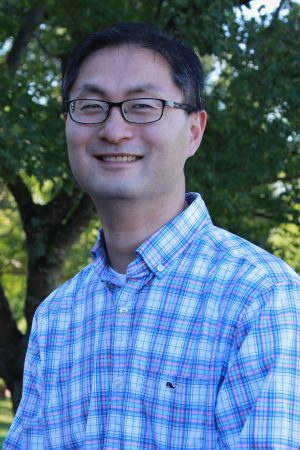
Reza Bosagh Zadeh is an Adjunct Professor at the Institute for Computational and Mathematical Engineering (ICME) at Stanford University. His research focuses on machine learning, deep learning, and their applications in video classification, healthcare analytics, and distributed algorithms. He specializes in developing scalable computational methods for real-time data processing and has contributed to advancements in neural networks and optimization techniques. Reza's work spans theoretical and applied domains, with notable contributions to TensorFlow frameworks, video summarization systems, and medical imaging analysis. His research often integrates interdisciplinary approaches, leveraging both academic and industrial collaborations. Notable projects include developing machine learning models for glaucoma detection and creating efficient algorithms for large-scale data processing in environments like Apache Spark. His publications emphasize real-time video stream analysis, distributed computing architectures, and practical implementations of deep learning. Reza holds a strong presence in both academic and tech sectors, with contributions to platforms like Twitter's Who-to-Follow system and innovations in edge computing for video surveillance.
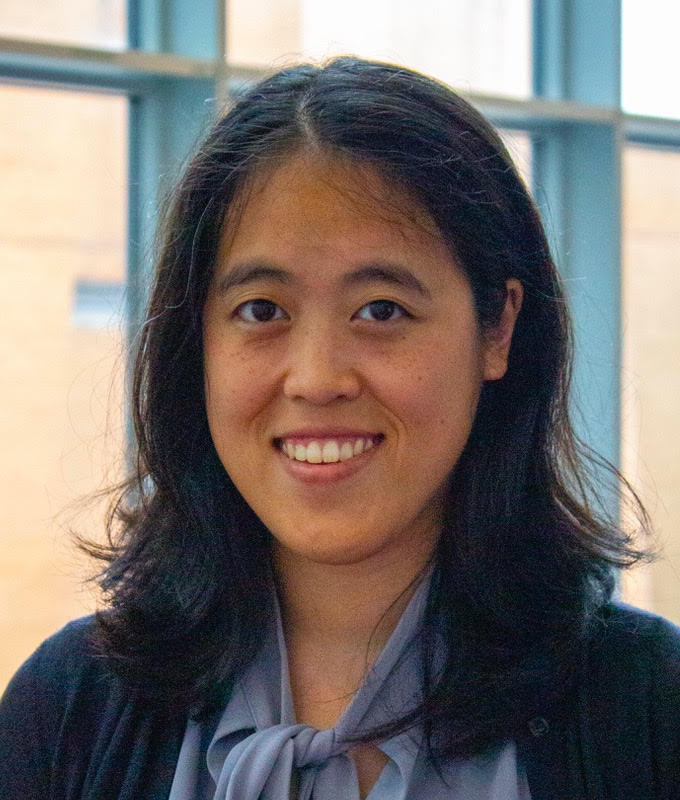
Min Shin is a Professor and Chair of the Computer Science Department at the University of North Carolina at Charlotte (UNC Charlotte), where he also serves as Assistant Dean for Research in the College of Computing and Informatics. He earned his Ph.D. in Computer Science & Engineering from the University of South Florida in 2001. His research focuses on Computer Vision, particularly multiple object tracking and automated visual inspection of nuclear power plants. He leads the Video and Image Analysis Lab, developing user-friendly tracking software funded by NSF, NIH, DARPA, and industry grants. Notable projects include the ABCTracker.org platform, which deploys algorithms refined over 10+ years of research. Dr. Shin’s work spans tracking applications in diverse domains such as ants, bees, cells, termites, robots, and vehicles. He has mentored Ph.D. and undergraduate students extensively, emphasizing computational methods in biology and engineering. His service includes roles as Associate Editor for IEEE Transactions on Systems, Man, and Cybernetics-B, and program committees for top conferences (ICCV, CVPR, ECCV). His grants and collaborations reflect interdisciplinary strengths in vision algorithms, usability, and real-world deployment.
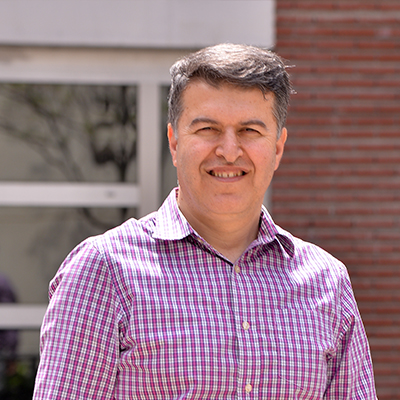
Nisar Ahmed is an Associate Professor at the University of Colorado within the Aerospace Engineering Sciences department. His research focuses on the intersection of Artificial Intelligence , Robotics , and Autonomous Systems , emphasizing decision-making under uncertainty, sensor fusion, and human-machine collaboration. Key research interests include: Active Inference for autonomous planning Decentralized Data Fusion in multi-robot systems Machine Self-Confidence and competency assessment Reinforcement Learning for spacecraft and robotic guidance Uncertainty Quantification in dynamic environments Recent publications highlight trends in Pareto-optimal decision-making , Bayesian optimization , contextual bandits , and trust calibration for UAS and planetary rovers. His work integrates probabilistic modeling with real-time autonomy , ensuring robustness in applications like search-and-rescue missions and lunar exploration. Contact: Nisar.Ahmed@Colorado.EDU
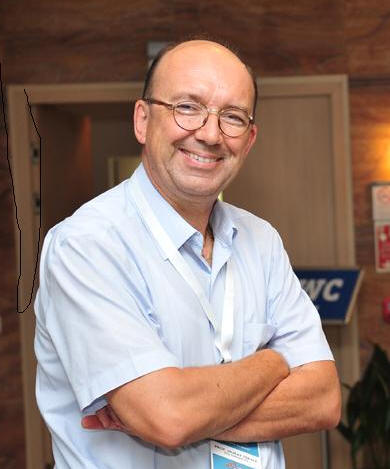
Kun An is a Professor at the Department of Traffic Information and Control Engineering within the College of Transportation Engineering at Tongji University. She has previously held academic positions at Monash University (Senior Lecturer, 2018–2019; Lecturer, 2016–2018) and conducted postdoctoral research at the University of Illinois at Urbana-Champaign (2015–2016) and The Hong Kong University of Science and Technology (2014–2015). Her academic journey includes a PhD in Civil Engineering from HKUST (2014) and a Bachelor's degree from Tongji University (2009). PhD: Civil Engineering, The Hong Kong University of Science and Technology (2014) Bachelor's: Transportation Engineering, Tongji University (2009) Dr. An specializes in intelligent transportation systems, focusing on optimizing complex traffic networks, characterizing traveler behavior in stochastic environments, and advancing electric vehicle sharing infrastructure. Her research spans urban transit planning, carsharing logistics, battery electric bus deployment, and real-time traffic signal optimization, with applications to mitigate rail disruptions and enhance multimodal connectivity. Her publications emphasize solving transport challenges through stochastic programming, game theory, and behavioral analysis. Key themes include autonomous vehicle integration, demand uncertainty modeling, and sustainable mobility solutions. Awards include the Hong Kong PhD Fellowship and multiple best paper recognitions. Hong Kong PhD Fellowship (2010–2014) TRBADB30 Best Paper Nomination (2014) Best Paper at 18th Hong Kong Transportation Annual Meeting (Second Author, 2013)
John Harrison Kurunathan is an Integrated PhD Researcher affiliated with the CISTER Research Centre at the University of Porto, Portugal. He holds a PhD in Electrical and Computer Engineering (2021), a Master's in Very Large-Scale Integration (2014), and a Bachelor's in Electronics and Communication (2012). Education: PhD (2021) - University of Porto, Portugal MSc (2014) - SSN College of Engineering, Anna University BSc (2012) - SRM University His research focuses on Wireless Sensor Networks (WSNs) , Cyber-Physical Systems (CPS) , and Automotive Networks , with an emphasis on Quality-of-Service (QoS) optimization, secure communication, and vehicular platooning. Notable projects include SafeCOP for safety-related CO-CPS and work on IEEE 802.15.4e DSME networks. Recent publications (2023-2025) span areas like Visible Light Communication , Vehicular Security , and Machine Learning in UAV Operations , reflecting his interdisciplinary work bridging embedded systems and transportation technologies. Scientific Awards: Best oral communication Award (in ex aequo) at DCE 2019 Reviewing Roles: Conference: ICCPS, EWSN, MSN, RTN Journal: IEEE ACCESS, IEEE Transactions on Vehicular Technology, ACM Sigbed Harrison is actively involved in workshops and conferences, including chairing roles at WIN-WIN-4S 2024 and technical demonstrations at WoWMoM 2023. His work appears in venues like IEEE Transactions on ITS, IEEE COMST, and PDP 2025.
Dongheui Lee is an Assistant Professor at the Institute of Automatic Control Engineering (LSR) within the Faculty of Electrical Engineering and Information Technology at Technische Universität München (TUM). She leads the Dynamic Human Robot Interaction for Automation System Lab. Her research focuses on human motion understanding, physical human-robot interaction, and machine learning in robotics. Education: B.S. and M.S. in Mechanical Engineering from Kyunghee University (2001-2003), PhD in Mechano-Informatics from the University of Tokyo (2007). Prior roles include research scientist at KIST Korea (2001-2004) and project assistant professor at the University of Tokyo (2007-2009). Research Interests: Human-robot collaboration, probabilistic robotics, motion recognition, and incremental lifelong learning mechanisms. She has contributed to advancements in motion primitives, compliant physical interaction, and real-time object tracking. Selected Awards: Finalist for KUKA Service Robotics Best Paper Award (2009), Hirose Scholarship (2006-2007), and multiple grants from KRF, KOSEF, and international robotics competitions. Key Publications: Focus on prioritized inverse kinematics, motion imitation, and adaptive control systems. Her work bridges robotics theory and practical applications in humanoid robots and human-robot interaction.
Jennifer Tang is a Postdoctoral Associate at the Massachusetts Institute of Technology (MIT), holding dual appointments in the Institute for Data, Systems, and Society (IDSS) and the Laboratory for Information and Decision Systems (LIDS). She conducts her research under Professor Ali Jadbabaie, focusing on interdisciplinary problems at the intersection of information theory, network science, and social dynamics. Her position is temporary as she actively seeks a permanent academic role through the 2025 job market. Her academic credentials include: Ph.D. in Electrical Engineering and Computer Science from MIT, advised by Professor Yury Polyanskiy Bachelor of Science in Engineering (B.S.E.) in Electrical Engineering from Princeton University, with independent work supervised by Paul Cuff Dr. Tang's research program centers on theoretical and applied aspects of information theory, including channel capacity, quantization, and data compression. She investigates prediction and estimation in high-dimensional settings, data analytics for complex systems, and mathematical modeling of social dynamics and inference in multi-agent networks. Her work employs tools from statistics, optimization, and network theory to address challenges in communication, decision-making, and societal systems, with particular emphasis on opinion dynamics under social pressure and efficient representation of probability distributions. Analysis of her publication record reveals consistent contributions to information-theoretic limits, social network modeling, and compression techniques. Her works frequently appear in top venues like IEEE Transactions on Information Theory and major conferences (ISIT, CDC, ACC), demonstrating expertise in bridging theoretical foundations with real-world applications in networked systems and societal challenges. Her scientific achievements have been recognized with: Best Student Paper Award at IEEE International Symposium on Information Theory (ISIT) 2022 Best Student Paper Award at IEEE Machine Learning for Signal Processing (MLSP) 2022 Student Competition Winner at the Shannon Centennial Celebration Dr. Tang maintains an active teaching portfolio, having served as instructor for MIT 1.022: Introduction to Network Models (Spring 2025) and teaching assistant for multiple core courses including 6.008 (Introduction to Inference), 6.041/6.431 (Probabilistic Systems Analysis), 6.437 (Inference and Information), and 6.439 (Statistics, Computation and Applications). She also contributed to the MIT Women's Technology Program as a Mathematics Instructor during summer 2017. Her research is embedded within MIT's Laboratory for Information and Decision Systems (LIDS) and Institute for Data, Systems, and Society (IDSS), two premier interdisciplinary laboratories fostering collaboration on data-driven decision-making, societal challenges, and foundational theory in information and systems.
Senthil Arumugam Muthukumaraswamy is an Associate Professor at the School of Engineering & Physical Sciences, Heriot-Watt University. His research focuses on robotics, machine learning, IoT applications, and automation, with contributions to the UN Sustainable Development Goals in areas like healthcare and agriculture. His work spans smart navigation systems for healthcare robots, surveillance systems for livestock health, facial recognition algorithms, and automated agricultural solutions like aquaponics and vertical farming. He explores path-planning algorithms for firefighting and military robotics, emphasizing AI-driven problem-solving in hazardous environments. Research trends include integrating bio-inspired algorithms, neural networks, and IoT for real-world applications such as elderly health monitoring, smart home automation, and energy-efficient systems. Collaborations span multiple countries, reflecting global interest in his interdisciplinary approaches. No scientific awards are listed, but his extensive publication record highlights active grant-funded research in robotics, automation, and renewable energy. He leads projects in robotics design, control systems, and sustainable farming technologies, contributing to both academic and industry partnerships. Labs and teams include collaborations on robotics, AI, and IoT systems, though specific lab names are not detailed in the provided texts.
Dr. Gözde Damla Turhan is a Researcher at the Department of Architecture within the Faculty of Fine Arts and Design at İzmir University of Economics, a position she has held since September 2017. She holds a B.Sc. in Architecture from İzmir Ekonomi Üniversitesi (2014), followed by dual Master's degrees: M.Arch in Advanced Architectural Design (2016) and M.Sc. in Architecture (2016). Her Ph.D. in Design Studies (2022) focused on biobased materials, computational design, and digital fabrication. Current research interests include AI applications in design (machine learning, diffusion models, LLMs), and sustainable material innovation. Her work bridges architecture and computational technologies, emphasizing bio-based materials (e.g., bacterial cellulose), digital fabrication methods, and AI-driven design processes. She has explored topics like urban rehabilitation via GANs, NFT art hybrid experiences, and life cycle assessments of unconventional construction materials. Publications (2016–2023) span computational form-finding, material science, and digital tools in architecture. She actively contributes to design pedagogy, investigating how AI tools like diffusion models can reshape educational frameworks.
Professor Gabriel RG Benito is a Research Professor in the Department of Strategy and Entrepreneurship at BI Norwegian Business School. He holds a doctorate from NHH Norwegian School of Economics and a Master's from BI Norwegian Business School. His research focuses on foreign direct investment, multinational enterprise strategies, globalization impacts, and corporate governance. He has held leadership roles including Dean of Doctoral Studies (2011-2014) and Associate Dean for the PhD program in Strategic Management. His work explores international business dynamics, subsidiary governance, and MNE responses to global challenges like sustainability and political risk. Key research themes include mode flexibility, subsidiary capital structures, and institutional voids in emerging markets. He has published extensively in journals like Journal of International Business Studies and Global Strategy Journal , with recent work addressing circular economy strategies and geopolitical implications for global firms. His teaching spans international business strategy at all academic levels.
Professor Mark Price is a leading academic in engineering at Queen's University Belfast, holding the title of Professor of Aeronautics in the School of Mechanical and Aerospace Engineering. He specializes in aerospace engineering, mechanical engineering, and advanced manufacturing technologies. His research focuses on bio-inspired design, cloud-based manufacturing systems, and design automation. He has held key administrative roles, including Pro-Vice-Chancellor for Engineering and Physical Sciences (2015-2020) and Head of the School of Mechanical and Aerospace Engineering (2011-2015). Education: BEng (First Class Honours) in Aeronautical Engineering, Queen's University Belfast (1987) MEng in Engineering Computation, Queen's University Belfast (1988) PhD in Mechanical Engineering (Hexahedral Finite Element Mesh Generation), Queen's University Belfast (1993) Research Interests: Professor Price’s work explores disruptive design technologies, including bio-inspired generative design methodologies, cloud-based manufacturing systems, and sustainable engineering practices. His current projects include the EPSRC Programme Grant on 'Re-Imagining Engineering Design' and the 'Design the Future 2' initiative, which aim to integrate design and manufacturing processes inspired by natural systems. He has published over 240 articles and supervised 30 PhD students. Awards: 2006 Thomas Hawksley Medal from the IMechE Best Paper Gold Award (17th International Conference on Manufacturing Research, 2019) Best Paper Prize (Journal of Materials and Design, 2012) Advising & Grants: Supervised 30 completed PhD students Principal Investigator of EPSRC grants totaling millions Lead on international collaborations, including the UK-China E9 Consortium Labs & Teams: Professor Price leads the Re-Imagining Engineering Design project (EPSRC Programme Grant) and the Biohaviour initiative (EP/R003564/1). He is affiliated with the Research Centre in Sustainable Energy Aerospace and Manufacturing and has contributed to the Northern Ireland Advanced Composites and Engineering Centre (NIACE).
Dr. Guangbo Hao is a Professor of Mechanical Engineering at University College Cork (UCC), where he leads the UCC CoMAR research group and directs the Mechatronics/Robotics Lab. He holds dual PhDs from Northeastern University (China, 2008) and Heriot-Watt University (UK, 2011). His research focuses on compliant mechanisms, robotics, and their applications in precision manufacturing, energy harvesting, and medical devices. He has secured over €1.3M in research funding, including grants from SFI, EU Horizon 2020, and Enterprise Ireland. He is an ASME Fellow and has received multiple accolades, including the ASME Compliant Mechanisms Award (2017, 2018, 2022) and the UCC President’s Excellence in Teaching Award (2023). Education: BSc (2004), MSc (2007), PhD (2008) from Northeastern University; second PhD (2011) from Heriot-Watt University Research interests include compliant mechanisms, mechatronics, and robotics with emphasis on deployable structures, medical devices, and energy harvesting systems. His work has resulted in over 200 peer-reviewed publications and 30 invited talks. He supervises students in PhD, research-master, and taught-master programs, with notable student achievements in international competitions and awards. Professional roles include Associate Editorships at Advanced Equipment , ASME Journal of Mechanisms and Robotics , and IEEE Robotics and Automation Letters . He chairs major conferences like ASME IDETC/CIE 2025 and co-chairs the 2026 IEEE/ASME AIM conference. His labs, including the UCC Engineering Maker Lab, focus on innovation in robotics and mechatronics.
Prof. Bahattin Koç is a Professor at Sabancı University's Faculty of Engineering and Natural Sciences, coordinating the Manufacturing Engineering Program. He holds a Ph.D. and has extensive experience in academia and industry, including roles at The State University of New York at Buffalo. His research focuses on 3D bioprinting, additive manufacturing, computational geometry, and nanotechnology-driven manufacturing processes. Research Interests: 3D bioprinting for tissue engineering, computational geometry for additive manufacturing, heterogeneous and multi-functional object modeling, nano-micro additive manufacturing, and hybrid manufacturing processes. His work integrates advanced design and manufacturing techniques to address challenges in biomedical and industrial applications. Grants and Funding: Secured significant grants including £815,625 from UK EPSRC (2018-2021), €1.4M from DiCoMI H2020 RISE (2018-2022), and $5M from the Turkish Ministry of Development. Projects include bone defect repair, bioprinting of patient-specific scaffolds, and advanced composite manufacturing. Students and Collaborations: Advised over 30 graduate students and researchers. Notable collaborations include work with Penn State University, University of Buffalo, and industry partners like TUSAS Engine Industries. He is a founding member of Sabancı University's Integrated Manufacturing Center and serves on TÜBİTAK advisory boards. Awards and Recognition: Co-inventor of patents such as the 'Method For Three Dimensional Printing Of Heterogeneous Structures' and 'Resorbable Laminated Repair Film'. Recognized for contributions to biofabrication and manufacturing innovation.
Xing-Dong Yang is an Associate Professor of Computer Science at Simon Fraser University (SFU) and holds an adjunct appointment as Assistant Professor at Dartmouth College. He directs the XDiscovery Lab and focuses on Human-Computer Interaction (HCI), particularly in developing interactive systems for smart everyday objects such as wearables, garments, and appliances. His research emphasizes accessibility for visually impaired users and prototyping tools for non-specialists. He earned his PhD from the University of Alberta, following degrees from the University of Manitoba and University of Alberta. Affiliations: Simon Fraser University (School of Computing Science), Dartmouth College (Adjunct) Education: PhD, Computer Science, University of Alberta MS, Computer Science, University of Alberta BS, Computer Science, University of Manitoba His research explores novel interactive systems, including tactile interfaces for education, assistive technologies for visual impairments, and innovative input methods for wearables. Key projects include MakeBronze (cultural preservation through interactive crafts), AccessibleCircuits (inclusive electronics for blind users), and systems like iWood and MicroFluID that merge materials science with HCI. His work has been recognized with awards such as the Best Paper Award at UIST'19 and multiple Honorable Mentions at CHI and UIST conferences. He advises a dynamic team of PhD and MSc students, emphasizing hands-on prototyping and industry collaborations through internships at companies like Google, Microsoft, and Apple. Yang has secured grants including an NSF CRII grant for device modulation and an NSF CSR Large grant for health-focused earpiece technology. His lab fosters interdisciplinary innovation, bridging computer science with design, engineering, and cultural studies.
Ahmet Tekalp is a Professor in the Department of Electrical and Computer Engineering at Koc University's College of Engineering since 2001. He holds dual citizenship in Turkey and the USA, with prior academic roles at the University of Rochester (1986-2005) and research positions at Eastman Kodak (1984-1987) and Rensselaer Polytechnic Institute (1981-1984). He chairs the Electronics and Informatics Group at TUBITAK since 2004 as a part-time position. B.S. (1980) in Electrical Engineering & Mathematics, Bogaziçi University M.S. (1982) and Ph.D. (1984) in Electrical, Computer, and Systems Engineering, Rensselaer Polytechnic Institute His research focuses on digital image and video processing, including video compression, motion-compensated filtering for high-resolution applications, video segmentation, object tracking, content-based video analysis, multi-camera surveillance processing, and digital content protection. He has led numerous European and U.S. grants, including FP7 STREP projects and NSF awards, emphasizing applications in sensor networks, visual databases, and medical imaging. His scholarly work spans diverse areas such as superresolution reconstruction, head gesture animation, 3DTV streaming, and reversible data hiding. He has played pivotal roles in editorial boards, including serving as Editor-in-Chief of Signal Processing: Image Communication, and has contributed to major standards bodies like ISO MPEG and ANSI NCITS. Member, Turkish Academy of Sciences (TUBA) Fellow, IEEE Fulbright Senior Scholarship (1999) TUBITAK Science Award (2004) IEEE Signal Processing Society Distinguished Lecturer (1998) He has led multiple international research collaborations and projects, including European FP6/FP7 networks and NATO programs, with substantial grant funding from NSF, NYSTAR, and industry partners like Eastman Kodak, Xerox, and Siemens.