
Paweł Ocłoń is a Professor at the Department of Energy, Faculty of Environmental Engineering and Energy, Cracow University of Technology. His research focuses on thermal systems, renewable energy, heat transfer, and energy efficiency. He has authored 153 publications with an h-index of 28 (Scopus) and 24 (Web of Science), and has supervised 5 promoted theses. His work addresses topics such as heat exchanger optimization, solar energy integration, and underground thermal storage. Research Interests: Environmental Engineering, Energy Systems, Heat Transfer Enhancement, Thermal Analysis, Fluid Dynamics. Key Achievements: Over 150 publications, 5 promoted theses, and contributions to sustainable energy solutions. Notable projects include the RESHeat system for renewable energy integration and studies on thermal energy storage in soil. He actively participates in international conferences and collaborates on process optimization for industrial sustainability. Awards: 2 notable achievements recognized in his profile. Grants & Advising: Extensive experience in research funding and mentoring doctoral students in energy-related fields.
جستجوی استاد راهنمای دانشگاهی
برای مسیر پژوهشیتان، استاد راهنما، استاد دانشگاه و پژوهشگر مناسب را پیدا کنید و با آنها ارتباط بگیرید.
نمایش ۱۶-۳۰ از ۶۸ استاد راهنما
اطلاعات پروفایلها از صفحات عمومی دانشگاهها گرفته شده و ممکن است بهروز نباشد.

Prof. Adrian Horzyk is a distinguished academic at AGH University of Science and Technology, where he leads research in Artificial Intelligence , Associative Systems , and Biocybernetics within the Department of Biocybernetics and Biomedical Engineering . His work bridges Neural Networks , Knowledge Graphs , and Biomedical Applications , with a focus on associative computing and computational intelligence . Key Roles: Professor, AGH University of Science and Technology Labs: Biocybernetics, Cognitive Science, and Artificial Intelligence Laboratory Horzyk's research explores associative knowledge graphs (ANAKG/LANAKG), self-optimizing neural networks (ASONN), and graph-based data structures (AGDS). He investigates how neural plasticity , synaptic delays , and semantic memory can enhance AI systems, including applications in medical diagnostics (e.g., Fetal Alcohol Syndrome classification) and emotional state analysis via chatbots. His recent publications span topics like ECG signal compression , stock market forecasting , and associative reasoning in neural networks . He has developed AVB+ trees for data structure optimization and DASNG (Deep Associative-Semantic Neural Graphs) for efficient data representation. Scientific Collaborations: Collaborated with leaders in AI, including Prof. Leszek Rutkowski and Prof. Ryszard Tadeusiewicz Contributed to international competitions and publications, including monographs like Artificial Associative Systems and Associative Artificial Intelligence (EXIT Publishing, 2013)
Marek Piaseckiمشاهده پروفایل
پژوهشگر
Marek Piasecki is a researcher at the Department of Computer Engineering, Faculty of Information and Communication Technology, Wrocław University of Science and Technology. His work focuses on software development for autonomous systems, user modeling, personalization, and mobile computing. His research in autonomous systems includes classical and reactive navigation, localization, and path planning for mobile robots, particularly in the RoboCup competition. He has extensively explored automatic recommendation systems and software development for mobile devices, blending both Android and iOS platforms. The articles he has published demonstrate strong engagement with robotics, autonomous systems, and mobile computing. Key areas include evolutionary algorithms, differential mapping, IoT applications, and educational robotics (LEGO Mindstorms). These works span theoretical development, software implementation, and pedagogical approaches. In teaching, he specializes in C++, C, and Java programming languages, object-oriented programming, and software engineering principles. He also leads seminars on constructing mobile robots and supervises diploma projects involving mobile robotics and software development.
- Autonomous Systems
- User Modeling
- Personalization
- +۳ مورد دیگر
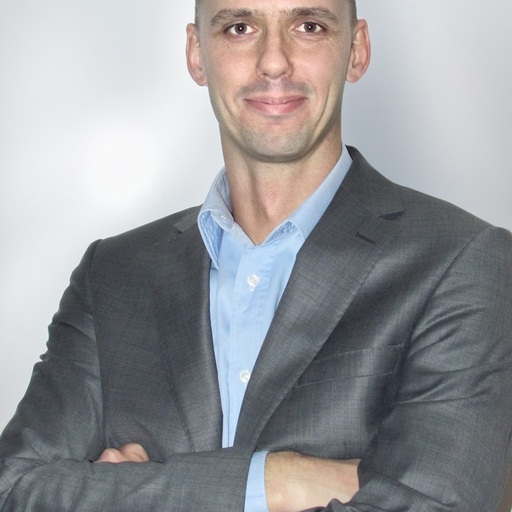
Michał Przewoźniczek is a Professor at Wrocław University of Science and Technology (PWr), actively contributing to the fields of evolutionary computation, optimization, and artificial intelligence. He is a key member of multiple research teams, including the Metaheuristics Team, Machine Learning Team, and Advanced Data Analysis Methods Team, reflecting his broad interdisciplinary impact. His research focuses on Evolutionary Computation , Multi- and Many-objective Optimization , Linkage Learning , Problem Decomposition , and Hybridization of metaheuristic methods, with applications in industrial process planning, network optimization, and real-world decision-making. He leads significant research projects such as greybox optimization (2023–2026) and multi-objective evolutionary methods with linkage learning (2021–2026), demonstrating sustained grant support and scientific leadership. The analysis of his recent publications reveals a consistent trend in advancing parameter-less evolutionary algorithms, empirical linkage learning, and scalable distributed implementations using containerization (e.g., Docker). His work bridges theoretical algorithm development with practical applications in optical networks, manufacturing, and distributed computing. His scientific honors include: Best Paper Nomination at the Genetic and Evolutionary Computation Conference (GECCO) Associate Editor, IEEE Transactions on Evolutionary Computation (since January 2023) Prof. Przewoźniczek supervises graduate students as a thesis advisor and collaborates extensively with researchers such as Piotr Dziurzanski, Marcin Komarnicki, Krzysztof Walkowiak, and Leandro Soares Indrusiak. He is actively involved in major conferences like GECCO, CEC, and CORES, and his work is indexed in Google Scholar, ResearchGate, and ORCID (0000-0003-2446-6473). He is affiliated with research groups focusing on Machine Learning, Computer Networks, Advanced Data Analysis, and Metaheuristics, indicating a strong collaborative and team-based research environment.
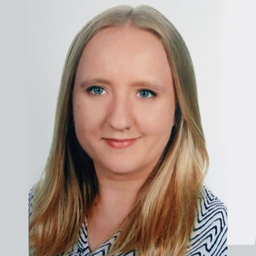
Mariusz Topolski is a Professor at the Department of Computer Systems and Networks, Faculty of Computer Science and Telecommunications, Wrocław University of Science and Technology. He received his habilitated doctor degree in Computer Science in 2024 and has been actively contributing to research and teaching in machine learning, data analysis, and optimization. He is a member of multiple research teams including the Machine Learning Team (ZUM), Advanced Data Analysis Methods Team, and Metaheuristics Team. Education: Habilitated Doctor in Computer Science, Wrocław University of Science and Technology, 2024 PhD in Technical Sciences (Computer Science), Wrocław University of Science and Technology, 2008 Master's and Engineering Degree in Technical Physics (Biomedical Engineering), Faculty of Fundamental Problems of Technology, Wrocław University of Science and Technology, 2003 His research interests include machine learning, pattern classification, feature extraction, explainable AI, multi-objective optimization, and data mining. His work applies advanced computational techniques to real-world problems in medicine, construction, pharmaceuticals, and logistics. He has developed novel methods in PCA modification, feature selection, and signal analysis, particularly for diagnostic applications in neurology and oncology. The recent publications reflect a strong trend in applying machine learning and optimization to medical diagnostics and industrial risk modeling. Key areas include PCA-based classification, multi-objective feature selection, and hybrid signal processing techniques. His interdisciplinary work bridges computer science with healthcare and civil engineering, demonstrating the versatility of AI in solving complex, multi-domain challenges. Scientific Awards: Degree of Habilitated Doctor in Computer Science (awarded February 28, 2024) Mariusz Topolski has led and participated in numerous national and international research projects, including collaborations with Jagiellonian University Collegium Medicum, Medical University of Warsaw, Gdańsk Medical University, and foreign institutions such as the National Mining University of Ukraine and Fundación ICIL in Spain. He supervises diploma theses and contributes to academic training through workshops and lectures. He is also engaged in industrial applications, developing optimization and machine learning methods for supply chain logistics. Research Teams: Machine Learning Team (ZUM) Advanced Data Analysis Methods Team Metaheuristics Team Computer Networks Team Teaching Team
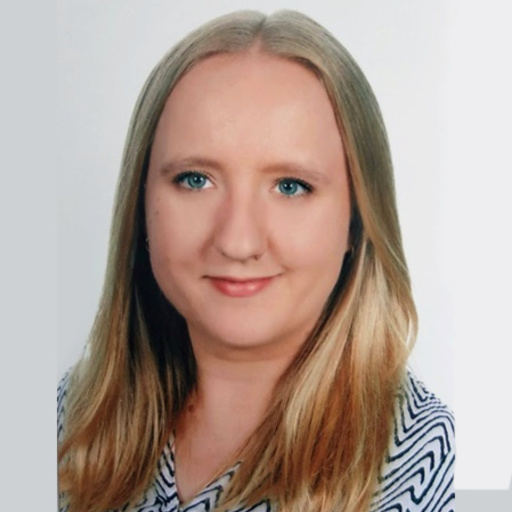
Dr. Eng. Joanna Klikowska is a researcher at the Department of Computer Systems and Networks, Faculty of Electronics, Photonics and Microsystems, Wrocław University of Science and Technology. She is actively involved in the Machine Learning Team and contributes to key research projects such as MOO, IDSTREAM, and Dark-Box Optimization. Her research focuses on machine learning, particularly in the areas of imbalanced data classification, ensemble learning, and multi-objective optimization. She applies evolutionary and optimization techniques to improve classifier performance in complex decision-making tasks. The recent publications highlight a strong trend in using multi-objective optimization for training classifiers and feature selection, especially in challenging data environments. Her work bridges theoretical optimization methods with practical applications in data classification and stream learning. Involved in projects: swarog, moo, idstream She supervises diploma theses and participates in teaching activities. She is also affiliated with scientific platforms including Google Scholar, ResearchGate, ORCID, and PBN.
Renata Słota is a Professor at the Institute of Computer Science within the Faculty of Computer Science at AGH University of Science and Technology in Kraków, where she serves as Vice-Dean of the Faculty of Development. Her office is located at D-17, ul. Kawiory 21, room II, 3.34, with contact details including phone +48 12 328 33 35 and email rena@agh.edu.pl. She also contributes to academic governance as a member of the Disciplinary Council for Technical Information Technology and Telecommunications. Her research centers on distributed data management and cloud computing , with pioneering work in digital cultural heritage systems , blockchain-based decentralized authority , and scientific workflow automation . Notable contributions include integrated frameworks for 3D Cultural Heritage objects management, consensus mechanisms for collaborative data sharing, and multi-cloud data access solutions. Her work bridges theoretical advances with practical applications in cultural preservation and scientific computing. Analysis of her 2020-2026 publications reveals dominant trends in decentralized data governance , cultural heritage digitization , and hybrid cloud workflow management . Key themes include blockchain applications for organizational structures, semantic interoperability for quality-oriented data access, and reproducibility frameworks for computational experiments. Her research consistently addresses real-world challenges in global data accessibility and fault tolerance. Professor Słota actively participates in major research initiatives including the Onedata project for global data federation and the Scalarm platform for distributed parameter studies, demonstrating leadership in data-intensive computing environments and collaborative infrastructure development.
Muhammad Usman serves as an Assistant lecturer at the Department of Biomedical Engineering within the Faculty of Electronics, Telecommunications and Informatics at Gdańsk University of Technology, based in Building A of the faculty. His academic role encompasses teaching and research activities in biomedical engineering with a strong emphasis on computational methods. His research spans multiple critical domains: Medical image segmentation for tumors (brain, breast) and polyps using attention-based neural networks Remote health monitoring via video-based photoplethysmography (rPPG) signal extraction Semantic wound analysis for ulcer detection and color space optimization Visual perception systems for autonomous driving with multitasking capabilities Analysis of his 2024-2025 publications reveals a consistent focus on architectural innovations in deep learning, particularly attention mechanisms, spatio-temporal feature fusion, and encoder-decoder frameworks. His work addresses real-world challenges including motion artifacts in physiological monitoring, limited medical datasets, and real-time inference requirements for safety-critical applications. The research demonstrates interdisciplinary integration of biomedical engineering, computer vision, and signal processing to solve complex problems in healthcare and autonomous systems. No information regarding scientific awards, student supervision, research grants, or laboratory affiliations appears in the source material.

Professor Robert Jankowski is a distinguished academic at Gdańsk University of Technology, serving as Professor, Head of the Department of Building Engineering, and Director of the Doctoral School at the Faculty of Civil and Environmental Engineering. With over 309 publications and numerous research projects, he is a leading expert in earthquake engineering and structural dynamics. His educational background includes a doctorate from the University of Tokyo, Japan (1997), where he was supported by a Japanese Government Scholarship (1994). He earned his habilitation degree in 2007 and was awarded the title of Professor in 2014. Professor Jankowski's research focuses on earthquake engineering , structural pounding , and dynamics of metal structures . His work addresses critical challenges in structural safety during seismic events, developing innovative control techniques for buildings and bridges. He has pioneered research in structural shape and stress control, base isolation systems, and the application of machine learning in predicting structural behavior. His extensive publication record demonstrates a strong trend toward integrating computational methods and artificial intelligence with traditional structural engineering. Recent work explores machine learning applications for predicting concrete properties, optimal control systems for seismic response mitigation, and the behavior of innovative composite structural elements. Nagroda indywidualna Rektora Politechniki Gdańskiej za osiągnięcia naukowe (multiple years) Nagroda Naukowa im. W. Nowacki za wybitne osiągnięcia naukowe (2015) Medal Komisji Edukacji Narodowej (2011) Brązowy Krzyż Zasługi (2006) Stypendium Rządu Japonii na studia doktoranckie (1994) As an academic advisor, he has successfully supervised eight PhD students to completion, with research focusing on structural dynamics and earthquake engineering. He has led significant research projects including "GASŁUPMIKROS" on microseismic monitoring technology for hydraulic fracturing processes. Professor Jankowski actively contributes to the academic community through his leadership roles in the Doctoral School and the Department of Building Engineering, where he shapes the next generation of civil engineers and researchers in structural dynamics and earthquake-resistant design.
Olha Matsyiمشاهده پروفایل
استادیار
Olha Matsyi serves as an Assistant Professor (post-doc) within the Division of Applications of Contemporary Mathematical Analysis at Lodz University of Technology, with contact details including email olha.matsyi@p.lodz.pl and phone (+48) 42 631-36-17. Her research focuses on Operations Research and Mathematical Optimization, specializing in combinatorial algorithms for location theory, knapsack problems, community detection, and VLSI routing. She employs metaheuristic and bio-inspired methods to solve NP-hard optimization challenges, bridging theoretical mathematics with engineering applications in healthcare logistics and crisis management. Publications from 2020-2025 demonstrate increasing emphasis on real-world implementations like mobile medical service optimization and decision support systems, alongside theoretical advances in continuous coverage and constrained classification. Collaborative work with researchers such as Oksana Pichugina highlights her interdisciplinary approach to algorithm design. No scientific awards were documented. Information regarding student mentorship, research grants, or specific laboratory teams was not provided in the source material.
Abdel Anwar Hossen is affiliated with the Faculty of Engineering at the University of Mauritius, where he contributes to research in sustainable energy systems and thermal engineering. His work bridges numerical modeling, renewable energy, and sustainable infrastructure design, particularly in tropical contexts. His research interests include sustainable energy, thermo-economics, renewable energy systems, green buildings, solar energy, energy policy, numerical modeling, condensing flows, climate-sensitive design, and bio-refinery engineering. His studies often focus on practical applications in island and tropical environments, such as Mauritius, with an emphasis on energy efficiency and environmental sustainability. The recent publications (2019–2022) demonstrate a strong trend in energy system modeling, building performance under tropical conditions, and advanced simulation techniques in thermal and solar energy systems. His work frequently appears in high-impact journals such as Renewable Energy , Energy , and Journal of Heat Transfer , reflecting interdisciplinary engagement across engineering and environmental sciences. Although no specific scientific awards are listed, his research has been sponsored by prominent institutions including the National Research Foundation, National Science Foundation, Ministry of Higher Education and Scientific Research, Deanship of Scientific Research at King Saud University, and the Ministry of Oceans and Fisheries, indicating recognition and funding support. He has authored or co-authored 31 publications between 2013 and 2023, with a growing citation impact and an emerging activity level. While no formal advisees are listed, his collaborative network includes multiple co-authors across institutions, suggesting participation in research teams. There is no mention of specific laboratories or research groups led by him, but his work implies involvement in energy and sustainability research initiatives at the University of Mauritius.
Prof. dr hab. inż. Andrzej Cichoń is a faculty member at the Opole University of Technology, serving as Dean of the Faculty of Electrical Engineering, Automatics and Computer Science and Head of the Department of Electrical Power Engineering and Renewable Energy. His research focuses on advanced diagnostic techniques for electrical systems, particularly using acoustic emission and machine learning methodologies. His work spans critical areas such as Acoustic Emission Signal Analysis Partial Discharge Detection Power Transformer Diagnostics Renewable Energy Integration Vibroacoustic Monitoring with recent projects addressing machine learning applications for fault classification and energy-efficient industrial systems. His publications from 2025 to 2019 demonstrate expertise in Transformer Condition Monitoring Signal Processing Algorithms Renewable Energy Storage Machine Learning Integration Industrial Diagnostic Systems Acoustic and Thermal Modeling reflecting a strong technical and applied research trajectory.
Professor Andrzej Biłozor is affiliated with the Institute of Spatial Management and Geography at the University of Warmia and Mazury. His academic focus spans socio-economic geography and spatial management, with expertise in GIS applications, urban-rural continuum analysis, and space optimization. His research integrates fuzzy set theory, spatial modeling, and multi-criteria decision-making frameworks. Key research areas include: Geospatial analysis for urban planning Land use conflict detection and optimization Urban sprawl and rural-urban transition zone identification Evaluation of quality of life through spatial metrics His publications emphasize GIS-driven methodologies, fuzzy logic applications, and CORINE database integration. Scientific awards and student advisement details are unavailable in the provided texts. He contributes to spatial engineering education and territorial development strategies.
Robert Pilch is a Professor at the Department of Machine Design and Operation within the Faculty of Mechanical Engineering and Robotics at AGH University of Science and Technology in Kraków. His research focuses on reliability engineering, preventive maintenance strategies, and safety integrity level (SIL) assessment of complex technical systems. Research Interests: Reliability assessment of technical systems Preventive maintenance optimization Adaptive maintenance strategies Network systems reliability Safety integrity level (SIL) modeling Simulation-based failure prediction Scientific Awards: No specific awards mentioned in provided materials. Contact: pilch@agh.edu.pl

Agata Filipowskaمشاهده پروفایل
استادیار
Agata Filipowska is an Assistant Professor at the Department of Information Systems, Institute of Informatics and Quantitative Economics, Poznań University of Economics and Business. Her work bridges computer science, semantic web technologies, and management studies, with a focus on data quality, profiling, and business process management. PhD in Computer Science (2010) and Economics (2009) Active in semantic technologies, machine learning, and art market analytics Key projects include FP7 LOD2 and USE-ME.GOV . Research Interests: Search systems, profiling, information extraction, business process management, and semantic web applications. Her interdisciplinary approach addresses challenges in data quality, user behavior, and art market analysis. Article Trends: Recent work emphasizes knowledge graph ensembles (2024), art market data enrichment, and mobility-based behavioral biometrics. Earlier studies focus on BPM, social telco applications, and Polish language NLP. Activities: She contributes to semantic interoperability, microgrid energy forecasting, and telecom data analysis. Her collaborations span 50 co-authors, including Anna Fensel, Dominik Filipiak, and Piotr Kałużny.
- search systems
- profiling
- information extraction
- +۹ مورد دیگر