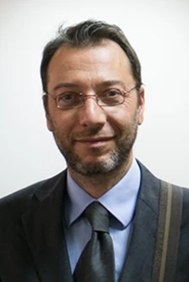
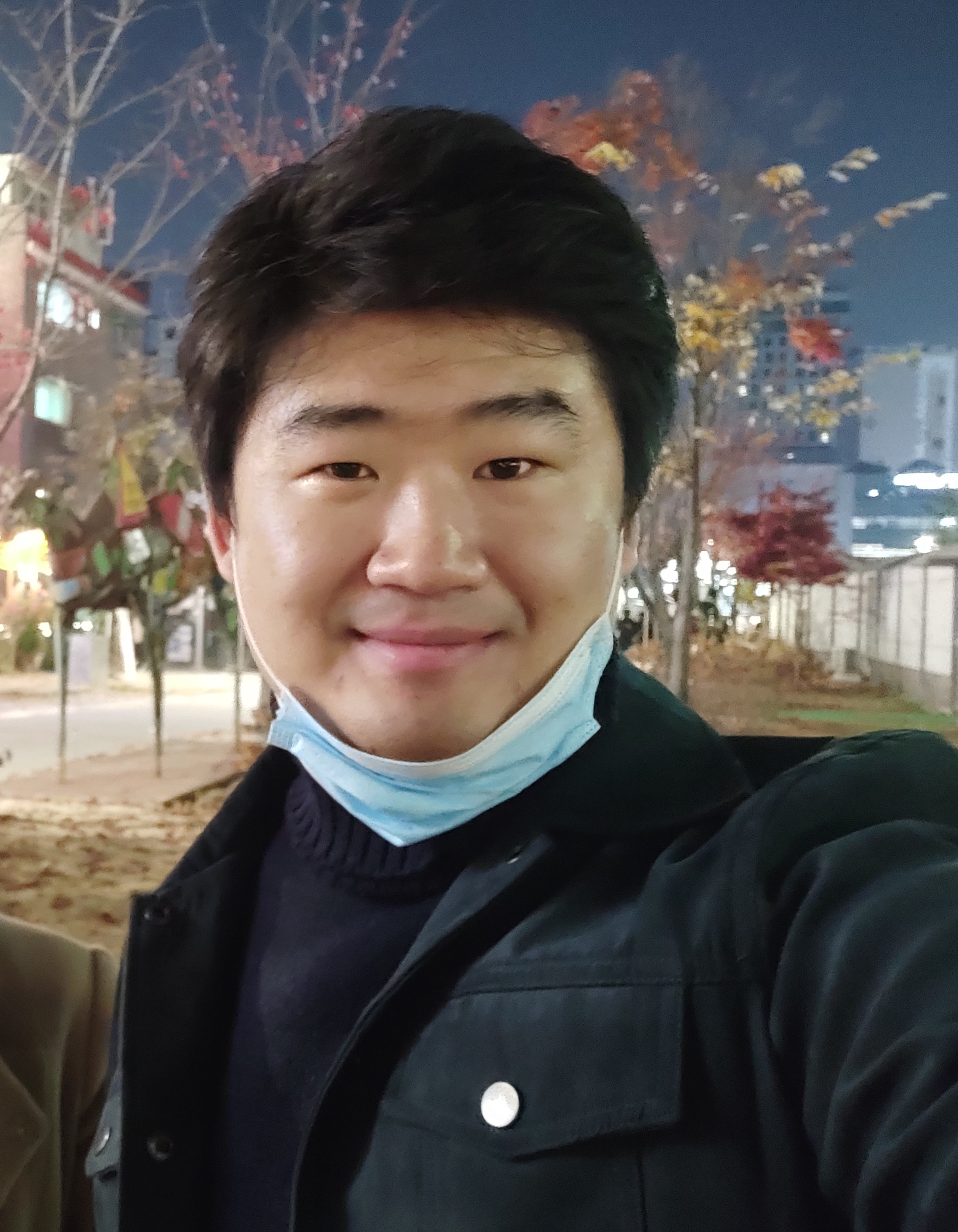
Priyabrata Saha is a Research Fellow at the Georgia Institute of Technology, affiliated with the College of Engineering and the Department of Electrical and Computer Engineering. Research interests include: Deep learning applications in ocean acoustics Control systems for autonomous vehicles Reduced-order modeling of partial differential equations Robust perception in autonomous systems Spatiotemporal dynamics prediction His work spans interdisciplinary domains, combining machine learning with physical modeling for applications in oceanography , robotics , and sensor systems . Key trends in his publications highlight: Integration of physics-based models with generative deep learning Real-time control algorithms for multi-agent systems Resource-efficient architectures for autonomous perception Hybrid methods in dynamical system modeling
Dimitrios D. Piromalis is an Associate Professor at the University of West Attica , specifically within the Department of Industrial Design and Production Engineering . He leads the Research Lab of Electronic Automation, Telematics and Cyber-Physical Systems (EATCPS) , focusing on electronic embedded systems for applications in autonomous vehicles, IoT, and cyber-physical systems. With over 120 publications and extensive industry collaboration spanning 25 years, his work bridges academic research and practical engineering solutions. Education : BSc, MSc, and PhD in Electrical and Electronics Engineering. Research Focus : Electronic embedded systems, autonomous vehicles, IoT, cyber-physical systems, digital twins, 3D/4D printing, energy management, and smart agriculture. Recent publications highlight trends in TinyML for smart cities, predictive maintenance integration, hybrid energy storage for EVs, and digital twin applications across agriculture and automotive sectors. His work also extends to emergency communication systems, biomedical sensors, and blockchain-enabled energy gateways. Industry Collaboration : Field Application Engineer and Technical Consultant for multinational semiconductor companies. Teaching : Platforms for AI and Python programming, autonomous vehicles and drones.
Se-In Jang is an Associate Research Scientist in the Department of Radiology & Biomedical Imaging at Yale University (since 2025). Previously, he served as a Research Associate at Yale (2024–2025), a Research Fellow at Massachusetts General Hospital/Harvard Medical School (2021–2023), and a Research Fellow at the National University of Singapore (2019–2021). He earned his Ph.D. (2019), M.S. (2012), and B.S. (2010) from Yonsei University and Youngdong University, respectively. Research Interests : Jang focuses on AI-driven medical imaging, including PET image denoising, tumor segmentation, generative models for medical data, and explainable AI. His work also spans neural-symbolic learning, self-supervised learning, and optimization techniques for medical applications. Education : Ph.D., Yonsei University (2019) M.S., Yonsei University (2012) B.S., Youngdong University (2010) Labs & Collaborations : He contributes to the Whisk Cup Streamline Lab , advancing AI and medical imaging research. His collaborations include Yale, Harvard, and institutions in Singapore.
Doris Aschenbrenner is a researcher specializing in human-robot interaction and augmented reality applications for industrial maintenance systems at Julius Maximilians University Würzburg. Her work bridges computer science, engineering, and human factors disciplines to develop practical solutions for Industry 4.0 environments. Her research focuses on Human-Robot Interaction , Augmented and Virtual Reality for industrial applications , Human-in-Command systems , and Industry 4.0 technologies . She has conducted extensive work on AR-assisted maintenance operations, digital twins for production environments, and human factors considerations in collaborative robotics systems. Her research demonstrates how immersive technologies can enhance manufacturing processes while maintaining appropriate human oversight and control. Her publication record shows significant contributions to conferences like ISMAR, VR, and Frontiers in Robotics and AI, with a consistent output from 2013 through 2024. Her recent work has focused on regulatory aspects of AI implementation in manufacturing, particularly regarding the EU AI Act, and developing platforms for digital remote maintenance services. Her research has practical implications for manufacturing industries seeking to implement advanced human-machine collaboration systems while addressing regulatory requirements and human factors considerations.
Andrew Skidmore is a Professor of Spatial Ecology at Macquarie University and holds an Honorary Professorship at the University of Twente. He specializes in hyperspectral and LiDAR remote sensing technologies for vegetation monitoring, biodiversity conservation, and climate change impact analysis. His research focuses on developing innovative image processing techniques and essential biodiversity variables (EBVs) for sustainable natural resource management. Previously, Skidmore worked for the Forestry Corporation of New South Wales and served as Head of the Department of Natural Resources at the University of New South Wales from 1997. He has directed the Centre for Remote Sensing and GIS and currently leads projects on coastal blue carbon ecosystems, forest community monitoring, and climate adaptation strategies in Australia and Europe. His research interests include canopy structure analysis, ecosystem resilience, and the integration of environmental DNA (eDNA) with satellite remote sensing. Skidmore has contributed to over 450 publications and collaborates internationally on biodiversity observation systems. He has received grants for projects such as 'Monitoring Blue Carbon Ecosystems' and 'Can coastal floodplains survive ferals and rising seas?' Key awards and recognitions are not explicitly listed, but his extensive editorial work includes roles at the International Journal of Applied Earth Observation and Geoinformation . His advisory efforts focus on leveraging remote sensing for ecological conservation and policy alignment with essential biodiversity variables.
Roberto Sabatini is an Honorary Professor at RMIT University's School of Engineering and a Professor of Aeronautics and Astronautics at Khalifa University (UAE). He holds adjunct roles at multiple institutions, including RMIT's Sir Lawrence Wackett Defence and Aerospace Centre and Chosun University in South Korea. With three decades of experience, his research focuses on aerospace systems, autonomous systems, and AI-driven solutions for aviation and space sectors. His expertise spans avionics, space domain awareness, trusted autonomy, and sustainable aviation. He leads projects funded by governments and industry partners such as Thales and NASA. Notable contributions include innovations in UAS traffic management, GNSS systems, and space debris tracking. Prof. Sabatini has authored over 300 publications and is listed in Stanford's top 2% of cited scientists (2019–present). Awards include the 2021 Distinguished Leadership Award and Scientist of the Year (2019). He chairs Khalifa University's Aerospace Research Strategy Committee and serves on IEEE's Board of Governors. Key Collaborations : ICAO, NASA, UAE Space Agency, and Korea Aerospace Research Institute. Leadership Roles : IEEE AESS Avionics Systems Panel Chair (2021–2024), Vice President of Technical Operations (2024). Research interests emphasize cyber-physical systems, space traffic management, and AI applications. His work bridges academia and industry, addressing challenges in advanced air mobility and sustainable aerospace development.
Dr. Gary KL Tam is a Senior Lecturer in the Department of Computer Science at Swansea University's School of Mathematics and Computer Science. He has been with Swansea University since 2012, initially as a Lecturer (2012-2018) and promoted to Senior Lecturer in 2018. He is based at The Computational Foundry on Bay Campus and is actively involved in research through the Visual Computing Group and RIVIC. Dr. Tam's research spans several key areas in computer science, with a strong focus on visual analytics, machine learning, and digital geometry processing. His work demonstrates expertise in analyzing multidimensional data, information retrieval, and pattern recognition. He has developed substantial research in 3D reconstruction techniques, point cloud processing, and their applications in medical imaging and urban modeling. His publication record shows a clear evolution from foundational work in 3D shape matching and non-rigid registration to current applications in medical diagnostics (particularly Chronic Kidney Disease classification), Welsh language processing (CymruFluency project), and industrial applications. Recent publications demonstrate strong interdisciplinary work bridging computer vision, machine learning, and healthcare applications. Best VAST Paper Award at VIS 2016 Conference for 'Analysis of Machine- and Human-Analytics in Classification' Excellence in Learning and Teaching Award (ELTA) from Swansea University (2018) Dr. Tam actively supervises numerous PhD students across diverse research topics including explainable AI for economic growth, 3D city reconstruction, medical diagnostics, and human-in-the-loop systems. He has secured multiple research grants totaling over £50,000 from sources including CHERISH-DE, EPSRC, and Swansea University funds, supporting projects in medical AI, Welsh language processing, and computational infrastructure. His research group maintains strong collaborations with Cardiff University, National University of Singapore, and various medical research institutions, focusing on applying advanced computational techniques to real-world problems in healthcare, language processing, and industrial applications.
Dr. Andrew Bradley is a Reader in the School of Engineering, Computing and Mathematics at Oxford Brookes University, leading the Autonomous Driving and Intelligent Transport group. He sits on the steering committee of the AI and Data Analytics Network (AIDAN) and is a member of the Artificial Intelligence, Data Analysis and Systems (AIDAS) institute. His research focuses on autonomous vehicles, intelligent transport systems, and AI-driven solutions for adverse conditions. Key projects include the CLAIMOR initiative (2025-2025) with £54k funding and the £966k Epistemic AI project (2021-2025). Research interests span autonomous driving datasets (e.g., ROAD), adversarial weather perception, trajectory prediction, and cybersecurity for connected vehicles. He collaborates with industry partners like Oxfordshire County Council. Notable outputs include the ROAD: The ROad event Awareness Dataset (2023) and work on real-time simulation tools for vehicle control. Bradley’s work emphasizes bridging AI theory and real-world applications, with a focus on safety-critical systems. Current projects aim to enhance autonomous systems’ robustness through scenario-based testing and self-supervised learning techniques.
Neelu Madan is a Postdoctoral Researcher at the Department of Architecture, Design and Media Technology, Section for Media Technology, within The Technical Faculty of IT and Design at Aalborg University, Denmark. Her research focuses on computer vision and machine learning with applications in video surveillance and anomaly detection. Dr. Madan completed her PhD in Computer Science at Aalborg University in 2023. Her doctoral thesis, "Towards Limited Label Learning for Visual Surveillance", established her expertise in limited-label learning paradigms for surveillance systems. Her research spans anomaly detection , deep learning , and computer vision , with significant contributions in self-supervised learning for video analysis. She specializes in transformer architectures, masked autoencoders, and synthetic data generation, addressing challenges in multi-object tracking and event detection under limited supervision. Recent publications (2023-2024) reveal a strong trend toward foundation models for video understanding and self-supervised anomaly detection. Her work bridges theoretical advances in representation learning with practical applications in thermal imaging, fashion technology, and harbor safety systems. Scientific recognition includes: Spar Nord Fondens Forskningspris (2024) Dr. Madan is actively involved in externally funded research as Co-Investigator on three major projects: AICF: AI Color Fashion (2023-2026), Generic Object Tracking (2020), and Self-Supervised Learning For Video Anomaly Detection (2020-2023). While no formal advisees are documented, her postdoctoral role likely involves mentoring junior researchers. She operates within Aalborg University's Visual Analysis and Perception research group, maintaining strong industry collaborations with Milestone Systems on video surveillance applications and harbor safety technology.
Florian Echtler is an Associate Professor at Aalborg University's Department of Computer Science within The Technical Faculty of IT and Design. He holds a PhD in Computer Science from the Technical University of Munich (2009). His research focuses on ubiquitous computing, peer-to-peer networking, and security/privacy, aiming to reduce dependency on centralized infrastructure in mobile and cloud ecosystems. He has held roles including Junior Professor at Bauhaus-Universität Weimar (2014–2020) and Visiting Professor at University of Regensburg (2012–2014). Current affiliations: Human-Centered Computing Centre and Centre for Sustainable and Digital Transformation. Editorial roles: Journal of Visualization and Interaction, i-com. Research interests include interactive surfaces, mixed reality, mobile devices, and IoT. Notable projects: DeUCoE : Decentralized Ubiquitous Computing in Everyday Environments (DFG-funded, 2021–2024). VIGITIA : Smart interactive table environments (BMBF-funded, 2019–2022). Awards include DIS 2024 Honourable Mention, TEI 2022 Best Paper Award, and CHI 2020 Best Paper Award (top 1%). Active in media engagement, e.g., discussing mobile collision warnings (2022).
Denis Cioffi is a Research Professor of Physics at North Carolina State University. His work spans two primary domains: project management theory and astrophysical research. In project management, he specializes in developing analytical frameworks for scheduling, cost estimation, and risk mitigation, notably pioneering advancements in S-curve modeling and earned value analysis. His astrophysics research focuses on supernova remnants, X-ray emission dynamics, and interstellar medium interactions. Key contributions include formalizing project risk contingency budgeting methods and exploring the evolution of extragalactic radio source structures. His project management methodologies have influenced both academic and industrial practices, emphasizing probabilistic approaches to uncertainty management. While no formal student advising roles are documented, his work demonstrates significant collaborative engagement in both fields. Research interests bridge engineering systems optimization and cosmic phenomena analysis, reflecting a unique interdisciplinary approach. His publications since 1980 showcase sustained contributions to both disciplines, with recent emphasis on project management formalisms and historical astrophysical investigations.
Dr. Ge Gao is a researcher at the Department of Informatics, University of Hamburg, affiliated with the CV Research Group. His research focuses on 6D object pose estimation, cognitive robotic vision, and deep learning applications in robotics. He holds a PhD in Informatics from the University of Hamburg, completed in 2021. Education: PhD in Informatics (2021), University of Hamburg. Previously conducted research on occlusion-resistant object pose estimation and saliency-guided segmentation techniques. Research emphasizes robotics perception, point cloud analysis, and multimodal sensor fusion. His work spans applications from robotic grasp planning to gait analysis using dynamic vision sensors. Key contributions include CloudAAE framework for 6D pose regression and saliency-driven supervoxel segmentation. Publications (2015–2021) address challenges in 3D object localization, multimodal data processing, and robotic vision systems. Active in conferences like ICRA, ECCV, and IROS. Labs/Projects: Involved in InteGreatDrones (drone-based robotics), Crossmodal Learning (CML), ahoi digital (crossmodal sensor data collection), and MACS (machine learning applications).
Dr. Mohammad Mahfujur Rahman is a Research Fellow in the Signal Processing, Artificial Intelligence and Vision Technologies (SAIVT) group at Queensland University of Technology (QUT). He holds a PhD in computer vision and deep learning from QUT, focusing on addressing dataset bias in deep neural networks. His research interests include domain adaptation, domain generalization, transfer learning, and computer vision applications in biometrics and medical imaging. Education: PhD in Computer Vision and Deep Learning, Queensland University of Technology (QUT), Australia Research Focus: Dr. Rahman’s work centers on improving deep learning models’ performance across different domains. He has pioneered approaches to mitigate dataset bias through correlation-aware adversarial methods and multi-component image translation. His research has applications in object detection, image segmentation, and cross-domain generalization. Awards & Memberships: IEEE Young Professionals member Grants & Labs: His contributions are part of the SAIVT research group at QUT’s School of Electrical Engineering and Robotics. No explicit grants are mentioned, but his work aligns with broader university initiatives in AI and robotics.
Jesus Martinez del Rincon is a Professor in the School of Electronics, Electrical Engineering and Computer Science at Queen’s University of Belfast. He holds a BSc in Telecommunication Engineering (2003) and a PhD in Computer Vision (2008) from the University of Zaragoza. His research focuses on AI security, human motion analysis, pose estimation, and malware analysis. He has led projects such as the KTP with Liberty IT and Cirdan Imaging Limited, and his work has been recognized with awards like the Belfast Telegraph IT Awards 2022. Education: BSc Telecommunication Engineering, University of Zaragoza (2003) PhD Computer Vision, University of Zaragoza (2008) Research Interests: Security of AI, AI for Security, Human motion analysis, Pose estimation, Activity recognition, Tracking algorithms, Multi-target tracking in real time, Malware Analysis. Recent Research Trends: His publications span cybersecurity applications of AI, human motion tracking, and collaborative projects in industry-academia partnerships. Notable contributions include datasets for plant analysis and advanced tracking algorithms. Awards: Belfast Telegraph IT Awards 2022 - Cybersecurity Project of the Year Best Knowledge Transfer Partnership Award (2022) Best paper award (ACM AiSec 2022) Advising & Grants: Supervised 13 PhD students, including Jane Doe, Ahmad Ali, and Ioannis Papadopoulos. Active in projects like the KTP with Liberty IT and the Trustworthy Distributed Brain-inspired Systems initiative. Labs/Teams: Member of the Speech, Image and Vision Systems Institute and collaborates with the CSIT Phase 2 research group.
Dr Yi Lu is a Senior Lecturer at the Queensland University of Technology (QUT), Faculty of Science, School of Computer Science. He serves as Deputy Academic Lead (HDR) for the School of Computer Science, contributing to higher degree research leadership. His academic journey includes a PhD in Computer Science from the University of New South Wales (2008) and prior roles as a Lecturer at UNSW (2007–2013) and Principal Researcher at Oracle Labs (2013–2019). PhD in Computer Science, University of New South Wales, 2008 Bachelor of Information Technology (Honours), Queensland University of Technology, 2002 Dr Lu's research lies at the intersection of programming languages and information security, with a focus on theoretical and practical aspects of software security. His work includes type systems for object synchronization, ownership types, information flow control, and the application of deep learning to vulnerability detection. He has made significant contributions to static analysis, points-to analysis, and secure multithreaded programming. His recent publications span topics such as threat hunting in industrial control systems, nontransitive security types, and multi-class vulnerability prediction using graph neural networks. These works reflect a strong trend toward combining formal methods with machine learning to enhance software security, particularly in complex and critical systems. Dr Lu has been involved in significant research initiatives, including the Cyber Security Cooperative Research Centre and the ARC Linkage Project on Java language-based security conformance. His industry experience at Oracle Labs led to patented solutions for real-world cybersecurity problems, demonstrating the practical impact of his research. He supervises research projects on fine-grained vulnerability detection, reproducible deep learning workflows, and open-source supply chain analysis. His teaching includes courses such as Principles of Software Security and Object-Oriented Design, aligning closely with his research expertise. Dr Lu is affiliated with the School of Computer Science at QUT, a research-active unit within the Faculty of Science, contributing to cybersecurity education and innovation in Australia.