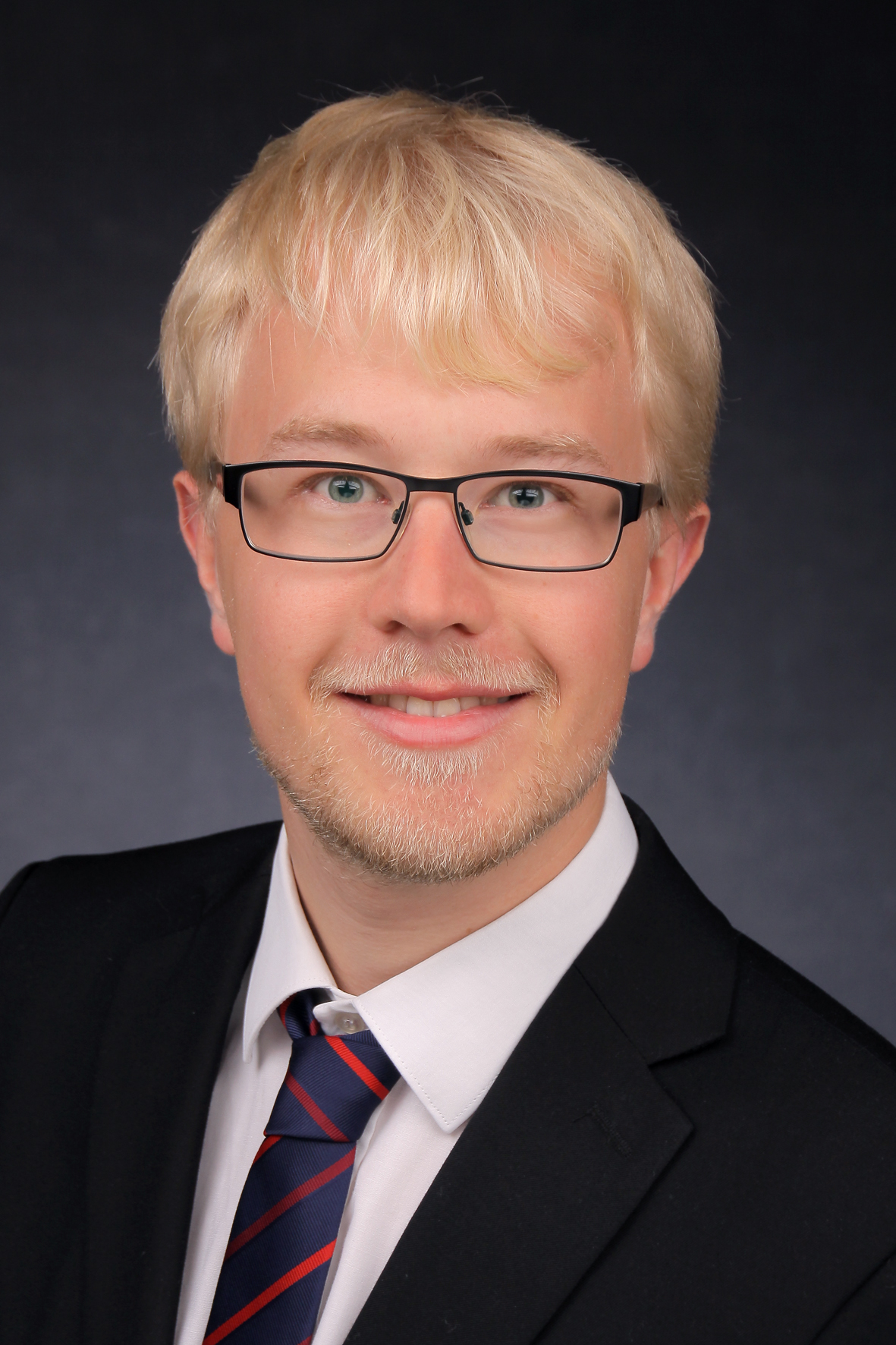
Dr. Simon Bultmann is currently a Postdoctoral Researcher at the Robot Learning Lab, Albert-Ludwigs-Universität Freiburg. Previously, he completed his Ph.D. in the Autonomous Intelligent Systems Group at the University of Bonn (2019–2024) and earned his M.Sc. and B.Sc. in Electrical Engineering and Information Technology from Karlsruhe Institute of Technology (KIT, 2012–2018). His research focuses on collaborative perception, sensor fusion, and machine learning for embedded systems ("Smart Edge Sensors"). Key applications include real-time multi-modal semantic fusion, 3D scene perception, and autonomous UAVs. Awards: Best Paper Award at IEEE SSRR 2020 Finalist for Best Paper Award at RoboCup 2021 His work spans robotics, computer vision, and distributed systems, with contributions to international conferences like ICRA, RSS, and IAS. He has also been involved in competitions such as MBZIRC, demonstrating autonomous UAV capabilities in disaster response scenarios.
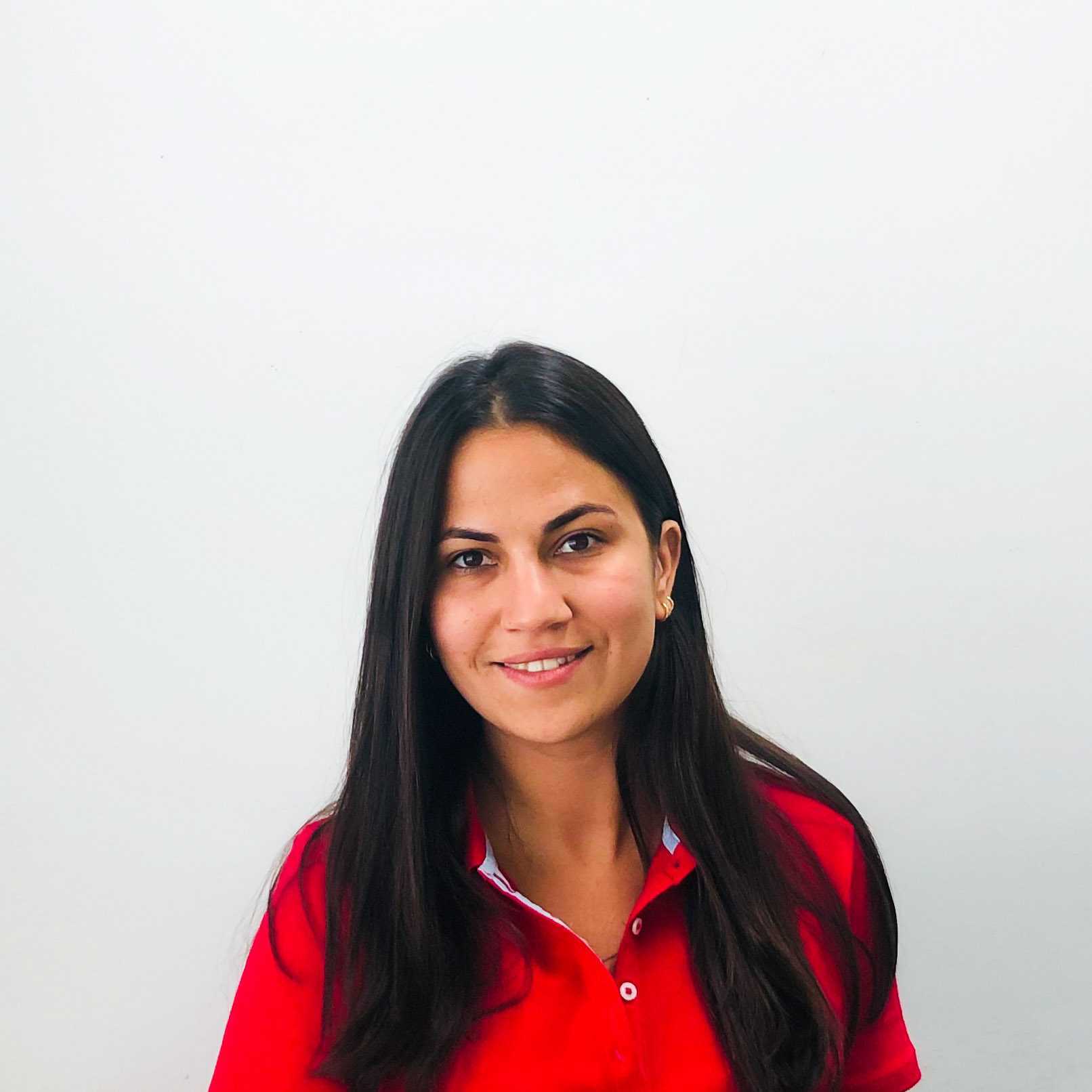
Dr Catherine Fitzgerald is a Postdoctoral Fellow at the Faculty of Nursing and Midwifery, Royal College of Surgeons in Ireland (RCSI). Her research focuses on continuing professional development (CPD), health professions education, and health services research, with a strong emphasis on nursing, midwifery, and cystic fibrosis outcomes. She collaborates with national and European academic and industry partners and is leading the implementation of the European Centre of Excellence for Research in CPD and scoping a WHO Collaborating Centre at RCSI. Education: PhD in Public Health and Epidemiology, University College Dublin, Ireland (2017) Master of Public Health (MPH), University of Alabama at Birmingham, USA (2012) Bachelor of Science in Occupational Health Nursing, Leeds Beckett University, UK (2007) Midwifery Studies, University College Dublin, Ireland General Nursing, Our Lady of Lourdes Hospital, Drogheda, Ireland (1999) Her research interests center on Health Professions Education , particularly continuing professional development for healthcare workers, interprofessional learning, and educational modalities in long-term care. She also investigates Health Services Research , including workforce staffing, policy, and outcomes, with a clinical focus on Cystic Fibrosis , especially newborn screening, caregiver burden, and economic impact. Her work aligns with the UN Sustainable Development Goal 3: Good Health and Well-being. The 15 most recent publications reflect a consistent trajectory in evaluating CPD effectiveness, teaching methods, and economic aspects in healthcare education, alongside longitudinal studies on cystic fibrosis outcomes and newborn screening awareness. Her work combines mixed-methods, systematic reviews, economic evaluations, and cohort studies, often involving multi-center and international collaborations. Scientific Awards: No awards listed in the provided text. Dr Fitzgerald has secured multiple competitive research grants, including EU-funded ECHOES, AMEE-funded CPD Train-the-Trainer, and Skillnet projects, supporting her work in CPD and health professions education. She has supervised or collaborated with numerous researchers and co-authored studies involving teams across Ireland and Europe. While no formal students are listed, her mentoring role is evident in collaborative publications and academic leadership. She is actively involved in building research infrastructure, including the European Centre of Excellence for CPD and a potential WHO Collaborating Centre, indicating leadership in shaping future research and policy in health professions education.
Chengpei Xu is a Research Fellow at the Mine Internet of Things and Indoor Positioning (MIoT & IPIN) Lab, MERE, University of New South Wales, Sydney. His academic journey includes a Bachelor's in System Engineering from NUDT (China), a Master's in Information Technology from UNSW, and a Ph.D. in Computing Sciences and Engineering from University of Technology Sydney (2022). Research Interests : Designing deep learning algorithms for multi-modal scene/document understanding and analysis Developing generative AI for healthcare, eLearning, and human-computer interaction Multi-modal sensor fusion to analyze complex, degraded environments Detection and recognition of arbitrarily shaped scene text Grants & Supervision : CI for Australia’s Economic Accelerator (AEA) grant (2024-2025): $160,000 for "Rock bolt identification based on LiDAR point cloud" Supervising MPhil student Birgul Topal (Middle East Technical University) on "Partially Overlapping Point Cloud Registration Accuracy in Mine Tunnels" Labs & Affiliations : Mine Internet of Things and Indoor Positioning (MIoT & IPIN) Lab Minerals and Energy Resources Engineering (MERE), University of New South Wales
Mustafa Sert , currently serving as Associate Professor at Başkent University's Department of Computer Engineering and as Vice Dean of the Faculty of Engineering, has made significant contributions to audio signal processing, machine learning, and semantic multimedia. He earned his PhD (2006), MSc (2001), and BSc (1997) in Computer Engineering from Gazi University, supervised by prominent academics. PhD: Gazi University (2006) MSc: Gazi University (2001) BSc: Gazi University (1997) His research focuses on audio-visual content analysis , multimodal information fusion , and machine learning applications in semantic multimedia systems. He leads projects at the intersection of deep learning , speech processing , and acoustic pattern recognition , with work appearing in venues like IEEE Access, ACM Multimedia conferences, and Signal Processing and Communications Applications Conference (SIU). Recent publications demonstrate trends in automated audio captioning , medical speech analysis , and educational data mining , with applications spanning mental health detection, chatbot development, and reviewer selection systems. His work integrates transformer architectures , convolutional networks , and fuzzy decision-making models . Scientific Recognitions: Best Paper Award (7th Eurasian Congress on Emergency Medicine 2021) Outstanding Reviewer Awards (IEEE ICME 2020, 2021) Outstanding Area Chair Award (ACM Multimedia 2024) Academic Leadership includes roles as Senior IEEE Member, technical committee board positions in IEEE CTSoc divisions, and ACM membership. He supervises over 20 graduate students in topics ranging from depression detection through speech to geothermal permeability estimation , while maintaining active involvement in conference organization and journal reviewing for top-tier publications.
Jan Alexandersson is a Researcher at the German Research Center for Artificial Intelligence (DFKI) in Saarbrücken, Germany, where he leads work in the Cognitive Assistance Systems group. His research bridges artificial intelligence and healthcare, focusing on developing multimodal systems for therapeutic applications and medical diagnostics. His core research interests include Affective Computing , Natural Language Processing , and Human-Computer Interaction , with specialization in emotion recognition, motivational interviewing analysis, and engagement estimation. Current projects explore AI applications for mental health support, pediatric therapy, and medical diagnostics through interdisciplinary collaborations. Recent publications reveal a strong trend toward multimodal AI architectures integrating linguistic, visual, and behavioral data. His 2024 work demonstrates increasing adoption of large language models for clinical applications, particularly in emotion regulation strategy identification and therapeutic dialogue analysis across diverse healthcare contexts. Dr. Alexandersson actively contributes to major initiatives including MULTI-IMMERSE (virtual reality therapy for hospitalized children), GAIN (Georgian AI networking), AI@Home (elderly care risk prediction), Kitatta (corneal transplant quality assessment), and MePheSTO (digital phenotyping for psychiatric disorders). These projects collectively focus on translating AI research into practical healthcare solutions through sensor integration, behavioral modeling, and clinical validation.
Dr. Shuting Han leads a Junior Research Group at the University of Zurich under the Helmchen Lab, funded by the SNSF Ambizione Fellowship since 2024. She holds a Research Fellow position focusing on cortical dynamics underlying sensory processing and memory. Her research examines how distributed cortical areas interact during sensory processing and memory formation, utilizing multi-area two-photon calcium imaging, virtual reality behavior paradigms, electrophysiology, and advanced data analysis techniques. Key projects include investigating sensory representation in cortical areas, predictive processing in neural circuits, cortico-cortical interactions, memory consolidation across the neocortex, and developing high-throughput imaging methodologies. Her recent publications demonstrate expertise in cross-modal predictions, cortical microstates during consciousness alterations, and neural ensemble dynamics. She directs research on top-down predictive signals in neocortex and develops tools for volumetric neural imaging. SNSF Ambizione Fellowship Dr. Han mentors PhD students Maï Ly Leclair and Saidong Ma in the Helmchen Lab. Her group develops custom multi-area two-photon microscopes and applies machine learning for neural data analysis, bridging experimental neuroscience with computational approaches to decode cortical information processing.
Harry Lahrmann is an Associate Professor and Research Group Leader at the Department of Construction, Urban and Environmental Engineering within Aalborg University's Faculty of Engineering and Science. He specializes in traffic safety research with a focus on cyclist-pedestrian interactions, vehicle inspection systems, and urban mobility solutions. Key Research Areas: Bicycle traffic, road safety analysis, traffic engineering, and data-driven transportation policy Recent Work Trends: Utilizes ambulance data and self-reporting mechanisms to identify hazardous road locations; investigates impact of vehicle inspection programs and cycling safety technologies Awards: 1994 - First prize in bicycle safety at intersections Advising & Grants: Supervises PhD students and secures funding from institutions like TrygFonden for projects such as "Better Data on Traffic Accidents." Labs & Teams: Leads the Traffic Research Group, collaborating with experts in infrastructure, hydraulic engineering, and environmental technology.
Martin Theobald is a Professor in the Department of Computer Science at the University of Luxembourg's Faculty of Science, Technology and Communications. Previously affiliated with University of Ulm, Germany, his research spans database systems, information retrieval, and knowledge extraction with over 120 publications since 2002. His work bridges theoretical database foundations with practical applications in large-scale data processing. His research focuses on: Probabilistic and uncertain database systems Stream processing frameworks (notably the AIR architecture) Knowledge extraction from heterogeneous data sources Integration of machine learning with database systems Efficient query processing for structured and semi-structured data Recent publications demonstrate an evolving research trajectory toward real-time data stream processing with machine learning integration. His work on the AIR (Asynchronous Iterative Routing) framework and its extensions (TensAIR, OPTWIN) addresses critical challenges in concept drift detection, neural network training on streaming data, and efficient resource utilization. These contributions sit at the intersection of database systems, distributed computing, and machine learning, with applications in knowledge graph construction and question answering systems. Martin Theobald has mentored numerous researchers including Mauro Dalle Lucca Tosi, Alessandro Temperoni, and Vinu E. Venugopal, who have become active contributors to the database community. His collaborative network spans institutions across Europe, with frequent partnerships with researchers from University of Ulm, Max Planck Institute, and other European universities. His laboratory work focuses on developing scalable systems for processing evolving data streams, with particular emphasis on creating lightweight architectures that maintain high performance while minimizing resource consumption. Current projects involve integrating knowledge graphs with real-time analytics and developing adaptive systems that can handle concept drift in streaming environments.
Pan Pan is a Professor in the Department of Biomedical Engineering at Huazhong University of Science and Technology, with extensive research contributions spanning medical image analysis, computer vision, and underwater wireless communications. Their work demonstrates strong interdisciplinary collaboration between biomedical engineering and computer science, with significant industry partnerships including Alibaba. Research interests focus on medical image analysis (particularly automatic breast ultrasound systems), deep learning applications in healthcare diagnostics, and secure underwater communications . Their work bridges theoretical advances with practical clinical applications, developing innovative segmentation algorithms, tumor detection systems, and secure communication protocols for specialized environments. Analysis of recent publications reveals a strong trend toward integrating multi-modal data fusion techniques with uncertainty-aware deep learning models for medical diagnostics. The research spans both fundamental algorithm development (novel segmentation networks, feature matching optimization) and domain-specific applications (ABUS tumor detection, ICU mortality prediction, underwater sensor networks). Pan Pan maintains active collaborations with major Chinese technology companies and academic institutions, evidenced by the consistent publication record in top-tier conferences including CVPR, ICCV, and NeurIPS. While specific awards aren't documented in the provided materials, the research impact is demonstrated through numerous high-impact publications across computer vision and biomedical engineering venues. The research program shows particular strength in translating computer vision techniques to medical applications, with significant contributions to semi-supervised learning approaches for medical image segmentation where labeled data is scarce. Recent work also demonstrates growing interest in secure communications for specialized environments like underwater sensor networks.
Julien Ah-Pine is a lecturer at Laboratoire d'Informatique, de Modélisation et d'Optimisation des Systèmes (LIMOS) under Université Clermont Auvergne , with affiliations at Institut national polytechnique Clermont Auvergne and École des Mines de Saint-Étienne . He also holds a Researcher position at CNRS. Research Interests His work spans machine learning , information fusion , aggregation functions , and multi-criteria decision support , with a focus on complex data types like graphs , functional data , and multi-view datasets . Recent publications emphasize anomaly detection in spectral data streams , online learning , and interpretable AI for industrial applications. Selected Publications 2025 work on OnlineBootKNN introduces a novel framework for real-time spectral anomaly detection, while 2024 research explores multiple kernel methods in functional data classification. Earlier studies cover graph-based clustering , relational data mining , and linguistic network models for NLP tasks. Laboratory & Collaborations Works within LIMOS laboratory at Université Clermont Auvergne, collaborating with institutions like Mines Saint-Étienne and CNRS. Key partnerships include Nicolas Rojas Varela and Engelbert Mephu Nguifo on data stream analysis projects.
Maria Brbic is an Assistant Professor of Computer Science at EPFL, previously a postdoctoral researcher at Stanford University under Jure Leskovec. Her research focuses on developing machine learning methods for biological and biomedical applications, particularly representation learning of high-dimensional datasets, open-world semi-supervised learning, and single-cell genomics. Her work includes the STELLAR method for spatial cell type discovery (Nature Methods 2022), the ORCA framework for open-world learning (ICLR 2022), and contributions to the Fly Cell Atlas (Science 2022). She is involved in the Chan Zuckerberg Biohub and Neuro-omics projects. She received the University of Zagreb's best thesis award, was recognized as a MIT Rising Star in EECS, and won the Basel Computational Biology Conference best poster award. Her research bridges computer science with cutting-edge biomedical discovery.
Prof. Dr.-Ing. Joachim Denzler is a Professor leading the Chair for Digital Image Processing (Lehrstuhl für Digitale Bildverarbeitung) at Friedrich-Schiller-Universität Jena. His research spans computer vision, machine learning, medical imaging, and remote sensing applications across diverse domains including biomedical analysis, environmental monitoring, and facial recognition systems. His research interests focus on explainable AI, causal discovery, physics-informed neural networks, and bias mitigation in deep learning models. He has made significant contributions to fine-grained classification, concept activation vectors, and privacy-preserving techniques in facial recognition. His work often bridges theoretical computer vision with practical applications in medical diagnostics, environmental science, and infrastructure monitoring. His recent publications demonstrate a strong trend toward causal discovery methods, physics-informed neural networks, and addressing bias in machine learning systems. His work spans both theoretical advancements in model interpretability and practical applications in medical imaging, environmental monitoring, and infrastructure safety. The interdisciplinary nature of his research is evident from collaborations with ecologists, neuroscientists, and civil engineers. Best Paper Award at International Conference on Pattern Recognition (ICPR) 2024 Prof. Denzler actively mentors numerous PhD students and postdoctoral researchers, with frequent co-authors including Maha Shadaydeh, Niklas Penzel, Gideon Stein, and Tim Büchner appearing as first authors on significant publications. His laboratory has secured research funding across multiple domains including medical imaging, environmental monitoring, and AI safety. His work on CausalRivers represents a major contribution to benchmarking causal discovery methods with real-world time series data. The Chair for Digital Image Processing maintains strong industry and clinical partnerships, particularly in medical imaging applications for facial palsy analysis and neonatal care. Prof. Denzler's team has developed novel techniques for dam deformation monitoring using remote sensing data and created advanced methods for analyzing plant diversity effects on ecosystem functioning.
Markus Enzweiler serves as Professor of Computer Science and Autonomous Systems at Esslingen University of Applied Sciences within the Department of Computer Science and Engineering. He concurrently holds the leadership position of Director at the Institute for Intelligent Systems, where he oversees research initiatives focused on intelligent systems development for real-world autonomous applications. His research program centers on computer vision for autonomous systems , with specialized expertise in visual-inertial SLAM, collective perception, and neural rendering techniques. Key investigation areas include environmental robustness across agricultural and urban settings, real-time processing constraints for embedded systems, sensor fusion methodologies (particularly camera-radar integration), and the application of generative models for perception enhancement. His work consistently addresses practical implementation challenges such as computational efficiency and sensor calibration in unstructured environments. Analysis of his 2023-2025 publications reveals three dominant research trajectories: (1) Advancement of lightweight perception systems through stixel-based representations and neural rendering; (2) Development of infrastructure-supported collective perception frameworks with datasets like CoopScenes and OPNV; and (3) Rigorous benchmarking of SLAM components in domain-specific contexts including agricultural robotics and multi-season navigation. His recent systematic review on LLM-based vulnerability detection also demonstrates expanding interest in software security for autonomous systems. As Director of the Institute for Intelligent Systems, Prof. Enzweiler leads a research ecosystem focused on translating theoretical advances into practical autonomous vehicle technologies. His team develops specialized datasets (Rover, OPNV) and software stacks for smart city environments, emphasizing the integration of novel perception approaches with vehicle dynamics modeling and real-time operational constraints.
Aysim Toker is a Ph.D. candidate at the Chair for Computer Vision and Artificial Intelligence , affiliated with the Technical University of Munich . She works under the supervision of Prof. Dr. Laura Leal-Taixe and Prof. Dr. Xiaoxiang Zhu on interdisciplinary projects. Research Focus: Deep learning, sequence analysis, and remote sensing. Key Contributions: Advancing video object segmentation, Earth observation models, and anonymization techniques. Collaborations: Partnered with international researchers across multiple institutions. Publications span top venues like eLife , ICCV , NeurIPS , and CVPR , with a focus on: Deep learning architectures for multi-modal tasks Image and video analysis in remote sensing and anonymization Tracking and segmentation algorithms Her work bridges foundational computer vision research with applications in Earth science and privacy-preserving technologies.
Mansur R. Kabuka is a Professor in the Department of Electrical and Computer Engineering at the University of Miami College of Engineering . His research bridges computational methods with biomedical applications. University of Miami College of Engineering Electrical and Computer Engineering Department Research focuses on: Deep learning for network analysis Bioinformatics and protein classification Ontology-based data integration Biomedical data modeling His recent work involves: Motif-aware representation learning in multilayer networks Multi-modal approaches for protein interaction networks Metabolomics data integration frameworks Weather-traffic flow prediction models Distributed query processing over ontologies Publications demonstrate cross-disciplinary applications of machine learning in: Biological system modeling Cancer subtype prediction Protein family classification Intelligent transportation systems