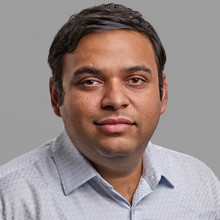
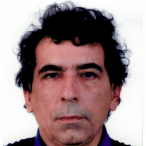
Jörn Hees is a Professor at the German Research Center for Artificial Intelligence (DFKI), affiliated with the Smart Data & Knowledge Services department. His work bridges deep learning, linked data, and knowledge graphs, with projects like TreeSatAI (AI for environmental monitoring) and DeFuseNN (deep network fusion). Research Interests : Deep learning, machine learning, data mining, knowledge graphs, semantic web, linked data, and association modeling. Projects : TreeSatAI (remote sensing AI), MInD (machine intelligence for digital transformation), DeFuseNN (neural network fusion), MOM (multimedia opinion mining). Recent publications focus on outlier detection for tabular data (Fin-Fed-OD, RECol), super-resolution techniques, and transformer-based models. He actively develops open-source tools like the RDFLib Python library and Graph Pattern Learner for SPARQL query generation. No scientific awards are explicitly mentioned in the available data.
Krishnamurthy Dvijotham (Dj) is a research scientist with a focus on developing safe, reliable, and secure AI systems. His current role as a Research Lead at ServiceNow Research (2024-2025) builds on his extensive experience at Google DeepMind (Researcher, 2017-2024), Pacific Northwest National Laboratory (Researcher, 2016-2017), and a postdoctoral fellowship at Caltech's Center for Mathematics of Information. Research Interests: Mathematical optimization, control theory, AI robustness, differential privacy, neural network verification, power systems optimization. Scientific Awards: Best Paper at ICML 2024, Best Paper at UAI 2018, Best Paper at Constraints 2016, Best Student Paper at UAI 2014. Dvijotham's work emphasizes the application of rigorous mathematical frameworks to AI systems. His publications span certified robustness , adversarial defense mechanisms , privacy-preserving learning , and power grid optimization , reflecting interdisciplinary contributions to both theoretical and applied domains. He has mentored numerous PhD students and postdoctoral fellows, many of whom now hold academic or research positions at institutions like UC Berkeley, Google DeepMind, and Microsoft Research. His recent articles highlight advancements in diffusion models , selective deferral systems , and formal verification techniques , with a strong focus on security and reliability in AI deployment.
Dr. Žiga Emeršič is an Assistant Professor at the University of Ljubljana , Faculty of Computer and Information Science, and a member of the Computer Vision Laboratory (LRV). His research focuses on biometrics , deep neural networks , and computer vision with a specialization in ear-based recognition systems. IEEE Member (#98052610) Recipient of the European Biometrics Association Award (2021) and SDRV Excellence Plaque (2023) Co-organizer of international challenges in ear recognition and machine learning workshops His work addresses unconstrained ear detection , model compression for edge devices , and privacy-preserving biometric systems . He has contributed to AI education through EU projects like AIM@VET and developed curricula for computer vision and biometrics. Highlights: Published in top journals ( Neural Computing & Applications , IET Biometrics , Entropy ) Authored chapters in Springer publications on deep ear recognition and ocular biometrics Active in international conferences (IEEE, IAPR) with over 60 publications He has received special recognition for both research (2018) and teaching excellence (2016, 2019), and his work has been featured in media outlets across Slovenia.
Dr. Debayan Banerjee is a Researcher at the Institute for Business Information Systems (IIS) and part of the Professorship for Business Informatics, especially Artificial Intelligence and Explainability at Leuphana University Lüneburg. His work bridges academic research with practical applications in knowledge management, network science, and AI systems. Institute: Institute for Business Information Systems (IIS) Professorship: Business Informatics, Artificial Intelligence and Explainability Location: Universitätsallee 1, C4.308b, Lüneburg (21335) Email: debayan.banerjee@leuphana.de Research interests focus on knowledge graph integration, hybrid intelligence systems, and explainable AI. His projects include USIN5G, ARDIAS, and INSTANT, emphasizing human-AI collaboration and scholarly data accessibility. Recent publications highlight SPARQL translation automation, hybrid question answering frameworks, and environmental impact analysis of language models. Collaborative work spans DBpedia-Wikidata interoperability, DBLP knowledge graph applications, and graph embeddings for QA systems. Education and advising : Mentored students include Mathias Gross, Fatemeh Ghoochani, and Soham Majumder, focusing on final theses related to AI-driven data extraction and knowledge graph development.
Joseph D. Romano serves as Assistant Professor of Informatics and Pharmacology within the Department of Biostatistics, Epidemiology and Informatics, leading a research program focused on artificial intelligence applications for predicting chemical toxicity and advancing drug discovery. His core research interests include: Translational Bioinformatics for biomedical data integration Environmental Toxicology mechanisms and prediction Biomedical Artificial Intelligence with emphasis on interpretability Romano's laboratory develops computational frameworks leveraging knowledge graphs, graph neural networks, and automated machine learning to model chemical-biological interactions. Current projects address toxicology prediction, drug-target affinity modeling, and venom-derived therapeutic discovery through multi-omics integration and semantic knowledge representation. Analysis of his 2022-2025 publications reveals consistent innovation in applying graph-based machine learning to toxicology and pharmacology challenges, with particular strengths in knowledge-guided deep learning for interpretable toxicity prediction and federated approaches for clinical data analysis. His research group maintains active development of open-source tools including ComptoxAI for automated predictive toxicology and VenomKB for computational toxinology, supporting collaborative advances in environmental health and drug safety assessment.
Prof. Jan Peters serves as Full Professor at the Faculty of Computer Science, Technical University Darmstadt, and heads the Systems AI for Robot Learning department at the German Research Center for Artificial Intelligence (DFKI) since 2022. A globally recognized leader in machine learning for robotics, his work bridges theoretical AI and practical robotic systems. His educational background includes: Diplom-Ingenieur in Electrical Engineering (TU München, 1996-2002) Diplom-Informatiker (Fern-Universität Hagen, 1996-2002) M.Sc. Computer Science (University of Southern California, 2001-2002) M.Sc. Aerospace & Mechanical Engineering (University of Southern California, 2004-2005) Ph.D. Computer Science (University of Southern California, 2007) His research pioneers adaptive machine learning for autonomous robots , specializing in reinforcement learning frameworks and real-world robot skill acquisition . Current work focuses on closing the reality gap between simulation and physical deployment through novel learning architectures. Recent publications (2025) reveal strong trends in adaptive reinforcement learning and vision-language model integration , featuring techniques like context-aware prompt learning and neural distillation for efficient policy transfer. These advances target scalable robot learning in unstructured environments. Major recognitions include: IEEE Fellow (2019) and ELLIS Fellow (2020) ERC Starting Grant (2016-2021) Dick Volz Best Thesis Award (2011) INNS Young Investigator Award (2013) Amazon Research Award (2021) As an advisor, he has mentored award-winning researchers including two Best European Robotics Ph.D. Thesis winners (Lutter, Kober) and finalists (Kroemer, Lioutikov). His research receives substantial funding from ERC, EU Horizon, and industry partnerships. He leads the Systems AI for Robot Learning department at DFKI and co-founded ELLIS Robot Learning unit "Closing the Reality Gap," driving collaborative research across European institutions while directing hessian.AI's robotics initiatives.
Zoé Christoff is an Assistant Professor in Cognitive Artificial Intelligence and Rosalind Franklin Fellow at the Bernoulli Institute for Mathematics, Computer Science and Artificial Intelligence of the University of Groningen. She joined the university in September 2020 and is a member of the Multi-Agent Systems Group. Her interdisciplinary work bridges humanities and sciences, focusing on formal models of social phenomena. Christoff earned her PhD at the University of Amsterdam under the supervision of Johan van Benthem and Sonja Smets at the Institute for Logic, Language and Computation (ILLC). Prior to that, she completed her MA at the University of Geneva under Pascal Engel, Fabrice Correia and Kevin Mulligan. Her academic journey includes postdoctoral positions at the University of Bayreuth (Germany) and the University of Liverpool. Her research centers on collective intelligence, exploring how groups of agents can act smart or dumb together. She investigates opinion formation, collective decision-making, and social influence using formal tools from logic, artificial intelligence, social network theory, social epistemology, and social choice theory. Her work examines how social networks distort information and how logical tools can model social network dynamics, including similarity-based processes like social influence and link changes. Christoff is particularly interested in understanding patterns and laws governing information dynamics and social network phenomena, with applications to democratic institutions and misinformation. Her recent publications reveal a strong focus on the intersection of logic, network theory, and social phenomena. Key trends include investigating majority illusions in social networks, modeling opinion diffusion in similarity-driven networks, analyzing voting systems, and developing dynamic logics for network changes. Her work consistently applies formal mathematical approaches to understand complex social dynamics, with particular attention to how network structures constrain information flow and collective behavior. NWO VENI grant for research project 'Democracy on Social Networks' Rosalind Franklin Fellow Christoff leads research on collective intelligence and has established a collaborative working environment that values work-life balance. Her NWO VENI grant supports her research on democracy in the context of social networks. She emphasizes the importance of interdisciplinary approaches that don't force a choice between humanities and sciences, maintaining that the most interesting questions often lie at their intersection. As a member of the Multi-Agent Systems Group at the Bernoulli Institute, Christoff contributes to a research environment focused on formal models of social phenomena. Her work on information dynamics in social networks has implications for understanding collective intelligence, democratic processes, and the impact of social media on society.
Yova Radoslavova Kementchedjhieva is a Research Fellow in the Department of Computer Science at the University of Copenhagen, specializing in Natural Language Processing within the university's NLP research group. Her work bridges artificial intelligence, computer vision, and language technologies through interdisciplinary collaborations. Her research focuses on Natural Language Processing, Artificial Intelligence, and Computer Vision, with specific expertise in cultural adaptation of recipes, vision-language model alignment, fact mutability in language models, multi-label classification for legal/biomedical text, grammatical error correction, and image captioning. She employs advanced multimodal learning and neural network analysis techniques to address complex linguistic and visual challenges. Recent publications reveal strong trends in vision-language integration, including vector space alignment studies and geometric convergence between language and vision models. Her work demonstrates applications in cross-cultural communication systems, dynamic fact verification, neural response modeling, and lightweight image captioning architectures. She actively contributes to the Natural Language Processing research group at the University of Copenhagen, collaborating with researchers like Anders Søgaard on projects spanning computational linguistics, multimodal AI, and cognitive modeling of language systems.
David Christopher Balderas-Silva serves as a Research Professor at Tecnológico de Monterrey's Institute for Advanced Materials for Sustainable Manufacturing in Mexico City. His interdisciplinary work bridges biomedical engineering, computer science, and advanced manufacturing with emphasis on sustainable industrial solutions and accessibility. His educational credentials include: B.Eng. in Mechatronics Engineering from Universidad Panamericana MSc in Biomedical Engineering from Delft University of Technology PhD in Engineering Sciences from Tecnológico de Monterrey Dr. Balderas-Silva's research centers on computer vision , artificial intelligence , and brain-computer interfaces , with applications in healthcare accessibility, robotics, and Industry 4.0. His work on EEG-based speech decoding and 3D-printed assistive devices demonstrates commitment to inclusive technology, while metaheuristic optimization research advances sustainable manufacturing. Recent publications reveal strong focus on neural signal processing (40% of 2022-2024 output) and computer vision for robotics (30%), with growing emphasis on UN Sustainable Development Goals related to disability inclusion and clean energy. His recognition includes: Mexican Researcher Certification - Level 1 As a member of the Mexican National Researchers System, he has co-authored over 20 publications and multiple inventions. His Education 4.0 pedagogy initiatives for machine learning and neurotechnology training highlight academic leadership. While specific grant details aren't provided, his Institute affiliation indicates active participation in collaborative research addressing sustainable manufacturing and assistive technology gaps. He contributes to the Institute for Advanced Materials for Sustainable Manufacturing through projects integrating brain-computer interfaces with industrial robotics, developing low-cost eye-tracking systems, and optimizing PCB manufacturing via digital twins. His lab work emphasizes cross-disciplinary teams focused on translating AI research into practical solutions for Industry 4.0 challenges.
Greg Dongyoon Han serves as a Senior Research Scientist at NAVER AI Lab since January 2018 and an Adjunct Professor at KAIST's Graduate School of AI since September 2021. His work bridges industrial AI research and academic instruction, focusing on foundational advancements in large-scale machine learning systems without maintaining a dedicated KAIST laboratory. His research spans machine learning, deep learning, and multi-modal AI with emphasis on large language models, vision-language systems, and transformer architectures. Key themes include model efficiency through token compression, robustness against adversarial attacks, mathematical reasoning enhancement, and novel approaches to model merging and unlearning. His work consistently addresses scalability challenges in vision and language domains while exploring theoretical aspects of neural network dynamics. Recent publications (2024-2025) reveal three dominant trends: 1) Token-level innovations for model compression and efficiency, 2) Robust adaptation techniques for vision-language systems, and 3) Mathematical reasoning augmentation for large language models. These contributions appear in top venues including NeurIPS, ICML, CVPR, and ICLR, often featuring novel architectural modifications and training paradigms. Award highlights include: 4th place in ImageNet ILSVRC 2017 object localization Outstanding Reviewer at NeurIPS 2018 and CVPR 2021 Outstanding Paper Award at ICACT 2014 NAVER AI Lab's Best 2022 Paper for "Learning Features with Parameter-Free Layers" Though not currently advising KAIST students directly, Han actively co-mentors research projects as evidenced by multiple "co-mentored project" publications. His academic service is extensive: Area Chair for ICLR 2026 and NeurIPS 2025, plus continuous reviewing for NeurIPS (2018-2024), ICLR (2019-2025), and CVPR (2018-2026). He maintains strong industry-academia collaboration through NAVER internships rather than traditional university lab structures. Based at NAVER AI Lab, Han operates within South Korea's premier industrial research environment while contributing to KAIST's AI graduate education. His work demonstrates the growing synergy between corporate AI labs and academic institutions in advancing foundational machine learning research.
Dr. Daniel Beck is a Senior Lecturer in the School of Computing Technologies at RMIT University. His research focuses on interdisciplinary areas including Artificial Intelligence, Machine Learning, Information Systems, and their applications in Health Services and Linguistics. He actively supervises projects exploring topics like Large Language Models in design empathy, Alzheimer’s disease progression modeling, and multilingual NLP tasks. His work bridges computational methods with real-world challenges in healthcare, education, and technology ethics. Research Interests: His key areas include AI ethics, graph-based biomedical discovery, Bayesian modeling for disease trajectories, and NLP applications in clinical documentation. He contributes to advancing methodologies such as graph embeddings, state-space emotion modeling, and quality estimation in machine translation. Teaching & Supervision: Beck coordinates courses in Computing Technologies and mentors projects like 'Between activism and literacy: The mediatization of data journalism in Indonesia' and 'Can large language models provide investment advice like humans?' Publications: His 2023-2025 works emphasize AI’s role in healthcare (e.g., Alzheimer’s biomarker analysis), ethical AI autonomy debates, and multimodal NLP innovations. Recent studies highlight contributions to medical record generation via synthetic dialogue and empathic accuracy prediction in design contexts.
Francesco Vespignani is an Associate Professor at the University of Padova. His research focuses on the cognitive and neural mechanisms underlying language comprehension, particularly sentence processing, ERPs (event-related potentials), and interactions between syntax and pragmatics. He investigates how language influences visual attention, bilingualism, aging, and deafness. His work integrates psycholinguistic, ERP, and EEG methodologies. Research areas: ERPs and sentence comprehension, syntax-pragmatics interaction, language and visual attention, language in atypical populations (bilingualism, aging, deafness). Publications: Over 40 peer-reviewed articles in journals like Journal of Experimental Psychology , Brain and Language , and Discourse Processes . Recent articles highlight speaker-specific speech prediction, pragmatic leniency toward foreigners, and neural mechanisms of language processing in cochlear implant users. His work bridges cognitive psychology, neuroscience, and linguistics. Key findings include the role of novel linguistic labels in visual attention disengagement and ERP evidence of discourse expectations linked to the question under discussion. Collaborations span Italy, Germany, and the UK, focusing on bilingualism and neurocognitive language processing.
Rex Ying is an Assistant Professor in the Department of Computer Science at Yale University's School of Engineering & Applied Science. His research focuses on developing expressive, scalable, and explainable algorithms for graph-structured data through graph neural networks and geometric learning. His work spans graph learning applications in recommender systems, anomaly detection, social network analysis, protein networks, drug discovery, and physical simulations. Key research thrusts include Non-Euclidean Foundation Models , Geometric Deep Learning , and Explainable AI for graph representations, with recent emphasis on hyperbolic geometry for hierarchical data modeling. Recent publications reveal strong trends in foundation models for scientific discovery (particularly spatial biology), hyperbolic adaptations of LLMs , and multimodal integration for biomedical applications. His lab actively bridges theoretical geometric learning with real-world applications in biology and physics. Baidu Scholarship 2019 Area Chair for LoG 2022 Conference Blue Sky Best Paper Award at ACM KDD 2025 NSF core program award on foundation models for scientific discovery Ying leads the Graph and Geometric Learning Lab, which develops open-source tools like PyTorch Geometric. He actively recruits PhD students for research on GNN frontiers, theoretical studies of graph learning, and applications in social/natural sciences. Recent grants include NSF funding for scientific foundation models and industry collaborations with Amazon/Ericsson. The lab maintains strong industry partnerships with telecom (Ericsson), healthcare (spatial omics), and social platforms, while organizing key workshops like Non-Euclidean Foundation Models at WebConf 2025 and Graph Signal Processing at GSP 2025.
Seong Tae Kim is a Professor at Kyung Hee University's Department of Biomedical Engineering. He previously held affiliations at the Technical University of Munich (Germany) and KAIST's Image and Video Systems Laboratory in South Korea. His research focuses on computer vision, medical imaging, and AI applications in healthcare. Kim's work emphasizes explainable AI, neural network interpretability, and deep learning for medical diagnosis. He has contributed to advancements in knowledge graph-based reasoning, video object segmentation, and generative models for medical data synthesis. His research often bridges computer vision techniques with biomedical applications, such as cancer diagnosis and surgical phase recognition. Over 100 publications since 2003 highlight his expertise in neural networks, federated learning, and robust training methods. Notable projects include developing frameworks for COVID-19 CT analysis and generating realistic biomedical datasets. He collaborates widely with institutions like the Max Planck Institute for Informatics (via Nassir Navab's lab) and Samsung Research. Current research interests include interpretable machine learning models, longitudinal medical image analysis, and AI-driven healthcare solutions. His work frequently appears in top conferences like CVPR, MICCAI, and ECCV.
Chen Lin is affiliated with Xiamen University, School of Informatics , China. Their research spans Computer Science , Artificial Intelligence , and Bioinformatics , with a focus on Recommender Systems , Machine Learning , and Natural Language Processing . Chen Lin has published extensively on topics such as language models , index advisors , and adversarial attacks . Their work includes optimizing multi-modal recommendation systems , knowledge graphs , and drug-target interaction prediction . Recent publications in 2024 explore hypergraph pre-training , robustness in index advisors , and anonymized LLM annotation techniques . Key collaborations include researchers like Yeyun Gong , Zhenghao Lin , and Guoliang Li . While no formal awards are listed, their contributions to deep learning , data mining , and security are evident through their high-impact publications in venues such as NeurIPS , ICML , and KDD .