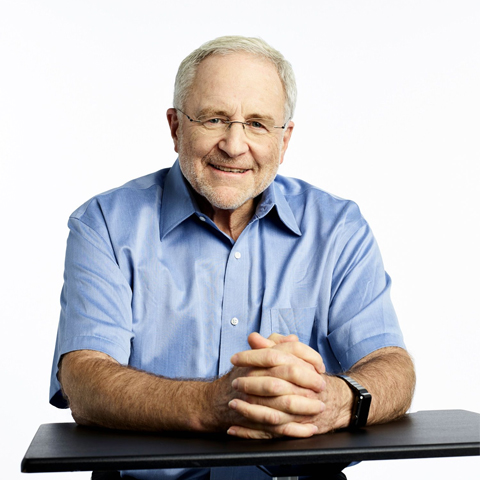
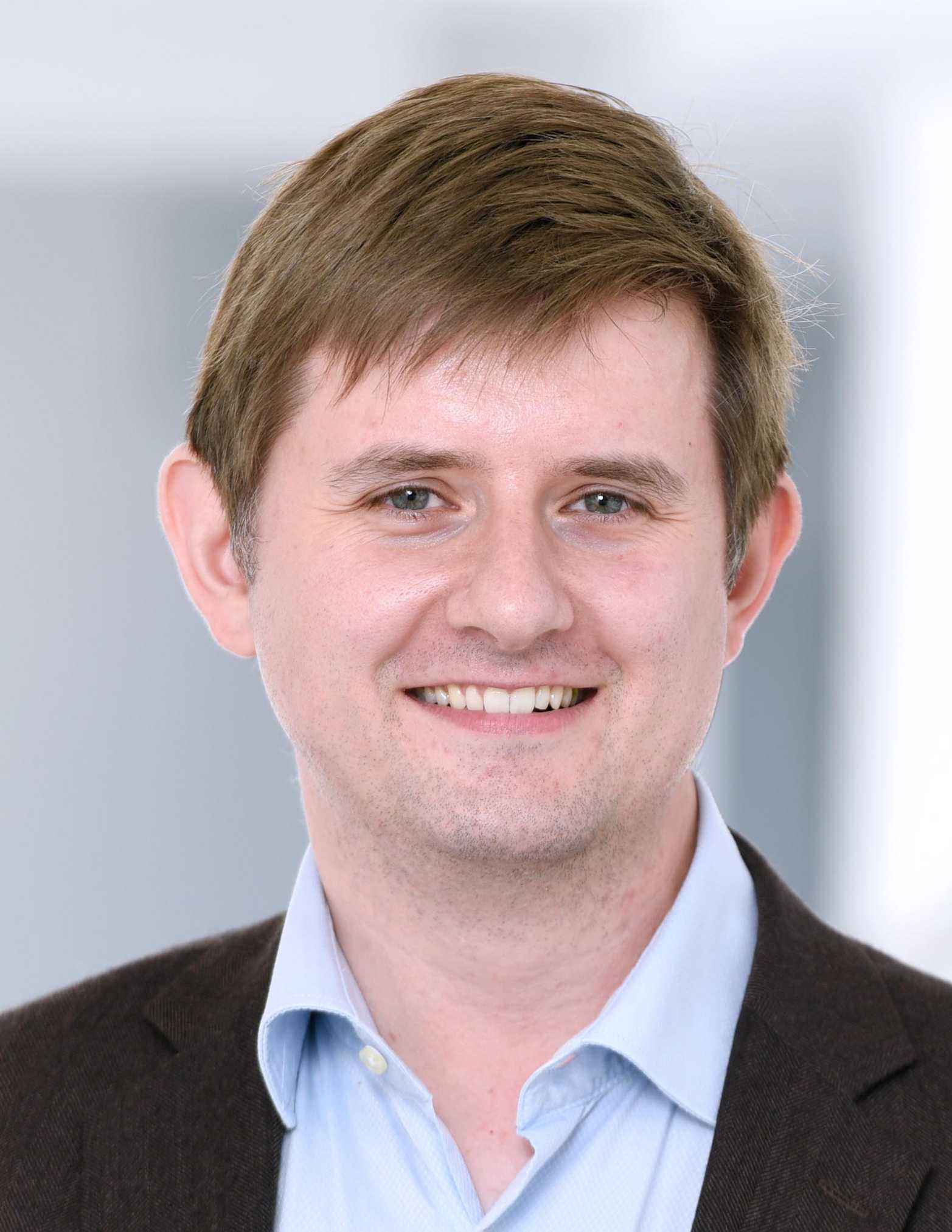
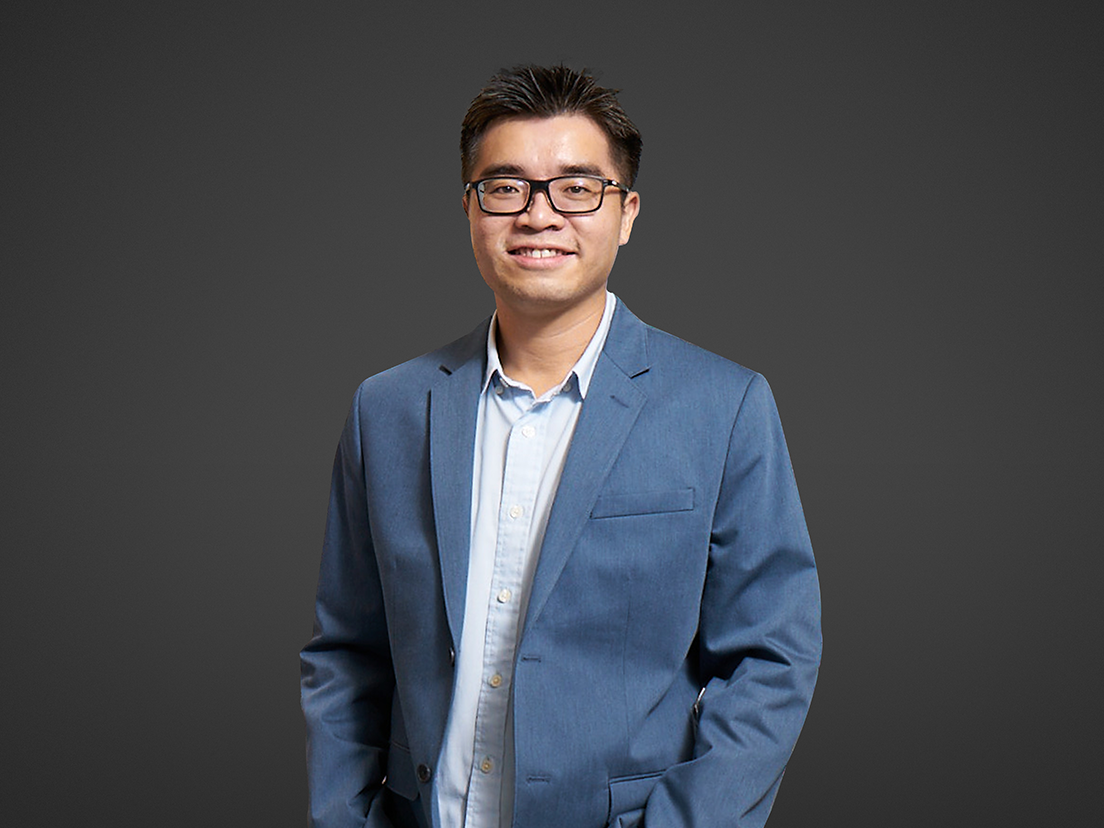
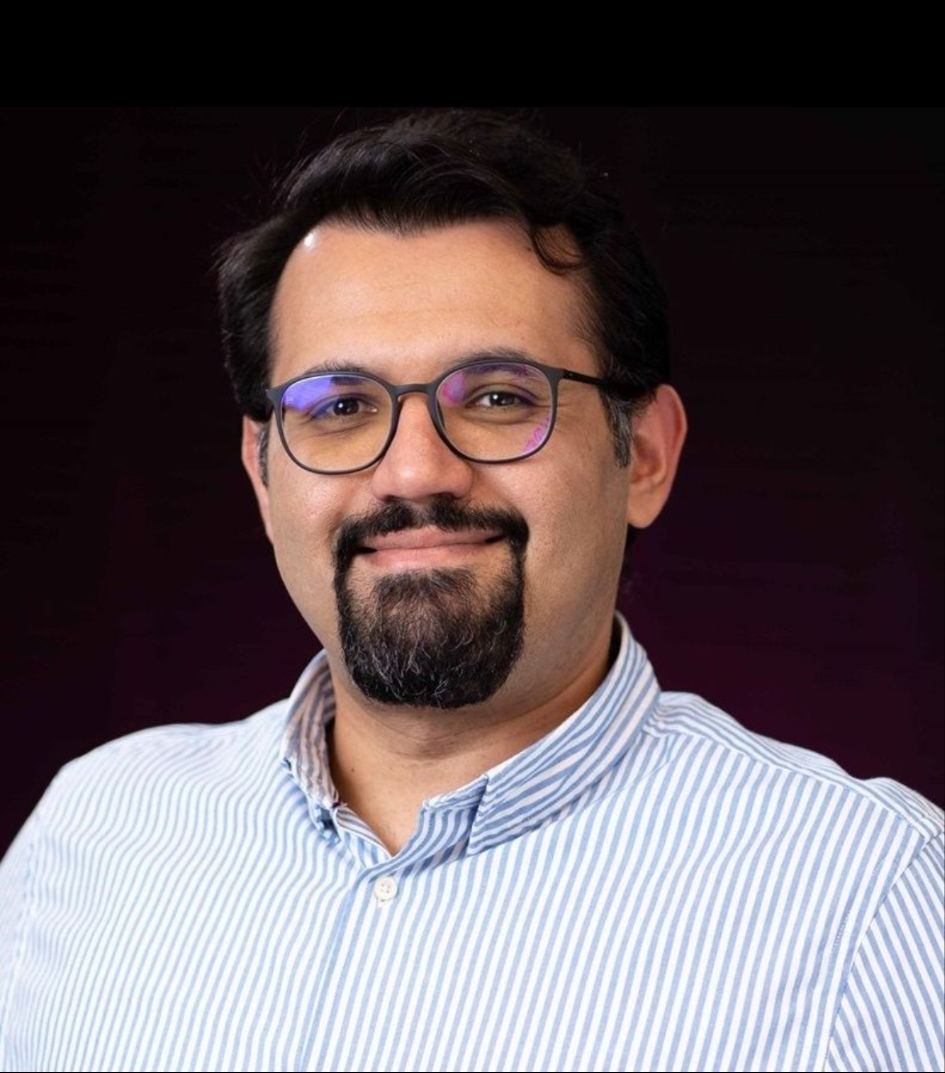
Prof. Michael Moor is a tenure-track Assistant Professor for Medical AI at ETH Zurich's Department of Biosystems Science and Engineering in Basel. Previously, he conducted postdoctoral research at Stanford University under Prof. Jure Leskovec, focusing on medical foundation models. His work spans causal learning, multimodal AI, and sepsis prediction. Moor holds an MD from the University of Basel and a PhD from ETH Zurich's Machine Learning and Computational Biology Lab under Prof. Karsten Borgwardt. Research Interests: Generalist medical AI models Multimodal medical reasoning Zero-shot and few-shot learning Clinical causal inference Retrieval-augmented language models Sepsis prediction systems Key Achievements: Published foundational work in Nature (2023) on generalist medical AI Developed Med-Flamingo multimodal model (2023) Zero-shot causal learning framework accepted to NeurIPS 2023 (Spotlight) International sepsis prediction study with 156k ICU patients (2023) Lab Activities: Leads ETH's Medical Foundation Models group, collaborating with Stanford HAI and NASA Ames. Active in creating medical AI benchmarks like AgentClinic and developing retrieval-augmented systems like Almanac.
Perla Maiolino serves as an Associate Professor in Engineering Science at the University of Oxford and Principal Investigator of the Soft Robotics Lab (SRL) within the Oxford Robotics Institute. Her academic foundation includes BEng, MEng, and PhD degrees in Robotics and Automation from the University of Genoa, where she pioneered CySkin technology for distributed tactile sensing in robots—later exhibited at the Science Museum in London. She expanded her expertise during a 2017-2018 postdoctoral fellowship at Cambridge University's Biologically Inspired Robotics Lab, focusing on soft robotics and tactile perception. Dr. Maiolino's research centers on developing artificial skin systems, soft robotic actuators, and distributed sensing architectures. Her work bridges biological inspiration with engineering innovation to create robots capable of safe human interaction and dexterous manipulation in unstructured environments. Key contributions include compliant beaded-string jamming mechanisms for anthropomorphic fingers, monolithic 3D-printed soft pneumatic arms (JAMMit!), and distributed time-of-flight sensor networks for robotic self-awareness. Recent publications (2024-2025) reveal a strong convergence of tactile sensing with machine learning, featuring optical flow for gesture recognition, diffusion models for artificial skin simulation, and zero-shot sim-to-real transfer techniques. Her team has made significant advances in multi-modal sensing integration, variable stiffness actuation, and scene flow estimation for robots operating in dynamic surroundings. Scientific Awards No specific awards were documented in the provided institutional materials. Advising and Grants While her leadership of the Soft Robotics Lab implies active student supervision and grant management, detailed information about advisees or funded projects was not included in the source documentation. Labs and Teams As Principal Investigator of the Soft Robotics Lab at Oxford Robotics Institute, Dr. Maiolino directs research on tactile perception systems, soft actuation mechanisms, and sensor-integrated robotic structures. The lab's work focuses on applications requiring safe physical interaction, including healthcare robotics and human-robot collaboration scenarios, with emphasis on multi-material 3D printing and embedded sensing technologies.
Baharan Mirzasoleiman is an Assistant Professor in the Department of Computer Science at the University of California, Los Angeles (UCLA), where she leads the BigML research group. Prior to joining UCLA, she was a postdoctoral research fellow in Computer Science at Stanford University working with Jure Leskovec. She received her Ph.D. in Computer Science from ETH Zurich advised by Andreas Krause. Her research focuses on addressing sustainability, reliability, and efficiency of machine learning, with particular emphasis on improving big data quality by developing theoretically rigorous methods to select the most beneficial data for efficient and robust learning. Her work spans several critical areas including data efficiency, robustness against label noise and data poisoning, and addressing spurious correlations in machine learning models. She has made significant contributions to understanding how neural networks exploit spurious features that correlate with certain categories during training but fail to generalize to minority groups. Professor Mirzasoleiman's research demonstrates how theoretically grounded approaches can lead to practical improvements in model robustness and efficiency across various applications including medical diagnosis and environmental sensing. Her work has resulted in the development of the SpuCo package, a Python library that provides modular implementations of state-of-the-art methods to address spurious correlations, along with controllable synthetic datasets like SpuCoMNIST and large-scale vision datasets like SpuCoAnimals. She has received numerous prestigious awards including the ETH medal for Outstanding Doctoral Thesis, being selected as a Rising Star in EECS by MIT, an NSF Career Award, a UCLA Hellman Fellows Award, and an Okawa Research Award. Her students have also received multiple fellowships and awards including Amazon Doctoral Student Fellowships and an OpenAI Superalignment Fast Grant. Professor Mirzasoleiman actively contributes to the academic community through invited talks at major conferences including ICML, ICLR, NeurIPS, and KDD, as well as co-organizing workshops on new frontiers in adversarial machine learning and sparsity in neural networks. She has developed educational resources including tutorials on Foundations of Data-efficient Learning presented at ICML 2024.
Yi Fang is an Associate Professor of Computer Engineering and an affiliated Associate Professor of Computer Science at New York University Abu Dhabi (NYUAD), and a Global Network Associate Professor at NYU Tandon. He is a core faculty member in the Division of Engineering, specializing in Electrical and Computer Engineering. His research is centered at the intersection of Embodied AI, Robotics, and AI-driven assistive technologies, with strong support from agencies such as the US NSF, UAE ADEK, and ASPIRE. PhD, Purdue University Yi Fang's research interests span 3D Computer Vision, Multimedia Processing, Machine Learning, Deep Learning, and Embodied AI . He focuses on AI-driven perception, learning, and real-world applications, particularly in engineering, medicine, and accessibility. His lab, the Embodied AI and Robotics (AIR) Lab, develops intelligent robotic systems that integrate perception, learning, and decision-making to solve complex societal challenges. His work emphasizes large-scale visual computing, deep visual learning, and cross-domain/multimodal foundation models , with recent innovations in assistive AI for the Deaf and Hard-of-Hearing community. The 15 most recent publications reflect a consistent focus on 3D vision, sketch-based 3D retrieval, point cloud learning, and assistive computer vision . His work leverages deep learning, adversarial training, metric learning, and generative models to bridge modalities such as sketches, depth images, and 3D models. There is a clear trend toward cross-modal understanding, unsupervised representation learning, and real-world assistive applications , especially for visually impaired individuals. Yi Fang actively contributes to the academic community as an Area Chair for top-tier conferences including CVPR, ECCV, ICCV, IJCAI, and IROS. He also serves in peer review and mentoring roles, shaping the future of AI and robotics research. As a dedicated educator, he teaches foundational and advanced courses such as Computer Vision, Applied Machine Learning, Data Structures, and Capstone Design . He mentors students through research seminars and honors projects, fostering innovation and technical excellence. His research is supported by major grants from US NSF, UAE ADEK, and ASPIRE, enabling high-impact interdisciplinary collaborations. He founded and directs the Embodied AI and Robotics (AIR) Lab at NYU Abu Dhabi, a dedicated research space for developing intelligent systems that seamlessly integrate perception, learning, and decision-making. The lab promotes interdisciplinary collaboration across engineering, medicine, and social sciences, advancing the frontiers of Embodied AI.
Georgia Gkioxari is an Assistant Professor in the Division of Computing and Mathematical Sciences at Caltech , with a part-time affiliation at Meta AI . Her work focuses on extending visual perception models through advanced 2D and 3D representation learning, spatial reasoning, and generative models. Education: Not explicitly mentioned in the text Research interests span 3D perception , spatial reasoning , and vision-language integration , with projects like Visual Agentic AI for Spatial Reasoning and Token-by-Token Multimodal Alignment . Her publications emphasize 3D object detection , reconstruction , and generative modeling techniques including diffusion models and transformers . Scientific recognition includes the Meta LLM Evaluation Research Grant , Okawa Research Grant , Google Faculty Scholar Award 2024 , and Amazon Research Award . She teaches courses like Large Language & Vision Models (EE/CS 148) and Learning & 3D (CS 101) at Caltech. Labs & Teams: Leads Glab with members including Ilona Demler, Ziqi Ma, and Damiano Marsili
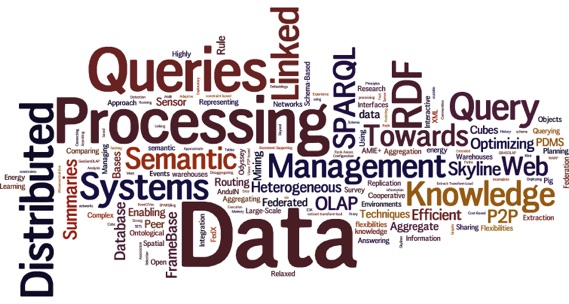
Katja Hose is a Full Professor of Data Management at TU Wien's DBAI research unit, heading the Data Management and Knowledge-Driven AI Lab. She previously held a Poul Due Jensen Foundation Professorship at Aalborg University. Her research focuses on data and knowledge engineering, including graph databases, knowledge graphs, querying, analytics, and machine learning, with interdisciplinary applications in bioscience, healthcare, and environmental assessment. Education: PhD in Computer Science (Ilmenau University of Technology, 2009), Postdoc at Max Planck Institute for Informatics (2009–2012). Academic roles include Program Co-Chair for ISWC 2024 and EDBT 2023, and editorial board membership at VLDBJ and TGDK. She leads projects like TARGET (health virtual twins) and ARMADA (data management). Research Interests: Knowledge Graphs, Semantic Web, Big Data, Machine Learning, Data Integration, and Provenance Systems. Key contributions include SHACL shape extraction, conversational data analytics, and environmental knowledge graphs. Awards include the 2025 Distinguished Meta-Reviewer Award and 2024 Manfred Paul Award. Advising and Grants: Supervised students including E. Pürmayr (Diploma Thesis 2025). Active in EU projects (TARGET, ARMADA) and grant coordination. Labs/Teams: DMKI Lab at TU Wien, collaborating with interdisciplinary teams in healthcare and environmental science.
Xiaoming Liu is the Anil K. and Nandita Jain Endowed Professor of Engineering and MSU Foundation Professor in the Department of Computer Science and Engineering at Michigan State University . Holding a Ph.D. from Carnegie Mellon University (2004), he leads cutting-edge research in computer vision and machine learning. Research Interests : Computer Vision Pattern Recognition Image and Video Processing Machine Learning Medical Image Analysis Multimedia Retrieval Recent Research Trends : Focus on 3D object detection and depth estimation Development of robust biometric recognition systems Integration of radar-camera fusion for autonomous systems Advancements in self-supervised and multimodal learning Exploration of adversarial AI security Creation of interpretable forgery detection frameworks Teaching : Spring 2013: CSE891-006 Computer Vision Seminar Fall 2012-2015: CSE803 Computer Vision Spring 2014-2017: CSE 471 Media Processing and Multimedia Contact Information : Email: liuxm@cse.msu.edu Office: EB 3137, Michigan State University Phone: +1 (517) 355-2359
Moshe E. Ben-Akiva is the Edmund K Turner Professor at the Massachusetts Institute of Technology (MIT), affiliated with the School of Engineering and the Department of Civil and Environmental Engineering. He holds a B.S. from Technion-Israel Institute of Technology (1968), and M.S. and Ph.D. degrees in transportation systems from MIT (1971, 1973). His research focuses on transportation systems analysis, intelligent transportation systems, demand modeling, econometrics, and infrastructure management. He has been recognized with prestigious awards, including election to the National Academy of Engineering (2025) for contributions to transportation systems modeling and demand analysis. His work spans theoretical and applied domains, including agent-based microsimulation for freight logistics, tradable credit schemes for congestion management, and behavioral dimensions of transport decarbonization. Ben-Akiva collaborates with industry and policymakers to design sustainable mobility solutions. His notable publications include foundational texts on discrete choice analysis and stated preference elicitation. He advises on transportation policy, urban planning, and emerging mobility technologies such as automated vehicles and urban air mobility. Current research explores impacts of automated mobility-on-demand systems, real-time tolling strategies, and e-commerce delivery demand modeling. His team develops tools like SimMobility Freight, an agent-based urban freight simulator. He remains active in teaching, focusing on demand modeling and econometrics courses at MIT.
Yonatan Bisk is an Assistant Professor at Carnegie Mellon University (CMU) in the School of Computer Science , with dual appointments in the Language Technologies Institute and Robotics Institute . His research bridges Natural Language Processing (NLP) with robotics, focusing on grounded and embodied language understanding. Assistant Professor, Language Technologies Institute, CMU (2021–Present) Courtesy Appointment, Robotics Institute, CMU Research Themes : Language as a social codification of embodied experience Interpretable multimodal model training Human-robot collaboration frameworks Embodied question-answering systems Selected Trends : His recent publications show increasing focus on cross-modal attention mechanisms (Vid2Robot), error detection in toolchains (Tools Fail), and theory-of-mind reasoning in language agents (SOTOPIA). Multimodal integration spans vision, audio, and robotic control contexts (ANAVI). Labs & Collaborations : Founder of CLAW Lab (Connecting Language to Action and the World) Collaborations with Microsoft Research, Meta Inc, and CMU's REAL (Robotics, Embodied AI, Learning) community
Raquel Fernández is Full Professor of Computational Linguistics and Dialogue Systems at the University of Amsterdam, where she leads the Dialogue Modelling Group at the Institute for Logic, Language & Computation (ILLC). As Vice-Director for Research at ILLC and a Fellow of the ELLIS Society, she bridges computational linguistics, cognitive science, and artificial intelligence through her research on language use in multimodal and conversational contexts. PhD in Computational Linguistics from King's College London Prior research positions at University of Potsdam and Stanford University's CSLI Her work explores how cognitive constraints, social interaction, and perception shape language use, with a focus on: Visually-grounded language processing Multimodal dialogue modeling Model uncertainty and calibration Language grounding in multimodal data Language learning and semantic change Dialogue reference resolution Recent publications analyze multimodal reasoning limitations, cross-lingual knowledge consistency, and uncertainty modeling in dialogue systems. She has received multiple accolades including an ERC Consolidator Grant , NWO VENI/VIDI/Aspasia fellowships , and EMNLP/GenBench awards . Outstanding Paper Award (EMNLP 2023) Best Data Award (GenBench Workshop 2023) ELLIS Society Fellow ERC Consolidator Grant #819455 recipient NWO VENI/VIDI/Aspasia awardee As a leader in academic service, she serves on the SIGDAT Executive Committee and chairs multiple conference committees. Her lab develops models for multimodal dialogue, visual storytelling, and grounded language understanding.
Karsten Borgwardt is a Professor and Director of the Department of Machine Learning and Systems Biology at the Max Planck Institute of Biochemistry. He holds a PhD in Computer Science (2007) from LMU Munich and has held academic positions at ETH Zürich, Universität Tübingen, and the Max Planck Institutes in Tübingen. His research focuses on machine learning applications in biology and medicine, including biomarker discovery, personalized medicine, and systems biology. Education: PhD in Computer Science (2007), LMU Munich M.Sc. in Biology (2003), University of Oxford Diplom (M.Sc. equivalent) in Computer Science (2004), LMU Munich Research Interests: Development of machine learning algorithms for large biomedical datasets Pattern recognition in genomic and clinical data Applications in sepsis biomarkers, antimicrobial resistance prediction, and personalized medicine Grants & Projects: Scientific Coordinator of Marie Curie Networks (2013-2022) Swiss National Science Foundation Starting Grant (2014) Personalized Swiss Sepsis Study (CHF 5.3M, 2018) Awards: Krupp Award (2013), Golden Owl Teaching Award (2017), multiple 'Top 40 under 40' recognitions (2014-2016). Labs: Leads the Machine Learning and Systems Biology Department at MPI, collaborating with 22+ labs in sepsis research and international networks.
Ranjay Krishna is an Assistant Professor at the Paul G. Allen School of Computer Science & Engineering at the University of Washington, where he co-directs the RAIVN lab and leads the computer vision team at the Allen Institute for AI (Ai2). His research intersects computer vision , natural language processing , robotics , and human-computer interaction . PhD in Computer Science from Stanford University (2021) Bachelor's and Master's degrees from Stanford and Cornell His work has received best paper , outstanding paper , and orals at top conferences like CVPR, ACL, CSCW, NeurIPS, UIST, and ECCV. Media outlets including Science , Forbes , and PBS NOVA have covered his research. He has been supported by grants from Google , Apple , NFS , and others. Ranjay advises a diverse group of 15 PhD and postdoctoral researchers , including Jieyu Zhang, Benlin Liu, and Cheng-Yu Hsieh. His teams have developed benchmarks like MemoryBench and The Colosseum , and his PathFinder framework achieved 74% accuracy in skin melanoma diagnosis—surpassing human experts by 9%. Notable contributions include: Perception Tokens for visual reasoning in MLMs SAM2Act for robotic manipulation with memory Synthetic Visual Genome dataset with 5.6M relationships
Prof. Anya Belz is Full Professor of Computer Science at Dublin City University's School of Computing and Science Lead at ADAPT Research Centre. A leading NLP researcher with PhD-level expertise, she specializes in natural language generation, evaluation methodologies, and multimodal systems. Recipient of multiple best paper awards and NAACL Test of Time Award nomination. Research innovations include foundational work on statistical language generation (deployed in weather forecasting systems), comparative evaluation frameworks, vision-language integration, and reproducibility quantification. Current EPSRC-funded ReproHum project coordinates 20 global labs studying evaluation consistency. Achievements : Developed industry-deployed generation systems for accessibility applications Pioneered cross-modal alignment techniques for image description Authored 100+ publications spanning generation, evaluation, and reproducibility
Dr. Foong Shaohui is an Associate Professor and Associate Head at the Engineering Product Development (EPD) pillar of the Singapore University of Technology and Design (SUTD), with prior experience as a Visiting Assistant Professor at MIT's Mechanical Engineering department (2011). He leads the Aerial Innovation Research (AIR) Laboratory @ SUTD and actively collaborates with Singapore's Ministry of Defence (MINDEF) and medical institutions like National University Hospital (NUH) and Changi General Hospital (CGH). PhD, MS, and BS in Mechanical Engineering from Georgia Institute of Technology (2005-2010) Research Interests span multiple domains: Robotics & UAVs : Nature-inspired aerial craft design (Project MONOCO), hybrid flight dynamics, and transformable rotorcraft Medical Device Innovation : Magnetic localization systems for nasogastric tubes and ventriculostomy procedures Engineering Education : Design-Centric pedagogy and pre-university Aerial Craft Workshops Autonomous Systems : Deep tunnel sewer inspection drones (NRF/PUB funded) and soft robotics Scientific Contributions include patented magnetic localization technologies (licensed to Medergo Pte. Ltd.), over 20 peer-reviewed publications, and 5 granted patents. His work bridges aerospace engineering with biomedical applications through innovative mechatronic solutions. Best Application Paper Award at SCIS & ISIS (2014) Research Grants include projects funded by Singapore's National Research Foundation (NRF), Public Utilities Board (PUB), and National University Hospital partnerships. He mentors PhD/Master's students through interdisciplinary research in aerial robotics and medical device development.
Dr. Ehsan Abbasnejad is an Associate Professor at Monash University's Department of Data Science and Artificial Intelligence, and holds adjunct positions at the Australian Institute for Machine Learning (AIML, University of Adelaide) and the Centre for Augmented Reasoning (CAR). He specializes in foundational AI, focusing on vision-language tasks, adversarial machine learning, and reinforcement learning. His work bridges theory with real-world applications in agriculture, energy, healthcare, and sports. Education: PhD in Computer Science from Australian National University (ANU). Research Interests: Machine Learning Theory and Adversarial Defenses Neural Network Robustness and Generalization Multimodal Learning (Vision-Language) Continual and Transfer Learning Applications in Energy, Healthcare, and Robotics Awards: Finalist for Australian AI Academic/Researcher of the Year (2024) Multidisciplinary competition wins (e.g., OzMineral Explorer Challenge) Advising & Grants: Australian Research Council (ARC) Discovery Project on Reinforcement Learning CSIRO's Next Generation Graduate Fund Accepting PhD students in foundational AI and applications Labs & Teams: Director of Foundational Machine Learning & Reasoning at Monash, leading global teams in AI competitions and industry collaborations (Microsoft Research, NEC Labs America).