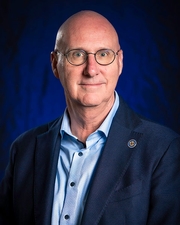
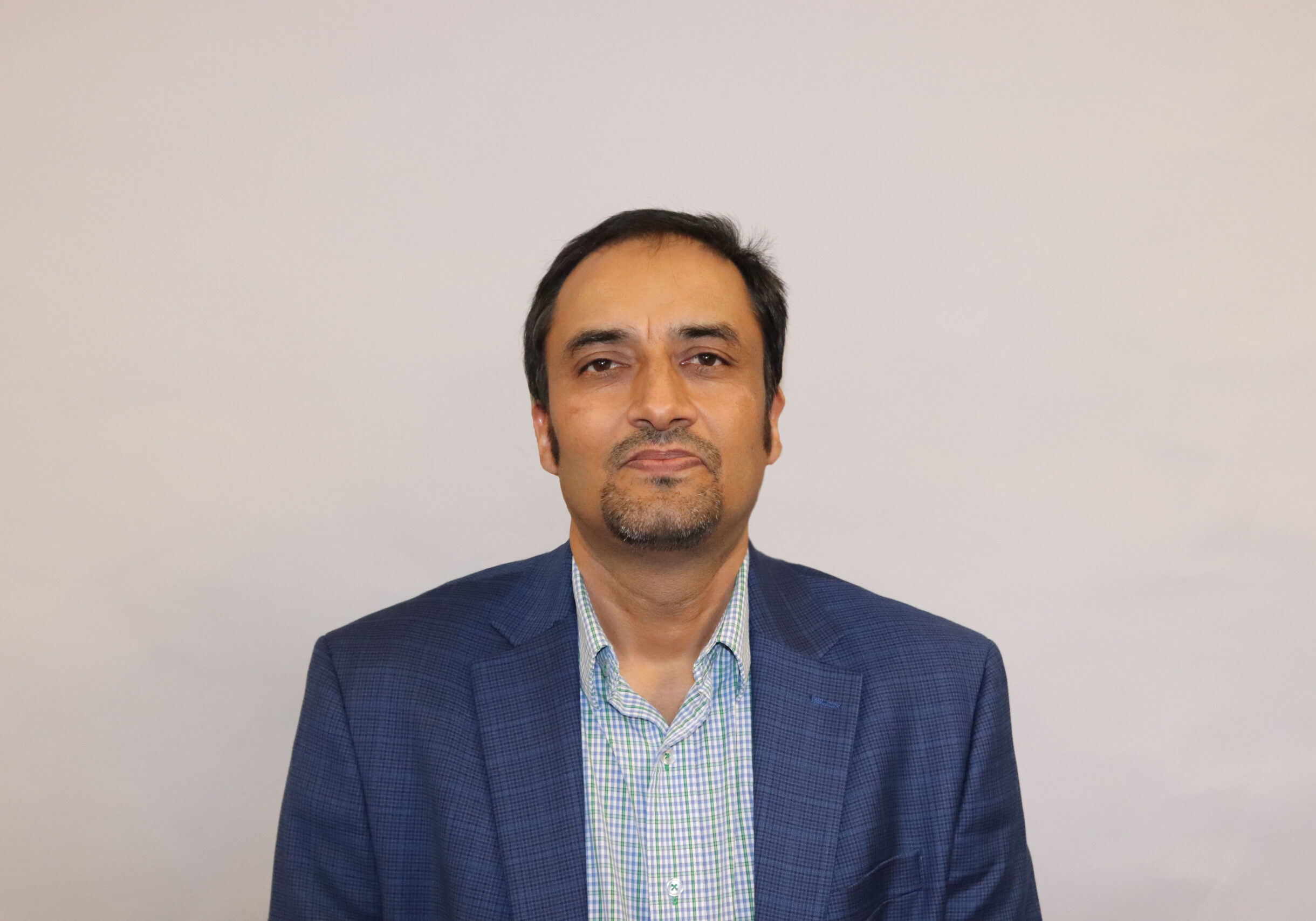
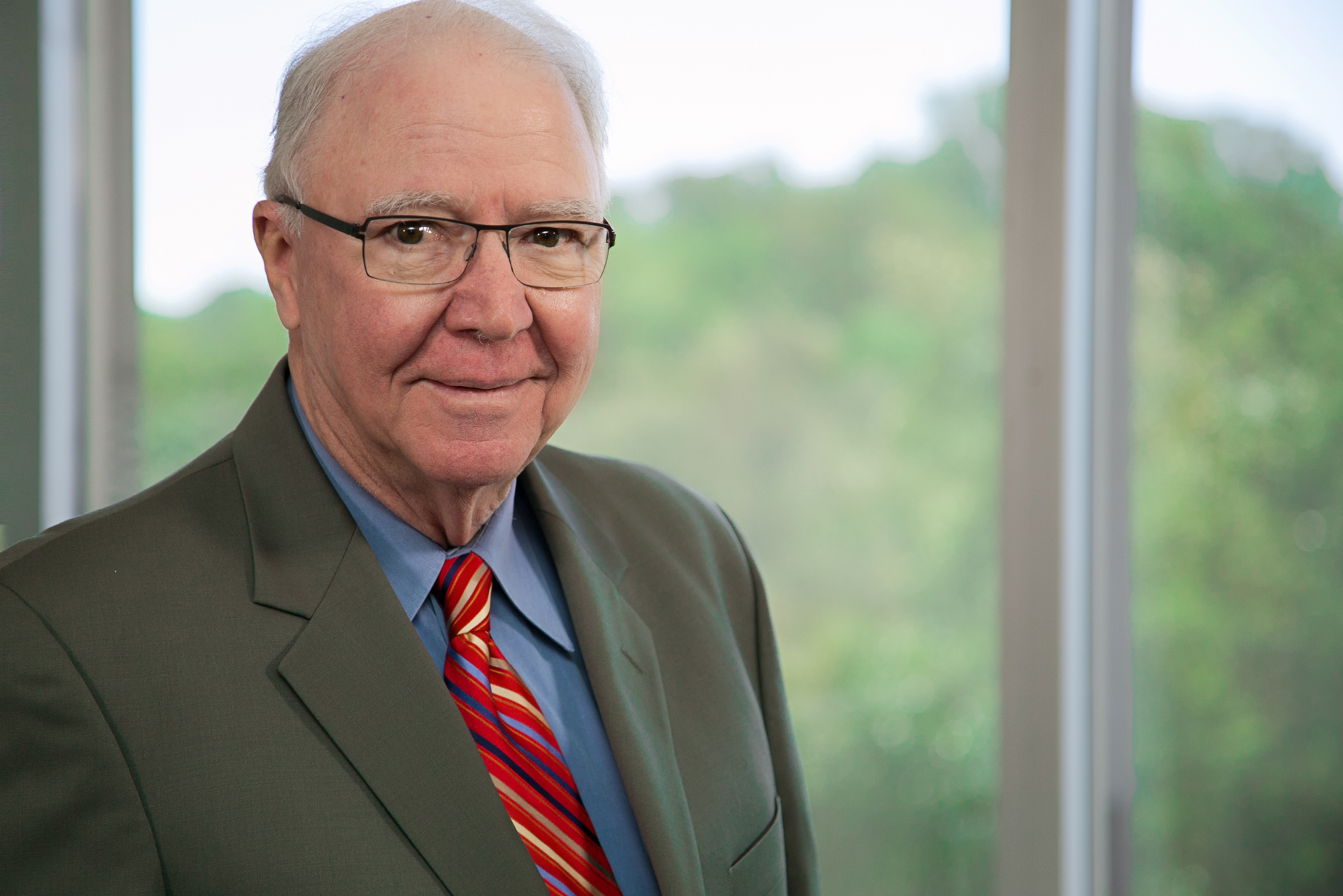
Dr. Robert O. Walton is an Associate Professor in the Department of Decision Sciences and Analytics at Embry-Riddle Aeronautical University's College of Business. He holds a Ph.D. in Business Administration and expertise in Aviation, Supply Chain Management, and Air Cargo Operations. Previously, he served as Executive Director of Campus Operations International and Associate Dean of Academic Support for Embry-Riddle in Europe. Education includes a Ph.D. from Northcentral University and multiple master's degrees in Aviation, Logistics, and Business Administration from Embry-Riddle and Sacred Heart University. His research focuses on aviation safety, logistics innovation, and air cargo systems, with over 50 peer-reviewed publications and several textbooks. Walton’s research trends emphasize safety analysis, additive manufacturing in aviation, AI applications, and gender demographics in aviation accidents. His award-winning work includes the 2019 Faculty of the Year and 2024 Teaching Award. He advises on academic governance as a Faculty Representative to the Board of Trustees and teaches courses in supply chain management, logistics, and aviation analytics.
Hari Kandel is an Assistant Professor at Lake Superior State University (LSSU), affiliated with the School of Chemistry, Environmental, & Geosciences and School of Natural Resources, within the College of Great Lakes Ecology & Education and College of Arts & Sciences. His expertise spans environmental science, geology, and remote sensing, with a focus on interdisciplinary research addressing environmental challenges. Education: Ph.D. in 2015, Florida International University M.S. in 2010, Bowling Green State University M.S. in 2007, Tribhuvan University, Nepal Research Interests: Dr. Kandel investigates environmental contamination (e.g., uranium in groundwater, PAHs in lakes), geologic processes (e.g., shoreline delineation, sandstone provenance), and the application of remote sensing in water quality, hydrology, and land-use change analysis. His work often bridges environmental science with public health and policy, such as studying firework pollution and pandemic-driven environmental shifts. Recent Research Trends: His articles highlight a focus on remote sensing for environmental monitoring (e.g., satellite-derived bathymetry, chlorophyll-a modeling) and interdisciplinary collaborations (e.g., local government partnerships on urban heat mitigation). He also addresses geologic hazards (e.g., uranium contamination in Michigan) and anthropogenic impacts in Nepal and the U.S. Grants & Advising: No specific grants or advisees listed, but his work implies collaboration with governmental and environmental agencies. His research often involves fieldwork and satellite data integration. Labs/Teams: Engaged in multi-institutional projects, particularly with local governments on environmental management and geologic surveys.
John Lachin is a Professor and leading biostatistician at George Washington University, renowned for his pivotal role in diabetes research. He joined the Biostatistics Center in 1973 as an Assistant Research Professor and later served as Assistant Director, Co-Director, Director (1988-2000), and Interim Director (2010-2012). His career has been marked by leadership in landmark clinical trials, including the Diabetes Control and Complications Trial (DCCT) and its extension, the EDIC Study. These studies transformed Type 1 diabetes care by demonstrating the benefits of tight glycemic control. His research has generated over $471 million in grants, produced 397 peer-reviewed papers, and 5 books, with over 96,000 citations. Key contributions include advancing statistical methodologies in clinical trials, analyzing biomarkers for cardiovascular and renal complications, and mentoring generations of biostatisticians. In 2024, he received the Tulane Science and Engineering Outstanding Alumni Award for Professional Excellence, recognizing his unparalleled impact on diabetes research and public health. Key Projects: DCCT/EDIC (Type 1 diabetes), GRADE Study (Type 2 diabetes therapies), DPP/DPPOS (diabetes prevention). Awards: 2024 Tulane Alumni Award, cited as one of the most influential figures in diabetes science. Grants: Over $471 million secured as PI/Co-PI since 1985, supporting multi-center trials and coordinated research initiatives. His work bridges biostatistics and clinical practice, emphasizing rigorous data analysis to improve patient outcomes. Ongoing research focuses on glycemic variability, epigenetic mediation of complications, and cardiovascular risk prediction in diabetes.
Summary Associate Professor Vikram Garaniya is the Director of the National Centre for Maritime Engineering and Hydrodynamics (NCMEH) at the Australian Maritime College (AMC), University of Tasmania. He holds dual roles as an Associate Professor and Adjunct Professor, specializing in safety engineering, environmental risk assessment, and maritime technologies. He leads the MarIInE Research Group, which focuses on coastal environmental research and safety engineering, contributing over 150 scholarly publications and 4,600 Google citations. Education: BEng (1st class honours) from Dharmsinh Desai Institute of Technology (India), MEngSci from UNSW, and PhD from the University of Tasmania. Research Interests: Safety and reliability engineering, combustion science, air pollution modeling, shipping fuels, environmental risk assessment, and data analytics. His work bridges academia and industry, with collaborations spanning Australia and internationally. Grants & Projects: Secured ~$7M in external funding, including ARC grants for biofilm research, high-power laser technology, and offshore renewable energy systems. Notable projects include risk-based methodologies for offshore aquaculture and renewable energy co-location. Teaching: Responsible for courses like Thermal Engineering (JEE223) and Design of Offshore Systems (JEE361). Supervised over 20 doctoral and master’s students, with peer-reviewed publications arising from student projects. Awards: Fellow of Engineers Australia (FIEAust), Chartered Professional Engineer (CPEng), and active member of committees like the Australian Council of Engineering Deans (ACED) and National Committee on Coastal and Ocean Engineering (NCCOE). Labs/Teams: Leads the MarIInE Research Group, developed a modern laboratory with advanced instruments, and collaborates with institutions like the Australian National University, CSIRO, and international partners.
Vincenzo Fiamma serves as Assistant Professor of Ocean Engineering at the Mediterranea University of Reggio Calabria (UNIRC), where he has been an active member of the NOEL laboratory research team since 2009. Previously, he contributed to the Maritime Engineering Laboratory through the OKEANOS consortium (1998-2008) and participates in Italy's National Group for Defense from Hydrogeological Disasters since 1996. His three-decade career centers on experimental coastal engineering with Professor Boccotti, including foundational work on wave mechanics and energy conversion systems. His research spans Ocean Engineering , Wave Energy Conversion , and Coastal Protection Systems , characterized by innovative field experiments at sea. Key contributions include the development of U-OWC (U-Oscillating Water Column) breakwaters and REWEC (Resonant Wave Energy Converter) devices for dual-purpose coastal infrastructure. His methodology uniquely bridges theoretical modeling with real-sea validation, advancing sustainable solutions for Mediterranean coastal challenges through practical engineering applications. Recent publications (2020-2024) demonstrate evolving expertise from wave mechanics fundamentals to integrated renewable energy systems. His work shows increasing interdisciplinary scope, connecting U-OWC technology with coastal hazard analysis, infrastructure resilience, and environmental impacts. Notable trends include Mediterranean-focused full-scale implementations (e.g., Salerno and Civitavecchia ports), advanced uncertainty quantification in floating structures, and investigations into compound climate hazards like concurrent floods and sea storms. Professor Fiamma has supervised 20 degree theses in maritime engineering and environmental hydraulics while contributing to major national research initiatives. His project portfolio includes multiple biennial Projects of Relevant National Interest (PRIN), notably the 2001 hydrodynamics study of low-crested breakwaters, 2004 coastal protection/wave energy integration project, and 2005 REWEC port breakwater experiment that pioneered wave-to-electricity conversion technologies. As a core member of UNIRC's NOEL laboratory, he directs experimental campaigns on wave energy converters and coastal structures. His earlier foundational work contributed to Professor Boccotti's seminal texts Idraulica Marittima (1997) and Wave Mechanics for Ocean Engineering (2000), establishing theoretical frameworks still referenced in contemporary research on wave group dynamics and coastal processes.
Clémentine Prieur is a Professor at the University of Grenoble Alpes, affiliated with the Jean Kuntzmann Laboratory (LJK - CNRS / Inria / UGA - Grenoble INP-UGA) and the Inria AIRSEA Project Team. She holds significant leadership positions including Head of the Applied Mathematics specialty at the MSTII Doctoral School, Vice-President of the French Statistical Society, and President of the SAMO (Sensitivity Analysis of Model Output) board. Her educational background includes a Master's degree, teaching qualification, and mathematics thesis. She pursued her academic career after expressing interest in mathematics as early as sixth grade, eventually specializing in probability and statistics after initially being drawn to abstract mathematics. Prieur's research focuses on uncertainty quantification, sensitivity analysis, model and dimension reduction, robust inversion, multivariate risk analysis, and nonparametric estimation for dependent processes. Her work bridges theoretical mathematics with practical applications in climatology, health, energy, and environmental science. She has developed numerous methodologies for analyzing complex systems and extracting meaningful information from data. Her publications demonstrate consistent contributions to uncertainty quantification and sensitivity analysis, with recent work spanning epidemic modeling, climate science, renewable energy systems, and machine learning. Her research shows increasing interdisciplinary applications while maintaining strong mathematical foundations, particularly in developing computational methods for high-dimensional problems. Vice-President of the French Statistical Society President of SAMO (Sensitivity Analysis of Model Output) board Local coordinator of MATH-AmSud project SMILE Coordinator of Inria associate team UNQUESTIONABLE Member of CNRS thematic networks for Uncertainty Quantification and Earth and Energies Prieur actively supervises doctoral students and postdocs, guiding them from master's internships through thesis completion. Her research is supported through multiple national and international projects including CIROQUO (Research and Industry Consortium), MIAI chair BALTEEC, and various CNRS networks. She frequently travels internationally for research collaborations, with recent visits to institutions in Uruguay, Italy, and Chile. She leads the Inria AIRSEA project team and participates in several research groups focusing on uncertainty quantification, including the CNRS thematic network Quantification of Uncertainties RT2172 and the thematic network Earth and Energies RT2166. Her work with CIROQUO connects academic research with industrial applications in uncertainty quantification for expensive data.
Prof. Filippo Santucci De Magistris is a Full Professor at the Department of Biosciences and Territory, University of Molise. His research focuses on geotechnical engineering, seismic vulnerability assessment, and soil-structure interaction, with emphasis on liquefaction mitigation, pipeline stability, and seismic site response analysis. His work integrates numerical modeling, experimental testing, and field investigations in complex geotechnical systems. Key research areas include: Constitutive modeling of geomaterials under dynamic loads Liquefaction risk assessment in urban and industrial contexts Seismic safety of critical infrastructure (pipelines, healthcare networks) Advances in site response analysis methodologies His publications (2021-2025) increasingly emphasize probabilistic frameworks for infrastructure resilience, innovative bounding surface models for advanced geotechnical simulations, and interdisciplinary approaches to disaster risk reduction. He leads the StregaDynaLab research group (www.stregadynalab.tk), focusing on dynamic geotechnical analysis and mitigation strategies for seismic hazards. Notable contributions include field reconnaissance after major earthquakes (2016 Central Italy, 2015 Nepal), validation of constitutive models in OpenSees, and development of empirical fragility functions for infrastructure components.
Oladoyin Kolawole is an Assistant Professor of Geomechanics and Geotechnical Engineering at NJIT's Department of Civil and Environmental Engineering, and Faculty Coordinator for the Geosystems Minor program. He directs the Geomechanics for Geo-Engineering and Sustainability (GGES) Lab. Previously, he was a Postdoctoral Research Associate at Texas Tech University and a Visiting Assistant Professor at Hope College. His research focuses on biogeomechanics, experimental/computational studies of rock-soil deformation, and applications to infrastructure sustainability, energy, and hazard mitigation. He pioneered the 'biogeomechanics' concept analyzing biological effects on rock mechanics. His work addresses CO2 sequestration, geothermal systems, and subsurface energy storage. Education : Ph.D. in Petroleum Engineering (Geomechanics), Texas Tech University (2021) M.S. in Petroleum Engineering, University of Miskolc (2018) B.S. in Petroleum Engineering, Rivers State University (2012) Research Interests : Mechanical behavior of rocks/soils under biological, thermal, and chemical stimuli CO2 storage security and enhanced oil recovery Nano-to-microscale geomechanical characterization Bio-inspired geotechnical materials Urban geohazards and infrastructure resilience Low-carbon grouting technologies Awards : 2022 Future Leader Award, American Rock Mechanics Association 2020 Distinguished Service Award, American Rock Mechanics Association Advising & Grants : Mentors undergraduate and graduate students, actively involved in peer review for rock mechanics journals, and serves on the U.S. National Academies' Committee on Geological and Geotechnical Engineering (COGGE). His lab develops novel solutions for subsurface engineering challenges through interdisciplinary collaboration. Labs/Teams : Directs the GGES Lab, focusing on sustainability-linked geomechanical innovations. Collaborates with industry and academic partners on CO2 storage, geothermal energy, and bio-based material applications.
Amélie Châtel is a Professor at the University of Angers, Faculty of Sciences, specializing in ecotoxicology of emerging contaminants like nanomaterials and microplastics. She leads the Master's in Ecology and Sustainable Development and the BIOSSE laboratory's HDR program. Her research focuses on assessing the health impacts of contaminants on aquatic invertebrates, using molecular and biochemical tools. She holds a Doctorate in Ecotoxicology (2009) and an HDR (2021) from Le Mans University. Her research interests include: Ecotoxicology of micro/nanoplastics in coastal and estuarine environments Risk assessment using adverse outcome pathways Molecular responses to nanoparticle exposure Environmental fate of contaminants in freshwater and marine systems Key recent work examines plastic toxicity in species like Scrobicularia plana and Corbicula fluminea, emphasizing size-dependent effects and trophic transfer mechanisms. She collaborates on projects like EcoPlastOC and MICRO-LOIRE to map microplastic pollution in the Loire River. Teaching includes courses in cellular physiology, biotechnology, and immunology. Her advisory roles include overseeing the Plastic-Seine project and mentoring four PhD students: Evan Bossard (microplastic impacts), Andrew Barrick (nanomaterial ecotoxicology), Rihab Jaouani (pharmaceutical contaminants), and Clémentine Labbé (continental plastic pollution). She coordinates interdisciplinary programs like BIOSSE and IDHAL, integrating environmental and health research.
Alan Ager is a Courtesy Faculty member at Oregon State University's College of Forestry, specifically within the Department of Forest Engineering, Resources & Management. His research focuses on wildfire risk management, fuel treatment optimization, and ecological restoration, particularly in Mediterranean and western U.S. landscapes. Research Interests Wildfire risk modeling and mitigation Fuel treatment optimization (linear breaks, mosaic patterns) Landscape-scale ecological restoration Fire transmission dynamics Socio-ecological fire governance Publication Trends Recent works emphasize spatial optimization models for wildfire risk reduction, with applications in Portugal, Greece, and the western U.S. Key themes include cross-boundary fire impacts, erosion control, and integrating fire management with carbon sequestration strategies. Collaborators Works with John Bailey and Woodam Chung on wildfire management and forest restoration projects.
Charley Hill-Butler is an Assistant Professor at Coventry University's School of The Environment, specializing in natural hazards and geospatial technologies. They hold roles including Associate Head of School (Quality and Accreditation) and Assistant Professor in Research at the Centre for Agroecology, Water and Resilience. Their expertise integrates thermal remote sensing and geostationary satellite data to study volcanic-earthquake interactions, land use change, and agricultural resilience. Education: PhD in Geography and Natural Hazards (2015), supervised by Prof. Mark Blackett MSc by Research in Physical Geography (2012) Short-Term Fellowship at University of Hawai’i (during PhD) Research Focus: Volcanic activity monitoring via thermal remote sensing Earthquake-volcano interaction dynamics Coastal wetland restoration using UAVs Agricultural resilience to climate change Sustainable Development Goals (SDGs) alignment Articles Overview: Recent work emphasizes volcanic radiant flux analysis, UAV-based vegetation monitoring, and spatial policy implications of land access. Key themes include geophysical hazard interdependencies, environmental restoration techniques, and geospatial innovation applications. Awards: Trailblazers 2022 (2021) for contributions to occupational research and career development Grants & Projects: Co-investigator in REPAS: Co-creating citizen science for plastic pollution reduction (2023-2024) Researcher in Rewilding Wild Packington (2023) and Charterhouse Fields ecological restoration (2024) Labs & Teams: Active in the Centre for Agroecology, Water and Resilience, collaborating on transdisciplinary environmental solutions.
Dr. Muhammad Waqas Khan holds a PhD in Philosophy (2016) and is affiliated with Northumbria University. His research focuses on environmental monitoring, IoT applications, wireless sensor networks, and geotechnical engineering. He has contributed to innovative solutions in landslide detection, subsurface characterization, and low-cost sensor technologies. His work spans interdisciplinary fields including environmental science, civil engineering, and computer science. Key areas of expertise include sensor networks localization, image-based tracking for slope stability, and the development of cost-effective monitoring systems. His publications highlight advancements in real-time environmental analysis, remote sensing, and sensor fusion techniques.
Dr. Boris S. Pervan is Professor of Mechanical and Aerospace Engineering at Illinois Institute of Technology's Armour College of Engineering, where he holds the Frank Gunsaulus Faculty Fellow position and directs the CARNATIONS research center. Education: Ph.D. in Aeronautics and Astronautics from Stanford University (1996) M.S. in Aeronautics from California Institute of Technology (1987) B.S. in Aerospace Engineering from University of Notre Dame (1986) His research develops assured navigation technologies for transportation systems, focusing on GNSS integrity monitoring, spoofing/jamming resistance, and multi-sensor fusion for autonomous vehicles. Current projects address resilient positioning for driverless cars and aircraft through USDOT-funded initiatives. Publications demonstrate leadership in navigation security, with recent advances in INS monitoring against spoofing, lidar integrity verification, and interference-resistant signal processing. Research consistently bridges theoretical innovation with real-world validation in urban environments. Awards highlight exceptional contributions: Johannes Kepler Award (2022) AIAA Associate Fellow ION Fellow Multiple best paper awards from IEEE and ION Guggenheim Fellowship He leads the $10M CARNATIONS UTC developing anti-spoofing technologies for transportation infrastructure. Professional memberships include IEEE, AIAA, and Institute of Navigation where he influences technical standards.
Dr. Ayşe Atalay Dutucu is a Lecturer in the Department of Geography at Sakarya University's Faculty of Humanities and Social Sciences. Her research integrates GIS, remote sensing, and environmental science to address climate impacts on land cover, hydrology, and erosion dynamics. Research interests focus on: Geospatial analysis of climate change impacts Drought and flood risk modeling Land cover transformation in Mediterranean ecosystems Sustainable watershed management Publications demonstrate consistent focus on environmental monitoring through advanced geospatial techniques, with recent emphasis on ensemble modeling for endemic species conservation and flood susceptibility analysis. Awards: Makale Teşvik Ödülü (Publication Incentive Award), Sakarya University BAPK (2012) Advising & Grants: Supervised master's thesis on flood risk modeling and contributed to multiple BAP-funded projects including 'Spatial Analysis of Temperature Trends in Turkey' and 'Sakarya Tourism Information System'. Leads fieldwork teams for hydrological data collection and collaborates with national research networks on climate adaptation strategies.
Dr. Mohsen Zaker Esteghamati is an Assistant Professor in Civil and Environmental Engineering at Utah State University, leading the Stochastic Structures (StoStruct) Lab. His research integrates data-driven modeling with traditional engineering approaches to enhance disaster resilience of built environments. Research focuses on: Machine learning for structural performance prediction Risk-informed design methodologies Fire resistance of timber structures Multi-hazard resilience frameworks Recent publications demonstrate innovative applications of explainable machine learning for fire resistance evaluation, comparative analysis of surrogate models, and holistic performance assessment of building systems. Dr. Esteghamati teaches Structural Steel Design and Structural Reliability courses while mentoring graduate students in probabilistic modeling and sustainable infrastructure development.