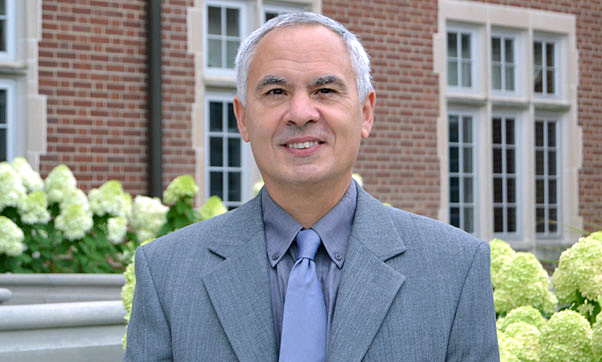
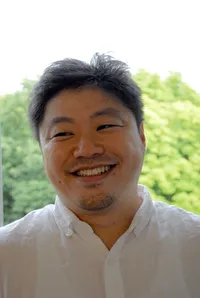
Martin Skov is a Senior Lecturer in Marine Biology at the School of Ocean Sciences, Bangor University . He actively supervises Mark Chatting Mollie Duggan-Edwards Cai Ladd Elwyn Sharps Rachel Kingham Harvey and provides external advisory for Kate Davison Selena Gress . His research focuses on coastal wetland ecology , particularly mangroves and saltmarshes. Key areas include: Carbon sequestration and blue carbon dynamics Natural coastal protection mechanisms Biodiversity-ecosystem functioning relationships Human wellbeing associations with coastal habitats Major funded projects like C-SIDE , CoastWEB , and Mikoko Pamoja (world's first mangrove carbon-trading initiative) highlight his impact in climate adaptation research. He directs Bangor's MSc Marine Environmental Protection program and serves as external examiner for Swansea University's Marine Biology BSc.
Professor Jason Sharples is a Professor at UNSW Canberra in the School of Science. His research focuses on extreme bushfires and the development of mathematical and computational models to understand fire behavior, fire-atmosphere interactions, and fire propagation in complex landscapes. He is actively involved in developing education and training materials for firefighters and has contributed to operational protocols for fire agencies, enabling them to better monitor dangerous weather conditions and anticipate rapid escalations in fire growth and intensity. Professor Sharples holds a B.Sc., B.Math. (Hons), and PhD. He is recognized as a Fellow of the Australian Academy of Technological Sciences and Engineering, Fellow of the Royal Society of New South Wales, and Fellow of the Modelling and Simulation Society of Australia and New Zealand. His research addresses the growing global problem of extreme bushfires, exacerbated by climate change and urban expansion. Professor Sharples and his team use sophisticated mathematical and computational models to study dynamic fire behavior, particularly how bushfires interact with the atmosphere to produce dangerous forms of fire propagation. They investigate critical fire weather events such as heatwaves, mountain winds, and frontal systems, and their association with major fire outbreaks like the 2019-20 'Black Summer' fires. His work demonstrates that extreme fires behave fundamentally differently from typical fires, allowing for better anticipation and prediction of their occurrence and behavior. Analysis of Professor Sharples' recent publications reveals a strong focus on wildfire modeling, fire-atmosphere interactions, and the development of predictive tools for fire behavior. His work spans computational modeling, field studies, and practical applications for fire management. Key themes include fire front dynamics, fuel moisture modeling, fire weather prediction, and the development of visualization tools for fire behavior. His research increasingly incorporates machine learning techniques and interdisciplinary approaches to address complex fire phenomena. Fellow of the Australian Academy of Technological Sciences and Engineering Fellow of the Royal Society of New South Wales Fellow of the Modelling and Simulation Society of Australia and New Zealand Professor Sharples serves as Associate Editor for several prestigious journals including Environmental Modelling and Software, PLoS Climate, and the International Journal of Wildland Fire. He is an active member of multiple professional societies including the International Association of Wildland Fire, the Australian Mathematical Society, and the Australia and New Zealand Industrial and Applied Mathematics Society (ANZIAM). His research has been incorporated into operational protocols for fire agencies, helping them monitor dangerous weather conditions and anticipate rapid escalations in fire growth and intensity. Professor Sharples leads a research group focused on extreme fire behavior, with particular emphasis on fire-atmosphere coupling and the development of mathematical models for fire spread prediction. His team collaborates with fire agencies and other researchers to translate scientific findings into practical applications for fire management and firefighter safety. The group utilizes advanced computational techniques and field observations to study complex fire phenomena, with the goal of improving fire prediction capabilities and reducing fire-related risks to communities and ecosystems.
Andreas Kunz is a Lecturer at the Department of Mechanical and Process Engineering, ETH Zurich, where he leads the Innovation Center for Virtual Reality (ICVR). His research focuses on developing user-oriented virtual and mixed reality systems tailored for industrial applications across product development processes and digital factories. Current Affiliation: ETH Zurich, Institute for Machine Tools Research Themes: Virtual Reality, Mixed Reality, Human-Computer Interaction, Digital Twin Systems Since joining ETH Zurich in 1994 and completing his habilitation in 2004 on "Interaction with the digital product model in virtual space," Kunz has pioneered VR systems for visualization, collaboration, and haptic interfaces in industrial contexts. His work combines academic research with practical implementation through industry collaborations. Recent research trends show increasing focus on real-world VR applications including: Multiuser redirected walking algorithms Attention guidance systems Industrial MTM motion transcription Smartphone-MR device integration Eye tracking for cognitive analysis Haptic interfaces for control panels The ICVR group under Kunz's leadership maintains strong industry partnerships while producing significant publications in IEEE VR, ISMAR, and ACM VRST conferences. Their work bridges theoretical VR research with practical implementations in manufacturing, assembly, and safety-critical environments.
Catalina González-Dueñas serves as an Assistant Professor in the Sid and Reva Dewberry Department of Civil, Environmental, and Infrastructure Engineering at George Mason University's Fairfax campus. Her research program focuses on enhancing infrastructure and community resilience against hurricanes, flooding, and extreme winds through probabilistic methods and artificial intelligence, emphasizing dynamic interactions among built, natural, and social systems. Her academic credentials include: PhD in Civil Engineering from Rice University MS in Civil Engineering from Universidad de los Andes BS in Civil Engineering from Universidad de los Andes Dr. González-Dueñas' research spans risk and resilience assessment of infrastructure systems, applied AI for civil engineering, and cascading effects in complex systems under extreme events. Her work integrates structural engineering with probabilistic hazard analysis to develop performance-based assessment frameworks for built-natural systems under multi-hazard conditions, with increasing attention to social vulnerabilities and risk communication. Analysis of her 14 publications (2018-2023) reveals consistent innovation in multi-hazard risk frameworks, particularly through data-driven hurricane debris modeling and knowledge-informed systems for coupled human-built-natural interactions. Her research trajectory shows growing integration of time-varying social factors and AI methodologies to address coastal community resilience and infrastructure performance under climate change. While the source text references her research group, specific operational details were not provided. No information regarding student advising, grant funding, or scientific awards was included in the available materials.
Olga Viedma is an Associate Professor at the University of Castilla-La Mancha in the School of Environmental Sciences . Her research focuses on fire ecology, remote sensing applications, and landscape dynamics in Mediterranean ecosystems. PhD in Environmental Sciences (Geography) from Universidad de Alcalá de Henares BSc in Geography and History from Universidad de Alicante Her work integrates LiDAR technology, satellite imagery (Sentinel, MODIS, Landsat), and statistical modeling to study: Fire severity prediction and mapping Landscape structural controls on fire behavior Ecosystem recovery post-fire Long-term fire regime trends Key article trends (2017–2025) show a consistent emphasis on: Fire severity analysis using multi-sensor data LiDAR-based fuel modeling Spatiotemporal fire pattern detection Human-climate-fire interactions Mediterranean ecosystem transitions She collaborates extensively with fire ecologists like José Manuel Moreno and develops open-source tools like LadderFuelsR for vegetation structure analysis.
Mehdi Akbari Saatlu is a Researcher at Mid Sweden University's Department of Engineering, Mathematics and Subject Didactics (IMD) in Sundsvall, affiliated with the FSCN Research Centre. He actively contributes to the MEQAL project focused on methane leak detection through advanced sensor technologies. His research centers on gas sensing using nanomaterials, particularly metal oxide semiconductors like ZnO/SnO2. He develops ultra-sensitive sensors for hazardous gases (H2S, CH3SH) via techniques including screen printing, flame pyrolysis, and ultrasonic spray pyrolysis, achieving sub-ppb detection levels. His work bridges materials engineering and environmental safety applications. Analysis of his 2020-2025 publications reveals consistent innovation in nanomaterial-based gas sensors, with emerging trends in heterostructure engineering, nanowire integration, and machine learning for multi-sensor data fusion. These advancements target industrial safety and environmental monitoring with increasing sensitivity and reliability. As part of the FSCN Research Centre, Dr. Akbari Saatlu collaborates on the MEQAL project developing next-generation methane detection systems. His research directly addresses critical industrial safety challenges through novel nanomaterial sensor platforms.
Dr. HE Lipeng is a Research Associate Professor at the Department of Ocean Science and Engineering of the Southern University of Science and Technology . He holds a Ph.D. in Structural Geology from the Guangzhou Institute of Geochemistry, Chinese Academy of Sciences (2019) and completed postdoctoral research at the same institution (2019-2022). His work focuses on fine-scale crustal structure, induced earthquakes, and microseismic detection through seismic and geodynamic modeling. B.Sc. in Geology, Lanzhou University (2014) Ph.D. in Structural Geology, Guangzhou Institute of Geochemistry, Chinese Academy of Sciences (2019) Research interests include seismic imaging of crustal structures, induced seismicity mechanisms, and tectonic evolution in East Asia. His publications highlight applications of ambient noise tomography, joint inversion techniques, and studies of magma chambers and lithospheric dynamics. Recent publications (sorted by year) reveal a focus on fault zones (e.g., Prague, Oklahoma; Xinfengjiang reservoir), lithospheric modification (e.g., Jiuyishan, South China), and volcanic systems (e.g., Datong volcanoes). These works employ seismic tomography, geodynamic modeling, and multi-method data inversion to address crustal deformation and seismic hazards. He leads the NSFC-funded project Determining Lithosphere and Upper Mantle deformation and Melting beneath East Asia: An Integrated Seismic/Geodynamic Model Approach (2021-2024), which aligns with his expertise in seismic structure analysis and lithospheric dynamics.
Louise Brett is a researcher in the Department of Civil and Environmental Engineering at the University of Strathclyde. Her multidisciplinary work focuses on improving management of extreme weather events, particularly multi-hazards in rural Scotland, aligning with UN Sustainable Development Goals. She actively collaborates with institutions like Deltares and contributes to public outreach through initiatives such as the Monthly Blog Posts for CompoundNET. Education: Doctor of Philosophy, Civil and Environmental Engineering Master of Science in Climate Change Science and Policy, University of Bristol (2021) Bachelor of Arts in Geographical Tripos, University of Cambridge (2019) Research Interests: Louise Brett's research addresses compound weather extremes, stakeholder engagement, and climate risk management. Her work integrates climate science, policy, and rural adaptation strategies to tackle challenges posed by overlapping natural hazards like extreme precipitation and wind events. Scientific Awards: Excellence in Sustainability (shortlisted, 2025)
Alexandre Aubry is a Research Director at CNRS affiliated with the Institut Langevin in Paris. His work focuses on imaging through complex media using wave physics principles, with applications in ultrasonic imaging, optical microscopy, seismic imaging, and radar technology . He leads projects supported by the ERC Consolidator Grant REMINISCENCE and ANR COPPOLA , and has co-founded the biomedical imaging company OWLO . Education: Habilitation à Diriger des Recherches, Université Paris Sciences & Lettres (2022) Post-Doc under John Pendry, Imperial College London (2008-2010) PhD under Arnaud Derode, Université Pierre et Marie Curie (2008) Engineer's Degree, ESPCI ParisTech (2005) Research Highlights: He developed 3D ultrasound matrix imaging to overcome wavefront distortions in biomedical applications, and pioneered passive seismic matrix imaging for volcanic structure mapping. His theoretical contributions include distortion matrix formalism for aberration correction and multiple scattering analysis in heterogeneous media. Scientific Awards: ERC Consolidator Grant REMINISCENCE ANR COPPOLA grant Research Team: Currently supervising 9 active PhD students and 5 postdoctoral researchers , with a track record of mentoring 12 former team members including prominent researchers like François Legrand and Laura Cobus.
Karel Kellens serves as an Associate Professor in the Department of Mechanical Engineering within the Faculty of Engineering Technology at KU Leuven. He holds dual campus appointments at Diepenbeek and Leuven, coordinating research and education initiatives for Materials and Mechanical Engineering across both Geel and Diepenbeek campuses. As a senior academic staff member, he participates in the Council of the Faculty of Engineering Technology and the Mechanical Engineering Department Council, contributing to institutional governance and academic strategy. His research centers on Human-Robot Interaction , Automated Assembly and Disassembly , and Energy-Efficient Manufacturing , with particular emphasis on flexible gripper systems and circular economy applications. Current projects span robotic demanufacturing of batteries (AUDRI, DEMAN), 3D concrete printing (3D4WALL), and high-speed aseptic filling lines (ISOLATOR5.0_IRVA), demonstrating strong industry alignment in sustainable manufacturing and waste valorization. Analysis of his recent publications reveals a dominant focus on waste sorting automation and battery remanufacturing , with technical contributions in multi-robot coordination algorithms, adaptive gripper design, and radiation mapping for hazardous environments. His work consistently bridges theoretical robotics with industrial implementation, particularly in pharmaceutical and recycling sectors. Kellens actively supervises doctoral candidates including Engelen, Peeters, and Cramer, with current grants totaling over €10 million in collaborative European and national projects. He leads the Robotics, Automation and Mechatronics (RAM) research unit at Diepenbeek Campus, which operates specialized laboratories for robotic disassembly, gripper development, and sustainable manufacturing validation. Future research directions emphasize autonomous demanufacturing systems and resource-efficient circular production models.
Professor Dmitriy Makarov is a Full Professor at Ulster University, affiliated with the Belfast School of Architecture & the Built Environment within the Faculty of Computing, Engineering & Built Environment. He has established himself as an internationally recognized expert in hydrogen safety engineering and computational fluid dynamics. Education Background: Mechanical Engineer degree from Bauman Moscow State Technical University (1991) PhD in Computational Fluid Dynamics from Bauman Moscow State Technical University (1995) Research Interests: Professor Makarov specializes in computational fluid dynamics with a focus on modeling turbulent and reacting systems. His work spans hydrogen safety engineering, fire dynamics, and safety analysis of energy systems. He has pioneered research in hydrogen storage safety, computational modeling of hydrogen behavior under various conditions, and development of safety protocols for hydrogen infrastructure. His work contributes significantly to UN Sustainable Development Goals related to clean energy and sustainable cities. Research Trends: Professor Makarov's recent publications demonstrate a strong focus on hydrogen safety across multiple dimensions - from fundamental combustion phenomena to practical applications in storage and refueling systems. His work increasingly addresses cryogenic hydrogen systems, BLEVE phenomena, and advanced computational modeling techniques like LES. There's a clear trend toward more complex multi-physical phenomena and system-level safety analysis, reflecting the maturation of hydrogen as an energy carrier. Scientific Recognition: h-index of 30 with 2368 citations according to Scopus Member of the organizing committee of the International Conference on Hydrogen Safety Co-chair of "Hydrogen Bridge 2016: Safety of high-pressure hydrogen storage" conference Contributor to IEA HIA Task 37 "Hydrogen safety" Member of the Combustion Institute (British Section) Member of the International Association for Fire Safety Science Research Leadership: Professor Makarov has served as Principal Investigator and Co-Investigator on numerous European and UK-funded projects totaling 30 projects (5 active, 25 completed). He played a pivotal role in establishing the Hydrogen Safety Engineering and Research Centre (HySAFER) as an internationally leading provider of hydrogen safety research and education. His current projects include DELHYVEHR (2024-2026), EPSRC Clean Maritime Research Partnership (2023-2027), and ELVHYS (2023-2025), focusing on advanced hydrogen storage and safety systems. Research Infrastructure: Professor Makarov's work is centered around the Hydrogen Safety Engineering and Research Centre (HySAFER) at Ulster University, which has developed significant expertise in computational fluid dynamics for safety engineering applications. The center has established itself as a key player in hydrogen safety research, collaborating with international partners and contributing to global safety standards.
Alfredo Camara Casado is a Senior Lecturer (Profesor Titular de Universidad) at the Polytechnic University of Madrid, affiliated with the Department of Continuous Mechanics and Structural Theory. His research focuses on structural dynamics, seismic analysis, and wind-vehicle-bridge interactions, with a particular emphasis on multi-hazard scenarios involving earthquakes, wind, and live loads. He holds a Doctor of Engineering degree and is a member of the Computational Mechanics Group and the Ignacio da Riva University Institute of Microgravity (IDR). His work addresses innovative methods for bridge design, analysis of cable-stayed bridges under seismic and wind loads, and vibration control using tuned mass dampers and rocking isolation techniques. His recent publications highlight trends in asymmetric bridge dynamics (2024), spatial ground motion variability in cable-stayed bridges (2024), skew wind effects on traffic safety (2023), and advanced modeling of rocking piers (2022). Key subfields include earthquake engineering, wind-vehicle interactions, computational mechanics, and structural stability. As a Senior Lecturer, he contributes to teaching and research in structural engineering. His collaborations span institutions like ETH Zurich and Tongji University, focusing on seismic resilience, renewable energy structures, and computational modeling. Current projects involve dynamics of slender bridges, soil-structure interaction, and aerodynamic damping.
Remi Drai is Professor of Mathematics at Grove City College, Pennsylvania. His primary appointment resides within the Department of Mathematics, where he teaches and conducts research in applied mathematics with a strong emphasis on guidance, navigation, and control (GNC) systems for aerospace applications. Prof. Drai's research portfolio, as evidenced by more than two-dozen peer-reviewed publications between 1997 and 2014, centers on the mathematical foundations of spacecraft navigation and control. His interests span vision-based landing algorithms for lunar and planetary missions, robust multi-objective control synthesis via convex optimization, and autonomous guidance schemes for near-Earth asteroid rendezvous. A recurring theme is the fusion of inertial sensors with vision/GNSS data to achieve pinpoint landing accuracy under stringent mission constraints. Across his publications, Drai addresses both theoretical contributions—such as dissipative control theory and linear matrix inequality (LMI) methods—and practical validation through laboratory demonstrations and flight testing. This dual focus highlights a commitment to bridging rigorous mathematical analysis with real-world aerospace engineering challenges. Laboratory & Collaborations: While explicit laboratory names are not provided, the breadth of flight-test campaigns (e.g., precision landing GNC facility tests, ExoMars EDL demonstrator) indicates extensive collaboration with European space agencies and industry partners. Contact: Email: DraiR@gcc.edu Phone: 724-458-2105
Dr.-Ing. Yoshiyuki Sakai is a Scientific Employee at the Department of Hydromechanics, College of Engineering, Technical University of Munich (TUM). His research focuses on wall-bounded flows, duct turbulence, coherent structures, computational fluid dynamics (CFD), and high-performance computing (HPC) applications. PhD in Fluid Mechanics (2016) from Karlsruhe Institute of Technology MSc in Computational Science and Engineering from TUM (2012) BEng in Aerospace Engineering from University of Southampton (2010) His work bridges fundamental turbulence research with environmental applications, particularly microplastic transport in aquatic systems and hyporheic exchange processes. He has contributed to advancing DNS and HPC capabilities through code optimization studies. Recent publications show strong focus on: Turbulent flow structure evolution Pore-scale and open channel flow dynamics Microplastic dispersion modeling LES-RANS hybrid methods Flow regime transitions HPC performance optimization His work combines theoretical fluid mechanics with advanced computational methods to address both engineering and environmental challenges.
Santi Marsal is an Associate Professor at the Ebro Observatory University Institute , affiliated with the Geophysics Research Group . His work focuses on Geomagnetism , Space Weather , and Power Grid Engineering , analyzing how geomagnetic disturbances affect critical infrastructure in Spain and the Ebro Basin. Primary Affiliation: Ebro Observatory University Institute Research Group: Geophysics Research Interests Marsal’s research integrates Geomagnetism and Space Weather to study: Geomagnetically Induced Currents (GIC) in power grids Magnetosphere-ionosphere electrodynamics Multi-hazard modeling (e.g., gas pipelines and power networks) Statistical analysis of magnetic storms Publications span GIC validation tools, ionospheric perturbations, and infrastructure resilience, with recent work applying deep learning to storm forecasting. Projects include: POWER-GAS-SW (2024-2027): Space weather impacts on Spanish gas and power networks IBERGIC-CAST (2021-2024): Spanish grid vulnerability to GIC AGAUR grants (2022-2025): Geophysics research expansion Collaborations involve institutions across Spain, focusing on magnetospheric interactions and grid resilience.