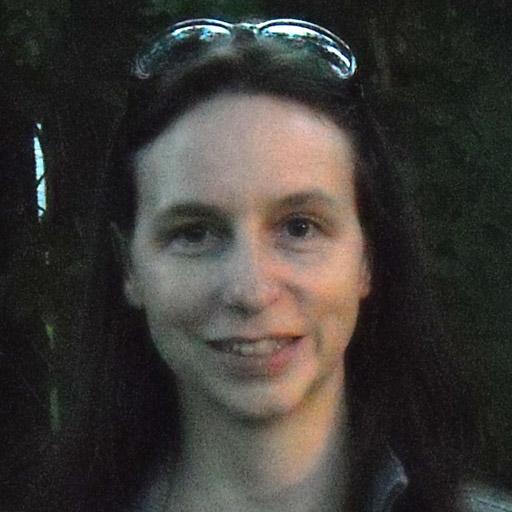
Masahiro Ryo is a Professor of Environmental Data Science at Brandenburg University of Technology (BTU) and leads the working group "Artificial Intelligence for Smart Agriculture" at the Leibniz Centre for Agricultural Landscape Research (ZALF). His research integrates machine learning with ecological systems to address global sustainability challenges, focusing on biodiversity, soil health, and AI-driven agricultural solutions. His work spans environmental data science, ecosystem services, and smart agriculture. Key themes include explainable AI for biodiversity monitoring, soil organic carbon prediction, and machine learning applications in ecological modeling. Recent publications highlight trends in environmental AI, with applications in yield mapping, fungal taxonomy, and global change ecology. He emphasizes the integration of ecological theory with deep learning to tackle small-data problems and improve model transferability. Contact: masahiroryo@gmail.com | Personal Website
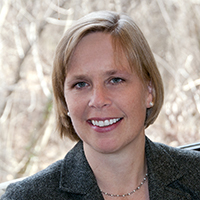
Kadri Koorem is an Associate Professor in Plant Ecology at the Institute of Ecology and Earth Sciences, University of Tartu. She serves as Editor for European Journal of Soil Biology and contributes to academic administration as Council member and peer-review panelist. PhD (2012) and Master's (2007) in Plant Ecology from University of Tartu Research focuses on plant-soil interactions, mycorrhizal networks, and biodiversity in disturbed ecosystems Her recent publications analyze arbuscular mycorrhizal fungal responses to agricultural practices, salinization, and climate change, with global implications for ecological restoration. She mentors doctoral candidates studying multi-trophic interactions and novel crop sustainability. Scientific awards include University of Tartu's 2022 Badge of Distinction and Wiley Blackwell's 2010 recognition for outstanding presentation. She coordinates projects under EU Horizon and Estonian Research Council grants, examining evolutionary plant-soil dynamics and microbial community responses to land use change.
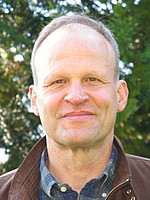
Laura Llorens Guasch is an Associate Professor in the Department of Environmental Sciences at the University of Girona, where she has been a faculty member since 2010, previously serving as a Lecturer from 2005 to 2010. Her academic background includes a PhD in Biology from the Autonomous University of Barcelona and a Marie Curie postdoctoral fellowship at the University of Sheffield. She teaches in the Biology, Environmental Sciences, and Master’s in Environmental Change programs. Bachelor of Biology – University of Barcelona (1999) PhD in Biology – Autonomous University of Barcelona (2003) Marie Curie Postdoctoral Fellow – University of Sheffield (2003–2005) Her research centers on plant physiological responses to climate change stressors such as elevated CO 2 , drought, temperature rise, and UV radiation, with a focus on Mediterranean ecosystems. She leads research within the Research Group on Soils and Vegetation in the Mediterranean , exploring plant community dynamics and ecosystem resilience. A recent initiative investigates the potential benefits of ruderal species in organic horticulture, particularly for tomato cultivation. Her 15 most recent publications reveal a consistent focus on plant ecophysiology under global change, combining field experiments with physiological measurements. Key themes include photoprotection, water use efficiency, carbon assimilation, and plant-plant interactions. The work spans functional ecology, climate change biology, and sustainable agriculture, often integrating multi-stressor experimental designs. She has served as an associate editor for Functional Ecology and has contributed to 5 book chapters and over 50 conference presentations. Her research has been supported by 14 competitive grants, 4 of which she led as principal investigator. Associate Editor – Functional Ecology (IF=4.83) Principal Investigator in 4 competitive research projects Participant in 14 research projects total Laura Llorens Guasch actively supervises students and contributes to academic mentoring, though specific student names are not listed. Her work continues to advance understanding of how Mediterranean vegetation adapts to environmental change, with implications for conservation and sustainable land use.
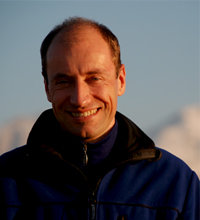
Dr. Rebecca Tittler is a part-time faculty member at Concordia University's Loyola College for Diversity and Sustainability, affiliated with the Department of Geography, Planning and Environment. She combines academic advising with research coordination at the Loyola Sustainability Research Centre. Ph.D. in Biology from Carleton University (2008) M.Sc. in Biology from University of Alberta (1998) B.A. in Biology from Swarthmore College (1995) Her research focuses on: Interactions between biodiversity, forest landscape structure, and human activity Sustainable boreal/mixedwood forest management Ecosystem services in urban and periurban environments Source-sink dynamics in avian populations TRIAD zoning strategies Landscape-scale ecological modeling Key publication themes include: Optimizing vegetation management under electric infrastructure Long-term forest sustainability under climate change Wildfire risk mitigation in timber supply Anthropogenic disturbance zoning TRIAD forest management applications Avian dispersal patterns Current research projects examine: Climate change impacts on Quebec's annual allowable cut Biodiversity effects of partial cuts Plantation location optimization Urban tree ecosystem services
Sarah Stafford is a Professor of Economics at the College of William & Mary, affiliated with the Department of Economics in the College of Arts & Sciences. She joined the faculty in 1998 after earning her Ph.D. in Economics from Johns Hopkins University and B.S. in Foreign Service from Georgetown University. Her research focuses on environmental regulations' impacts on firms and industries, with particular emphasis on coastal management, hazardous waste policy, and regulatory compliance mechanisms. Education: B.S. in Foreign Service, Georgetown University (1990) Ph.D. in Economics, Johns Hopkins University (1998) Her research interests span environmental economics, regulatory policy, and law and economics. Key areas include evaluating the effects of environmental regulations on business behavior, measuring social vulnerability to climate change, and designing effective compliance frameworks for hazardous materials. Recent work emphasizes coastal zone management, living shorelines, and the economic impacts of recurrent flooding in Virginia. Her publications analyze regulatory effectiveness, including studies on environmental audits, state-federal regulatory interactions, and community vulnerability indices. Research consistently bridges economic theory with practical policy applications, particularly in coastal resilience and environmental justice.
Huiran Jin is an Associate Professor in the School of Applied Engineering and Technology at New Jersey Institute of Technology (NJIT). Her research focuses on remote sensing, land cover classification, and environmental modeling, with a strong emphasis on integrating multi-sensor data and machine learning techniques. She has secured federal grants from NSF and USGS for projects addressing riparian ecosystem dynamics and harmful algal blooms. Her work spans applications from solar image generation using GANs to geospatial education frameworks promoting diversity and inclusion in STEM. Her research interests include environmental monitoring using remote sensing technologies such as VIIRS, Landsat, and LiDAR, as well as cognitive strategies in engineering education. Notable contributions include fusion of optical/radar/LiDAR data for land cover mapping and assessing spatiotemporal variations of environmental parameters like PM2.5 and PM10 in China. Her articles reflect interdisciplinary trends in geospatial science, combining environmental data analysis with educational innovations. Recent projects highlight deep learning applications for flood monitoring and subpixel urban mapping. Jin has collaborated internationally on ecosystem dynamics and hydroclimate variability studies. Her work has been supported by grants totaling over $1M, including a 7-year NSF project (2018-2025) and a 2023 USGS-funded study on harmful algal blooms in NJ lakes. She has published extensively in journals like ISPRS Journal of Photogrammetry and Remote Sensing, with over 500 citations and an h-index of 11.
Prof. Dr. Anita Kirmer is Acting Professor of Vegetation Science at Anhalt University of Applied Sciences (Hochschule Anhalt), Department 1: Agriculture, Nutritional Science and Landscape Development, Bernburg campus, Germany. Since 2019 she has also been a Privatdozentin (private lecturer) at TU Berlin . Her career combines research, teaching and applied restoration practice focused on biodiversity enhancement in farmland, ecological restoration of grasslands and post-mining landscapes, and climate-adapted land management. Education & Career Path 1994 – Diploma Biology, University of Hohenheim 2003 – Dr. rer. nat. (Geobotany), Martin-Luther-University Halle-Wittenberg 2017 – Habilitation & Venia legendi in Applied Biodiversity Research, TU Berlin 2021-present – Acting Professor of Vegetation Science, Hochschule Anhalt Research Focus Prof. Kirmer’s work centres on restoring biodiversity in degraded ecosystems , especially: Long-term experiments on species-rich field margins and wildflower strips in intensive farmland. Developing best-practice methods for restoring open habitats (grasslands, fringes, post-mining slopes). Climate-change adaptation strategies in viticulture and grassland management. Knowledge transfer between science and practice for green-sector professionals. Research Funding & Projects She currently leads or co-leads numerous large, externally funded projects: AgriRestore (DFG, 2024-2029) – ecosystem restoration across scales for biodiversity & climate resilience. Grassworks (BMBF, 2021-2024) – multi-region assessment of successful grassland restoration concepts. LIFE VineAdapt (EU LIFE, 2020-2025) – sustainable viticulture adapting to climate change. TEAM#UP & TRAIN#ER (Erasmus+, 2022-2027) – vocational excellence in ecological restoration training. Further projects funded by DBU, ELER, BMBF, EU Interreg, etc. Scientific Output & Recognition Prof. Kirmer has authored >100 peer-reviewed publications, co-edited international handbooks (e.g., Guidelines for Native Seed Production and Grassland Restoration , Cambridge Scholars), and published practical guides widely used by practitioners. She is active in the Society for Ecological Restoration (SER) and the Ecological Society of Germany (GfÖ). Laboratories & Collaborations She heads activities within the KAT Competence Center LIFE SCIENCES at Hochschule Anhalt and collaborates with >30 national and international partners (e.g., TU München, Leuphana Lüneburg, Thünen Institute, Universities of Alicante & Greifswald, NINA Norway, Czech Academy of Sciences).
Prof. Dr. Thilo Streck is a Professor of Biogeophysics at the Institute of Soil Science and Land Evaluation, University of Hohenheim, Germany . He has served as Head of the Department of Biogeophysics since 2001 and was Head of the Institute of Soil Science and Land Evaluation (2002-2006) . Since 2023, he is the Research Director of the Computational Science Hub (CSH), University of Hohenheim . His research focuses on: Soil and environmental physics Measurement and modeling of terrestrial ecosystem processes Land surface processes (soil-plant-atmosphere exchange) Environmental fate of chemicals Regionalization and risk assessment Recent publications highlight his work in 2025 on trait-based microbial modeling , land-atmosphere feedback observatories , and climate change impacts on agricultural systems , with 2024 work on crop yield prediction , water demand modeling , and organic matter stabilization . Scientific honors include: Gips-Schüle Award 'Freedom for Research' (2016) Fritz Scheffer Award of the German Soil Science Society (1994) He has led major DFG research initiatives: Research Unit 1695 (2012-2019) : Agricultural Landscapes under Global Climate Change PAK 346 (2008-2011) : Structure and Functions of Agricultural Landscapes
Pascal A. Niklaus is a Senior Lecturer and Adjunct Professor at the Department of Evolutionary Biology and Environmental Studies, University of Zurich. He leads the Global Change and Soil Ecology Group, focusing on plant-soil interactions, biogeochemical cycles, and biodiversity-ecosystem functioning relationships. His research integrates field experiments, statistical analysis, and microbial ecology to address global change impacts on ecosystems. Education: PhD in Botany, University of Basel (1997-2000) Postdoctoral positions at ETH Zurich and University of Basel National Science Foundation Postdoctoral Fellowship (2001-2002) Research Interests: His work explores how plant diversity influences ecosystem processes, particularly methane and nitrous oxide dynamics in soils. He investigates microbial community responses to environmental changes and the role of biodiversity in maintaining ecosystem resilience. His studies span terrestrial ecosystems, including forests and grasslands, using experimental approaches and advanced analytical techniques. Articles Trends: Recent work emphasizes climate impacts on tree traits, microbial diversity effects on carbon cycling, and the role of plant-soil interactions in mediating global change effects. Key themes include biodiversity-productivity relationships and the ecological consequences of species loss. Awards: No specific scientific awards listed, but recognized for editorial roles in Oecologia and Scientific Reports . Grants & Grants: Secured funding from NSF, Swiss National Science Foundation, and the Treubel Foundation. Current projects address soil ecology under global change and microbial community dynamics. Labs/Teams: Head of the Global Change and Soil Ecology Group at UZH, collaborating with international networks on biodiversity and ecosystem studies.
Prof. Dr. Merel Soons (Utrecht University) is a leading ecologist in Environmental Sciences and Chair of the university's Biodiversity Council . Her work integrates spatial ecology with global change drivers to advance biodiversity conservation and ecosystem restoration . Institution: Copernicus Institute of Sustainable Development Expertise: Movement ecology, seed dispersal, wetland/grassland conservation Contact: mbsoons@uu.nl , m.b.soons@uu.nl Her research bridges theoretical ecology and applied conservation , focusing on: Plant and animal dispersal across fragmented landscapes Biodiversity-climate interactions in grasslands and wetlands Restoration ecology for climate resilience and ecosystem services Global change impacts (land use, climate, nitrogen deposition) Recent publications highlight her team's work on seed dispersal networks , drought resilience via plant diversity, and peatland bistability . Key projects include COMBINED (climate-biodiversity-human interactions) and UU BioCliVE (biodiversity-climate experiments). Scientific Awards : NWO Meervoud grant (2025) NWO VIDI grant (2024) NWO Aspasia grant (2023) She supervises 10+ PhD students and leads interdisciplinary collaborations with institutions like Natuurmonumenten , Urgenda Foundation , and LTO Netherlands , emphasizing policy-relevant science for sustainable landscape management.
Dr. Prem Parajuli is a Professor of Environmental Engineering and Watershed Modeling in the Department of Agricultural and Biological Engineering at Mississippi State University (MSU), affiliated with the Bagley College of Engineering. He holds a Ph.D. in Biological and Agricultural Engineering from Kansas State University. His career spans over 15 years, including roles as Post-Doctoral Researcher (2007–2009) and progressively advancing to Assistant (2009–2015), Associate (2015–2021), and Full Professor (2021–present). Dr. Parajuli’s research focuses on environmental engineering, particularly watershed hydrology, water quality modeling (e.g., SWAT), climate change impacts, bio-energy systems, and GIS/remote sensing applications. Key interests include the water-energy-food nexus, agricultural conservation practices, and non-point source pollution mitigation. He leads projects funded by USDA and other agencies, emphasizing sustainable land and water management. His teaching spans courses like ABE 4803 (Biosystems Simulation), ABE 3513 (GPS/GIS in Agriculture), and ABE 4990 (Watershed Modeling). He has mentored 55 students, including 23 PhD candidates and 8 MS students, and collaborates internationally through initiatives in Nepal and Taiwan. Dr. Parajuli is a recognized leader in ASABE, serving as Outstanding Associate Editor (2021) and committee roles in hydrology and environmental systems. Notable achievements include over 100 peer-reviewed publications, development of SWAT-based models for water quality prediction, and leadership in multi-state USDA projects. His work bridges academic research with practical solutions for environmental resilience, emphasizing climate adaptation and sustainable agriculture.
Frank van der Hoeven is Director of Research at the Faculty of Architecture and the Built Environment and Open Science programme manager at TU Delft. He specializes in urban underground space, climate adaptation, and multi-functional land use. His work addresses sustainable mobility, high-rise development, and urban heat island mitigation. Research focuses on Dutch urban challenges including heritage conservation, remote sensing applications, and creative industry policy. He serves on boards of the Dutch Tall Building Council and Royal Netherlands Archaeological Society (KNOB). Key contributions include methodologies for urban heat mapping (e.g., Rotterdam/Hague studies) and frameworks for railway station area design evaluation using agent-based simulations. Over 145 research outputs include books, journal articles, and datasets on urban climate resilience. Active in academic governance, he oversees open access policies and collaborates internationally on sustainability initiatives. Media engagements discuss urban heat adaptation and Dutch spatial planning strategies.
William Peterman is an Associate Professor in Wildlife Ecology and Management at The Ohio State University. His research integrates field observation, molecular lab work, and quantitative modeling to study biodiversity responses to climate change, habitat alteration, and urbanization. He focuses on animal population connectivity, habitat restoration, and conservation strategies across spatial-temporal scales. Landscape ecology and conservation biology Population genetics and metapopulation dynamics Climate change impact on amphibians and reptiles Recent publications highlight advancements in landscape resistance modeling, hybridization effects on conservation, and climate-agroecosystem interactions. His lab emphasizes interdisciplinary methods including biophysical models and camera trap technology for biodiversity monitoring. Current students in his lab include Grant Ravary, Olivia Ruppert, Marissa Roseman, Aidan McCarthy, Jess Dong, Ryan Wagner, and Allison Williams. He has developed specialized software (ResistanceGA) and teaches courses like ENR 5370: Management of Wildlife Habitat .
Marcos Gridi-Papp is a Professor in the Department of Biological Sciences at University of the Pacific, specializing in the study of acoustic communication systems in animals. His research investigates the interplay between hearing, vocal anatomy, and communication behavior, with a focus on frogs and crickets. He also teaches courses related to biological sciences and advises biology and pre-dental majors. PhD in Integrative Biology, University of Texas, Austin (2003) MS in Ecology, State University of Campinas, Brazil (1997) BS in Biological Sciences, State University of Campinas, Brazil (1994) Gridi-Papp's research explores how anatomical structures influence vocal performance and auditory sensitivity. His lab investigates: Laryngeal morphology and vocal control in túngara frogs Auditory tuning mechanisms and ultrasound sensitivity Environmental impacts on communication strategies Physiological and behavioral adaptations in vocal systems Signal complexity evolution and middle ear mechanics Eustachian tube control and acoustic reflexes Recent research trends focus on: Bioacoustic adaptations in amphibians Behavioral responses to environmental changes Anatomical constraints on vocalization Acoustic signal optimization Frequency modulation mechanisms Multi-component call structures His lab offers research opportunities in anatomy, electrophysiology, animal behavior, and computational methods, supporting students with credit hours and technical training.
Dr. Cristina Ganuza is a postdoctoral researcher at the Chair of Animal Ecology and Tropical Biology (Zoology III) within the Biocenter of the University of Würzburg. Her work focuses on community ecology and agroecology, particularly examining pollination dynamics, climate change impacts on biodiversity, and land-use effects on ecosystem services. MSc: Biology (Conservation and Systems Ecology), Wageningen University BSc: Biology, Universidad Autónoma de Madrid Her research investigates functional biodiversity in agricultural and semi-natural landscapes, with a strong emphasis on plant-pollinator interactions, phenology shifts under climate change, and the interplay between habitat fragmentation and trophic networks. She contributes to the LandKlif project analyzing climate change adaptation strategies. Recent publications highlight her work on insect biomass decline, dung decomposition dynamics, and habitat quality metrics across temperate and tropical ecosystems. Collaboration with senior ecologists like Prof. Steffan-Dewenter and Prof. Tscharntke underscores her interdisciplinary approach.