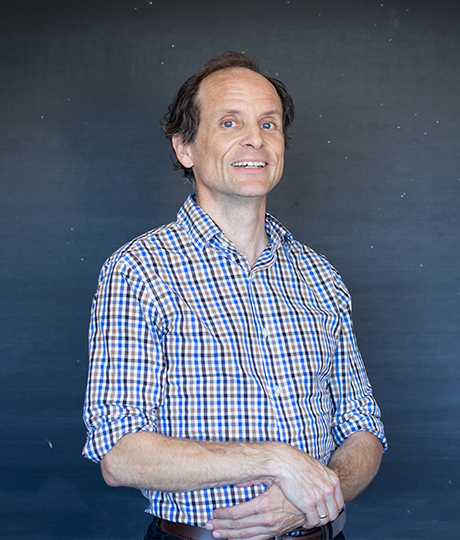
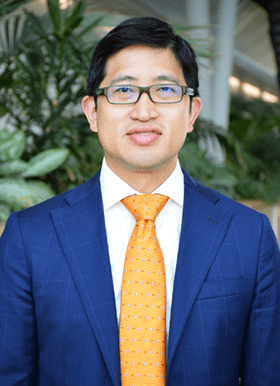
Tara Boroushaki is an incoming Assistant Professor in Electrical & Computer Engineering at Yale University. She completed her Ph.D. at MIT (expected May 2025), advised by Prof. Fadel Adib, with a focus on sensing and mobile technologies. Her research spans wireless networking, robotics, and human-computer interaction, emphasizing multi-modal sensing for environmental perception. Key achievements include the Microsoft Research PhD Fellowship (2022–2024) and the IEEE RFID '23 Best Paper Award. Her work on RF-based 'X-ray vision' has been featured in TEDxMIT and media outlets like the BBC and World Economic Forum. She co-founded Cartesian Systems, deploying sensing technologies in retail and supply chain. Research interests include non-line-of-sight perception, RFID localization, and robotic grasping. She has developed systems like FuseBot and RFusion, highlighted as transformative in MIT's '103 Ways to Make the World Better' initiative.
Suranga Chandima Nanayakkara is an Associate Professor in the Department of Computer Science at the National University of Singapore (NUS), leading the Centre for Holistic Inquiry into Lifelong Learning (CHILL) and the Smart Systems Institute (SSI). He holds roles such as AI+HCI Theme Lead at NUS+CNRS IPAL Lab and Residential Fellow at NUS College. His research focuses on assistive human-computer interfaces, emphasizing technologies that enhance perceptual and cognitive capabilities for individuals with sensory deficits. He earned his PhD and BEng from NUS, followed by postdoctoral work at MIT Media Lab. Notable projects include the Augmented Human Lab, iTILES for rehabilitation, and the FingerReader device for visually impaired shoppers. His work has garnered awards like the MIT TR35, TOYP, and INK Fellowship. Research interests include Intelligent Systems, Human Augmentation, and Design Science. He explores applications in assistive technologies, healthcare informatics, and educational tools. Over 15 publications highlight innovations in wearables, stress management, and multimodal interaction. Awards: 40+ accolades, including MIT TR35, TOYP, and multiple design awards for projects like Kiwrious and FingerReader. Grants: Led projects funded by institutions like NUS and Singapore’s innovation initiatives. Labs: Augmented Human Lab (founded 2011), focusing on humanizing technology through natural interfaces.
Dr. Jules Rawlinson is a Senior Lecturer in Digital Design at the Reid School of Music , University of Edinburgh. He serves as Programme Director for the MSc Sound Design and contributes to MSc Design and Digital Media, ESALA undergraduate courses, and the Reid School's MSc Digital Composition and Performance. PhD in Composition (University of Edinburgh, 2011) MSc Sound Design (University of Edinburgh, 2006) BA Combined Arts (Sunderland University) Jules investigates audiovisual composition , live electronics , and interactive performance systems , blending machine learning , virtual environments , and corpus-based sound synthesis . His work explores non-linear narrative structures , graphical scores , and political sound-art through collaborations like Raw Green Rust and projects such as Lie Still My Sleepy Fortunes and w[i]nd . His 15 most recent outputs span audiovisual installations , generative sound systems , and collaborative performances , focusing on virtual reality , spectral transformation , and digital improvisation . Jules co-founded the LLEAPP network and has secured grants from EPSRC and New Media Scotland's Alt-w Fund . He supervises PhD students Tim Bentley, Hal Xu, Benjamin Cantil, and Liam Peacock, with works showcased at festivals including Sonorities , Edinburgh International Film Festival , and Edinburgh Festival Fringe . His Requiem for Edward Snowden was featured in BBC Radio 3's Hear and Now and selected for Creative Scotland's Made In Scotland Showcase.
Dr Brandon M Grainger is an Eaton Faculty Fellow and Associate Professor of Electrical and Computer Engineering at the University of Pittsburgh’s Swanson School of Engineering, where he also directs the Electric Power Technologies Laboratory, serves as Associate Director of the Energy GRID Institute, and co-directs Pitt AMPED. A key architect of Pitt’s electric power program since 2008, he focuses on advanced power conversion, high-voltage electronics, wide-band-gap semiconductors, and aerospace power systems. Education PhD, Electrical Engineering (Power Conversion), University of Pittsburgh, 2014 MS, Electrical Engineering, University of Pittsburgh, 2011 BS, Mechanical Engineering & Minor in Electrical Engineering, University of Pittsburgh, 2007 Executive Education Certificate, Tepper School of Business, Carnegie Mellon University, 2019 Research Focus Dr Grainger’s work lies at the intersection of power electronics, high-voltage engineering, and sustainable energy systems. He specializes in medium- and high-voltage power electronics (HVDC, STATCOM), resonant converters, and ultra-high-power-density designs leveraging SiC and GaN semiconductors. His investigations extend to electric-vehicle traction drives, solid-state transformers, optimized magnetics for aerospace applications, and resilient microgrids. He and his students routinely collaborate with NASA JPL, Johns Hopkins APL, Honeywell Aerospace, and the Naval Research Laboratory, leveraging Pitt’s NSF SHREC center to push the boundaries of power conversion in space and defense systems. Selected Research Themes High-frequency, high-density DC/DC converters for satellite power systems Radiation-tolerant GaN converters and point-of-load power stages Medium-voltage testbed development (13.8 kV, 5 MVA) Rare-earth-free permanent-magnet machine topologies Model-predictive control of multi-phase drives and microgrids Honors & Awards 2024 IEEE Region 2 Outstanding Educator Award 2024 Pitt STRIVE Outstanding DEI Service Award 2019 ESWP Engineer of the Year 2019 ASEE 2nd Place Best Paper Award 2019 SRI Undergraduate Best Mentor Award Richard K. Mellon Endowed Graduate Fellowship National Academies of Science & Engineering Ambassador Senior Member, IEEE Grants & Industry Partnerships Dr Grainger’s research has been continuously funded by federal agencies and industry partners including NASA JPL, Johns Hopkins APL, Honeywell Aerospace, the Naval Research Laboratory, Eaton, and the National Science Foundation through the SHREC Center. These awards support graduate students and post-docs working on next-generation power systems for aerospace, naval, and terrestrial applications. Laboratories & Teams Director, Electric Power Technologies Laboratory (EPTL) Associate Director, Energy GRID Institute Co-Director, Pitt AMPED (Advanced Multimodal Power and Energy Development) Faculty Affiliate, NSF SHREC Center
Zian Qin serves as an Associate Professor in the Department of Electrical Sustainable Energy at Delft University of Technology, Netherlands. His academic journey includes a B.Sc. from Beihang University (2009), M.Sc. from Beijing Institute of Technology (2012), and Ph.D. from Aalborg University (2015), all in Electrical Engineering, with a Visiting Scientist stint at RWTH Aachen University (2014). B.Sc., Electrical Engineering, Beihang University (2009) M.Sc., Electrical Engineering, Beijing Institute of Technology (2012) Ph.D., Electrical Engineering, Aalborg University (2015) His research centers on power electronics-based grid stability, solid-state transformers, and battery energy storage systems. Key contributions span DC microgrid control, magnetic material optimization, and EV charging infrastructure, with fingerprints highlighting expertise in power quality ( 100% ), voltage stability ( 87% ), and grid-forming applications ( 79% ). Current projects like ECS4DRES and GROW focus on resilient renewable energy systems and African energy storage solutions. His 154+ publications reveal strong emphasis on power electronics control ( 83% ), grid integration ( 79% ), and EV technologies ( 42% ), with recent work targeting microgrid vulnerability reduction and data-driven magnetic loss modeling. Awards include IEEE Prize Paper Awards (2023), World Top 2% Scientist recognition, and IEEE Innovation Awards (2024). IEEE International Challenge Excellent Innovation Award (2024) IEEE Open Journal Prize Paper Award (2023) World's Top 2% Scientist (2022-2024) Featured IES Journal Articles (2023) IEEE TIE Distinguished Reviewer (2020) As Founding Chair of IEEE Transportation Electrification Council Benelux Chapter and Dutch National for Cigre WG B4.101, he leads critical industry collaborations. His editorial roles in IEEE TPEL/TIE/JESTPE and projects like PROGRESSUS demonstrate significant grant leadership in next-generation power infrastructure. Lab activities focus on DC systems, energy conversion, and storage validation through Delft's Electrical Sustainable Energy facilities.
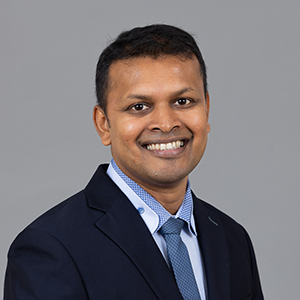
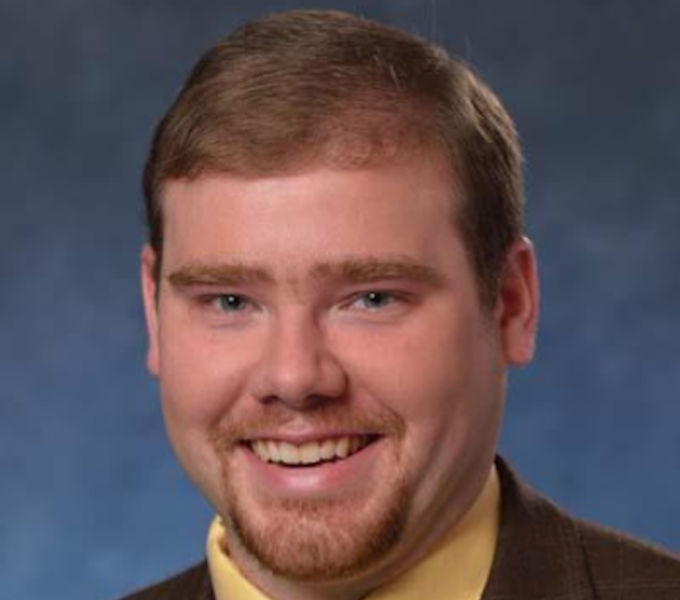
Dr. Lucy Hederman is an Associate Professor in Computer Science at Trinity College Dublin (TCD), affiliated with the O'Reilly Institute. Her research focuses on leveraging data and documents to support clinical decision-making, particularly in healthcare knowledge work. She has led interdisciplinary projects addressing data integration for rare diseases (e.g., ANCA-vasculitis, MND) and socio-technical challenges in adopting patient-generated health data (PGHD) into clinical practice. Dr. Hederman has secured over €xxxk in research funding and leads the Heterogeneity and Interoperability (H&I) challenge in the SFI-funded ADAPT 2 Centre. Her educational background includes advanced studies in computer science and healthcare informatics, though specific degree details are not explicitly stated in the text. She has supervised 4 PhDs, 2 research MScs, and co-supervised 6 PhDs, while currently mentoring 8 graduate students. Her career includes founding TCD spinouts PBOC and BIOLOGIT, which align with her research in health informatics and technology. Key research interests include: Interdisciplinary collaboration between clinicians, researchers, and technologists Data harmonization for multi-national clinical studies (e.g., FAIRVASC, Precision-ALS) Development of clinical decision support systems (CDSS) Design of mobile health (mHealth) tools for underserved populations Recent work emphasizes FAIR principles for healthcare data and socio-technical factors influencing PGHD adoption. She has contributed to over 70 peer-reviewed publications and actively participates in initiatives like the EU-funded TRANSFORM project and HRB Primary Care Research Centre. Dr. Hederman’s professional memberships include the Irish Computer Society, ACM, and Healthcare Informatics Society of Ireland. Her research has impacted healthcare practices in Ireland, with many MSc student projects influencing local health services.
Pavan Turaga is a Professor and Founding Director of The GAME School at Arizona State University (ASU), with a joint appointment in the School of Electrical, Computer and Energy Engineering (ECEE). They lead transdisciplinary research and education initiatives spanning gaming, esports, AI-enabled media creation, computer vision, and geometric modeling. Ph.D., Electrical Engineering, University of Maryland (2009) B.Tech., Electronics and Communication Engineering, IIT Guwahati (2004) Research focuses on integrating geometry and topology with machine learning , enabling advancements in: Computer vision for human activity recognition Generative AI for immersive media Health analytics and wearable rehabilitation systems AI ethics and pandemic prediction Key publications span CVPR (2023 spotlight paper PolyINR ), DLGC workshop (2023 best paper), and ICML (2019 work on GAN priors). Recent work explores LMMs , 3D human modeling , and AI for pandemic preparedness . Scientific accolades include: ASU Founders' Day Research Excellence (2025) NSF CAREER award (2015) CVPR 2023 Spotlight paper 2024 X-Prize (Rainforest Challenge) Directed research for students like Rajhans Singh and Ankita Shukla, securing grants from NSF , DARPA , and industry partners (Adobe, Google ATAP). Founded the Geometric Media Lab , emphasizing interdisciplinary collaborations with mathematicians, health scientists, and media artists.
Sabine Süsstrunk is a Full Professor and Director of the Images and Visual Representation Laboratory (IVRL) at EPFL's School of Computer and Communication Sciences. She holds a BS in Scientific Photography from ETH Zürich, MS from Rochester Institute of Technology, and PhD from University of East Anglia. Her career includes positions at Hewlett-Packard Labs and Corbis Corporation. Her research explores computational imaging, computational photography, color processing, computer vision, and image quality. Key interests include near-infrared applications, multispectral imaging, and computational aesthetics. Her work bridges hardware and software solutions for imaging challenges. Publications demonstrate consistent focus on advancing generative models (diffusion models, neural cellular automata), 3D reconstruction (NeRF variants), and media integrity (DeepFake detection). Recent trends show increased emphasis on 3D vision, robustness in generative AI, and video analysis. Awards & Honors: IS&T/SPIE Electronic Imaging Scientist of the Year (2013) Raymond C. Bowman Teaching Award (2018) EPFL AGEPoly IC Polysphere Award (2020) 8 Best Paper/Demo Awards Fellowships: IEEE, IS&T, ELLIS, AIIA She leads the IVRL lab and advises PhD candidates while serving as President of the Swiss Science Council. Research is supported through competitive grants and industry collaborations.
Alexander J Sundermann serves as an Assistant Professor in the Department of Epidemiology at the University of Pittsburgh School of of Public Health. His research focuses on leveraging pathogen genomic surveillance and machine learning to revolutionize infection prevention practices in healthcare settings, with demonstrated impacts on outbreak detection accuracy and intervention speed. Education: 2013: BS in Microbiology, University of Rochester 2014: MPH in Infectious Diseases and Microbiology, University of Pittsburgh 2022: DrPH in Epidemiology, University of Pittsburgh Dr. Sundermann's work centers on whole-genome sequencing of pathogens to detect healthcare-associated transmission invisible to traditional methods. His research demonstrates how genomic surveillance reveals hidden outbreaks of vancomycin-resistant Enterococcus (VRE) and mucormycosis, directly linking colonization to clinical outcomes like ICU admission and mortality. He pioneers machine learning tools that analyze electronic health records to identify transmission routes, creating more efficient outbreak investigation frameworks across hospital networks. His publication portfolio (2019-2025) shows a clear trajectory toward integrated genomic-clinical surveillance systems, with recent work quantifying clinical and economic impacts while addressing implementation barriers. This interdisciplinary approach bridges epidemiology, genomics, and data science to transform infection prevention protocols. Scientific Awards: No awards listed in available information. Advising and Grants: While specific advisees and grant details aren't provided, his multi-institutional collaborations suggest active mentorship within genomic epidemiology research teams. His work with the National Healthcare Safety Network indicates engagement with major public health surveillance infrastructure. Labs and Teams: Dr. Sundermann leads cross-functional teams including microbiologists, data scientists, and clinicians across multiple healthcare systems. His UPMC outbreak investigations and national linen contamination studies demonstrate operational frameworks for real-time genomic surveillance implementation in complex hospital environments.
Patrick Brown is an Associate Professor at the University of Toronto , affiliated with the Department of Statistical Sciences and cross-appointed to the Centre for Global Health Research and St. Michael's Hospital . His research focuses on spatio-temporal data modeling , Bayesian inference , and non-parametric methods for spatial epidemiology and environmental sciences. Fields of Interest : Spatial Statistics, Cancer Statistics, Statistical Software Education : PhD from University of Lancaster His methodological work encompasses Bayesian inference for non-Gaussian spatial data, Gaussian Markov random fields, and computational techniques like INLA and MRA. Applied research themes include disease mapping, environmental risk assessment, and public health surveillance using real-world data sources such as electronic health records and wastewater monitoring . He has developed key R packages (mapmisc, geostatsp, diseasemapping) supporting spatial statistical applications. Current collaborative projects span diverse fields: Ultra-diffuse galaxy detection with astrophysical applications Multi-pollutant mortality studies in Canadian cities SARS-CoV-2 seropositivity tracking Homelessness population estimation using EHR Geospatial cancer risk tools for Nova Scotia His work bridges statistical innovation with global health challenges , emphasizing computationally efficient solutions for large-scale spatiotemporal datasets.
Prof. Felix Balzer is a Professor for Medical Data Science and Chief Medical Information Officer (CMIO) at Charité - University Medicine Berlin . He serves as Director of the Institute of Medical Informatics, leading digitalization efforts for patient care and overseeing implementation of the hospital's electronic medical record (EMR) systems. Medical Data Science professorship (2021) Director of Institute of Medical Informatics Acting Chief Information Officer (2024-2025) Deputy Chief Medical Officer for Clinical Digitalization (2025) His research focuses on: Digital healthcare transformation Machine learning in critical care Alarm fatigue mitigation Interoperability standards (FHIR, OMOP) Electronic health records (EHR) optimization Patient monitoring systems The 2025-2026 publications reveal expertise in ICU data analysis, predictive modeling for postoperative delirium, and pandemic response technology. His work bridges clinical practice with technical implementation through: Interdisciplinary teams Multi-center trials Real-time clinical data architectures Human factors in healthcare AI
Dr. Bo Liu is an Associate Professor in the School of Computer Science at the University of Technology Sydney (UTS), where he serves as a core member and director of the AI Security and Privacy (AISP) Research Lab at the Australian Artificial Intelligence Institute (AAII). With expertise spanning cybersecurity, privacy protection, AI and machine learning, and wireless communications, Dr. Liu has established himself as a leading researcher in the field of AI security and privacy. Dr. Liu earned his PhD from the Department of Electronic Engineering at Shanghai Jiao Tong University in 2010. His academic journey at UTS has progressed from Senior Lecturer (November 2019-December 2022) to his current position as Associate Professor (January 2023-present). Dr. Liu's research focuses on the critical intersection of artificial intelligence and security, particularly addressing emerging threats in the age of advanced AI systems. His work spans multiple dimensions of security and privacy, including deepfake detection, privacy-preserving data synthesis, AI model security, and fair machine learning. He has pioneered approaches to detect AI-generated content, protect visual privacy through de-identification techniques, and address the complex relationship between algorithmic fairness and privacy preservation. His publication record demonstrates significant contributions across multiple cutting-edge research areas, with particular emphasis on detecting and mitigating threats from generative AI systems. His recent work reveals a strong focus on deepfake detection across multiple modalities (images, video, and audio), privacy-preserving techniques for sensitive data, and the security implications of emerging AI architectures like Retrieval-Augmented Generation systems. Dr. Liu has secured substantial research funding, including as Lead Chief Investigator on multiple ARC Discovery and Linkage Projects, totaling over $3.5 million AUD. His industry collaborations include partnerships with the NSW Department of Planning and the Reserve Bank of Australia, demonstrating the practical applicability of his research. As an academic leader, Dr. Liu serves as Associate Editor for IEEE Transactions on Broadcasting and actively contributes to the academic community through conference organization, peer review for top-tier venues, and assessment for ARC grant schemes. He also teaches courses including Penetration Testing, Ethical Hacking and Offensive Security, and supervises Masters and PhD students in cybersecurity and privacy research.
Hayato Yamana serves as Professor at Waseda University's Faculty of Science and Engineering and concurrently holds the position of Vice President for IT Promotion and Chief Information Officer since October 2020. His academic journey began with a Dr. Eng. degree from Waseda University in 1993, followed by positions at the Electrotechnical Laboratory of MITI, before joining Waseda University as Associate Professor in 2000 and becoming full Professor in 2005. He has held significant leadership roles including Director of the Database Society of Japan and the Information Processing Society of Japan, as well as Vice Chair of IEICE's Information and Communication Society. Waseda University, Faculty of Science and Engineering (2005-Present) National Institute of Informatics, Visiting Professor (2005-Present) Waseda University, Vice President for IT Promotion (2020-Present) Deputy Chief Information Officer (2015-2020) His research spans homomorphic encryption, big data analysis, and computer architecture, with notable contributions in privacy-preserving computation, recommender systems, and secure data processing. His work bridges theoretical cryptography with practical applications in smart cities, healthcare, and e-commerce security. Recent publications demonstrate strong focus on accelerating homomorphic encryption operations, improving recommendation system diversity, and developing novel authentication mechanisms. Analysis of his 15 most recent publications reveals consistent emphasis on privacy-preserving technologies (particularly homomorphic encryption applications), innovative recommender system architectures, and biometric security solutions. His research group produces highly cited work at the intersection of cryptography, machine learning, and systems security, with practical implementations in real-world scenarios including smart grids, e-commerce, and healthcare. Fellow, Information Processing Society of Japan (IPSJ), 2020 Golden Core Award, IEEE Computer Society, 2018 Fellow, Institute of Electronics, Information and Communication Engineers (IEICE), 2018 IBM Faculty Award, 2009 Multiple Best Paper Awards from IEICE, IPSJ, and ITE Yamana has secured substantial research funding for projects in homomorphic encryption, smart city infrastructure, and privacy-preserving systems. His leadership extends to advising numerous doctoral students and directing major research initiatives including the Smart Systems and Services Innovative Professional Education Program. He maintains active collaborations with industry partners through projects involving secure computation and data analytics. His research group operates at the forefront of secure computing, with specialized laboratories focused on homomorphic encryption acceleration, privacy-preserving machine learning, and secure mobile authentication. The team actively develops practical implementations of cryptographic protocols for real-world applications in healthcare, finance, and smart city infrastructure, bridging theoretical cryptography with deployable security solutions.
Albert M. Lai, PhD, is a Professor of Medicine and Computer Science & Engineering at Washington University in St. Louis, serving as Chief Research Information Officer (CRIO) for the School of Medicine and Deputy Director of the Institute for Informatics, Data Science and Biostatistics (I²DB). He leads WashU Medicine's data warehousing and informatics services, driving innovation in clinical research infrastructure. His expertise spans biomedical informatics, natural language processing (NLP), and telemedicine. Dr. Lai is also Deputy Faculty Lead for WashU’s Digital Transformation initiative, focusing on secure AI integration with sensitive healthcare data. He holds affiliations with the Institute for Public Health, Siteman Cancer Center, and the Center for Applied Health Informatics (CAHI). Research Interests: Dr. Lai develops informatics infrastructure to support clinical trial prescreening, leveraging NLP and machine learning for phenotype extraction from EHR data. He also explores telemedicine, mobile health applications, and EHR-driven cardiovascular health interventions for cancer survivors. His recent work addresses AI ethics in healthcare, including responsible data sharing and bias mitigation in generative AI models. Key Contributions: Over 77 peer-reviewed publications across clinical informatics, AI in healthcare, and pandemic response strategies. His projects include EHR-based cardiovascular health tools, SARS-CoV-2 surveillance in schools, and machine learning models for predicting transplant outcomes. Active mentorship of PhD/MSTP students in translational informatics and data science. Labs/Teams: Leads the Informatics Services Core and collaborates with the CRITICAL consortium for intensive care analytics. Engages in multi-institutional initiatives like the Greater Plains Collaborative for cancer data integration.
Alan Hunter is a Professor in Autonomous Systems at the University of Bath's Department of Mechanical Engineering. He serves as Deputy Head of Department for Workload and Wellbeing and is affiliated with the Water Innovation & Research Centre (WIRC) and the UKRI CDT in Accountable, Responsible and Transparent AI. His research focuses on underwater acoustics, signal processing, imaging, and machine intelligence, with applications in sonar-based remote sensing and marine robotics. Education: B.E. (Hons I) in Electrical and Electronic Engineering from the University of Canterbury (2001), PhD in Synthetic Aperture Sonar (SAS) from the same institution (2006). Career highlights include roles at the University of Bristol (2007-2010), TNO Netherlands (2010-2014), and NATO CMRE (2014). He has led projects on sub-sediment imaging, autonomous mine-hunting systems, and precision navigation algorithms. Research Interests: • Underwater Acoustics & Sonar Imaging • Autonomous Underwater Vehicles • Machine Learning for Acoustic Data Analysis • Non-Destructive Inspection via Ultrasound • Sustainable Coastal Protection (via UN SDG contributions) Active Projects (2023-2025+): - Noise Network Plus : Engineering a Quieter Future (EPSRC) - TESSMEX SR 4 : Naval Mine-Hunting Technology (Defence Lab) - Decision-Making with Ambiguities : Legal AI for Robotics (EPSRC) Professional Affiliations: • Senior Member, IEEE • Associate Editor, IEEE Journal of Oceanic Engineering • Collaborations with NATO, TNO, and UK Defence Orgs. Labs & Teams: • Robotics and Autonomous Systems Lab • Centre for Space, Atmospheric and Oceanic Science • WIRC @ Bath (Water Innovation Hub)



/prod01/channel_3/media/tcd/scss/headshots/Lucy-Hederman-BW-1.jpg)