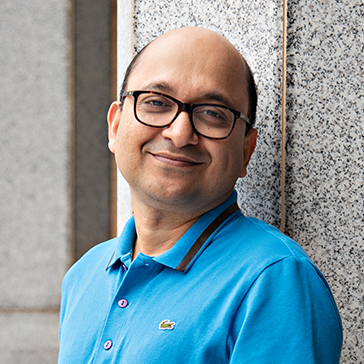
Vyacheslav S. Kharchenko is a researcher affiliated with the National Aerospace University in Kharkiv, Ukraine, specializing in cybersecurity, artificial intelligence, and dependable computing. His work focuses on safety and security assessment of UAVs, IoT systems, and programmable systems, with a strong emphasis on Markov models, penetration testing, and hardware-based security solutions. Recent research includes cybersecurity frameworks for unmanned aircraft, blockchain quality models , and resilience engineering for AI systems. Collaborative efforts with colleagues like Oleg Illiashenko and Herman Fesenko address AI-powered cyberattacks, LiFi network reliability, and resource-constrained AI security. His publications span journals such as IEEE Access , Sensors , and Algorithms , covering topics like stochastic modeling for data evaluation, cache memory optimization , and UAV swarm reliability . Despite no explicit awards listed, his extensive contributions to safety-critical systems and Industry 4.0 cybersecurity underscore significant academic impact.
Shengkai Zhang is an active researcher with 26 publications and 444 citations spanning engineering, computer science, and environmental disciplines. His work demonstrates strong interdisciplinary collaboration through co-authorship with researchers like Kezhong Liu and Mozi Chen across multiple high-impact venues including IEEE conferences, arXiv, and specialized journals. His research interests center on Machine Learning applications in maritime systems , with significant contributions to Large Language Model integration for ship navigation, wireless sensing for bridge officer monitoring, and sensor fusion techniques. Additional expertise spans robotics perception (visual-inertial systems, mmWave radar enhancement), environmental modeling (urban energy systems, climate studies), and biomedical applications of traditional medicine. Recent work shows increasing focus on AI foundation models and their security implications. Zhang's publication trajectory reveals consistent output with accelerating impact since 2023, featuring 15+ papers in 2024 alone. His research clusters around three core themes: Maritime AI Systems (LLM navigation, track association, watchkeeping monitoring) Advanced Sensing Technologies (mmWave radar, Wi-Fi sensing, GNSS fusion) Environmental & Biomedical Applications (urban energy modeling, gut microbiome studies) These areas demonstrate both technical depth in signal processing/computer vision and practical focus on real-world engineering challenges.
George Lentaris is an Assistant Professor at the Department of Computer Engineering, School of Engineering, University of West Attica. He is also a researcher at the National Technical University of Athens (associate, first level). Education: PhD in 'Parallel Architectures and Algorithms for Digital Signal and Image Processing' from National & Kapodistrian University of Athens Master's in 'Logic and Theory of Algorithms and Computation' Master's in 'Electronic Automation' Bachelor's in Physics from National & Kapodistrian University of Athens Research Interests: Design of hardware units and high-performance embedded systems FPGA and multi-core architectures HW/SW heterogeneity and optimization Acceleration of algorithms for space, telecommunications, and edge computing applications Professional Contributions: Participated in 18+ research projects funded by European Space Agency, Horizon, and NSRF Published 60+ scientific articles, including 21+ in journals like IEEE/ACM Transactions and 40+ in international conferences
Enrico Riccardi is an Associate Professor in Computational Engineering at the Department of Energy Resources, Faculty of Science and Technology, University of Stavanger (UIS), Norway. His work bridges computational chemistry, machine learning, and multi-scale modeling, with applications in energy, environmental science, and biophysics. Research Interests: His core expertise lies in molecular dynamics , rare event simulation methods (e.g., reaction kinetics and adsorption), and multi-scale modeling from molecular to continuum levels. He is a key developer of path sampling methodologies and software such as PyRETIS and PyVisA , enabling the study of slow and rare processes in complex systems. His research spans interfacial phenomena in emulsions, membrane permeation, atmospheric chemistry, and data-driven discovery of reaction pathways using machine learning. Recent Publication Trends: Over the past decade, Riccardi has consistently published in high-impact journals such as Journal of Chemical Physics , Physical Chemistry Chemical Physics , and Nature Machine Intelligence . His recent work (2023–2025) shows an expanded scope into educational technology , environmental science , and open-source tool development (e.g., GeoSight), reflecting a growing interdisciplinary impact. The publications reveal a strong focus on algorithmic innovation in simulation methods and their application across chemistry, biology, and engineering. Scientific Contributions: Lead and co-developer of PyRETIS, a widely used open-source library for rare event simulations. Contributor to immuneML, a machine learning ecosystem for immune repertoire analysis published in Nature Machine Intelligence . Active in promoting open science, data sharing, and academic integrity through public commentary and educational initiatives. Advising and Grants: While no formal students are listed in the provided text, Riccardi has mentored or collaborated with numerous early-career researchers and PhD candidates, particularly within the van Erp group. He has contributed to multiple collaborative research projects, likely funded by Norwegian and European research councils, though specific grants are not mentioned. His outreach on postdoctoral challenges suggests engagement with academic policy and mentorship. Labs and Teams: Riccardi is part of a vibrant computational research group at UIS, closely collaborating with Prof. Titus Sebastiaan van Erp and colleagues in the Department of Energy Resources. His work is embedded in a team focused on advanced simulation techniques, with strong ties to international networks in computational chemistry and soft matter physics.
Dr. Muhammed Ali Bingol is a Senior Lecturer in Cyber Security and Programme Leader for the BSc in Computer Networks and Security at De Montfort University, UK, within the School of Computer Science and Informatics, Faculty of Computing, Engineering and Media. He is affiliated with the Cyber Technology Innovations and Digital Future Institute research groups. Education: Ph.D. in Computer Science and Engineering, Sabanci University, 2019 M.Sc. in Electronics and Communication Engineering, Istanbul Technical University, 2012 B.Sc. in Telecommunications Engineering, Istanbul Technical University, 2008 His research focuses on cryptography , information security , blockchain , secure multi-party computation , private function evaluation , authentication systems , and e-voting . He has contributed significantly to RFID security, distance-bounding protocols, and cryptographic protocol design. His work bridges theoretical cryptography and practical security implementations in wireless, cloud, and mobile environments. His recent publications (2022–2025) span topics from flexible threshold signatures and homomorphic encryption to blockchain-based voting and pedestrian safety analysis , indicating an interdisciplinary reach while maintaining a core in cryptographic protocol development. Trends show increasing focus on blockchain integration, privacy-preserving technologies, and real-world security applications. Scientific Awards and Memberships: Fellowship of the Higher Education Academy (FHEA) Member, Institute of Electrical and Electronics Engineers (IEEE) Cisco Networking Academy (CNA) Dr. Bingol has advised on multiple EU, public, and government cybersecurity projects and has served as a visiting scientist at Université Catholique de Louvain and a visiting lecturer at Istanbul City University. He has held industrial research roles at TÜBİTAK BİLGEM (Chief Researcher, 2008–2020), TSSG, and AOL. He leads curriculum development for undergraduate cybersecurity programs and teaches courses in cryptography, networks, malware analysis, and security management. He is actively involved in the Cyber Technology Innovations research group, where he contributes to advancing secure communication protocols, blockchain applications, and privacy-preserving technologies.
José Cano Reyes is a Senior Lecturer (Associate Professor) at the University of Glasgow's School of Computing Science, leading the Glasgow Intelligent Computing Lab (gicLAB) and serving as deputy Head of the GLAsgow Systems Section (GLASS). His academic career includes postdoctoral roles at the University of Edinburgh (2014-2018) and Universitat Politècnica de Catalunya (2012-2013), with a PhD and engineering degree from Universitat Politècnica de Valencia (2004-2012). He has held visiting and guest lecturer positions at Edinburgh and Glasgow across computer architecture, compilers, and embedded systems topics. Research focuses on hardware-software co-design for edge AI, including DNN acceleration (FPGA/GPU), encrypted AI systems, and secure mission-critical SoCs. Key projects include EU's dAIEDGE, EPSRC IDEAL, and UKRI AppControl. He leads over 15 research staff and students in areas like quantization, sparsity exploitation, and robust AI deployment. Notable contributions span 100+ peer-reviewed publications across top venues (ISCA, IJCNN, IEEE TPDS) and 3 authored books on ad hoc networks and embedded systems. Academic service includes organizing 20+ conferences (ISPASS, Euro-Par, ASPLOS) and serving on editorial boards for ACM TACO and IEEE TPDS. His educational efforts include teaching Computer Architecture (Year 4), Computer Systems (Year 1), and supervising over 20 PhD/MSc students since 2017.
Bin Ren is an Assistant Professor in the Department of Computer Science at the College of William & Mary, where he has been a faculty member since Fall 2016. He holds a Ph.D. in Computer Science and Engineering from The Ohio State University (2014) and was a postdoctoral research associate at Pacific Northwest National Laboratory from 2014 to 2016. Research Interests: His work centers on high-performance computing, compiler techniques, and machine learning systems, with a focus on enabling real-time and energy-efficient deep neural network execution on mobile and edge devices. He explores compiler optimizations, DNN pruning, neural architecture search, and GPU memory management to improve system performance and efficiency. Publication Trends: His recent publications (2023–2025) reveal a strong focus on compiler-aware deep learning systems, mobile and edge AI, and performance optimization across heterogeneous platforms. Key themes include DNN acceleration, memory efficiency, real-time inference, and hardware-software co-design. His work frequently appears in top-tier venues such as ASPLOS, SC, CVPR, and PLDI. Scientific Awards: NSF CAREER Award, 2021 Best Paper Award, SC 2020 Best Student Paper Nomination, SC 2020 Jeffress Trust Award, 2020 ISLPED Design Contest First Place, 2020 Student Cluster Reproducibility Challenge Paper, SC 2019 Best Paper Award, CGO 2013 SIGPLAN Research Highlights, 2013 Advising and Grants: Bin Ren has advised numerous Ph.D. and master’s students, many of whom have co-authored influential papers. His research has been supported by competitive grants, including the NSF CAREER Award. He actively mentors students in areas of parallel computing, compiler design, and machine learning systems. He has also received funding from the Jeffress Trust Awards and other sources to support interdisciplinary research. Professional Service: He has served in leadership roles such as Program Co-Chair for PPoPP'25 and HIPS'21, Track Co-Chair for ICPP'24 and HiPC'24, and Artifact Evaluation Co-Chair for PPoPP'24 and ALENEX'25. He is a frequent reviewer for top journals and conferences including TPDS, TACO, NeurIPS, and SC. Teaching: He teaches courses such as CS304 (Computer Organization) and CS642 (Compiler Techniques for High Performance Computing), contributing to both undergraduate and graduate education in systems and programming. Lab and Team: His research group focuses on system-software co-design for efficient AI deployment. Collaborators include researchers from institutions like Pacific Northwest National Laboratory and The Ohio State University. His team works on real-world applications in healthcare, autonomous systems, and scientific computing.
Fulvio Mastrogiovanni serves as an Associate Professor in the Department of Computer Science, Bioengineering, Robotics, and Systems Engineering (DIBRIS) at the University of Genoa's Polytechnic School, specializing in Information Processing Systems (SSD IINF-05/A). He teaches core robotics and computer engineering courses including Artificial Intelligence for Robotics and Computer Architecture across Master's and Bachelor's programs. His research expertise centers on intelligent robotics systems with emphasis on: Human-robot cognitive interaction frameworks Embedded AI architectures for robotic platforms Real-time systems in autonomous robotics Logistics automation through robotic solutions Computer architecture optimization for robotics applications Multi-agent coordination in industrial robotics Administratively, he contributes as: Member of the Board of Directors at the Italian Center of Excellence for Logistics, Transport, and Infrastructure (CIELI) Member of the Technology Transfer Commission
Prof. Dr.-Ing. Ulrich Rückert is a Professor at the Faculty of Engineering of the University of Bielefeld , where he leads the Cognitronics & Sensor Technology Group and participates in CITEC (Center for Cognitive Interaction Technology). He serves as Vice Rector for Digitalization and Data Infrastructure , driving university-level digital transformation initiatives. Research Focus : Neuromorphic computing, spiking neural networks (SNNs), embedded systems, robotics, UWB localization, and reconfigurable hardware. Projects : Leading federal and EU-funded initiatives like eProcessor (RISC-V multi-core systems), VEDLIoT (efficient deep learning in IoT), and Al4DG (AI in distribution grid control). Teaching & Leadership : Academic advisor for the Master in Biomechatronics , chairs examination boards, and leads the Library Commission . His work integrates neuromorphic hardware with edge computing and real-time systems , supported by grants from the European Union and German Federal Government . Recent publications analyze FPGA-based SNNs , UWB localization , and resource-efficient embedded architectures . Scientific Contributions : Over 200 publications in robotics, neural networks, and hardware-software co-design. Notable collaborations with institutions in Germany, Switzerland, and Italy.
Kevin Andrea is a full-time teaching-track Assistant Professor in the Department of Computer Science at George Mason University's College of Engineering and Computing. With a PhD in Computer Science from GMU, he teaches systems programming courses including Computer Systems and Programming (CS 367), Operating Systems (CS 471), and graduate-level Computer Systems and Fundamentals of Programming (CS 531). His research focuses on embedded systems, internet of things, and low-level programming, combining practical implementation with educational innovation. PhD, Computer Science, George Mason University (2023) MS, Computer Science, George Mason University BS, Computer Science, George Mason University AA, Computer Information Systems – Systems Programming, De Anza College Andrea's research bridges hardware-software interactions through projects like resilient hierarchical routing for wireless networks and swarm robotics integration with sensor motes. His 2023 Resilient Hierarchical Routing for Wireless Networks and 2020 co-authored work on cross-disciplinary active learning strategies demonstrate his dual focus on technical innovation and pedagogical advancement. His publications, including the 2017 MILCOM Best Paper Award-winning Multicast Address Moving Target Defensive System , reveal consistent contributions to network security and embedded systems. The 2014-2016 series on RPL-based protocols and swarm robotics establish foundational work in low-power networking and mobile sensor systems. Teaching Excellence Award, George Mason University (2025) Outstanding Term Assistant Professor, College of Engineering and Computing (2025) Outstanding Teaching Award, Department of Computer Science (2019-2020) Outstanding Mason Core Info Tech Ethics Course (2018) As advisor for CS courses with extensive project components, Andrea emphasizes hands-on learning through Zeus Linux server-based assignments requiring strict compliance with academic integrity policies. He leads the Computer and Networking Systems (CNS) Lab and collaborates with the Autonomous Robotics Laboratory, applying systems programming principles to robotic platforms.
Muhammad Abu Bakar Siddique is an Assistant Professor in the Department of Computer Science at the University of Kentucky, part of the Stanley and Karen Pigman College of Engineering. His research focuses on natural language processing, large language models, and machine learning with particular emphasis on zero-shot learning and conversational AI systems that are safe, personalizable, and interpretable. Dr. Siddique earned his Ph.D. in Computer Science from the University of California, Riverside (2017-2021), his M.S. from Lahore University of Management Sciences, Pakistan (2008-2011), and his B.S. from International Islamic University, Pakistan (2003-2008). His research interests include: Natural Language Processing and Large Language Models Zero-shot and few-shot learning for conversational AI Safe, personalizable, and interpretable conversational systems Task-oriented dialog systems with domain generalization Mobile app recommendation systems Scalable machine learning methodologies Dr. Siddique's publications span top venues including WWW, SIGIR, KDD, and IEEE S&P, demonstrating his focus on developing practical AI solutions that can adapt to new domains without extensive retraining. His recent work shows increasing exploration of quantum software and the intersection of AI with mobile applications. His notable achievements include Best Paper Awards at the IEEE International Conference on Quantum Software (2025) and IEEE ICSC (2021). Dr. Siddique has secured significant funding from the National Science Foundation: CPS Medium: Calfhealth: Explainable AI for Pneumonia Detection in Dairy Calves ($941,359) SaTC CORE: Personalized and Trustworthy Mobile App Recommendations ($300,000) III Small: User-Centric Task-Oriented Dialog Systems ($599,898) DCL EPSCOR: Distributed Edge Intelligence ($100,000) He currently advises three PhD candidates (Adib Mosharrof, Moghis Fereidouni, and Muhammad Umair Haider) and has mentored several successful graduates. Dr. Siddique serves on program committees for major conferences including ACL, NeurIPS, ICML, and AAAI, and participates in outreach by hosting high school students through the University of Kentucky's Summer Youth Program.
Mustafa Yasin Erten serves as a Lecturer in the Department of Electrical and Electronic Engineering at Kırıkkale University's Faculty of Engineering and Natural Sciences, focusing on critical intersections of power systems engineering, advanced materials, and artificial intelligence. His institutional role centers on electrical engineering with specialized contributions to energy sustainability and nanomaterial innovation. His research program spans three core domains: Energy Forecasting & Grid Management : Development of deep learning models for electricity load prediction in commercial buildings, solar/wind power forecasting, and demand response integration, addressing climate-resilient grid operations as evidenced by his 2025 California ISO study. Nanocomposite Materials : Investigation of copper/aluminum/titanium matrices reinforced with MWCNTs, GNPs, SiC, and ceramics to enhance thermal, electrical, and wear properties for electrical applications. Smart Systems Implementation : Design of IoT-enabled infrastructure including public transportation networks, smart homes, and robotic control systems using embedded devices and communication protocols. Analysis of his 2020-2025 publications reveals a strategic shift toward AI-driven energy solutions, with 60% of recent work applying machine learning to forecasting challenges, while maintaining parallel expertise in nanomaterial synthesis. His California ISO case study exemplifies growing emphasis on real-world climate-energy crisis responses. Scientific Awards: No awards documented in source materials Advising and Grants: Source documentation provides no details regarding graduate student mentorship, research grants, or funded projects. His publication record indicates independent and collaborative work without explicit funding acknowledgments in the provided excerpts. Labs and Teams: While institutional affiliation is clearly established, no specific laboratories, research centers, or team structures are mentioned in the available information. His work on embedded systems and nanocomposites suggests potential involvement with university-level engineering labs, though unconfirmed.
Luísa Coheur is an Associate Professor at the Department of Computer Science , Instituto Superior Técnico (University of Lisbon), and a researcher at INESC-ID 's Human Language Technologies group. She served on the Management Committee of IST-Taguspark (2020-2023), overseeing pedagogical organization and library services. Education: Ph.D. in Natural Language Processing (IST/Université Blaise-Pascal) Postgraduate in Higher Education Pedagogy (University of Lisbon, 2023) Degree in Applied Mathematics and Computer Science (IST) Research Interests: Specializes in NLP with focus areas in: Dialogue systems and conversational AI Machine translation (including Portuguese Sign Language) Question answering architectures Educational technology and accessibility Cyberbullying detection in social media Her work integrates linguistic theory with machine learning for real-world applications. Publication Trends: Over 120 publications emphasizing machine translation evaluation (e.g., fine-grained error detection), NLP for social good (cyberbullying datasets), sign language processing, and educational tools. Recent works leverage active learning and transformer models for low-resource scenarios. Awards: IST Outstanding Teaching Award (2023) Recognized as 'Excellent Professor' >20 times via IST QUC Advising & Projects: Supervised 10+ PhD and 80+ Master's students. Secured participation in 17 national/international projects (e.g., EU-funded initiatives in NLP). Leads pedagogical innovation like educational escape games for STEM courses. Labs/Teams: Core member of INESC-ID's Human Language Technologies group , developing resources for Portuguese NLP. Collaborates with clinicians on assistive tech (e.g., VITHEA-Kids for autism language skills).
Subhajit Chakrabarty serves as Associate Professor and Director of the Master of Science in Computer Systems Technology program within the Department of Computer Science at Louisiana State University Shreveport's College of Arts & Sciences. He joined LSUS in 2020 after relocating to the USA in 2016 to pursue research in data science and machine learning, bringing three decades of professional experience spanning IT management, government service, and corporate leadership. His educational credentials include: PhD in Computer Science from University of Massachusetts Lowell (2020) PhD in International Business from Indian Institute of Foreign Trade, New Delhi Alumnus of INSEAD (France/Singapore) Chakrabarty's research spans data science, machine learning, deep learning, bioinformatics, cybersecurity, and econometrics, with recent emphasis on biomedical applications of deep learning. His interdisciplinary approach integrates computer science with business analytics, neuroscience, and educational technology, reflecting his dual expertise in technical and business domains developed through extensive industry experience. His publication record from 2016-2022 demonstrates consistent innovation across multiple domains, with significant contributions to ensemble learning for financial forecasting, independent component analysis for high-dimensional data processing, and educational assessment tools for computer science pedagogy. Key trends include the adaptation of transformer networks for stock volatility prediction, novel denoising techniques for sensor data, and evidence-based studies on programming skill development. No scientific awards were documented in the source material. As an educator, Chakrabarty directs the MS in Computer Systems Technology program while teaching core courses including Introduction to Programming, Database Implementation, Machine Learning, and Deep Learning. His prior industry roles as Deputy Commandant in India's Border Security Force and National Security Guard, plus Director of IT & IS in corporate settings, inform his practical teaching methodology and student mentorship approach.
Fiona Gilbert holds the Chair of Radiology at the University of Cambridge since 2011 and serves as an Honorary Consultant Radiologist at Addenbrooke's Hospital. She currently leads as President of the European Society of Breast Imaging (EUSOBI) and chairs the breast subcommittee of the Radiological Society of North America. Her extensive leadership history includes Chair of the Academic Committee of the Royal College of Radiologists, Chair of the NCRI Imaging Advisory Group, and Chair of the Royal College of Radiologists Breast Group, with significant contributions to NICE and SIGN breast imaging guidelines. Her research centers on advancing breast imaging for early cancer detection, with core interests in breast Tomosynthesis, non-FDG radiotracers, and breast MRI for tumor physiology analysis. She pioneers risk-adapted screening protocols for women with dense breasts using multimodal imaging and variable mammography frequency. A major focus involves integrating Artificial Intelligence into radiology workflows to enhance diagnostic accuracy, reduce errors, and optimize resource allocation in cancer screening programs. Analysis of her recent publications reveals dominant themes in AI-driven screening optimization, supplemental imaging for dense breasts (BRAID trial), and preoperative MRI impact on surgical outcomes (MIPA study). She leads international initiatives like MyPeBS for personalized risk-stratified screening while addressing critical ethical and equity challenges in AI implementation. Her work consistently bridges technical innovation with clinical guideline development across European radiology practice. Professor Gilbert is embedded in the Cambridge Mathematics of Information in Healthcare (CMIH) Hub at the Centre for Mathematical Sciences, fostering interdisciplinary collaboration between mathematicians, computer scientists, and clinicians to develop computational solutions for healthcare challenges, particularly in oncology imaging and AI validation frameworks.