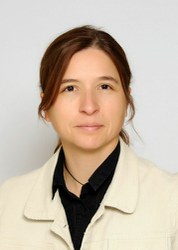
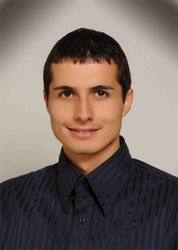
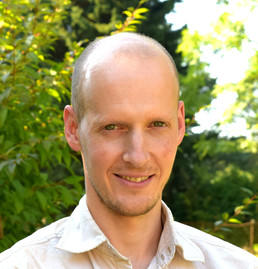
Akram Y. Sarhan is a prolific researcher with a focus on cybersecurity , data security , and algorithm design for communication and logistics systems. He has published extensively in PeerJ Comput. Sci. and IEEE Access , addressing challenges in privacy-preserving protocols , blockchain applications , and secure data dissemination under constraints. Key research areas include reinforcement learning , network security , and decentralized systems . His work spans crisis response data management , drone logistics optimization , and blockchain-based identity solutions . Notable trends in his publications involve secure communication protocols for RIS-enabled systems, agent-based health passport frameworks , and heuristic scheduling algorithms for warehouses and networks.
Katerina Raleva is a Full Professor at the Institute of Electronics, Faculty of Electrical Engineering and Information Technologies (FEIT), Ss. Cyril and Methodius University in Skopje, Republic of Macedonia. Her research focuses on semiconductor device physics, Monte Carlo simulations, and thermal effects in nanoscale devices. She holds a Ph.D. (2008) and M.Sc. (2002) in Electrical Engineering from her university, with a B.Sc. (1991) equivalent to an MS in the U.S. Her research interests include semiconductor device modeling, electronic circuit simulations, and nanotechnology. Collaborators include prominent figures like Dragica Vasileska (ASU) and Stephen M. Goodnick (ASU). She has authored books on self-heating effects in nanoscale devices and contributed chapters to handbooks on optoelectronic device modeling and nanophotonics. Raleva’s publications emphasize electrothermal modeling, phonon dissipation, and Monte Carlo simulations. Her work addresses critical challenges in nanodevice thermal management and high-performance electronics. She is involved in educational initiatives using cloud-based tools for microelectronics learning. Her affiliations include collaborations with TU Vienna, HEIG-VD Switzerland, and other institutions. Research labs and teams focus on nanoelectronics, semiconductor device simulation, and thermal modeling applications.
Shuminoski Tomislav is a researcher at the Faculty of Electrical Engineering and Information Technologies, Ss. Cyril and Methodius University in Skopje, North Macedonia. He holds a PhD in Electrical Engineering and Information Technologies (2016) with a dissertation on 5G QoS mechanisms and vertical multi-homing. His academic background includes a Master’s (2010) and Bachelor’s (2008) in Telecommunication, both with perfect grades. He specializes in telecommunications, cybersecurity, and next-generation mobile networks, focusing on QoS optimization, 5G infrastructure, and secure communication frameworks. Education: PhD, 2016: Ss. Cyril and Methodius University, Faculty of Electrical Engineering and Information Technologies (Dissertation: “QoS Mechanisms and Vertical multi-homing for 5G Mobile and Wireless Networks”) M.Sc., 2010: Telecommunication, Module: Communication and Information Technologies B.Sc., 2008: Telecommunication Research Interests: His work spans 5G networks, mobile edge computing, cybersecurity, IoT security, QoS provisioning, and blockchain applications in cloud computing. He emphasizes practical implementations of theoretical models in real-world scenarios, such as emergency response systems and ultra-reliable low-latency communication. Publications: Over 30 peer-reviewed articles since 2009, including innovative papers on 5G frameworks, secure communication platforms, and steganographic techniques. Recent work focuses on AI-driven resource allocation and quantum-resistant cryptography for IoT. Awards/Grants: No specific awards mentioned, but active in collaborative industry projects on network security and cloud infrastructure. Labs/Teams: Associated with the Telecommunications Institute at FEIT, contributing to research on wireless networks and critical infrastructure systems.
Amos H.C. Ng is a Professor of Automation Engineering at the School of Engineering Science, University West (Högskolan i Skövde). His academic qualifications include BEng, MPhil, and PhD degrees, complemented by professional certifications such as Chartered Engineer (UK) and membership in the Institution of Engineering and Technology (UK). His research focuses on production simulation, multi-objective optimization, simulation-based innovization, and digital human modeling, with applications in manufacturing systems, Industry 4.0, and smart manufacturing. Ng has contributed to over 150 publications since 2000, spanning topics like decision support systems, maintenance optimization, and reconfigurable manufacturing. His work integrates simulation, data mining, and evolutionary algorithms to address challenges in production systems, including bottleneck analysis, energy efficiency, and human-robot collaboration. Notable projects include developing the Mimer knowledge discovery tool and frameworks for digital twin applications in production lines. His research emphasizes practical industry applications, collaborating with organizations to improve production processes through advanced methods like trend mining and cloud-based optimization. Ng also serves as a course coordinator and contributes to educational initiatives in automation engineering.
Rubén Santiago Montero is an Associate Professor at the Department of Computer Architecture and Systems Engineering, Universidad Complutense de Madrid (UCM). He leads research in distributed systems, focusing on resource provisioning in Grid, Cloud, and edge computing environments. His work emphasizes virtual machine management, cloud federation, and utility computing models. Montero co-leads the OpenNebula project, a widely adopted cloud management platform, and contributed to the GridWay metascheduler. Research interests include distributed resource management, virtualization, and interoperability between cloud infrastructures. He participates in major EU projects such as RESERVOIR, BEACON, and PANACEA, advancing cloud and grid technologies. His contributions span over 200 peer-reviewed publications in top journals and conferences, addressing topics like workflow scheduling, elastic resource allocation, and edge-cloud architectures. Education: PhD in Computer Science (UCM). Grants & Projects: Principal investigator in EU-funded initiatives (e.g., RESERVOIR, BEACON) totaling €20M+. Labs/Teams: Distributed Systems Architecture Group at UCM, collaborating with NASA, IBM, and European research networks.
Prof. Daniel Göhring is a professor in the Department of Computer Science at the Free University of Berlin, leading the Autonomous Cars Lab and part of the Dahlem Center for Machine Learning and Robotics. His research emphasizes robotic perception, object tracking, and real-time planning under computational constraints, with a focus on autonomous vehicles and cooperative systems. Education: Bachelor's/Master's in Robotics (exact program unspecified) PhD in Computer Science at Humboldt University Berlin Postdoctoral Research at International Computer Science Institute (ICSI), Berkeley, CA Research Interests: Daniel's work integrates machine learning and sensor technologies like LiDAR and cameras to address challenges in autonomous driving. Key areas include SLAM algorithms, trajectory prediction, cooperative perception, and real-time systems. He explores how limited sensor data and computational resources can be optimized for dynamic traffic environments. Grants and Projects: Leader of the Autonomous Cars Lab Involved in EU-funded projects such as H2020 HIVEOPOLIS and KIS-M (AI-based mobility systems) Past projects include CRTX (recycling optimization), Open.Make (open hardware), RoboFish (biological swarm analysis), and SAFARI Awards: Best Poster Award at IAAS Workshop 2024 Best Paper Award at ICAIR-CACRE 2019 Teaching: He has taught courses such as Image Processing, Robotics, and Advanced Robotics. Recent semesters include modules on self-supervised learning, autonomous vehicle research, and continuous learning software projects. Labs and Teams: Daniel heads the Autonomous Cars Lab and collaborates with the BioRobotics Lab, focusing on interdisciplinary projects like 'Robots Communicating with Fish' and 'Open Hardware for FAIR Robotics.'
Christian Schönauer is a PostDoc Researcher at TU Wien's Department of Virtual and Augmented Reality. His work focuses on advanced AR/VR applications in emergency response training, construction quality assurance, and healthcare rehabilitation. He leads the BIMCheck project (2021–2024), developing smart BIM-real building comparison systems. Notable research includes immersive training systems for first responders, wireless VR platforms like ImmersiveDeck, and AR frameworks for distributed collaboration. Education: PhD in Computer Science (2015, TU Wien) and MSc in Technical Mathematics. His projects have been funded by FFG (Austrian Research Promotion Agency), OEAD, and EU Commission grants. Research highlights include: Development of photogrammetry-based autonomous robots for 3D reconstruction Integration of BIM models with AR for construction site inspections VR training systems for CBRN defense and fire brigade operations Human-robot interaction studies in hazardous environments He has supervised 12 diploma theses on topics ranging from laser tracking systems to motion capture rehabilitation tools. Active in international conferences like IEEE VR and ISMAR, his work bridges academic research with practical industry applications in construction safety and emergency preparedness.
Leonardo Bonati is an Associate Research Scientist in the Department of Electrical and Computer Engineering at Northeastern University. He specializes in cutting-edge wireless communication systems, particularly focusing on Open RAN, 5G/6G networks, and AI-driven network intelligence. His work emphasizes automated testing, network slicing, and security in software-defined cellular systems. He leads and contributes to high-profile projects such as AutoRAN and DigiRAN, funded under the CHIPS and Science Act, which aim to enhance open and disaggregated cellular network testing and digital twin frameworks. His research also involves experimental platforms like Colosseum and OpenAirInterface for large-scale wireless emulation and real-world testing. Key research interests include: AI-based network control (via dApps/xApps), digital twins for network validation, zero-touch deployment, and security in O-RAN interfaces. He holds multiple patents on topics ranging from network slicing to private 5G connectivity through steganography. Notably, Bonati was recognized among the top 2% most-cited scientists globally in 2024 by Stanford University. He collaborates actively with industry and academia on next-generation cellular technologies, contributing to both theoretical advancements and practical implementations. His advising and grant activities include co-PI roles on major initiatives like AutoRAN (testing automation) and DigiRAN (high-fidelity digital twins), totaling over $4M in funding. Bonati’s work bridges academic research and industry-ready solutions through platforms like Colosseum and the Open RAN Gym.
Javier Bajo is a Full Professor at the School of Computer Engineering, Polytechnic University of Madrid (UPM). He coordinates the Master's Degree in Artificial Intelligence at UPM and previously held roles as Associate Professor and Director of the Data Center at the Pontifical University of Salamanca (2003–2012). He earned a PhD in Computer Sciences (summa cum laude) from the University of Salamanca (2007), a Master’s in E-Commerce (2006), and degrees in Computer Systems Engineering (University of Valladolid, 2001) and Computer Science (Pontifical University of Salamanca, 2003). His research focuses on multi-agent systems, social computing, ambient intelligence, and AI ethics. He has led 11 research projects and contributed to over 50 others, with funding from EU, national, and regional entities. He has authored/co-authored over 300 publications, including 49 in JCR-indexed journals, and co-chaired 30+ international conferences (e.g., ACM SAC, IEEE FUSION). His work bridges theory and practice: developing multi-agent architectures for smart cities, optimizing traffic systems, and addressing algorithmic fairness. He also pioneers gamification in machine learning education and applies AI to healthcare diagnostics and infrastructure management. Key contributions include: Smart waste collection systems with LoRaWAN and route optimization Anti-feromone algorithms for urban rescue robotics Causal models for bias mitigation in AI Multi-sensor fusion for crop irrigation monitoring His educational innovations include challenge-based learning frameworks for computational biology and flipped classrooms for sustainability education.
Patrick Thomas Eugster is a Full Professor of Computer Science at the Università della Svizzera italiana (USI), leading the Software Systems (SWYSTEMS) group within the Computer Systems Institute, which he co-founded. Previously, he held faculty positions at Purdue University (2005-2016) and TU Darmstadt (2014-2017), with a visiting role at MIT (2012/2013). His research focuses on distributed systems, networking, security, and programming languages, with over 160 publications and significant industry collaborations with companies like Amazon, Google, and Facebook. Education: He holds an M.S. (1998) and Ph.D. (2001) in Computer Science from École Polytechnique Fédérale de Lausanne (EPFL). Research Interests: His work addresses distributed systems challenges such as fault-tolerance, security, and efficient resource management. Recent topics include datacenter reliability, quantum network verification, and confidential computing. His team explores intersections between systems, languages, and networks to build robust and secure distributed applications. Publications: Recent work spans topics like failure detection in datacenters, formal verification of systems, and network congestion control. Key venues include USENIX ATC, ACM SIGMETRICS, IEEE Network, and TACAS. His 2025 work on failure detection and TCAM encoding exemplifies contributions to system resilience and hardware optimization. Awards: Jean-Claude Laprie Award (2025), TACAS Best Paper (2025), ERC Consolidator Grant (2014), NSF CAREER Award (2007). Advising & Grants: Supervised over 20 PhD and postdoctoral researchers. Active grants include EU Horizon Europe CloudStars, Swiss National Science Foundation, and industry partnerships with Cisco and SAP. Labs & Teams: Directs the SWYSTEMS group, collaborating on projects like secure cloud analytics, quantum network verification, and datacenter monitoring. Former students hold roles at universities, tech firms, and startups.
Frank Leymann is a Professor of Computer Science at the University of Stuttgart, where he serves as Director and Founder of the Institute of Architecture of Application Systems. His career spans academia and industry, including 20 years at IBM Germany as a Software Architect. Research Focus: Workflow Management, Service Computing, Cloud Computing, Quantum Computing, Pattern Languages, Digital Humanities. Standards: Co-author of BPEL, BPMN, WS-RF, TOSCA, Human Task specifications. His work on quantum computing emphasizes hybrid quantum-classical applications and practical integration challenges. He pioneered the OASIS cloud standard TOSCA and developed the open-source OpenTOSCA platform, which has over 1,000 downloads. Scientific awards include an Honorary Doctorate from the University of Crete (2015), IBM Distinguished Engineer (2000), and IBM Academy of Technology membership (1996). Google Scholar cites his work over 43,300 times (H-Index 89), ranking him among the world's top computer scientists.
Prof. Stefan Tai is a full professor and Chair of Information Systems Engineering at Technische Universität Berlin (Germany) since 2014. Previously, he held a full professorship at Karlsruhe Institute of Technology (KIT) and worked as a Research Staff Member at IBM's Thomas J. Watson Research Center. His research focuses on distributed systems, decentralized architectures, cloud service engineering, and privacy-preserving blockchain systems, emphasizing off-chain solutions and scalable technologies. Tai's work bridges academic research with industry applications, particularly in serverless computing, energy-efficient cloud-native systems, and blockchain-based solutions for supply chains and energy grids. He has authored numerous peer-reviewed publications in top-tier conferences and journals, including IEEE ICSA, Future Generation Computer Systems, and IEEE Blockchain. His contributions address challenges in software systems engineering, federated learning, and sustainable computing. Research Interests: Next-generation distributed software systems Decentralized architectures and blockchain systems Cloud and serverless computing Energy-efficient design Data management and privacy-preserving technologies Smart energy grids and IoT integration Key Publications Trends: Tai's recent work explores the intersection of blockchain and federated learning, serverless architectures for big data, and energy-efficient cloud-native applications. His 2025 paper introduced a framework for optimizing cloud-native energy efficiency, while 2024 contributions advanced verifiable decentralized systems and serverless data processing. Earlier research (2020–2021) focused on privacy in local energy grids and serverless computing scalability. Grants & Labs: While specific grants are not detailed, his leadership in TU Berlin's Information Systems Engineering group indicates involvement in EU-funded or industrial projects. Collaborations with institutions like TU Wien and KIT suggest multi-institutional efforts in distributed systems and blockchain. Labs/Teams: Leads the Information Systems Engineering research group at TU Berlin, focusing on software systems engineering, cloud architectures, and blockchain applications.
Dr. Akanksha Saini is a Lecturer at RMIT University's School of Accounting, Information Systems, and Supply Chain. Her research focuses on cybersecurity, distributed systems, health informatics, and blockchain applications in healthcare. She holds an ORCID identifier (0000-0002-7191-2854) and is open to supervising Masters and PhD students in cyber security and related fields. Research Interests: Cybersecurity and Privacy Blockchain Technology in Healthcare Artificial Intelligence Applications Quantum Computation Supply Chain Management Health Informatics Systems Key Contributions: Pioneering work on securing distributed networks for IoT intrusion detection Developed blockchain-based frameworks for medical data sharing and access control Established collaborations with industry and international researchers Publications Highlight: Recent articles (2021–2025) emphasize blockchain applications in healthcare, federated learning, and cybersecurity challenges in the GenAI era. Over 30+ peer-reviewed papers in journals like Journal of Information Security and Applications and IEEE Internet of Things Journal . Supervision and Collaboration: Available to supervise research in cyber security and AI Industry partnerships align with national research priorities Co-authored papers with global collaborators in cryptography and health informatics Labs and Teams: Engaged in interdisciplinary projects at RMIT's School of Accounting, Information Systems, and Supply Chain, with a focus on real-world industry applications.
Dr. Qiang Fu is a Senior Lecturer at RMIT University's School of Computing Technologies, specializing in Cloud, Networked Systems, and Security. He holds a PhD from The University of Queensland and is actively involved in industry collaborations. His research focuses on Internet and Cloud-based systems, including Content Delivery Networks (CDNs), data centre design, Cyber-Physical Systems (CPS)/IoT, virtualization, and SDN/NFV. Recent work emphasizes network telemetry, fault detection, and IoT workflow optimization. He has published extensively in top-tier journals and conferences like IEEE Transactions and IFIP NOMS. Dr. Fu supervises PhD/Master students in areas such as network security, cloud computing, and IoT. His projects are often industry-funded and address real-world challenges like network scalability and blockchain integration. He is open to supervising students in these domains through RMIT's scholarship programs.
Michael Devetsikiotis is a Professor and Chair of the Department of Electrical and Computer Engineering at the University of New Mexico (UNM), part of the School of Engineering. He holds a Ph.D. from North Carolina State University (1993). His career includes roles as an Assistant/Associate Professor at Carleton University (1996–1998), Associate/Professor at North Carolina State (2000–2016), and leadership in UNM's ECE Department since 2016. He specializes in telecommunication networks, smart grids, IoT, and quantum information science. Education: Ph.D. in Electrical Engineering, North Carolina State University, 1993 M.S. in Electrical Engineering, North Carolina State University, 1990 Dipl. Ing. in Electrical Engineering, Aristotle University of Thessaloniki, Greece, 1988 Research Interests: Focuses on network design, smart grid communications, cyber-physical systems, and quantum technologies. He has published over 180 refereed papers and secured funding from NSF, NSERC, Cisco, and IBM. Notable projects include leading UNM’s Quantum Information Science program and managing the $20M NSF EPSCoR “SMART” Grid initiative. Articles Trends: Recent work emphasizes AI-driven network management (e.g., LSTM models for 5G/6G), blockchain for secure IoT/satellite systems, and quantum computing. Earlier contributions addressed EV charging infrastructure and smart grid resilience. Scientific Awards: IEEE Fellow (2012) NC State ECE Alumni Hall of Fame (2017) Advising & Grants: Directed UNM’s NSF Quantum Computing Faculty Fellowship (2020), enabling hires in quantum engineering. Previously managed a 800-student ECE graduate program at NC State. Active in IEEE leadership roles, including Distinguished Lecturer (2008–2011) and Chair of flagship conference committees. Labs & Teams: Spearheaded UNM’s IBM Q-Hub affiliation (2020), advancing quantum research collaboration. Leads interdisciplinary teams for smart city defense, blockchain energy markets, and 6G network automation.