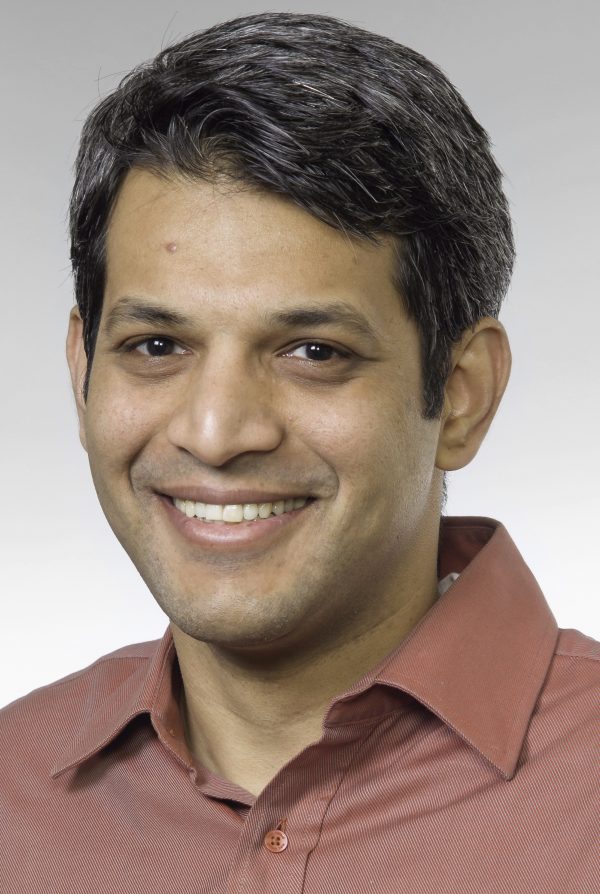
Niall Williams is a Faculty Fellow & Postdoctoral Researcher at the New York University Tandon School of Engineering, part of the Immersive Computing Lab . He holds a PhD in Computer Science from the University of Maryland, College Park (expected April 2024), where he specialized in computational methods for natural walking in virtual reality under Professors Dinesh Manocha and Aniket Bera. His undergraduate studies at Davidson College focused on redirected walking thresholds, advised by Prof. Tabitha Peck. Education: PhD in Computer Science, University of Maryland, College Park (2024) B.S. in Computer Science, Davidson College (Honors, 2019) Research Focus: His work bridges computer graphics, human perception, and virtual reality. Key areas include redirected walking algorithms, haptic guidance, and perceptual thresholds for VR locomotion. He explores how gaze, posture, and environmental compatibility influence user experience in immersive environments. Awards: Best Paper Honorable Mention at IEEE VR (2021) Best Paper Honorable Mention at IEEE ISMAR (2021) Best Paper Honorable Mention at IEEE VR (2021) Teaching & Service: Taught courses on Information Visualization and Programming at NYU, and served as a teaching assistant in advanced data structures and game programming at UMD. Active reviewer for IEEE TVCG, VR, ISMAR, and CHI. Labs & Collaborations: Member of NYU's Immersive Computing Lab and UMD's GAMMA lab. Collaborates with industry partners like NVIDIA and Meta Reality Labs through internships.
Prof. Frank Müller is a Universitätsprofessor at Forschungszentrum Jülich GmbH , leading the Molecular Sensory and Neurobiology research group. His work bridges computational methods and biological systems. Research focuses on: Graph-based machine learning for biological networks Transformer architectures for molecular data Computational approaches to sensory neuroscience Parameter-efficient models for multi-task learning Key article trends show expertise in graph transformers , molecular foundation models , and multi-agent reasoning systems . No awards explicitly mentioned. Current affiliation: IBI (Institute of Biological Information Processing), Forschungszentrum Jülich
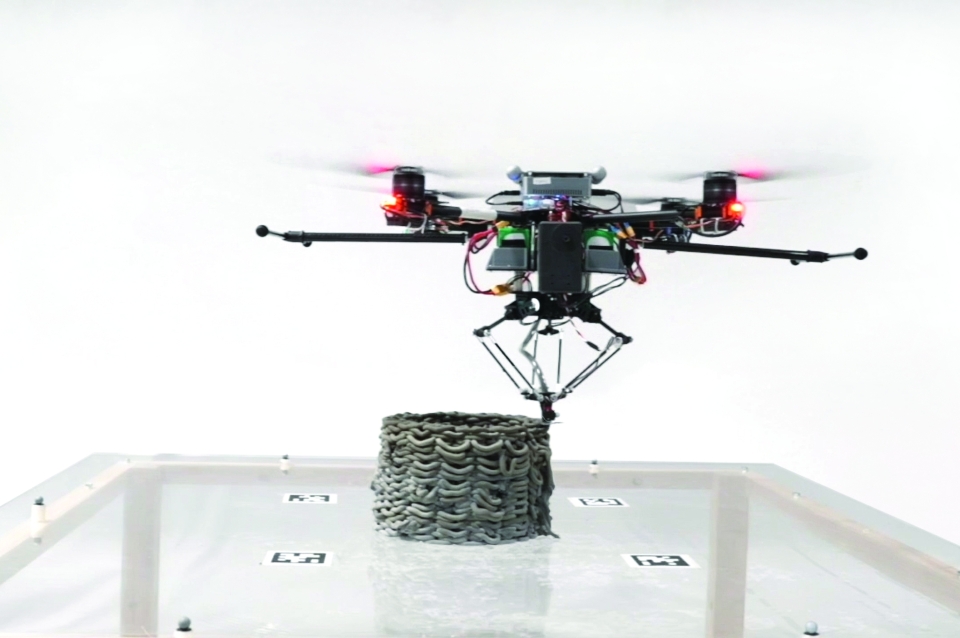
Robert Stuart-Smith is an Assistant Professor of Architecture at the University of Pennsylvania’s Stuart Weitzman School of Design, where he also directs the MSD-RAS program and the Autonomous Manufacturing Lab. His research focuses on integrating robotics, computation, and architectural design to address environmental and economic challenges in construction. He leads a $5M+ research portfolio collaborating with firms like Cemex and Skanska, and his work includes pioneering aerial additive manufacturing with drones, published in Nature . Stuart-Smith co-founded Robert Stuart-Smith Design and Kokkugia, and authored Behavioural Production . His teaching spans courses on material formations and robotic design at institutions globally. Exhibitions of his work include the Venice Biennale and Frac Centre-Val de Loire. His academic background includes dual BAs in Architecture and Environmental Design, with additional affiliations to the GRASP Lab in Engineering. Key research themes include robotic fabrication, collective robotic construction, and sustainable material practices. Recent projects explore ceramic die-extrusion and dynamic slip casting techniques. Stuart-Smith’s work bridges academia and industry, emphasizing scalable, culturally impactful architectural solutions. Notable collaborations include the Aerial Additive Manufacturing project demonstrating in-flight drone coordination, and the Ceramic Forest initiative exploring robotic ceramic production. His pedagogical focus on interdisciplinary education is reflected in the MSD-RAS program’s emphasis on technical innovation and design speculation.
Alfonso Capozzoli is a Full Professor at the Department of Energy (DENERG) of Politecnico di Torino, coordinating the College of Electrical and Energy Engineering. He specializes in building energy systems, data-driven energy management, and smart building technologies. His roles include membership in the SmartData@PoliTO Lab and editorial boards of journals like ENERGY AND AI and SUSTAINABLE ENERGY, GRIDS AND NETWORKS . Education: Graduated in Mechanical Engineering from the University of Naples Federico II (Italy) and earned a PhD in Engineering of Mechanical Systems. He has conducted visiting research at the University of Wollongong, Australia. Research focuses on adaptive control strategies, fault detection in HVAC systems, and energy data analytics. He leads projects on predictive energy management, smart building envelopes, and coordinated energy management in building clusters. His work bridges building physics and data science, emphasizing AI-driven solutions for energy efficiency. Teaching includes courses on building physics, energy management systems, and architectural sustainability at Politecnico di Torino. He supervises PhD students exploring topics like AI-based control systems, energy flexibility in communities, and semantic integration in building management. Key contributions include developing the CityLearn platform for grid-interactive communities and co-founding the BAEDA Lab. He has secured funding from EU projects (e.g., EU-DREAM) and national grants, focusing on data-driven solutions for energy systems. Awards include recognition for his students (e.g., Sabrina Savino’s AIDDA 2024 award) and PoliTo Quality Awards for doctoral research. His work addresses sustainable development goals related to energy (SDG 7), cities (SDG 11), and responsible consumption (SDG 12).
Lorenzo Steccanella is a Postdoctoral Researcher at Universitat Pompeu Fabra in Barcelona, Spain, specializing in Reinforcement Learning and Artificial Intelligence. He holds a Ph.D. in Reinforcement Learning from the same institution (2023), focusing on Hierarchical Reinforcement Learning and Representation Learning. His research emphasizes long-horizon decision-making, generative vision models, and applications in autonomous systems. **Education**: Ph.D. in Reinforcement Learning (Universitat Pompeu Fabra, 2023). **Research Interests**: Hierarchical Reinforcement Learning, Representation Learning, Computer Vision for Robotics, Multi-Agent Systems, and Autonomous Navigation. He has contributed to projects such as obstacle detection for autonomous boats (Blue Brain Project/EPFL) and localization algorithms for mobile robots (University of Verona). **Articles Trends**: His work spans Reinforcement Learning theory, computer vision applications in robotics, and multi-agent coordination. Recent publications emphasize hierarchical methods and representation learning, while earlier work includes path planning for articulated vehicles and Petri net-based multi-robot systems. **Awards**: No scientific awards explicitly mentioned. **Labs/Teams**: Current affiliation with Universitat Pompeu Fabra's AI/ML group. Previously contributed to the Blue Brain Project (EPFL) and the Intcatch Project at the University of Verona.
Dr. Sharon Guni is an Assistant Professor in the Department of Computer Science & Engineering at Texas A&M University, affiliated with the College of Engineering. She directs the PiStar laboratory, focusing on advancing artificial intelligence (AI) theory and its practical applications, particularly in transportation systems and multi-agent coordination. Her research integrates reinforcement learning, combinatorial optimization, and game theory to address real-world challenges such as traffic congestion and autonomous vehicle management. Ph.D. in Information Systems Engineering, Ben-Gurion University (2015) M.S. in Information Systems Engineering, Ben-Gurion University (2012) B.S. in Information Systems Engineering, Ben-Gurion University (2011) Dr. Guni’s research interests span AI, intelligent transportation systems, reinforcement learning, and multiagent systems. Notable contributions include socially optimal traffic tolling mechanisms, conflict-based search algorithms for multi-agent pathfinding, and agent-based models for epidemiological inference. She has received prestigious awards, including the NSF CAREER Award (2023) and the AAAI Outstanding Paper Award (2016). Her lab’s work on self-optimizing traffic signal controllers has been featured in WIRED Magazine and multiple news outlets. Recent projects include socially optimal non-discriminatory policies for continuous-action games and curriculum generation for reinforcement learning. Awards: Bergmann Memorial Research Award (2024), Wilson Memorial Lecture (2025), AIJ Prominent Paper Award (2020) Grants: NSF CAREER Award, Texas A&M grants supporting traffic optimization and AI research PiStar collaborates on interdisciplinary projects, including autonomous driving demonstrations with Houston high schools and pandemic mitigation strategies via agent-based modeling. The lab hosts a dynamic team of graduate students and researchers advancing AI’s societal impact.
Yixuan (Janice) Zhang is an Assistant Professor in the Department of Computer Science at William & Mary, holding a Ph.D. in Human-Centered Computing from Georgia Tech (2023). Her research focuses on Human-Computer Interaction (HCI), Human-LLM Interaction, Data Visualization, and Trust Dynamics, with cross-disciplinary applications in health informatics and STEM education. She has published in top venues like ACM CHI, CSCW, and IEEE VIS, earning awards including the 2022 Rising Star in EECS and Foley Scholar recognition. Research Highlights: Explores ethical implications of LLMs in education and healthcare. Investigates trust dynamics in crisis informatics and social media. Designs AI-driven tools for Alzheimer’s awareness and mental health support. Grants & Collaborations: NSF RITEL Grant ($900K) for LLM-powered collaborative learning systems. Partnerships with WHO, Microsoft Research, and Virginia educational institutions. Co-chaired ACM DIS'24 and served on CHI'24 program committees. Awards: Best Paper Award at CHI'23 Learn, Discover, Innovate grant (2023) General Assembly of Virginia grant for ADRD awareness systems. Her lab actively engages in projects like MetaAgents (CSCW'25) and EmotionPrompt (enhancing LLMs with emotional stimuli). She advises PhD students in AI ethics and education technology.
Hugues Bersini is a Professor at Université Libre de Bruxelles (ULB) and Co-Director of the IRIDIA laboratory, the Artificial Intelligence research laboratory of ULB. His academic career spans over three decades, with significant contributions to the fields of artificial intelligence, complex systems, and biological networks. Bersini earned his MS degree in 1983 and his Ph.D. in engineering in 1989, both from Université Libre de Bruxelles. After working as a researcher with an EEC grant from the JRC-CEE in Ispra (1984-1987), he joined the IRIDIA laboratory at ULB, where he has remained throughout his career, eventually becoming a full professor. His research spans a diverse range of topics within artificial intelligence and complex systems. Bersini is particularly known for his work on modeling and control of complex systems, neural networks, fuzzy control, data mining, autonomous agents, and biological networks. He pioneered the exploitation of biological metaphors, especially from the immune system, for engineering and cognitive sciences applications. His research has evolved to include computational chemistry, immune engineering, cognitive sciences, bioinformatics, and object-oriented technology. In recent years, he has focused on business intelligence applications and public goods through the Brussels Institute FARI. Throughout his career, Bersini has published approximately 300 papers, demonstrating consistent productivity and evolving research interests. His early work focused on optimization algorithms and immune-inspired computing, which gradually expanded to include fuzzy and neuro control systems, biological networks, and more recently, applications to real-world problems through spin-off companies and the FARI institute. His publications show a clear trajectory from theoretical foundations to practical applications, with growing emphasis on interdisciplinary approaches that bridge computer science with biology, chemistry, and cognitive sciences. Bersini has been actively involved in the academic community, having co-organized major conferences including the Parallel Problem Solving from Nature (PPSN), European Conference on Artificial Life (ECAL), European Workshops on Reinforcement Learning (EWRL), and International Competitions on Evolutionary Optimization (ICEO). He also organized tributes to Francisco Varela and the International Conference on Artificial Immune Systems (ICARIS). As an educator, Bersini teaches artificial intelligence, object-oriented programming (C++, Java, .Net, Kotlin, UML, Django/Python), and design patterns to both university students at Solvay and Polytechnic Schools and for industry professionals. He has authored fourteen French books covering computer science fundamentals, complex systems, and the intersection of computer science with other fields. His books range from technical manuals to philosophical explorations of complex systems and emergence. Bersini has coordinated significant research projects including the FAMIMO LTR European Project on fuzzy control for multi-input multi-output processes and participated in ESPIRIT projects NEMORETS and METHODS. His work has led to practical applications through spin-off companies such as Cluepoints, Tevizz, and In Silico DB, and more recently through the Brussels Institute FARI which addresses public goods like mobility, epidemics, access to jobs and schools, and energy transition.
Akshay Rajhans is a Chief Research Scientist and Head of the Advanced Research & Technology Office at MathWorks . His work bridges technical computing, model-based design, and AI-enabled cyber-physical systems (CPS), with a focus on verification, simulation, and industrial applications. He holds a Ph.D. in Electrical and Computer Engineering from Carnegie Mellon University (2013) and an M.S. in Electrical Engineering from University of Pennsylvania (2007).
Dean Chatfield is an Associate Professor in the Department of Information Technology & Decision Sciences at Old Dominion University , where he teaches and conducts research in supply chain management and simulation modeling. Education: Ph.D. in Management Science and Information Systems, Pennsylvania State University (2001) M.S. in Management Information Systems, Pennsylvania State University (1993) M.B.A. in Finance, Pennsylvania State University (1991) B.S. in Management Systems, Rensselaer Polytechnic Institute (1989) Research Interests focus on supply chain dynamics and inventory system optimization , particularly examining phenomena like the Bullwhip Effect , stockout propagation , and risk amplification in multi-echelon systems. His work employs discrete-event simulation and agent-based modeling to develop decision support frameworks for complex supply chain scenarios, including cascading failures and stochastic lead times. Representative Publications include simulation studies on network characteristics affecting supply chain resilience (International Journal of Production Economics, 2020), crossover-aware inventory policies (Transportation Research Part E, 2018), and quantifying information-sharing impacts on demand amplification (Production and Operations Management, 2004). His research has secured over $834,238 in grants , including a $551,438 NSF CAREER award for simulation-based inventory modeling. Scientific Honors: 2005 Best Application Research Paper, Decision Sciences Institute Grants address technology gaps in transportation logistics and mathematical frameworks for service-driven systems. He has developed specialized simulation tools like SISCO and SCML to support industry applications.
Sergio Rajsbaum is a Professor (Investigador Titular "C") at the Institute of Mathematics of the Universidad Nacional Autonoma de Mexico (UNAM) in Mexico City. He has been a member of SNI (Sistema Nacional de Investigadores) nivel III. His academic career includes a visiting scientist position at MIT's Laboratory for Computer Science (1993-1995) and a Research Staff member position at Cambridge Research Laboratory of HP (1999-2002). Rajsbaum received his Computer Engineering degree from UNAM in 1985 and his PhD in Computer Science from the Technion (Israeli Institute of Technology) in 1991 under the supervision of Shimon Even. His academic genealogy traces back to Paul Erdős (Erdős number 2). Rajsbaum's research focuses on the theory of distributed computing, particularly issues related to coordination, complexity, and computability. He has made significant contributions to combinatorial topology applications in distributed systems, consensus problems, and graph theory. His work often bridges theoretical computer science with practical distributed system design. He has pioneered the use of topological methods to study distributed computing from complexity and computability perspectives. Analyzing his publication record reveals a consistent focus on fundamental problems in distributed computing, particularly consensus and set agreement. His work demonstrates a progression from basic algorithm design to more abstract topological approaches. The publications show strong collaboration patterns, especially with researchers like Achour Mostefaoui, Michel Raynal, Maurice Herlihy, and Eli Gafni. His research spans theoretical foundations, algorithm design, and practical implementations. Best Student Paper Award at ACM PODC 2008 for "New Combinatorial Topology Upper and Lower Bounds for Renaming" Long-standing editorial role as editor of the ACM SIGACT News Distributed Computing Column (2000-2007) Rajsbaum has been actively involved in the distributed computing research community, serving as program committee chair for major conferences including LATIN02, PODC03, and ENC06. He has been a steering committee member for DISC, LADC, LATIN, and PODC. His teaching includes graduate and undergraduate courses on Principles of Distributed Computing, Algorithms, Theory of Computation, and JAVA Distributed Computing at UNAM. He has mentored numerous students and contributed significantly to the academic community through conference organization and editorial work.
Tingjian Ge is a Professor at the Miner School of Computer & Information Sciences , part of the Kennedy College of Sciences at the University of Massachusetts Lowell. He serves as the Graduate Coordinator for MS Programs and specializes in data management systems, focusing on probabilistic and uncertain data, scientific data, and data security and privacy. Education : B.E. (Tsinghua University), M.S. (University of California, Davis), Ph.D. (Brown University) His research spans data management, with emphasis on uncertain data processing, graph stream analysis, and blockchain applications. Recent work includes methods for real-time predictive event monitoring, fairness-aware analytics in dynamic networks, and security enhancements for blockchain systems. Key publication trends highlight contributions to resource optimization in graph streams, recommender systems, and cybersecurity. His expertise intersects database theory, privacy-preserving techniques, and networked data analysis.
Professor Alun D. Preece is a distinguished academic at Cardiff University's Crime and Security Research Institute, UK, with significant contributions to artificial intelligence, particularly in explainable AI (XAI), social media analysis, and neuro-symbolic approaches. His research spans over three decades with continuous publication output through 2024, demonstrating sustained scholarly impact in the AI community. His research interests focus on creating transparent and interpretable AI systems that can effectively collaborate with humans in complex environments. Key areas include explainable AI methodologies, social media analysis for misinformation detection, neuro-symbolic integration for robust reasoning, and collaborative perception-cognition-communication-action frameworks. His work bridges theoretical AI foundations with practical applications in security, public safety, and coalition operations. Recent publications (2022-2024) reveal a strong focus on cutting-edge AI challenges, with particular emphasis on neuro-symbolic approaches, vector symbolic architectures, and human-AI teaming. His work consistently addresses the critical challenge of creating AI systems that are not only effective but also transparent, trustworthy, and capable of meaningful collaboration with human users. Professor Preece has established extensive collaborations across the AI research community, with notable co-authors including Dave Braines, Federico Cerutti, Ian J. Taylor, and Mani Srivastava. His research has been published in top venues including FUSION, IEEE Transactions, and AAAI workshops. His work on verifiable credentials for AI model transparency, collaborative perception frameworks, and misinformation analysis demonstrates practical applications of his theoretical contributions to real-world security and information challenges. The trajectory of his recent publications indicates continued leadership in addressing the critical challenges of trustworthy and explainable AI systems.
Wayne Kelly is an Associate Professor in the School of Computer Science at Queensland University of Technology (QUT), Faculty of Science. He has over 25 years of academic experience and serves as the Academic Lead for Teaching and Learning and Course Coordinator for the Bachelor of Information Technology degree. PhD in Computer Science, University of Maryland, College Park, 1996 BSc (Hons) in Computer Science, University of Queensland, 1989 His research expertise lies in Programming Languages, Compiler Construction, and Parallel Computing, with significant contributions to High Performance Computing, Big Data, and Bioinformatics. His work has led to collaborations with Microsoft Research and over $2 million in external funding. His recent publications reflect a strong trend in parallel and distributed systems, embedded computing, bioinformatics data analysis, and remote sensing. Key themes include optimization of computational systems, memory management, and scalable data processing. Wayne Kelly has made impactful contributions to both teaching and research, guiding numerous postgraduate students and leading curriculum development in information technology. Optimizing I/O cost and managing memory for bioinformatics A communication model for streaming applications on MPSoC Ruby.NET: a compiler for the Common Language Infrastructure He is actively engaged in real-world technology development, including a project with a vision-impaired student to improve public transportation accessibility, currently trialed by transport authorities in Australia and the US.
Dr. Hae In Lee is a Lecturer in Autonomous Systems at Cranfield University's Centre for Autonomous and Cyberphysical Systems within the School of Aerospace Transport and Manufacturing. She holds a PhD from Cranfield University (2019) and BSc and MSc degrees in aerospace engineering from the Korea Advanced Institute of Science and Technology (2013, 2015). Prior to her current position, she worked as a Research Fellow in Autonomous Systems and Artificial Intelligence before joining Cranfield as a Lecturer in 2022. Dr. Lee's research focuses on networked control systems, adaptive control, and multi-objective optimization for autonomous systems. Her expertise spans Autonomous Systems, Computing and Simulation, Flight Physics, Mechatronics & Advanced Controls, and Sensor Technologies. She has published extensively in leading journals and conferences, with recent work concentrating on UAV collision avoidance, multi-agent systems, slung-load transportation, and unmanned traffic management. Her publication record shows a clear progression from foundational work in UAV slung-load transportation to more complex multi-agent systems and autonomous control frameworks. The research demonstrates strong theoretical foundations in control theory combined with practical applications in aerospace and robotics. Recent publications (2022-2025) increasingly address real-world implementation challenges in drone traffic management, rail monitoring, and advanced air mobility. Dr. Lee has delivered 7 MSc modules at Cranfield University and has been invited to lecture at other research institutes and industry organizations. Her teaching and research bridge theoretical control systems with practical autonomous vehicle applications.