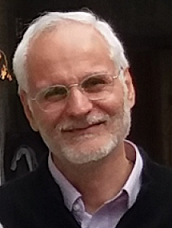
Ioannis Panageas is an Assistant Professor in Computer Science at UC Irvine's Donald Bren School, directing the GOALLab. His research develops theory for learning in multi-agent systems, game dynamics, and optimization. Funded by NSF and NRF, he focuses on last-iterate convergence guarantees in games, efficient equilibrium computation, and multi-agent reinforcement learning. Recent Work: Provides first exponential lower bounds for fictitious play in potential games (NeurIPS 2023), efficient Nash equilibrium computation methods (ICLR 2023), and semi-bandit learning dynamics with no-regret guarantees (ICML 2023). Teaching: Offers courses in Algorithmic Game Theory and Optimization for Machine Learning. Currently advising 3 PhD students and 2 MS students.
Eleni Stai is an Assistant Professor at the School of Electrical and Computer Engineering, National Technical University of Athens (NTUA), affiliated with the Division of Communication, Electronic and Information Engineering. She holds advanced degrees in Electrical Engineering, Mathematics, and Applied Mathematical Sciences from NTUA and the National and Kapodistrian University of Athens. Her academic credentials include: Diploma in Electrical and Computer Engineering, NTUA (2009) B.Sc. in Mathematics, National and Kapodistrian University of Athens (2013) M.Sc. in Applied Mathematical Sciences, NTUA (2014) Ph.D. in Electrical Engineering, NTUA (2015) Dr. Stai's research integrates advanced optimization techniques with communications networks and energy systems. She develops stochastic and deterministic optimization frameworks for network resource allocation, data analytics on complex topologies, and smart-grid control applications. Her work bridges theoretical foundations with practical implementations in energy-harvesting networks, network slicing, and reinforcement learning for distributed systems. Analysis of her recent publications reveals dominant research thrusts in AI-driven network management (particularly O-RAN and network slicing), energy-integrated communications, and optimization of energy communities. A significant portion of her work addresses the convergence of 5G/6G networking with power systems, emphasizing real-time control and sustainability. Her scientific contributions have been recognized through prestigious awards: Chorafas Foundation Best Ph.D. Thesis award Thomaidis Foundation Best M.Sc. Thesis award Best Paper Award at ICT 2016 Best Presenter Award at IEEE ENERGYCON 2022 Dr. Stai serves on technical program committees for major international conferences and has co-authored the book "Evolutionary Dynamics of Complex Communications Networks". She teaches undergraduate courses in Queuing Systems, Computer Networks, and Social Network Analysis, reflecting her expertise in network theory and applications. Her research trajectory demonstrates continuous evolution from fundamental network optimization to AI-enhanced solutions for next-generation communication-energy systems. Her work builds upon her postdoctoral experience at EPFL (2016-2020) and ETH Zurich (2020-2023), where she developed advanced frameworks for communications networks and energy systems.
George Vouros is a Professor in the Department of Digital Systems at the University of Piraeus, Greece. He is the head of the AI Lab (http://ai-group.ds.unipi.gr/ai-group/) and director of the MSc in Artificial Intelligence program in collaboration with the Institute of Informatics and Telecommunications at NCSR Demokritos. He completed his BSc in Mathematics (1986) and PhD in Artificial Intelligence (1992) at the University of Athens. His research focuses on Expert Systems, Knowledge Management, Multi-Agent Systems, Reinforcement Learning, and Mobility Analytics. He has served as program chair and committee member for major conferences (AAMAS, AAAI, IJCAI) and editorial roles in journals like Discover Artificial Intelligence (Springer Nature) and Information (MDPI). He has supervised 13 PhD students and currently oversees 4. His work spans EU-funded projects and national initiatives, emphasizing scalable mobility analytics, air traffic management automation, and ontology engineering. He is also President of the Hellenic A.I. Society and actively promotes interdisciplinary applications of AI in healthcare, transportation, and environmental monitoring. Recent research highlights include deep reinforcement learning for tactical air traffic conflict resolution, LLM-integrated ontology engineering, and multimodal generative adversarial imitation learning for flight trajectory modeling. His work bridges theoretical advancements with real-world applications in critical infrastructure systems.
Symeon Papavassiliou is a Professor at the Department of Communications, Electronics and Information Systems, School of Electrical and Computer Engineering, National Technical University of Athens since 2004. Previously held positions include Associate Professor at New Jersey Institute of Technology (1996-2004) and senior researcher at AT&T Labs (1995-1999). He leads the Network Management and Optimal Design Laboratory and has served in various academic leadership roles, including Deputy Director since 2005. His research focuses on computer networks, wireless systems, and AI-driven network management with over 400 publications. Recognized with multiple best paper awards and NSF Career Award (2003). Education: B.A. Electrical Engineering, NTUA (1990) MSc & PhD Electrical Engineering, Polytechnic University, NY (1992/1996) Key Roles: Founder, New Jersey Center for Wireless Networks & Internet Security Member, EETT (National Telecommunications Commission) 2006-2009 Editorial Board Member, multiple journals Research Interests: Specializes in mobile/distributed systems optimization, wireless networks, complex systems, IoT, and AI applications in network management. Active in 6G architecture research, edge computing orchestration, and secure federated learning frameworks. Publications highlight innovations in network resource allocation, game theory models for positioning systems, and symbiotic computing continuum architectures. Recent work emphasizes resilience in critical infrastructure and smart grid optimization. Awards: Over 10 best paper awards from IEEE conferences, AT&T recognition, and Greek Excellence in Research Grant (2012). Grants: Funded by EU Framework Programs, NSF, ESA, and industry partners like Panasonic and Northrop Grumman. Leads interdisciplinary projects like HEROES (UAV-based emergency response) and NEPHELE (multi-cloud ecosystems). Active in digital twin development for cultural heritage preservation and SDG tracking via knowledge graphs.
Michail G. Lagoudakis is a Professor at the Department of Electronic and Computer Engineering, Technical University of Crete. His academic journey includes a Ph.D. in Computer Science from Duke University (2003), an M.Sc. from the University of Louisiana, Lafayette (1998), and a B.Sc. from the University of Patras (1995). He has held prestigious positions such as Postdoctoral Fellow at Georgia Institute of Technology's School of Industrial and Systems Engineering. Research Interests : Spanning machine learning (especially reinforcement learning), decision-making under uncertainty, robotics, algorithm selection, computational biology, and human-computer interaction. Publications : Over 15 recent works, including key contributions to robotics (auction-based multi-robot routing), medical diagnosis (urgent endoscopy prediction), and foundational machine learning (Least-Squares Policy Iteration, RCPI algorithm). Scientific Recognition : Recipient of Duke University's Outstanding Dissertation Award (2002-2003) and two Outstanding Teaching Assistant Awards. Professional Affiliations : Member of AAAI, IEEE, and ACM. Collaborations include industrial applications in disassembly planning, dynamic packet routing, and medical imaging. He advocates for computational biology and interdisciplinary research, aiming to integrate tools from mathematics and control theory into machine learning.
Dr. Eleftherios Doitsidis is an Associate Professor at the School of Production Engineering & Management of the Technical University of Crete (TUC) and a member of the Intelligent Systems & Robotics Laboratory. Previously, he served as faculty at the Department of Electronic Engineering at Hellenic Mediterranean University. His expertise spans multirobot systems, autonomous vehicle control, and computational intelligence. He holds a robust record of EU and national research project involvement. Research Interests: Specializes in multirobot team coordination, autonomous navigation systems for UAVs/AUVs, control systems design, and computational intelligence applications. Recent work focuses on energy-efficient path-planning for swarms, educational robotics frameworks like HYDRA, and digital twin integration in autonomous systems. Publications Trends: His 150+ publications address cutting-edge topics including: Autonomous vehicle control architectures Modular robotics for STEM education Optimization algorithms for multirobot systems Energy efficiency in manufacturing systems Advising & Projects: Lead researcher on numerous funded projects involving UAV/AUV missions, swarm robotics, and educational technology. Active in collaborative research with institutions like the University of South Florida. Labs & Groups: Leads the Intelligent Systems & Robotics Lab at TUC, developing advanced robotic platforms and educational tools. Maintains an open-access research portal at doitsidis.tuc.gr .
Lefteris Doitsidis is an Associate Professor at the School of Production Engineering and Management, Technical University of Crete. He holds a PhD in Production and Management Engineering from the same institution (2008), with prior academic positions at the Department of Electronics, Hellenic Mediterranean University. His professional journey includes visiting scholar roles at the University of South Florida, USA. Research focuses on robotic systems, including autonomous navigation of UAVs/AUVs, multirobot teams, computational intelligence, and educational robotics. He leads the Intelligent Systems and Robotics Laboratory, developing tools like HYDRA for STEM education and frameworks for industry 4.0 applications such as bin-picking and precision agriculture. His work integrates control systems optimization, energy efficiency in manufacturing, and digital twin technologies. Over 65 publications span journals, conferences, and books, emphasizing practical implementations like ROS-based autonomous vehicle testbeds and energy management systems for electric vehicles. Key contributions include UAV path planning algorithms, swarm robotics coordination, and sensor fusion techniques. Current research trends emphasize sustainability in manufacturing, educational robotics platforms, and autonomous systems validation through advanced algorithms like Deep Deterministic Policy Gradient.
Kostas Vlachos is an Assistant Professor in the Department of Computer Science and Engineering at the University of Ioannina, Greece. He has been in this position since 2014, following prior teaching roles at the University of Thessaly (2007–2013). He is a member of the Information Processing and Analysis (I.P.AN.) research group and actively supervises PhD, MSc, and diploma students in robotics and control systems. PhD, School of Mechanical Engineering, National Technical University of Athens, 2004 MSc, Interdepartmental Postgraduate Program in Automation Systems, National Technical University of Athens, 2000 Diploma in Electrical Engineering, Technical University of Dresden, Germany, 1993 His research focuses on robotics and control, with emphasis on microrobotics , haptic mechanisms , medical simulators , and autonomous navigation . He has made significant contributions to over-actuated marine platforms, reinforcement learning for navigation, and tactile robotic systems. His work bridges mechanical engineering and computer science, particularly in intelligent robotic control. The 15 most recent publications highlight a strong trend in autonomous marine robotics , multi-agent reinforcement learning , and intelligent control systems . Key themes include energy-efficient control, obstacle avoidance, sensor fusion, and learning-based navigation. The research spans from theoretical control design to real-world implementation in unmanned surface vehicles and microrobots. Best Student Paper Award, 9th Hellenic Conference on AI (SETN 2016) Vlachos has supervised over 30 students at various levels and has participated in multiple national and European research projects in robotics and automatic control. His teaching includes courses such as Computational Mathematics, Robotics, and Robotic Systems. He collaborates extensively with researchers like E. Papadopoulos and K. Blekas. He leads research within the Information Processing and Analysis (I.P.AN.) group, focusing on intelligent perception and control of robotic systems. His lab works on mobile manipulators, haptic devices, mini-robots, and marine platforms, integrating simulation (ROS/Gazebo) with real-world experimentation.
Georgios Vouros is a Professor at the Department of Digital Systems within the School of Information and Communication Technologies at the University of Piraeus. He previously served as a professor at the Department of Information and Communication Systems Engineering of the University of the Aegean (1998-2011), where he was department president for five years (2000-2005) and later dean of the School of Sciences (2006-2010). He currently directs the Artificial Intelligence Laboratory and the Inter-Institutional Master's Degree in Artificial Intelligence. Dr. Vouros holds a degree in Mathematics and a PhD in Artificial Intelligence from the National and Kapodistrian University of Athens. His research spans theoretical and applied artificial intelligence with emphasis on knowledge representation systems. His work integrates cognitive modeling with practical AI applications, particularly in multi-agent environments where reinforcement learning techniques are deployed for complex decision-making processes. He has pioneered approaches in conceptual knowledge representation that bridge symbolic AI with modern machine learning paradigms. Professor Vouros has served as president of the Hellenic Society for Artificial Intelligence for six years and has extensive experience in international research collaboration, having directed multiple EU-funded projects including datAcron and DART, with current focus on Reinforcement Machine Learning applications in Air Traffic Management. He has supervised 12 completed doctoral theses and currently guides 3 doctoral candidates and 3 post-doctoral fellows, in addition to numerous undergraduate and graduate students throughout his academic career. His research has been supported through significant grants including FP7/Grid4All and FP7/SEMAGROW projects. Professor Vouros directs the Artificial Intelligence Laboratory at the Department of Digital Systems and co-directs the Inter-Institutional Master's Degree "Artificial Intelligence" in collaboration with the Institute of Science & Technology of the NCSR "Demokritos".
Konstantinos Blekas is a Professor at the Department of Computer Engineering and Informatics, University of Ioannina, Greece. He is affiliated with the Polytechnic School and teaches advanced courses such as 'Machine Learning' (MYE002) and 'Probability and Statistics' (MYY304). His research focuses on Machine Learning, Intelligent Agents, Computer Vision, and Bioinformatics, with particular expertise in Reinforcement Learning, Deep Learning, and their applications in autonomous systems, traffic management, and aerospace engineering. Education: Ph.D. in Electrical and Computer Engineering, National Technical University of Athens (1997) Diploma in Electrical Engineering, National Technical University of Athens (1993) Research Interests: Dr. Blekas explores cutting-edge topics in machine learning, including generative adversarial networks (GANs), multi-agent systems, and reinforcement learning for autonomous navigation. His work spans domains such as unmanned surface vehicles, air traffic management, and medical informatics. Notable contributions include advanced frameworks for flight trajectory modeling, urban traffic optimization, and brain functional network analysis. Awards and Recognition: While specific awards are not explicitly listed, his extensive publications and contributions to AI and robotics reflect significant academic impact. Advising and Grants: He supervises research in machine learning applications, though specific student names or grant details are not provided in the texts. His courses emphasize practical implementation, with resources available on e-learning platforms like e-course.uoi.gr. Labs and Teams: Engaged in collaborative projects involving robotics and AI, though no specific lab names are mentioned. His work integrates interdisciplinary approaches across computer science, engineering, and biomedical fields.
Papamichail Ioannis is a Professor at the School of Production Engineering and Management, Technical University of Crete. His research focuses on advanced traffic control systems, automated vehicle navigation, and intelligent transportation systems. He specializes in macroscopic/microscopic traffic modeling, reinforcement learning applications, and optimization-based control strategies for lane-free and conventional traffic environments. Key research areas include automated vehicle trajectory planning, variable speed limit algorithms, cooperative adaptive cruise control, and intersection control for connected vehicles. His work integrates numerical methods, partial differential equations, and multiagent decision-making frameworks to address traffic congestion, safety, and efficiency challenges. Recent investigations emphasize lane-free traffic systems, exploring optimal path planning, vehicle nudging strategies, and boundary control mechanisms through microscopic simulations. He has also developed novel controllers for highway work zones and urban networks, leveraging data fusion and real-time state estimation techniques. Ioannis collaborates on EU-funded projects and actively contributes to SUMO-based simulation tools for automated vehicle testing. His research bridges theoretical control systems with practical traffic management solutions, aiming for zero congestion/accidents in future transportation networks.
Michail G. Lagoudakis is a Professor at the School of Electrical and Computer Engineering (ECE) of the Technical University of Crete (TUC), Greece. He leads the Intelligent Systems Laboratory (InteLLigence), focusing on machine learning, robotics, and decision-making under uncertainty. His academic journey includes a Ph.D. from Duke University (2003) and prior roles at Georgia Tech and AT&T Labs. Education: Ph.D. in Computer Science, Duke University, 2003 M.Sc. in Computer Science, University of Louisiana, 1998 Diploma in Computer Engineering and Informatics, University of Patras, 1995 Research Interests: His work spans reinforcement learning, multi-agent systems, robotics (team coordination, probabilistic methods), and complex systems. Notable projects include the EURECA-PRO university network, RoboCup Kouretes team, and algorithmic advancements like LSPI. Teaching: Courses include Artificial Intelligence, Machine Learning, and Robotics. His teaching philosophy emphasizes hands-on learning with tools like ROS and NAO robots. Projects & Collaborations: Current projects include aerial-ground robot collaboration, dialogue management systems, and solar energy optimization. Earlier work includes auction-based coordination and DPLL solver enhancements (RLSAT). Lab & Teams: The Intelligent Systems Lab develops autonomous systems, robotic platforms, and learning algorithms. The Kouretes team competes in RoboCup leagues, showcasing adaptive multi-agent strategies.
Ioannis Papamichail is a Professor at the Technical University of Crete (TUC), leading the Dynamic Systems and Simulation Laboratory. He holds academic positions since 2004 and has been a Visiting Scholar at UC Berkeley (2010). His expertise spans Mathematical Programming, Optimal Control, and Traffic Systems Optimization . Education : - PhD in Chemical Engineering (2002), Imperial College London - MSc in Process Systems Engineering (1999), Imperial College London - Diploma in Chemical Engineering (1998), National Technical University of Athens Research Interests : Focuses on Nonlinear Programming, Global Optimization, and Optimal Control , applied to traffic and transportation systems. His work addresses challenges in automated vehicle coordination, lane-free traffic systems, ramp metering, and intelligent transportation systems (ITS). Recent trends in his publications emphasize deep reinforcement learning for autonomous driving , microscopic/macroscopic traffic modeling , and multi-agent decision-making algorithms . Key Contributions : Developed lane-free automated traffic control frameworks using LQR and model-free controllers Pioneered vehicle nudging strategies for path planning in complex networks Validated control algorithms via SUMO-based microscopic simulations Awards : 2010 IEEE Transition to Practice Award (Ramp Metering Algorithms) 2014 TRB Best Paper Award (Freeway Operations) 2020 IEEE-ITS Best Paper Award Labs & Teams : Directs the Dynamic Systems and Simulation Laboratory , collaborating on projects like: Autonomous vehicle trajectory optimization Urban traffic signal control with connected vehicle data Macroscopic traffic model calibration
Konstantinos D. Blekas is a Professor at the Department of Computer Science & Engineering , Polytechnic School, University of Ioannina. His career spans over 25 years with research focusing on Machine Learning , Autonomous Agents , Computer Vision , and Bioengineering . Education: Diploma in Electrical Engineering (1993) and PhD in Electrical & Computer Engineering (1997) from NTUA. Teaching: Offers courses like Probabilities & Statistics (MY304), Machine Learning (MYE002), Data Mining, and Bioinformatics. Research Interests include advanced machine learning techniques, reinforcement learning applications in traffic and robotics, image segmentation, and bioinformatics for medical data analysis. His work bridges theoretical innovation with practical implementations in autonomous systems and biomedical research. Recent Publications highlight trends in multiagent reinforcement learning , neural network optimization , and fMRI data modeling , with applications in robotics, air traffic management, and biomedical imaging. Collaborative projects often integrate spatial constraints and generative models. Scientific Awards Best Paper Award, DASC 2018 Best Student Paper Award, SETN 2018 2nd Winner, AIBIRDS 2014 Competition Professional Impact includes mentoring students, developing educational curricula, and cross-disciplinary research in medical AI. His work is widely cited (>1000 citations) with contributions to journals like Neural Networks , Medical Imaging , and AI Magazine .
Ioannis Vlahavas is a Professor in the School of Informatics at Aristotle University of Thessaloniki since 2003, where he directs the Intelligent Systems Lab. He has held significant leadership roles including Chair of the School of Informatics (2003-2005, 2013-2017) and Dean of the School of Science and Technology at the International Hellenic University (2007-2016). His career spans over three decades with continuous contributions to artificial intelligence research and education. Education: Ph.D. in Computer Science, Aristotle University of Thessaloniki (1988) B.Sc. in Physics, Aristotle University of Thessaloniki (1982) Professor Vlahavas's research focuses on foundational AI areas including Logic Programming, Knowledge Representation and Reasoning, Automated Planning, and Machine Learning. His work bridges theoretical frameworks with practical applications in autonomous systems, healthcare diagnostics, and financial modeling. He has pioneered methodologies in reinforcement learning and multi-agent systems, with particular emphasis on personality emulation in gamified environments and transformer-based architectures for complex real-world problems. His recent publications reveal a strong trajectory toward deep reinforcement learning, transformer optimization, and low-resource language processing. Key application domains include autonomous driving (5 of 15 recent papers), biomedical text mining (particularly drug-drug interaction extraction), and personality modeling in gaming environments. There is notable cross-pollination between finance (portfolio theory applications, cryptocurrency trading) and AI methodology development. Scientific Awards: EurAI Fellow (2017) Professor Vlahavas has mentored numerous graduate students through PhD candidate programs and research projects. His leadership extends to organizing major international conferences including the 24th IEEE International Conference on Tools with AI (2012) and the 9th Hellenic Conference on Artificial Intelligence (2016). He serves on editorial boards and has guest-edited special journal issues on AI applications. He directs the Intelligent Systems Lab at Aristotle University, which operates as a multidisciplinary research hub focusing on machine learning, natural language processing, and intelligent system applications across healthcare, transportation, and finance sectors. The lab maintains strong industry connections including RealMINT, the university spin-off where he serves as CEO.