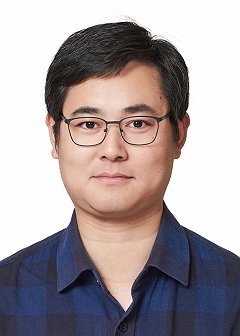
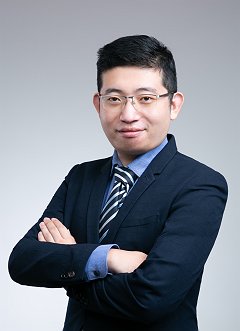
Cristian Cadar is a Professor in the Department of Computing at Imperial College London, leading the Software Reliability Group. He holds an ERC Consolidator Grant and is an EPSRC Early-Career Fellow. His research focuses on enhancing software reliability and security through techniques like symbolic execution and dynamic analysis. Education: PhD in Computer Science (Stanford University), M.Eng. and B.S. in Computer Science and Mathematics (MIT). Research interests include software engineering, computer systems, and security, with a focus on practical tools for testing and verification. His work has led to advancements in symbolic execution, compiler testing, and dynamic software updates. Key publications span topics like KLEE, symbolic execution optimization, and compiler fuzzing. Awards include the BCS Roger Needham Award, Humboldt Research Award, and SIGOPS Hall of Fame recognition. He advises PhD students and postdocs, focusing on systems programming and compilers. His lab develops tools like KLEE and explores multi-version execution and greybox fuzzing.
Dr. Philip Langer is a researcher at TU Wien's Institut für Information Systems Engineering, part of the Faculty of Informatics. His work focuses on model-driven engineering, semantic model differencing, and cloud-based software modernization. He contributed to frameworks like GLSP, ARTIST, and xMOF, emphasizing tool integration and collaboration in modeling environments. Research Areas: Model transformation, UML semantics, cloud migration, and search-based optimization Key Projects: ARTIST (cloud migration), GLSP (web modeling tools), xMOF (formal semantics) Publications highlight advancements in model differencing using execution traces, multi-objective model merging (MOMM), and semantic visualization techniques for web-based IDEs. His work bridges theoretical foundations with practical tool development, addressing challenges in collaborative modeling and legacy system modernization. Awards: No specific prizes mentioned, but recognized through prolific conference contributions and framework development. Grants/Advising: He collaborates extensively with peers like Tanja Mayerhofer and Manuel Wimmer, though specific grants or student advisement details are not explicitly stated. His research impacts both academic and industrial software engineering practices.
Jie Liu is a Researcher at the Institute of Software, Chinese Academy of Sciences and a Professor and Doctoral Supervisor at University of Chinese Academy of Sciences. He is also a Member of the Youth Innovation Promotion Association of the Chinese Academy of Sciences and an Executive Committee Member of the System Software Committee of the CCF Computer Society. His research is conducted within the Software Engineering Technology R&D Center. Dr. Liu received his Ph.D. from the University of Science and Technology of China in 2011 and his B.A. from the same institution in 2004. He has progressed through the ranks at the Institute of Software, CAS, starting as an Assistant Research Fellow (2011-2014), then Associate Research Fellow (2014-2024), and currently as a Researcher (since 2024). His research spans Big Data Intelligent Analysis Models and Systems at the intersection of AI, Software Engineering, and System Software. Specifically, his work covers three main areas: Big Data and Machine Learning Systems (statistics and AI algorithm model libraries, data quantitative analysis tools, LLM reasoning optimization, Earth Big Data); Intelligent Software Engineering (code model constraint decoding, data science agents, system log analysis agents); and Knowledge-Enhanced Intelligent Model Construction (knowledge extraction, knowledge graphs, domain AI model design). His research has resulted in innovative approaches to handling complex data analysis challenges across multiple domains. Dr. Liu's research has produced significant outcomes including EarthDataMiner, which supports SDG indicator calculations and won the 2024 Beijing Municipal Science and Technology Progress First Prize. His work on RISC-V software migration technology has been integrated into the Ruiqian tool (https://rvpt.top/), demonstrating practical applications of his research in emerging computing architectures. Beijing Science and Technology Progress Award, First Prize, 2024 2023 Surveying and Mapping Science and Technology Award, Special Prize, 2023 DASFAA Best Paper Runner-up, Second Prize, 2013 Dr. Liu has successfully guided numerous graduate students who have secured positions at major technology companies including Alibaba, ByteDance, Southern Power Grid, and Agricultural Bank of China. He has secured funding through multiple National Natural Science Foundation projects, National Key R&D Program projects, and over ten other research initiatives. His research collaborations span industry leaders like Huawei, JD.com, and TravelSky, as well as academic institutions within the Chinese Academy of Sciences. He teaches graduate courses such as 'Machine Learning Systems' and 'Cloud Computing and Big Data Technology' at University of Chinese Academy of Sciences, and has established a research group focused on developing innovative solutions at the intersection of AI and software engineering with real-world applications in earth sciences, healthcare, and intelligent systems.
Dr. Yutian Tang serves as an Assistant Professor (UK Lecturer) and Principal Investigator at the School of Computing Science, University of Glasgow, where he supervises PhD students and leads research in AI-driven software engineering. His academic journey includes a PhD from The Hong Kong Polytechnic University's Department of Computing. His research spans AI+SE integration , particularly focusing on Large Language Models for program analysis, software testing, and Android security. Key areas include: LLM-assisted vulnerability detection and repair Empirical studies of real-world software systems Privacy protection mechanisms Configuration compatibility in mobile applications Smart contract security optimization His publication portfolio shows a clear trajectory toward AI-augmented software engineering , with recent work demonstrating how LLMs can enhance taint analysis, binary code similarity detection, and test generation. This evolution reflects the field's broader shift toward AI integration while maintaining rigorous empirical validation. Award highlights include: Best Industry Paper Award at ISSRE'18 Elevation to IEEE Senior Member (2024) Three Android OS defects confirmed by Google Security Team As an active researcher and community contributor, Tang serves on 40+ program committees including PLDI, ICSE, and FSE. His work receives funding from National Natural Science Foundation of China, Shanghai Science Commission, OpenAI, and Google. Current projects focus on automated bug localization and LLM-based testing frameworks, with recent grants from OpenAI Cybersecurity and Google Cloud programs. He leads research groups investigating Android security and AI-assisted program analysis, collaborating with institutions like Lund University.