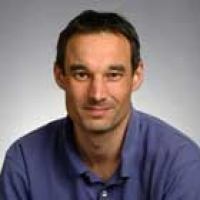
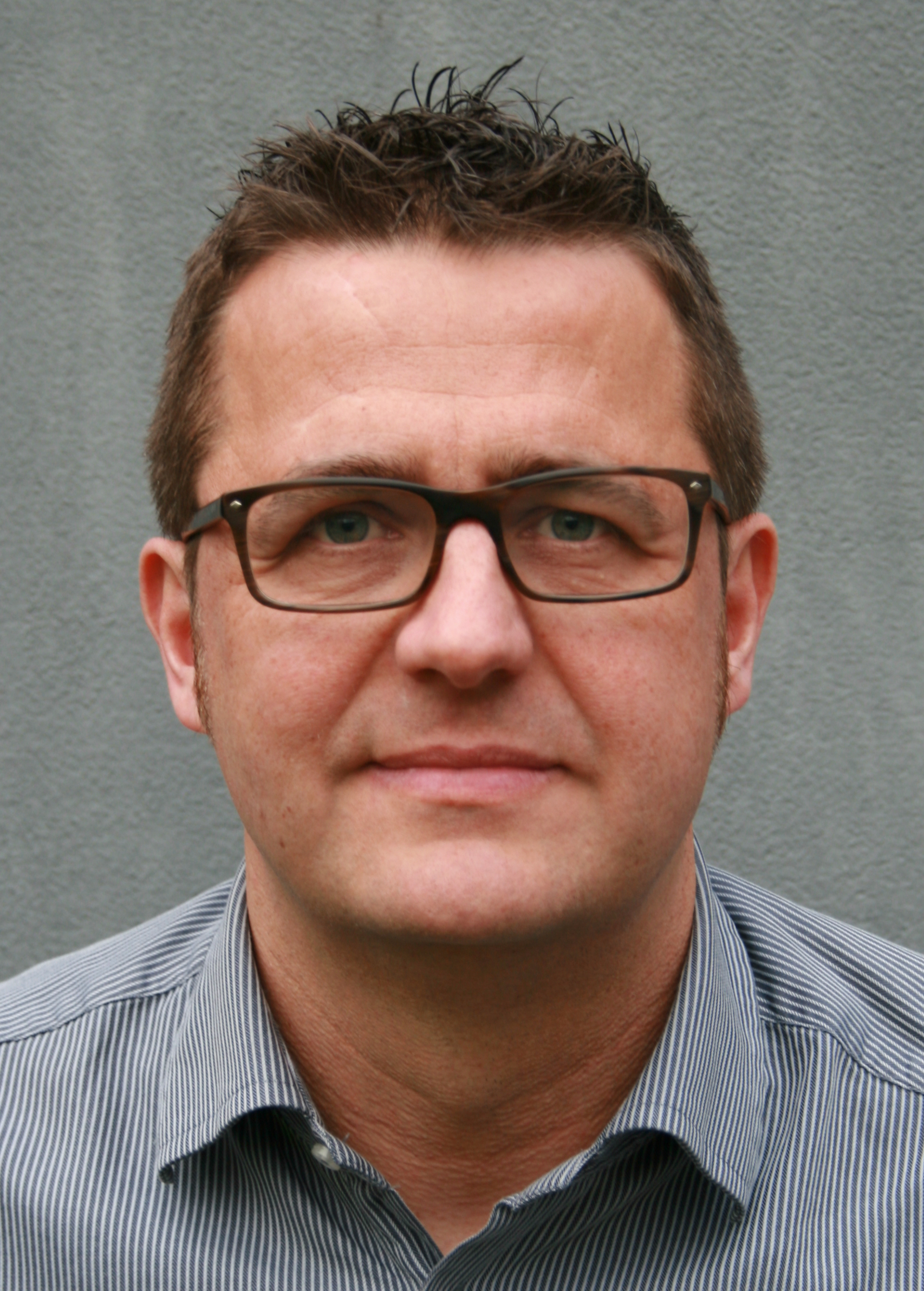
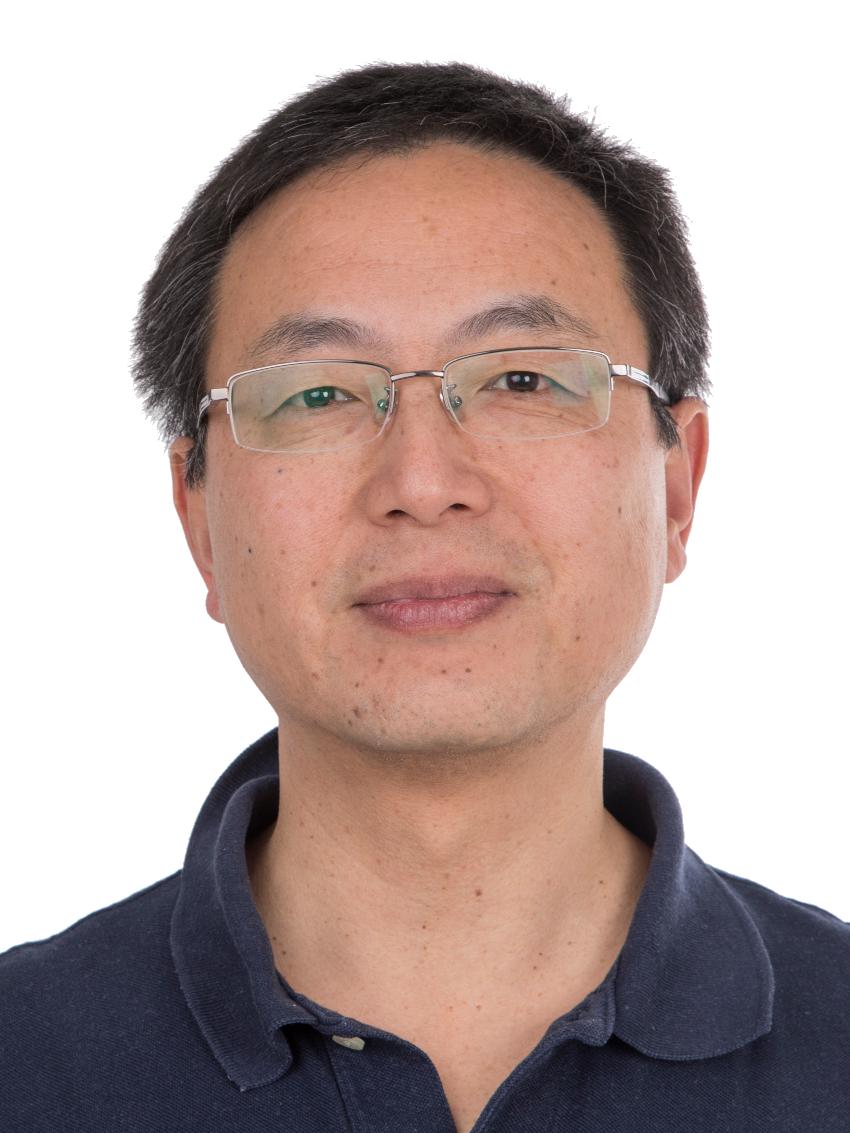
Frans Kaashoek is the Charles Piper Professor in MIT's Department of Electrical Engineering and Computer Science (EECS) and a member of the Computer Science and Artificial Intelligence Laboratory (CSAIL). He leads the Parallel and Distributed Operating Systems (PDOS) group, focusing on secure systems, formal verification, and distributed computing. His work emphasizes crash-safe systems, concurrent programming, and cryptographic security. Education: PhD in Computer Science from Vrije Universiteit Amsterdam (1992), thesis on group communication in distributed systems under Andy Tanenbaum. Research interests include operating systems, networking, programming languages, and computer architecture. Notable projects: FSCQ (verified crash-safe file system), Perennial (framework for verifying concurrent systems), and Noria (high-performance web backend). Awards: ACM SIGOPS Mark Weiser Award (2001), ACM Prize in Computing (2010), National Academy of Engineering membership (2006), and American Academy of Arts and Sciences membership (2012). Publications: Over 150 papers on systems software, verification, and security. Authored textbooks like Principles of Computer System Design: An Introduction and xv6 commentary.
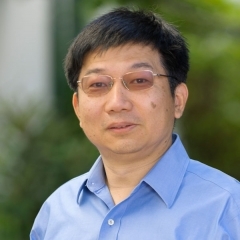
Tao Yang is a Professor in the Department of Computer Science at the University of California, Santa Barbara, where he has been a faculty member since 1993. His research spans web search and mining, database and information systems, machine learning and data mining, parallel and distributed systems, and cloud computing. He serves as an active educator, teaching courses including CS170 Operating Systems (Spring 2024), CS291A Neural Information Retrieval (Fall 2024), and CS140 Parallel Computing (Winter 2025). PhD in Computer Science, Rutgers University ME in Artificial Intelligence, Zhejiang University MS in Computer Science, Rutgers University BS in Computer Science, Zhejiang University Professor Yang's research focuses on advancing the field of information retrieval with particular emphasis on neural approaches to search and ranking. His recent work explores neural document ranking, privacy-aware search systems, and versioned data search. He has led significant projects including Neptune clustering infrastructure, Sorrento self-organizing storage cluster, and TMPI for MPI execution optimization. His research bridges theoretical advances with practical implementations, particularly in scaling search architectures to handle billions of documents while maintaining relevancy, performance, and freshness. His publication record shows a clear evolution from foundational work in parallel and distributed systems toward contemporary research in neural information retrieval. Recent publications demonstrate expertise in optimizing both sparse and dense retrieval methods, with particular focus on efficiency improvements for multi-vector representations. His work consistently addresses real-world challenges in search scalability and privacy preservation. Faculty Research Award, Google Research Research Initiation Award, NSF (1994) UC Regents' Junior Faculty Award (1994) Computer Science Faculty Teacher Award (1995) CAREER Award, NSF (1997) Noble Jeeviant Award, AskJeeves (2002) Professor Yang has supervised numerous graduate students, many of whom have gone on to prominent positions at companies like Google, Apple, and Coursera, or academic positions at universities worldwide. His industry experience as Chief Scientist for Ask.com (2001-2010) and founding Chief Scientist for Teoma (2000-2001) has informed his research direction and provided valuable practical context for his academic work. He has served on program committees for major conferences including WWW, SIGIR, KDD, WSDM, CIKM, ECIR, and EMNLP. His research group maintains active projects in neural information retrieval, privacy-aware search, similarity computing, and parallel computing systems. The group collaborates closely with industry partners, particularly in the search technology space, and has developed systems that power major search engines serving over 100 million users.
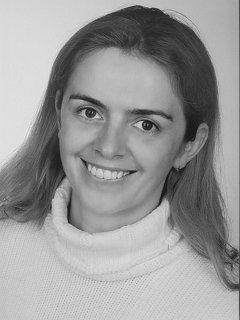
Ruzica Piskac is a Professor of Computer Science at Yale University, where she leads the Rigorous Software Engineering (ROSE) group. She has made significant contributions to the fields of software verification, security, automated reasoning, and code synthesis, focusing on improving software reliability and trustworthiness through formal techniques. Dr. Piskac received her PhD from the Swiss Federal Institute of Technology (EPFL) in 2011, where her dissertation won the Patrick Denantes Prize. Prior to joining Yale, she led an independent research group at the Max Planck Institute for Software Systems in Germany (2012-2013). Her research spans several key areas: symbolic execution for Haskell (G2), privacy-preserving formal methods (PPFM), functional reactive synthesis, verification of configuration files, and analysis of software updates. Her work consistently bridges theoretical formal methods with practical applications in real-world systems. Dr. Piskac's recent publications demonstrate a strong trend toward applying formal verification techniques to emerging challenges including large language models, quantum computing security, legal accountability of automated systems, and cyber-physical systems. Her research increasingly intersects with AI, cryptography, and legal domains while maintaining strong foundations in formal methods. Her scientific achievements have been recognized with numerous prestigious awards: Multiple Amazon Research Awards Yale University's Ackerman Award for Teaching and Mentoring Facebook Communications and Networking Award Microsoft Research Award for the Software Engineering Innovation Foundation (SEIF) Patrick Denantes Prize for her PhD dissertation Dr. Piskac has graduated five PhD students, four of whom have gone on to become assistant professors of computer science. She has served as Program Chair of the 37th International Conference on Computer Aided Verification and is on the Steering Committee of the Formal Methods in Computer-Aided Design conference. She leads the Rigorous Software Engineering (ROSE) group at Yale, which focuses on several key projects including: Symbolic Execution Engine for Haskell (G2) Privacy Preserving Formal Methods (PPFM) Functional Reactive Synthesis Verifications for Configuration Files Analysis of Software Updates and Configuration Files
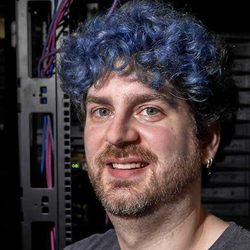
Ruben Verborgh is a Professor of Decentralized Web Technology at IDLab of Ghent University – imec and a Visiting Fellow at the Oxford Martin School within the University of Oxford . As a hybrid academic and industry expert, he serves as a Solid Ecosystem Architect for Inrupt and advises other companies on decentralized data architectures. His research focuses on enabling a post-Big Data era through decentralized knowledge graphs, where individuals control their data storage and sharing. He investigates technologies that balance societal trust with economic incentives , aiming to dismantle data harvesting business models. Key areas include Linked Data , Web APIs , and trust envelopes for responsible data reuse. Recent publications emphasize automated policy negotiation , ODRL policy interoperability , and query optimization in Solid environments. His work spans decentralized healthcare data, semantic transport systems, and rule-based agents for personal data stores, reflecting a cross-disciplinary approach to digital trust and data sovereignty . As a co-designer of the Solid ecosystem , Verborgh contributes to projects like Components.js for dependency injection and Comunica for federated SPARQL query engines. His collaborations with institutions such as Oxford and industry partners highlight his role in bridging academic innovation with real-world implementation .
Dr. Pengyu Nie is an Assistant Professor at the University of Waterloo's Cheriton School of Computer Science. His research enhances developer productivity through machine learning techniques for software testing, code maintenance, and program analysis. Specific interests include execution-guided test completion, code-comment co-evolution, and multilingual programming systems. Current projects investigate LLM-based code editing in computational notebooks, multilingual code co-evolution, and test generation for exceptional behaviors. Research outputs include tools like pytest-inline for Python testing and Roosterize for Coq lemma suggestions. Awards include the Margarida Jacome Dissertation Award (2023) and ACM SIGSOFT Distinguished Paper Awards (2023, 2019). He leads the UW-SWaG research group and advises PhD/master's students on software engineering and ML projects.
Michael Philippsen is a Professor at the Department of Computer Science at Friedrich-Alexander-Universität Erlangen-Nürnberg (FAU), where he leads the Chair of Programming Systems (Lehrstuhl für Informatik 2). His research spans software engineering, programming languages, high-performance computing, and machine learning applications. He has directed multiple significant research projects including Holoware (software visualization in VR/AR), ORKA (OpenMP for FPGAs), and CS4MINTS (computer science education initiatives). Prof. Philippsen's research focuses on improving software quality and developer productivity through innovative approaches. His work in software testing includes novel methods for detecting flaky tests using version history and test execution data. In compiler research, he has pioneered automated testing techniques and optimization methods, particularly for FPGA acceleration using OpenMP extensions. His Holoware project revolutionized software visualization by applying city metaphors in virtual reality to enhance program comprehension. Additionally, he has made significant contributions to machine learning applications in software engineering, including few-shot out-of-domain detection in natural language processing systems. His publication record demonstrates a strong trend toward interdisciplinary research bridging traditional software engineering with emerging technologies. A significant portion of his recent work focuses on optimizing compiler techniques for heterogeneous architectures, particularly FPGA acceleration through OpenMP extensions. His research in software visualization has produced award-winning work on layered software city metaphors that significantly improve program comprehension compared to traditional visualization techniques. The consistent theme across his work is applying practical, measurable solutions to real-world software engineering challenges. Best Paper Award for 'Multipurpose Cacheing to Accelerate OpenMP Target Regions on FPGAs' (2023) Best Paper Award for 'A Layered Software City for Dependency Visualization' (2020) Prof. Philippsen has secured substantial research funding from the German Federal Ministry for Economic Affairs and Energy (BMWE), the Bavarian State Ministry of Science and the Arts (StMWK), and the Fraunhofer Society. His projects often involve industry collaboration to ensure practical applicability. He has supervised numerous student theses contributing to his research in compiler testing and software visualization. His research group maintains specialized laboratories for VR/AR software visualization, FPGA acceleration, and educational tool development as part of the CS4MINTS project.
Marcus Völp is an Associate Professor and head of the CritiX research group at the University of Luxembourg's Interdisciplinary Centre for Security, Reliability and Trust (SnT). His research focuses on ultra-reliable operating systems, fault and intrusion tolerant systems for cyber-physical environments, and hierarchical hybridization techniques to construct resilient computing platforms. His work bridges theoretical foundations with practical implementations, particularly in developing dependable systems-on-chip that can withstand faults and intrusions. Research spans formal verification methods, radiation-hardened hardware, blockchain security, and autonomous vehicle safety systems. Recent publications demonstrate advancement in parameterized system verification, radiation effects on routers, and N-version machine learning for autonomous systems. His group maintains strong focus on practical resilience mechanisms for real-time and critical systems across computing layers.
Kerstin Schneider is a full-time Professor for Databases at Harz University of Applied Sciences since 2007. She operates within the Faculty of Automation and Informatics , focusing on database theory, data engineering, and AI-driven educational technology solutions. Current research emphasizes adaptive e-learning platforms (ALEA system) Interdisciplinary projects in AI Engineering (AiEng 2021-2025) Custom database applications for SMEs (TEA project) Her research interests span: Reliable workflow execution in distributed systems Multimedia information systems Semantic data recommendations Temporal XML database models Recent publications (2021–2017) highlight trends in: Academic database foundations Intelligent e-learning architectures Life science data analytics Historical data visualization Scientific Awards : 2004 Research and Innovation Award of the Rhine-Neckar Triangle Foundation She contributes to academic governance through roles in: Steering Committee for Fundamentals of Databases Examination Board AI Engineering Senate Deputy at Harz University Equal Opportunities Officer for AI Department Key collaborative projects include: APRICOTS (CORBA-based workflow systems) GEIST (Intelligent History Information Systems) Team projects with international universities Open Educational Resources (OER) development
Bjorn De Sutter is a Full Professor in the Computer Systems Lab within the Department of Electronics and Information Systems at Ghent University, Belgium. His research spans software protection/security (obfuscation, side channels, diversity) and code generation for accelerators like GPUs. Research interests include: Software protection mechanisms against reverse engineering and attacks Compiler techniques for heterogeneous architectures Multi-variant execution and software diversity Cryptographic key extraction and protection modeling Publications focus on software security (67%), systems (20%), and compilers (13%), with recent work in protection evaluation methodologies, GPU compilation, and diversified execution. Key trends include empirical security validation and adaptive protection techniques. Awards and honors: Barco Award for Graduation Dissertations (1998) HiPEAC Technology Transfer Awards (2013, 2018) ACM SIGSOFT Distinguished Paper & Best Paper Award at ICPC 2017 Advises 4 PhD students and 6 Master's candidates. Secured €2M+ funding from: EU FP7 (ASPIRE coordinator) FWO projects on software protection/compilers VLAIO industrial fellowships Leads the Computer Systems Lab focusing on secure compilation and architecture-aware optimization.
Heather Hornbeak is an active Associate Professor of Web Design in the Art Department at Charleston Southern University (CSU), where she teaches Web Design, UX/UI, and Photography. She joined CSU in 2024 after previously serving as Professor of Interactive Media at Asbury University (2016-2024) and teaching photography at Union University during graduate studies. Her career uniquely bridges academia and industry, with designs featured globally in Apple stores and major trade shows like CES and MacWorld. Education: M.F.A. in Graphic Design & Photography, Azusa Pacific University (2016) B.A. in Graphic Design, Union University (2004) Animation Design Training, School of Visual Arts (2022) Production Design Training, Asbury University (2017) Her research focuses on user-centered digital design, particularly Web Design and UX/UI methodologies. She investigates practical applications of Data Visualization in education and corporate settings, alongside sustainable design innovations demonstrated through her tiny home project and van conversion. Her work consistently connects technical design skills with real-world user behavior and ethical digital communication practices. Recent publications (2016-2024) reveal three key trends: (1) UX/UI design for corporate and educational contexts, (2) data visualization as a communication tool, and (3) design's role in lifestyle innovation. She emphasizes the intersection of technology, user behavior, and physical space optimization, with growing attention to social media's impact on community events. Heather Hornbeak has not received any listed scientific awards or fellowships in the provided text. While no formal graduate students are documented, she mentors through teaching and industry leadership. She trained employees in her AV & Home Automation business and taught photography at Union University. Grant history isn't mentioned, but her corporate work included major accounts for Target, Walmart, and Best Buy, reflecting applied research funding through industry partnerships. She co-owns a studio and AV & Home Automation business with her husband, personally training employee teams. At CSU, she collaborates with the Art Department but no dedicated research lab is specified. Her Creo Art Guild membership and AIGA judging role indicate professional team engagement.
Daniel Lohmann is a Full Professor and Fachgebietsleiter (Head of Department) at the Department of Operating Systems and Middleware within the College of Engineering and Computer Science at Leibniz Universität Hannover . His research focuses on operating system construction , embedded systems , and dependable real-time systems , with a strong emphasis on generative approaches , software product lines , and hardware-RTOS co-design .
Vincent Danjean is an associate professor at Grenoble Alpes University , specializing in parallel computing, high-performance computing, and bioinformatics. He earned his PhD in 2004 from École Normale Supérieure de Lyon under the supervision of Raymond Namyst. Research Interests: Vincent's work spans several critical areas in computational science: Parallel and Distributed Systems: Focus on task-based parallelism and hybrid cluster architectures. Performance Analysis: Development of visual frameworks for analyzing parallel applications. Bioinformatics: Application of computational methods to genetic and genomic data analysis. GPU Computing: Efficient scheduling and work stealing strategies for multi-GPU systems. Reproducible Research: Workflows using Git and Org-mode for scientific transparency. Publication Trends: His publications demonstrate a consistent focus on advancing parallel computing techniques, with significant contributions to GPU scheduling, cache-efficient algorithms, and visualization tools. Recent work includes interdisciplinary applications in genomics and cybersecurity protocols. Contact: vincent.danjean@imag.fr
Prof. Dr. Anna-Lena Lamprecht is a Chair of Software Engineering at the University of Potsdam, Institute of Computer Science. Her work focuses on interdisciplinary research software engineering, scientific workflows, and FAIR principles for computational materials science and bioinformatics. University of Potsdam Department of Software Engineering Research Interests Lamprecht explores the intersection of domain-specific languages, automated workflow composition, and agile methodologies for scientific computing. She emphasizes reproducibility, sustainability, and semantic validation in research software, particularly through projects like Workflomics and TopoToolbox3. Publications Her recent work spans multi-dimensional software categorization, workflow modeling patterns, and FAIR adoption in GitHub repositories. She also investigates benchmarks for bioinformatics workflows and semantic constraints in geospatial service composition. Projects Current projects include VERSECLOUD, Workflomics, and TopoToolbox3. She leads initiatives in automated workflow composition and has contributed to the FAIR4RS principles. Teaching and Supervision Supervised student works Full-semester RSE courses Computational thinking education Contact anna-lena.lamprecht@uni-potsdam.de | +49 331 977-3040 | Campus Golm, Building 70, Room 1.35
Paolo Romano is an Associate Professor at the Department of Computer Engineering, Instituto Superior Técnico (IST), Universidade Técnica de Lisboa. He is also a Senior Researcher at the Distributed Systems Group (INESC-ID). His research focuses on distributed systems, AI/ML systems, transactional memory, autonomic computing, and high-performance computing. He holds a PhD in Computer Engineering from Sapienza University of Rome (2007) and a Master's Degree (Summa Cum Laude) from the University of Rome Tor Vergata (2002). PhD Thesis: 'Protocols for End-to-End Reliability in Multi-Tier Systems' Supervised over 10 PhD and MSc students Research Interests : Dependable Distributed Systems Transactional Memory (Hardware/Software) Autonomic and Self-Optimizing Systems Performance Modelling & Evaluation Key achievements include leading the Cloud-TM EU-funded project (€1.7M), coordinating the Euro-TM COST Action, and winning multiple best-paper awards at ICAC, NETYS, and NCA conferences. He actively participates in technical committees for conferences like EuroPar, ICDCS, and Middleware. Grants & Projects : Coordinator of 'Euro-TM' (€400K) Coordinator of 'Cloud-TM' (€1.7M EC funding) Principal Investigator in national projects like 'specSTM' (€127K) He advises students in areas such as self-tuning distributed systems, transactional data stores, and hardware-software co-design for concurrency control. His work bridges theory and practice, with contributions to frameworks like D2STM and Cloud-TM.
Weihai Yu is an Associate Professor at the Department of Computer Science, UiT The Arctic University of Norway. His research focuses on distributed systems, collaborative editing, conflict-free replicated data types (CRDTs), edge computing, and decentralized service orchestration. He leads the Open Distributed Systems (ODS) research group and contributes to projects like the Conflict-free Replicated Relation (CRR) and Nudge Project. Yu has authored over 50 publications since 2009, with recent work emphasizing replicated data streams, undo mechanisms in collaborative systems, and edge-cloud integration. Key research interests include: distributed database replication, real-time collaborative editing with CRDTs, fault-tolerant service orchestration, and asynchronous systems design. His work bridges theory and practice, addressing challenges in consistency, scalability, and user experience in distributed applications. Publications trends show a strong focus on CRDT advancements (e.g., low-cost set CRDTs, generic undo support) and edge computing applications. He collaborates extensively with industry partners on projects like the Nudge Project, exploring IoT-driven transportation systems. Yu's contributions are published in top venues such as Springer Nature, ACM, and IEEE journals/conferences. Maintains the Open Distributed Systems (ODS) group at UiT, focusing on collaborative systems and distributed computing innovations. Current research includes local-first software architectures and conflict-free replicated relations for multi-synchronous database management.