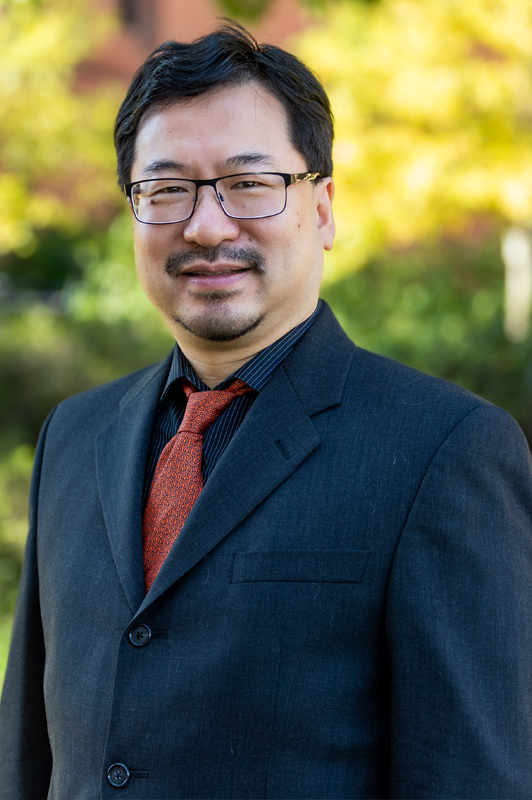
Page Anderson is a Professor at Georgia State University's College of Arts & Sciences , directing the ARTLab and specializing in clinical research on anxiety disorders. With a Ph.D. from the University of Georgia (1998), Dr. Anderson explores technology-based interventions like VR and mobile apps to improve mental health equity and treatment accessibility. Focuses on attention and cognitive biases in anxiety disorders Investigates cultural influences on mental health interventions Develops practical, accessible digital health solutions Committed to multidisciplinary approaches and mental health equity The research spans experimental studies examining attention biases, community-based data collection, and technology implementation in real-world settings. Recent publications analyze mindfulness apps, VR therapies, and culturally adapted digital interventions for anxiety. The ARTLab actively supports social justice initiatives, aligning with the Black Lives Matter movement. Current projects emphasize enhancing technology-based treatments' acceptability and effectiveness, particularly through: Multi-method assessment of cognitive biases Real-world implementation of mental health apps Culturally responsive digital intervention design Integration of translational neuroscience with community partnerships
Shiwen Mao is a Professor and Earle C. Williams Eminent Scholar Chair at Auburn University's Department of Electrical and Computer Engineering. He serves as Director of the Wireless Engineering Research and Education Center. His education includes a Ph.D. in Electrical Engineering from Polytechnic University, M.S. in Systems Engineering, and dual B.E. degrees in Electronic Engineering and Enterprise Management from Tsinghua University. Research interests span wireless networks, multimedia communications, RF sensing for healthcare IoT, smart grid systems, and machine learning applications. Mao's work focuses on transforming edge intelligence, 6G systems, drone localization, and AI integration for next-generation networks. Recent publications demonstrate strong trends in AI-driven wireless communications, satellite-terrestrial networks, cybersecurity applications of large language models, and generative AI for wireless sensing. Awards and Honors: IEEE Communications Society's Best Paper Award (2021) IEEE Jack Neubauer Memorial Award (2020) Multiple National Science Foundation grants including a $300K award for 6G systems research Best Paper and Best Demo awards from IEEE conferences As Director of the Wireless Engineering Research and Education Center, Mao leads collaborative research involving over 20 faculty members addressing real-world communication challenges. The center develops solutions integrating drone technology, millimeter wave communications, and AI for future wireless systems.
Norman Johnson is a Bauer Professor of Business Analytics and Chair of the Decision and Information Sciences Department at the University of Houston's C. T. Bauer College of Business. He holds a joint appointment as a Professor in the Hobby School of Public Affairs. His research focuses on decision-making processes, psychometric analysis, data mining, and predictive analytics, with applications in computer-mediated negotiations, virtual worlds, and healthcare information systems. He has over two decades of academic experience, including prior roles as an Assistant Actuary and current advisory roles in corporate data analytics. Johnson earned his Ph.D. from the City University of New York. His research appears in top-tier journals such as MIS Quarterly, Journal of Management Information Systems, and European Journal of Information Systems. Key themes include the impact of communication media on negotiation dynamics, affective computing in virtual environments, and the integration of structured/unstructured data analytics in public and private sectors. His applied work bridges academia and industry, with projects on predictive modeling for pension funds, healthcare IT adoption, and user engagement in virtual worlds. While no formal awards are listed, his prolific publication record reflects sustained scholarly impact. Johnson advises students in the Bauer Ph.D. programs and collaborates across disciplines, including the Hobby School of Public Affairs. His current research emphasizes big data applications in governance and healthcare, reflecting his dual role in business analytics and public policy.
Dr. Gun A. Lee serves as a Senior Research Fellow at the Empathic Computing Lab within the School of Information Technology and Mathematical Sciences at the University of South Australia. He concurrently holds an Adjunct Senior Fellow position at the HIT Lab NZ, University of Canterbury. His academic journey spans multiple institutions with significant contributions to extended reality research. Dr. Lee's educational foundation includes: Ph.D. in Computer Science and Engineering from POSTECH (2002-2009) M.S. in Computer Science and Engineering from POSTECH (2000-2002) B.S. in Computer Science from Kyungpook National University (1996-2000) His research centers on extended reality technologies and their applications. Dr. Lee's work explores Virtual Reality (VR), Augmented Reality (AR), and Mixed Reality (MR) systems with emphasis on creating immersive experiences for learning, training, and collaboration. His concept of 'Immersive Authoring' represents a significant contribution to the field, enabling content creation while immersed in the experience itself. In Human-Computer Interaction, he develops novel interaction techniques that leverage natural human behaviors and multimodal inputs, particularly focusing on eye tracking, gesture recognition, and spatial awareness. Analysis of Dr. Lee's recent publications reveals a clear trajectory from foundational AR frameworks to sophisticated collaborative mixed reality systems. His work increasingly integrates social and emotional dimensions into remote collaboration, with projects like SharedSphere demonstrating practical applications of live 360-degree mixed reality. The research consistently bridges theoretical HCI principles with real-world applications across education, professional training, and entertainment domains. As a Research Degree Supervisor, Dr. Lee mentors graduate students in extended reality and human-computer interaction. His teaching portfolio includes the 'Human Interface Technology - Design and Evaluation' course at the HIT Lab NZ, where he specialized in evaluation methodologies for interactive systems across multiple semesters from 2014-2016. He has also conducted specialized workshops including 'The Glass Class' on Google Glass development. At the Empathic Computing Lab, Dr. Lee leads research initiatives focused on creating technologies that enhance human connection. His project portfolio spans from fundamental interaction research like 'Interaction with Augmented Mirrors' to applied mobile AR applications including CityViewAR, AntarcticAR, and GeoBoids. His work on the Mobile AR Framework represents significant infrastructure development for the field, while projects like VPS (VR-based Paint Spray Training Simulator) demonstrate practical industrial applications of his research.
Dr. Bartosz Marcinkowski serves as Professor and Head of the Department of Business Informatics at the University of Gdańsk's Faculty of Management, concurrently holding the positions of Deputy Dean for Research and Head of the Doctoral School. His academic leadership spans departmental administration, faculty research strategy, and doctoral program oversight within Poland's prominent management education institution. Marcinkowski's research centers on the intersection of information systems and practical business applications, with dominant focus areas including agile software development methodologies, digital transformation frameworks, and facility management technology adoption. His work consistently addresses contemporary challenges such as post-pandemic recovery in IT projects, generative AI integration, and sustainable business practices through empirical industry-academia collaborations. Recent publications demonstrate particular expertise in scaling agile frameworks for distributed teams and implementing blockchain solutions in enterprise environments. Analysis of his 2022-2025 publications reveals a strategic research trajectory emphasizing practical solutions for complex business-technology challenges. His work shows increasing integration of sustainability considerations across domains, from facility management to corporate governance, while maintaining strong methodological focus on agile approaches and systems integration. The recurring industry-academia collaboration theme highlights his commitment to bridging theoretical research with real-world business applications.
Professor Vijay Sivaraman is a distinguished academic at the University of New South Wales, where he serves as Professor in the School of Electrical Engineering and Telecommunications within the Faculty of Engineering. With extensive experience in network research, he leads significant projects in network architecture, security, and performance optimization. His educational background includes a PhD in Computer Science from UCLA (2000), an MSc in Computer Science from North Carolina State University (1996), and a B.Tech in Computer Science and Engineering from the Indian Institute of Technology, Delhi (1994). Professor Sivaraman's research focuses on making communication networks like the Internet more efficient and effective. He develops network architectures and algorithms for improving delivery of services such as video streaming and gaming, with particular expertise in scalable architectures and protocols for optical, wireless, and sensor networks. His work bridges theoretical foundations with practical applications to solve real-world networking challenges. His recent publications demonstrate a strong trend toward network security, particularly in IoT environments, Software Defined Networking applications, and enterprise network monitoring. A significant portion of his work addresses security challenges in the Internet of Things, DNS security, and metaverse network requirements, showing his ability to anticipate and address emerging networking challenges. Awarded the Chorafas Foundation Award in 2000, Professor Sivaraman has secured substantial research funding including an ARC Discovery Project ($405K for 2014-2017) on interactive and scalable media over software defined networks, and a Google Research Award ($63K for 2013) on virtualizing access networks using SDN. He currently supervises 6 students in his lab, with 10 students having already graduated under his guidance. His research group actively works on projects related to Software Defined Networking, security mechanisms for networked IoT devices, and improving Internet service quality using data analytics and artificial intelligence. Professor Sivaraman leads a dynamic research laboratory focusing on network technologies, with particular emphasis on creating practical solutions for real-world networking problems through the integration of theoretical research and hands-on experimentation.
Professor Jang Yoon is a faculty member in the Department of Computer Engineering at Sejong University, South Korea. He currently holds the position of Daeyang Distinguished Professor and leads the Data Visualization Lab. His academic journey includes postdoctoral research at the Swiss National Supercomputing Center (2007-2009), ETH Zurich (2009-2011), and Purdue University (2011-2012). His educational background includes a Bachelor's degree from Seoul National University in Electrical Engineering (2000), and Master's and Doctoral degrees from Purdue University in Electrical and Computer Engineering (2002 and 2007). His academic progression at Sejong University shows his appointment as Assistant Professor (2012-2016), Associate Professor (2016-2022), and Professor (2022-present). Professor Jang's research spans multiple domains within data science and visualization, with primary focus on data visualization, visual analytics, and their applications in various domains. His work bridges theoretical computer science with practical applications in traffic analysis, healthcare, and smart city infrastructure. He has developed innovative techniques for spatiotemporal data visualization, volume rendering, and causal analysis in complex datasets. His recent publications (2023-2025) demonstrate a strong focus on integrating deep learning with visualization techniques, particularly in traffic analysis, volume rendering, and large language model interpretability. His work shows a clear trajectory toward combining causal inference with visual analytics, applying these methods to urban traffic systems, structural health monitoring, and public relations analysis. Professor Jang has served in numerous leadership roles in major visualization conferences including IEEE VIS, IEEE PacificVis (as General Chair in 2023), EuroVis, and HCI Korea conferences. His service contributions include program committee memberships and chair positions across multiple prestigious conferences in the visualization field. His laboratory work focuses on practical applications of visualization techniques with numerous patents registered in Korea. His research has resulted in multiple practical systems for traffic analysis, VR sickness detection, data quality improvement, and eye-tracking applications. The lab maintains strong industry connections through applied research projects addressing real-world problems.
Dr. Chetan Arora is a Senior Lecturer in Software Engineering at Deakin University's School of Information Technology, part of the Faculty of Science Engineering and Built Environment. He holds a PhD from the University of Luxembourg where he received the best PhD thesis award in the ICT domain. His research focuses on applied Artificial Intelligence in Software Engineering, with particular emphasis on Empirical Software Engineering, Requirements Engineering, and Applied Natural Language Processing. PhD in Computer Science from University of Luxembourg Masters in Software Engineering from Technische Universitat Kaiserslautern (Germany) Bachelors in Engineering (CS) from Thapar University (India) Arora's research interests center on the intersection of AI and Software Engineering, particularly how machine learning and natural language processing can enhance software development processes. His work explores requirements engineering, test automation, software trustworthiness, and human-centric software development. He investigates how large language models can be effectively deployed for tasks like test case generation, requirements analysis, and traceability. His recent publications reveal a strong focus on practical applications of AI in software engineering, with numerous studies examining the real-world implementation challenges and benefits. His publication record shows significant activity in top software engineering venues, with a notable emphasis on AI applications in software engineering processes. His recent work demonstrates expertise in retrieval-augmented generation systems, requirements-driven testing, and human-centric software development approaches. The publications collectively highlight his focus on bridging theoretical AI advancements with practical software engineering challenges. Best Ph.D. thesis award in the ICT domain at University of Luxembourg Arora actively supervises doctoral students working on cutting-edge topics including satellite communication systems, extended reality applications, and human-centered AI requirements engineering. His industry collaborations include work with Department of Defence on projects like Contextually Situated Anomaly Detection and Planning and Optimisation of Resources in Defence Satellite Communication Systems. He previously worked at SES Satellites on applied AI for IoT and Satcom, and as an FNR-PPP research fellow at the University of Luxembourg in software quality assurance. His laboratory work focuses on developing practical AI solutions for software engineering challenges, particularly in requirements engineering and test automation. Current projects involve multi-orbit satellite constellation optimization, dynamic radio resource management, and extended reality enabled human-centric requirements engineering.
David Chaves-Fraga is an Assistant Professor at Universidade de Santiago de Compostela (Spain), affiliated with CiTIUS (Center for Intelligent Technologies) and a research collaborator at KU Leuven's DTAI group. His expertise lies in Knowledge Graph Construction (KGC), focusing on declarative mapping rules, data integration, and semantic web technologies. He completed his PhD at Universidad Politécnica de Madrid in 2021, researching Knowledge Graph Construction from heterogeneous data sources. Education PhD in Artificial Intelligence, Universidad Politécnica de Madrid (2016–2021) Master in Artificial Intelligence, Universidad Politécnica de Madrid (2015–2016) Bachelor in Computer Science, Universidade de Santiago de Compostela (2011–2015) Research Interests Dr. Chaves-Fraga specializes in optimizing data integration systems using declarative rules (e.g., RML), scalable KG materialization, and benchmarking tools like KROWN. He emphasizes reproducibility and sustainability in KG creation, advocating for community-driven standards. His work bridges theory and practice, addressing challenges in real-world KG adoption. Contributions He co-chairs the W3C Knowledge Graph Construction Community Group, organizes workshops like KGC and Sem4Tra, and coordinates initiatives like Open Summer of Code. His tools (e.g., SDM-RDFizer, RMLdoc) are widely used in the semantic web community. Key themes include RDF-star generation, SHACL constraint extraction, and ontology-mapping interoperability.
Professor Torben Bach Pedersen at Aalborg University's Department of Computer Science within The Technical Faculty of IT and Design is a leading expert in Data Engineering, Artificial Intelligence, and Energy Systems. With over 394 publications and 19 completed projects, he directs research at the Daisy – Center for Data-intensive Systems and leads innovations in energy flexibility and smart grid technologies. Key research areas: Data Warehousing, AI/ML, Energy Systems, Smart Grids Major projects: domOS (Smart Building OS), FEVER (Virtual Power Plants), DiCyPS (Cyber-Physical Systems) His research spans data-intensive systems, AI applications in energy management, and smart infrastructure development. Recent work focuses on transformer-based network AI and energy flexibility metrics. Scientific recognition includes: Æresdoktor (Honorary Doctor) at TU Dresden (2021) Best Paper Award Runner-Up (2019) WWW 2017 Best Demo Award Best Poster Award World Smart Grid Forum (2013) Member of Danish Academy of Technical Sciences (2013) As principal investigator and supervisor in 17 PhD projects, he advances AI-driven solutions for 6G wireless systems, smart buildings, and energy market optimization.
Birgit Lugrin is a Professor and Chair of Computer Science V (Socially Interactive Agents) at the University of Würzburg's Institute of Computer Science since 2024. Her interdisciplinary research bridges computer science and psychology, focusing on socially interactive agents (SIAs) for education, healthcare, and cultural understanding. She leads a lab focused on human-robot interaction, virtual agents, and bias reduction. Education: B.Sc. and M.Sc. in Computer Science from Augsburg University, followed by a Dr. rer. nat. in Human-Centered AI. Research Themes: Socially interactive agents, cultural diversity in AI, educational robotics, elderly support, and bias reduction through virtual agents. Projects: Adaptive pedagogical agents, mixed-cultural speech models, robotic concierge design, and VR interventions for racial bias. Her recent work explores AI-driven robotics for elderly engagement, empathy-building in mixed-cultural contexts, and the efficacy of virtual agents in educational and social settings. She has contributed to tools like PePUT for Pepper robotics and frameworks for ingroup bias research. Scientific Awards Victor Lesser Distinguished Dissertation Award (IFAAMAS-12) Best Paper Awards at ICMI, AAMAS, and Culture and Computing Women's Representative roles at University of Würzburg As a mentor, she advises students in socially interactive agents, co-authoring studies on topics like robotic storytelling, speech perception, and user studies. Her lab engages in field studies, partnerships with institutions like USC and NII, and multi-stakeholder design processes.
Dr. Loutfouz Zaman is an Associate Professor in the Game Development and Interactive Media department at Ontario Tech University , part of the Faculty of Business and Information Technology . He holds a PhD in Computer Science with a focus on Human-Computer Interaction from York University. His research explores visual programming interfaces, game analytics, and extended reality technologies, with a focus on practical applications such as automated bug detection and user experience optimization. Dr. Zaman has collaborated on projects funded by MITACS, NSERC, and industry partners, addressing challenges in healthcare incident management, language learning gamification, and air traffic control simulation training. He teaches courses ranging from introductory game math to graduate-level topics in human-computer interaction and machine learning for game analytics. Education: Bachelor of Science in Computer Science (Software Systems) – Concordia University Master of Science in Computer Science (Human-Computer Interaction) – York University PhD in Computer Science (Human-Computer Interaction) – York University Research Interests: Dr. Zaman’s work spans user research in gaming, game evaluation methodologies, and emerging technologies like AR/VR. His team focuses on developing tools for visual game analytics and automated testing, with recent projects including mixed reality fitness gaming interfaces and deep learning-based bug detection systems. Grants & Collaborations: His industry partnerships include projects on healthcare incident management during pandemics, CRM gamification, and pet identification systems using computer vision. He actively seeks doctoral candidates to expand research in visual analytics, XR technologies, and automated bug detection. Labs & Affiliations: Dr. Zaman is affiliated with the Software and Informatics Research Centre (SIRC) and contributes to the university’s efforts in bridging academic research with real-world applications.
Christopher McCarthy is an Associate Professor in the Department of Computing Technologies within the School of Science, Computing and Emerging Technologies at Swinburne University of Technology. His research focuses on computer vision algorithms applied to robotics, intelligent transport systems, and assistive technologies, particularly for people with low vision. He serves as Stream Leader in Swinburne’s Innovative Planet Research Institute, leading the Intelligent Transport stream, and is a Chief Investigator in the Australian Cobotics Centre funded by the ARC. He has held research roles at CSIRO Data61, the Bionics Institute, and the University of Melbourne, contributing to bionic eye technology under the Bionic Vision Australia consortium. His research interests include: Computer Vision and AI for real-time systems Robot perception and navigation Assistive technologies for low-vision and blind users Intelligent transport systems and video analytics Human-machine interaction and cyber-human teams His recent publications reflect strong trends in deep learning, continual learning, and real-world deployment of vision systems in transport and healthcare. He has led numerous field trials and evaluations to assess system performance in real-world contexts. His work is highly interdisciplinary, combining computer science with engineering, medicine, and urban planning. Christopher McCarthy has received multiple awards, including: FSET Research Collaboration Award Excellence in Industry Engagement Special Commendation – VC Research Impact Finalist – National Disability Award in Technology Best Paper Award (IEEE) Excellence in Teaching (University of Melbourne) He has supervised over 20 HDR students in areas including robotics, AI, assistive tech, and transport analytics. He has led major research grants from ARC, Defence, SmartCrete CRC, iMOVE, and city councils. He also served as Academic Director for Work-Integrated Learning (2016–2023) and coordinated professional placements. His teaching includes core computer science units such as Computer Systems and Object-Oriented Programming. He maintains ongoing affiliations with: Bionics Institute (Honorary Member) Bionic Vision Australia (Affiliate) Data61 (Honorary Member) Royal Children's Hospital, Melbourne International Task Force for Vision Restoration Outcomes (Chair)
Associate Professor Belinda Parmenter is an adjunct clinical academic and accredited exercise physiologist (AEP) with the UNSW Medicine & Health Lifestyle Clinic, School of Health Sciences, Faculty of Medicine & Health. She serves as a member of the SPHERE Cardiac and Vascular Clinical Theme Leadership Group and is the co-founder and national co-chair of the Australian Cardiovascular Alliance (ACvA) Peripheral Artery Disease (PAD) Working Group. With over 25 years of clinical experience, she specializes in assessing, prescribing, implementing and supervising exercises for people at risk of or with cardiovascular disease. Dr. Parmenter earned her PhD from the University of Sydney in 2012, where her research investigated high-intensity progressive resistance training for patients with intermittent claudication from PAD, earning her the Exercise and Sports Science Australia (ESSA) Medal for the most outstanding thesis. She completed her Bachelor of Health Science (Exercise and Sports Science) at Griffith University in 1996. Her research focuses on the effect of cardiovascular disease on aerobic capacity and muscle strength and endurance, as well as how exercise reduces symptoms in those with and at risk of cardiovascular disease across the lifespan. Current projects include investigating ways to improve regular incidental physical activity, developing eHealth interventions for adolescents to increase physical activity levels, and exploring optimal exercise prescriptions for cardiovascular risk amelioration and peripheral artery disease treatment. Her work often bridges clinical practice with research innovation, particularly in exercise physiology applications. Dr. Parmenter's publication portfolio demonstrates a strong focus on systematic reviews and meta-analyses in exercise physiology, with significant contributions to understanding resistance training for cardiovascular conditions, peripheral artery disease management, and physical activity monitoring technologies. Her research trajectory shows increasing emphasis on digital health interventions and multi-condition approaches addressing comorbidities. 2023 UNSW Sydney School of Health Sciences Researcher of the Year 2022 UNSW Sydney Faculty of Medicine & Health Education Innovation Award 2022 The MHS Learning Network Inc Award in Therapeutic and Clinical Services 2020 UNSW Faculty Heroes Award for improving student experience 2019 UNSW School of Medical Sciences Paper of the Month 2012 ESSA Medal for outstanding PhD thesis As an active grant recipient and chief investigator, Dr. Parmenter has secured over $15 million in research funding since 2010, including significant MRFF grants for cardiovascular health, diabetes management, and mental health interventions. She supervises multiple research projects including the Diabetes Clinic feasibility study, STREss less Exercise for Blood Pressure, and the UPLIFT study on progressive resistance training for alcohol use disorder. Her teaching responsibilities include convening the HESC3504 Physical Activity and Health course for the Bachelor of Exercise Physiology program, focusing on exercise effects across healthy populations and those with cardiovascular risk. Dr. Parmenter leads several major research initiatives including Health4Life, MERIT, SHAPE, and the Meta-Health Clinic, working collaboratively with institutions like the Matilda Centre at Sydney University to develop comprehensive exercise and eHealth interventions for diverse populations from adolescents to older adults with complex health conditions.
Stephanie Tulk Jesso is an Assistant Professor at the School of Systems Science and Industrial Engineering at Binghamton University. Her research focuses on human-centered design principles applied to healthcare technology, human-AI interaction, and social robotics. She holds a joint appointment in systems engineering and has collaborated extensively with clinical partners to address real-world healthcare challenges. Her work emphasizes translational research, aiming to bridge gaps between technological innovation and practical healthcare applications. Key research themes include improving patient-clinician interactions through AI tools like VizTrust, reducing hospital fall risks via human-centered robotics, and evaluating clinician involvement in AI development. She has pioneered studies on trust dynamics in human-AI/robot interactions using experimental methods in virtual environments and healthcare settings. Notable projects include co-designing AI chatbots with hospitals and exploring ethical implications of autonomous medical robotics. Her multidisciplinary approach integrates insights from social cognition, behavioral economics, and engineering design. Recent work examines how perceived competence and context influence human-AI collaboration, with implications for healthcare system design. She actively participates in translational research initiatives to ensure technologies are developed with end-user needs central to the process. Dr. Jesso's research trends show strong focus on: (1) Healthcare technology adoption challenges, (2) Ethical frameworks for AI/robotics in medicine, (3) Quantitative evaluation of human-technology collaboration, and (4) Co-design methodologies involving clinicians and patients. Her work frequently appears in top journals addressing human factors, medical informatics, and robotics applications. In advising, she mentors students working at the intersection of technology and healthcare ethics. Her lab collaborates with regional hospitals and tech companies to develop practical solutions for clinical environments. Current projects include AI-driven patient monitoring systems and designing intuitive interfaces for collaborative surgical robots.