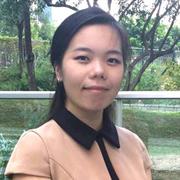
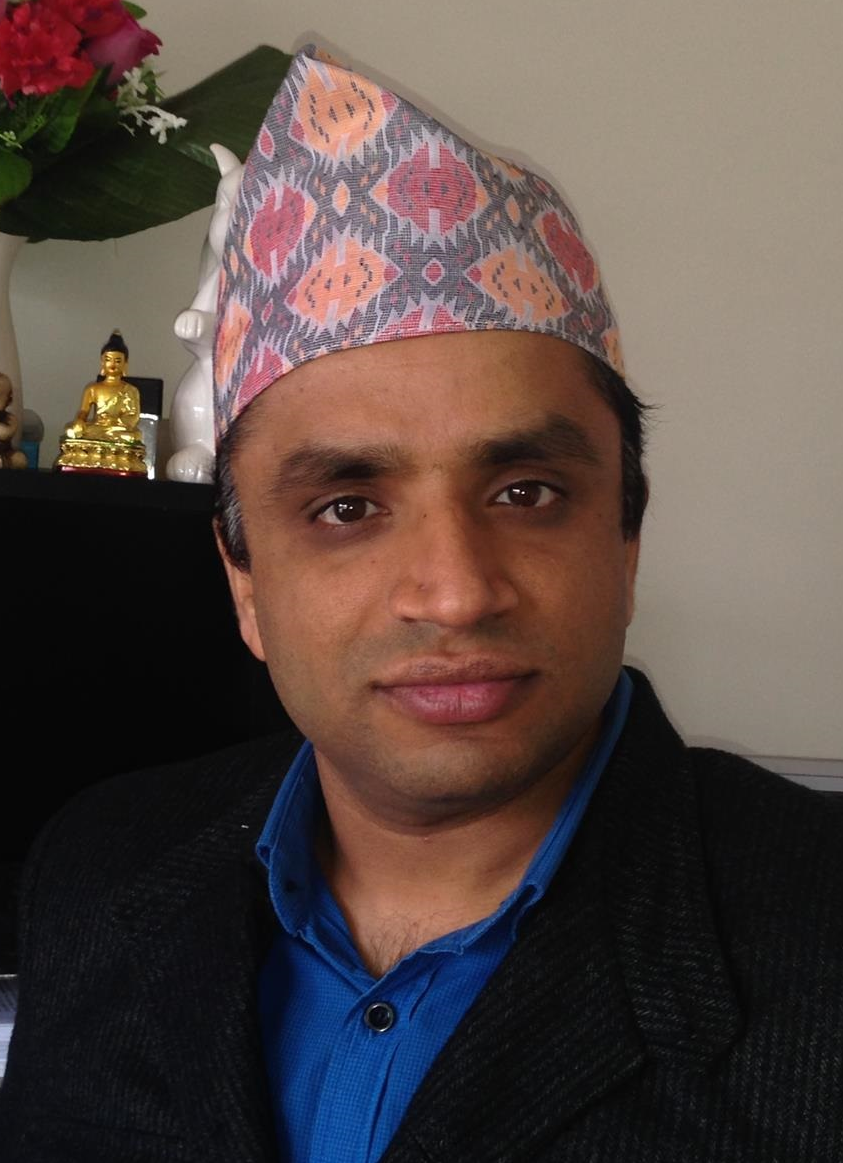
Dr. Fernando Vanegas Alvarez is a Lecturer at the School of Electrical Engineering and Robotics at Queensland University of Technology (QUT). He holds a M.Sc. in Electrical Engineering from Halmstad University and a PhD in Aerial Robotics from QUT. His research focuses on Drone Autonomy, UAV navigation in GNSS-denied environments, and AI-assisted remote sensing. Education: M.Sc. in Electrical Engineering, Halmstad University PhD in Aerial Robotics, QUT Research Interests: Dr. Vanegas' work emphasizes motion planning for UAV exploration , POMDP , SLAM , Visual Odometry , and AI-driven remote sensing applications . His projects include UAV frameworks for planetary exploration, invasive species mapping, and multi-UAV coordination in challenging environments. Scientific Awards: Advanced Queensland Industry Research Fellowship Grant (2024) Supervision & Grants: Dr. Vanegas has supervised three postgraduate students, including topics like planetary exploration UAV systems and multi-agent UAV search algorithms. He actively accepts new students for Honours, Masters, and PhD programs. His research is supported by grants and collaborations with the QUT Centre for Robotics. Teams & Affiliations: He is a core member of the QUT Centre for Robotics and contributes to the School of Electrical Engineering & Robotics. His work bridges robotics, AI, and environmental science.
Professor Jennifer Palmer is a leading academic in Aerospace Engineering at RMIT University, serving as Head of Department and Associate Dean. Her research focuses on autonomous systems, UAV propulsion, and urban environment operations. She previously led the Trusted Autonomous Systems (TAS) Defence CRC and held roles at the Defence Science and Technology Group (DSTG), emphasizing industry collaboration. Her career spans over 15 years in aerial autonomy and defense-related R&D, with expertise in hybrid power systems for UAVs and flapping flight mechanics. She has published extensively in top-tier journals across Aerospace, Mechanical, and Computer Science disciplines. Current projects include optimizing multimodal transport logistics and exploring fuel types for advanced propulsion systems. Professor Palmer’s work integrates academic research with practical defense and civilian applications, fostering innovation in autonomous technologies and robotic teaming strategies. She is open to supervising PhD and Masters students in aerospace engineering and related fields.
Dr. Jing Fu is a Lecturer at the School of Engineering, RMIT University in Australia. Her research focuses on applying optimization algorithms and machine learning to telecommunications, wireless networks, and edge computing. She specializes in restless bandit models for dynamic resource allocation, multi-agent coordination, and energy-efficient systems design. Key areas include satellite communications, radar systems, and distributed computing architectures. Her work bridges theoretical operations research with practical applications in 5G/6G networks, UAV communication platforms, and smart sensor networks. She has published extensively on topics like beam scheduling, edge computing offloading strategies, and adaptive wireless protocols. Current supervision interests span neural networks for sensor systems, IoT resource allocation, and next-generation mega satellite networks. Research Themes: AI-driven network optimization, distributed radar systems, energy-efficient edge computing Key Projects: Reinforcement learning-based IoT resource allocation 6G wireless communication with AI integration Optimal beam scheduling for phased array radars Collaborations: Active in multi-disciplinary projects involving telecommunications, aerospace engineering, and computer science Dr. Fu supervises research projects on neural networks for telecommunications, adaptive wireless techniques, and satellite formation flying. She is based at RMIT's City Campus and open to guiding postgraduate research in her areas of expertise.
Dr. Gun A. Lee serves as a Senior Research Fellow at the Empathic Computing Lab within the School of Information Technology and Mathematical Sciences at the University of South Australia. He concurrently holds an Adjunct Senior Fellow position at the HIT Lab NZ, University of Canterbury. His academic journey spans multiple institutions with significant contributions to extended reality research. Dr. Lee's educational foundation includes: Ph.D. in Computer Science and Engineering from POSTECH (2002-2009) M.S. in Computer Science and Engineering from POSTECH (2000-2002) B.S. in Computer Science from Kyungpook National University (1996-2000) His research centers on extended reality technologies and their applications. Dr. Lee's work explores Virtual Reality (VR), Augmented Reality (AR), and Mixed Reality (MR) systems with emphasis on creating immersive experiences for learning, training, and collaboration. His concept of 'Immersive Authoring' represents a significant contribution to the field, enabling content creation while immersed in the experience itself. In Human-Computer Interaction, he develops novel interaction techniques that leverage natural human behaviors and multimodal inputs, particularly focusing on eye tracking, gesture recognition, and spatial awareness. Analysis of Dr. Lee's recent publications reveals a clear trajectory from foundational AR frameworks to sophisticated collaborative mixed reality systems. His work increasingly integrates social and emotional dimensions into remote collaboration, with projects like SharedSphere demonstrating practical applications of live 360-degree mixed reality. The research consistently bridges theoretical HCI principles with real-world applications across education, professional training, and entertainment domains. As a Research Degree Supervisor, Dr. Lee mentors graduate students in extended reality and human-computer interaction. His teaching portfolio includes the 'Human Interface Technology - Design and Evaluation' course at the HIT Lab NZ, where he specialized in evaluation methodologies for interactive systems across multiple semesters from 2014-2016. He has also conducted specialized workshops including 'The Glass Class' on Google Glass development. At the Empathic Computing Lab, Dr. Lee leads research initiatives focused on creating technologies that enhance human connection. His project portfolio spans from fundamental interaction research like 'Interaction with Augmented Mirrors' to applied mobile AR applications including CityViewAR, AntarcticAR, and GeoBoids. His work on the Mobile AR Framework represents significant infrastructure development for the field, while projects like VPS (VR-based Paint Spray Training Simulator) demonstrate practical industrial applications of his research.
Sunil Aryal is an Associate Professor of Data Science at the School of Information Technology, Faculty of Science Engineering and Built Environment, Deakin University, Australia. He received his PhD and Master by Research degrees from Monash University Australia and has published over 70 papers in top-tier international venues in Artificial Intelligence, Machine Learning and Data Mining. Dr. Aryal's educational background includes: Graduate Certificate of Higher Education Learning and Teaching, Deakin University (2020) PhD in Computer Science, Monash University (2017) Master of Information Technology (Research), Monash University (2012) Master of Information Technology (Coursework), University of Southern Queensland (2008) Bachelor of Information Technology, Purbanchal University, Nepal (2005) His primary research interests focus on making Machine Learning and Data Mining algorithms robust and flexible to handle heterogeneous, noisy and uncertain data in real-world problems. His work spans across several specific areas including anomaly detection, clustering, kernel/similarity-based learning, ensemble methods, learning from limited data, reinforcement learning, natural language processing, and computer vision. Dr. Aryal is particularly interested in applying these techniques to solve challenges in Defence, National Intelligence, Engineering, Manufacturing, Healthcare and Education. Dr. Aryal co-leads the Machine Learning for Decision Support (MLDS) Research Group at Deakin University and has secured over AUD 4.5 million in external research funding. His research is supported by diverse organizations including US and Australia Defence Agencies, the Australian Office of National Intelligence, Worksafe Victoria, the Victorian State Department of Education and Training, the Technology Innovation Institute (TII) UAE, and Table Tennis Australia (TTA). His notable awards include multiple Deakin University research and teaching awards, the Australian Postgraduate Award for his PhD studies, and several student travel awards during his doctoral candidature. Dr. Aryal actively supervises numerous PhD and Master's students and has contributed significantly to teaching in various courses at Deakin University and previously at Federation University. He serves on several university committees and contributes to the research community as a reviewer, program committee member, and editor for various journals and conferences.
Qinglong Han is the Pro-Vice Chancellor (Research Quality) and a Distinguished Professor at Swinburne University of Technology in Melbourne, Australia. He previously held academic and leadership roles at Griffith University and Central Queensland University. His research focuses on networked control systems, multi-agent systems, time-delay systems, smart grids, and unmanned vehicles. He is a Fellow of IEEE, IFAC, and multiple other institutions, and has received prestigious awards including the IEEE Dr.-Ing. Eugene Mittelmann Achievement Award (2024) and Norbert Wiener Award (2021). His research interests span control engineering, applied mathematics, and artificial intelligence. Notable contributions include secure platooning control for autonomous vehicles, resilient control under cyber-physical threats, and optimization of industrial systems. He leads editorial roles in journals like IEEE Transactions on Industrial Informatics and IEEE/CAA Journal of Automatica Sinica. His work emphasizes interdisciplinary applications in smart grids, robotics, and industrial automation. Dr. Han has supervised numerous PhD students in areas like networked control and vehicle dynamics. He has secured grants from ARC and NSFC for projects on networked control systems and renewable energy integration. His achievements include multiple best paper awards and recognition as a Clarivate Highly Cited Researcher in Engineering and Computer Science.
Carl Driesener is an Associate Professor and Senior Marketing Scientist at the Ehrenberg-Bass Institute for Marketing Science, where he has worked for over 15 years. He leads the Institute’s in-house tracking capabilities and conducts bespoke market research across industries including packaged goods, financial services, IT, telecommunications, real estate, and the wine market in China. His research focuses on buyer behaviour, market modelling, and internet research, with a strong emphasis on empirical generalisations in marketing. Carl’s research interests centre on buyer behaviour , brand equity , mental availability , and the application of the NBD-Dirichlet model and Duplication of Purchase analysis. He investigates how brands compete, grow, and decline using rigorous empirical methods. His work explores brand image measurement, consumer loyalty, and the impact of media and nostalgia on purchasing decisions. He has made significant contributions to understanding how consumers perceive country-of-origin effects, particularly in the Chinese wine market. His recent publications (2018–2023) reflect a strong trend in cross-cultural consumer behaviour , marketing analytics , and empirical modelling . Themes include mental availability, brand loyalty across categories, ageism in branding, and the use of advanced statistical models like the Poisson log-normal and Dirichlet. His work frequently applies marketing laws to digital and cultural contexts, including music consumption and social media integration. Scientific Awards: Best Paper Award, International Symposium on Marketing (2007) Carl has not publicly listed advisees, but his extensive collaboration with leading marketing scientists such as Byron Sharp, Jenni Romaniuk, and Zorka Anesbury suggests active mentorship and team-based research. He has contributed to major projects on brand loyalty, market structure, and consumer repertoire analysis. While no specific grants are listed, his ongoing publication output and leadership in large-scale research initiatives indicate sustained funding and institutional support. He is a key contributor to the Ehrenberg-Bass Institute’s mission of advancing evidence-based marketing science. Carl is involved in a research team focused on marketing science , brand tracking , and consumer data analytics at the Ehrenberg-Bass Institute. This team applies mathematical models to real-world marketing problems, working with global clients and publishing in top academic journals. Their work is foundational to modern brand management and category growth strategies.
Professor Raylene Cooke is a distinguished academic at Deakin University, serving in the School of Life and Environmental Sciences within the Faculty of Science Engineering and Built Environment. As Course Director for the Bachelor of Environmental Science (Wildlife and Conservation Biology), she champions experiential learning through field studies, work-integrated opportunities, and global mobility programs. Her leadership extends to faculty working groups focused on enhancing work-integrated learning and student global engagement. Doctor of Philosophy, Deakin University Bachelor of Education, Deakin University Bachelor of Science, Deakin University Professor Cooke's research passion centers on wildlife conservation, particularly focusing on how disturbance processes like urbanization, rodenticides, fire, and invasive species impact ecosystems and wildlife. Her pioneering work with powerful owls has transformed understanding of how apex predators adapt to urban environments. She employs spatial modeling and GPS tracking technologies to study predator movements and habitat use across urban-forest gradients. Her recent research investigates rodenticide prevalence in native wildlife across Australia and the Asia-Pacific, and she contributes to long-term studies on fire and climate change impacts on small mammals in the Grampians National Park. Professor Cooke's publication record reveals a strong focus on apex predator ecology, particularly powerful owls, across urbanizing landscapes. Her work integrates spatial ecology, toxicology, and conservation biology to address pressing environmental challenges. Recent publications highlight increasing concern about rodenticide exposure in native wildlife, urban habitat fragmentation effects on predators, and climate change impacts on small mammal communities. Her research consistently bridges theoretical ecology with practical conservation applications, often involving multi-institutional collaborations and field-based approaches. 2020 Australian Award for University Teaching - National Programs Award for Programs that Enhance Learning 2017 Vice Chancellors Award for Teaching Excellence 2016 Nancy Millis Award for Science in Parks 2015 Vice Chancellors Award for Outstanding Contributions to Global Experiences 2007 Carrick Citation for Outstanding Contributions to Student Learning (National award) 2005 Vice-Chancellors Award for Distinguished Teaching 2005 Deakin University Award for Teaching Excellence Professor Cooke maintains an active supervision portfolio with multiple current doctoral and masters students investigating topics ranging from rodenticide impacts to climate change refugia. Her extensive grant portfolio demonstrates strong industry and government partnerships, with recent projects funded by Parks Victoria, Melbourne Water Corporation, and various local councils. These grants support field research on powerful owl ecology, post-fire small mammal recovery, and rodenticide exposure across diverse Australian landscapes. Her research team includes honors students and postgraduates working collaboratively on urban processes, raptor ecology, invasive species, and conservation ecology. Professor Cooke leads a dynamic research group focused on wildlife conservation biology, with particular emphasis on apex predators in changing landscapes. Her team collaborates with Parks Victoria, local councils, and environmental organizations to translate research into practical conservation management. The group maintains long-term monitoring programs in the Grampians National Park and across Melbourne's urban fringe, employing cutting-edge technologies including GPS tracking, spatial modeling, and ecotoxicology to address contemporary conservation challenges.
Eduardo Nebot is Emeritus Professor and former Patrick Chair in Automation and Logistics at the University of Sydney, where he founded the Australian Centre for Robotics. His research develops perception and navigation systems for autonomous vehicles, focusing on robust operation in complex environments. Nebot's work enables autonomous systems for mining, transportation, and field robotics applications. Research interests include sensor fusion, cooperative perception, probabilistic tracking, and validation methods for autonomous systems. Current projects investigate V2X-enabled cooperative driving, pedestrian trajectory prediction, and robust localization under environmental changes. Publication trends highlight multi-sensor perception systems, with recent work emphasizing domain adaptation for 3D detection, safety validation frameworks, and human-robot interaction in autonomous driving. Articles consistently address real-world deployment challenges in industrial and urban settings. Fellow of the Australian Academy of Technology and Engineering (2016) Fellow of the IEEE (2016) The Australian Centre for Robotics collaborates with industry partners on autonomous haulage systems and intelligent transportation. Nebot has supervised numerous PhD candidates in robotics and maintains research partnerships with mining and automotive sectors.
Assoc. Professor Qinghua Guo holds a position at the University of Wollongong's School of Electrical, Computer and Telecommunications Engineering. He earned his PhD from City University of Hong Kong (2008) and has been affiliated with the University of Wollongong since 2019. His research focuses on signal processing, communications, radar systems, machine learning, and optical sensing, with notable contributions to graphical models and Bayesian inference. Prof. Guo is recognized as a top 2% influential scientist globally (Stanford University) and a leader in Electronics and Computer Science (Research.com). He serves as an Associate Editor for IEEE Transactions on Signal Processing and IEEE Wireless Communications Letters, among other roles. His teaching spans undergraduate to postgraduate levels, including specialized subjects in engineering and information sciences. His recent research emphasizes integrated sensing and communication systems, federated learning, and secure beamforming in 5G/6G networks. He has supervised over 30 PhD and Master’s students in areas like MIMO systems, signal processing for IoT, and quantum sensing. Key funded projects include AFDM-SCMA (2025–2028) for IoT connectivity and Grant-Free Multiple Access for LEO satellite networks (2023–2027). His work bridges theoretical advancements with practical applications in robotics, energy systems, and defense technologies.
Dr Abdullah Nazib is a Research Fellow at Queensland University of Technology (QUT) in the Faculty of Engineering, School of Electrical Engineering & Robotics. His research focuses on applying advanced computational techniques to medical imaging challenges, particularly in cancer detection and treatment planning. His research interests include: Medical image registration and segmentation Deep learning architectures for healthcare applications 3D medical image analysis Prostate cancer detection and grading Organ segmentation for radiation therapy Radiomics-based diagnostic systems Analysis of Dr Nazib's publication history reveals a clear evolution from general computer vision research toward specialized medical applications. His recent work demonstrates significant contributions to uncertainty quantification in medical image segmentation and multimodal learning approaches for diagnostic imaging. The 2024 publications particularly highlight his focus on clinically relevant applications with immediate potential impact on cancer diagnosis and treatment planning. His collaborative research network includes strong partnerships with Dr Fookes, Dr Perrin, and other members of QUT's biomedical imaging group, reflecting an interdisciplinary approach that bridges computer science, engineering, and clinical medicine to develop practical AI solutions for healthcare challenges.
Senjian An is a Senior Lecturer in the School of Electrical Engineering, Computing and Mathematical Sciences at Curtin University, Faculty of Science and Engineering. His research focuses on machine learning, computer vision, and structural health monitoring, with applications in 3D displacement measurement and anomaly detection. Key interests include physics-guided neural networks, unsupervised learning for time-series data, and vision-based structural analysis. His recent publications emphasize robustness in damage detection, synthetic data generation, and transformer-based models for industrial monitoring. An's work integrates deep learning with engineering challenges, advancing non-contact measurement techniques for civil infrastructure. No students or awards are noted. Collaborative projects involve vibration analysis and maritime surveillance, reflecting a strong applied focus in AI and computer vision.
Dr. Zhaoyu Li is the Head of the Cancer Research Cluster at the School of Biomedical Sciences, University of Western Australia (UWA). He holds the Jack Tiddy Senior Lecturer position and is affiliated with the UWA Centre for Applied Bioinformatics and UWA Data Institute. His research focuses on cancer prevention through three main avenues: developing breast cancer prevention strategies, leveraging sex disparities in liver and esophageal cancers for prevention, and creating quantitative epigenomic tools like NUCLIZE for high-resolution histone modification analysis. Dr. Li has expertise in functional genomics, epigenomics, and bioinformatics, with a track record in NIH-funded projects including the Roadmap Epigenomics initiative. Education: PhD in Biochemistry from the University of Alberta (2006), M.S. and B.S. in Biochemistry from Dalian Medical University. His training includes postdoctoral work at the University of Pennsylvania and Mayo Clinic. Research interests emphasize translational oncology, epigenetic regulation in cancer, and computational biology applications. His lab actively recruits students and researchers in genomics, bioinformatics, and machine learning. Awards: K99/R00 Award, NIH R01 Grant (PI) Key Tools: NUCLIZE (quantitative epigenomic analysis)
David B. Jones is a Professor at James Cook University's College of Science and Engineering, specializing in aquaculture genomics and genetic improvement of marine species. His research focuses on genomic selection, quantitative trait mapping, and biotechnological applications for commercially important aquaculture species including barramundi, pearl oysters, shrimp, and flounder. He maintains active collaborations with Dean Jerry, Kyall Zenger, and international research teams across Australia, South Korea, and Sri Lanka. His primary research interests involve developing genomic tools for selective breeding programs, with emphasis on growth traits, disease resistance, coloration phenotypes, and environmental adaptation. Jones employs advanced methodologies including GWAS, RAD-Seq, SNP array development, and machine learning for genomic prediction. His work bridges fundamental genomics with practical aquaculture applications, significantly contributing to genetic gain acceleration in breeding programs. Analysis of his recent publications (2023-2025) reveals a strategic expansion from foundational pearl oyster genomics toward multi-species applications, with increasing focus on climate resilience traits, viral disease resistance, and AI-driven phenotyping. His current work demonstrates strong industry relevance through optimized genomic prediction models and commercial trait development. While no specific awards are documented in the provided materials, his extensive publication record in high-impact journals reflects significant scholarly contributions. His research program appears supported by collaborative grants focused on genomic selection implementation and selective breeding optimization across multiple aquaculture species. Dr. Jones contributes to advanced breeding infrastructure through development of species-specific genomic resources including SNP panels, linkage maps, and prediction models. His work directly supports selective breeding programs for barramundi, olive flounder, pearl oysters, and black tiger shrimp, with particular emphasis on translating genomic research into practical aquaculture applications.
Professor Xiaodong Li is a faculty member at RMIT University's School of Computing Technologies, serving as Assistant Associate Dean for Data Science & Artificial Intelligence. He holds a Ph.D. in Artificial Intelligence from the University of Otago, New Zealand. His research focuses on machine learning, evolutionary computation, swarm intelligence, and optimization techniques with applications in blockchain security, renewable energy, and logistics. He has received prestigious awards including the 2013 ACM SIGEVO Impact Award and the 2017 IEEE Transactions on Evolutionary Computation Outstanding Paper Award, and is an IEEE Fellow. His academic contributions include editorial roles at IEEE Transactions on Evolutionary Computation and leadership in IEEE Task Forces on Swarm Intelligence and Multi-modal Optimization. Current research interests span automated code generation, quantum AI-driven logistics, and anomaly detection. Supervision projects highlight interdisciplinary applications in AI ethics, solar energy monitoring, and fraud detection. Education: Ph.D. in Artificial Intelligence, University of Otago, New Zealand Key Roles: IEEE Fellow, ARC College of Experts (2023–2025) Publications: Over 280 peer-reviewed articles, including works on niching methods and evolutionary algorithms. Research trends show strong emphasis on hybrid optimization techniques, blockchain security, and AI-driven solutions for sustainability challenges. Recent articles explore dynamic environments, quantum rerouting strategies, and explainable machine learning systems. Awards: ACM SIGEVO Impact Award, IEEE Fellow, ARC College Membership Grants/Projects: Multiple industry-collaborative grants in smart logistics and energy systems. He leads the Data Science & AI team at RMIT, fostering innovation in large-scale optimization and metaheuristics. Active in international conferences like GECCO and IEEE CEC, he promotes open-source benchmark datasets for algorithm testing.