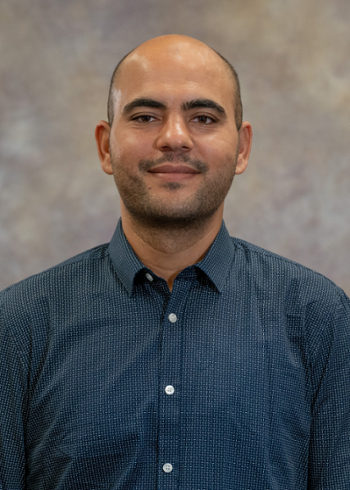
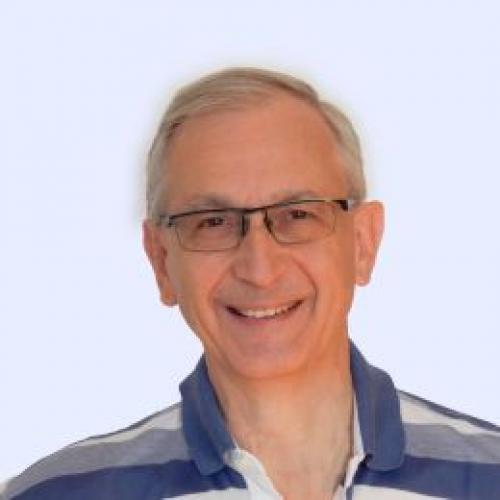
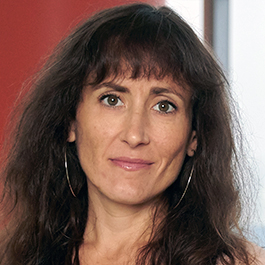
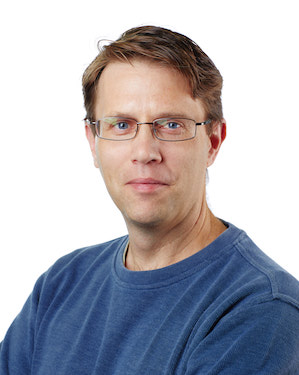
Martin Nordal Petersen is an Associate Professor at the Department of Electrical and Photonics Engineering , Technical University of Denmark (DTU) . His work spans Internet of Things (IoT) , optical networking , and wireless communication systems, with notable contributions to LoRa , NB-IoT , and LPWAN technologies. He actively supervises PhD projects on topics such as machine learning in IoT edge devices , secure 5G communication , and smart community architectures . Active projects (2024–2027): Machine Learning in IoT Edge Devices , Deterministic and Secure 5G Communication Finished projects (2021–2024; 2018–2021; 2015–2018): Reliable M2M/IoT Communication , Smart Communities , IoT 100% , Network Slicing His research explores: IoT Reliability : Multi-RAT communication, backup systems, and signal propagation Optical Networks : Alien wavelength integration, SDN control, and network emulation platforms Wireless Innovation : GPS-free geolocation, maritime NB-IoT use cases, and multimode fiber distribution Current collaborations emphasize cross-disciplinary applications of IoT in healthcare , industrial ergonomics , and smart environments .
Dr. Abdessattar Abdelkefi is a Professor in the Department of Mechanical & Aerospace Engineering at New Mexico State University's College of Engineering. He directs the Nonlinear Dynamics & Energy Harvesting Laboratory (NDEHL) and holds a Ph.D. from Virginia Tech (2012). His research bridges dynamics, fluid-structure interactions, and renewable energy, with applications in drones, MEMS, and energy harvesting. Research Focus Dr. Abdelkefi's work spans Dynamics & Vibrations , Aeroelasticity , and Robotics & Controls , emphasizing nonlinear phenomena and energy conversion. Key areas include: Vortex-induced vibrations for renewable energy harvesting Bio-inspired drone design and aerodynamic optimization Nanoscale sensors and microgyroscopes Flexoelectric and piezoelectric material applications Publication Trends Recent articles (2019-2020) focus on experimental/theoretical synergy in energy harvesting (galloping, vortex-induced, piezoelectric) and bio-inspired UAV design. Over 70% involve computational modeling validated with wind tunnel/field tests, highlighting innovations in broadband energy capture and nano/microsystem efficiency. Awards & Honors 2020: Outstanding Research Professor (MAE Academy) & Teaching-Research-Service Synergy Award (College of Engineering) 2019: Early Career Award (NMSU Research Council), Outstanding Research Professor, Los Alamos NMC Faculty Appointee 2013: Best Paper Award from Theoretical & Applied Mechanics Letters 2011–2012: Graduate Scholarships (Virginia Tech) Laboratory & Advising NDEHL researches vibration-based energy harvesting, nonlinear dynamics, and drone aerodynamics. Dr. Abdelkefi mentors graduate students in experimental/computational projects, though specific advisees are unnamed in available data.
Antonia Teresa Spano is a Full Professor at the Department of Architecture and Design (DAD) of Politecnico di Torino, Italy. She serves as Vice Coordinator of the PhD Program in Architectural Heritage and is a member of the Future Urban Legacy Lab (FULL). Her research focuses on geomatics, 3D modeling, and digital documentation for cultural heritage preservation. University: Politecnico di Torino Department: Department of Architecture and Design (DAD) Spano's work integrates advanced geomatic techniques like LiDAR, UAV photogrammetry, and SLAM-based modeling to address challenges in architectural and archaeological heritage documentation. Her expertise spans GIS, digital photogrammetry, and machine learning applications in conservation processes. Her recent publications emphasize multi-sensor 3D surveys for Pier Luigi Nervi's structures, AI-driven decay detection, and semantic classification of LiDAR data. These works align with SDG goals for sustainable cities and quality education. Scientific Awards: Premio Giovani CNR (2005) Miglior Poster at GISTAM (2016) and GEORES (2019) Fellow of CIPA Heritage Documentation (2023-2033), CIRAAS ETS (2020-2030), and ISPRS (2017-2024) Spano supervises PhD students in architectural heritage programs and leads numerous research projects, including collaborations with institutions like the Pompeii Archaeological Park, CRAST, and international universities. She has contributed to editorial boards and program committees of journals and conferences such as Virtual Archaeology Review and ISPRS symposiums.
Haoyi Xiong is an active academic researcher in artificial intelligence, machine learning, and data science, with extensive publications in top-tier journals and conferences including IEEE TPAMI, NeurIPS, ICML, KDD, and AAAI. His work spans explainable AI, graph neural networks, diffusion models, remote sensing, and large language models. Research Interests: Explainable AI (XAI) and model interpretability Graph Neural Networks and contrastive learning Diffusion models and generative AI Medical and remote sensing image analysis Large language models and autonomous agents Learning to rank and web search His recent publications (2023–2025) show a strong trend toward self-supervised learning , model robustness , and integration of LLMs with structured data and knowledge graphs . He frequently collaborates with researchers from major tech and academic institutions. Scientific Awards: No explicit awards mentioned in the provided text. Advising and Grants: While no direct mention of students or grants, his role as a senior author on numerous papers suggests he advises graduate students and likely leads funded research projects in machine learning and AI. His work on frameworks like COLTR , GS2P , and MUSCLE indicates leadership in developing scalable AI systems. Labs and Teams: Though not explicitly stated, his frequent collaboration with Jiang Bian, Dejing Dou, and Dawei Yin suggests affiliation with a well-established AI research lab or industry-academia partnership focused on data mining, intelligent systems, and large-scale learning.
Nuno Miguel Fonseca Ferreira is a Full Professor at the Instituto Superior de Engenharia de Coimbra (ISEC), part of the Polytechnic of Coimbra, where he currently serves as President of the Scientific Council. His academic career spans over 25 years at ISEC, progressing from Assistant to Professor Coordenador Principal. He has held significant leadership positions including Vice-President of ISEC (2001-2005), Pro-President of the Polytechnic of Coimbra (2009-2010), President of ISEC (2010-2013), and Vice-President of the Polytechnic of Coimbra (2013-2017), where he was responsible for internationalization initiatives. His educational background includes a degree in Electrical Engineering from the University of Porto (1996), a Doctorate in Electrical Engineering from the University of Trás-os-Montes and Alto Douro (2006), and a Habilitation Title (Aggregation) from the same institution (2020). His research focuses on Robotic Systems, with specialization in cooperative robotic systems as evidenced by his Habilitation work. Professor Ferreira's research spans multiple domains of robotics and intelligent systems, with particular emphasis on multi-robot coordination, environmental applications, and medical robotics. His work bridges theoretical control systems with practical applications across diverse fields including forestry, healthcare, manufacturing, and education. He has developed innovative approaches to robotic manipulation, sensor integration, and human-robot interaction, often incorporating advanced techniques from artificial intelligence and machine learning. His recent publications demonstrate a strong trend toward practical applications of robotics in real-world environments, particularly in forestry maintenance, industrial automation, and medical applications. The research shows progression from theoretical control systems to applied robotics in challenging environments, with increasing integration of computer vision, deep learning, and collaborative systems. His work spans both fundamental robotics research and immediate industrial applications, reflecting a balance between academic inquiry and practical implementation. Professor Ferreira has supervised two doctoral theses and participated in numerous research projects with substantial funding. His leadership extends to coordinating 15 of the 33 national and international R&D projects he has participated in, demonstrating significant grant acquisition and management capabilities. His international collaborations through Erasmus+ and other European programs highlight his role in fostering global research partnerships. He is an integrated member of GECAD (Research Group in Engineering and Intelligent Computing for Innovation and Advanced Development), a Portuguese R&D unit classified as Excellent by the Portuguese Science and Technology Foundation. Additionally, he is a member of LASI (Associated Laboratory for Intelligent Systems), the Portuguese laboratory associated with Artificial Intelligence, connecting him to a broader national research ecosystem.
Daniele Caviglia serves as Full Professor in the Department of Naval, Electrical, Electronic and Telecommunications Engineering at the University of Genoa, Italy. He holds the position of Coordinator for the Master's Degree in Electronic Engineering and teaches advanced courses including Radio Frequency Electronics, Electronic Devices, and Electronic Systems for Telecommunication across both Bachelor's and Master's programs. His research program focuses on ultra-low-power electronics for biomedical and environmental applications, with three primary thrusts: (1) nW-scale circuit design for bio-signal processing and neural interfaces, (2) advanced beamforming techniques in medical ultrasound imaging, and (3) energy harvesting systems for autonomous environmental monitoring. His group has pioneered inverter-based OTAs achieving sub-10nW operation and developed novel genetic algorithm-optimized apodization methods for plane-wave ultrasound imaging. Recent publications (2024-2025) reveal strong thematic continuity with increasing emphasis on practical implementations - particularly sea wave energy harvesters for environmental buoys and satellite microwave link systems for rainfall monitoring in urban settings. The work consistently bridges fundamental circuit innovation with real-world medical and environmental applications, maintaining high impact in IEEE and Elsevier journals.
Professor Sohini Kar-Narayan is a British-Indian materials scientist at the University of Cambridge, specializing in polymer-based materials for energy harvesting and biomedical applications. She serves as editor-in-chief of the journal APL Electronic Devices and leads innovative research on nanogenerators, microfluidic sensors, and bioelectronic interfaces. Education: Presidency University, Kolkata (undergraduate); Indian Institute of Science (PhD) Her research focuses on piezoelectric and triboelectric nanomaterials, with applications in self-powered wearable devices , orthopedic surgery sensors , and 4D-printed responsive systems . She develops scalable fabrication techniques like aerosol jet printing to bridge academic research and industrial innovation. The most recent publications highlight advancements in biopolymer-based energy harvesting , smart textiles , and microfluidic diagnostic tools , emphasizing interdisciplinary collaboration between materials science, biomedical engineering, and manufacturing technologies. Scientific Awards: Royal Society of Chemistry Peter Day Prize (2023), European Research Council Consolidator Grant (2023), Royal Academy of Engineering Fellowship (2024), Innovator of the Year (2024) Her work includes the development of the ArtioSense sensor for orthopedic surgery and collaborations with medical professionals to create workflow-compatible devices. She has received major funding from the European Research Council and leads a research group exploring sustainable energy solutions and bio-integrated electronics.
Miroslaw Staron is a Professor of Interaction Design and Software Engineering at Chalmers University of Technology. He maintains a unique 50/50 work arrangement, spending half his time on field research at Ericsson while holding his academic position. His research bridges academic theory with industrial practice through collaborations with major companies including Volvo Car Corporation and Volvo Information Technology. His research spans several key areas in software engineering: Software metrics and measurement systems in industry Model driven software development and empirical studies Defect prediction in software projects Requirements engineering in model-based development Applications of AI and machine learning in software engineering Automotive software development and security Staron's recent work demonstrates a strategic shift toward integrating AI technologies into software engineering processes, with particular focus on automotive applications. His publications from 2024-2025 reveal expertise in generative AI applications for code review automation, testing methodologies, and requirements engineering, showing how these technologies can transform traditional software development practices while addressing domain-specific challenges in automotive systems. Current research projects include: Kvantdatorer för framtidens mobilitetslösningar (2025-2027) Automatiserad och designoptimerad programvarukonstruktion/kodgenerering (2025-2029) Förvandla fordonsarkitektur med hjälp från AI (2021-2023) Arkitektonisk design och verifiering/validering av system med maskininlärning komponenter (2020-2024) With 78 publications documented in Chalmers' research database, Staron has established himself as a significant contributor to evidence-based software engineering research with strong industrial relevance.
Ebru Turanoglu Bekar is a Senior Lecturer at the Department of Industrial and Materials Science, Chalmers University of Technology, specializing in Smart Maintenance and Production Systems. She contributes to the Production Service Systems & Maintenance research group. Research Interests: Total Productive Maintenance (TPM), Artificial Intelligence applications in manufacturing, Multi-Criteria Decision Making, Performance Measurement systems Recent Focus: Development of data-driven algorithms for predictive maintenance, integration of digital twins in industrial contexts Key Projects: Factory SensAI (2025–2028) - Data integration for AI in manufacturing Trustworthy Predictive Maintenance TPdM (2022–2025)
Brenna Argall is an Associate Professor at Northwestern University with joint appointments in the Departments of Computer Science, Mechanical Engineering, and Physical Medicine & Rehabilitation . She is also a Faculty Research Scientist at the Shirley Ryan AbilityLab , the nation’s premier rehabilitation hospital. Her research focuses on robotics autonomy, machine learning, and human rehabilitation , particularly in developing assistive and rehabilitation robotics that utilize shared control and interface-aware intelligence to enhance user autonomy. Education: Ph.D. in Robotics (2009), Carnegie Mellon University M.S. in Robotics (2006), Carnegie Mellon University B.S. in Mathematics (2002), Carnegie Mellon University Research Interests: Argall's work sits at the intersection of robotics, artificial intelligence, and rehabilitation . Key themes include trust-based control systems, dynamic autonomy allocation, and human-in-the-loop machine learning . Her lab, the Assistive & Rehabilitation Robotics Laboratory (argallab) , develops semi-autonomous wheelchairs, robotic arms, and adaptive control systems tailored to users’ physical and cognitive abilities. Projects emphasize customizable shared control, intent inference, and human-robot collaboration . Article Trends: Recent publications highlight advancements in shared autonomy, interface-aware robotics, and human-robot co-adaptation . Key areas include 7-DoF robot arm teleoperation, eye gaze tracking for control, high-dimensional body-machine interfaces, and trust-based dynamic control allocation , reflecting her lab’s focus on user-centric AI and rehabilitation technology . Scientific Awards: NSF CAREER Award (2016) Crain's Chicago Business 40 under 40 (2016) NSF Convergence Accelerator Phase 1 & 2 Awards (2022, 2024) AIMBE College of Fellows (2023) Office of Naval Research (ONR) Grant Advising & Grants: Argall advises students in the Masters of Science in Robotics program and has secured significant funding from NSF, NIH, and ONR for projects on self-driving wheelchairs, intent disambiguation, and trust-aware autonomy . Labs & Teams: As founder and director of the argallab , she leads a multidisciplinary team at the Shirley Ryan AbilityLab . The lab’s mission is to advance human ability through robotics autonomy , focusing on motor-impaired users and human-robot co-adaptation .
Chih-Chun Wang is a Professor at the Elmore Family School of Electrical and Computer Engineering , Purdue University, with additional leadership roles as Associate Head for Facilities, Planning, and Staff. He earned his Ph.D. in Information Sciences and Systems from Princeton University in 2005, following an M.S. (2002) and B.S. (1999) in Electrical Engineering from Princeton and National Taiwan University, respectively. Research Interests: His work spans Network coding (graph-theoretic capacity, wireless network coding, feedback mechanisms) Coding theory (LDPC codes, Reed-Solomon decoding, iterative algorithms) Information theory (multi-user detection, network information theory) Signal processing (turbo equalization, space-time codes) Control theory (optimal stopping theory) Scientific Contributions: He has published extensively on Age-of-Information (AoI) minimization, low-latency coding, and multi-hop relay optimization. His research trends include Integrating machine learning with network coding Wireless security for Beyond-5G systems Distributed storage networks with intelligent helper selection Delay-constrained communication protocols Awards: Recognized as an IEEE Fellow in 2024 for contributions to network coding and information theory. Teaching: He teaches undergraduate courses like ECE301: Signals and Systems and graduate courses such as ECE639: Error Control Coding , with a focus on iterative decoding, LDPC codes, and network information theory. Advising: Supervised 15+ Ph.D. students, including current advisees Pin-Wen Su (delay-oriented coding), Wonjun Lee (cyber-physical systems), and Giles Bischoff (low-latency systems). Former students hold prominent roles at institutions like Google, Meta, and Intel.
Guillaume Pierre is a Professor and research leader at Univ Rennes, affiliated with Inria, CNRS, and IRISA, where he leads the Magellan research team. He is based at the Institute of Science and Technology of Information and Communication (ISTIC), Department of Computer Science and Electronics. His research focuses on fog computing, cloud computing, and large-scale distributed systems, with applications in scalable web hosting and edge intelligence. Research Interests: Fog and Edge Computing Cloud Computing and Resource Management Scalable Web Application Hosting Peer-to-Peer and Decentralized Systems Stream Processing and Kubernetes Orchestration Elasticity and Energy Efficiency in Distributed Environments His recent publications highlight a strong trend in geo-distributed systems, particularly focusing on Kubernetes cluster federation, fog-based environmental monitoring, and elasticity in stream processing. His work bridges theoretical advances with practical implementations in real-world fog and cloud infrastructures. Scientific Awards: Best Paper Award, IEEE International Symposium on Applications and the Internet (2005) Best Paper Award, IEEE International Conference on Cloud Engineering (IC2E 2014) Guillaume Pierre has advised numerous PhD students, many of whom now hold positions at Google, Amazon, Ericsson, and Ansys. He has coordinated major research projects such as the H2020 FogGuru initiative and the DiPET project on distributed data stream processing. His work is supported by EU funding and institutional collaborations. Labs and Teams: He leads the Magellan research team at the INRIA/IRISA lab, which is at the forefront of innovation in fog and cloud computing technologies.
Soroosh Sorooshian is a Professor at the Samueli School of Engineering , University of California, Irvine, with joint appointments in Civil and Environmental Engineering and Earth System Science . He serves as Founding Director of the Center for Hydrometeorology and Remote Sensing (CHRS) and holds the Samueli Endowed Chair in Engineering . His expertise spans hydrometeorology, climate-water interactions, remote sensing applications, and water resource management in arid regions. Education : Ph.D. in Engineering (1978), Engineer Degree in Systems Engineering (1977), M.S. in Operations Research (1973), B.S. in Mechanical Engineering (1971). Leadership & Affiliations : Member of US National Academy of Engineering , International Academy of Astronautics , and multiple scientific bodies (AAAS, AGU, AMS, IWRA). Former advisor to NASA, NOAA, and UNESCO initiatives. Recent research focuses on machine learning integration for hydrological modeling , satellite precipitation product development , and climate change impact assessments . Key trends include deep learning for bias correction , multi-sensor precipitation fusion , and atmospheric river hydrology in California. Awards include the AGU Horton Medal , NASA Distinguished Public Service Medal , and Prince Sultan Bin Abdulaziz International Water Prize . He consults on urban flooding and surface hydrology challenges. Scientific Honors : Chinese Academy of Sciences Einstein Professorship (2014) UNESCO Great Man-Made River Water Prize (2007) AMS Walter Orr Roberts Lecturer (2009) Multiple Distinguished Educator Awards Advisory Roles : Served on committees for NASA, DOE, and World Climate Research Programme's Hydrology Commission.
Sean B. Andersson is a Professor in the Department of Mechanical Engineering at Boston University's College of Engineering. His research focuses on optimal estimation, system identification, single particle tracking, robotics, and control theory. He earned his Ph.D. from the University of Maryland, College Park. Education : Ph.D. in Mechanical Engineering (University of Maryland, College Park) His work integrates control algorithms with applications in microscopy, nanofabrication, and multi-agent systems. Recent research trends highlight persistent monitoring, trajectory optimization, MRI reconstruction, and dip-pen nanolithography. He has mentored numerous graduate and undergraduate students, many of whom now hold positions at institutions like MIT Lincoln Labs, University of Pennsylvania, and Juniper Networks. Scientific Contributions : Developed robust multi-agent control policies for data harvesting Advanced single particle tracking with real-time feedback Innovated in non-raster scanning probe microscopy Optimized sensor scheduling via minimax and semidefinite programming His lab team combines theoretical and applied research in robotics and control systems, with alumni contributing to academia, industry, and research labs globally.
Dr. Boyin Ding is an Associate Professor at the University of Adelaide , serving as Academic Director at Haide College and researcher in the Mechanical Engineering department within the Faculty of Sciences, Engineering and Technology. He leads the Wave Energy Research initiative established in 2014, while also contributing to Robotics and Biomechanics through his work with the Flinders Medical Device Research Institute. Research Areas: Ocean Wave Energy Harvesting Control Systems for Renewable Energy 6DOF Robotic Testing Spine Biomechanics Transnational Education Programs Key Collaborations: Australia-China Joint Research Centre for Offshore Wind & Wave Energy Acoustics, Vibration and Control Research Group Scientific Awards: Australian Endeavour Fellowship Malcolm Kinnaird Engineering Excellence Award (2012) His recent publications focus on hybrid offshore energy systems, nonlinear hydrodynamics in wave energy converters, and biomechanical testing technologies. He has developed control algorithms for floating offshore wind-wave systems and pioneered 6DOF robotic platforms for medical applications. As an eligible PhD supervisor, he actively collaborates with global industries and academic institutions.