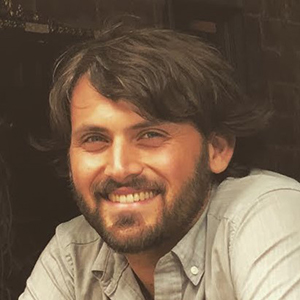
Daniel Sousaمشاهده پروفایل
دانشیار
- Remote Sensing
- Wildfires
- Terrestrial Ecology
- +۷ مورد دیگر
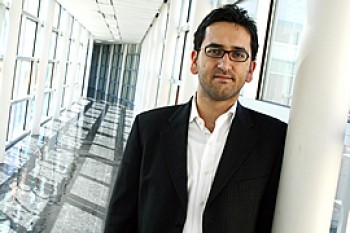
**Daniel Sousa** is an **Associate Professor of Geography** at **San Diego State University (SDSU)**, affiliated with the **College of Arts and Letters**. His research focuses on remote sensing applications for Earth surface processes, integrating sensor engineering and data analysis methods like manifold learning. Key areas include wildfires, ecology, agriculture, climate variability, water quality, and geologic mapping. Sousa holds a **PhD in Earth & Environmental Sciences (Geophysics)** from Columbia University, with prior roles at NASA JPL, Ames Research Center, and the NOAA Knauss Fellowship on Capitol Hill. **Education**: BS from UC Davis (Natural Sciences), MA and PhD from Columbia University (Climate & Society, Earth & Environmental Sciences). **Research Interests**: Sousa develops novel methods to synthesize multiscale remote sensing data, addressing challenges in spectral and spatial analysis. His lab’s work spans geologic mapping, agricultural monitoring, and environmental health risk assessment, funded by NASA, NSF, USDA, and binational initiatives. **Publications**: Over 30 refereed articles (e.g., in *Remote Sensing of Environment*, *Science of the Total Environment*) and contributions to AI-driven ecosystem assessments. Recent work includes EMIT mission applications and global land cover analysis. **Awards**: SDSU Sustainability Seed Award, NSF NEON Early Career Scholar, and multiple Outstanding Reviewer Awards. **Grants**: $5.8M extramural funding, including NASA projects on geogenic arsenic exposure and coastal wastewater monitoring. **Teaching**: Courses include *Advanced Remote Sensing*, *Research Design in Geography*, and *Intermediate Remote Sensing*. Supervises graduate and undergraduate students in projects like plastic debris mapping and wildfire analysis. **Service**: Editorial Board Member of *Remote Sensing Applications: Society and Environment*, NASA SARP Faculty Advisor, and contributor to the Rockefeller Foundation’s Pandemic Prevention Institute.