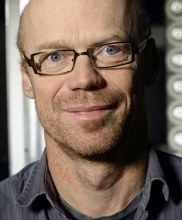
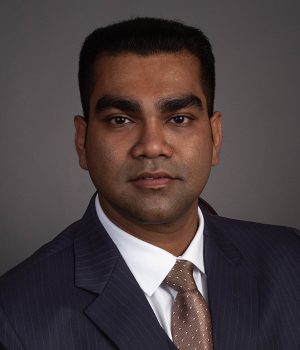
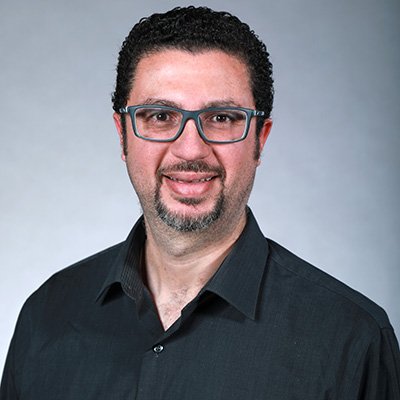
Prof. Dr. Uwe Rascher is the Head of the Shoot Dynamics group at the Institute of Bio- and Geosciences (IBG) , Plant Sciences (IBG-2) within the Jülich Research Centre . His research bridges biophysical processes in photosynthesis with remote sensing applications. Research Focus: Spatiotemporal dynamics of photosynthesis Non-destructive physiological monitoring Solar-induced chlorophyll fluorescence (SIF) for ecosystem analysis Drought and stress response in crops Machine learning for agricultural decision support Integration of leaf-to-canopy scale observations Scientific Trends: Analysis of SIF for photosynthesis quantification, development of hyperspectral imaging systems, cross-scale stress detection (drought, heat), machine learning applications in plant phenotyping, and climate research collaborations. Technical Contributions: Development of HyScreen, FloX, and FluoMap systems for field spectroscopy, UAV-based sensor validation, and standardized ground measurement networks. His work emphasizes sensor fusion, light distribution models, and fractal geometry for fluorescence downscaling.
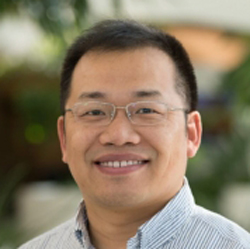
Dr. Gregery Buzzard is a Professor of Mathematics and Director of the Center for Computational and Applied Mathematics at Purdue University, within the College of Science. His research focuses on computational imaging, inverse problems, and biological systems modeling, with significant contributions to image reconstruction techniques like Plug-and-Play Priors and Consensus Equilibrium. He holds the SIAM Imaging Sciences Best Paper Prize (2020) and led collaborations on algorithms for electron microscopy, CT, and hyperspectral imaging. Current students include Haley Duba (Mathematics), Samin Nur Chowdhury (ECE), and Karl Weisenburger (Mathematics). His work bridges applied mathematics and engineering, emphasizing uncertainty quantification and optimal experimental design. Key projects involve dynamic sampling strategies for microscopy and tomography, as well as multi-agent consensus frameworks for distributed imaging systems. Buzzard also contributed to cellular signaling research, particularly T-cell and B-cell receptor dynamics. Education: Ph.D. in Mathematics (not explicitly stated but inferred from career path) Grants: Multiple grants supporting imaging and computational research (details omitted) Labs/Teams: Directs the Center for Computational and Applied Mathematics (CCAM) Publications: Over 50 peer-reviewed articles, including foundational work on PnP-MACE frameworks
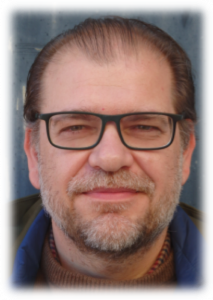
Chris Bennett is a Research Fellow at the University of Bristol's School of Computer Science. He holds qualifications including Meng (Master of Engineering), Chartered Engineer (CEng), and a BA (Hons) degree. His research focuses on autonomous robotic swarms, verification and validation of multi-agent systems, and exploiting heterogeneity in distributed systems. He is affiliated with the Thales-Bristol Partnership in Hybrid Autonomous Systems Engineering (TBPHASE). Research interests include robotic swarm behavior analysis, system validation methodologies, and applications of multi-agent heterogeneity in tasks like foraging and herding. Recent works explore fault detection in swarms and strategies for maximizing research impact through platforms like LinkedIn. No scientific awards are listed. He has no recorded advisees or grants in the provided data. Collaborations include industry partnerships like TBPHASE, contributing to advancements in autonomous systems engineering.
Rasool Keshavarz is a Senior Research Fellow at the University of Technology Sydney (UTS), affiliated with the School of Electrical and Data Engineering within the Faculty of Engineering and Information Technology. He holds a Ph.D. in Telecommunications Engineering from Amirkabir University of Technology, Iran. His research focuses on RF/microwave/mm-wave systems, antennas, sensors, and electromagnetic compatibility (EMC), with a strong emphasis on applications in precision agriculture and IoT. He leads projects like 'Sustainable Sensing for Precision Agriculture' (funded by Food Agility-CRC and NTT) and collaborates with Zetifi Company on rural connectivity solutions. Education: Ph.D. in Telecommunications Engineering (Amirkabir University of Technology), M.Sc./B.Sc. details not specified. Professional roles at UTS include Senior Research Fellow (2023–present), Postdoctoral Research Fellow (2022–2023), and Visiting Fellow (2019–2021). He teaches courses such as 'Introduction to Satellite Communication and Sensing' and supervises graduate projects in 5G antennas, energy harvesting, and sensor design. Research interests span metamaterials, wireless power transfer, agricultural sensing systems, and antenna design for IoT. Key projects involve developing compact, low-cost RF systems for rural connectivity and sensor PCBs for soil quality analysis. His work integrates AI-driven data fusion strategies and advanced electromagnetic modeling. Recent publications highlight innovations in THz beamforming, soil permittivity spectroscopy, and reconfigurable antennas for smart agriculture. He is a technical leader in EMC compliance testing and contributes to industry partnerships for agricultural technology advancements.
Dr. Negin Shariati Moghadam is an Associate Professor in the School of Electrical and Data Engineering at the University of Technology Sydney (UTS), Australia. She leads the RF and Communications Technologies (RFCT) Lab, a state-of-the-art facility with over $3.5M in equipment and 30+ team members. Her research focuses on RF energy harvesting, IoT, metamaterials, and precision agriculture. She has attracted over $6M in grants, including ARC and industry partnerships with NTT, Zetifi, and Food Agility CRC. Dr. Shariati also directs the WiEIT initiative to promote gender equity in STEM. Key achievements include developing Farm-wide WiFi for rural connectivity and winning the 2023 Food Agility Research & Innovation Award. Education: PhD in Electrical-Electronic and Communication Technologies from RMIT University (2016). Industry experience as an electrical engineer (2008-2012). Research Interests: RF energy harvesting, low-power IoT, metamaterials for beamforming, agricultural sensing systems, and wireless communication protocols. Her work integrates machine learning with RF sensing for applications like soil moisture monitoring and secure data transmission. Grants & Collaborations: Co-Director of an ARC Training Centre for Automated Vehicles in Rural Regions (2024-2028) and leader of the $1.7M Sustainable Sensing project with NTT. Industry partnerships include Zetifi for AgTech innovations and Hokkaido University for collaborative research. Awards: Recognized for pioneering RF energy harvesting (Standout IoT Award 2021), ECR excellence (2019), and multiple IEEE accolades. Media engagement includes features in the NSW Smart Sensing Network and Food Agility CRC reports. Lab & Impact: RFCT Lab's innovations include metamaterial lenses for wireless power transfer and compact sensors for smart agriculture. Outputs span 87+ publications and 9 PhD students under supervision.
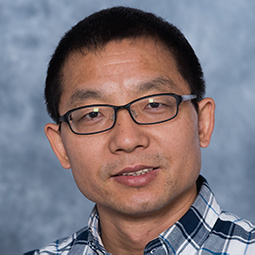
Prof. Tao Sun is an Associate Professor of Mechanical Engineering at Northwestern University, leading the FAST-AM Lab. His research focuses on advancing additive manufacturing technologies through fundamental studies of energy-matter interactions, process monitoring, and material characterization using synchrotron X-ray imaging and machine learning. He holds a PhD from Northwestern University and MS/BS degrees from Tsinghua University. Education : PhD (Northwestern), MS/BS (Tsinghua University) Research interests include additive manufacturing processes (laser powder bed fusion, directed energy deposition), in situ/operando characterization, machine learning for defect detection, and synchrotron-based techniques. Recent work emphasizes real-time process monitoring and optimizing microstructural control. Publications span porosity mechanisms, melt pool dynamics, and multi-physics modeling, with a focus on bridging experimental observations with computational models. Awards include the TMS Young Innovator Award for contributions to additive manufacturing materials science. Labs/Teams: FAST-AM Lab explores advanced manufacturing via cutting-edge characterization tools and AI integration.
Dr. Jingyi Han is a Postdoctoral Research Associate in the Department of Biosciences at Durham University. Their research spans interdisciplinary fields including plant molecular biology, genetics, and computer vision. Early work focused on computer vision applications such as human pose classification in near-infrared imagery and multi-modal target detection for surveillance systems. Later research transitioned to plant biology, investigating stem cell factors in cambium development, auxin signaling pathways, and transcriptional regulation mechanisms. This shift reflects expertise in integrating computational methods with biological systems. Key contributions include studies on auxin response networks (Nature, 2021), root tip gene expression regulation (iScience, 2024), and cambium stem cell positioning (Science, 2024). Their publications demonstrate a progression from engineering-focused computer vision projects (2008-2013) to molecular genetics research in plant developmental biology. No scientific awards or grants are explicitly mentioned in the provided materials. Dr. Han has not listed formal advisees or lab affiliations in the available data.
Dr. Eleftherios Doitsidis is an Associate Professor at the School of Production Engineering & Management of the Technical University of Crete (TUC) and a member of the Intelligent Systems & Robotics Laboratory. Previously, he served as faculty at the Department of Electronic Engineering at Hellenic Mediterranean University. His expertise spans multirobot systems, autonomous vehicle control, and computational intelligence. He holds a robust record of EU and national research project involvement. Research Interests: Specializes in multirobot team coordination, autonomous navigation systems for UAVs/AUVs, control systems design, and computational intelligence applications. Recent work focuses on energy-efficient path-planning for swarms, educational robotics frameworks like HYDRA, and digital twin integration in autonomous systems. Publications Trends: His 150+ publications address cutting-edge topics including: Autonomous vehicle control architectures Modular robotics for STEM education Optimization algorithms for multirobot systems Energy efficiency in manufacturing systems Advising & Projects: Lead researcher on numerous funded projects involving UAV/AUV missions, swarm robotics, and educational technology. Active in collaborative research with institutions like the University of South Florida. Labs & Groups: Leads the Intelligent Systems & Robotics Lab at TUC, developing advanced robotic platforms and educational tools. Maintains an open-access research portal at doitsidis.tuc.gr .
Lefteris Doitsidis is an Associate Professor at the School of Production Engineering and Management, Technical University of Crete. He holds a PhD in Production and Management Engineering from the same institution (2008), with prior academic positions at the Department of Electronics, Hellenic Mediterranean University. His professional journey includes visiting scholar roles at the University of South Florida, USA. Research focuses on robotic systems, including autonomous navigation of UAVs/AUVs, multirobot teams, computational intelligence, and educational robotics. He leads the Intelligent Systems and Robotics Laboratory, developing tools like HYDRA for STEM education and frameworks for industry 4.0 applications such as bin-picking and precision agriculture. His work integrates control systems optimization, energy efficiency in manufacturing, and digital twin technologies. Over 65 publications span journals, conferences, and books, emphasizing practical implementations like ROS-based autonomous vehicle testbeds and energy management systems for electric vehicles. Key contributions include UAV path planning algorithms, swarm robotics coordination, and sensor fusion techniques. Current research trends emphasize sustainability in manufacturing, educational robotics platforms, and autonomous systems validation through advanced algorithms like Deep Deterministic Policy Gradient.
Dr. Bin Zhang is an Associate Professor in the Department of Electrical Engineering at the Molinaroli College of Engineering and Computing, University of South Carolina. With over 20 years of experience in prognostics and health management, intelligent systems and control, and robotics, he has established himself as a leading researcher in battery management systems, power electronics, and fault-tolerant control systems. Dr. Zhang's educational background includes: Ph.D. in Electrical Engineering from Nanyang Technological University, Singapore M.E. in Mechanical Engineering from Nanjing University of Science and Technology, China B.E. in Mechanical Engineering from Nanjing University of Science and Technology, China His research focuses on active approaches to achieve intelligent smart systems with self-situational-awareness and self-adapting capabilities. Primary interests include prognostics and health management (PHM), which covers fault detection and isolation, failure prognosis, and fault tolerance; robotics and unmanned systems; intelligent systems and control; and dynamic systems design, modeling, simulation and control. His work integrates physics-based models with data-driven techniques and computational intelligence, including pattern recognition and machine learning. Analysis of Dr. Zhang's recent publications reveals a strong emphasis on battery modeling (particularly lithium-ion batteries), power electronics control (including fractional order delay and virtual variable sampling techniques), and deep learning methods (including graph neural networks, deep residual convolutional neural networks, and deep belief networks). His research spans multiple application domains including power grids, batteries, aircraft, helicopters, and manned/unmanned vehicles. Dr. Zhang serves as Associate Editor for prestigious journals including IEEE Transactions on Industrial Electronics, IEEE Transactions on Systems, Man, and Cybernetics: Systems, and Neurocomputing. He is a Senior Member of IEEE and a member of ASME. As director of the Resilient Systems Laboratory, Dr. Zhang advises numerous graduate students working on cutting-edge research in battery technology, power cable insulation, and control systems. His lab is equipped with advanced facilities including an 8-channel ARBIN BT-Smart battery testing system, power electronics control systems, cable/wire testing systems, rotating machinery testing systems, and unmanned vehicles including quadrotors and hexacopters.
Aritra Dutta is an Assistant Professor at the AI Initiative of the University of Central Florida (UCF), primarily affiliated with the Department of Mathematics and secondarily with the Department of Computer Science. He also holds an affiliation with the Pioneer Centre for AI (P1), Denmark. His research focuses on optimization (stochastic/nonconvex), distributed computing (including federated learning), numerical linear algebra, machine learning, low-rank approximation, and computer vision applications such as image/video analysis and object detection/tracking. Dr. Dutta’s work emphasizes interdisciplinary approaches, blending mathematical rigor with computational efficiency. He actively seeks Ph.D. students and postdocs with strong foundations in mathematics (optimization, linear algebra) or computer science (ML, distributed systems), prioritizing candidates with publication records in top-tier venues. His teaching includes courses in applied mathematics and computational methods. His research outputs span communication-efficient distributed learning frameworks, convergence analysis of optimization algorithms, and vision transformer architectures. Notable projects include GAEA (geolocation-aware conversational models) and MAVREC (multi-view aerial visual recognition). Postdoc opportunities: Open for exceptional candidates. Labs/Initiatives: UCF AI Initiative (UCF Aii), UCF Center for Research in Computer Vision (CRCV). Grants: Competitive research assistantships with tuition support.
Ming Shen is an Associate Professor at the Department of Electronic Systems, part of The Technical Faculty of IT and Design at Aalborg University. His research focuses on antennas, millimeter-wave systems, and AI-driven RF sensors with applications in 5G/6G communications, biomedical engineering, and smart systems. His research interests span antenna design (including phased arrays, metamaterials, and compact structures), AI integration in electromagnetic systems, and medical sensor technologies. Recent projects include drone-based electromagnetic signature analysis, vibration energy harvesting for pacemakers, and smart healthcare systems for posture recognition and surgical site infection monitoring. Key projects include DRONES: Drone-Obtained Electromagnetic Signatures (2024–2028), Sensor Intelligence for Healthcare and Sports (2022–2027), and DeepBone (2021–2022), which explored deep learning for surgical infection detection. His work also bridges machine learning and electromagnetic design, with breakthroughs in surrogate modeling and automated antenna optimization. Ming Shen has supervised 6 PhD students and published over 160 peer-reviewed articles. Notable contributions include AI-assisted NLOS sensing, ultra-wideband antenna innovations, and medical applications such as electrical impedance-based bone healing assessment.
ZHENG Baihua serves as Professor of Computer Science at Singapore Management University's School of Computing and Information Systems (SCIS), concurrently holding leadership roles as Associate Dean for SCIS Post-Graduate Research Programmes and Director of the Master of Science in Computing programme. Currently on leave but maintaining full-time faculty status, his academic career spans over two decades with foundational training from Hong Kong University of Science and Technology. Professor Zheng's research program integrates artificial intelligence, data science, and urban computing to solve critical challenges in mobility and sustainability. His expertise centers on trajectory data management, social network analysis, and spatio-temporal modeling, with significant contributions to trajectory compression algorithms, influence minimization in social networks, and real-time traffic prediction systems. His work bridges theoretical database innovations with practical applications in smart city infrastructure and public health interventions. Analysis of recent publications (2024-2025) reveals a dominant focus on physics-informed trajectory processing, GPU-accelerated indexing for high-dimensional data, and transformer-based models for urban mobility prediction. Key trends include the fusion of graph neural networks with spatio-temporal dynamics, novel approaches to contact tracing through timeline graphs, and differentiable search techniques for structured data discovery. These works consistently target real-world deployment in transportation systems and epidemic control. No scientific awards are documented in available institutional records. Information regarding student supervision, research grants, laboratory facilities, or collaborative teams remains unspecified in current public profiles.
Enrique Dunn is an Associate Professor in the Department of Computer Science at Stevens Institute of Technology. He holds an academic position within the Charles V. Schaefer, Jr. School of Engineering and Science. His research focuses on 3D Computer Vision, emphasizing geometric and semantic relationships in imaged environments. Dunn earned a B.S. in Computer Engineering from the Autonomous University of Baja California (1999), an M.S. in Computer Science from the Ensenada Center for Scientific Research (2001), and a Ph.D. in Electronics and Telecommunications (2006). He held postdoctoral roles at UNC Chapel Hill (2008–2012) before joining Stevens in 2016. His research interests include 3D reconstruction, visual odometry, and large-scale visual analytics. Dunn has authored over 40 papers in top conferences/journals such as CVPR and ICCV. He serves as an Associate Editor for Elsevier's Image and Vision Computing journal and has held roles in program committees for ECCV and 3DV. Key contributions include VOLDOR-SLAM (2021), NeuroCS (2023), and methods leveraging dense optical flow residuals for visual odometry. His team comprises Ph.D. students Juan Carlos Dibene and Siyuan Cao, with alumni Zhixiang Min (Apple) and Xiangyu Xu (InnoPeak). Dunn's work addresses challenges in crowd-sourced imagery and dynamic scene modeling.
Dr. Hany Elgala is an Assistant Professor in the Department of Electrical and Computer Engineering at the University at Albany, State University of New York, and Director of the Signals and Networks (SINE) Lab. Previously, he served as a Research Professor at Boston University, co-leading the Multimedia Communications Lab and acting as Communications Testbed leader at the NSF Smart Lighting ERC. His research focuses on telecommunications, digital signal processing, and embedded systems, with specialization in visible light communications (VLC), LiFi networks, IoT security, and AI-driven wireless solutions. He has coordinated industrial projects with Airbus and EADS on optical wireless networks in aircraft cabins. Elgala's work emphasizes heterogeneous wireless networks, backscatter communication, and security in IoT. He has authored/co-authored ~50 publications/patents, contributing to fields like spectral efficiency, energy optimization, and network coexistence. His leadership in the SINE Lab drives innovations in 6G networks, UAV-based systems, and hybrid LiFi-WiFi architectures. His research portfolio includes breakthroughs in VLC system design, machine learning applications for physical layer optimization, and jamming-resistant IoT networks. Recent efforts focus on indoor flying networks and low-complexity VLC frameworks leveraging multi-task learning and autoencoder-based modulation.