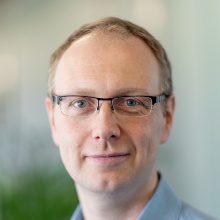
Femke Ongenae is an Associate Professor at Ghent University's Faculty of Engineering and Architecture within the Department of Information Technology . She leads research at the IMEC postdoctoral level in areas bridging eHealth, predictive healthcare, and knowledge graph technologies . Her work focuses on context-aware systems, stream reasoning, and hybrid AI for healthcare and smart infrastructure applications. Key research domains: Artificial Intelligence , Health Informatics , Knowledge Graphs Leadership roles: Digital Innovation for Man and Society research unit, eBehaviourChange group Her recent publications (2023-2025) highlight advancements in: Semantic rule mining for decision support systems Anomaly detection in healthcare and water networks Context-aware machine learning for COPD and migraine monitoring Knowledge graph embeddings for industrial process monitoring Collaborative projects involve: Developing INK framework for knowledge graph rule mining Building DIVIDE system for adaptive IoT querying Creating MASSIF platform for semantic IoT services Advancing stream reasoning for real-time healthcare applications
Herman Bruyninckx is a Professor at the Faculty of Engineering Sciences , KU Leuven , where he also serves as Vice-Chair of the Department of Mechanical Engineering and head of the Robotics, Automation and Mechatronics (RAM) subdivision. His research focuses on integrating formally represented domain knowledge into robotic systems for real-time, self-explanatory, and certifiable control. He advocates for open standards and software engineering practices in robotics, with a career-long emphasis on knowledge-driven robotic systems over data-driven approaches.
Andrea Boni is an Associate Professor in the Department of Information Engineering at the Faculty of Engineering, University of Parma, where he has been a faculty member since 1999. He leads the Analog IC Design research group and teaches core electronics courses including Analog Design, Amplifier Design, and Electronics 2 at both undergraduate and graduate levels. His research focuses on analog and mixed-signal integrated circuits, with emphasis on high-speed and ultra-low-power designs in CMOS and BiCMOS technologies. Key areas include Analog-to-Digital Converters (ADCs), low-voltage reference circuits, RF oscillators, frequency synthesizers, and their applications in wireless sensors, UWB radars, and RFID systems. The recent publications highlight a strong trend toward low-power, wireless, and intelligent sensing systems, particularly in structural health monitoring, precision agriculture, and food authenticity. These works reflect a convergence of analog circuit innovation with embedded intelligence and IoT applications. Dr. Boni serves on the technical committee of the Custom Integrated Circuits Conference and is a reviewer for IEEE Journal of Solid-State Circuits and IEEE Transactions on Circuits and Systems – II. He advises no listed students in the provided text and has not been awarded any scientific prizes mentioned. His group receives both public and private funding. He leads the Analog IC Design group, which has been active for over a decade in cutting-edge analog circuit research.
Professor Richard Lucas holds a Sêr Cymru Research Chair in the Department of Geography and Earth Sciences at Aberystwyth University. He has previously held academic and research positions at the University of New South Wales, the Australian Federal Government, and Swansea University. His research focuses on Earth observation and ecosystem dynamics, particularly in terrestrial and coastal environments. His expertise lies in utilizing satellite remote sensing to quantify ecosystem responses to climatic and anthropogenic changes. Key research areas include forest biomass estimation, mangrove monitoring, land cover change detection, and environmental sustainability. He has developed innovative frameworks such as the Earth Observation Data for Ecosystem Monitoring (EODESM) and leads the national Living Wales project for land cover monitoring. His recent publications highlight a strong trend in using multi-source Earth observation data—especially Landsat, Sentinel, and GEDI lidar—for global and regional environmental assessments. These works span topics such as mangrove resilience under tropical cyclones, habitat mapping, soil moisture analysis, and biomass modeling, reflecting a cohesive focus on sustainable ecosystem management through advanced remote sensing. Professor Lucas leads several externally funded research projects with agencies including the European Space Agency, the Welsh Government, and the Australian Research Council. Notable initiatives include CCI-BIOMASS, EO4AgroClimate, and the Global Mangrove Watch. His datasets, such as the Australia's Mangrove Portal and Plant Biomass Library, are publicly available and widely used in the scientific community. He has contributed significantly to policy-relevant science, with research impacting coastal land use policy and supporting UN Sustainable Development Goals, particularly those related to climate action and life on land. His work has been featured in media outlets and policy documents, demonstrating broad societal impact. Professor Lucas is actively involved in international collaborations and scientific outreach, regularly presenting at workshops and conferences such as Living Coasts and Dynamics Coasts. He mentors researchers and contributes to editorial and peer-review activities, further strengthening the scientific community in Earth observation and environmental informatics.
Prof. Dr. Andreas Bulling is Full Professor of Computer Science at the University of Stuttgart , leading the Collaborative Artificial Intelligence research group at the Institute for Visualization and Interactive Systems. He is also a founding director of the Stuttgart ELLIS Unit and serves on multiple prestigious boards including IEEE Transactions on Visualization and Computer Graphics . Education: MSc in Computer Science (KIT), PhD in Information Technology (ETH Zurich) Research Interests: Human-Computer Interaction, Eye Tracking, Wearable Computing, Computer Vision, and Privacy-Preserving AI Scientific Leadership: UbiComp Steering Committee member, ACM ETRA General Chair (2020), and extensive editorial/guest editor roles Key Awards: ERC Starting Grant (2018), Henriette Herz Scout (2024), and multiple best paper awards at CHI, ETRA, and UIST Technical Contributions: Developed datasets (LPW, VisRecall++), created novel methods for gaze estimation, mental face reconstruction, and saliency prediction in visualizations His work bridges AI and Human-Computer Interaction with applications in immersive systems and healthcare technologies.
Dr. Tim Ritter is a Senior Scientist at the Institute for Forest Growth, University of Natural Resources and Life Sciences Vienna (BOKU), with expertise in biometrics, forest inventory, and laser scanning applications. He earned his Dr. forest. ("summa cum laude") in 2014 from Georg-August-Universität Göttingen, following M.Sc. and B.Sc. degrees in Forest Ecosystem Analysis and Forestry. Research Focus: Terrestrial/Personal Laser Scanning (TLS/PLS) for forest mapping Stochastic corrections for tree non-detection Spatial statistics and 3D forest modeling Deadwood inventory and carbon storage analysis Forest road monitoring and harvesting damage detection Publications Trends: Recent work emphasizes LiDAR integration in forest inventory, automated point cloud analysis, and digital twin development for forest ecosystems. Key methods include machine learning, spatial regression, and multi-sensor data fusion for timber volume estimation and biodiversity assessment. Scientific Awards: 2014: Finding talent: Researcher Career Grant Professional Activities: Editorial Board Member for Frontiers in Forests and Global Change (2023), Topical Advisory Panel for Sustainability (2020), and active reviewer for 15+ journals including Remote Sensing and Forests . Presented 55+ lectures across 5 countries, including keynote speeches at international conferences.
Markus Immitzer is a Senior Scientist at the Institute of Geomatics, University of Natural Resources and Life Sciences, Vienna (BOKU). His research focuses on land cover classification, vegetation monitoring, and biophysical parameter modeling using remote sensing data from various platforms (UAV, aircraft, satellite) and sensors (multispectral to hyperspectral, LiDAR). He teaches courses in remote sensing, geodata management, and photogrammetry. Education includes a Ph.D. (2017) on mapping tree species using satellite imagery, Diplomingenieur in Forestry Science (2013), and M.Sc. in Wildlife Ecology and Wildlife Management (2011), all from BOKU. Professional experience includes positions at Swiss Federal Research Institute WSL (2023) and Geotree Ltd./Mantle Labs Ltd. (2022). Research interests center on developing remote sensing methodologies for forestry applications, habitat modeling, and vegetation monitoring. Key focus areas include tree species classification, disturbance detection, biomass estimation, and multi-sensor data integration for environmental monitoring. Recent publications demonstrate strong emphasis on operational forest monitoring using multi-platform remote sensing data, with applications in carbon project verification, biodiversity assessment, and fire danger modeling. Research increasingly incorporates machine learning techniques and multi-temporal analysis for improved accuracy in vegetation characterization. Awards and honors include: BOKU Best Paper Award (2024) BOKU Sustainability Award nomination (2020) Multiple dissertation awards (2018-2019) Research prizes for forest remote sensing (2017-2018) Performance scholarships (2005-2009)
Dr. Gregery Buzzard is a Professor of Mathematics and Director of the Center for Computational and Applied Mathematics at Purdue University, within the College of Science. His research focuses on computational imaging, inverse problems, and biological systems modeling, with significant contributions to image reconstruction techniques like Plug-and-Play Priors and Consensus Equilibrium. He holds the SIAM Imaging Sciences Best Paper Prize (2020) and led collaborations on algorithms for electron microscopy, CT, and hyperspectral imaging. Current students include Haley Duba (Mathematics), Samin Nur Chowdhury (ECE), and Karl Weisenburger (Mathematics). His work bridges applied mathematics and engineering, emphasizing uncertainty quantification and optimal experimental design. Key projects involve dynamic sampling strategies for microscopy and tomography, as well as multi-agent consensus frameworks for distributed imaging systems. Buzzard also contributed to cellular signaling research, particularly T-cell and B-cell receptor dynamics. Education: Ph.D. in Mathematics (not explicitly stated but inferred from career path) Grants: Multiple grants supporting imaging and computational research (details omitted) Labs/Teams: Directs the Center for Computational and Applied Mathematics (CCAM) Publications: Over 50 peer-reviewed articles, including foundational work on PnP-MACE frameworks
Chris Bennett is a Research Fellow at the University of Bristol's School of Computer Science. He holds qualifications including Meng (Master of Engineering), Chartered Engineer (CEng), and a BA (Hons) degree. His research focuses on autonomous robotic swarms, verification and validation of multi-agent systems, and exploiting heterogeneity in distributed systems. He is affiliated with the Thales-Bristol Partnership in Hybrid Autonomous Systems Engineering (TBPHASE). Research interests include robotic swarm behavior analysis, system validation methodologies, and applications of multi-agent heterogeneity in tasks like foraging and herding. Recent works explore fault detection in swarms and strategies for maximizing research impact through platforms like LinkedIn. No scientific awards are listed. He has no recorded advisees or grants in the provided data. Collaborations include industry partnerships like TBPHASE, contributing to advancements in autonomous systems engineering.
Rasool Keshavarz is a Senior Research Fellow at the University of Technology Sydney (UTS), affiliated with the School of Electrical and Data Engineering within the Faculty of Engineering and Information Technology. He holds a Ph.D. in Telecommunications Engineering from Amirkabir University of Technology, Iran. His research focuses on RF/microwave/mm-wave systems, antennas, sensors, and electromagnetic compatibility (EMC), with a strong emphasis on applications in precision agriculture and IoT. He leads projects like 'Sustainable Sensing for Precision Agriculture' (funded by Food Agility-CRC and NTT) and collaborates with Zetifi Company on rural connectivity solutions. Education: Ph.D. in Telecommunications Engineering (Amirkabir University of Technology), M.Sc./B.Sc. details not specified. Professional roles at UTS include Senior Research Fellow (2023–present), Postdoctoral Research Fellow (2022–2023), and Visiting Fellow (2019–2021). He teaches courses such as 'Introduction to Satellite Communication and Sensing' and supervises graduate projects in 5G antennas, energy harvesting, and sensor design. Research interests span metamaterials, wireless power transfer, agricultural sensing systems, and antenna design for IoT. Key projects involve developing compact, low-cost RF systems for rural connectivity and sensor PCBs for soil quality analysis. His work integrates AI-driven data fusion strategies and advanced electromagnetic modeling. Recent publications highlight innovations in THz beamforming, soil permittivity spectroscopy, and reconfigurable antennas for smart agriculture. He is a technical leader in EMC compliance testing and contributes to industry partnerships for agricultural technology advancements.
Dr. Negin Shariati Moghadam is an Associate Professor in the School of Electrical and Data Engineering at the University of Technology Sydney (UTS), Australia. She leads the RF and Communications Technologies (RFCT) Lab, a state-of-the-art facility with over $3.5M in equipment and 30+ team members. Her research focuses on RF energy harvesting, IoT, metamaterials, and precision agriculture. She has attracted over $6M in grants, including ARC and industry partnerships with NTT, Zetifi, and Food Agility CRC. Dr. Shariati also directs the WiEIT initiative to promote gender equity in STEM. Key achievements include developing Farm-wide WiFi for rural connectivity and winning the 2023 Food Agility Research & Innovation Award. Education: PhD in Electrical-Electronic and Communication Technologies from RMIT University (2016). Industry experience as an electrical engineer (2008-2012). Research Interests: RF energy harvesting, low-power IoT, metamaterials for beamforming, agricultural sensing systems, and wireless communication protocols. Her work integrates machine learning with RF sensing for applications like soil moisture monitoring and secure data transmission. Grants & Collaborations: Co-Director of an ARC Training Centre for Automated Vehicles in Rural Regions (2024-2028) and leader of the $1.7M Sustainable Sensing project with NTT. Industry partnerships include Zetifi for AgTech innovations and Hokkaido University for collaborative research. Awards: Recognized for pioneering RF energy harvesting (Standout IoT Award 2021), ECR excellence (2019), and multiple IEEE accolades. Media engagement includes features in the NSW Smart Sensing Network and Food Agility CRC reports. Lab & Impact: RFCT Lab's innovations include metamaterial lenses for wireless power transfer and compact sensors for smart agriculture. Outputs span 87+ publications and 9 PhD students under supervision.
Prof. Tao Sun is an Associate Professor of Mechanical Engineering at Northwestern University, leading the FAST-AM Lab. His research focuses on advancing additive manufacturing technologies through fundamental studies of energy-matter interactions, process monitoring, and material characterization using synchrotron X-ray imaging and machine learning. He holds a PhD from Northwestern University and MS/BS degrees from Tsinghua University. Education : PhD (Northwestern), MS/BS (Tsinghua University) Research interests include additive manufacturing processes (laser powder bed fusion, directed energy deposition), in situ/operando characterization, machine learning for defect detection, and synchrotron-based techniques. Recent work emphasizes real-time process monitoring and optimizing microstructural control. Publications span porosity mechanisms, melt pool dynamics, and multi-physics modeling, with a focus on bridging experimental observations with computational models. Awards include the TMS Young Innovator Award for contributions to additive manufacturing materials science. Labs/Teams: FAST-AM Lab explores advanced manufacturing via cutting-edge characterization tools and AI integration.
Dr. Jingyi Han is a Postdoctoral Research Associate in the Department of Biosciences at Durham University. Their research spans interdisciplinary fields including plant molecular biology, genetics, and computer vision. Early work focused on computer vision applications such as human pose classification in near-infrared imagery and multi-modal target detection for surveillance systems. Later research transitioned to plant biology, investigating stem cell factors in cambium development, auxin signaling pathways, and transcriptional regulation mechanisms. This shift reflects expertise in integrating computational methods with biological systems. Key contributions include studies on auxin response networks (Nature, 2021), root tip gene expression regulation (iScience, 2024), and cambium stem cell positioning (Science, 2024). Their publications demonstrate a progression from engineering-focused computer vision projects (2008-2013) to molecular genetics research in plant developmental biology. No scientific awards or grants are explicitly mentioned in the provided materials. Dr. Han has not listed formal advisees or lab affiliations in the available data.
Dr. Eleftherios Doitsidis is an Associate Professor at the School of Production Engineering & Management of the Technical University of Crete (TUC) and a member of the Intelligent Systems & Robotics Laboratory. Previously, he served as faculty at the Department of Electronic Engineering at Hellenic Mediterranean University. His expertise spans multirobot systems, autonomous vehicle control, and computational intelligence. He holds a robust record of EU and national research project involvement. Research Interests: Specializes in multirobot team coordination, autonomous navigation systems for UAVs/AUVs, control systems design, and computational intelligence applications. Recent work focuses on energy-efficient path-planning for swarms, educational robotics frameworks like HYDRA, and digital twin integration in autonomous systems. Publications Trends: His 150+ publications address cutting-edge topics including: Autonomous vehicle control architectures Modular robotics for STEM education Optimization algorithms for multirobot systems Energy efficiency in manufacturing systems Advising & Projects: Lead researcher on numerous funded projects involving UAV/AUV missions, swarm robotics, and educational technology. Active in collaborative research with institutions like the University of South Florida. Labs & Groups: Leads the Intelligent Systems & Robotics Lab at TUC, developing advanced robotic platforms and educational tools. Maintains an open-access research portal at doitsidis.tuc.gr .
Lefteris Doitsidis is an Associate Professor at the School of Production Engineering and Management, Technical University of Crete. He holds a PhD in Production and Management Engineering from the same institution (2008), with prior academic positions at the Department of Electronics, Hellenic Mediterranean University. His professional journey includes visiting scholar roles at the University of South Florida, USA. Research focuses on robotic systems, including autonomous navigation of UAVs/AUVs, multirobot teams, computational intelligence, and educational robotics. He leads the Intelligent Systems and Robotics Laboratory, developing tools like HYDRA for STEM education and frameworks for industry 4.0 applications such as bin-picking and precision agriculture. His work integrates control systems optimization, energy efficiency in manufacturing, and digital twin technologies. Over 65 publications span journals, conferences, and books, emphasizing practical implementations like ROS-based autonomous vehicle testbeds and energy management systems for electric vehicles. Key contributions include UAV path planning algorithms, swarm robotics coordination, and sensor fusion techniques. Current research trends emphasize sustainability in manufacturing, educational robotics platforms, and autonomous systems validation through advanced algorithms like Deep Deterministic Policy Gradient.