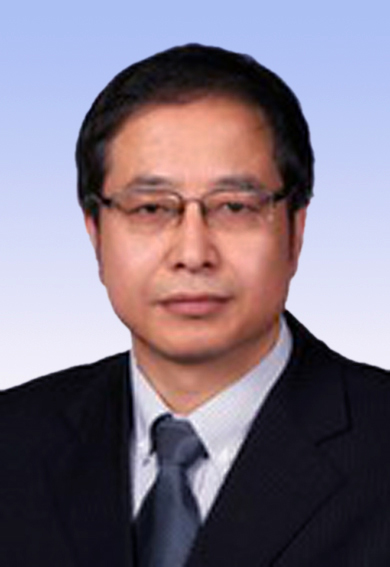
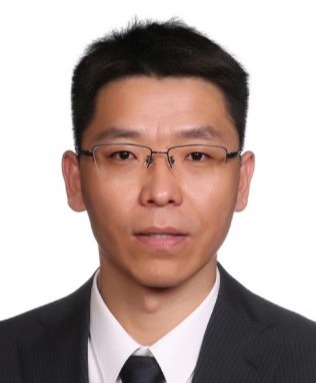
LIN Meng is an Associate Professor at the Department of Mechanical and Energy Engineering , Southern University of Science and Technology (SUSTech) . He holds a Ph.D. in Mechanical Engineering from Swiss Federal Institute of Technology in Lausanne (EPFL) (2018) and has held postdoctoral positions at Caltech's Joint Center for Artificial Photosynthesis (2018-2019). Research Interests include solar thermal/thermochemical/(photo)electrochemical energy conversion devices , CO2 capture and utilization , and multi-scale modeling and simulation . His work focuses on optimizing energy systems through advanced computational models and cross-disciplinary integration of physics. Recent Publications highlight his contributions to solar fuel processing, CO2 conversion technologies, and hybrid electrochemical systems, with articles in Nature Communications , Joule , and Energy & Environmental Science . His research emphasizes scalable solutions for sustainable energy and carbon management. Scientific Awards ASME Graduate Student Award (2018) Outstanding Reviewer of Solar Energy (2018, 2015) Swiss National Science Foundation Postdoc Fellowship (2017) Shanghai Outstanding Master Thesis (2016) Shanghai Jiao Tong University Outstanding Graduate (2013)
Dr. Li Hailong is a Chair Professor at the School of Environmental Science and Engineering, Southern University of Science and Technology (SUSTech), Shenzhen. He holds a PhD in Hydrogeology from the University of Hong Kong (2003), an MSc (1991) and BSc (1988) in Applied Mathematics from Fudan University. His academic journey includes professorships at China University of Geosciences-Beijing (2009-2020) and Anshan Normal University (1999-2009). Recipient of 2010 NSFC Outstanding Young Scientist Grant 2022 Dayu Water Conservancy Science and Technology Award 2008 Chutian Professorship (Hubei Province's highest academic honor) Dr. Li's research focuses on multi-component, multi-phase subsurface flows in coastal zones and their ecological/environmental effects. His work spans aquifer parameter estimation, ecohydrology, marine groundwater discharge, and computational fluid dynamics. Recent projects involve submarine groundwater discharge (SGD) quantification in Bohai Sea and Jiaozhou Bay using radium/radon isotopes. His publications in top journals like Nature Geoscience , Geochimica et Cosmochimica Acta , and Water Resources Research have been cited 7,072 times (H-index 49). He has led 19 research projects, including 6 NSFC grants and 973 Program subprojects. Dr. Li serves on editorial boards of Advances in Water Resources and Water Science and Engineering , and was Associate Editor for Hydrogeology Journal (2012-2015).
Professor Mou Bozhong is a full Professor and Doctoral Supervisor at the School of Chemistry and Molecular Engineering, East China University of Science and Technology (ECUST) . He serves as Director of the Engineering Research Center for Biorecovery, Ministry of Education and heads the Institute of Applied Chemistry . Recognized as a Foreign Academician of the Russian Academy of Engineering , he also sits on the editorial boards of five leading journals and is a member of key professional committees of the Chinese Chemical Society and Chinese Society of Microbiology. Education & Career Path B.Sc. (1982), Chengdu University of Technology M.Sc. (1989), China Coal Research Institute (Xi’an) – Geodrilling Fluid Chemistry Laboratory Ph.D. (1998), Southwest Petroleum University – Applied Chemistry/Interfacial Chemistry Postdoctoral Research (1998–2000), Ocean University of Qingdao Visiting Scholar, University of Wyoming, USA – Microbial Enhanced Oil Recovery (MEOR) Joined ECUST as Full Professor (January 2001–present) Research Interests Professor Mu’s interdisciplinary research integrates microbiology, interfacial chemistry, and petroleum engineering . He investigates microbial life in extreme reservoir environments , focusing on: Structure and function of biosurfactants and bio-based surfactants Anaerobic biodegradation pathways of petroleum hydrocarbons and associated biomarkers Microbial community dynamics in high-temperature, high-pressure reservoirs CO₂ biotransformation and biofixation by reservoir microorganisms for CCUS applications Microbially influenced corrosion (MIC) and mitigation strategies in oilfield systems Publication & Patent Trends His 200+ SCI-indexed articles and 50+ invention patents (32 authorized) reveal a trajectory from fundamental molecular simulation of lipopeptide surfactants to large-scale field demonstrations of MEOR and CO₂-EOR technologies. Notable themes include in-situ microbial community engineering, metabolic pathway reconstruction via multi-omics, and development of eco-friendly surfactants for enhanced energy recovery . Scientific Awards & Honors Foreign Academician, Russian Academy of Engineering Second Prize, National Science and Technology Progress Award (2010) First Prize, Shanghai Science and Technology Progress Award (2008) First Prize, China Industry-University-Research Cooperation Innovation Achievement Award Baosteel Outstanding Teacher Award National Teaching Achievement Award (Second Prize) Enjoys Special Government Allowance from the State Council Member, 11th & 12th Shanghai CPPCC Teaching & Mentoring Professor Mu delivers core undergraduate courses in Physical Chemistry and graduate courses in Biophysical Chemistry and Energy Biotechnology . He pioneered the nation’s first bilingual Physical Chemistry demonstration course and mentors students in chemistry, microbiology, and bioengineering, actively recruiting Ph.D. and Master’s candidates. Laboratory & Teams His laboratories (Room 225, Laboratory Building 3) house the Engineering Research Center for Microbial Enhanced Oil Recovery , equipped for molecular microbiology, interfacial chemistry, and pilot-scale bioprocess testing. The group collaborates with PetroChina, SINOPEC, and international partners to translate fundamental discoveries into field applications.
Cao Haishan is an Associate Professor at Tsinghua University, affiliated with the Department of Energy and Power Engineering in the School of Mechanical Engineering. His research focuses on cryogenic cooling systems, high heat flux thermal management, and the physics of amorphous ice formation and phase transitions. He leads a research group supported by the National Natural Science Foundation of China and industry partners including Huawei, Midea, and Lenovo. Ph.D., Mechanical Engineering, University of Twente, 2013 M.Sc., Chemical Engineering, Dalian Institute of Chemical Physics, Chinese Academy of Sciences, 2009 B.Sc., Chemical Engineering, Zhejiang University, 2006 Dr. Cao's research spans three major areas: cryogenic cooling (including micro cryocoolers and sorption systems), high heat flux electronic cooling (especially with non-condensable gases), and the formation and transformation of amorphous water ice. His work combines theoretical modeling, computational simulation, and experimental validation, often at micro and nano scales. He applies principles from thermodynamics, fluid dynamics, and materials science to solve engineering challenges in refrigeration and thermal control. The recent publications reflect a strong trend toward interdisciplinary research, integrating machine learning for heat transfer prediction, computational screening of MOFs for cryogenic switches, and fundamental studies of ice nucleation on various substrates. The articles span journals in physics, engineering, materials, and applied thermal sciences, indicating broad impact across multiple domains. Notable scientific awards include: Gustav and Ingrid Klipping Award (2016) Cryogenics Best Paper Award (2017) Annual Teaching Excellence Award, Tsinghua University (2023) Excellent Supervisor Award, Tsinghua University (2024) Multiple First Prize Advisor awards in national student contests on energy saving Dr. Cao has been principal investigator on several grants, including projects funded by the National Natural Science Foundation of China on amorphous ice lifetime and micro-cryocooling for semiconductor chips. He has also led industry-university collaborations with Huawei, Midea, and Lenovo. He advises graduate students and leads a research team focused on next-generation cooling technologies. He serves on editorial boards for Journal of Refrigeration , Vacuum and Cryogenics , and Energies , and has chaired sessions at major international conferences such as ICEC-ICMC and ACTS. His research group operates within the Institute of Thermophysics at Tsinghua University, leveraging facilities in the Lee Shau Kee Science and Technology Building. The team collaborates with national laboratories and international institutions, particularly maintaining ties with the University of Twente. Current efforts are directed toward ultra-low vibration cooling, efficient separation of non-condensable gases, and extending the stability of amorphous ice for cryobiological applications.
Junmin Jiang serves as Associate Professor in the Department of Electronic and Electrical Engineering at Southern University of Science and Technology's College of Engineering since 2022, following promotion from Assistant Professor. He directs a research group focused on cutting-edge analog/power IC design with strong industry partnerships including Texas Instruments, Qualcomm, and Analog Devices. His educational background includes: Ph.D. in Electronic and Computer Engineering (2017), The Hong Kong University of Science and Technology Visiting Scholar (2015-2016), State Key Laboratory of AMSV, University of Macau B.Eng. in Electronic Information Engineering (2011), Zhejiang University Dr. Jiang's research centers on power management IC design with three interconnected thrusts: Power ICs for Specific Applications (e.g., audio/LiDAR drivers), Power ICs for AI systems, and AI-enhanced power IC design. His work achieves breakthroughs in switched-capacitor converters, delivering ultra-high efficiency (>97%), fast transient response ( His 15 most recent publications demonstrate consistent leadership in top venues (ISSCC/JSSC), showing accelerating impact in hybrid converter topologies, parasitic loss reduction, and AI-integrated power management. The trend reveals increasing industrial relevance with 8 U.S. patents and real-world implementations in audio/LiDAR systems. Scientific recognition includes: IEEE SSCS Pre-Doctoral Achievement Award (2017) National Overseas High-level Talent (Youth Project, 2022) SUSTech Outstanding Teaching Award (2024) Shenzhen Industrial Innovation Talent Award (2023) As an advisor, he mentors 8+ students including ISSCC awardees and competition winners. His group actively recruits undergraduates for chip design projects, with students winning top honors in National Electronic Design and Mathematical Modeling competitions. Current teaching includes graduate Nonlinear Circuits and undergraduate Microcomputer Principles. The Jiang Research Group maintains strong industry ties for student placements and collaborates with international institutions in the U.S., EU, and Macau. Lab capabilities focus on full-cycle IC design from simulation to tapeout, with recent 100V-output converters achieving 86.2% efficiency for acoustic applications.
Professor Li Tian (b. 1982) is a full professor and PhD supervisor at the Department of Civil Engineering, School of Civil Engineering, Shandong University. He serves as Director of the Shandong Green Building Intelligent Construction Center and was selected into Shandong University's Youth Scholar Future Plan (2017-2022). His research focuses on seismic and wind resistance of civil infrastructure, with 38 SCI publications and 56 patents (26 inventions). Research Interests Structural Earthquake and Wind Resilience Vibration Control Systems Smart Material Applications Multi-hazard Structural Analysis Long-span Transmission Tower Dynamics Publications Overview His 15 most recent works (2018-2019) demonstrate expertise in seismic/wind vulnerability of power infrastructure, vibration control devices (particularly SMA-TMD systems), and multi-hazard structural analysis. Key contributions include probabilistic seismic demand modeling, bidirectional damping mechanisms, and collapse failure simulations. Scientific Awards Multiple Shandong Electric Power Science and Technology Progress Prizes (2018, 2015) Shandong University Teaching Awards (2017, 2012, 2014) National and Regional Academic Paper Prizes Academic Engagement He actively participates in structural engineering societies, serves on NSFC review panels, and acts as reviewer for over 30 journals including Engineering Structures and Earthquake Engineering and Engineering Vibration .
Shaowei Wang is a Professor in the Department of Engineering Mechanics at the School of Civil Engineering, Shandong University, China. He holds a Ph.D. in Mathematics (2007) from Shandong University and completed post-doctoral research in fluid mechanics (2009) at Peking University. His research focuses on heat and mass transfer in porous media , fluid mechanics , and mathematical methods in mechanics . His recent publications highlight advancements in electro-osmotic flows, oscillatory non-Newtonian fluid dynamics, and stability analysis of bioconvection in porous media. Key themes include modeling viscoelastic fluids (Oldroyd-B, Maxwell), fractional calculus applications, and microchannel transport phenomena. First Prize in Natural Science of the Ministry of Education (2015) Second Prize of Natural Science Award of Shandong Province (2015) Du Qinghua Young Scholar Award (2016) Wang serves as Director of Shandong Society of Mechanics and editorial board member of multiple journals. His work bridges theoretical fluid dynamics with practical applications in microfluidics and geophysical systems.
Dr. QUAN Chen is an Associate Professor at the School of Microelectronics, Southern University of Science and Technology (SUSTech), holding this position since May 2025 after serving as Assistant Professor (2019-2025) and Research Assistant Professor at the University of Hong Kong (2012-2018). A Shenzhen high-level overseas talent, he earned his PhD from the University of Hong Kong and conducts cutting-edge research in electronic design automation. His academic credentials include: Ph.D. from The University of Hong Kong (2010) Master's degree from The University of Hong Kong (2007) Bachelor's degree from Sun Yat-Sen University (2005) Dr. Chen's research pioneers advanced EDA algorithms for large-scale analog/RF circuit simulation, post-Moore multi-physics analysis, and AI-assisted design technologies. His work addresses critical challenges in nanodevice modeling and quantum computing circuits, resulting in over 50 publications in top venues like IEEE TCAD and DAC, plus four Chinese patents. Analysis of his recent publications reveals dominant trends in exponential integrator methods for transient simulation, model order reduction techniques, and physics-informed machine learning for reliability analysis. His work bridges numerical mathematics with practical EDA applications across analog circuits, quantum hardware, and emerging memory technologies. Key recognitions include: Wu Wenjun Artificial Intelligence Science and Technology Award, Second Prize (2020) ICCAD Best Paper Award Nomination (2012) Dr. Chen actively recruits Postdoctoral Fellows, Research Assistants, and Graduate Students while leading major funded projects including NSFC key/general programs and Guangdong Provincial R&D initiatives. His industry partnerships with Huawei, Empyrean, and Guowei Group translate theoretical advances into real-world EDA solutions. He directs a specialized research group at SUSTech focused on computational methods for next-generation circuit design, fostering innovation in simulation algorithms and multi-physics analysis through academic-industry collaboration.
Chao YUAN is a Professor in the Department of Engineering Mechanics at the School of Civil Engineering, Shandong University, China. He obtained his PhD in Geomechanics/Civil Engineering from Université Grenoble Alpes (France) in 2016, following MSc and BEng degrees from Shandong University. Education : PhD (2012-2016), MSc (2009-2012), BEng (2005-2009) Prior Appointments : Postdoctoral Associate at University of Calgary (2017-2019), Postdoctoral Research Fellow at Université Grenoble Alpes (2016-2017) Research Interests focus on granular material mechanics through advanced computational methods. His work includes discrete element modeling , multi-physics/multiphase couplings , unsaturated soil mechanics , and soil conditioning in Tunnel Boring Machines . Key contributions involve pore-scale simulations of hydromechanical interactions and stability analysis of tunnels and slopes. Publication Trends emphasize computational geotechnics , with studies on drainage dynamics, wetting-induced collapse, and machine learning applications in geomechanics. His articles span journals like Granular Matter , Proceedings of the National Academy of Sciences , and Acta Geotechnica , reflecting interdisciplinary approaches to granular media. Contact : chao.yuan@sdu.edu.cn , chaoyuan.geo@outlook.com
Chongxuan Liu is Chair Professor at the Southern University of Science and Technology (SUSTech) , affiliated with the School of Environmental Science and Engineering and the Department of Environmental Science and Engineering. Previously, he served as Chief Scientist at the U.S. Department of Energy's Pacific Northwest National Laboratory (PNNL) from 2006–2016 and as a part-time scientist there since 2015. His research integrates theoretical, experimental, and simulation approaches to study pollutant kinetics, multi-scale reactive transport, microbial community evolution, and nanomaterials for environmental remediation. Ph.D. in Environmental Engineering, Johns Hopkins University M.S. in Low-Temperature Aqueous Geochemistry, University of Alabama M.E. in Hydrogeochemistry and B.S. in Geology, Zhejiang University Liu’s research focuses on environmental geochemistry and biogeochemistry , particularly the kinetics of contaminant transformation , multi-scale reactive transport theories , and microbial/nanomaterial-based remediation technologies . His work addresses uranium, arsenic, and nitrate contamination in groundwater-sediment systems, employing cybernetic modeling, pore-scale simulations, and watershed-scale hydro-biogeochemical studies. His recent publications (2014–2016) emphasize uranium adsorption mechanisms , nanoparticle transport dynamics , and coupled biogeochemical-hydrological processes . Articles span journals like Environmental Science & Technology , Geochimica et Cosmochimica Acta , and Water Resources Research , reflecting expertise in contaminant transport, microbial remediation, and nanotechnology. Scientific accolades include Fellow of the Geological Society of America (2011) U.S. Department of Energy Outstanding Contribution Award (2004) He has authored over 170 peer-reviewed articles, with an H-index of 51 (8,000+ citations), and served as Associate Editor-in-Chief for ACS Earth and Space Chemistry . His lab at SUSTech trains undergraduate, master’s, and Ph.D. students, with recent publications by Li Qianqian (master’s student) and collaborations across environmental molecular sciences, computational modeling, and nanomaterial synthesis.
Hetao Hou is a Professor and PhD Tutor at the School of Civil Engineering , Shandong University . With a Doctor of Engineering from Tongji University (2005) and Master/Bachelor degrees from Shandong University, his research focuses on seismic and shock absorption technologies in steel structures, innovative prestressed concrete systems, lightweight energy-saving composite wall panels, and prefabricated construction methods. Key research themes include: Replaceable energy-consuming beam-column joints New buckling-restrained brace designs Precast concrete structural systems Steel-concrete composite components Holds 34 patents in structural engineering, including composite shear walls, precast slab systems, and seismic connection nodes Co-authored 67+ publications in journals like Engineering Structures , Structural Control and Health Monitoring , and Engineering Mechanics with international collaborators His work bridges experimental testing and numerical modeling of composite structures, focusing on seismic resilience and prefabrication technologies. Patents demonstrate practical applications in earthquake-resistant construction systems.
Junfeng Zhao is a Lecturer in the Department of Mechanics at the School of Civil Engineering, Shandong University. His research focuses on mechanical properties of complex fractured rock masses, micro-nano electromechanical systems, spacecraft orbital dynamics, and vibration analysis of large structures. He teaches undergraduate courses in Theoretical Mechanics, Mechanics of Materials, and Mathematical Physics Methods, as well as graduate courses in Spacecraft Orbital Dynamics and Management Operations Research. Bachelor's Degree : Mechanical Engineering at Shandong University of Science and Technology (1994-1998) Master's Degree : Engineering Mechanics at Shandong University (1999-2001) Ph.D. : Process Equipment Engineering at Shandong University (2007-2013) His research integrates strain gradient theories, modified couple stress models, and numerical simulations to analyze size-dependent mechanical behaviors in micro/nanostructures and fractured rock masses. Key applications include MEMS/NEMS, spacecraft dynamics, and fluid-structure interaction systems. Zhao has received notable recognition for his teaching excellence, including the First Prize in the 2012 Shandong University Young Teachers Lecture Competition and the 'Teaching Expert' title in 2012. He has authored/ co-authored 12 peer-reviewed articles and contributed to two textbooks in mechanical engineering. 2010 Shandong University Young Teachers Lecture Competition Third Prize 2012 Shandong University Young Teachers Lecture Competition First Prize 2012 Sixth 'Teaching Expert' of Shandong University He has led one National 863 Program sub-project and participated in nine major research initiatives, including National Natural Science Foundation and Shandong Provincial grants, totaling over RMB 1.7 million in funding.
Shiyi Chen is Chair Professor in the Department of Mechanics and Aerospace Engineering at Southern University of Science and Technology (SUSTech) . From January 2015 to November 2020 he served as the founding President of SUSTech. He is an Academician of the Chinese Academy of Sciences, a Fellow of the American Physical Society (1995), the Institute of Physics (UK, 2004) and The World Academy of Sciences (TWAS, 2018). Education B.Sc. in Mechanics, Zhejiang University (1981) M.Sc. in Mechanics, Peking University (1984) Ph.D. in Mechanics, Peking University (1987) Research Interests Professor Chen is internationally recognized for pioneering work in turbulence theory and computational fluid dynamics . His research spans direct numerical simulation of turbulent flows, large-eddy simulation and sub-grid-scale modeling, lattice Boltzmann methods , multi-scale algorithms , and the industrial applications of turbulence in multi-phase flows, combustion, and granular media. He developed the mapping-closure theory for probability density functions in turbulent reacting flows and provided fundamental explanations for the two-dimensional inverse energy cascade. Awards & Honors Academician, Chinese Academy of Sciences (2013) Fellow, American Physical Society (1995) Fellow, Institute of Physics, UK (2004) Fellow, The World Academy of Sciences (TWAS) (2018) Qiu Shi Outstanding Scientist Award (2017) Shenzhen Education Reform Pioneer Award (2019) Leadership & Service Professor Chen has held numerous leadership roles: President, Southern University of Science and Technology (2015–2020) Vice President for Research and Dean of Graduate School, Peking University (2013–2015) Founding Dean, College of Engineering, Peking University (2005–2013) Chair, Department of Mechanical Engineering, Johns Hopkins University (2002–2004) Director, State Key Laboratory of Turbulence and Complex Systems (2011–present) Alonzo G. Decker Jr. Chair in Engineering and Science, Johns Hopkins University Oppenheimer Fellow & Group Leader, Los Alamos National Laboratory (1987–1997) Research Staff Member, IBM TJ Watson Research Center (1994–1999) Laboratory & Research Teams Since 2011 he has directed the State Key Laboratory of Turbulence and Complex Systems , fostering interdisciplinary research in high-Reynolds-number turbulence, multi-scale modeling, and advanced computational techniques. Under his guidance the laboratory collaborates closely with national aerospace and energy industries.
Dr. Oscar Lung Wa Chung is a tenured Full Professor at the Department of Chemistry, Southern University of Science and Technology of China (SUSTech), with a research focus on multi-scale and machine learning simulations for complex homogeneous catalysis and biocatalysis. He holds a Ph.D., M.Phil., and B.Sc. (1st Honors) in Chemistry from The Hong Kong University of Science and Technology (HKUST), where he studied under Prof. Yun-Dong Wu. Education Ph.D. (2006), HKUST M.Phil. (2003), HKUST B.Sc. (2000), HKUST His research spans multi-scale simulations of chemical and biochemical systems, with emphasis on sustainable/bio-inspired catalysis, biocatalysis, and method development. He has published 100+ SCI-indexed papers, including Chemical Reviews , Accounts of Chemical Research , and Journal of the American Chemical Society , with over 5,600 citations. Notable achievements include the 2024 Organic Chemistry Horizon Prize from the Royal Society of Chemistry and inclusion in Stanford University's Top 2% Global Scientists (2021-2024). Scientific awards 2024 Royal Society of Chemistry's Organic Chemistry Horizon Prize World's Top 2% Scientists (2021-2024) Shenzhen's Peacock Plan Awardee (2014) Fukui Fellowship (2006-2010) He teaches General Chemistry , Bioinorganic Chemistry , and Computational Chemistry , while serving as a reviewer for 20+ journals and funding agencies. His work often bridges computational predictions with experimental validation, with two proposed mechanisms incorporated into standard textbooks.
Dr. Jun Gu serves as an Associate Professor, Doctoral Supervisor, and Research Group Leader at the Department of Chemistry, College of Science, Southern University of Science and Technology (SUSTech). He leads an active research program in electrocatalysis and is recognized as a National Overseas High-Level Talent for his significant contributions to the field. Joined SUSTech in March 2021 as tenure-tracked Assistant Professor, promoted to Associate Professor Previously conducted postdoctoral research at EPFL in Switzerland (2016-2021) Research group focuses on carbon-neutral energy technologies Dr. Gu received his B.S. in Chemistry from Peking University in 2011 and completed his Ph.D. in Inorganic Chemistry there in 2016 under the supervision of Professor Yawen Zhang and Academician Chunhua Yan. His doctoral research centered on controlled synthesis and catalytic applications of rare-earth-based and noble metal-based nanomaterials. Dr. Gu's research program focuses on developing electrocatalytic reactions, materials, and electrolysis devices for CO 2 reduction under acidic conditions. His group investigates structure-activity relationships of catalysts, production of multi-carbon products from CO electroreduction, and electrocatalytic organic synthesis. The research integrates experimental approaches with advanced characterization techniques including in situ infrared spectroscopy, Raman spectroscopy, and electrochemical differential mass spectrometry, combined with finite element simulation to understand mass transfer processes and optimize electrolyzer design. Analysis of Dr. Gu's publication record reveals a consistent focus on CO 2 electrochemical reduction technologies, particularly in challenging acidic media environments. His work spans from fundamental catalyst design (including single-atom catalysts) to practical electrolyzer development, addressing critical challenges in carbon neutralization and renewable energy storage. His research has significant implications for sustainable chemical production and achieving China's carbon neutrality goals before 2060. National Overseas High-Level Talent As a Doctoral Supervisor, Dr. Gu mentors PhD students and leads a well-funded research group with multiple postdoctoral researchers and research assistants. His laboratory is equipped with advanced instrumentation for electrocatalysis research and benefits from his extensive international collaborations developed during his postdoctoral work at EPFL. The research group actively recruits talent with competitive compensation packages, including opportunities for professional development and research funding support. Dr. Gu's research laboratory focuses on developing practical technologies for carbon-neutral energy systems. His team combines experimental electrochemistry with computational modeling to understand and optimize electrocatalytic processes. Current projects include developing novel ionomers for membrane electrode assemblies, investigating cation effects in acidic electrolytes, and designing electrolyzers that balance selectivity, energy conversion efficiency, and stability for industrial-scale CO 2 conversion.