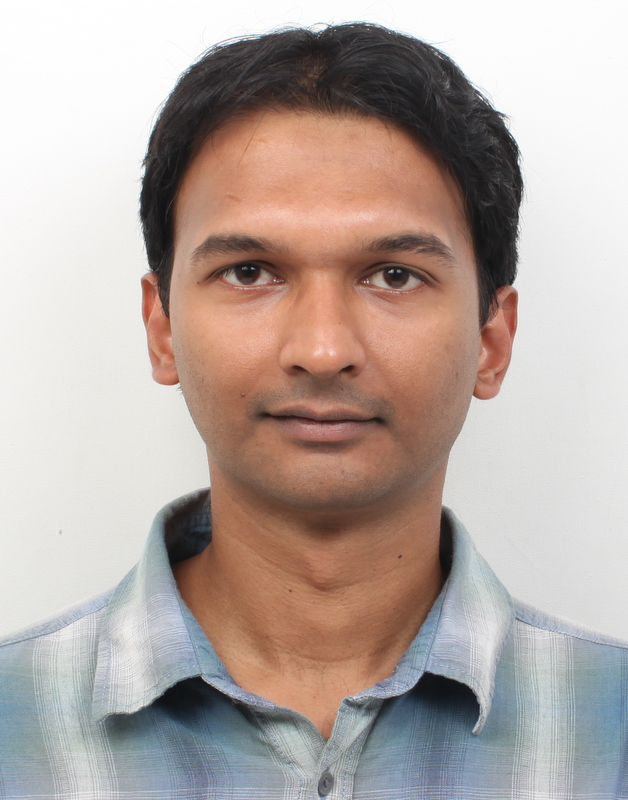
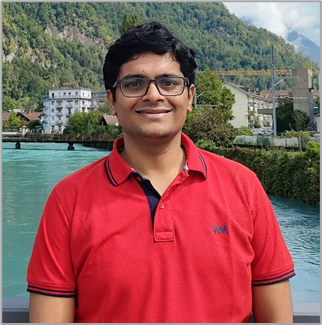
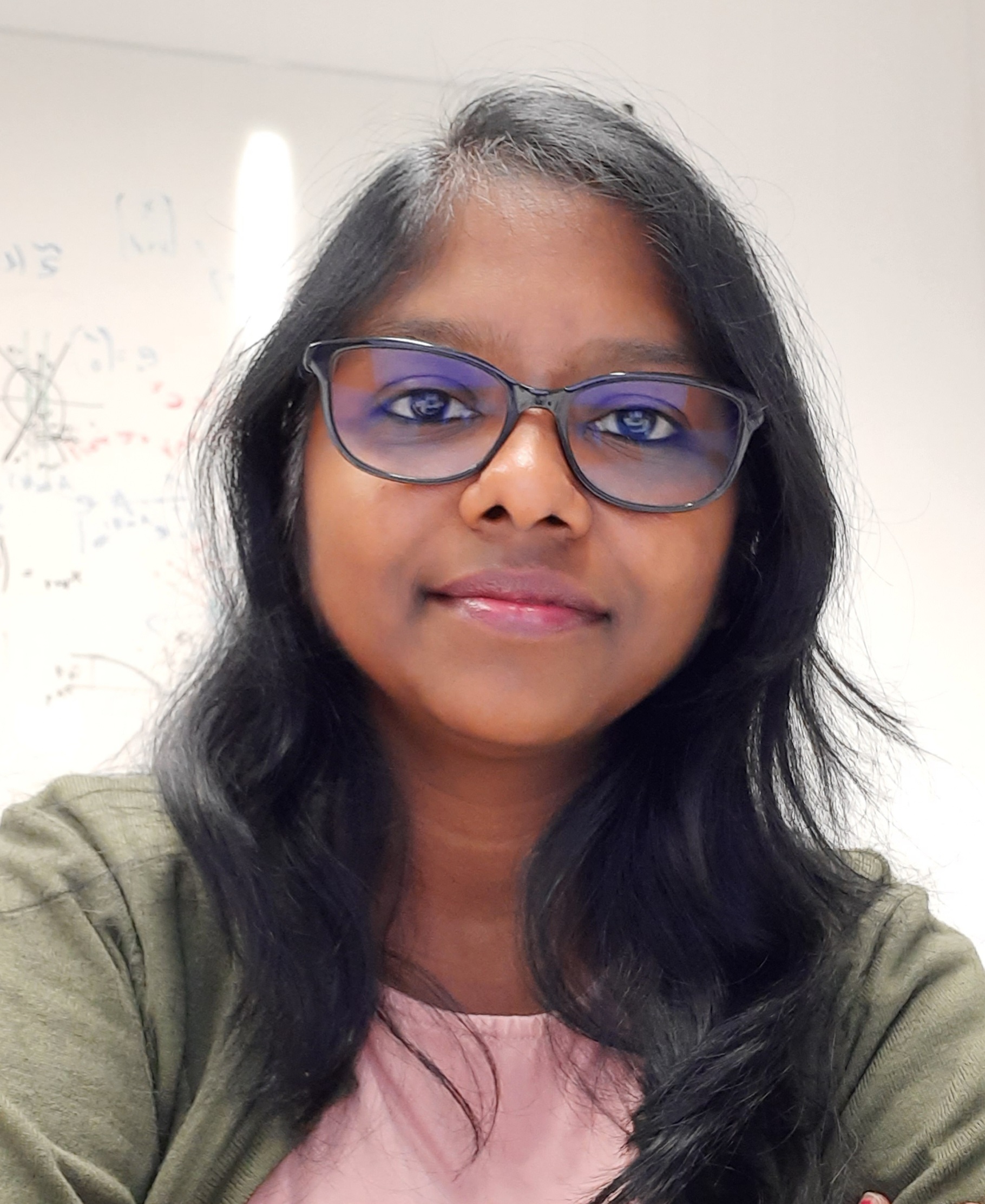
Shivaram Kalyanakrishnan is an Associate Professor at the Department of Computer Science and Engineering , Indian Institute of Technology Bombay , specialising in Artificial Intelligence and Machine Learning . His research spans sequential decision making , multiagent learning , multi-armed bandits , and humanoid robotics , with applications in robot soccer , computer games , and online advertising . He teaches advanced courses like CS 747: Foundations of Intelligent and Learning Agents and CS 748: Advances in Intelligent and Learning Agents , focusing on end-to-end system design and theoretical analysis. His scientific awards include the Best Student Paper Award at RoboCup International Symposium 2006 and nomination for Best Student Paper Award at AAMAS 2007 . His work on reinforcement learning and policy iteration has been published in leading venues such as IJCAI , ICML , and COLT , with recent contributions to railway scheduling and bandit algorithms. While no explicit list of advisees is provided, his research projects and publications suggest mentorship of students in collaborative efforts. Contact : shivaram@cse.iitb.ac.in .
Laxmidhar Behera is a Professor in the Department of Electrical Engineering at the Indian Institute of Technology Kanpur, specializing in Intelligent Systems and Control. With over two decades of academic experience at IIT Kanpur and international research experience at institutions including Fraunhofer Institute of Autonomous Intelligent Systems in Germany, ETH Zurich, and University of Ulster, he has established himself as a leading researcher in cognitive robotics and intelligent control systems. Dr. Behera's research spans multiple cutting-edge domains including Cognitive Robotics, Nano-robotics, Vision based Control, Soft Computing, Information Retrieval in music and language, Semantic Information Processing, Physics of Complex Systems, Cyber Physical Systems, Formation Control of UAVs, Brain-Computer Interface (BCI), and Sanskrit Computational Linguistics. His interdisciplinary approach bridges traditional control theory with modern computational intelligence techniques, creating innovative solutions for complex real-world problems. His extensive publication record in top-tier journals like IEEE Transactions demonstrates his leadership in areas such as brain-computer interfaces, visual servoing, multi-robot systems, and music information retrieval. Notably, his work on quantum neural networks for EEG filtering and multisatellite formation control has received significant attention in the research community. UKIERI Standard Research Award 2008 Best Paper at International Conf. on Intelligent Sensors and Information Processing (ICISIP-2004) Best Paper at WoSco,02, Int. Conf. High-Performance Computing (HiPC, 2002) AICTE career award for young teacher (1997) Senior Member IEEE Multiple IEEE top accessed articles (2009-2010) As an Associate Editor for Autosoft Journal and Technical Committee Member for Intelligent Control at IEEE Control System Society, Dr. Behera actively contributes to the academic community. His laboratory in the Western Lab - 212A of the Department of Electrical Engineering serves as a hub for research in intelligent systems, where he mentors students and collaborates with researchers worldwide on cutting-edge projects in robotics, control systems, and computational intelligence.
Bishakh Bhattacharya is a Professor at the Department of Mechanical Engineering , Indian Institute of Technology Kanpur . He specializes in vibration and control, structural health monitoring (SHM), sensors & actuators , and is actively involved in interdisciplinary research spanning robotics, smart materials, and neural modeling. Education: PhD in Aerospace Engineering, Indian Institute of Science Bangalore (1998) M.E. in Applied Mechanics, Jadavpur University (1991) B.E. in Civil Engineering, Jadavpur University (1988) Research Interests: His research spans a wide spectrum of engineering and applied sciences. Major themes include: Active & Passive Vibration Control – developing control strategies for mechanical systems Smart Structures & Adaptive Systems – integrating sensors and actuators for real-time response Structural Health Monitoring – using advanced sensing for damage detection in civil and aerospace structures Child-Robot Interaction Design – exploring human-robot interfaces for developmental applications Neural Oscillation & Brain Modeling – applying multi-scale modeling to understand brain dynamics Awards & Honors: UK-India Research Initiative Award (2012) Young Scientist Award – Systems Society of India (2006) Academic Senate Commendation – IIT Kanpur US Patent: Vibration Damping System and Method Editorial Board Member – Journal of Low Frequency Noise, Vibration and Active Control Laboratory & Facilities: He leads the Applied Dynamics and Vibration Laboratory at IIT Kanpur, located in NL-103. The lab is equipped with advanced instrumentation for vibration testing, sensor integration, and control system prototyping. His team collaborates across disciplines including aerospace, civil, and biomedical engineering.
Soumya Ranjan Sahoo is an Associate Professor in the Department of Electrical Engineering at the Indian Institute of Technology Kanpur. His academic career at IIT Kanpur began with a contract position as Assistant Professor in 2014, progressing to Assistant Professor in 2016, and currently holding the position of Associate Professor since December 2020. Prior to joining IIT Kanpur, he worked as a Scientist Fellow at the National Aerospace Laboratories in Bangalore. PhD in Systems and Control Engineering from IIT Bombay (2013) Thesis Title: Coordination problems with minimal sensing and coarse actuation Thesis Supervisors: Prof. Ravi N. Banavar and Dr. Arpita Sinha B.Tech in Electrical Engineering from University College of Engineering, Burla, Odisha (2008) Dr. Sahoo's research spans the complex intersection of control theory and practical engineering applications. His work primarily focuses on nonlinear dynamical systems, with significant contributions to the control of unmanned vehicles and coordinated control systems. His research has evolved to address modern power system challenges, particularly in the domain of AC and DC microgrids, where he has developed innovative control strategies for improved performance. His work on discontinuous systems demonstrates his ability to tackle mathematically challenging control problems with practical implications. Analysis of Dr. Sahoo's publication record reveals a clear evolution from fundamental control theory to applied research with significant practical impact. His early work focused on theoretical aspects of multi-agent systems and network control, which has progressively shifted toward power systems applications, particularly microgrids. The consistent theme across his publications is the development of robust control strategies that work effectively under realistic constraints such as communication delays, incomplete information, and system heterogeneity. His research bridges theoretical control concepts with practical engineering implementations, particularly in the domains of autonomous systems and modern power grids. Dr. Sahoo teaches several key courses in the Electrical Engineering curriculum including Introduction to Electrical Engineering, Control Systems Analysis, Basics of Modern Control Systems, Nonlinear Systems, Adaptive Control Theory, and advanced topics in Nonlinear Systems. His teaching portfolio reflects his deep expertise in control theory and its applications. His laboratory work, particularly through the DiSCo Lab (as referenced in his homepage), focuses on practical implementations of control algorithms for various applications including unmanned vehicle coordination and microgrid management. This laboratory work bridges the gap between theoretical control design and real-world implementation challenges.
K R Guruprasad is an Associate Professor in the Department of Mechanical Engineering at the Indian Institute of Technology Kanpur (IIT Kanpur). With a PhD in Aerospace Engineering from the Indian Institute of Science (IISc) Bangalore, he has established himself as a leading researcher in robotics, motion planning, and multi-robot systems. His research interests span a wide range of topics in robotics including Robotics-Mechanics and Control, Motion Planning, Multi Robots Systems, Cooperative Control, Exo-Skeleton Control, and Voronoi Partition applications. His work particularly focuses on UAV/Drones motion planning, mobile manipulation, and artificial intelligence applications in robotics. His research integrates theoretical foundations with practical implementations, evidenced by his numerous publications in high-impact journals. Prof. Guruprasad's scholarly contributions include a book titled 'Robotics: Mechanics and Control' (PHI, 2019) and several edited volumes. His publication record shows consistent output with an h-index of 11, i10 index of 14, and 382 citations according to Scopus data. His recent work demonstrates strong focus on multi-robot coverage algorithms, UAV applications, and distributed control systems. Among his recognitions are a best presentation award at the IISc-IBM Research Workshop (2008) and a best paper award finalist at DARS 2014. His research has practical applications in search and rescue operations, landmine detection, and autonomous exploration. Prof. Guruprasad maintains active collaborations with researchers globally and has contributed significantly to advancing robotics research in India through his work at IIT Kanpur's Mechanical Engineering department.
Anisur Rahaman Molla is an Associate Professor at the Indian Statistical Institute (ISI) in Kolkata, India, affiliated with the Cryptology and Security Research Unit (CSRU) and the R. C. Bose Centre for Cryptology and Security . His work spans distributed computing, network algorithms, and mobile robotics, with a focus on fault tolerance and Byzantine agreement. Education : PhD in Computer Science from Nanyang Technological University, Singapore (2014) M.Tech in Computer Science from ISI Kolkata (2010) M.Sc in Pure Mathematics from Calcutta University (2007) B.Sc in Mathematics (Honors) from Calcutta University (2005) Research Trends : His recent work emphasizes mobile agent algorithms for tasks like dispersion, leader election, and graph traversal, with applications in fault-tolerant systems and dynamic networks. Papers frequently address message complexity, Byzantine resilience, and optimization in unoriented/oriented grids. Scientific Awards : Best Contributor Award (PhD Forum), ICDCN 2013 Advising : Supervised Prabhat Kumar Chand (current PhD student at ISI) and graduated Manish Kumar (PhD, ISI 2023). Co-supervised master's and bachelor's theses at the University of Freiburg and ISI. Labs & Collaborations : Works within the CSRU and R. C. Bose Centre at ISI. Collaborates with institutions like IIT Madras, University of Freiburg, and ETH Zürich.
Dr. Salil Goel is an Assistant Professor in the Department of Civil Engineering at the Indian Institute of Technology Kanpur, specializing in Geoinformatics. He has been serving at IIT Kanpur since 2018, following research positions at The University of Melbourne and RMIT University in Australia. Education: PhD: The University of Melbourne and IIT Kanpur (Jointly awarded), 2017 B. Tech M.Tech (Dual), Civil Engineering (Geoinformatics), IIT Kanpur, 2011 Dr. Goel's research focuses on the use and fusion of sensors such as LiDAR, Camera, Inertial and GNSS to solve problems related to localization, mapping and tracking involving various platforms including terrestrial and UAV systems. He is particularly active in indoor positioning and navigation, developing algorithms for localization and mapping in GNSS denied and challenging environments. His work bridges geospatial technology, sensor fusion, and practical applications in urban and indoor settings. His publication record demonstrates a strong focus on cooperative positioning systems, UAV navigation, and mobile mapping technologies. His recent work has centered on indoor localization challenges, benchmarking measurement campaigns, and cooperative UAV localization networks, reflecting his commitment to advancing positioning technologies in environments where traditional GNSS systems fail. Scientific Awards: Young Geospatial Scientist Award 2018 and Rachapudi Kamakshi Memorial Gold Medal Best paper award, IGNSS Conference, Sydney, Australia (2018) ION GNSS+ 2017 student paper award Best paper award, 10th International Conference on Mobile Mapping Technology, Cairo, Egypt (2017) MATS award, Melbourne School of Engineering (2017) Dr. Goel leads the Geoinformatics Laboratory at IIT Kanpur, where he conducts research on sensor fusion techniques for challenging positioning environments. His work has implications for urban mobility, indoor navigation, and drone traffic management systems. While specific grant information is not provided, his numerous awards and publications suggest active research funding and collaboration with international institutions. His laboratory focuses on developing practical solutions for real-world positioning challenges, particularly in environments where traditional GPS/GNSS systems cannot function effectively. This research has applications in emergency response, indoor navigation, and autonomous systems operation in complex environments.
Anupam Saxena is a Professor in the Department of Mechanical Engineering at the Indian Institute of Technology Kanpur. His research spans multiple domains within mechanical engineering with a focus on innovative design methodologies and computational approaches to mechanical systems. Education: PhD, University of Pennsylvania, USA (2000) M.S., University of Toledo, USA (1997) B.Tech, Mechanical Engineering, IIT Bombay (1995) Research Focus: Professor Saxena's work primarily centers on compliant mechanisms, which are structures that gain mobility from the deflection of flexible members rather than traditional joints. His research integrates computational methods with mechanical design to develop novel approaches for topology optimization, CAD applications, robotics systems, MEMs devices, and large deformation analysis. His work on material mask overlay methods represents significant contributions to computational design methodologies. Publication Trends: Analysis of his publications reveals a consistent research trajectory focused on computational approaches to mechanical design problems. His work demonstrates increasing sophistication in handling complex mechanical systems through computational methods, with particular emphasis on optimization techniques and multi-physics considerations. Recent publications show integration of robotics concepts with compliant mechanism design, suggesting interdisciplinary expansion of his research focus. Awards and Recognition: Alexander von Humboldt Fellowship (2010) Associate Editor, ASME Journal of Mechanisms and Robotics (2011) AICTE Career Award (2006) Procter and Gamble Best Professional Paper Award (1997) Silver Medal, Mathematics Talent Search Examination, Government of India (1991) Vivek Vir Award, Government of Madhya Pradesh, India (1992) Professor Saxena's research contributions have established him as a significant contributor in the field of computational mechanical design, with particular expertise in compliant mechanisms and topology optimization methodologies.
Indian Institute of Technology Hyderabad (IITH)India
Vishal Sawant is an Assistant Professor in the Department of Electrical Engineering . His research focuses on advanced control systems and autonomous technologies. Education : Ph.D from IIT Bombay Research Interests : Multi-agent Systems (coordination and control of distributed autonomous entities) Optimal Control (mathematical optimization for dynamic systems) Autonomous Motion Planning (robotics and vehicle trajectory optimization) Cyber-Physical Security (protection of interconnected physical and digital systems)
Kiran Kumari serves as an Assistant Professor at the Indian Institute of Science (IISc), Bangalore, specializing in advanced control systems research with active contributions to theoretical and applied domains. Educational Background: Ph.D. from Indian Institute of Technology, Bombay (2021) M.Tech. from Indian Institute of Technology, Delhi (2015) B.Tech. from Guru Gobind Singh Indraprastha University, Delhi (2013) Research Interests: Dr. Kumari's work centers on critical challenges in modern control theory, including event-triggered control mechanisms for resource-constrained systems, cooperative strategies in multi-agent frameworks, precise stabilization techniques for quadrotor dynamics, robust sliding mode methodologies for nonlinear systems, and resilience in networked control architectures. Her research directly addresses stability and efficiency requirements for autonomous vehicles, robotic swarms, and distributed cyber-physical systems operating under uncertainty. Scientific Awards: No scientific awards or honors were documented in the source material. Advising and Grants: The available documentation contains no references to doctoral students, postdoctoral researchers, or external research funding acquisitions under her supervision.
Indian Institute of Technology Hyderabad (IITH)India
Himabindu Allaka is an Assistant Professor in the Department of Mechanical & Aerospace Engineering at the Indian Institute of Technology Hyderabad. Her research focuses on multi-domain unmanned systems, marine hydrodynamics, and subsea robotics. She holds a Ph.D. from the University of Haifa and operates from Office Room C-604 in the Academic Block C at IIT Hyderabad, Sangareddy, Telangana, India.
Twinkle Tripathy serves as an Assistant Professor in the Department of Electrical Engineering at the Indian Institute of Technology Kanpur (IIT Kanpur), operating from office ACES 412A within the Advanced Centre for Electronic Systems building. Her academic position places her within the Faculty of Engineering at one of India's premier technical institutions. Dr. Tripathy's research focuses on advanced control systems with particular emphasis on autonomous vehicle guidance, multi-agent system formation control, nonholonomic systems analysis, and missile guidance technologies. Her work bridges theoretical control theory with practical applications in robotics and autonomous systems. While specific publication details aren't fully visible in the provided information, her research areas indicate significant contributions to modern control engineering with applications spanning defense technology, autonomous transportation systems, and robotics. Her work likely involves both theoretical development and practical implementation of control algorithms for complex dynamic systems. As a faculty member at IIT Kanpur, she participates in teaching electrical engineering curriculum while maintaining an active research program in her specialized areas of expertise within the Department of Electrical Engineering.