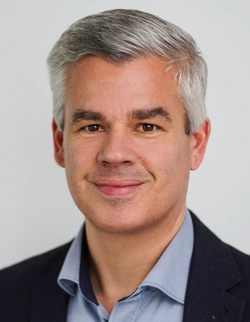
Dr. Bracha Laufer is a senior lecturer at the School of Electrical Engineering , part of the Iby and Aladar Fleischman Faculty of Engineering at Tel Aviv University. Her research focuses on acoustic source localization, speech signal processing, and machine learning techniques for audio engineering. Her recent work explores conformal prediction and manifold-based approaches for robust source localization, deep learning architectures for sound source separation, and simplex geometry in multichannel signal analysis. These publications highlight interdisciplinary applications of machine learning and statistical methods in acoustics. Dr. Laufer's research integrates Bayesian inference , probabilistic graphical models , and uncertainty quantification to address challenges in adverse acoustic environments. She has contributed to advancements in multi-microphone speaker localization and speech inpainting .
Robin Dietrich is a Researcher at the Department of Informatics 6 - Chair of Robotics, Artificial Intelligence and Real-time Systems at the Technical University of Munich . His work bridges computational neuroscience and robotics, focusing on translating neural mechanisms from mammalian brains into algorithms for mobile robot navigation. B.Sc. and M.Sc. in Computer Science Research on hippocampal temporal dynamics for neuromorphic SLAM Specializes in spiking neural networks for navigation and radar processing Research Interests : Robin's research explores the intersection of robotics, artificial intelligence, and computational neuroscience . His work specifically investigates spiking neural networks, FMCW radar data processing, and neuromorphic algorithms for autonomous systems. Recent projects focus on uncertainty quantification, evolutionary optimization, and multi-robot exploration using biologically inspired models. Publication Trends : Robin's publications (2019-2025) demonstrate a consistent focus on neuromorphic computing for robotic perception , with increasing specialization in spiking neural networks for radar processing and biologically inspired navigation algorithms . Key collaborations include contributions to multi-robot exploration metrics and hardware acceleration frameworks. Teaching Contributions : Robin has taught Digital Signal Processing and Real-Time Systems lectures since 2019, co-led seminars on Bio-inspired Data Processing , and supervised practical courses on Intelligent Mobile Robots using ROS.
Prof. Dr. Didier Stricker is a leading academic in computer science, serving as Scientific Director at the German Research Center for Artificial Intelligence (DFKI) and Professor at the University of Kaiserslautern-Landau (RPTU). His career spans over two decades, including leadership roles at Fraunhofer IGD and founding the Augmented Vision research unit at DFKI/RPTU, which now includes ~30 researchers. Education: Electrical Engineering (Technical University of Grenoble, Karlsruhe) PhD: Computer Vision-based Calibration and Tracking Methods for Augmented Reality (2002, TU Darmstadt) His research focuses on virtual and augmented reality , computer vision , human-computer interaction , and on-body sensor networks . He leads major EU/national projects like LUMINOUS (Language-Augmented XR) and SHARESPACE (Ethical Hybrid Shared Spaces), with industrial partnerships including Sony, Google, and John Deere. Recent publications emphasize 3D reconstruction , neural network optimization , and XR systems . Key trends include event camera processing , scene flow estimation , and multimodal AI for industrial applications . He holds patents in AR tracking and has received the 2006 Innovation Prize from the German Society of Computer Science. Scientific Awards : Innovation Prize (2006) Best Paper/Demonstration Awards at ISMAR, EUSIPCO, CVPR, and ICRA As a reviewer for journals and conferences in VR/AR and computer vision, he contributes to shaping research standards. His lab ( AG Augmented Vision ) combines academic and industrial collaborations to advance cognitive interfaces and extended reality systems.
Sanaz Mostaghim is a full Professor of Computer Science at the Otto-von-Guericke-Universität Magdeburg, Faculty of Computer Science, Institute for Intelligent Cooperative Systems (IWS), where she leads the Chair of Computational Intelligence since 2014. She is also Vice-President for Member Activities of the IEEE Computational Intelligence Society (since 2021) and has held numerous leadership and editorial roles within IEEE and other international organizations. Education PhD in Electrical Engineering and Computer Science, University of Paderborn, 2004 Habilitation in Applied Computer Science, Karlsruhe Institute of Technology (KIT), 2012 Research Interests Her research focuses on Computational Intelligence and Swarm Intelligence , with applications ranging from optimization and robotics to medicine and engineering. She develops evolutionary algorithms and particle swarm optimization techniques for solving complex multi-objective problems. She also explores swarm robotics and distributed systems , aiming to achieve intelligent behaviors through simple local rules and interactions. Scientific Awards & Honors DFG Heisenberg-Professorship, 2014 IEEE CIS Distinguished Lecturer, 2020 Vice-President for Member Activities, IEEE Computational Intelligence Society, 2021–present Elected member of IEEE CIS Administrative Committee (ADCOM), 2015–2020 Advising & Grants Prof. Mostaghim has supervised numerous PhD students through her habilitation and professorship. She has been principal investigator on projects funded by the German Research Foundation (DFG) and collaborates extensively with international research groups and industry partners including Honda, Bosch, and Procter & Gamble. Labs & Teams She leads the Chair of Computational Intelligence at the Institute for Intelligent Cooperative Systems (IWS), fostering interdisciplinary research across computer science, robotics, and application domains such as automotive, healthcare, and digital transformation.
Florian Noichl is a Group Lead in Spatial Computing at the Chair of Computing in Civil and Building Engineering at the Technical University of Munich . His work focuses on methods for creating digital twins of industrial environments, particularly car manufacturing plants, and includes collaborative projects with Siemens . He was a Visiting Researcher at the Department of Geomatics Engineering at the University of Calgary, Canada (May–August 2023). Research interests include Spatial computing Digital twinning Point cloud processing Artificial intelligence in construction Scan planning optimization GeoAI for retrofitting Recent publications emphasize automation in point cloud segmentation, material passport creation for steel structures, semantic facade analysis, and energy efficiency estimation using vision-language models. His work often integrates BIM with laser scanning and AI . Teaching includes Bau- und Umweltinformatik 1 (WS22/23, WS23/24) and Softwarelab . He supervises theses on topics like UAV mission planning Point cloud enrichment Image-based localization CAD model matching BIM design reviews Review activities cover journals such as Automation in Construction , IEEE Sensors Journal , and Remote Sensing . He is listed on OrcID : 0000-0001-6553-9806 Google Scholar ResearchGate Labs associated with include the BIM-Lab and Robotic Fabrication Lab . His work intersects digital construction with industrial AI applications.
Prof. Dr.-Ing. Klaus Kefferpütz serves as Professor at Ingolstadt University of Applied Sciences (THI) since 2022 within Faculty E, specializing in autonomous cooperative systems. He maintains dual research affiliations with the Fraunhofer Application Center 'Connected Mobility and Infrastructure' and AImotion Bavaria AI Mobility Hub Ingolstadt. His research focuses on coordination algorithms for autonomous systems and distributed sensor data fusion , with significant contributions to UAV navigation, swarm robotics, and constrained control systems. Recent work integrates nonlinear control theory with practical mobility applications, emphasizing real-world implementation challenges. Publications from 2020-2022 reveal consistent output in robotics and control engineering venues, demonstrating expertise in solving practical constraints like input saturation and windup phenomena. His patent portfolio indicates translational research impact. Through AImotion Bavaria and Fraunhofer partnerships, Prof. Kefferpütz accesses substantial industry-connected research funding, facilitating student involvement in applied mobility projects. His background bridges academic theory (TU Darmstadt PhD) and industry practice (MBDA flight control engineering). As a core member of THI's AImotion AI Node, he contributes to Bavaria's strategic mobility research initiative, focusing on AI applications for intelligent transportation systems and cooperative vehicle infrastructure.
Prof. Achim Schweikard is a Full Professor at the University of Lübeck's Institute for Robotics and Cognitive Systems, where he has led pioneering research since 2002. His academic journey spans Stanford University's neurosurgery and computer science departments and Technical University of Munich, establishing him as a leading figure in medical technology translation. His research focuses on Medical Robotics and Artificial Intelligence with transformative clinical applications. Key achievements include inventing correlation-based tracking for cancer radiosurgery (now global standard of care) and developing stereotactic arrhythmia radioablation (STAR) protocols. Current projects address critical challenges in cardiac radioablation through the RAVENTA multicenter trial, MATRIX-VT imaging fusion study, and SonoBox robotic ultrasound system for pediatric diagnostics. His publication record shows sustained high impact with 15+ articles in 2023-2025 in top journals including Radiotherapy and Oncology and Heart Rhythm. These works demonstrate progression from foundational robotics to clinical implementation, with recent focus on cardiac motion estimation, target transfer automation, and S-ICD patient treatment solutions. As Academic Director of UNI Luebeck's Grad School (2025), he oversees doctoral training while leading the Robotics Laboratory (RobLab). The lab maintains active grants supporting: RAVENTA trial: German multicenter feasibility study for ventricular tachycardia radioablation DYNAMIC phantom development for end-to-end treatment validation ECG-gated 4D CT motion modeling for precision targeting Landmark-based ultrasound-CT fusion techniques Students gain comprehensive experience across the medical technology pipeline - from hardware prototyping to clinical trial participation - within an internationally collaborative environment spanning the STOPSTORM.eu consortium and multiple EU research networks.
Prof. Reiner Marchthaler is a Professor at Esslingen University of Applied Sciences within the Faculty of Computer Science and Information Technology. He serves as Deputy Director of the Institute for Intelligent Systems (IIS), Scientific Director of the Green IT 2026 Conference, and Liaison Lecturer for the Friedrich Ebert Foundation. His academic leadership spans autonomous systems research and educational initiatives in embedded technologies. His research centers on Embedded Systems and Sensor Data Fusion, with pioneering work on Kalman filters for autonomous systems. He maintains the authoritative resource kalman-filter.de and has developed real-time capable SLAM algorithms, camera-based reference systems, and parking space detection frameworks. His expertise extends to entropy-based safety evaluation in autonomous driving and semantic segmentation using mixed real/synthetic data. Analysis of his 2020-2025 publications reveals dominant trends in autonomous driving systems, emphasizing real-time sensor fusion, deep learning for perception, and safety validation. Key subfields include adaptive Kalman filtering (ROSE-Filter), landmark-based navigation, neural network training with synthetic data, and maximum entropy safety frameworks. His work bridges theoretical innovation with automotive applications, particularly in model vehicle testing environments. Prof. Marchthaler leads research at the Institute for Intelligent Systems, directing the Green IT 2026 initiative and advising the Friedrich Ebert Foundation. His team develops ROS-based validation environments for autonomous algorithms and maintains the Kalman filter knowledge portal. Current projects focus on connected traffic systems using conventional infrastructure landmarks and entropy-optimized safety protocols for production vehicles.