Dr. Irene Manzella is an Associate Professor in the Department of Applied Earth Sciences at the University of Twente. Her research focuses on landslide dynamics, volcanic processes, and granular flow mechanics with applications to natural hazard mitigation. She specializes in experimental geophysics, combining field observations, laboratory simulations, and numerical modeling to understand mass wasting phenomena. Key research areas include debris avalanche propagation mechanisms, sedimentological analysis of volcanic deposits, and the role of particle concentration in gravitational instabilities within volcanic clouds. Manzella's work integrates smart sensor technologies for real-time landslide monitoring and develops innovative methods for disaster impact assessment, such as multi-hazard dashboards and EO-based risk frameworks. Her collaborative projects involve creating flood and earthquake hazard maps for Dominica, developing immersive visualizations for scientific communication, and organizing conferences like the NEEDS conference 2023. Manzella contributes to open-source tools like Python workflows for satellite data processing and has published over 35 peer-reviewed articles in journals like Geomorphology and Frontiers in Earth Science . Recent work emphasizes bidisperse granular flows' scale-dependent behavior, smart sensor applications for tracking debris movement, and improving volcanic hazard predictions through experimental validation of ash cloud dynamics. Her research bridges engineering, geology, and computer science to enhance disaster resilience strategies globally.
Patrick Pun is an Associate Professor in the Division of Mathematical Sciences at Nanyang Technological University (NTU), Singapore, serving as Assistant Chair (MSc Programs) and Director of the MSc in FinTech program within the School of Physical and Mathematical Sciences. His academic journey includes a Ph.D. and M.Phil. from the Chinese University of Hong Kong (CUHK) and a B.Sc. from Nankai University. Professor Pun’s research focuses on the intersection of applied mathematics and finance, with methodologies spanning stochastic controls, nonlinear partial differential equations (PDEs), robust optimization, and machine learning. His work addresses challenges in portfolio optimization, derivatives pricing, risk management, and financial data analysis. He has also contributed to interdisciplinary areas such as nanoparticle characterization and epidemiological modeling (e.g., during the COVID-19 pandemic). Award-winning scholar, Pun holds the 2016 Nicola Bruti Liberati Prize from the Bachelier Finance Society and the CUHK Young Scholars Thesis Award. He is an ad-hoc reviewer for leading journals including Automatica , SIAM Journal on Financial Mathematics , and Quantitative Finance . His professional roles include membership in the Academic Council of the Global Digital Economy Forum. Pun’s teaching and academic leadership include oversight of master’s programs and curriculum development. His research outputs emphasize innovative solutions to time-inconsistent problems, high-dimensional financial data challenges, and the integration of machine learning with traditional financial models. His recent work explores transformer-based generative models, quantum algorithms for financial PDEs, and reinforcement learning applications in portfolio management.
Professor Andrew James Neely is the Associate Dean (Research Engagement) at UNSW Canberra, where he also holds a full professorship in the School of Engineering and Technology. His research focuses on hypersonic aerothermodynamics, thermal-structural modeling, fluid-structure interaction (FSI), and biomechanics of nerve tissue. He leads international collaborations including the HIFiRE, HyCAUSE, and SCRAMSPACE flight experiment projects, and hosts the High-Speed FSI Unit Cases database. His key roles include Non-executive Director at Canberra Innovation Network (CBRIN), Fellow of the Royal Aeronautical Society (RAeS), and President of RAeS Australian Division (2017–2019). He founded the RAeS 'Cool Aeronautics' STEM outreach program and actively engages with organizations like the American Institute of Aeronautics and Astronautics (AIAA) and International Society for Air Breathing Engines (ISABE). His awards span technical excellence (AIAA Best Paper Awards) and STEM outreach (Harry Staubs Award). Research Grants : 2023: Hypersonic FTSI Unit Case for a Thermally Buckled Structural Panel (USAF AFOSR) 2023: NCI Supercomputer Time Allocation (Fluid-thermal-structural interactions) 2022: Trailblazer Universities Program funding for Defense research 2022: USAF AOARD project on shape distortion sensing 2021: Lockheed Martin Australia grant on hypersonic aerothermal shape distortion 2021: DST Group funding for FSI experiments Neely supervises PhD/MRes students in areas like hypersonic FSI, biomechanics, and propulsion systems. He has a strong track record of graduated students now working in aerospace industry and academia. His work bridges computational and experimental hypersonics, with recent studies on NASA AePW3 panel flutter and optic chiasm compression mechanics. Labs/Teams : Leads UNSW's hypersonics research group, collaborating with Canberra Hospital, ANU Medical School, and European partners through the HEXAFLY-INT project. Involved in advanced diagnostics like high-speed IR thermography and digital image correlation systems.
AJung Moon is an Assistant Professor in the Department of Electrical & Computer Engineering at McGill University, Canada. She directs the McGill Responsible Autonomy & Intelligent System Ethics (RAISE) Lab, an interdisciplinary group exploring ethical and societal implications of AI/robotics. Her affiliations include the McGill Centre for Intelligent Machines, Mila, and the Bensadoun School of Retail Management (Faculty of Management). She holds roles in global tech-policy initiatives like the IEEE Global Initiative and the International Panel on Autonomous Weapons Regulation (IPRAW). Her research focuses on human-robot interaction, AI ethics, and governance of autonomous systems. Key interests include ethical design practices, nonverbal communication in HRI, and translating ethics principles into technical workflows. She advocates for inclusive policy design through initiatives like the Open Roboethics Institute. Her recent work emphasizes systemic risk analysis for AI systems, comparative evaluations of ethics frameworks, and sociotechnical harm reduction strategies. Publications address topics ranging from ADAS liability to hesitation gestures in robot collaboration. Moon's lab actively bridges engineering and social science perspectives to advance responsible AI development. Her advisory roles include the UN Digital Cooperation Panel and Canada’s AI Advisory Council (2019-2021). She has pioneered participatory policy frameworks and demonstrated how safety engineering principles can improve AI system accountability.
Mooi Choo Chuah is a Professor in the Department of Computer Science & Engineering at Lehigh University. She serves as the associate director of I-DISC and previously held the NSF Advance Chair at Lehigh (2011). A renowned expert in autonomous systems, cyber-physical systems security, and healthcare technologies, she holds over 78 patents (63 U.S. + 15 international) in networking and AI domains. Her work spans efficient computer vision, autonomous vehicle perception, mobile healthcare systems, and resilient smart grid networks. Dr. Chuah earned her Ph.D. and M.S. in Electrical Engineering from UC San Diego, and a B.Eng. (1st Class Honors) from the University of Malaya. Her research focuses on cross-disciplinary innovations in AI-driven healthcare solutions, cybersecurity for industrial systems, and advanced vision systems for autonomous technologies. Her publications emphasize cutting-edge advancements in 3D human pose estimation, low-light imaging, and autonomous system robustness. Recent work addresses adversarial attacks on trajectory prediction models and novel semantic segmentation techniques for UAV inspections. Her 2021–2025 articles reflect a growing focus on multimodal fusion, event-based sensors, and real-time cybersecurity solutions. Awards: IEEE Fellow (2023), NAI Fellow (2023) Grants: Extensive NSF and industry-funded projects on smart grids and healthcare AI Labs: Leads I-DISC initiatives in interdisciplinary computing and security
Franz Wotawa is a Professor of Software Engineering at Graz University of Technology. He holds a M.Sc. (1994) and PhD (1996) from Vienna University of Technology. He has served as head of the Institute for Software Technology from 2003–2009 and since 2020. His research focuses on model-based reasoning, software testing, autonomous systems, and diagnosis, with over 390 peer-reviewed publications. He founded Softnet Austria (2006) to bridge research and industry. He leads the Christian Doppler Laboratory for Quality Assurance Methodologies for Autonomous Cyber-Physical Systems since 2017 and has supervised 90+ master and 36+ PhD students. His awards include the 2016 Lifetime Achievement Award from the International Diagnosis Community. He is a member of Academia Europaea, IEEE, and AAAI. **Education**: M.Sc. in Computer Science, Vienna University of Technology, 1994 PhD, Vienna University of Technology, 1996 **Research Interests**: Model-based reasoning, qualitative reasoning, theorem proving, mobile robotics, verification/validation, software testing/debugging, AI, and autonomous systems. **Notable Projects**: A-IQ Ready (2022–2026): Quantum sensing for autonomous systems. ALFA (2024–2027): AI for smart diagnosis in building automation. Bilateral AI (2024–2029): Combining symbolic and sub-symbolic AI. VARCOS (2025–2028): Vehicle-road cooperative systems for autonomous driving. **Awards & Memberships**: Lifetime Achievement Award (2016, International Diagnosis Community) Senior Member, AAAI Member of Academia Europaea, IEEE, ACM, and Austrian Computer Society **Labs/Teams**: Christian Doppler Laboratory for Quality Assurance Methodologies (since 2017). Active in Cluster of Excellence “Bilateral AI” at TU Graz.
Massimo Gobbino is an Associate Professor at the Department of Civil and Industrial Engineering, University of Pisa. His research focuses on Partial Differential Equations (PDEs), Functional Analysis, and Calculus of Variations, with notable contributions to the Perona-Malik equation, non-local approximations of Sobolev norms, and wave equations with damping. He collaborates extensively with researchers like Nicola Picenni and Marina Ghisi. Key research areas include the analysis of PDEs related to image processing, variational methods, and nonlinear phenomena. His work bridges theoretical analysis with applications in mathematical physics and optimization. Recent studies explore monotonicity properties, symmetry-breaking, and multi-scale analysis of minimizers. Prof. Gobbino’s articles frequently appear in journals such as Journal of Functional Analysis , Calculus of Variations and PDEs , and SIAM Journal on Mathematical Analysis . He maintains an active presence in academic forums and student supervision through structured directories like Studenti and Eureka projects.
Mason Porter is a Professor in the Department of Mathematics at the University of California, Los Angeles (UCLA). His research focuses on network science, nonlinear dynamics, and mathematical modeling of complex social systems. He explores topics such as opinion dynamics, temporal networks, multilayer networks, and the interplay between network structure and dynamical processes. Porter’s work spans theoretical and applied domains, including the analysis of social networks, epidemic spread, and infrastructure resilience. He has contributed to methods for detecting community structures, analyzing hypergraphs, and modeling collective behavior in systems ranging from online social media to biological networks. His recent studies emphasize bounded-confidence models, quantum walks on networks, and the application of topological data analysis to spatial systems. His research also intersects with interdisciplinary projects, such as modeling disease mitigation strategies, customer mobility in supermarkets, and the coevolution of disease spread and opinions. He has collaborated on initiatives like the NSF-funded project to predict microbiome assembly via multilayer networks. Porter’s publications reflect a deep engagement with both foundational theory and real-world applications, often leveraging computational and analytical techniques to uncover principles governing complex systems. His work bridges mathematics, physics, and social sciences, addressing challenges in data ethics, information diffusion, and network-driven phenomena.
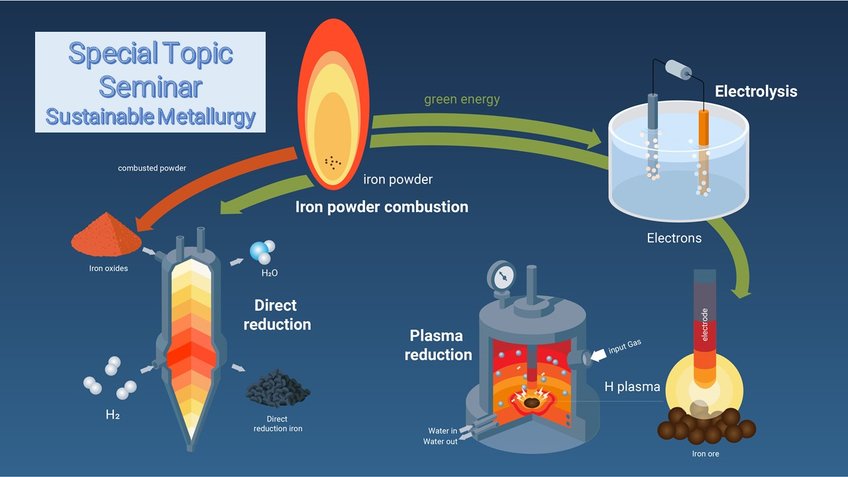
Prof. Wangzhong Mu is a Senior Lecturer (Docent) in the Department of Materials Science and Engineering at KTH Royal Institute of Technology, Stockholm. His research focuses on sustainable metallurgy, microstructure physics, and alloy design. He leads the thermo-physical property analysis section in the Hultgren Lab and is affiliated with Digital Futures at KTH. Educations: PhD in Materials Science, KTH Royal Institute of Technology (2015) MSc/Bachelor's in Materials Science, Northeastern University, China Research Interests: Inclusion engineering and microstructure-property correlations in steels High-entropy alloy design using digital tools (AI/thermodynamic modeling) In-situ characterization via confocal microscopy and multiscale analysis Recycling-oriented steel production and CO2 reduction strategies Grants/Projects (selected): SSF Strategic Mobility Grant (2023-2024): Clean steel for sustainable future VINNOVA Mobility Grant (2022-2024): Hydrogen-based metallurgy STINT Project (2022-2023): Inclusion engineering for green steel EIT RawMaterials (ENDUREIT, 2019-2021): Durable steels at intermediate temperatures Labs/Teams: Hultgren Lab (materials characterization), Digital Futures (AI-driven metallurgy), and international collaborations with Hanyang University (South Korea), IIT Bombay (India), and Tohoku University (Japan).
Prof. Alexander Onysko is a full-time Professor and Head of the Institute of English and American Studies at the University of Klagenfurt's Faculty of Cultural and Educational Sciences. His academic roles include membership in the Curricular Commission for English and American Studies and the Faculty Conference. His research focuses on cognitive linguistics, sociolinguistics, and world Englishes, with particular interest in language contact, multilingualism, and conceptual metaphors. Recent research projects explore interdisciplinary topics like media literacy, swarm intelligence in robotics, and sustainable business ecosystems. Notable publications in 2025 address online political avoidance, robotic exploration algorithms, and healthcare workforce retention during pandemics. He actively contributes to academic administration and has supervised multiple institutional innovation projects. His work bridges linguistic theory with practical applications in education and technology-driven solutions.
Tapan Mehta is a tenured Professor and Vice Chair for Research in the Department of Family and Community Medicine at the University of Alabama at Birmingham (UAB). He also holds appointments in the School of Health Professions - Health Services Administration and multiple research centers including the Comprehensive Arthritis, Musculoskeletal, Bone and Autoimmunity Center (CAMBAC), Center for Clinical and Translational Science (CCTS), and Center for Outcomes and Effectiveness Research and Education (COERE). His research spans health services, biostatistics, and data analytics with a focus on obesity, cardiometabolic conditions, disability, and rehabilitation. Dr. Mehta earned his PhD in Biostatistics and Masters in Electrical Engineering from the University of Alabama at Birmingham. His educational background combines engineering principles with statistical methodology, providing a unique foundation for his research in health services and outcomes. His research interests center on health services and outcomes research related to cardiometabolic conditions (diabetes and obesity), disability, and rehabilitation. He specializes in pragmatic study design application and development, population health initiatives, and analytics for large datasets. His work often involves developing and testing interventions for weight management, diabetes care, and physical activity promotion in diverse populations, including those with mobility disabilities. He has particular expertise in telehealth interventions, adaptive trial designs, and analyzing large existing datasets to answer critical health services questions. Analysis of Dr. Mehta's recent publications reveals a strong focus on adaptive intervention strategies for obesity and cardiometabolic conditions, telehealth delivery of care for people with disabilities, and innovative methods for improving healthcare quality. His work spans clinical trials, machine learning applications, and qualitative studies to understand patient experiences. A consistent theme across his research is the development of personalized, accessible interventions that can be implemented in real-world settings, particularly for underserved populations. Creativity is a Decision Faculty Contest Award (2016) Dr. Mehta serves as a PI and/or co-investigator on numerous research studies funded by NIH, NIDILRR, and PCORI. His grants portfolio includes the NIH-funded Nutrition Obesity Research Center Behavioral Science and Analytics Core and the CDC-funded Data Coordinating Center for the National Center on Health Physical Activity and Disability. He has mentored multiple PhD students, serving as committee chair for several dissertations in rehabilitation science and health services administration. His collaborative approach is evident in his numerous multi-institutional projects focused on improving health outcomes for people with disabilities and chronic conditions. Dr. Mehta leads several research initiatives including the Research Collaborative in the School of Health Professions and co-leads the NORC Behavioral Science and Analytics Core. His work often involves interdisciplinary teams spanning medicine, public health, engineering, and computer science. He has developed and tested numerous telehealth interventions including Movement-to-Music programs, digital coaching platforms, and AI-powered diabetes management tools designed specifically for rural and underserved populations.
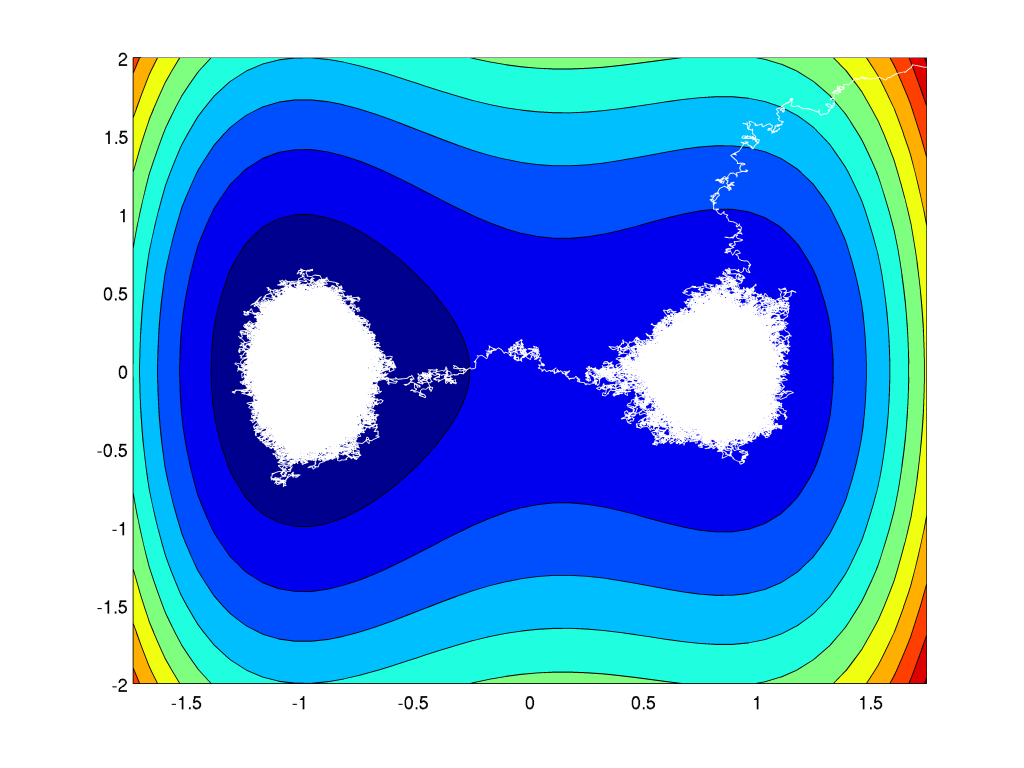
André Schlichting is a Full Professor of Applied Analysis at the University of Ulm, leading the Institute of Applied Analysis since October 2024. Previously, he served as an Associate Professor for Applied Mathematics at the University of Münster (2020–2024) and held postdoctoral and visiting professor roles at institutions including the University of Bonn and RWTH Aachen. His research focuses on the qualitative analysis of complex systems, combining methods from partial differential equations, stochastic analysis, and numerical analysis. Key interests include metastability in statistical mechanics, phase transitions, variational methods, and the longtime behavior of dissipative systems. Education: Habilitation (Facultas Docendi), University of Bonn, 2020 (Phase Transitions in Interacting Systems) PhD in Mathematics, Universität Leipzig, 2012 Diploma in Mathematics, TU Freiberg, 2008 Studies in Mathematics at University of Pavia (Italy) and TU Freiberg Research Interests: His work bridges applied mathematics and theoretical physics, addressing problems in statistical mechanics, stochastic processes, and machine learning. Key areas include: Metastability in molecular and statistical mechanics systems Coarsening and nucleation phenomena in interacting particle systems Variational methods for dissipative evolution equations Entropy methods and functional inequalities (spectral gap, log-Sobolev) Gradient flows and their limits in continuum and discrete settings Discrete and nonlocal dynamics on graphs and data sets Recent Article Trends: His recent work emphasizes gradient flow structures, discretization schemes for PDEs, and metastability in stochastic systems. Notable contributions include analysis of the exchange-driven growth model, McKean-Vlasov equations on manifolds, and covariance-modulated optimal transport. These studies highlight interdisciplinary approaches to bridging discrete and continuum dynamics. Labs/Teams: He leads the Applied Analysis group at Ulm University, focusing on collaborative research in PDEs, stochastic processes, and numerical methods. Active participation in initiatives like the Hausdorff Trimester Program (Bonn) underscores his role in fostering interdisciplinary research networks.
Stephen Ramsey, an Associate Professor at Oregon State University, holds dual appointments in the School of Electrical Engineering and Computer Science (College of Engineering) and the Department of Biomedical Sciences (Carlson College of Veterinary Medicine). With a PhD in Physics from the University of Maryland, his postdoctoral training in computational genomics at the University of Washington, and professional experience at the Institute for Systems Biology and Center for Infectious Disease Research, Ramsey bridges computational methods with biomedical applications. Education : Ph.D., Physics, University of Maryland; M.S., Physics, University of Maryland; Sc.B., Mathematical Physics, Brown University Ramsey specializes in computational systems biology , focusing on bioinformatics , biomedical knowledge graphs , and precision medicine . His research integrates machine learning , gene regulatory network modeling , and multi-omics data analysis to address challenges in rare disease diagnostics , drug monitoring , and inflammatory disease mechanisms . Current work includes AI-driven biomedical translation and electrochemical biosensor development for non-invasive diagnostics . Recent publications highlight knowledge graph applications in translational biomedicine , causal network inference in clinical-environmental data integration , and cross-species cancer transcriptomics . His team develops tools like RTX-KG2 and PloverDB to standardize biomedical data sharing and semantic reasoning . Scientific Awards : 2019 Zoetis Award (Carlson College of Veterinary Medicine) 2016 NSF CAREER Award 2016 PhRMA New Investigator Award 2010 NIH K25 Mentored Quantitative Research Award Ramsey advises in computational biology courses (CS 446/546) and contributes to biomedical AI through projects like mediKanren for rare disease diagnostics . His NSF-funded research explores gene expression noise and regulatory network dynamics , while NIH and PhRMA grants support his translational medicine initiatives. He leads the Ramsey Laboratory , which develops graph-based reasoning tools for biomedical data translation and multi-omics integration . The lab's work spans comparative oncology models, electrochemical biosensors , and knowledge graph infrastructure for clinical decision support .
Dr. Xiu Yao is an Associate Professor in the Department of Electrical Engineering at the University at Buffalo (UB), School of Engineering and Applied Sciences. She joined UB in 2015 and has held positions such as a research engineer at the University of Dayton Research Institute and a research intern at ABB Corporate Research Center. Her research focuses on power electronics, microgrid control, high-voltage DC transmission, and DC arc fault detection. Dr. Yao has received the 2016 US Air Force Summer Faculty Fellowship award for her work at Wright-Patterson Air Force Base. Education includes a PhD in Electrical Engineering from The Ohio State University (2015), an MS from Xi'an Jiaotong University (2010), and a BS from the same institution (2007). Her work emphasizes practical applications like modular multilevel converters and fusion power plant systems. Recent publications highlight advancements in DC microgrid security, wide-bandgap semiconductor devices (e.g., Ga2O3), and fault detection algorithms. Her research trends reflect a strong focus on integrating cybersecurity into power systems, optimizing HVDC systems, and enhancing fault detection through machine learning and observers. Awards and honors underscore her contributions to defense-related power systems. While no grants are explicitly listed, her work aligns with high-impact areas like renewable energy integration and high-voltage engineering.
Dr. Emili Balaguer-Ballester is an Associate Professor in Computational Neuroscience at Bournemouth University, UK. He co-champions the Interdisciplinary Neuroscience Research Centre and serves as Senior Fellow of the Higher Education Academy. His research spans computational neuroscience, machine learning, and virtual reality applications, with collaborations across Europe (University of Barcelona, Heidelberg University, IDIBAPS, Polyra) and North America (Indiana Purdue University, University of British Columbia). PhD in Physics (Cum Laude) from University of Valencia (2001) MSc in Neuroscience and Biology of Behaviour from University of Seville (2004) Research focuses on cortical network dynamics, mesoscopic auditory cortex modeling, top-down modulation in cognition, and affective computing in VR. His work combines nonlinear time series analysis with neurodynamic modeling to study spontaneous and task-related brain activity states. Recent publications demonstrate expertise in causal inference, neuroevolutionary optimization, and affective state detection using EMG/PPG sensors in VR environments. Collaborators include neuroscience labs (Sanchez-Vives, Durstewitz) and tech companies (Sony London, Emteq). PhD thesis award - Culture Institute 'Juan Gil-Albert', Spain (2001) Senior Fellow Higher Education Academy (2020) Secured major grants including Royal Society funding for cortical network modeling (2022), Human Brain Project ERC support for neuromorphic hardware (2022), and Santander Bank research travel grants (2016). Supervised 14 PhD students through projects involving data streams, VR immersion, and cortical dynamics. Labs include Balaguer Lab (GitHub), Interdisciplinary Neuroscience Research Centre, and collaborations with Human Brain Project. Teaching encompasses doctoral-level neuroscience, MSc data analytics, and undergraduate systems design courses.