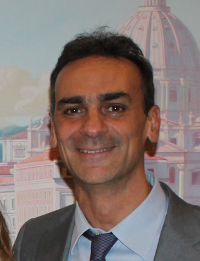
Francesco Pilati is an Associate Professor at the Department of Industrial Engineering, University of Trento, where he serves as local coordinator for the scientific field ING-IND/17 (Industrial Plants and Logistic Systems). He chairs the research group on Industrial Plants, Production Systems, and Logistics, and teaches courses in Industrial Plants and Design of Digital Production and Assembly Systems. As coordinator of the Master's program in Management and Industrial Systems Engineering and University Coordinator for the EIT double degree in Zero-Defect Manufacture, Pilati bridges academic leadership with advanced manufacturing research. He has also served as Invited Lecturer at universities in Vienna and Göttingen. His research focuses on integrating environmental sustainability with technical-economic criteria through multi-objective optimization and impact assessment. Key areas include: Distribution networks and warehousing systems Manufacturing and assembly line design Hybrid energy production systems Digitization of manual production processes using depth cameras Recent publications highlight applications of Industry 4.0 technologies to pandemic safety, logistics optimization, and smart manufacturing. Pilati has received significant recognition including the Philip Morris Italia Empowering Research Award (2016) and Autostrade per l'Italia academic recognition. His editorial contributions include guest editing special issues on Digital Twins and Smart Factories in Q1 journals.
Rita Cucchiara is a Full Professor at the Department of Engineering 'Enzo Ferrari' of the University of Modena and Reggio Emilia. She leads the AImageLab research laboratory, part of the Artificial Intelligence Research and Innovation Center (AIRI) in Modena. Her research focuses on Computer Vision, Pattern Recognition, Machine Learning, and Multimedia, with applications in video surveillance, medical imaging, human-centered AI, and generative models. She is actively involved in interdisciplinary projects like ELIAS (European Lighthouse for AI Sustainability) and ELSA (European Lighthouse on Secure AI). Her recent roles include being elected Rector of the University of Modena and Reggio Emilia in 2025. She has organized and participated in major AI events, including workshops at NeurIPS, CVPR, and ECCV, and has contributed to advancements in multimodal models, deepfake detection, and trustworthy AI. Education details are not explicitly provided, but her extensive academic and research experience at the University of Modena underscores her expertise. She collaborates with institutions like NVIDIA, CINECA, and industry partners such as Digital Design and NVIDIA's AI Technology Center. AImageLab's projects include developing systems for medical imaging, ethical AI, and generative adversarial networks (GANs) for design surfaces. She co-organizes initiatives like the ELLIS Summer School on Large-Scale AI and contributes to policy discussions on AI ethics and societal impact. Her work spans from foundational research (e.g., vision transformers, continual learning) to applied projects (e.g., DDGan system for surface printing). Key grants and collaborations include the FAIR project and PNRR-M4C2 initiatives. She advises students and researchers in AI, with 7 PhD positions funded under national programs. Her leadership roles in AIRI and AImageLab highlight her commitment to bridging academia and industry, fostering innovation in AI-driven solutions for sustainability and healthcare.
Luca Iocchi is a Full Professor at Sapienza University of Rome, where he teaches in the Master in Artificial Intelligence and Robotics program. He is affiliated with the Department of Computer, Control, and Management Engineering and the Faculty of Engineering of Information, Computer Science and Statistics. Iocchi serves as an Associate Editor for Artificial Intelligence Journal and has been the scientific coordinator of Spoke of PNRR project FAIR (Future AI Research). His educational background includes: Master in Engineering in Computer Science (Laurea in Ingegneria Informatica) cum Laude, Sapienza Università di Roma, 1995 PhD in Engineering in Computer Science (Dottorato in Ingegneria Informatica), Sapienza Università di Roma, 1999 Professor Iocchi's research focuses on cognitive robotics, task planning, multi-robot coordination, robot perception, robot learning, human-robot interaction, and social robotics. His work has significant applications in security, surveillance, and environmental monitoring. He has published over 200 referred papers with an h-index of 46 (Google Scholar). His research bridges theoretical AI with practical robotic systems operating in real-world environments, with a particular emphasis on developing intelligent systems that can interact effectively with humans. His recent publications show a strong trend toward multi-agent reinforcement learning, trust modeling in human-AI teams, UAV coordination, and planning systems. There's a clear focus on making robotic systems more reliable, efficient, and capable of operating in complex real-world scenarios like healthcare facilities and smart cities. His work increasingly integrates formal planning approaches with machine learning techniques. Professor Iocchi has received numerous scientific awards: 1999 Top Paper Award WebNet'99 2006 Best Paper Award RoboCup 2006 2008 Best Robotics Demo Award AAMAS 2008 2014 Best Paper Award For Engineering Contribution RoboCup 2014 2017 RoboCup@Home SSPL 2017 - 3rd place 2018 Canada-Italy Innovation Award 2019 Best Paper Award For Engineering Contribution RoboCup 2019 As an academic advisor, Iocchi has directed the PhD Program in Engineering in Computer Science from 2020 to 2023. He has been Principal Investigator for numerous research projects including SciRoc (European Robotics League), AI4EU (European AI project), BUBBLES, AIPlan4EU, ROSITA, Trust Your Agents, and FAIR. His research has been supported by EU H2020 programs, national grants, and industry collaborations, demonstrating strong connections between academia and practical applications. Professor Iocchi is actively involved with the Cognitive Cooperating Robots Lab (LabRoCoCo) and is a key member of the RoboCup Federation, having served as Vice-President from 2019 to 2024. He has played a significant role in benchmarking domestic service robots through RoboCup@Home and the European Robotics League Service Robots (ERL-SR), which he helped establish. His leadership in organizing international scientific robot competitions has been instrumental in advancing the field of service robotics.
Sandra Paterlini is a Full Professor in the Department of Economics and Management at the University of Trento, Italy. She holds academic roles including Co-Chair of the ERCIM Working Group on Optimization Heuristics and Vice-Chair of the IEEE Task Force on Portfolio Optimization. Her career includes visiting positions at institutions such as the University of Minnesota and Ludwig-Maximilians-Universität München. She earned a PhD in Computational Methods for Financial and Economic Decisions from the University of Bergamo, an MSc in Financial Mathematics from the University of Warwick, and a Laurea in Economics from the University of Modena and Reggio E. Her research focuses on quantitative finance, risk management, portfolio optimization, and network analysis, with applications to ESG, systemic risk, and financial stability. Key research contributions include methodologies for sparse graphical modeling, systemic risk analysis, and ESG scoring frameworks. She has received multiple awards for research excellence and serves on editorial boards of journals like Computational Statistics & Data Analysis and Frontiers in Applied Mathematics and Statistics . Her work bridges academia and policy, with contributions to the European Central Bank’s Financial Stability Directorate and involvement in global conferences on computational finance and econometrics.
Stefano Leonardi is a Full Professor in the Department of Computer, Control and Management Engineering Antonio Ruberti at Sapienza Università di Roma. His research focuses on Algorithm Theory, Algorithms and Data Science, and Economics and Computation. He leads the ERC Advanced Grant project AMDROMA, exploring algorithmic mechanisms for online markets. He has held roles as Conference Chair for STOC 2021, WWW 2015, and FUN 2018, and coordinates the Sapienza School of Advanced Studies (2016-2018). His work spans approximation algorithms, online algorithms, and mechanism design. Awards include the ERC Advanced Grant and EATCS Fellowship. His research interests emphasize foundational algorithmic problems in web-based markets, leveraging rigorous design and large-scale data analysis. Recent projects include ALGADIMAR (PRIN 2019-2022) for digital market algorithms. He chairs the Highlights of Algorithms conference series and serves on program committees for top venues like EC, ICALP, and SODA. His lab focuses on web algorithmics and data mining, addressing challenges in online labor markets and fair division. Leonardi's academic contributions include over 100 publications, with recent work on fair algorithms, prophet inequalities, and mechanism design in auctions. He has pioneered methods for submodular optimization, online learning, and multi-agent systems. Grants and awards reflect his leadership in bridging theory with real-world applications, particularly in digital economies. Grants: ERC Advanced Grant (2018-2023), PRIN ALGADIMAR (2019-2022) Leadership: Chair of ACM STOC 2021, WWW 2015, and 9th FUN Conference Labs/Teams: Laboratory on Web Algorithmics and Data Mining Key Projects: AMDROMA (algorithmic mechanisms), ALGADIMAR (digital markets)
Gianfranco Chicco is a Full Professor at the Politecnico di Torino , Italy, within the Department of Energy (DENERG). He serves as Scientific Director of the Electrical Power Systems research group and the Turin unit of the ENSIEL Consortium. A Fellow of IEEE (since 2018), he has held editorial leadership roles as Editor-in-Chief of Sustainable Energy, Grids and Networks and Subject Editor of Energy , while chairing major conferences like IEEE ISGT Europe 2017 and UPEC 2020. Education : Laurea (cum laude) in Electrical Engineering (1987), Ph.D. in Electrical Engineering (1992), Doctor Honoris Causa (2017, Polytechnic University of Bucharest; 2018, Technical University 'Gheorghe Asachi' of Iasi). Research Interests : Focus on power transmission and distribution systems , distributed energy resources , and multi-energy smart grids , with applications in artificial intelligence , load management , and power quality . His work addresses technical, economic, and environmental aspects of distributed generation and smart grid sustainability . Publications Trends : Recent articles emphasize photovoltaic power optimization , dynamic grid modeling , and multi-energy system coordination , reflecting expertise in renewable integration , clustering algorithms , and adaptive control . Key subfields include voltage stability , load forecasting , and blockchain for energy trading . Awards : IEEE Fellow (2018-) Best Paper Awards at SEST (2018, 2020) Doctor Honoris Causa (2017, 2018) 'Giancarlo Vallauri' Degree Prize (1988) Advising and Grants : Supervises PhD students in power converters , renewable integration , and high-voltage measurement methodologies . Leads European projects like H2020 MIGRATE and OSMOSE, focusing on grid resilience , clustering-based network planning , and multi-energy sustainability .
Riccardo Raheli is a Full Professor at the University of Parma , Department of Engineering and Architecture, with a career spanning over three decades in Information and Communication Technologies (ICT). He has served as Chair of the Councils for Telecommunications and Communication Engineering programs, and as representative of the University of Parma in CNIT and its Members' Assembly. Education: Laurea in Electronic Engineering (University of Pisa, 1983), M.Sc. in Electrical and Computer Engineering (University of Massachusetts, 1986), Postgraduate Diploma (Scuola Superiore Sant'Anna, 1987) Key Roles: President of Degree Councils (2002-2018), CNIT Committee Member (2000-2005), Editorial Board member for IEEE Transactions, Springer and MDPI journals His research bridges telecommunications , digital signal processing , and healthcare applications , producing extensive international publications and industrial patents. He has co-authored monographs including Detection Algorithms for Wireless Communications (Wiley, 2004) and LDPC Coded Modulations (Springer, 2009). Recent article trends show interdisciplinary work in automotive stress monitoring (IoT/Matlab-based systems), video processing for healthcare (neonatal seizures, respiratory monitoring), and acoustic field control (microphone virtualization, personal sound zones). His work spans machine learning applications in automotive systems, stochastic acoustic modeling , and power-line communications . Scientific Leadership : Co-Chair for IEEE conferences (ICC 2010, GLOBECOM 2011, ISPLC 2020) Editorial roles in 7+ international journals Grants & Collaborations : Led industrial patents in communications systems Coordinated CNIT Technical Reports series (2025) He teaches Wireless Communications and Digital Signals Laboratory , emphasizing Matlab/Simulink proficiency. His laboratory sessions focus on practical implementation of signal processing algorithms, requiring full software installation on personal devices.
Matteo Brunelli is Associate Professor of “Mathematical Methods of Economics and Actuarial and Financial Sciences” at the University of Trento , Department of Industrial Engineering, and Adjunct Professor (docent) at Lappeenranta University of Technology , Finland. He is nationally habilitated as Full Professor in Italy and has held long-term visiting positions at Berkeley, Turku, Auckland, JAIST and Binghamton. Education: Ph.D. (Doctor of Science) in Information Technologies, Åbo Akademi University, Finland, 2011 – graded Eximia cum laude approbatur M.Sc. in Economics, University of Trento, 2007 – grade 110/110 cum laude B.Sc. in Economics, University of Trento, 2005 Research focus: Brunelli’s work sits at the intersection of multi-criteria decision analysis , operations research and computational optimisation . He develops axiomatic foundations and algorithms for pairwise comparison matrices , consistency indices , the best-worst method and fuzzy preference relations , and applies them to energy planning, sustainable inventory, maintenance scheduling, 3-D printer selection, and blockchain governance. His 2023-2025 articles reveal intensified interest in uncertainty modelling (Dempster-Shafer theory), bi-objective optimisation of inventory and maintenance, and group decision protocols that integrate probabilistic or active-learning components, demonstrating both methodological depth and practical relevance. Scientific awards & grants: Academy of Finland Postdoctoral Researcher grant (€254 670, 2014-2017) Claudio Dematté Research Grant (€19 000, 2008) Teacher of the Year Award, Aalto University (2013 – both Spring & Autumn semesters) Bernard Roy Award 2021 for outstanding contribution to Multiple Criteria Decision Aiding (under-40 category) Supervision & funding: While specific doctoral students are not listed, Brunelli currently supervises graduate theses at Trento and has continuously held competitive national grants. His Academy of Finland project “Consistency of valued preference relations for decision analytics methods” financed three years of full-time research and international collaboration. Editorial & community roles: He serves on the editorial boards of International Journal of General Systems and Mathematical and Computational Applications , and acts as area editor for Journal of Multi-Criteria Decision Analysis , positioning him among the key gatekeepers of the MCDA community.
Daniele Caviglia serves as Full Professor in the Department of Naval, Electrical, Electronic and Telecommunications Engineering at the University of Genoa, Italy. He holds the position of Coordinator for the Master's Degree in Electronic Engineering and teaches advanced courses including Radio Frequency Electronics, Electronic Devices, and Electronic Systems for Telecommunication across both Bachelor's and Master's programs. His research program focuses on ultra-low-power electronics for biomedical and environmental applications, with three primary thrusts: (1) nW-scale circuit design for bio-signal processing and neural interfaces, (2) advanced beamforming techniques in medical ultrasound imaging, and (3) energy harvesting systems for autonomous environmental monitoring. His group has pioneered inverter-based OTAs achieving sub-10nW operation and developed novel genetic algorithm-optimized apodization methods for plane-wave ultrasound imaging. Recent publications (2024-2025) reveal strong thematic continuity with increasing emphasis on practical implementations - particularly sea wave energy harvesters for environmental buoys and satellite microwave link systems for rainfall monitoring in urban settings. The work consistently bridges fundamental circuit innovation with real-world medical and environmental applications, maintaining high impact in IEEE and Elsevier journals.
Andrea Passerini is a Full Professor in the Department of Information Engineering and Computer Science at the University of Trento, Italy, where he also serves as Coordinator of the PhD programme in Information Engineering and Computer Science (Ministerial Decree 45/2013). His academic footprint spans multiple departments including Mathematics, Sociology, Cellular Biology, and Industrial Engineering, reflecting deep interdisciplinary engagement across computational sciences and life sciences. His research centers on Machine Learning and Data Mining with specialized expertise in Neuro-Symbolic AI , Probabilistic Reasoning , and Statistical Relational Learning . He pioneers methods for graph-based learning, medical AI applications, and explainable systems, with significant contributions to bioinformatics (particularly RNA-protein interactions) and healthcare diagnostics. His work bridges theoretical rigor with practical implementations in critical domains. Analysis of his 2025 publications reveals dominant trends in neuro-symbolic integration for graph data, human-AI collaboration in medical decision-making, and robust recommender systems. His research increasingly focuses on interpretable AI for high-stakes applications like surgical planning and physician support, while advancing foundational techniques in graph neural networks and concept-based modeling. As PhD programme Coordinator, Professor Passerini mentors doctoral candidates across AI and computer science disciplines. His collaborative network extends to medical researchers at CIBIO (Cellular, Computational and Integrative Biology department) and industrial partners, though specific lab structures aren't documented in available materials. Current projects emphasize medical AI validation, temporal network modeling, and LLM integration with structured reasoning frameworks.
Jost-Diedrich Graf Von Hardenberg is a Full Professor in the Department of Environmental, Land and Infrastructure Engineering (DIATI) at the Polytechnic University of Turin. He serves as the Energy and Climate Change Area Coordinator and is a Scientific Advisor of the HPC-AI Advisory Council. His research focuses on climate science and geophysical fluid dynamics, with significant contributions to understanding climate change impacts and Earth system modeling. Professor Von Hardenberg's research interests span multiple areas of climate science, including climate dynamics, geophysical fluid mechanics, hydrological cycle analysis, numerical climate modeling, and precipitation downscaling. His work particularly emphasizes climate tipping points and extremes, Rayleigh-Bénard convection in geophysical contexts, high-resolution Earth-system climate modeling, and stochastic approaches to precipitation downscaling. His research integrates theoretical, computational, and observational approaches to address fundamental questions about climate system behavior and change. His recent publications demonstrate a strong focus on Atlantic Meridional Overturning Circulation (AMOC) dynamics, climate extremes in Alpine regions, urban climate effects, and interdisciplinary applications of climate science to ecological and conservation challenges. His work bridges fundamental climate dynamics with practical applications for climate adaptation and environmental management. Among his notable recognitions are the Research in Paris award from the Maire de Paris (2009) and Fellowships at the London School of Economics and Political Science (2001-2002, 2004-2006). He has participated in numerous research networks including the European Geosciences Union section 'Nonlinear Processes in Geophysics' (2004-2012), the EC-Earth Consortium (2012-present), and COST Action ES0805 TERRABITES 'The terrestrial biosphere in the earth system' (2010-2014). Professor Von Hardenberg actively supervises PhD students including Marianna Albanese, Maria Clara Corda, Sara Filippini, and Jacopo Grassi, among others. He leads multiple significant research projects such as ROTurb (Resolving Ocean Macroscale Turbulence), LocClima (Impact of LOCal conditions on Italian microCLIMAtes), CRAWL (Carbon Release in A Warming cLimate), and CliMOC (Climate Impacts of the Atlantic Meridional Overturning Circulation), with funding from EU, national programs, and commercial contracts. He is a member of the Interdepartmental Center SmartData@PoliTO - Big Data and Data Science Laboratory, where he contributes expertise in climate data analysis and modeling. His collaborative work extends to multiple institutions through non-commercial agreements with the National Research Council and various international research consortia focused on climate system understanding.
Andrea Appolloni is an Associate Professor at the Department of Management and Law, University of Rome Tor Vergata. His academic career focuses on Management with emphasis on Sustainable Supply Chain Management , Digital Transformation , and Circular Economy . His research explores the intersection of technological innovation and sustainability, particularly through topics like AI in Logistics , Green Procurement , and Policy Optimization . Publications span both theoretical frameworks and empirical studies in China, Italy, and Malaysia, with a strong focus on environmental impact and organizational performance. Recent work includes digital twin applications for human-AI collaboration, blockchain integration in sustainable supply chains, and analyzing barriers to circular economy adoption. His 15 most recent articles (2025-2022) demonstrate a trend toward combining Artificial Intelligence , Operations Management , and Environmental Governance .
Marco Martino Rosso is a Research Fellow at the Department of Structural, Building and Geotechnical Engineering (DISEG) at the Polytechnic University of Turin, where he also serves as an external lecturer and teaching assistant in both DISEG and the Department of Mathematical Sciences (DISMA). He is affiliated with the Doctoral School (SCDOTT) and completed his PhD under the supervision of Professor Giuseppe Carlo Marano. His academic work bridges civil engineering with advanced computational methods, focusing on structural health monitoring, optimization, and machine learning applications. His research interests center on Structural Health Monitoring , Machine Learning in Civil Engineering , Earthquake Engineering , Structural Optimization , Operational Modal Analysis , and AI-driven diagnostics for infrastructure. He applies deep learning, neural networks, and hybrid modeling techniques to problems such as damage detection, post-earthquake assessment, tunnel and bridge monitoring, and dynamic analysis of timber and concrete structures. His recent publications, spanning from 2023 to 2025, demonstrate a strong trend toward integrating artificial intelligence with structural engineering, particularly in automating modal analysis, optimizing structural forms, and enhancing seismic resilience. These works appear in journals like Mechanical Systems and Signal Processing , Computers & Structures , and Bulletin of Earthquake Engineering , as well as in proceedings of international conferences such as IOMAC and EWSHM. Marco Rosso has not received any explicitly mentioned scientific awards in the provided text. However, his extensive publication record and active role in research projects indicate strong recognition in his field. He has contributed to teaching as a course collaborator in subjects including Dynamic Identification of Structures , Statistics , Construction Techniques , and Safety Assessment and Retrofitting of Structures . He has also been involved in the ARTISTE 2025 Summer School, indicating engagement in advanced training programs. While no formal lab or team name is specified, his frequent collaborations with researchers such as Angelo Aloisio, Giuseppe Carlo Marano, and Jonathan Melchiorre suggest he is part of a vibrant research group focused on intelligent structural systems and data-driven engineering at Politecnico di Torino.
Luca Collini is a Professor at the Department of Industrial Systems and Technologies Engineering (DISTI) at the University of Parma. He teaches courses across both Mechanical Engineering and Management Engineering programs, including MACHINE DESIGN AB (I MOD) (3rd year, A.Y. 2025/2026), Mechanics of Materials and Structural Integrity (2nd year, A.Y. 2024/2025), and Principles of Mechanical and Structural Design (1st year, A.Y. 2024/2025). Research Interests: His work focuses on mechanical design optimization, additive manufacturing, and simulation techniques. Key areas include pneumatic actuator design , FDM 3D printing parameters , and Design-to-Value (DtV) methodology . He collaborates on projects involving virtual design integration, structural integrity analysis, and sustainable manufacturing practices. Key Publications Trends: Recent articles emphasize hybrid design approaches combining analytical formulas and simulations, multi-objective optimization using machine learning, and DtV strategies for industrial applications. Collaborative research with Maiocchi, Nicoletto, and colleagues demonstrates interdisciplinary focus on mechanical systems and advanced manufacturing.
Umberto Desideri is a Full Professor of Thermal Machines at the University of Pisa since November 2014, following his tenure as Full Professor at the University of Perugia from 2004 to 2014. He has held leadership roles, including Head of the Department of Engineering at the University of Perugia (2014) and Head of the Department of Energy, Systems, Territory and Construction Engineering at the University of Pisa (2016–2020). He is actively involved in editorial boards, such as the ASME Journal of Fuel Cell Science and Technology (2005–2017), Journal Applied Energy (since 2007, Associate Editor from 2011, Senior Editor since 2022), and Journal Applied Thermal Engineering (since 2013). Additionally, he co-founded two spin-off companies in 2005: Tecnologie per la riduzione delle emissioni engineering srl and Biomasse e nuove tecnologie srl . Desideri obtained his MSc in Mechanical Engineering from the University of Florence in 1988 and his PhD in Energy Engineering from the same university in 1993. His academic career includes roles as Assistant and Associate Professor at the University of Perugia (1992–2004) before becoming a Full Professor there in 2004. His research focuses on renewable energy systems (geothermal, solar, biomass), hydrogen and fuel cell technologies, carbon capture and storage, and energy-efficient buildings. He explores polygeneration systems, sustainable energy storage, and decarbonization strategies for industries like tissue paper production. Recent work emphasizes the integration of renewables with thermal storage and CO2 utilization in circular energy systems. Awards: Fellow of the American Society of Mechanical Engineers (since 1994) Listed in the Top Italian Scientists in Engineering Recognized as a World Top 2% Cited Scientist In advising and grants, he has supervised over 200 Master’s theses and led EU-funded projects such as: H2020 COMPBAT (2020–2024): Computer-aided design for next-gen flow batteries H2020 Regen-by-2 (2020–2027): Multi-energy systems using two-phase fluids LIFE Augia (2020–2023): Sewage oxy-gasification for chemicals production He directed the Fuel Cell Laboratory (2007–2014) and Wind Tunnel (2010–2014) at the University of Perugia. His current work at the University of Pisa’s DESTEC department addresses hydrogen technologies, energy transition, and sustainable systems.