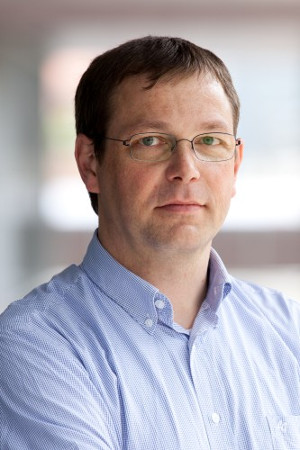
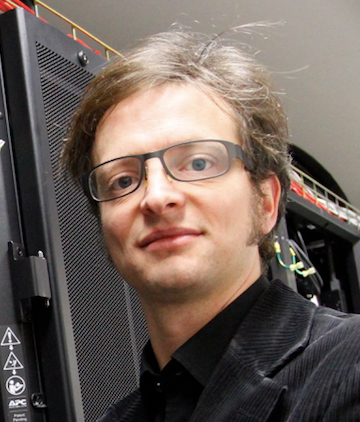
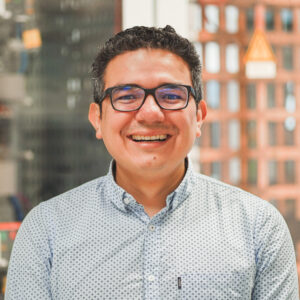
Geert Deconinck is a full professor at KU Leuven , leading the Electrical Energy Systems and Applications (ELECTA) research group within the Department of Electrical Engineering (ESAT). He also serves as scientific leader of the EnergyVille research center's algorithms domain, focusing on smart electrical networks and thermal systems. M.Sc. and Ph.D. from KU Leuven Head of ELECTA since 2012 (10 professors, 8 postdocs, 70+ PhDs) Over 8 million EUR research budget in last 5 years 44 completed PhDs and 10 current advisees IEEE Transactions editorial board member His research spans smart grid architectures , distributed control , and cyber-physical security , with recent focus on EV-grid integration , renewable energy democratization , and multi-carrier energy systems . Current projects include: Smart Charging - E-Mobility meets Renewable Energy Early Detection and Defense Systems for Smart Grids Open-source P2P energy sharing platforms Microgrid control strategies for PV-battery systems Awarded IET Fellow and IEEE Senior Member status, his work combines machine learning with power systems engineering through both theoretical modeling and experimental validation . He has contributed over 575 publications with 9800+ Google Scholar citations.
Tom Dhaene is a Full Professor at Ghent University, affiliated with the Department of Information Technology (INTEC-IDLab) within the Faculty of Engineering and Architecture (FEA). He also holds a position at imec, a research and innovation hub in nanoelectronics and digital technologies. Research Unit: Internet Technology and Data Science Lab (IDLab) Academic Rank: Full Professor Affiliations: Ghent University, imec His research focuses on data-efficient machine learning, surrogate modeling, Gaussian processes, Bayesian optimization, and system identification. He has developed widely used software tools such as the SUMO toolbox and ooDACE, and holds 5 U.S. patents. His work bridges theoretical advancements with practical applications in engineering and biomedical domains. Recent publications highlight his contributions to physics-informed machine learning, antenna design, microwave optimization, and healthcare applications. Notably, he explores Bayesian active learning, multi-objective optimization under uncertainty, and efficient modeling techniques for complex systems. Prof. Dhaene's research has been recognized through over 500 peer-reviewed publications and collaborations across academia, industry, and government sectors globally.
Karel Van Acker is a full professor in the Faculty of Engineering Science at KU Leuven , leading the Sustainable Materials Processing and Recycling (SeMPeR) research group. His work focuses on integrating environmental and economic sustainability assessments, particularly for metallurgical residues and circular economy systems. Head of SeMPeR group Contact person for SeMPeR at Arenberg campus Head of Subdivision 39, Brussels Campus Research areas include: Circular Economy: Monitoring systems, stock-flow models, and business models Sustainability Assessments: Life Cycle Assessment (LCA), techno-economic analysis, carbon footprinting Resource Valorization: Steel slag mineral carbonation, rare earth reduction, biorefinery processes Key article trends: 2025 works emphasize steel slag carbonation for carbon capture, hydrogen storage technologies, and clothing sufficiency as circular economy strategies 2024 research explores car mobility circularity , AI environmental impacts , and policy integration for circular economy monitors Earlier works (2023-2020) address textile recycling , biomass to biofuels , and landfill mining using system dynamics Teaching responsibilities: Sustainable Materials Management (H00R6A) Environmental Impact Analysis (I0V86A) Material Selection & Sustainability (D0X32A) Global Challenges for Sustainable Society (H0O00A)
Sajib Chakraborty is a Researcher at the MOBI - Electromobility Research Centre and the Department of Electrical Engineering and Power Electronics. His research focuses on condition monitoring, reliability assessment of power electronic systems, and advanced battery management systems (BMS). He has contributed to projects like HARPOONERS and FLEXMCS, aiming to optimize electric powertrain systems and vehicle-to-grid technologies. His work spans over 80 research outputs since 2018, with a strong emphasis on multi-objective optimization, physics-of-failure modeling, and digital twin technologies for electric vehicles. Collaborations include institutions in Europe and beyond, addressing challenges in renewable energy integration and high-voltage electric mobility. Advised 5 Master's theses on topics like DC-DC converter design and SiC MOSFET reliability. Active in editorial roles for IEEE Transactions on Transportation Electrification . Led projects funded by EU grants, totaling € multi-million investments. Key research themes include battery thermal management, EV charging infrastructure, and multi-physics modeling for power electronics reliability.
Maarten Bassier is an Assistant Professor (tenure track) at KU Leuven, affiliated with the Department of Civil Engineering within the Faculty of Engineering Technology. He is based at the Geomatics unit operating at the Ghent and Aalst Campuses. His academic profile combines research, teaching, and institutional service, with significant contributions to the field of digital construction technologies. As senior academic staff, he serves on both the Council of the Faculty of Engineering Technology and the Civil Engineering Department Council, actively participating in institutional governance while maintaining a robust research program focused on Scan-to-BIM methodologies and geospatial applications in construction. Dr. Bassier's research centers on Scan-to-BIM methodologies, which involve converting 3D scans of existing buildings into Building Information Models. His work bridges geomatics, computer vision, and civil engineering, with applications in construction progress monitoring, infrastructure inspection, and heritage documentation. He applies machine learning techniques to automate aspects of the modeling process, particularly semantic segmentation of point clouds and integration of UAV (drone) data. His research increasingly incorporates deep learning approaches for object detection, segmentation, and completion in complex built environments, with practical applications spanning road construction, bridge inspections, and electrical substation modeling. His interdisciplinary approach connects civil engineering with computer science to solve practical construction challenges through digital innovation. Bassier's recent publication record demonstrates a strong focus on automating the Scan-to-BIM process through advanced computational techniques. His work spans multiple application domains while maintaining a consistent methodological thread of integrating sensing technologies with semantic understanding of construction environments. The trajectory of his research shows increasing sophistication in machine learning applications, moving from basic point cloud processing to complex semantic understanding and automated model generation. His publications appear in high-impact journals across civil engineering, remote sensing, and computer vision domains, reflecting the interdisciplinary nature of his work. SESAME - Semantic Segmentation of Electrical Substations and Derived Models for Engineering (2024-2026) - Promotor UAV-assisted bridge inspections (2022-2027) - Co-promotor XR-empowered dynamic reality modeling for AECO applications (2021-2026) - Co-promotor Digitization in road construction: automating as-built models (2020-2026) - Co-promotor SCAN-to-BIM Automation of as-built BIM production through digitization and machine learning (2020-2025) - Co-promotor As a member of the Division Digital and Sustainable Civil Engineering and the Subdivision Geomatics Ghent, Dr. Bassier contributes to KU Leuven's research ecosystem focused on digital transformation in civil engineering. His teaching portfolio includes courses on BIM, industrial measurements, Scan-to-BIM, 3D modeling, and geomatics, preparing the next generation of civil engineers for the digital construction landscape. His work represents the cutting edge of digital construction technologies, with practical applications that address real-world challenges in infrastructure development and maintenance.
Prof. Jan De Beenhouwer is a faculty member at the University of Antwerp, affiliated with the Department of Physics and the imec Vision Lab. His research focuses on advanced computational imaging techniques, particularly in X-ray tomography, phase contrast imaging, and reconstruction algorithms for medical and industrial applications. His primary research interests include: Development of novel X-ray imaging methodologies like edge illumination phase contrast Advanced CT reconstruction algorithms for sparse-view and dynamic systems Integration of deep learning with tomographic reconstruction Industrial applications including defect detection and material characterization Biomedical imaging such as bone structure analysis and tissue modeling Analysis of recent publications (2024-2025) reveals strong emphasis on: Innovations in phase contrast imaging hardware and simulation tools Advanced reconstruction techniques for motion compensation and sparse data AI-powered approaches for industrial inspection and biomedical research Development of open-source tools (CAD-ASTRA) for the tomography community He leads research at imec Vision Lab, focusing on both fundamental imaging physics and practical applications. The lab collaborates extensively with industrial partners on non-destructive testing solutions.
Rajan Filomeno Coelho is a Visiting Professor at the Mechanics of Materials and Constructions department of Vrije Universiteit Brussel, Belgium. His research focuses on structural engineering, composite materials, and sensitivity analysis, with notable contributions to hybrid composite-concrete structures and deployable systems. His work emphasizes multi-objective optimization of structural components and BIM automation , reflecting expertise in computational modeling, material efficiency, and cost-benefit analysis. Key projects include investigations into scissor arches and hybrid beams. He has supervised research such as the 2020 thesis on Automated Classification of BIM Elements Using Supervised Machine Learning , though no scientific awards are documented in the provided texts.
Kristof Cools is a Full Professor at Ghent University's Faculty of Engineering and Architecture , affiliated with the Department of Information Technology and the Internet Technology and Data Science Lab . His research spans computational electromagnetics, integral equations, and finite element methods, focusing on electromagnetic scattering and wave propagation. Research Interests include: Computational Electromagnetics Integral Equations and Boundary Element Methods Domain Decomposition and Preconditioning Antennas, Propagation, and Modeling of Composite Systems His Publications emphasize stable time-domain solvers, multi-trace formulations, and advanced discretization techniques for electromagnetic problems. Notable trends include resonance-free equations, quasi-Helmholtz projectors, and nonlinear surface scattering models. Advisory Roles include supervising doctoral researchers: Cedric Münger Paul Olyslager Quang Huy Nguyen Alessandro Zuccotti Prakash Jay
Hugues Bersini is a Professor at Université Libre de Bruxelles (ULB) and Co-Director of the IRIDIA laboratory, the Artificial Intelligence research laboratory of ULB. His academic career spans over three decades, with significant contributions to the fields of artificial intelligence, complex systems, and biological networks. Bersini earned his MS degree in 1983 and his Ph.D. in engineering in 1989, both from Université Libre de Bruxelles. After working as a researcher with an EEC grant from the JRC-CEE in Ispra (1984-1987), he joined the IRIDIA laboratory at ULB, where he has remained throughout his career, eventually becoming a full professor. His research spans a diverse range of topics within artificial intelligence and complex systems. Bersini is particularly known for his work on modeling and control of complex systems, neural networks, fuzzy control, data mining, autonomous agents, and biological networks. He pioneered the exploitation of biological metaphors, especially from the immune system, for engineering and cognitive sciences applications. His research has evolved to include computational chemistry, immune engineering, cognitive sciences, bioinformatics, and object-oriented technology. In recent years, he has focused on business intelligence applications and public goods through the Brussels Institute FARI. Throughout his career, Bersini has published approximately 300 papers, demonstrating consistent productivity and evolving research interests. His early work focused on optimization algorithms and immune-inspired computing, which gradually expanded to include fuzzy and neuro control systems, biological networks, and more recently, applications to real-world problems through spin-off companies and the FARI institute. His publications show a clear trajectory from theoretical foundations to practical applications, with growing emphasis on interdisciplinary approaches that bridge computer science with biology, chemistry, and cognitive sciences. Bersini has been actively involved in the academic community, having co-organized major conferences including the Parallel Problem Solving from Nature (PPSN), European Conference on Artificial Life (ECAL), European Workshops on Reinforcement Learning (EWRL), and International Competitions on Evolutionary Optimization (ICEO). He also organized tributes to Francisco Varela and the International Conference on Artificial Immune Systems (ICARIS). As an educator, Bersini teaches artificial intelligence, object-oriented programming (C++, Java, .Net, Kotlin, UML, Django/Python), and design patterns to both university students at Solvay and Polytechnic Schools and for industry professionals. He has authored fourteen French books covering computer science fundamentals, complex systems, and the intersection of computer science with other fields. His books range from technical manuals to philosophical explorations of complex systems and emergence. Bersini has coordinated significant research projects including the FAMIMO LTR European Project on fuzzy control for multi-input multi-output processes and participated in ESPIRIT projects NEMORETS and METHODS. His work has led to practical applications through spin-off companies such as Cluepoints, Tevizz, and In Silico DB, and more recently through the Brussels Institute FARI which addresses public goods like mobility, epidemics, access to jobs and schools, and energy transition.
Giovanni Lugaresi is a tenure-track Assistant Professor at KU Leuven's Faculty of Engineering Technology, affiliated with the Department of Mechanical Engineering. He actively contributes to Leven.AI and LIM - KU Leuven Institute for Mobility. Research Focus: His work centers on digital twins for manufacturing systems, with specific emphasis on: Smart de-/remanufacturing systems Process mining integration Circular production systems Human-robot collaboration Real-time simulation Adaptive scheduling frameworks Publication Trends: Recent work demonstrates strong integration of digital twins with AI techniques, focusing on interoperability challenges, decision support systems, and circular economy applications. His research spans theoretical frameworks and practical implementations in smart manufacturing environments. Scientific Contributions: Key publications include: Research manifesto on digital twins for business processes (2024) Optimization frameworks for adaptive demanufacturing Learning curve integration in digital twins Comprehensive handbook chapters on digital twins in rail applications Teaching: Dr. Lugaresi teaches courses in Advanced Operations Management, Total Quality Management, and Operations Management at KU Leuven.
Lieven Eeckhout is a Professor at Ghent University, Belgium, in the Department of Electronics and Information Systems (ELIS), where he leads the PerformanceLab research group. His work spans computer architecture, performance evaluation and modeling, workload characterization, dynamic resource management, CPU/GPU microarchitecture, and sustainability. He has supervised a dozen PhD students and postdocs, with alumni now in academia (e.g., assistant professors at TU Eindhoven, ANU) and industry (e.g., Intel, Huawei). Education : PhD in Computer Science (Ghent University, 2002) Awards : ACM Fellow (2021), IEEE Fellow (2018), 2017 ACM SIGARCH Maurice Wilkes Award, 2017 OOPSLA Most Influential Paper Award, 2024 IEEE CAL Best Paper Award, Distinguished Artifact Evaluation Award at ASPLOS 2024, and multiple Hall of Fame/Top Pick recognitions. Research focuses on computer architecture and hardware/software interface , with recent emphasis on sustainability and processor design . Key projects include the Sniper multi-core simulator and ERC-funded initiatives like LSC (Load Slice Core) and DPMP (Dependable Performance Management). Articles highlight trends in GPU memory systems , vector runahead , and carbon-aware architectural models . Scientific honors include 2024 IEEE CAL Best Paper Award Distinguished Artifact Evaluation at ASPLOS 2024 IEEE/ACM MICRO 2023 Best Paper Award ISCA@50 25-Year Retrospective Selection ACM Fellow (2021) IEEE Fellow (2018) Maurice Wilkes Award (2017) IBM Belgium Prize for Informatics (2003) As a research advisor , he has mentored numerous PhD students, including Benyamin Eslami, Jaime Roelandts, and Hossein SeyyedAghaei. His grants include ERC Starting (2011-2017) and Advanced Grants (2018-2023). The PerformanceLab group explores topics like multi-core simulation , GPU architecture , and energy-proportional systems , with collaborations across institutions (e.g., TU Eindhoven, Intel, ANU).
Wilmar Martinez Martinez is an Associate Professor at the Department of Electrical Engineering (ESAT) , KU Leuven , and Research Line Coordinator at EnergyVille. His work bridges power electronics, renewable energy systems, and electromobility technologies. Education: PhD in Power Electronics (Shimane University, Japan), MSc in Electrical Engineering (Universidad Nacional de Colombia) Research Interests: Power conversion optimization for energy systems, magnetic components design, SiC/GaN semiconductor applications, and machine learning in power electronics Projects: Leads research on high-frequency magnetic components, wireless charging topologies, and sustainable energy storage solutions with ongoing projects until 2028 Publications: 15 most recent works focus on converter architectures, thermal modeling, and AI-driven magnetic loss predictions Affiliations: Member of EnergyVille, Leuven Centre for Affordable Sustainable Technology, and KIES - KU Leuven Institute for Energy and Society
Professor Bart De Moor is a full professor at the KU Leuven Faculty of Engineering Sciences, affiliated with the Department of Electrical Engineering (ESAT) and the STADIUS Center for Dynamic Systems, Signal Processing, and Data Analysis. His research spans mathematical engineering, system theory, and biomedical data science, with significant contributions to Machine Learning Medical AI Time Series Analysis High-Dimensional Data Optimization underpinned by an ERC Advanced Grant and the Order of the Crown (2025). His recent work includes AI-driven clinical decision support systems ( BJOG , 2025), spatial omics pipelines for pancreatic cancer ( Cancer Research , 2025), and energy demand forecasting ( Applied Energy , 2025). He has supervised over 93 PhD students and founded 9 spin-offs, including Health House and Athumi .
Md Sazzad Hosen is a Research Professor at the MOBI - Electromobility Research Centre, Vrije Universiteit Brussel, with affiliations in the Electrical Engineering and Power Electronics department. His expertise spans battery characterization, digital twin development, and battery management systems (BMS). He leads projects on energy storage systems, predictive tool development, and battery safety. He holds a Doctorate in Engineering Sciences from Vrije Universiteit Brussel (2021), a Master's in Power Engineering from Brandenburg University of Technology (2016), and a Bachelor's in Mechanical Engineering from Khulna University of Engineering and Technology (2012). Research Interests: Energy storage system design, online/offline predictive tools, battery safety, and second-life battery applications. His work focuses on lithium-ion battery degradation, thermal management, and machine learning-driven health monitoring. He has contributed to projects like REBORN (reusable battery modules) and NEMO (advanced battery electronics models). Recent Projects: Active in EU-funded initiatives such as GEARING MOBI (electric vehicle tech), THOR (battery testing methodologies), and AM4BAT (solid-state battery manufacturing). Collaborates extensively with industry partners like CLARIOS and Continental. Labs/Teams: Involved in the Electromobility Research Centre, leading teams in battery lifecycle modeling and digital twin development. Supervises PhD candidates and advises on battery integration in renewable energy systems.
Julien Blondeau serves as an Unpaid Guest Professor in the Department of Applied Mechanics within the Faculty of Engineering at Vrije Universiteit Brussel (VUB), Brussels. His research focuses on sustainable energy systems with particular emphasis on thermodynamics, combustion processes, thermal power plants, and biomass energy conversion. He maintains active collaborations between VUB and ULB through joint doctoral projects and seed funding initiatives. His research interests span Thermodynamics , Combustion Engineering , Biomass Energy Systems , Carbon Capture Technologies , and Urban Energy Transitions . Current work investigates ammonia-hydrogen combustion in gas turbines, forestry biomass energy return on investment, and the development of Positive Energy Districts through multi-objective optimization. His fingerprint analysis reveals strong expertise in gas turbines (56%), hot temperature applications (51%), boilers (48%), and carbon capture (43%). Analysis of his 15 most recent publications shows a clear trajectory toward integrated urban energy solutions, with increasing focus on techno-economic analysis of sustainable transitions. His 2024-2025 work demonstrates particular emphasis on Brussels-specific energy challenges, biomass optimization, and hybrid storage systems under uncertainty. Blondeau actively supervises doctoral candidates including Cyril Freyling through the VUB-ULB joint PhD program. His current research portfolio includes 27 active projects with significant funding from initiatives like SRP98 (Spatio-temporal data-driven modeling), IOF3029 (Huis van Duurzame Transities), and BASGO22 (FLOW research group). He participates in key research networks focused on thermal and fluid dynamic systems, contributing to workshops like the Extreme CFD series and presenting at international conferences on topics ranging from carbon fiber graphitization to flue gas condenser retrofitting. His work bridges fundamental fluid dynamics with practical urban sustainability challenges.