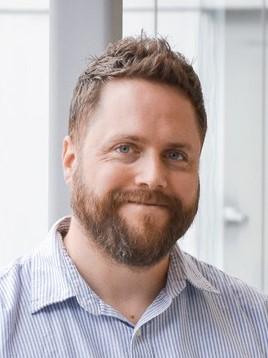
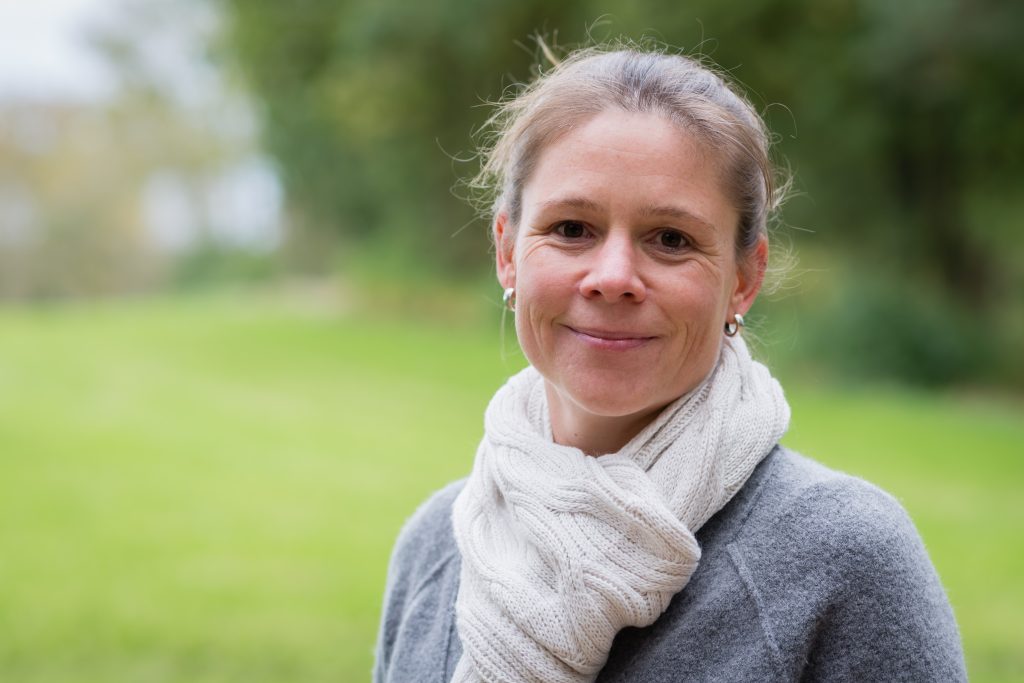
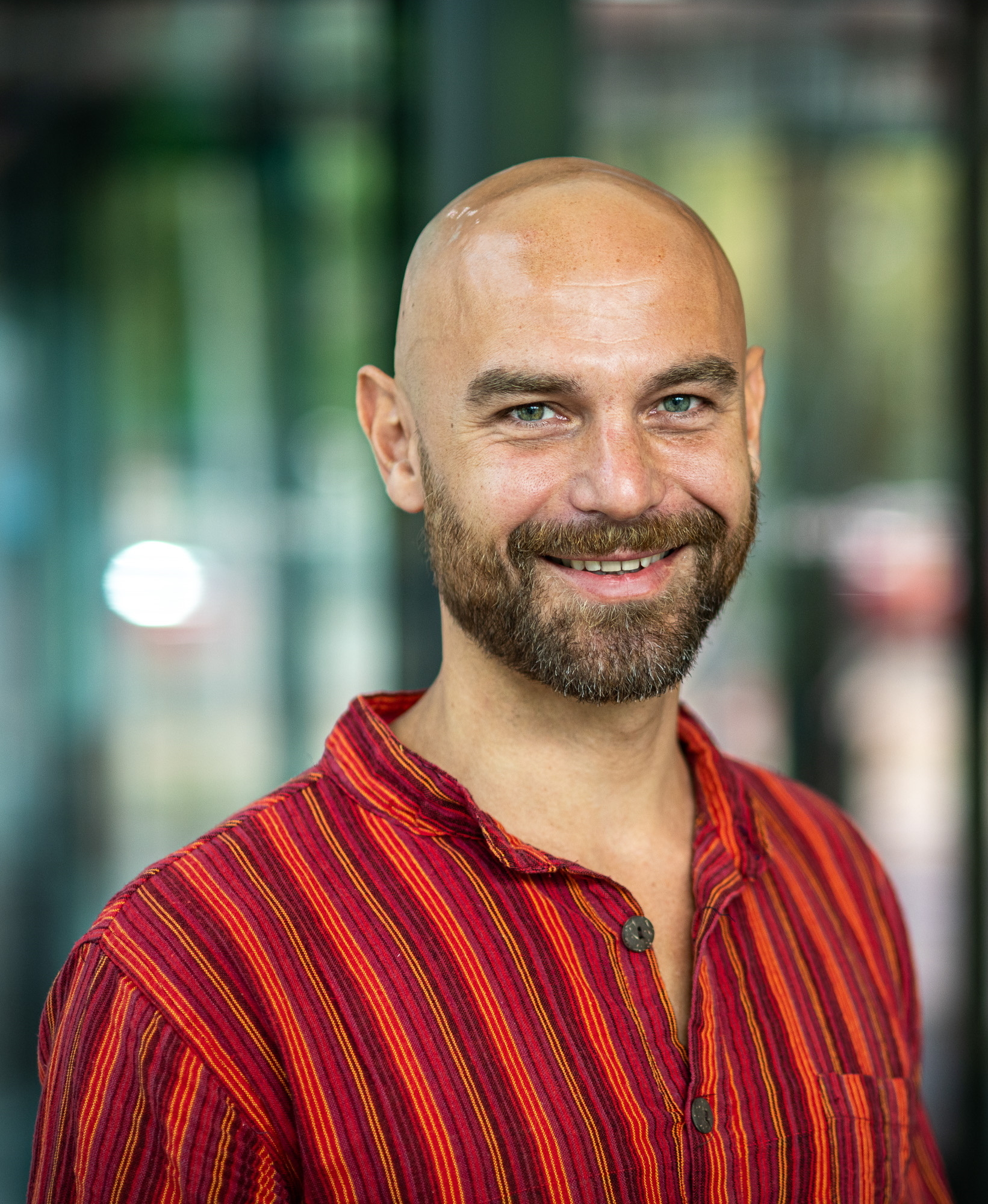
Joni Storie is an Associate Professor in the Geography Faculty at the University of Winnipeg. She holds an office in Lockhart Hall (5L05) and teaches courses including Mapping in a Global World, Intro Remote Sensing, Advanced GIS, and Advanced Remote Sensing. Her research focuses on land-use/land-cover mapping, map automation with machine learning tools, spatial statistics, and terrestrial/aquatic resource management. Teaching expertise spans Regional & Physical Geography, Resource Conservation & Management, and Geomatics (GIS & Remote Sensing). Her work integrates geospatial technologies with environmental challenges, including flood mitigation, mangrove ecosystem analysis, and food environment patterning in urban areas. Research outputs emphasize remote sensing applications in coastal conservation, surface water detection, and vegetation dynamics. Over 13 peer-reviewed articles since 2004 demonstrate sustained academic contributions to geomatics and environmental geography. Current activities include advising on geomatics projects and contributing to the University of Winnipeg’s Geography program infrastructure.
Dr. Erik Linstead is an Associate Professor and Senior Associate Dean at Chapman University, affiliated with the Fowler School of Engineering, School of Pharmacy, and George L. Argyros College of Business and Economics. His expertise spans Machine Learning, GPU Programming, Autism Spectrum Disorder, Assistive Technologies, Predictive Analytics, and Virtual Reality. Education: Bachelor of Science, Chapman University Master of Science, Stanford University Ph.D., University of California, Irvine Dr. Linstead's research integrates machine learning with diverse domains, including autism treatment, environmental monitoring, and software engineering. His recent publications focus on coral reef health, land surface temperature trends, and embedded machine learning systems. His scholarly work includes collaborations in remote sensing, medical informatics, and neurodiversity support. Articles highlight his interdisciplinary approach, applying AI to ecological challenges (e.g., Red Sea coral reefs, Nile Basin droughts) and human-centered technologies (e.g., VR therapy for autism, medication adherence analysis).
Igor Wojnicki is a Professor at AGH University of Science and Technology's Faculty of Electrical Engineering, Automatics, Computer Science and Biomedical Engineering, where he serves as Vice-Dean of the Faculty of Cooperation and Education. His primary affiliation is with the Department of Applied Informatics, where he maintains an active research laboratory focused on knowledge engineering and smart systems. His research spans multiple domains with evolving focus: Early career: Deductive databases and rule-based inference engines (PhD thesis on "A Rule-based Inference Engine Extending Knowledge Processing Capabilities of Relational Database Management Systems") Mid-career: Graph-based knowledge representation and Tabular Trees (XTT predecessor) Current focus: Smart city applications, particularly energy-efficient lighting control systems and graph-based urban data integration His recent publications demonstrate a clear trajectory toward applied urban computing, with over 15 significant papers in the last five years addressing smart city infrastructure optimization. Key themes include dynamic street lighting control, graph-based computational methods for urban environments, and energy conservation in public infrastructure. Wojnicki actively contributes to academic-practical collaboration through initiatives like the Green AGH Campus Project and IBM academic partnerships. His technical leadership includes development of the ReDaReS system for relational database knowledge processing and the Jelly View technology for advanced database queries. His laboratory maintains strong industry connections, particularly with IBM through student internship programs and technology transfer initiatives. The team produces both theoretical frameworks and practical implementations, with notable outputs including the Osiris GUI system and Magellan GPS software for Poland.
Brian M Deal serves as a Professor of Landscape Architecture within the School of Architecture at the University of Illinois at Urbana-Champaign, holding additional appointments in Urban and Regional Planning, the European Union Center, the Center for Latin American and Caribbean Studies, and the National Center for Supercomputing Applications (NCSA). His expertise bridges sustainable planning theory, energy systems, and spatial modeling to develop practical decision-support tools for community development and climate resilience. His educational foundation includes a PhD in Regional Planning (2002), Master of Architecture (1997), and BS in Architectural Studies (1983), all earned at the University of Illinois at Urbana-Champaign. Prior academic experience encompasses a decade of professional architecture practice and senior research at the Army Construction Engineering Research Laboratory (CERL), where he specialized in sustainable military facility design using spatial simulation. Deal's research centers on sustainable planning systems and climate adaptation, with current projects examining urbanization impacts on Korean rural amenities, advancing the University of Illinois' climate action plan (iCAP), and developing next-generation 'sentient' planning support systems. His work integrates land-use modeling, energy systems analysis, and decision-support technologies to address complex urban environmental challenges through interdisciplinary collaboration. Recent publications reveal a pronounced shift toward data-driven sustainability solutions, featuring AI applications for carbon-neutral planning, multi-scaled green infrastructure optimization, and socio-ecological modeling. Key themes include urban carbon sequestration, post-pandemic park dynamics, and climate-resilient coastal design, demonstrating consistent innovation in translating theoretical frameworks into actionable planning tools for real-world implementation. Professor Deal's scientific awards and honors were not detailed in the provided text. As faculty mentor to the Student Sustainability Committee and chair of campus sustainability planning efforts, Deal actively guides student development and institutional policy. His leadership of the LEAM Laboratory and SEDAC involves managing research grants focused on urban resilience, energy systems, and climate adaptation, fostering partnerships with government agencies and community organizations to deploy planning tools that directly impact community decision-making processes. Deal directs the Land Use Evolution and Impact Assessment Modeling (LEAM) Laboratory and Smart Energy Design Assistance Center (SEDAC), leading interdisciplinary teams in developing spatial simulation models and decision-support systems. His operational leadership extends to authoring the university's climate action plan and chairing campus sustainability committees, positioning him at the nexus of academic research, institutional policy, and community engagement for sustainable urban futures.
Dr Francesca Pianosi is an Associate Professor in Water & Environmental Engineering at the University of Bristol 's School of Civil, Aerospace and Design Engineering. She contributes to the Cabot Institute for the Environment and leads research on data analysis, mathematical modelling, and uncertainty quantification for hydrology and water engineering. Specialises in simulation and optimisation methods for water resource management Focuses on uncertainty propagation in natural hazard models Developed the open-source SAFE Toolbox for sensitivity analysis Research Trends Her recent publications (2023-2025) demonstrate expertise in: Groundwater flow and recharge in data-scarce regions Digital Twin applications for watershed management Climate change impact on landslides and droughts Multi-objective optimisation for reservoir operations Integration of machine learning with hydrological models Scientific Awards Arne Richter Award for Outstanding Young Scientists (2015) Best Research Oriented Paper - Journal of Water Resources Planning and Management (2024) Early Career Research Excellence (ECRE) award (2014) Francesca leads the Water Management and Adaptation based on Watershed Digital Twins project (2024-2027) and contributes to the USARIS project on uncertainty quantification for infrastructure systems (2023-2025).
Neil D. B. Bruce is an Associate Professor in the School of Computer Science at the University of Guelph, Canada. His research focuses on computer vision, deep learning, and computational neuroscience, with a strong emphasis on visual saliency, neural networks, and semantic segmentation. He holds a BSc in Computer Science & Pure Math from the University of Guelph, an MASc in Systems Design Engineering from the University of Waterloo, and a PhD in Computer Science from York University. Prior to Guelph, he held academic positions at Ryerson University and the University of Manitoba. Dr. Bruce leads the Vision Lab, exploring topics like attention mechanisms, image processing, and AI-driven solutions for visual computing challenges. His work bridges theoretical models with practical applications, including real-world gaze behavior analysis and exposure blending techniques. Key contributions include saliency prediction frameworks (e.g., AIM model) and semantic segmentation networks (EML-Net, Iterative Gating Networks). His research also intersects with interdisciplinary fields such as neuroscience and healthcare informatics, as seen in recent studies on avian influenza outbreak detection using social media data. Teaching highlights include courses in neural networks, data science, and machine learning. He actively supervises graduate and undergraduate research projects, emphasizing computational methods and AI innovation.
Anna Cord is a Professor and Chair of Computational Landscape Ecology at the Technische Universität Dresden, Faculty of Environmental Sciences. She leads research at the intersection of remote sensing, biodiversity, and ecosystem services. Previously, she headed the working group 'Biodiversity and Ecosystem Services' at the Helmholtz Centre for Environmental Research – UFZ from 2012 to 2020. Doctorate (Dr. rer. nat): University of Würzburg, 2012 Studies: Biology and Geography, University of Würzburg and University of Umeå, Sweden Research Assistant: German Aerospace Center (DLR) and University of Würzburg, 2007–2012 Her research focuses on spatial analysis and modeling of land use impacts on biodiversity and ecosystem services , using remote sensing and GIS. She investigates trade-offs and synergies in multifunctional landscapes and develops methods to monitor ecosystem services via Earth observation. Her work supports sustainable land management and policy design. Her recent publications reveal strong trends in ecosystem multifunctionality , multi-objective land use optimization , and integration of socio-environmental data . She emphasizes scalable models, interdisciplinary frameworks, and policy-relevant tools, often using national and global datasets. Her work bridges computational ecology, environmental modeling, and conservation science. Scientific Awards and Honors: Best PhD Student Paper Award, iEMSs Conference, Ottawa, 2010 Scholarship, German Academic Scholarship Foundation, 2004–2007 Member, Young Academy of BBAW and Leopoldina, since 2019 Anna Cord is actively involved in academic service and mentoring. She serves as Study Programme Coordinator for BSc and MSc Geography and teacher training programs at TU Dresden. She leads major research grants such as BESTMAP (EU Horizon 2020) and ECO²SCAPE (BMBF) . She is also an editor for Regional Environmental Change and Remote Sensing in Ecology & Conservation . She contributes to international scientific coordination as Task Leader for Remote Sensing of Ecosystem Services in GEO BON . She has previously served on the Main Committee of the Scientific and Technical Council at UFZ. Her leadership extends to curriculum development and examination boards in geosciences.
Maryam Imani is an Associate Professor of Water Systems Engineering at Anglia Ruskin University's School of Engineering and the Built Environment. As a Chartered Civil Engineer (CEng) and Fellow of the Higher Education Academy (FHEA), she specializes in water infrastructure resilience, sustainable drainage systems (SuDS), and computational modeling techniques. BEng (Hons) Civil Engineering, 2001 MEng Water Systems Engineering, 2006 PhD Water Systems Engineering, University of Exeter, 2012 PG Cert in Learning and Teaching in Higher Education, Anglia Ruskin University, 2016 Her research focuses on resilience modeling for water infrastructure, machine learning applications in water systems, and climate adaptation strategies . She leads projects addressing urban wastewater resilience, SuDS implementation in developing countries, and interdependent infrastructure systems. Maryam's work demonstrates a strong emphasis on multi-objective optimization and decision support systems for sustainable water management. Her recent publications explore challenges in Brazil, India, and the UK, integrating climate projections with urban planning. Exeter Research Scholarship (ERS) Fellow of the Higher Education Academy (FHEA) She contributes to major projects like Safe&SuRe water management and RESoURce@Brandia , securing grants from UKRI-GCRF, NERC, and EPSRC. Maryam collaborates with institutions across the UK, Brazil, and the US, including the University of Utah.
Dr. Rebecca Tittler is a part-time faculty member at Concordia University's Loyola College for Diversity and Sustainability, affiliated with the Department of Geography, Planning and Environment. She combines academic advising with research coordination at the Loyola Sustainability Research Centre. Ph.D. in Biology from Carleton University (2008) M.Sc. in Biology from University of Alberta (1998) B.A. in Biology from Swarthmore College (1995) Her research focuses on: Interactions between biodiversity, forest landscape structure, and human activity Sustainable boreal/mixedwood forest management Ecosystem services in urban and periurban environments Source-sink dynamics in avian populations TRIAD zoning strategies Landscape-scale ecological modeling Key publication themes include: Optimizing vegetation management under electric infrastructure Long-term forest sustainability under climate change Wildfire risk mitigation in timber supply Anthropogenic disturbance zoning TRIAD forest management applications Avian dispersal patterns Current research projects examine: Climate change impacts on Quebec's annual allowable cut Biodiversity effects of partial cuts Plantation location optimization Urban tree ecosystem services
Gordon Huang is an Adjunct Professor in the Civil Engineering department at McMaster University , specializing in environmental systems analysis and sustainable resource management. His research focuses on quantitative methods for addressing uncertainties in climate change, water-food-energy nexus planning, and contaminant remediation. Primary Affiliation : Civil Engineering, McMaster University His work integrates advanced computational models like Bayesian neural networks, factorial optimization, and copula-based downscaling to analyze complex environmental interactions. Recent projects examine CO2 emission pathways, microplastic impacts, and climate-driven drought risks. Key methodologies include stochastic programming , ecological network analysis , and machine learning for predictive modeling. Publications span topics from membrane technology for water treatment to large-scale hydropower socio-economic effects. Email : huangg31@mcmaster.ca
Lawrence Sass is a Professor and Chair of the Computation Group in the Department of Architecture at MIT's School of Architecture + Planning. His research focuses on design innovation using digital fabrication, particularly in low-cost housing and construction automation. He pioneered methods to reduce home construction steps through computational tools, including the concept of Snap Assembly building systems showcased at MoMA in 2008. His work has inspired startups in digitally fabricated housing. B.Arch from Pratt Institute (1990) Master’s (1994) and PhD (2000) from MIT Research interests include sustainable construction techniques, 3D printing in architecture, and material optimization. He co-founded LuBan3D, a software system enabling large-scale 3D modeling with affordable tools. Current projects explore AI and robotic systems for home production. Awards include the prestigious MacVicar Faculty Fellow recognition. His teaching includes courses like Design Computation (4.500) and Tiny Fab (4.501), emphasizing computational methods in architectural design. Collaborations include work with Singapore-based researcher Prof. Lujie Chen on large-scale fabrication software. His lab focuses on integrating digital tools into physical production workflows, aiming to democratize construction through accessible fabrication technologies.
Dr. Braden Limb is a Research Scientist in the Department of Mechanical Engineering at Colorado State University, affiliated with the Walter Scott, Jr. College of Engineering. He works under Dr. Jason Quinn in the Sustainability Research Laboratory, focusing on techno-economic analyses and optimization of sustainable technologies like electrified transportation and carbon capture systems. Education: PhD in Systems Engineering, Colorado State University MS and BS in Mechanical Engineering, Utah State University Research Interests: His work spans techno-economics, life cycle analyses, and optimization of sustainable systems. Key areas include carbon capture technologies, renewable energy integration, thermal energy storage, and biofuel sustainability assessments. He evaluates the economic viability of emerging green infrastructure and climate financing mechanisms. Advising & Grants: No formal advisees listed. His research is supported by institutional collaborations within the Sustainability Research Laboratory. Labs/Teams: Active member of the Sustainability Research Laboratory, contributing to cross-disciplinary projects on energy systems and environmental policy.
Ali Mansourian is a Professor of Geomatics at Lund University's Department of Physical Geography and Ecosystem Science, where he serves as Director of the Lund University GIS Centre and Coordinator of the GIS & RS Master Programme. He is actively involved with the United Nations Global Geospatial Information Management (UN-GGIM) Academic Network and previously served on the European Association of Geographic Information Laboratories in Europe (AGILE) council. His academic leadership spans large-scale international research initiatives and capacity-building projects funded by Erasmus+ and SIDA. Mansourian's research focuses on Geospatial Artificial Intelligence (GeoAI), Spatial Data Infrastructures (SDI), and Multi-Criteria Decision Analysis (MCDA) using multi-objective optimization techniques. His work extends to applying GIS in epidemiology and public health, disaster risk management, land-use planning, climate change, environmental management, and sustainability. His research portfolio demonstrates a strong interdisciplinary approach, bridging geospatial technology with critical societal challenges. His recent publications reveal a clear trend toward integrating advanced machine learning techniques with geospatial analysis, particularly in health applications, environmental monitoring, and climate change impacts. The research shows increasing emphasis on spatial ensemble learning, remote sensing applications, and the development of GeoAI tools that make geospatial analysis more accessible through natural language interfaces. His work spans multiple continents, with significant contributions in Africa, Europe, and Asia. Mansourian has extensive experience supervising PhD students and postdoctoral researchers, though specific student names aren't listed in the provided materials. He has coordinated numerous large-scale international projects including Geo-Academy, INTEGRAL, CADEO, and SWEMENA, demonstrating significant grant acquisition and management expertise. His leadership extends to evaluating proposals for major European research grant programs and serving as an invited evaluator for PhD theses. As Director of the Lund University GIS Centre and active member of multiple international networks, Mansourian leads a dynamic research environment focused on advancing geospatial technologies and their applications. His teams work at the intersection of traditional GIScience and emerging artificial intelligence approaches, creating innovative solutions for complex spatial problems across multiple domains including public health, environmental management, and sustainable development.
Dr. Michael Strauch is a researcher at the Department of Computational Landscape Ecology, Helmholtz Centre for Environmental Research – UFZ, Leipzig, Germany. He specializes in integrated process-based watershed modeling and multi-objective optimization of land-use allocation, focusing on the impacts of land use intensity, landscape composition, and configuration on water-related ecosystem services, agricultural production, and biodiversity. His work involves coupling simulation models with heuristic search algorithms using the generic model integration tool CoMOLA and advancing the Soil and Water Assessment Tool (SWAT) . Key Research Areas: Trade-offs and synergies among ecosystem services Stakeholder-driven land use strategies Climate change adaptation in water resources SWAT+/CoMOLA tool development Recent publications highlight his contributions to optimizing agri-environmental practices (2025), addressing soil data gaps in European catchments (2024), and modeling climate-deforestation impacts in Amazonia (2025). His work spans projects like BiodivERsA TALE and OPTAIN , with a focus on multifunctional agricultural landscapes.
Dr. John C. Tyndall is a Professor in the Department of Natural Resources Ecology and Management at Iowa State University's College of Agriculture and Life Sciences. He directs the PLUS Lab (People, Land Use and Society), where he leads research at the intersection of natural resource economics, policy, and sociology within forestry, agriculture, and urban contexts. His work focuses on financial and economic explorations of environmental quality management in highly managed landscapes. Dr. Tyndall's educational background includes a B.S. in Sociology and Environmental Studies from Western Michigan University (1991), an M.S. in Forest Resource Management from Iowa State University (1996), and a Ph.D. in Natural Resource Economics from Iowa State University (2003). His academic journey has positioned him as a leading expert in conservation economics and policy. His research interests span natural resource economics, conservation planning, ecosystem services valuation, and sustainable agricultural systems. Dr. Tyndall specializes in developing and applying economic frameworks to evaluate conservation practices, particularly in the context of water quality management and agricultural landscapes. His work bridges the gap between economic theory and practical conservation implementation, with a focus on spatially targeted approaches that maximize environmental benefits per conservation dollar spent. Analysis of Dr. Tyndall's recent publications reveals a strong focus on precision conservation, ecosystem service valuation, and the development of decision-support tools for conservation planning. His work increasingly incorporates social equity considerations into environmental management frameworks while maintaining a strong economic foundation. The Agricultural Conservation Planning Framework (ACPF) and related tools like PT 2 and FiNRT represent significant contributions to making conservation planning more effective and cost-efficient. Through his leadership of the PLUS Lab, Dr. Tyndall has mentored numerous graduate students who have gone on to contribute significantly to the fields of natural resource economics and conservation science. His collaborative approach is evident in the extensive list of interdisciplinary projects and co-authored publications spanning multiple institutions and disciplines. Dr. Tyndall's work has practical applications through several conservation planning tools he has helped develop, including the Prairie and Tree Planting Tool (PT 2 ), the Agricultural Conservation Planning Framework Financial and Nutrient Reduction Tool (ACPF FiNRT), and economic evaluation tools for barriers to minimize sportfish escapement. These tools represent the applied dimension of his research, translating complex economic analyses into practical decision support for conservation practitioners.