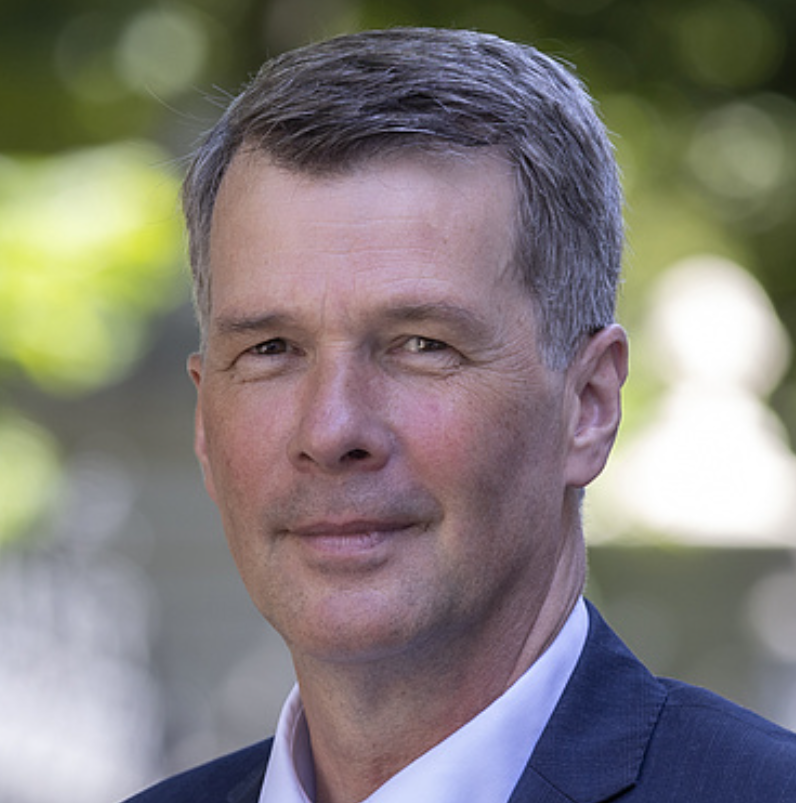
Ao.Univ.Prof. Dipl.-Ing. Dr.techn. Horst Bischof is an Associate Professor at Vienna University of Technology (TU Wien). His work focuses on computer vision, medical imaging, and pattern recognition. He has contributed to projects in automated medical diagnosis (e.g., rheumatoid arthritis assessment), 3D reconstruction, and cultural heritage preservation through advanced segmentation techniques. He has supervised numerous students including S. Veigl, A. Belbachir, and G. Langs. Bischof has edited proceedings like the 2005 Computer Vision Winter Workshop and published extensively on topics like Markov Random Fields, Active Appearance Models, and Canonical Correlation Analysis. His research bridges computer science and biomedical applications, with notable contributions to anatomical structure localization and robust model learning. He collaborates with institutions like the European Society of Musculoskeletal Radiology and has developed systems such as the RheumaCoachCAD for automated scoring of bone erosions. Education: Dipl.-Ing. (Master of Engineering) and Dr.techn. (Doctor of Technical Sciences) from TU Wien. Key Projects: CAD systems for rheumatoid arthritis, 3D rock-art segmentation, and MRF-based medical image analysis. Research interests emphasize integrating computational methods into clinical diagnostics and heritage conservation. His work on sparse MRF models and group-wise learning has advanced automated medical image processing techniques.
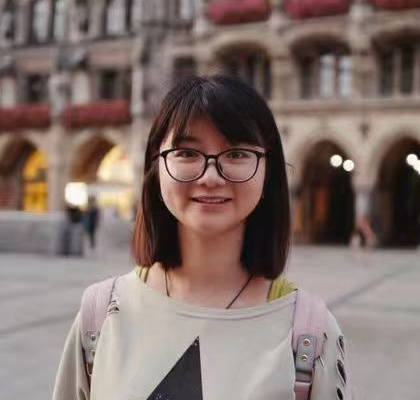
Jing Yang is a Research Associate at Core LAB and an Affiliated Lecturer in the Department of Computer Science and Technology at the University of Cambridge. Her research focuses on Computer Vision, particularly deep face analysis, model compression, and the intersection of 3D Computer Vision with generative models. She holds a PhD from the University of Nottingham under Prof. Georgios Tzimiropoulos. Research Interests: Her work spans facial action unit detection, knowledge distillation techniques, 3D head reconstruction, and generative adversarial networks (GANs). Notable contributions include advancements in neural avatars, robust facial expression analysis, and compact representation learning for image retrieval. Publications: Recent work includes high-impact publications in ICLR, IJCV, CVPR, and ECCV, focusing on generative models, facial recognition, and efficient neural network training. Examples include 'FAN-Trans: Online Knowledge Distillation for Facial Action Unit Detection' (WACV 2023) and 'Gaussian Head & Shoulders' (ICLR 2025). Affiliations: Active in Core LAB (GenAI research) and affiliated with the University of Cambridge's Computer Science department. Engages in collaborative research with industry and academia, contributing to projects like the Cambridge Ring initiative.
Prof. Luc Van Gool is a leading academic in computer vision and machine learning, holding dual positions at ETH Zurich and KU Leuven. He heads the Computer Vision Laboratory at ETH Zurich while leading the Computer Vision Research Group at KU Leuven. With over 160,000 citations, he ranks among the world's most cited computer scientists and has co-founded 12 startups that attracted tech giants like Nvidia, Apple, and Facebook to Zurich. His research spans 2D/3D object recognition , texture analysis , range acquisition , stereo vision , robot vision , and optical flow . Recent work demonstrates exceptional breadth across fundamental algorithms and real-world applications, with particular emphasis on robustness in dynamic environments and cross-domain adaptation. His teams consistently bridge theoretical innovation with industrial implementation through EU-funded projects like Vanguard, Improofs, and Impact. 2025 publications reveal dominant trends in multimodal learning , 3D scene representation via Gaussian splatting , and incremental object detection . Key advancements include vision-language model integration, embodied reasoning frameworks, and robustness benchmarks for human-object interaction. The research demonstrates a strategic shift toward compositional learning and cross-domain generalization while maintaining core strength in classical vision tasks. His accolades include: David Marr Prize (highest honor in computer vision) Koenderink Prize for fundamental contributions Helava Prize for photogrammetry Tsuji Award for pattern recognition ERC Advanced Grant for groundbreaking research Professor Van Gool drives technology transfer through 12 startups (assaia, Eyetronics, segments.ai, etc.) and major EU projects including ACTS Vanguard and Brite-Euram Soquetec. His labs maintain deep industry partnerships with automotive, medical imaging, and consumer electronics sectors, securing continuous funding for high-risk/high-reward research. Current grants emphasize embodied AI and real-world deployment challenges. The Computer Vision Laboratory at ETH Zurich and KU Leuven group operate as interconnected hubs with over 50 researchers. They maintain specialized facilities for 3D reconstruction, robotic vision, and multimodal sensing, recently expanded through industry partnerships. Current initiatives focus on embodied scene understanding for autonomous systems and vision-language models for industrial inspection.
Jens Behley is a Lecturer (Privatdozent) at the Institute of Geodesy and Geoinformation, University of Bonn, where he actively teaches graduate courses in robotics and computer vision while leading cutting-edge research in 3D perception. His work bridges theoretical advances with real-world agricultural and automotive applications, focusing on robust algorithms for unstructured environments. Behley's research centers on 3D point cloud processing, semantic segmentation, and SLAM systems, with specialized expertise in agricultural robotics for crop phenotyping and autonomous vehicle navigation. He develops novel techniques for plant organ-level analysis, fruit shape completion, and radar-based localization, emphasizing solutions that function under real-field conditions with sensor noise and dynamic changes. His methodologies frequently integrate deep learning with geometric computer vision to achieve precision in challenging outdoor settings. Analysis of his recent publications reveals a dominant trend toward neural implicit representations (e.g., Gaussian Splatting) and diffusion models for 3D scene understanding, alongside continued innovation in LiDAR processing for agricultural robotics. Key thematic clusters include plant phenotyping (18% of recent work), neural mapping techniques (24%), and robust sensor fusion for autonomous systems (31%), with growing emphasis on generative models for data synthesis. Scientific Awards Outstanding Reviewer at IEEE Robotics and Automation Letters (RA-L), 2024 Outstanding Reviewer at European Conference on Computer Vision (ECCV), 2024 Best Agri-Robotics Paper Award for “BonnBeetClouds3D...” at IROS, 2024 Best Paper Award in Workshop “Agricultural Robotics for Sustainable Futures” at IROS, 2024 Best Paper Award Second Place in Workshop “AI and Robotics For Future Farming” at IROS, 2024 Outstanding Reviewer at CVPR, 2024 Finalist Best Paper Award in Service Robotics at ICRA, 2024 Best Paper for “KISS-ICP...” by RA-L, 2023 Honorable Mention for “High Precision Leaf Instance Segmentation...” by RA-L, 2023 Outstanding Reviewer at CVPR, 2023 Outstanding Reviewer at ECCV, 2022 Finalist IROS Best Paper Award on Agri-Robotics, 2022 Outstanding Reviewer at RA-L, 2022 Outstanding Reviewer at ICRA, 2022 Outstanding Reviewer at ICCV, 2021 Faculty Award for Geodesy from Agricultural Faculty of University of Bonn, 2021 Outstanding Reviewer at CVPR, 2021 Finalist Best System Paper at RSS, 2020 Diplomarbeitspreis der Bonner Informatik Gesellschaft e.V., 2009 Behley actively mentors students through advanced coursework including “Machine Learning for Robotics and Computer Vision” and “Techniques for Self-Driving Cars,” though specific advisees aren't documented. His research is supported by extensive collaborations with Prof. Cyrill Stachniss's robotics group at Bonn, with publications appearing in top venues like RA-L, ICRA, and CVPR. Current projects focus on neural scene representations for agricultural robotics and robust localization in changing environments, with datasets like BonnBeetClouds3D establishing new benchmarks in plant phenotyping.
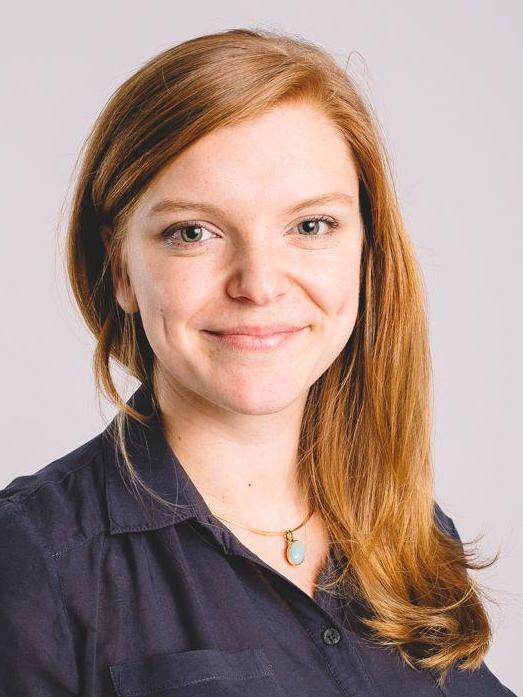
Bruno Vallet is a Senior Researcher at IGN (French National Institute of Geographic and Forest Information) within the LASTIG lab and leads the ACTE research team since 2019. His work focuses on geospatial data processing, including LiDAR and image registration, 3D urban modeling, and computer vision applications. He contributes to projects like AI4GEO and Time Machine , specializing in large-scale point cloud analysis and structured city reconstruction. Education : Habilitation (HDR) in Geographic Information Science (Univ Paris-Est, 2016), PhD in Computer Science (Institut National Polytechnique de Lorraine, 2008), and Master's in Computer Vision (Telecom ParisTech, 2005). His research integrates surface reconstruction , semantic labelings , and uncertainty propagation , with methodologies applied to autonomous navigation and urban change detection. Recent publications emphasize data fusion, visibility computation, and deep learning for 3D scene analysis. He co-supervises PhD students and leads teaching activities at ENSG (National School of Geographic Sciences), covering image processing and 3D data structures. Bruno Vallet also chairs the ISPRS Working Group II/4 on 3D Scene Reconstruction, demonstrating leadership in photogrammetry and remote sensing communities.
Anna Maria Feit is a Professor at Saarland University's Saarland Informatics Campus, leading the Computational Interaction Group (CIX) since January 2021. She previously served as a postdoctoral researcher at ETH Zurich (2018-2020) and completed her doctoral studies at Aalto University in Helsinki, where she focused on optimizing text input methods. Her research centers on computational interaction, developing algorithmic and mathematical methods to optimize and adapt user interfaces. She specializes in using optimization techniques to automate UI design processes, particularly in text input systems and adaptive interfaces that respond to users' changing contexts, environments, and capabilities. Her work bridges Human-Computer Interaction with methods from Machine Learning, Optimization, and Data Science to create intelligent interfaces that seamlessly integrate with real-world usage scenarios. Feit's publication record demonstrates consistent contributions to top HCI venues, with recent work focusing on gaze-based assessment of AI reliance, adaptive XR interfaces, and ergonomic 3D interaction design. Her research has evolved from foundational text input optimization to increasingly sophisticated adaptive systems that consider multiple contextual factors simultaneously. SIGCHI outstanding dissertation award Best Paper Award at CHI'21 Work featured on cover of Communications of the ACM (2021) As leader of the Computational Interaction Group, Feit has organized academic events including the 6th Summer School on Computational Interaction at Saarland University in 2022. Her group collaborates with institutions worldwide and is part of the Center for Perspicuous Computing (CPEC) since 2023. The CIX group maintains an active research agenda with publications spanning computational design methods, human-AI interaction, and user behavior modeling.
Chunying Li serves as an Assistant Professor in the Department of Electronic and Electrical Engineering at the College of Engineering, Southern University of Science and Technology (SUSTech). Recognized as a 2024 Shenzhen Pengcheng Peacock Program Distinguished Talent and Ocean Power Young Scientist nominee, her research pioneers spherical underwater robotics and multi-agent systems for complex marine environments. Her educational foundation includes: Ph.D. in Intelligent Mechanical Systems Engineering from Kagawa University, Japan (2021-2023) M.S. in Control Engineering from Tianjin University of Technology, China (2017-2020) Dr. Li's research integrates biomimetic principles with advanced engineering to solve underwater navigation challenges. Her work on multi-sensor fusion enables robust environmental perception, while adaptive control algorithms allow spherical robots to operate in turbulent conditions. Key applications include ocean monitoring, resource exploration, and collaborative multi-robot missions where traditional systems fail. Recent publications (2020-2024) reveal a strong focus on performance optimization and biomimetic sensing , with 7 of 11 representative papers appearing in Q1 journals like Information Fusion (IF=17.564). A notable trend is the development of artificial lateral line systems inspired by fish, significantly improving obstacle recognition in murky waters. Her accolades include: 2024 Young Scientists Nomination for Ocean Power 2024 Shenzhen Pengcheng Peacock Program Distinguished Talent 2023 Chinese Society of Automation Natural Science Award (Second Prize) 2022 CSC National High-Level University Scholarship Dr. Li leads the Shenzhen Outstanding Science and Technology Innovation Talent Program while contributing to international projects: Shenzhen Grants: Pengcheng Peacock Program (Principal Investigator) International Collaboration: Japan SPS KAKENHI Program (Key Researcher) Regional Projects: Tianjin Science and Technology Innovation Cooperation Program Her laboratory develops spherical underwater robot platforms featuring hybrid thrusters and multi-sensor arrays, emphasizing father-son robot coordination and jellyfish-inspired swarm behaviors. Through IEEE ICMA conference leadership roles (Finance Chair 2025, Publication Co-Chair 2024), she actively shapes robotics research standards in Asia-Pacific.
Prof. David Mendlovic is a Full Professor of electro-optics at the School of Electrical Engineering, The Iby and Aladar Fleischman Faculty of Engineering, Tel Aviv University. With a career spanning decades, he has established himself as a leading figure in optical engineering and signal processing, holding significant leadership positions including head of TAU Innovation Labs and board member of the Israel Innovation Authority (IIA). His academic journey began and continued at Tel Aviv University where he earned both B.Sc. and Ph.D. degrees in Electrical Engineering. His professional trajectory includes serving as Chief Scientist of the Israeli Ministry of Science (2008-2010), Co-Chair of the German Israeli Foundation for 6 years, and Vice Dean for Research of the Faculty of Engineering for a decade. Prof. Mendlovic's research spans computational photography for miniature imaging systems, advanced 3-D sensing, AI-based image processing, authentication systems, optical bio-sensing, and deep-fake detection. His work has produced worldwide breakthroughs including hollow fibers for IR transmission, extended depth of field imaging, multi-aperture camera systems, and innovations in the fractional Fourier transform. His recent publications demonstrate continued innovation with emphasis on thermal imaging applications for precision agriculture, dynamic identity authentication, light field photography, and advanced image processing leveraging deep learning approaches across computer vision, optical engineering, and thermal imaging domains. 1998 winner of ICO International Prize in Optics Ernst Abbe Medal by Carl Zeiss Fellow of The Optical Society of America Prof. Mendlovic has successfully translated research into commercial applications through multiple startups including Civcom (acquired by Padtec S/A of Brazil) and Eyesquad (acquired by Tessera Inc, later acquired by Samsung). He has mentored numerous graduate students with thesis topics spanning optical signal processing, diffractive optical elements, and imaging systems. His laboratory work bridges theoretical developments with practical implementations across security, healthcare, agriculture, and consumer electronics applications.
Matej Kristan is a Full Professor at the Faculty of Computer and Information Science , University of Ljubljana, where he serves as Vice Chair of the Department of Artificial Intelligence . He leads the Visual Object Tracking (VOT) Initiative , presides over the IAPR Slovenian Pattern Recognition Society , and acts as Associate Editor for IJCV . PhD from Faculty of Electrical Engineering, UL (2008) Co-organized 13+ workshops/conferences Research Interests focus on: Visual Object Tracking : Long-term re-detection, transparent object tracking, segmentation-based methods Autonomous Boats : Obstacle detection, sensor fusion, maritime navigation Physics-Informed Deep Learning : Sea level forecasting (HIDRA models), climate prediction Surface Defect Detection : Real-time deep architectures for cracks/dents Scientific Excellence : 26 Research Excellence Awards (Slovenian Research Agency) 10 Teaching Excellence Awards (UL/FRI) Best Paper Awards: ISPA2015, BMVC2022, Pattern Recognition Journal 2024 Student Mentorship : Supervised 8 PhD students including Alan Lukežič (summa cum laude 2021), Domen Tabernik , and Peter Uršič . His students have won 23 awards including multiple Prešeren Awards and Uroš Seljak distinctions. Laboratory Involvement : Key member of the Visual Cognitive Systems Laboratory , contributing to multimodal perception systems for maritime robotics, educational robotics platforms, and advanced deep learning architectures.
Dr. Žiga Emeršič is an Assistant Professor at the University of Ljubljana , Faculty of Computer and Information Science, and a member of the Computer Vision Laboratory (LRV). His research focuses on biometrics , deep neural networks , and computer vision with a specialization in ear-based recognition systems. IEEE Member (#98052610) Recipient of the European Biometrics Association Award (2021) and SDRV Excellence Plaque (2023) Co-organizer of international challenges in ear recognition and machine learning workshops His work addresses unconstrained ear detection , model compression for edge devices , and privacy-preserving biometric systems . He has contributed to AI education through EU projects like AIM@VET and developed curricula for computer vision and biometrics. Highlights: Published in top journals ( Neural Computing & Applications , IET Biometrics , Entropy ) Authored chapters in Springer publications on deep ear recognition and ocular biometrics Active in international conferences (IEEE, IAPR) with over 60 publications He has received special recognition for both research (2018) and teaching excellence (2016, 2019), and his work has been featured in media outlets across Slovenia.
Ying Qu is a Research Assistant at the Institute of Mechanical and Electrical Engineering , University of Southern Denmark , affiliated with the Faculty of Engineering . Their work bridges robotics, control systems, and multi-objective optimization (MOO) in industrial and marine contexts. Research Focus: Multi-objective optimization, underwater robotics, digital twin frameworks, and sustainable agricultural technology. Key Projects: Development of an innovative propeller polishing robot for the shipping industry, focusing on fuel savings and emission reductions. Ying Qu's publications emphasize MOO applications in robotics (e.g., underwater end-effector control), industrial systems (greenhouse climate management), and power electronics. Their work integrates machine learning, evolutionary algorithms, and simulation techniques to address complex engineering challenges.
Jing Wang is a Professor in the Department of Radiation Oncology at University of Texas Southwestern Medical Center (UTSW), working within the Division of Medical Physics and Engineering. His research focuses on medical image processing, image reconstruction, treatment outcome prediction, image-guided radiation therapy (IGRT), and adaptive radiation therapy (ART). B.S. in Materials Physics, University of Science and Technology of China M.A. and Ph.D. in Physics, Stony Brook University Postdoctoral training in Radiology (Stony Brook) and Radiation Physics (Stanford) Dr. Wang's laboratory develops advanced machine learning algorithms for: Medical image reconstruction (CT/CBCT/PET/MRI) Quantitative imaging applications Real-time tumor localization Radiomics biomarker development Multi-objective treatment optimization Deep learning for adaptive therapy Recent publications demonstrate strong focus on transformer-based models and real-time imaging solutions across various cancers including: Head and neck cancer (anatomy change prediction) Lung cancer (adaptive therapy strategies) Prostate cancer (tumor localization) Pancreatic cancer (surgical outcome prediction) Breast cancer (response assessment) Professional recognitions include: American Board of Radiology certification in Therapeutic Medical Physics Texas State Medical Physics License Dr. Wang leads the AIRT Lab , which focuses on improving radiation therapy efficacy through integrated software/hardware innovations in imaging and machine learning-based outcome prediction.
Abhinav Kumar is a Professor at Indian Institute of Technology Hyderabad , affiliated with the Department of Electrical Engineering, Department of Artificial Intelligence, and Department of Engineering Science. His research bridges Wireless Communication & Networking , Machine Learning , and Green Communication in emerging technologies like V2X , UAVs , and IoT . Education: PhD in Electrical Engineering from IIT Delhi (2013), Dual B.Tech/M.Tech from IIT Delhi (2009) Professional Roles: IEEE Senior Member, Editor of IEEE Transactions on Communications, Reviewer for multiple IEEE journals His research focuses on resource allocation in 5G networks, security in wireless systems, and machine learning applications for UAVs and mmWave radars. Recent projects include funded work on 6G integrated sensing, digital twin networks, and OTFS modems. Students under his guidance explore topics like QoE modeling , drone detection , and energy-efficient IoT protocols . Key publication trends combine machine learning with mmWave radar , VLC , and NOMA systems. He has co-authored over 25 journal articles since 2013, with a focus on 5G/6G , UAV communication , and edge computing . He leads the Wireless Communications and Networking (WiCoN) Laboratory , mentoring 25+ PhD and MTech students on projects ranging from smart triage systems to e-waste battery analysis . His lab has produced multiple IEEE Graduate Congress Best Thesis Award winners.
Dr. Jason Raphael Rambach is a Senior Researcher and Deputy Director at the German Research Center for Artificial Intelligence (DFKI) in Kaiserslautern, leading the team "Spatial Sensing and Machine Perception." His work focuses on Scene Perception and Reasoning using Machine Learning, with affiliations spanning Computer Vision, Augmented Reality, and Robotics. Education Diploma in Computer Engineering, University of Patras, Greece (2012) M.Sc. in Information and Communication Engineering, Technical University of Darmstadt, Germany (2014) PhD in Computer Science, University of Kaiserslautern (2020) Dr. Rambach's research bridges Object Pose Estimation , Semantic Scene Understanding , Hybrid AI , and Robotic Vision . His publications (50+ in top conferences) and projects like EU Horizon HumanTech highlight AI applications in construction and recycling. Recent articles analyze symmetry ambiguity resolution, spherical image segmentation, and radar-camera fusion. Scientific Awards CVPR 2025 Outstanding Reviewer Best Paper Award, ISMAR 2017 Five BOP Challenge Awards (ECCV 2022, ICCV 2023) Best Industrial Paper, ICPRAM 2024 Scan2BIM Third Place (CVPR2023, CVPR2024) As a coordinator of EU Horizon HumanTech and contributor to projects like COPPER, BERTHA, KIMBA, and TWIN4TRUCKS, Dr. Rambach integrates AI into industrial workflows. He reviews for CVPR, T-PAMI, ECCV, ICCV, and organizes workshops on AI in Construction Robotics.
Dr. Salil Goel is an Assistant Professor in the Department of Civil Engineering at the Indian Institute of Technology Kanpur, specializing in Geoinformatics. He has been serving at IIT Kanpur since 2018, following research positions at The University of Melbourne and RMIT University in Australia. Education: PhD: The University of Melbourne and IIT Kanpur (Jointly awarded), 2017 B. Tech M.Tech (Dual), Civil Engineering (Geoinformatics), IIT Kanpur, 2011 Dr. Goel's research focuses on the use and fusion of sensors such as LiDAR, Camera, Inertial and GNSS to solve problems related to localization, mapping and tracking involving various platforms including terrestrial and UAV systems. He is particularly active in indoor positioning and navigation, developing algorithms for localization and mapping in GNSS denied and challenging environments. His work bridges geospatial technology, sensor fusion, and practical applications in urban and indoor settings. His publication record demonstrates a strong focus on cooperative positioning systems, UAV navigation, and mobile mapping technologies. His recent work has centered on indoor localization challenges, benchmarking measurement campaigns, and cooperative UAV localization networks, reflecting his commitment to advancing positioning technologies in environments where traditional GNSS systems fail. Scientific Awards: Young Geospatial Scientist Award 2018 and Rachapudi Kamakshi Memorial Gold Medal Best paper award, IGNSS Conference, Sydney, Australia (2018) ION GNSS+ 2017 student paper award Best paper award, 10th International Conference on Mobile Mapping Technology, Cairo, Egypt (2017) MATS award, Melbourne School of Engineering (2017) Dr. Goel leads the Geoinformatics Laboratory at IIT Kanpur, where he conducts research on sensor fusion techniques for challenging positioning environments. His work has implications for urban mobility, indoor navigation, and drone traffic management systems. While specific grant information is not provided, his numerous awards and publications suggest active research funding and collaboration with international institutions. His laboratory focuses on developing practical solutions for real-world positioning challenges, particularly in environments where traditional GPS/GNSS systems cannot function effectively. This research has applications in emergency response, indoor navigation, and autonomous systems operation in complex environments.