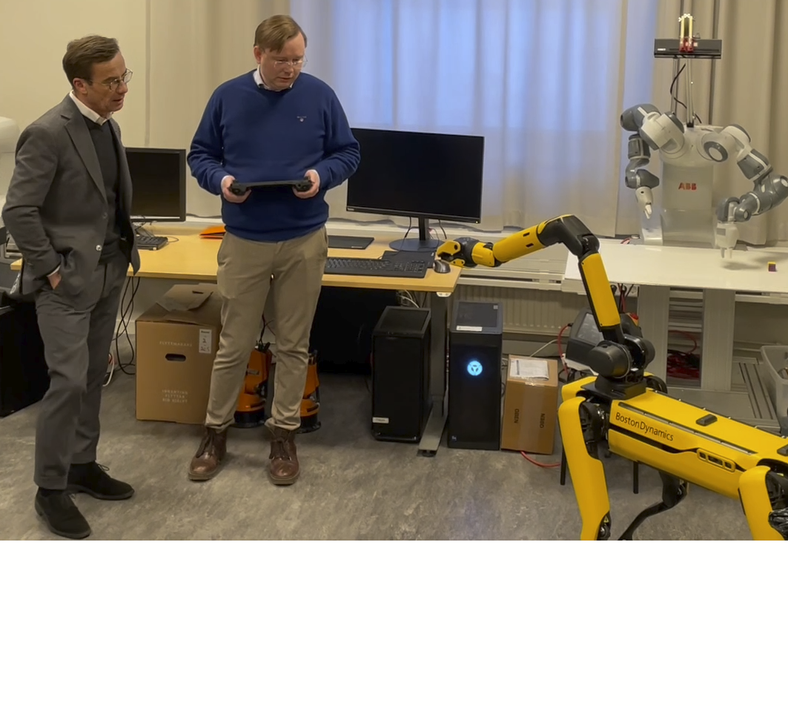
Olov Andersson is an Assistant Professor and WASP Fellow in AI for Autonomous Systems at KTH Royal Institute of Technology, leading the Division of Robotics, Perception and Learning. His research focuses on Embodied AI for autonomous robots and vehicles, combining advancements in Vision-Language Models (VLM), Large Language Models (LLM), and real-world navigation challenges. Key projects include the DARPA SubT Challenge-winning team CERBERUS and the EU H2020 Heron project for robotic road repair. He supervises multiple PhD students and postdocs, including Timon Homberger, Finn Lukas Busch, and Jesper Eriksson. Research interests emphasize full-stack autonomy in dynamic environments, including planning, mapping, and navigation. Notable contributions include the OneMap real-time open-vocabulary mapping system and self-supervised scene flow methods like Seflow. He has been recognized for technical leadership in autonomous systems through awards like the WASP Fellowship. Professional activities include co-chairing the 2024 IROS workshop on robot perception in dynamic environments and advising the Swedish Prime Minister’s AI initiative. Teaching roles span multiple graduate courses in machine learning, robotics, and systems engineering at KTH.
Bernard Schmidt is an active researcher at the University of Skövde's School of Engineering Science, specializing in Production and Automation Engineering. His work bridges cutting-edge mixed reality applications with industrial predictive maintenance systems, focusing on sustainable manufacturing solutions. Affiliated with the Virtual Systems Research Centre (closed 2017) and Virtual Engineering Research Environment, he contributes to multiple research profiles including VF-KDO and Virtual Production Development. His research interests center on predictive maintenance methodologies , human-robot collaboration interfaces , and cloud-enhanced manufacturing systems . Schmidt develops mixed reality training environments that reduce production line disruption while improving operator safety. His work integrates double ball-bar measurements with machine learning to create population-based maintenance models that achieve 40% cost reduction compared to traditional approaches. Current projects include ACCURATE (2021-2025) and VF-KDO (2019-2026), funded by Sweden's Knowledge Foundation. Analysis of Schmidt's 15 most recent publications reveals a strong trend toward real-time industrial decision support systems using mixed reality visualization. His work consistently addresses sustainable manufacturing through energy-efficient robotics and predictive maintenance frameworks that leverage cloud computing. Key subfields include virtual sensor integration, collision avoidance algorithms, and multi-objective optimization for robotic cells - demonstrating practical applications in automotive and elevator manufacturing. Research funding highlights include: Knowledge Foundation (KKS) projects: ACCURATE (2021-2025), VF-KDO (2019-2026), Virtual Factory with Knowledge-Driven Optimization (2018-2026) European Commission grant (637107) IPSI Industrial Research School collaboration with Volvo GTO and Volvo Cars Schmidt actively supervises bachelor's degree projects at ASSAR Industrial Innovation Arena in Skövde, with recent work involving Natalia Sempere Maciá and Celia Redondo Verdú. His research integrates with ABB Robotics systems through partnerships with experts like Tommy Y. Svensson. Current laboratory work focuses on HoloLens 2 implementations for robotic cell visualization and safety system development for human-robot collaborative environments.
Amos H. C. Ng is a Professor at the School of Engineering Science, University of Skövde, specializing in simulation-based optimization and Industry 4.0 technologies. His research bridges production engineering with human-robot collaboration, ergonomics evaluation, and cloud-based cyber-physical systems for manufacturing efficiency. Key Affiliations: University of Skövde (School of Engineering Science), Uppsala University (Industrial Engineering and Management) Research Themes: Multi-objective optimization, Digital Twin frameworks, Human-centric production systems, Reconfigurable manufacturing, Throughput bottleneck analysis Projects: ACCURATE 4.0 (Knowledge Foundation), VF-KDO (Virtual Factories with Knowledge-Driven Optimization), EWASS (Wire Harness Assembly Optimization) His recent publications demonstrate expertise in applying evolutionary algorithms, machine learning models, and digital human modeling tools to solve complex manufacturing problems ranging from crankshaft machining to wood supply chain robustness. Current work integrates motion capture technology with DHM tools for objective ergonomic assessments in assembly stations. Amos collaborates extensively with industrial partners like Volvo Penta and academic institutions, utilizing simulation-based approaches to enhance decision-making in production systems. His methodological focus includes non-dominated sorting genetic algorithms, surrogate modeling, and parallel computing architectures for optimization tasks.
Yifei Jin is a WASP Industrial PhD student at KTH Royal Institute of Technology's School of Electrical Engineering and Computer Science, specifically within the Division of Theoretical Computer Science. They are supervised by Professor Aristides Gionis and Associate Professor Sarunas Girdzijauskas at KTH, and also serve as an Experienced Researcher at Ericsson Research and a Visiting Researcher at Yale University under Rex Ying and Leandros Tassiulas. Yifei's research focuses on graph mining , network analysis , and graph representation learning , particularly applied to crowdsourcing data and wireless communication systems. Their work intersects telecommunications network optimization machine learning for graph-structured data AI-driven wireless resource management edge computing and distributed AI as evidenced by their publications spanning 2017–2025. Their academic contributions include 15 recent papers exploring topics such as neural surrogates for voltage drop estimation, wireless ray-tracing models, scalable distributed AI deployment, and vehicle platooning coordination. These publications demonstrate expertise in network traffic reduction KPI conflict analysis graph convolutional networks hyperbolic embeddings for ontologies real-time network diagnostics .
Erik Schaffernicht serves as a Senior Lecturer in the Department of Natural Sciences and Technology at Örebro University's School of Science and Technology. His research is primarily conducted through the Center for Applied Autonomous Sensor Systems (AASS) where he leads work in the Adaptive and Interpretable Learning Systems and Robot Navigation and Perception research groups. Dr. Schaffernicht's research spans multiple areas in robotics and artificial intelligence, with particular expertise in sensor systems, behavior trees, and gas distribution mapping. His work bridges theoretical computer science with practical applications in autonomous systems, environmental monitoring, and human-robot interaction. His research often involves developing novel algorithms for robot perception, control, and decision-making in complex environments. His recent publications demonstrate a strong focus on behavior trees for robot control, gas distribution mapping techniques, and applications of machine learning in robotics. The research shows increasing sophistication in using deep learning approaches for environmental sensing and robot navigation, with applications ranging from industrial safety to healthcare monitoring. Dr. Schaffernicht maintains an active research agenda with numerous publications in top robotics and AI venues, including IEEE Robotics and Automation Letters, Robotics and Autonomous Systems, and various IEEE conference proceedings. His work shows consistent collaboration with researchers across Europe, particularly with the AASS research center at Örebro University. His research projects include both ongoing work on automatic cognitive screening tests using eye-tracking technology and completed projects such as AIR (Action and Intention Recognition), RAISE (Robotic System for Air Quality Assessment), and SmokeBot (Mobile Robots for Disaster Site Inspection).
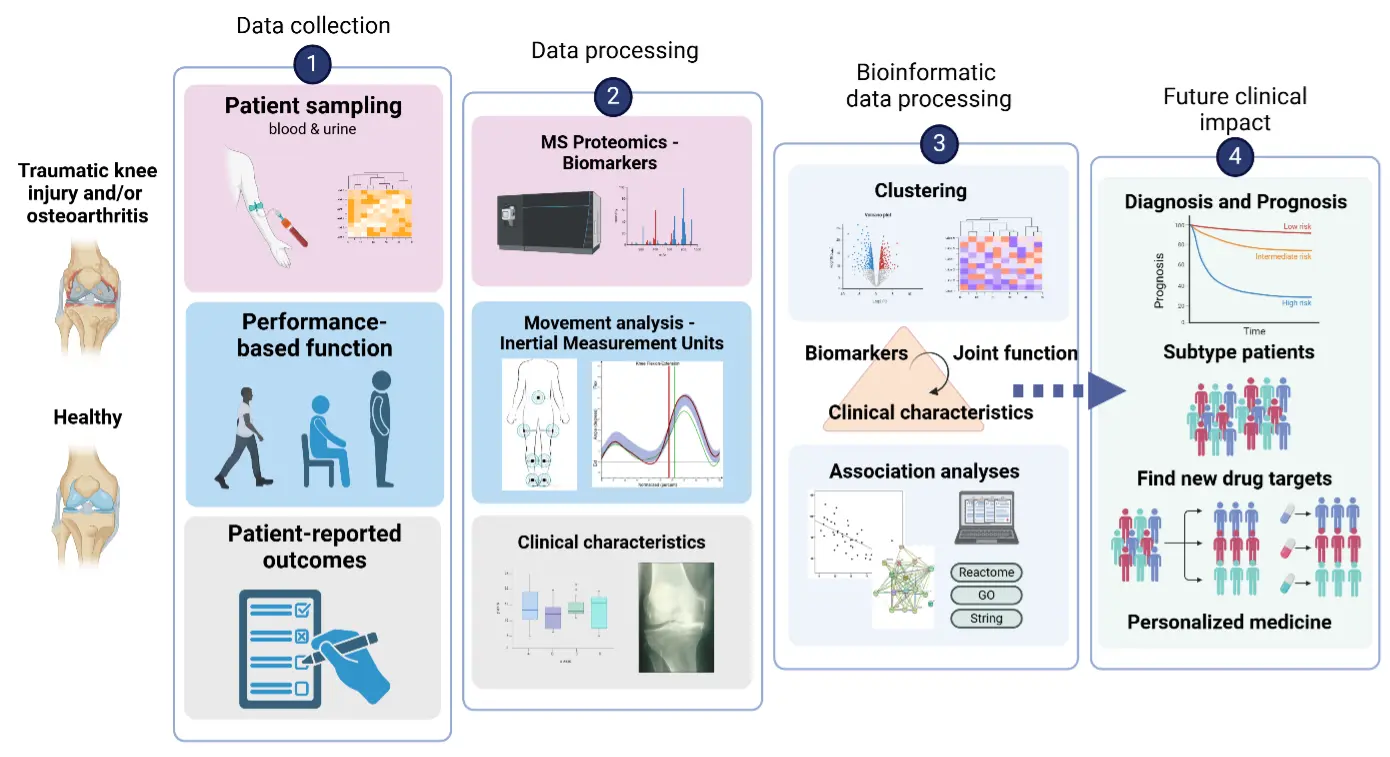
Josefine Naili is an Associate Professor of Physiotherapy and Docent at Karolinska Institutet, where she is affiliated with the Department of Women's and Children's Health. She leads the Experimental Orthopedics research team within the Movement, Activity and Health research group led by Eva Broström. Naili also maintains an affiliation with the University of Southern Denmark's Department of Clinical Research since 2020 and works clinically in the Motion Analysis Lab at Karolinska University Hospital. Her educational background includes: PhD (Doctor of Philosophy) from Karolinska Institutet (2017) Docent (equivalent to Associate Professor) from Karolinska Institutet (2023) Specialist competence in orthopedics as a registered physiotherapist Dr. Naili's research focuses on understanding the biomechanical and functional consequences of musculoskeletal conditions across the lifespan. Her work primarily investigates how joint injuries, diseases, and skeletal deformities affect movement patterns and gait. She employs advanced techniques including motion capture, wearable electronic devices, and biomechanical assessments to evaluate function in both children and adults with various orthopedic conditions. Analysis of her recent publications reveals a strong focus on osteoarthritis biomarkers, pediatric orthopedics (particularly clubfoot and osteogenesis imperfecta), and the biomechanics of movement disorders. Her work increasingly integrates proteomics with biomechanical assessments to develop predictive models of disease progression. There's a clear trajectory toward multi-modal assessment approaches that combine objective biomechanical measures with patient-reported outcomes and biological markers. Dr. Naili leads several significant research projects that demonstrate her commitment to translating biomechanical research into clinical practice: BIOFUNC project : Using a multi-modal approach including plasma proteomics, biomechanical assessments, and patient-reported outcomes to develop prediction models for osteoarthritis progression Recurrent clubfoot research : Developing structured surveillance systems for children with clubfoot using clinical examination, video analysis, and dynamic foot pressure evaluation Skeletal dysplasia studies : Evaluating walking ability and gait patterns in children with skeletal dysplasia Femoroacetabular impingement research : Investigating non-surgical treatments for movement patterns in individuals with this condition (in collaboration with University of Southern Denmark) Her laboratory work centers around the Motion Analysis Lab at Karolinska University Hospital, where she applies advanced techniques including motion capture systems and wearable electronic devices. Her research group, the Experimental Orthopedics team, focuses on developing objective methods to assess function and movement patterns in patients with various orthopedic conditions, with particular emphasis on translating these assessments into clinical practice.