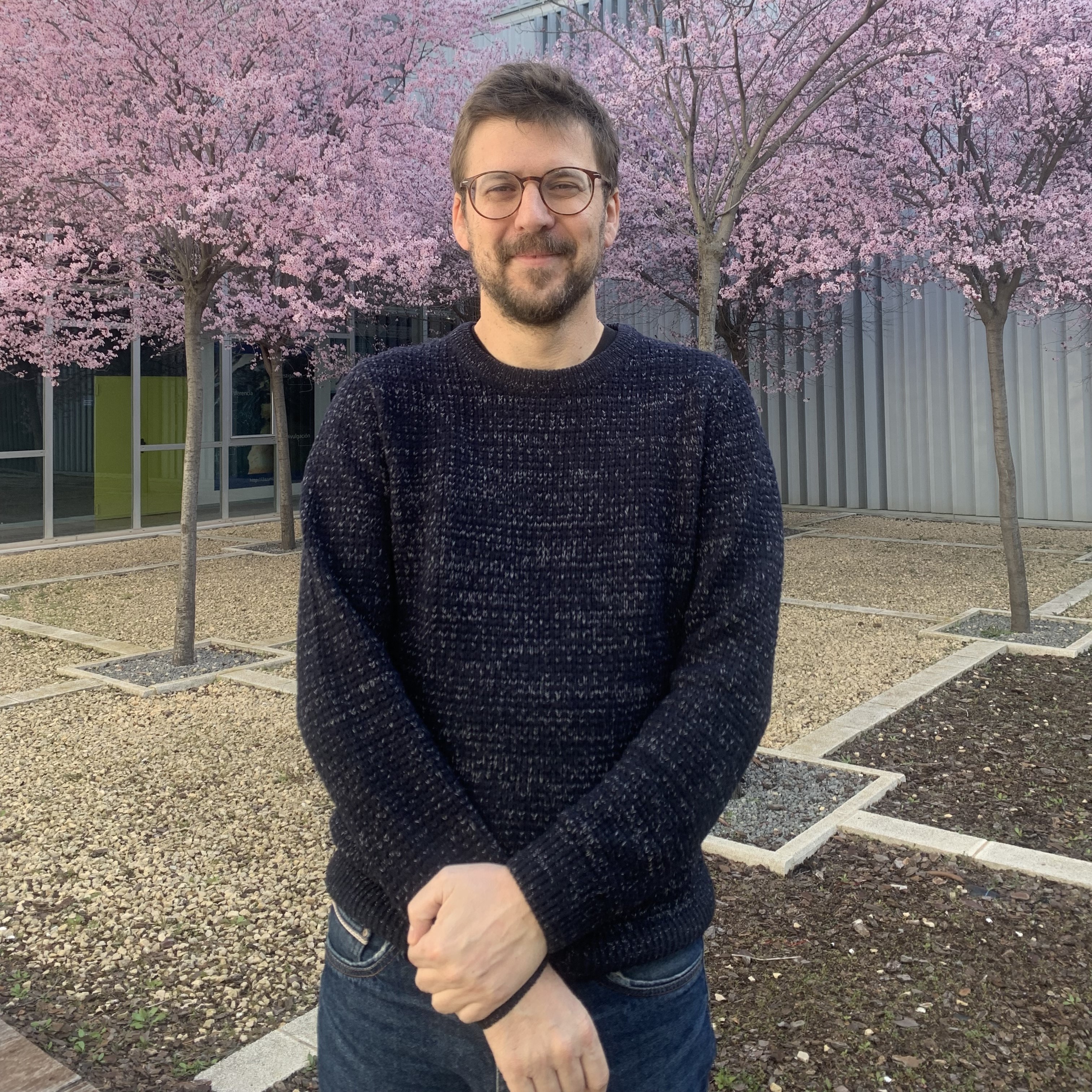
Rodrigo Gutiérrez Moreno is an Assistant Professor in the Department of Electronics at Universidad Autónoma de Madrid (UAM), affiliated with the Robesafe research group focused on Service Robotics and e-Safety Technologies. His work bridges robotics, autonomous systems, and AI applications in transportation and healthcare. He collaborates extensively with the CARLA simulator for autonomous driving research. Research interests include autonomous vehicle decision-making, reinforcement learning integration with classical control, motion prediction, and human-robot interaction. His group explores hybrid control systems, V2X communication validation, and ethical considerations in autonomous systems. Recent projects address lane change maneuvers, urban scenario navigation, and driver behavior analysis using gaze tracking and vehicle data. Publications span multimodal sensor fusion, graph-based prediction models, and modular autonomous driving architectures. His work emphasizes transitioning simulation-based algorithms to real-world implementations while maintaining safety and reliability standards. Active in open-source tools like ROS for robotic development, he also investigates healthcare robotics and biomedical engineering applications.
Manuel Mucientes is Professor of Computer Science and Artificial Intelligence at the Research Center on Intelligent Technologies (CiTIUS) of the University of Santiago de Compostela (USC). His research focuses on machine learning and computer vision, with applications in robotics, healthcare, and process mining. He has contributed to advancements in object detection, multi-object tracking, and responsible AI systems. Teaching: Statistical Learning (M.Sc. in Big Data), Supervised Machine Learning (B.Sc. in AI), Deep Learning (B.Sc. in AI), Automata Theory (B.Sc. in Computer Science). Projects: RAI4P (Responsible AI for Process Mining), QC4SUSTEX (Security for Sustainable Textiles), CAREBOT (Hospital Robotics), DronePlan (UAV Navigation), and others in AI for healthcare, education, and environmental monitoring. Research Trends: Recent work spans open-vocabulary object detection, few-shot learning, spatio-temporal modeling, and alignment algorithms for process conformance checking. Scientific Awards: Best Student Paper Nomination (2015), Industry Best Paper Application Award (2008), Runner-up Best Industry-Oriented Paper Award (2006). Collaborations: Regularly works with researchers like David Cores, Luis Vaquero, and Victor Brea on AI and computer vision systems.
Javier Civera Sancho is an Associate Professor at the University of Zaragoza, where he serves as Deputy Director of the Institute of Research in Engineering of Aragon (I3A). He is affiliated with the School of Engineering and Architecture in the Department of Computer Science and Systems Engineering, where he leads research in the RoPeRT group (Robotics, Computer Vision and Artificial Intelligence). With a background in Industrial Engineering and a PhD in Systems and Computer Engineering, both from the University of Zaragoza, Civera has established himself as a prominent researcher in computer vision and robotics. Industrial Engineering degree (2004, University of Zaragoza) PhD in Systems and Computer Engineering (2009, University of Zaragoza) Civera's research primarily focuses on computer vision, with special emphasis on SLAM (Simultaneous Localization and Mapping), 3D reconstruction, and spatial artificial intelligence. His work aims to provide computers with human-like visual capabilities, including object recognition, 3D structure estimation, spatial context understanding, and tracking of moving objects. He has maintained a long-standing research line in scene localization and mapping, making significant contributions to visual SLAM methodologies and applications. His publication trends reveal a strong focus on advancing visual SLAM techniques, with recent work exploring neural rendering integration, semantic mapping, robust camera calibration, and applications in challenging environments like agriculture. His research bridges theoretical computer vision with practical robotics applications, showing increasing integration with deep learning approaches while maintaining strong geometric foundations. 2 research sexenios (with last granted for 2012-2017) 2 teaching quinquenios h-index: 21 (Google Scholar) 397 citations in last 5 years (Google Scholar) Civera has directed 2 doctoral theses and is currently supervising 4 PhD students. His research has been supported through various institutional frameworks at the University of Zaragoza, including his role in the I3A which provides critical research infrastructure. He is actively involved in guiding the next generation of researchers in computer vision and robotics, emphasizing both theoretical understanding and practical implementation. As a member of the RoPeRT research group, Civera collaborates with a multidisciplinary team working at the intersection of robotics, computer vision, and artificial intelligence. His work often involves developing systems that integrate multiple sensor modalities and create robust spatial understanding for autonomous agents.
Tomas Saorin Perez is a Professor at the Department of Information and Documentation within the Faculty of Communication and Documentation at the University of Murcia. His research focuses on metadata, semantic web, knowledge graphs, and collaborative platforms like Wikipedia and Wikidata. He holds a Doctorate (2006) from the University of Murcia with a thesis on library automation in the digital context. His expertise spans knowledge organization systems, information architecture, content management systems (CMS), SEO strategies, and digital publishing frameworks. He actively contributes to GLAM-Wiki initiatives, promoting cultural heritage digitization through Wikimedia projects. Recent research emphasizes quantitative analysis of encyclopedic data to measure cultural relevance (Wiki3DRank model), multilingual literary canon analysis, and pandemic-related structured data generation. His work bridges library science with computational methods, addressing challenges in digital content management and open knowledge ecosystems. Key projects include the ODiSEA International Research Data Registry and Wiki Loves Monuments, showcasing his commitment to institutional collaboration and open data innovation.
Santiago Cóbreces Álvarez is an Associate Professor at the Department of Electrónica, Universidad de Alcalá. His primary research group is GEISER (Ingeniería Electrónica Aplicada a Sistemas de Energías Renovables), focusing on electronic engineering applied to renewable energy systems. He holds a Ph.D. from Universidad de Alcalá, awarded in 2009 for his thesis on optimizing current control loops in voltage source converters (VSCs) connected to uncertain grids via LCL filters, supervised by Dr. Francisco Javier Rodríguez Sánchez and Dr. Emilio José Bueno Peña. His research interests span power electronics, renewable energy systems, control systems, and grid integration. Notable contributions include work on grid-forming converters, admittance shaping, H-infinity control, and stability enhancement in DC catenary systems. He has extensively published on topics such as DC/AC converter design, renewable energy harvesting, and robust control techniques. His articles reflect a strong focus on practical applications in power electronics, including railway systems, solar inverters, and microgrid stability. While no awards are listed, his prolific publication record underscores his academic and technical influence. Advising and grants details are not explicitly mentioned in the provided text. He is affiliated with the GEISER research group, emphasizing applied electronic engineering for renewable energy solutions. His work bridges theoretical control methodologies with practical implementations in high-voltage systems and grid-connected applications.
Marta Marrón Romera is an Associate Professor at the Department of Electronics, School of Engineering, University of Alcalá. Her research focuses on intelligent systems, embedded systems, mobile robotics, computer vision, and assistive technologies. She holds a PhD in Electronics Technology (2008) and has over 25 years of research experience, including a 15-week stay at KTH Royal Institute of Technology in Sweden. Her work spans probabilistic algorithms for autonomous robots, machine learning, and applications in smart environments. She has led 33 research projects (19 national, 2 European, and 20 private) and holds 3 patents. She has authored 39 peer-reviewed journal articles (36 in JCR-indexed journals, 24 Q1-Q2), 5 book chapters, and over 70 conference communications. Her h-index ranges from 17 to 21, with over 1,200 citations. She has supervised 2 Cum Laude PhD theses (European), 4 ongoing PhDs, 19 master's, and 35 bachelor's theses. She actively participates as an evaluator for national research agencies, including the Spanish State Research Agency and Andalusian Quality Agency. She has organized 9 workshops and a Special Session on Multisensor Signal Processing. Her research is recognized by continuous 'sexenios' (research activity valuations) since 2015. Key contributions include the GEINTRA group's work on sensor fusion for intelligent spaces, autonomous wheelchairs, and human activity monitoring. She pioneers edge computing solutions for real-time surveillance and healthcare applications.
Juan Felipe García Sierra is a Professor at the University of León, affiliated with the College of Industrial, Computer and Aerospace Engineering within the Department of Mechanical, Computer and Aerospace Engineering. His academic career focuses on interdisciplinary research bridging robotics, computer architecture, and cybersecurity with applications in pharmacology and medical informatics. He earned a PhD in 2011 with the thesis Contributions to visual attention computation and application to the control of a humanoid robot , supervised by Dr. Vicente Matellán Olivera and Dr. Miguel Carriegos Vieira. Education: PhD (2011) from Universidad de León Research Interests García Sierra's work spans robotics (particularly humanoid robot control, augmented reality teleoperation, and elderly assistance systems), cybersecurity (malware analysis, secure coding standards, mobile application security), and medical applications (pharmacology teaching, respiratory training devices). His recent publications explore dynamic electricity tariff optimization, sports supplementation ethics, and workplace health risks in the hospitality industry. Scientific Contributions Developed visual attention models for RoboCup competitions Innovated parallel computation techniques for centrality measures in graphs Created robotics-based teaching tools for pharmacology education He has collaborated extensively with CAFE CIBERSEGURIDAD research groups and applied robotics to unconventional domains like animal herding and elderly assistance.
Manuel Mucientes Molina is a Full Professor at the Research Center on Intelligent Technologies (CiTIUS) within the University of Santiago de Compostela . His research focuses on Artificial Intelligence , particularly in Computer Vision and Machine Learning , with applications in object detection, process mining, and healthcare diagnostics. Research Areas : Machine learning, Computer vision, Process mining, Deep learning, AI for healthcare. Projects : Protonterap-IA (2025), AZOR (2024), RAI4P (2021), eXplica-IA (2018), DronePlan (2014), SoftLearn (2012). Publications highlight advancements in few-shot object detection, small object tracking, and AI-driven conformance checking. Notable collaborations include work on X-ray vision systems and medical mask detection in operating rooms. Awards : Best Student Paper Nomination (2015), Runner-up best industry-oriented paper award (2008). Teaching includes courses on Statistical Learning, Deep Learning, and Automata Theory at the M.Sc. and B.Sc. levels.
Gabriel Luque is an Assistant Professor in the Department of Languages and Computer Science at the E.T.S.I. Informática (School of Computer Engineering) of the University of Málaga, Spain. His academic career focuses on parallel metaheuristics and evolutionary algorithms, with applications spanning bioinformatics, natural language processing, traffic optimization, and workforce planning. Dr. Luque's research interests center on the design and analysis of parallel and distributed metaheuristics for solving complex combinatorial optimization problems. His work has significantly contributed to understanding the performance characteristics of distributed evolutionary algorithms, including studies on takeover time dynamics, energy consumption analysis, and communication overhead in parallel implementations. He has made notable contributions to DNA fragment assembly problems using parallel genetic algorithms and has extended his research to emerging areas like quantum computing applications. Research grant from Spanish Government: 'Ayuda a la Movilidad José Castillejo' (2008) Research grant from Andalusian Government: 'Beca de Formación de Personal Docente e Investigador' (2002-2006) Award: 'Proyecto Fin de Carrera - Diario el País' (2001) Dr. Luque actively supervises student research projects and has directed several final degree projects on topics including particle swarm algorithms for complex problem solving and extending optimization libraries. His research is supported by multiple national and international projects focused on smart mobility, intelligent cities, and fundamental metaheuristic research. Dr. Luque has established a productive research trajectory with numerous high-impact publications in journals and conferences, demonstrating consistent contributions to the field of parallel metaheuristics and their real-world applications.
María Teresa Ariza Gómez serves as a Full Professor in the Department of Telematics Engineering at the University of Seville, where she has established herself as a leading researcher in telecommunications and educational technology. Her academic career spans over two decades of continuous research contributions and teaching innovation. Professor Ariza Gómez's research interests focus on Telematics Engineering , with specialization in Distributed Systems , CORBA/MMS protocols , and IoT applications . She has pioneered the integration of gamification techniques into engineering education through tools like Kahoot, and developed virtual learning environments that transform programming instruction. Her work bridges theoretical telecommunications concepts with practical industrial applications, particularly in vehicle telematics and service station management systems. Her publication record shows consistent output with recent emphasis on educational technology (2015-2019), including software architecture for health applications and virtual laboratory environments. These works demonstrate her ability to adapt telecommunications expertise to solve problems in diverse domains from healthcare to automotive systems. Professor Ariza Gómez maintains active research through multiple projects including the TIC-154 research group (with continuous funding since 2006) and industry collaborations on Android applications and payment systems for gas stations. Her teaching methodology emphasizes project-based learning , virtual laboratories , and game-based educational resources that enhance student engagement in complex technical subjects. She leads research initiatives that combine telecommunications engineering with practical educational applications, creating innovative teaching tools that have been adopted across engineering disciplines at the University of Seville. Her work on virtualized computing environments has established a flexible, portable model that supports multidisciplinary teaching needs while maintaining technical rigor.