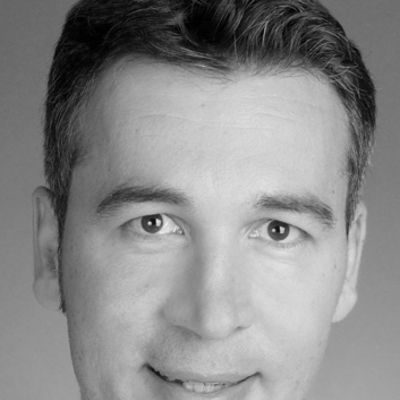
Valery Afanasiev is a Tenured Research Professor at the School of Applied Mathematics, HSE Tikhonov Moscow Institute of Electronics and Mathematics (HSE MIEM) since 2012. His academic career spans over five decades, including roles at Moscow Institute of Electronics and Mathematics and part-time professorship at Moscow State University's Department of Physics since 2011. Doctor of Sciences in System Analysis, Management and Information Processing (1983) Candidate of Sciences (PhD) in Control Systems (1972) Master's Degree in Electronic Engineering (1966) His research focuses on optimal control and nonlinear systems , particularly through differential games and parametric optimization . Key contributions include viscosity solutions for Bellman-Isaacs equations and adaptive filtering algorithms for cosmic radiation parameters. Recent publications highlight his work on: Extended linearization methods for nonlinear systems Differential games with multiple pursuers and evaders Tracking problems under bounded disturbances Control of nonlinear systems with state-dependent parameters Scientific recognition includes: Best Teacher Award (2015) He supervises doctoral theses on control systems and has authored influential textbooks such as Mathematical Theory of Control Systems Design and Control of Uncertain Dynamic Objects .
Dr. Ernestas Filatovas is a Senior Researcher and Chief Researcher in the Project at Vilnius University's Institute of Data Science and Digital Technologies (formerly Institute of Mathematics and Informatics), where he has been affiliated since 2013. He leads the Blockchain and Quantum Technologies Group, focusing on cutting-edge research at the intersection of quantum computing, blockchain, and artificial intelligence. Previously, he served as an Associate Professor and Lecturer at Vilnius Gediminas Technical University's Faculty of Fundamental Sciences from 2013 to 2019. Dr. Filatovas earned his Doctor of Technology in Computer Science Engineering from Vilnius University Institute of Mathematics and Informatics in 2012. His dissertation, supervised by Prof. Dr. Olga Kurasova, focused on the interactive solution of multi-criteria optimization problems. His research spans multiple high-impact domains, with particular expertise in blockchain technologies, quantum computing, artificial intelligence, and machine learning. He has pioneered work in quantum blockchain implementations, reproducibility of AI research through blockchain verification, and quantum machine learning applications. His research bridges theoretical computer science with practical applications in financial markets, healthcare, and distributed systems. His extensive publication record—over 50 scientific papers, with more than 25 in Clarivate Analytics-indexed journals—demonstrates consistent productivity and international collaboration. Recent work shows a clear trajectory toward quantum-enhanced AI systems, blockchain-based research verification frameworks, and quantum algorithms for practical problems. Laureate of the 4th LMA Young Scientists' Conference (2014) INFOBALT scholarship 2nd place winner (2014) Lithuanian State Science and Studies Foundation funding recipient (2009, 2010) Recognized as one of Lithuania's most active doctoral students Master's degree with honors (2006) Dr. Filatovas leads multiple significant research projects, including the 2021-2024 project 'Solving the problems of reproducibility of scientific research in the field of artificial intelligence using blockchain technologies' as team leader, and the 2023-2027 project 'Development and validation of quantum machine learning methods using prepared datasets' as Chief Researcher. He has also contributed to international collaborations such as the Spanish-funded 'High Performance Solutions for Modern Scientific Computing Challenges' (2019-2021). His popular science contributions, including the VU news portal article 'Quantum Computing: Who and Why?', demonstrate his commitment to science communication. As a key member of Vilnius University's Blockchain and Quantum Technologies Group, Dr. Filatovas contributes to Lithuania's growing reputation in quantum computing research and blockchain innovation, working closely with international collaborators across Europe.
Gokhan Serhat is a tenure-track Assistant Professor at the Department of Mechanical Engineering , KU Leuven, stationed at the Bruges Campus. He conducts research within the Mecha(tro)nic Systems Dynamics Group and the M-Group and maintains a guest-scientist affiliation with the Max Planck Institute for Intelligent Systems. Education: Ph.D. in Mechanical Engineering, Koç University, 2018 (Marie Curie Fellow) M.Sc. in Computational Mechanics, Technical University of Munich, 2013 B.Sc. in Mechanical Engineering, Middle East Technical University, 2011 Research interests span computational mechanics, numerical methods, design & topology optimization, structural dynamics, composite materials, fiber-path optimisation, functionally graded structures, and bio-mechanical/haptic modelling. His work integrates high-fidelity simulation, laminate-parameter techniques, and additive-manufacturing constraints to create lightweight, variable-stiffness composite structures and tactile/biomechanical devices. Recent articles (2022-2025) reveal a strong trajectory in composite optimisation (anisotropic topology, lamination parameters, manufacturability) alongside interdisciplinary forays into biomechanics & haptics (fingertip dynamics, tactile displays, skin simulation). The portfolio is evenly split between computational-method development and application-oriented studies in aerospace, automotive, and human-interaction domains. Scientific recognition: Marie Curie Early-Stage Research Fellow (doctoral training grant) Research funding & leadership: Promoter, Flemish project “Fiber path and topology optimization of 3D printed composites” (2023-2027) Promoter, FWO/Flemish project “Concurrent fiber path and topology optimization of 3D printed composites” (2022-2024) He teaches three courses at KU Leuven Bruges: Structural Dynamics , Aerospace Structures & Lightweight Design and Mechatronic Design , and is an active member of the Faculty Council and the Department Council.
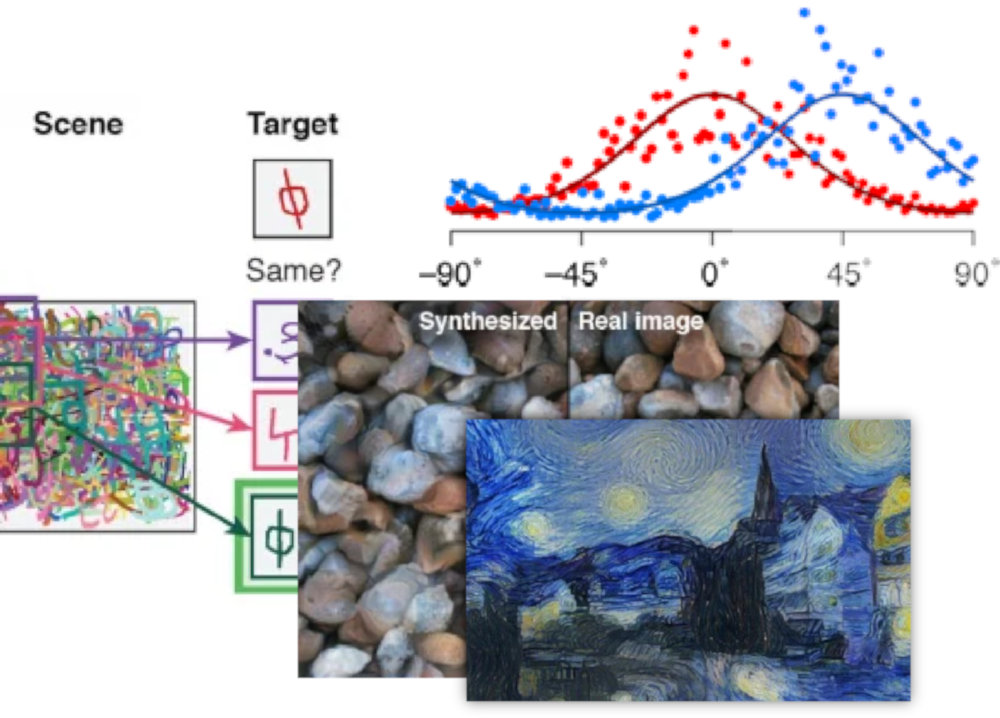
Prof. Dr. Alexander Ecker is Professor of Data Science at the Institute of Computer Science, University of Göttingen, and concurrently holds the prestigious Max Planck Fellow position at the Max Planck Institute for Dynamics and Self-Organization. Since 2020 he also serves on the Executive Board of the Campus Institute Data Science in Göttingen. He leads the Neural Data Science research group, comprising 14 PhD students and 2 postdoctoral researchers, focusing on the interface of machine learning and computational neuroscience. His educational background includes a Dr. rer. nat. in Neuroscience (2014) from the Graduate School of Neural and Behavioral Sciences/IMPRS, University of Tübingen, followed by post-doctoral and group-leader positions at the University of Tübingen and the Max Planck Institute for Biological Cybernetics. Research Interests Machine Learning & Deep Learning: developing novel algorithms for representation learning and generative modeling. Computational Neuroscience: large-scale data-driven modeling of visual cortical circuits. Visual Perception: bridging biological vision and computer vision via biologically inspired architectures. His work has produced a steady stream of influential publications (2019-2025) in leading journals such as Nature Communications , Nature , Nature Methods , PLOS Computational Biology , ICLR , NeurIPS , and CVPR . The publications trend toward integrating high-resolution neural recordings with state-of-the-art machine-learning models to uncover principles of sensory processing, neuron-type classification, and behavior. Scientific Awards & Honors Max Planck Fellow, Max Planck Institute for Dynamics and Self-Organization (ongoing) Executive Board Member, Campus Institute Data Science, Göttingen (since 2020) Teaching, Advising & Grants Regularly teaches advanced courses: “Deep Learning for Image Synthesis”, “Current Topics in Deep Learning”, and “Graph Machine Learning”. Supervises 14 current PhD students and 2 postdocs within the Neural Data Science Group. Offers numerous Bachelor’s and Master’s thesis projects, with topics ranging from neuronal morphology clustering to primate vocalization analysis. Leads or co-leads large collaborative consortia with labs in Göttingen, Tübingen, Baylor College of Medicine, and other institutions across the US and Germany. Labs & Teams The Neural Data Science Group operates at the Institute of Computer Science, University of Göttingen, and is tightly integrated with the Max Planck Institute for Dynamics and Self-Organization. The group maintains active collaborations with over a dozen partner laboratories, including groups led by Fabian Sinz, Andreas Tolias, Thomas Euler, Tim Gollisch, and Viola Priesemann, fostering an interdisciplinary environment that spans computer science, physics, biology, and psychology.
Dr. Venkata Sriram Siddhardh Nadendla serves as an Assistant Professor in the Department of Computer Science within the College of Engineering at Missouri University of Science and Technology. His research bridges theoretical foundations in information theory with practical applications in cyber-physical-human systems across critical infrastructure domains. His educational background includes: PhD in Electrical Engineering and Computer Science from Syracuse University MS from Louisiana State University BE from SCSVMV University, India Dr. Nadendla's research spans cyber-physical-human systems with particular emphasis on human-system interaction , statistical inference , and multi-agent decision making . His work integrates machine learning, game theory, and behavioral decision theory to address challenges in transportation systems, mining safety, and cybersecurity. Recent publications show growing focus on fairness in AI systems and neuromorphic computing applications. Analysis of his 15 most recent publications reveals concentration in transportation systems (20%), cybersecurity (25%), human-AI interaction (30%), and healthcare applications (10%), with remaining work spanning mining safety and theoretical decision frameworks. His research demonstrates consistent progression from theoretical foundations toward practical implementations in critical infrastructure. Dr. Nadendla is actively affiliated with the Center for Intelligent Infrastructure at Missouri S&T, where he contributes to developing smart infrastructure solutions. His work uniquely combines quantum cognition models with traditional game theory approaches to model human decision-making in complex systems.
Prof. Dr. Didier Stricker is a leading academic in computer science, serving as Scientific Director at the German Research Center for Artificial Intelligence (DFKI) and Professor at the University of Kaiserslautern-Landau (RPTU). His career spans over two decades, including leadership roles at Fraunhofer IGD and founding the Augmented Vision research unit at DFKI/RPTU, which now includes ~30 researchers. Education: Electrical Engineering (Technical University of Grenoble, Karlsruhe) PhD: Computer Vision-based Calibration and Tracking Methods for Augmented Reality (2002, TU Darmstadt) His research focuses on virtual and augmented reality , computer vision , human-computer interaction , and on-body sensor networks . He leads major EU/national projects like LUMINOUS (Language-Augmented XR) and SHARESPACE (Ethical Hybrid Shared Spaces), with industrial partnerships including Sony, Google, and John Deere. Recent publications emphasize 3D reconstruction , neural network optimization , and XR systems . Key trends include event camera processing , scene flow estimation , and multimodal AI for industrial applications . He holds patents in AR tracking and has received the 2006 Innovation Prize from the German Society of Computer Science. Scientific Awards : Innovation Prize (2006) Best Paper/Demonstration Awards at ISMAR, EUSIPCO, CVPR, and ICRA As a reviewer for journals and conferences in VR/AR and computer vision, he contributes to shaping research standards. His lab ( AG Augmented Vision ) combines academic and industrial collaborations to advance cognitive interfaces and extended reality systems.
Dr. Jun Li is a Senior Lecturer at the School of Computer Science, Faculty of Engineering and Information Technology, University of Technology Sydney (UTS), Australia. He received his Ph.D. in Computer Science from Queen Mary University of London in 2009 and is affiliated with the Australian Artificial Intelligence Institute (AAII) at UTS. His research spans multiple domains within artificial intelligence, with primary focus on Machine Learning applications in computer vision and 3D geometry. Dr. Li has published extensively in high-impact journals including IEEE Transactions (TPAMI, TIP, TNNSLS) and Pattern Recognition, with recent work expanding into interdisciplinary research in earth science and marine applications. His research output demonstrates consistent productivity with numerous publications each year across diverse AI application areas. Dr. Li's work shows strong thematic progression from foundational computer vision techniques to applied interdisciplinary research. Early work focused on face hallucination and video super-resolution, while more recent publications address environmental applications using Graph Neural Networks for wave prediction and damage classification for disaster response. His research consistently bridges theoretical AI advances with practical real-world applications across healthcare, autonomous systems, and environmental science. AI to assist disaster emergency response (2023-2026) Applying Generative Adversarial Network in Medical Image Analysis (2020-2021) Big Massive Open Online Course (MOOC) Data Retrieval (2017-2020) As an educator, Dr. Li teaches core courses including '31005 Machine Learning' and '32513 Advanced Data Analytics Algorithms' at UTS, and is available for Masters Research and PhD student supervision, contributing to the development of next-generation AI researchers.
Turo-Kimmo Lehtonen is Professor of Sociology at Tampere University's Faculty of Social Sciences, where he has served since 2012 and previously held the position of Head of Discipline (2014-2020). His academic journey includes professorship at the University of Helsinki (2009-2012) and fellowship at the Helsinki Collegium for Advanced Studies (2005-2009; 2012-2014), where he also served as Deputy Director (2013-2014). Lehtonen's research spans three interconnected domains: the sociology of risk and insurance, waste studies, and social philosophy with emphasis on materiality. His conceptually informed empiricism approach conducts 'fieldwork in philosophy' through empirical case studies, examining how material objects and technologies shape social life. He directs the Pragmatics of Uncertainty Research Group and leads major externally funded projects within the WISE and LONGRISK consortia focused on climate change adaptation. His publication record demonstrates consistent contributions to understanding insurance technologies, waste practices, and material sociality. Recent work analyzes climate governance in municipalities, digital behavioral insurance, and the gift economies of dumpster diving. Lehtonen has published in top journals including Theory, Culture & Society, Journal of Cultural Economy, and Anthropological Theory, with his 2024 work on environmental ethics continuing this trajectory. Science Pen of the Year award recipient Author of influential books including 'Material Community' (2008/2015) and 'The Power of Money' (1999) Recipient of multiple Academy of Finland research grants Lehtonen's teaching reflects his research interests, encompassing courses on sociological thinking, climate change preparedness, and the construction of social reality. His collaborative approach is evident in numerous co-authored publications with scholars like Olli Pyyhtinen, particularly on waste studies. His work bridges theoretical sophistication with empirical rigor, making significant contributions to economic sociology, science and technology studies, and environmental sociology.
Dr. Suruz Miah is an Associate Professor in the Department of Electrical and Computer Engineering at Bradley University's Caterpillar College of Engineering & Technology, with a joint appointment as Adjunct Professor at the University of Ottawa. He holds a Ph.D. in Electrical and Computer Engineering from the University of Ottawa and a B.Sc. in Computer Science and Engineering from Khulna University of Engineering & Technology. His research focuses on cyber-physical systems with specialization in: Mobile robot navigation and control systems Multi-agent systems and distributed control Reinforcement learning applications in robotics Autonomous vehicle technologies Biomedical sensor systems RFID and sensor network applications He leads the Cyber-Physical Systems Laboratory at Bradley and collaborates with the Machine Intelligence, Robotics, and Mechatronics Laboratory at Ottawa. Dr. Miah's recent publication trends show strong focus on: Reinforcement learning for robotic control (6 of 15 recent papers) Multi-agent coordination systems (4 papers) Biomedical sensor applications (3 papers) Aerial and ground robotics (5 papers) Autonomous vehicle technologies (3 papers) He has developed several courses including Autonomous Robotics and Introduction to Mechatronics and teaches both undergraduate and graduate courses in control systems, robotics, and embedded systems. Professional service includes: Senior Member of IEEE Associate Editor for IEEE Transactions on Industrial Informatics Reviewer for 10+ IEEE journals and conferences
Dr Phil Birch serves as Associate Professor in the Department of Engineering and Design within the School of Engineering and Informatics at the University of Sussex. He holds dual leadership roles as Head of Research for his department and Impact Lead for REF Unit of Assessment 12. His academic foundation includes a BSc and PhD from Durham University (awarded 1999), along with professional certifications as Chartered Physicist (CPhys) and Chartered Scientist (CSci). Dr Birch's research spans three interconnected domains: Computer Vision & Deep Learning: Specializing in object tracking (drones, humans), medical image analysis, and low-light enhancement Optical Physics: Focusing on liquid crystal devices, computer-generated holograms, and optical metrology Applied AI Systems: Developing practical implementations for UAV navigation, medical diagnostics, and security systems His recent publications (2024-2025) demonstrate strong activity in transformer-based tracking, diffusion model augmentation for medical imaging, and drone-based agricultural monitoring, with 15+ papers in high-impact venues including IEEE Transactions and SPIE conferences. Current funding includes an Innovate UK grant (2020-2024) for multi-modal security systems combining camera and sensor data. He leads the Industrial Informatics and Signal Processing research group, maintaining active industry collaborations while supervising PhD projects in optical AI systems. His lab resources include optical instrumentation, UAV testbeds, and access to high-performance computing for deep learning development.
Erik Schaffernicht serves as a Senior Lecturer in the Department of Natural Sciences and Technology at Örebro University's School of Science and Technology. His research is primarily conducted through the Center for Applied Autonomous Sensor Systems (AASS) where he leads work in the Adaptive and Interpretable Learning Systems and Robot Navigation and Perception research groups. Dr. Schaffernicht's research spans multiple areas in robotics and artificial intelligence, with particular expertise in sensor systems, behavior trees, and gas distribution mapping. His work bridges theoretical computer science with practical applications in autonomous systems, environmental monitoring, and human-robot interaction. His research often involves developing novel algorithms for robot perception, control, and decision-making in complex environments. His recent publications demonstrate a strong focus on behavior trees for robot control, gas distribution mapping techniques, and applications of machine learning in robotics. The research shows increasing sophistication in using deep learning approaches for environmental sensing and robot navigation, with applications ranging from industrial safety to healthcare monitoring. Dr. Schaffernicht maintains an active research agenda with numerous publications in top robotics and AI venues, including IEEE Robotics and Automation Letters, Robotics and Autonomous Systems, and various IEEE conference proceedings. His work shows consistent collaboration with researchers across Europe, particularly with the AASS research center at Örebro University. His research projects include both ongoing work on automatic cognitive screening tests using eye-tracking technology and completed projects such as AIR (Action and Intention Recognition), RAISE (Robotic System for Air Quality Assessment), and SmokeBot (Mobile Robots for Disaster Site Inspection).
Prof. Maria Dienerowitz is a Professor at Ernst Abbe University of Applied Sciences Jena specializing in laser technology and biophotonics. She teaches core courses including Laser Technology, Quantum Optics, and Vacuum Technology across Bachelor's and Master's programs while leading three major research initiatives: BioLOC (Carl-Zeiss-Stiftung-funded Lab-on-a-Chip system for molecular dynamics), OPTO (historical spectacle lens analysis with the German Optical Museum), and TOOLS (DFG-funded tailored optics for life sciences). Her research centers on advanced optical manipulation techniques including the ABEL trap for single-molecule studies without surface binding and holographic optical tweezers for nanoparticle control. Key focus areas encompass real-time enzyme kinetics of molecular motors like F-ATP synthase, single-molecule FRET dynamics , and nanoparticle characterization in biological contexts. This work bridges fundamental physics with biomedical applications through innovations in trapping methodology and optical instrumentation. Analysis of her 15 most recent publications reveals strong continuity in optical trapping methodologies with increasing biomedical applications since 2020. Her work demonstrates consistent contributions to single-molecule biophysics (particularly molecular motor studies), nanoparticle manipulation , and optical instrumentation development , with growing emphasis on life science interfaces evident in her Carl-Zeiss-Stiftung and DFG-funded projects. Prof. Dienerowitz currently oversees a research team comprising scientific staff members working across the BioLOC, OPTO, and TOOLS projects, including Dr. Jakub Malohlava (TOOLS), Maryam Shahrezaei (BioLoc), and Frederic Braun (TOOLS). Her laboratory infrastructure supports optical trap development, nanoparticle characterization, and molecular dynamics studies through equipment funded by the Carl-Zeiss-Stiftung and German Research Foundation.
Prof. Reiner Marchthaler is a Professor at Esslingen University of Applied Sciences within the Faculty of Computer Science and Information Technology. He serves as Deputy Director of the Institute for Intelligent Systems (IIS), Scientific Director of the Green IT 2026 Conference, and Liaison Lecturer for the Friedrich Ebert Foundation. His academic leadership spans autonomous systems research and educational initiatives in embedded technologies. His research centers on Embedded Systems and Sensor Data Fusion, with pioneering work on Kalman filters for autonomous systems. He maintains the authoritative resource kalman-filter.de and has developed real-time capable SLAM algorithms, camera-based reference systems, and parking space detection frameworks. His expertise extends to entropy-based safety evaluation in autonomous driving and semantic segmentation using mixed real/synthetic data. Analysis of his 2020-2025 publications reveals dominant trends in autonomous driving systems, emphasizing real-time sensor fusion, deep learning for perception, and safety validation. Key subfields include adaptive Kalman filtering (ROSE-Filter), landmark-based navigation, neural network training with synthetic data, and maximum entropy safety frameworks. His work bridges theoretical innovation with automotive applications, particularly in model vehicle testing environments. Prof. Marchthaler leads research at the Institute for Intelligent Systems, directing the Green IT 2026 initiative and advising the Friedrich Ebert Foundation. His team develops ROS-based validation environments for autonomous algorithms and maintains the Kalman filter knowledge portal. Current projects focus on connected traffic systems using conventional infrastructure landmarks and entropy-optimized safety protocols for production vehicles.