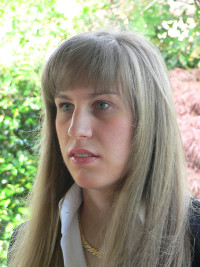
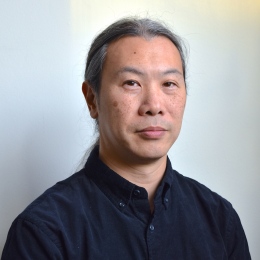
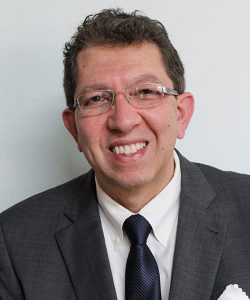
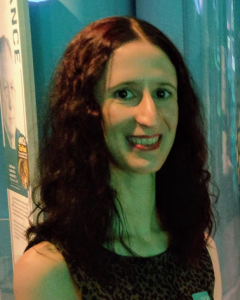
Akie Iriyama is a Professor at the Graduate School of Business and Finance, Waseda University, with affiliations to the Faculty of Commerce and Graduate School of Advanced Science and Engineering. Their research bridges practical and theoretical aspects of entrepreneurship, international business, and strategic management. Education: PhD, University of Pittsburgh, Joseph M. Katz Graduate School of Business M.A. and B.A., Keio University, Tokyo, Japan Research Focus: Globalization of venture capital and transnational technical communities Strategic responses to informal and foreign rivals in emerging markets Equity ownership dynamics in international joint ventures Technology sourcing and real options theory in MNC subsidiaries Paper Trends: Recent publications analyze competitive actions in non-market spaces, reverse technology transfer mechanisms, and equity ownership evolution in international partnerships. Common themes include cross-border knowledge flows, strategic paradoxes in outsourcing, and institutional factors shaping innovation. Scientific Awards: Waseda University Teaching Award (2016) Best paper award nominee (Academy of Management, 2016) Dean’s Discretionary Award (SUNY Buffalo, 2010) Nominated for Haynes Prize (Academy of International Business, 2010) Nominated for Best Conference Papers (Strategic Management Society, 2008) Research Projects: Current projects include large-scale data analysis of urban startup location strategies in Japan (2020-2024) and studies on multi-partner international joint ventures.
Giulia Giordano is a Full Professor in the Department of Industrial Engineering at the University of Trento, Italy, where she leads the Dynamical Networks and Systems Biology research group. She also holds a dual appointment as Visiting Professor and Delft Technology Fellow at the Delft Center for Systems and Control, Delft University of Technology, The Netherlands. Her career includes previous positions as Assistant Professor at Delft University of Technology (2017-2019), Postdoctoral Research Fellow at Lund University, Sweden (2016-2017), and Research Fellow at the University of Udine, Italy (2016). Giulia earned her Ph.D. in Industrial and Information Engineering: Automation (Excellent) from the University of Udine with a thesis titled "Structural Analysis and Control of Dynamical Networks." She completed her M.Sc. and B.Sc. in Electrical Engineering (both Summa cum laude) at the same institution. She also undertook research visits at Caltech (2012) as a SURF Fellow and at the University of Stuttgart (2015) as a DAAD Research Scholar. Her primary research focuses on the analysis and control of dynamical networks with applications in systems biology, mathematical ecology, and mathematical epidemiology. She develops mathematical frameworks that bridge control theory, network theory, and dynamical systems to address complex problems in biological systems. Her recent work spans epidemic modeling, opinion dynamics, biochemical networks, and neurological disorders, with a particular emphasis on structural analysis of networked systems. She employs both theoretical and computational approaches to understand system behavior under uncertainty. Giulia's publications reveal a strong interdisciplinary focus, spanning from theoretical control systems to practical applications in epidemiology and biology. Her recent work shows increasing emphasis on epidemic modeling (particularly related to mpox and SARS-CoV-2), network synchronization, and the application of control theory to biological phenomena like fibromyalgia pathogenesis and opinion formation. Many of her papers appear in top-tier control journals including Automatica and IEEE Transactions on Automatic Control. 2024: Outstanding Service as Associate Editor of IEEE Control Systems Letters 2021: SIAM Activity Group on Control and Systems Theory Prize 2020: Outstanding Reviewer, Annals of Internal Medicine 2017: NAHS Best Paper Prize and EECI PhD Award 2016: Outstanding TAC Reviewer, IEEE Transactions on Automatic Control Giulia actively mentors students and postdoctoral researchers, currently supervising five postdoctoral researchers and two Ph.D. students at the University of Trento. She has advised numerous M.Sc. and B.Sc. students on topics ranging from bio-inspired modeling to optimal control of epidemic systems. Her research is supported by competitive grants including the ERC Starting Grant INSPIRE (Integrated Structural and Probabilistic Approaches for Biological and Epidemiological Systems). She serves as Associate Editor for IEEE Control Systems Letters and Automatica, and is a Senior Member of IEEE and the Control Systems Society. Giulia leads the Dynamical Networks and Systems Biology research group at the University of Trento, which maintains strong international collaborations across Europe and North America. The group's work combines theoretical advances in control theory with practical applications to pressing problems in public health and biological systems, demonstrating the power of mathematical approaches to understanding complex phenomena in the life sciences.
Cheuk Wai Tai is a Senior Staff Researcher at Stockholm University's Department of Environmental and Materials Chemistry since 2009. He manages the transmission electron microscopes and sample preparation equipment at the Electron Microscopy Center and serves as Section Editor for the Journal of Electronic Materials. His work focuses on quantitative structure characterization in functional materials research, particularly within nanoscience and nanotechnology contexts. Education: Ph.D. in Applied Physics, The Hong Kong Polytechnic University, 2004 M.Phil. in Applied Physics, The Hong Kong Polytechnic University, 2001 M.Sc. in Physics, The Chinese University of Hong Kong, 1998 B.Sc. (Hons) in Engineering Physics, The Hong Kong Polytechnic University, 1997 Dip. in Mechanical Engineering (Computer Aided Engineering), Institute of Vocational Education (formerly Haking Wong Technical Institute), Hong Kong, 1992 His research centers on structure-property relationships in functional materials through advanced electron microscopy techniques. Current specializations include Pair Distribution Function (ePDF) & Diffuse Scattering, Energy Materials characterization, and EM sample preparation methodology development. The group maintains strong focus on translating structural data into functional performance metrics for nanomaterials. Recent publications (2013-2019) demonstrate consistent emphasis on electron microscopy applications for energy storage materials (batteries, photocatalysts) and functional ceramics. Key trends include structural disorder analysis in piezoelectrics, development of quantitative TEM methods like SUePDF, and nanoscale characterization of electrocatalyst surface phases. His work bridges materials chemistry with advanced imaging techniques. Scientific recognition includes: Fellow of The Royal Microscopical Society (U.K.) Senior Member of IEEE Marie Curie Fellowship (2007-2009) from European Commission Sir Edward Youde Memorial Fellowship (2003/2004) from Hong Kong S.A.R. Government He teaches Solid State Chemistry (KZ7003) and leads Introduction to Analytical Electron Microscopy (KZ8009), having previously taught Advanced Transmission Electron Microscopy (KZ8010) before 2011. Major grants supporting his work include: "Quantitative structural characterisation using 3D electron-based pair distribution function" (Swedish Research Council) "A Multidimensional Toolkit for Modern Electron Microscopy" (Swedish Foundation for Strategic Research) "Mitigating Ni-rich Li-ion cathode side-reactions" (Swedish Energy Agency, Co-applicant) He leads the Cheuk-Wai Tai group within Stockholm University's chemistry department and oversees operations at the Electron Microscopy Center, where his team develops and applies advanced characterization techniques for functional materials research.
Marios Polycarpou is a Professor of Electrical and Computer Engineering and Director of the KIOS Research and Innovation Center of Excellence at the University of Cyprus. He holds honorary positions at Imperial College London and is a member of Academia Europaea. His expertise spans intelligent systems, adaptive control, machine learning, and critical infrastructure. Education: B.A. Computer Science (Rice University, 1987) B.Sc. Electrical Engineering (Rice University, 1987) M.S. Electrical Engineering (University of Southern California, 1989) Ph.D. Electrical Engineering (University of Southern California, 1992) Research Focus: Polycarpou’s work emphasizes fault diagnosis in cyber-physical systems, water distribution networks, and adaptive control. He pioneers digital twin technologies for infrastructure resilience and develops algorithms for real-time anomaly detection and system optimization. Article Trends: His recent publications address adaptive control strategies, cybersecurity in networked systems, and AI-driven solutions for water management. Key themes include distributed control, event-triggered mechanisms, and transformer-based anomaly localization. Awards: 2023 IEEE Frank Rosenblatt Technical Field Award 2016 IEEE Neural Networks Pioneer Award Fellow of IEEE and IFAC Grants & Leadership: He secured prestigious grants including ERC Advanced and Synergy Grants. He led KIOS CoE’s Horizon 2020 projects and served as IEEE Computational Intelligence Society President (2012–2013). Labs & Teams: Directs the KIOS CoE, a hub for AI in critical infrastructure. Collaborates on projects like ERC Water-Futures, focusing on long-term water system transitions and contamination mitigation.
Olivia Di Matteo serves as an Assistant Professor in the Department of Electrical and Computer Engineering within UBC's Faculty of Applied Science, leading the Quantum Software and Algorithms Research (QSAR) group since her January 2022 appointment. Her academic foundation includes a BSc from Lakehead University and MSc/PhD in Physics (Quantum Information) from the University of Waterloo, completed in 2019. Dr. Di Matteo's research centers on quantum software engineering , with pioneering work in quantum compilation , circuit optimization , and debugging tools . She champions open-source quantum frameworks and develops accessible educational resources to democratize quantum computing. Analysis of her 15 most recent publications (2021-2025) reveals dominant trends in quantum programming infrastructure, particularly circuit analysis (33%), bug classification (20%), and qubit network optimization (15%), with strong emphasis on practical software tooling over theoretical physics. No scientific awards were documented in the source materials. She advises graduate students in the QSAR group while contributing to open-source quantum ecosystems through projects like PennyLane and The Ionizer transpiler, and teaches courses including CPEN 400Q (Gate-model quantum computing) and ELEC 221 (Signals and Systems). The QSAR group operates at the intersection of quantum software development and education, focusing on making quantum programming accessible through visual tools, real-time debugging environments, and hardware-agnostic compilation techniques.
Sri Kolla, Ph.D. is a tenured Professor in the Department of Electronics and Computer Engineering Technology at Bowling Green State University (BGSU) , where he has served since August 2002. He also served as a Visiting Professor at the Indian Institute of Science (2017) and as a Fulbright Research Scholar (2008-2009). His academic career spans faculty roles at Penn State University, University of Toledo, and consortium graduate faculty at Indiana State University. Education: Ph.D. in Electrical Engineering and Computer Science (University of Toledo, 1989) M.S. in Electrical and Computer Engineering (University of Saskatchewan, 1986) M.E. in Electrical Engineering (Indian Institute of Science, 1983) B.E. in Electrical Engineering (Andhra University, 1981) Research Interests: Dr. Kolla specializes in Electrical Power and Energy Systems with Smart Grid applications, Control Systems for networked environments, and Machine Learning techniques for power system diagnostics. His work focuses on fault detection in microgrids using LSTM networks, stability robustness of discrete-time systems, and multi-agent protection schemes for power infrastructure. Scientific Contributions: Developed robust control frameworks for microgrid systems under parameter variations (2023-2025) Pioneered AI-based fault identification in induction motors and transformers (1995-2000) Advanced networked control system designs addressing time delays (2002-2012) Published 82+ technical articles in IEEE, ISA Transactions, and conference proceedings Honors and Recognition: Recipient of the Fulbright-Nehru Academic and Professional Excellence Award and Whiteford Scholarship . Senior member of IEEE and ISA , with listings in Marquis Who’s Who and fellowships in The Institute of Engineers (India) .
Dr. Julie Fosdick is an Associate Professor in the Department of Earth Sciences at the University of Connecticut. She directs the Basin Analysis and Helium Thermochronology Laboratory and serves as Undergraduate Research Coordinator. Her educational background includes: PhD and MS in Geological & Environmental Sciences (Stanford University) BS in Geological Sciences (UC Santa Barbara, high honors) She completed an NSF Earth Science Postdoctoral Fellowship at the University of Arizona. Fosdick's research reconstructs: mountain-building and erosion processes through: Detrital thermochronology of orogenic systems Sedimentary basin analysis Tectonic-sedimentation interactions Paleotopography evolution Her NSF CAREER Award supports studies of sediment recycling in Argentina's Sierras Pampeanas. Current investigations examine: Post-glacial landscape evolution in Arctic Canada Andean hinterland tectonic development San Andreas Fault dynamics through Neogene deposits Greenland paleoclimate from subglacial sediments Her lab employs multi-method geochronology and thermal history modeling. Fieldwork spans global locations including: Argentine Andes Alaskan Range Greenland ice sheet California fault systems She maintains active collaborations across geoscience disciplines.
Dr. Xue Dong (Sarah Dong) serves as a Research Fellow at the Arndt-Corden Department of Economics within the Crawford School of Public Policy at the Australian National University. Her work focuses on Indonesian socio-economic development, particularly labor markets, gender equality, and policy interventions in education and business formalization. Education: PhD in Economics from the University of Western Ontario Research Focus: Dr. Dong employs empirical methods including randomized controlled trials to investigate electoral impacts on public spending, financial aid accessibility for low-income students, and microenterprise registration barriers. Her fingerprint analysis reveals 100% concentration on Indonesian contexts with strong emphasis on labor markets (90%) and gender equality (71%). Publication Trends: Recent outputs (2023-2025) demonstrate methodological rigor in causal analysis of policy reforms, with consistent regional specialization in Indonesia. Her work bridges academic research and practical development solutions through partnerships with Indonesian institutions. Project Leadership: As Co-Investigator on three major grants, she examines corporate social responsibility in emerging economies (2022-2026), tax registration for MSMEs (2018-2020), and foreign aid effectiveness (2016-2021). These projects involve multi-institutional collaborations across Australia and Indonesia. Academic Service: Registered to supervise graduate students at ANU, she contributes to gender equality discourse through editorial work including the 2023 ISEAS-Yusof Ishak Institute publication on Indonesian gender dynamics.
Jeff Shamma is the Department Head and Professor of Industrial and Enterprise Systems Engineering (ISE) at the University of Illinois at Urbana-Champaign, holding the Jerry S. Dobrovolny Chair. He is also courtesy Professor in Aerospace Engineering and Mechanical Science and Engineering. Formerly, he held the Julian T. Hightower Chair at Georgia Institute of Technology and faculty positions at KAUST. Dr. Shamma earned his PhD in Systems Science and Engineering from MIT (1988) and a BS in Mechanical Engineering from Georgia Tech (1983). He is a Fellow of IEEE and IFAC, recipient of the IFAC High Impact Paper Award, AACC Donald P. Eckman Award, and NSF Young Investigator Award. His research spans Decision and Control , Game Theory , and Multi-Agent Systems , focusing on human-machine networks, distributed autonomy, and adaptive robotic systems. Recent work examines crowd dynamics, risk-sensitive control, and feedback linearization for constrained optimization. Jeff has served as Editor-in-Chief of IEEE Transactions on Control of Network Systems (2020–2024) and held editorial roles in journals like Annual Reviews in Control and IEEE Transactions on Robotics . His 15 most recent publications (2024–2025) analyze learning dynamics, multi-agent optimization, and UAV-crawler systems, reflecting trends in autonomous systems, game-theoretic modeling, and industrial inspection technologies. Scientific distinctions include: Fellow of IEEE and IFAC IFAC High Impact Paper Award (2020) AACC Donald P. Eckman Award (1996) NSF Young Investigator Award (1992) Mohammed Dahleh Distinguished Lecture Award (2013) Dr. Shamma advises current PhD students Hassan Abdelraouf, Aya Hamed, and Nawaf Otaibi, with former advisees including Sarah Toonsi (2025) and Fat-hy Rajab (2025). His lab integrates theoretical research with applied projects like FalconScan, a UAV-crawler system for industrial inspection, and develops magnetic legs for curved surface UAV landing.
Themistoklis Sapsis is a Professor in the Department of Mechanical Engineering at the Massachusetts Institute of Technology (MIT), where he also holds an affiliation with the MIT Institute for Data, Systems, and Society. He earned his Ph.D. in Mechanical Engineering from MIT in 2011 and previously served as an Assistant Research Scientist at NYU’s Courant Institute of Mathematical Sciences. His research focuses on developing analytical, computational, and data-driven methods to predict and quantify extreme events in high-dimensional nonlinear systems, such as turbulent fluid flows and mechanical systems. Key areas include probabilistic modeling of climate extremes, machine learning for climate simulation corrections, and uncertainty quantification in complex dynamical systems. Recent work emphasizes applications in ocean engineering (e.g., vortex-induced vibrations, wave energy systems) and environmental science (e.g., spatially resolved climate extremes, bias correction in Earth system models). His methodologies combine stochastic emulators, Bayesian experimental design, and neural networks to address challenges in data sparsity and model fidelity. Notable contributions include frameworks for correcting coarse-scale climate simulations using machine learning, real-time ocean temperature reconstruction from satellite data, and data-driven modeling of hydrodynamic interactions in marine risers. His research bridges theoretical developments with practical applications in energy systems, structural monitoring, and autonomous systems. Prof. Sapsis collaborates with interdisciplinary teams and has contributed to initiatives such as FIRSTLING-DIGIMAR (a marine riser digital twin) and multi-fidelity frameworks for autonomous seakeeping. His work is supported by grants focused on advancing machine learning in scientific modeling and extreme event prediction.
Fan Zhang is an Assistant Professor in the Department of Computer Science at Yale University. He holds a Ph.D. from Cornell University, advised by Ari Juels, and a B.S. from Tsinghua University. His research focuses on computer security, applied cryptography, decentralized systems, blockchains, and trusted execution environments (TEEs). He leads the Decentralized Systems Group at Yale and is affiliated with the IC3, CDCC, and CADMY centers. He teaches courses on blockchain and real-world cryptography. Key research interests include blockchain decentralization, privacy-preserving protocols, and secure distributed systems. Notable contributions include the Town Crier oracle system (acquired by Chainlink), the DECO TLS protocol, and foundational work on transaction order fairness and MEV mitigation. Awards include the Ethereum Foundation Academic Grant (2022) and the IBM PhD Fellowship (2018-2020). His work has been published in top venues like CCS, S&P, CRYPTO, and USENIX Security.
Nicholas Feltovich is a Professor of Economics at Monash University, specializing in experimental economics, game theory, and behavioral economics. His research focuses on understanding strategic behavior in markets, bargaining institutions, and decision-making under uncertainty, with notable contributions to schizophrenia-related loss aversion studies and experimental political science. He holds a PhD in Economics from the University of Pittsburgh (1997) and a BS in Mathematics from Virginia Tech (1991). Education PhD in Economics, University of Pittsburgh, 1997 BS in Mathematics, Virginia Polytechnic Institute and State University, 1991 Research Interests His work explores experimental investigations of market institutions, bargaining power dynamics, and social norms. Key topics include the effects of communication in strategic interactions, the role of fairness perceptions in pricing, and the application of neuroeconomic methods to study decision-making impairments in schizophrenia. He has conducted influential studies on corporate social responsibility, leadership in public goods provision, and the impact of leniency programs on collusion. Grant Activities Posted prices, bargaining and auctions : ARC-funded project (2014–2019) examining experimental economics of market mechanisms. Effect of bargaining power : ARC project (2013–2018) analyzing institutional and normative influences on bargaining outcomes. Collaborations He collaborates internationally on projects spanning behavioral ethics, experimental game theory, and schizophrenia-related economic behavior. His work contributes to the UN Sustainable Development Goal on Quality Education through applied research in decision-making frameworks.
Dr. Azadeh Ghari-Neiat is a Senior Lecturer in Software Engineering at the University of Queensland's School of Electrical Engineering and Computer Science. She completed her PhD in Computer Science from RMIT University in 2018. Prior to joining UQ, she held academic positions at Deakin University as a Senior Lecturer and at the University of Sydney as a postdoctoral research fellow. Her research focuses on the intersection of Internet of Things (IoT), Mobile Computing, Crowdsourcing, and Cybersecurity. She develops innovative solutions for enhancing connectivity and security in modern computing environments through crowdsourced approaches. Key areas include service composition in sensor clouds, trust management frameworks, and optimization of drone-as-a-service systems. Her publications demonstrate consistent focus on IoT service ecosystems, with recent work exploring blockchain applications and machine learning techniques for dynamic systems. The research trends show evolution from fundamental service composition to AI-driven optimization in distributed environments. Dr. Ghari-Neiat leads projects involving energy service crowdsourcing and secure architectures for cyber-physical systems. Her work maintains strong emphasis on practical applications in delivery systems, UAV networks, and IoT marketplaces.
Steven M. LaValle is a Professor at the University of Oulu's Faculty of Information Technology and Electrical Engineering since 2018. Previously, he held tenured positions at the University of Illinois Urbana-Champaign (UIUC) and was a Principal Scientist at Oculus VR. His research spans robotics, motion planning (notably pioneering RRT algorithms), virtual reality, and sensor fusion. He has authored influential textbooks like Planning Algorithms and Virtual Reality . Education: PhD (1995), MS (1993), and BS (1990) in Electrical Engineering from UIUC. Research Interests: Focuses on minimal information requirements for robots, perception engineering, and foundational VR/AR systems. His work integrates control theory, computational geometry, and human perception. Achievements: Recipient of the IEEE ICRA Milestone Award (2019), University Scholar (UIUC, 2012), and XTIC Award 2024 for Innovation. Leads the Perception Engineering Group at Oulu, advancing VR/AR and telepresence technologies. Grants & Industry: ERC Advanced Grant (2021–2026), former VP of Huawei's VR/AR division, and collaborator with institutions like IIT Madras. Advises startups in robotics and virtual reality.
Erhan Kutanoglu is an Associate Professor in the Operations Research and Industrial Engineering Graduate Program at The University of Texas at Austin's Cockrell School of Engineering. He joined the faculty in 2002 and received a National Science Foundation Early Career Development Award that year. His research focuses on integrating predictive models with stochastic optimization to address challenges in disaster resilience, humanitarian logistics, and semiconductor manufacturing. Key areas include hurricane mitigation, power grid resilience, and supply chain optimization. Education: PhD in Industrial Engineering from Lehigh University (1999). Research Interests: Applied operations research for manufacturing/service logistics, disaster resilience decision-making, semiconductor cycle time optimization, and inventory modeling. Recent work emphasizes hurricane evacuation planning, flood mitigation for critical infrastructure, and equity considerations in grid resilience. Publications: Over 50 peer-reviewed articles in journals like IEEE Transactions, European Journal of Operational Research, and Annals of Operations Research. Notable work includes models for power grid resilience, patient evacuation strategies, and semiconductor manufacturing efficiency. Awards: NSF CAREER Award (2002), recognized for contributions to service logistics optimization and stochastic modeling. Advising & Grants: Advised graduate students on projects involving hurricane preparedness and semiconductor scheduling. Active in collaborative research with industry partners to streamline manufacturing processes and enhance disaster response systems. Labs/Teams: Engaged with the Cockrell School's infrastructure resilience research groups and interdisciplinary teams addressing climate adaptation challenges.