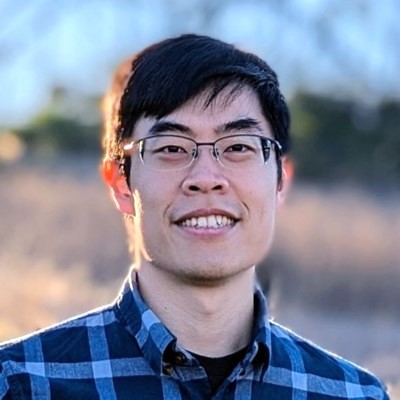
Hao-Wen Dong is an Assistant Professor in the Department of Performing Arts Technology at the University of Michigan, with an affiliation to the Computer Science and Engineering Department. His research focuses on Human-Centered Generative AI for content creation, emphasizing music, audio, and video domains. He holds a Ph.D. in Computer Science from UCSD, advised by Julian McAuley and Taylor Berg-Kirkpatrick. Affiliations: University of Michigan (Primary), UCSD (Ph.D.), National Taiwan University (B.S.) Research Pillars: Generative AI models for new domains, AI-assisted creative tools, and multimodal content creation His work spans music generation (e.g., MuseGAN), audio synthesis (e.g., ViolinDiff), and multimodal systems (e.g., TeaserGen). He has led over 25+ publications in top venues like ISMIR, ICASSP, and ICLR. He advises students in interdisciplinary projects and teaches courses on AI Music and Generative AI for Music/Audio Creation. Notable awards include the Doctoral Award for Excellence in Research (2024) and Rising Stars in AI (2024).
Dr Miao Xu is a Research Fellow at the University of Queensland (UQ), affiliated with the School of Electrical Engineering and Computer Science within the Faculty of Engineering, Architecture and Information Technology. She holds an Australian Research Council DECRA Fellowship (ARC DECRA), recognizing her early-career research excellence. Her research focuses on machine learning, data science, and time series analysis, with applications in healthcare, materials science, and algorithmic fairness. Dr Xu's work addresses challenges in noisy label handling, unlearning mechanisms, and adaptive modeling for irregular data. Education: She earned a Doctor of Philosophy (PhD) from Nanjing University. She is actively involved in supervising research and contributes to the Centre for Enterprise AI at UQ. Research Interests: Dr Xu’s expertise spans machine learning , time series analysis , deep learning , and unsupervised learning . Her recent work emphasizes robust learning with noisy or incomplete labels, model unlearning, and applications in alloy design and medical informatics. She explores methods like instance-attention GNNs for irregular time series and confidence-guided techniques for adversarial attack detection. Publications: Her recent work includes advancements in GNN-based time series modeling, bias mitigation in text classification, and active learning for alloy design. Key themes include improving generalization, reducing algorithmic bias, and enhancing model transparency. Awards: Her ARC DECRA fellowship (202X–202X) supports her research on data-driven methodologies. Supervision & Grants: Available for PhD supervision in machine learning and data science. Her grants include funding for projects in unlearning mechanisms and spatiotemporal modeling. Labs/Teams: Affiliated with the Centre for Enterprise AI at UQ, collaborating on enterprise-scale AI applications and interdisciplinary research.
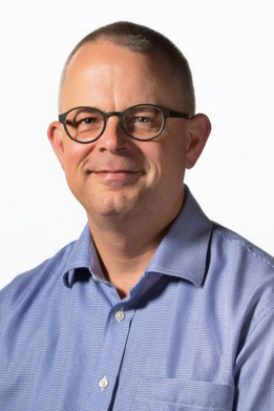
Timothy A. McKay serves as the Arthur F. Thurnau Professor of Physics, Astronomy, and Education at the University of Michigan's College of Literature, Science, and the Arts (LSA), where he also holds the administrative role of Associate Dean for Undergraduate Education. His dual expertise bridges astrophysics research and educational innovation, with significant contributions to both observational cosmology and learning analytics. His educational background includes: B.S. in Physics from Temple University (1986) Ph.D. in Physics from the University of Chicago (1992) McKay's research spans two interconnected domains. In observational cosmology, he pioneered work with major astronomical surveys including the Sloan Digital Sky Survey (SDSS), Robotic Optical Transient Search Experiment (ROTSE), and Dark Energy Survey (DES), focusing on galaxy clusters, cosmic rays, and large-scale structure. Since 2015, he has strategically shifted toward learning analytics, applying data science to transform STEM education. His innovative projects include E 2 Coach (a personalized student support system) and the NSF-funded REBUILD initiative, which creates intergenerational research teams to develop evidence-based teaching practices across physics, chemistry, astronomy, biology, and mathematics. Analysis of his publication trajectory reveals a deliberate pivot from astrophysics to educational research around 2015. While his early work centered on galaxy clusters and cosmological phenomena, recent publications (2020-2024) overwhelmingly focus on systemic equity gaps in STEM education, data-driven interventions, and multi-institutional collaborations. This evolution demonstrates how his data science methodology transitions seamlessly between cosmic structures and educational ecosystems. His scientific recognition includes: Prestigious Arthur F. Thurnau Professorship (awarded for exceptional undergraduate teaching) McKay directs the NSF-funded REBUILD project and the Digital Innovation Greenhouse, securing substantial research funding while mentoring undergraduate and graduate students in interdisciplinary teams. His work with the Big Ten Academic Alliance (CIC) has generated cross-institutional studies on grading patterns, performance disparities, and student support systems, with practical applications implemented across multiple universities. He actively collaborates with faculty across STEM disciplines to develop scalable educational technologies. His research infrastructure includes the Digital Innovation Greenhouse (an educational technology incubator) and REBUILD project teams, which integrate undergraduates, graduate students, postdocs, and faculty in evidence-based educational research. These teams operate at the intersection of data science and pedagogy, developing tools that analyze institutional datasets to personalize student support while maintaining rigorous scientific methodology.
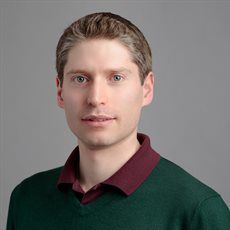
Miroslaw Bober is Professor of Video Processing at the University of Surrey, where he joined in 2011. He leads the Visual Media Analysis team within the Centre for Vision, Speech and Signal Processing (CVSSP) in the School of Computer Science and Electronic Engineering. His extensive industry experience includes 15 years as General Manager of the Mitsubishi Electric R&D Centre Europe and Head of Research for its Visual & Sensing Division. BSc and MSc in Electrical Engineering from AGH University of Science and Technology, Krakow, Poland (1990) MSc in Machine Intelligence with distinction from Surrey University (1991) PhD in Computer Vision from Surrey University (1995) Professor Bober's research focuses on novel techniques in signal processing, computer vision and machine learning with applications in industry, healthcare, big-data and security. His expertise particularly lies in image and video analysis and retrieval, including visual search, object recognition, and analysis of motion, shape and texture. His algorithms for shape analysis, image/video fingerprinting, and visual search are considered world-leading and have been selected for ISO International standards within MPEG, with applications used by organizations like the Metropolitan Police. His recent publication trends show a strong focus on hybrid network architectures, scene graph generation, medical imaging applications, and augmented reality publishing systems. His work spans both theoretical advancements in computer vision and practical implementations addressing real-world challenges in media, healthcare, and security domains. The research demonstrates a consistent pattern of bridging academic innovation with industrial applications, particularly in visual search technology and media analysis. Presidential Award for strengthening the TV business in Japan via innovative 'Visual Navigation' content access technology (2010) Mitsubishi Best Invention Award for Image Signature Technology (2008) Professor Bober serves as Programme Director for the MSc in Multimedia Signal Processing and Communications and holds various teaching and mentoring roles. He has secured over 30 research and industrial grants totaling more than £16M, including the BRIDGET FP-7 project (5.28 M€) as coordinator and PI, and the CODAM project (£1.05 M) as PI. His work with the BBC, Huawei, and other industry partners demonstrates strong industry-academia collaboration. As chair of MPEG technical work on Compact Descriptors for Visual Search (CDVS) and Compact Descriptors for Video Analysis (CDVA), Professor Bober leads international standardization efforts. His Visual Media Analysis team develops cutting-edge visual search and media analysis algorithms with applications across broadcast, security, and healthcare domains.
Dr. Christopher Gilliam is an Assistant Professor in Applied Signal Processing at the University of Birmingham's Department of Electronic, Electrical and Systems Engineering. He holds an MEng (1st Class Hons) in Electrical & Electronic Engineering (2008) and a Ph.D. in Signal Processing (2013), both from Imperial College London. Prior to joining Birmingham in 2022, he was a Postdoctoral Fellow at The Chinese University of Hong Kong (2013–2017) and a Research Fellow at RMIT University, Australia (2017–2022). Research Interests: Sensor signal processing, radar imaging, sampling theory, motion estimation, quantum navigation, and medical imaging. Labs: Microwave Integrated Systems Laboratory (MISL). Committees: Member of IEEE Signal Processing Society and APSIPA Technical Committees. His work focuses on advancing signal processing techniques for radar systems, navigation, and medical imaging. Recent research highlights include drone-based SAR imaging, motion correction in MRI, and fusion of classical/quantum sensors for inertial navigation. He is actively supervising PhD students and contributes to projects sponsored by DSTG. Publications span radar SLAM, probabilistic navigation algorithms, and deep learning-driven medical imaging solutions. His research bridges theoretical signal processing with practical applications in autonomous systems and healthcare.
Professor Ferrante Neri is a faculty member at the University of Surrey, holding the positions of Professor of Machine Learning and Artificial Intelligence and Associate Dean (International) for the Faculty of Engineering and Physical Sciences (FEPS). He is affiliated with the Nature Inspired Computing and Engineering Research Group, Surrey Institute for People-Centred AI (PAI), and the Computer Science Research Centre within the School of Computer Science and Electronic Engineering. His research focuses on optimization, explainable AI, and machine learning, with contributions to memetic computing and differential evolution. Since 2010, he has chaired the IEEE Task Force on Memetic Computing. He advises PhD students in topics like dynamic multi-objective optimization and AI-driven applications. His teaching expertise includes mathematical foundations for computer science. He has supervised students such as Aisha E S E Saeid and Pengjin Wu. Notable research areas include evolutionary algorithms, neural architecture search, and applications in robotics and environmental monitoring. Labs and teams include the Nature Inspired Computing group, which explores AI-driven solutions for complex problems. His work bridges theoretical advancements and practical applications in fields like autonomous systems and deep learning.
Nicolò Cesa-Bianchi is a Professor of Computer Science at the University of Milan, Department of Computer Science (Dipartimento di Informatica), and affiliated with the DEIB Department at Politecnico di Milano. His research focuses on foundational aspects of machine learning, particularly online learning, multi-armed bandits, reinforcement learning, and graph analytics. He is an ELLIS Fellow and a corresponding member of the Accademia Nazionale dei Lincei. Research interests include the design and analysis of algorithms for prediction, clustering, and online decision-making, with applications to digital markets, social networks, and bioinformatics. Notable contributions span cooperative online learning, multitask learning, and bandit algorithms. He co-authored the influential book Prediction, Learning, and Games (2006). Professional roles include Board member of ELLIS, co-director of the Milan ELLIS unit, and involvement in EU initiatives like ELSA (Secure & Safe AI) and ELIAS (AI for Sustainability). He teaches graduate courses on statistical methods, machine learning, and reinforcement learning, with a focus on theoretical foundations. Key awards: ELLIS Fellowship (2020), Corresponding Member of the Accademia Nazionale dei Lincei (Italian National Academy of Sciences). His work bridges theory and practice, addressing challenges in adaptive systems, market design, and algorithmic fairness. Current projects explore distributed learning, regret minimization in adversarial environments, and interpretable models.
Stan Sclaroff is a Professor of Computer Science and Dean of the College of Arts & Sciences at Boston University. He holds affiliated faculty status in the Department of Electrical and Computer Engineering. His research focuses on computer vision, pattern recognition, and machine learning, with expertise in tracking, human motion analysis, and multimedia retrieval systems. He co-leads the Image and Video Computing research group and has contributed pioneering work like the ImageRover content-based image retrieval system. Education: PhD in Media Arts & Sciences from MIT (1995), SM from MIT (1991), and BS in Computer Science and English from Tufts University (1984). Research Interests: Human motion tracking, sign language analysis, deformable shape matching, and multimedia indexing. Notable contributions include early work on content-based image retrieval and foundational techniques in video analysis. Honors: IEEE & IAPR Fellowships, NSF CAREER Award (1996), ONR Young Investigator Award (1996), and BU's Mentor of the Year (2018). Over 40+ students advised, many now in academia and industry leadership roles. Key roles: Chair of BU Computer Science (2007–2013), Associate Dean for Mathematical & Computational Sciences (2015–2018), Interim Dean (2018–2019), and current Dean since 2019.
Nicolas Zufferey is a Full Professor of Operations Management at the University of Geneva, Switzerland, where he has served since 2008. He leads research in optimization methods for complex systems, focusing on applications in supply chain management, production planning, inventory control, and transportation logistics. His affiliations include the Research Institute of Management and collaborations with CIRRELT (Transportation & Logistics) and GERAD (Decision Analysis). Education: PhD in Operations Research (EPFL, 2002), MSc/BSc in Mathematics (EPFL) Prior Experience: Postdoc at University of Calgary (2003–2004), Assistant Professor at Université Laval (2004–2007) Research Interests: His work emphasizes developing advanced metaheuristics (e.g., VNS, Tabu Search, PSO) for challenging optimization problems. Key domains include: Multi-objective scheduling with resource constraints Inventory deployment under uncertainty Network design for supply chains and transportation systems Publications: Over 150 peer-reviewed articles across journals like European Journal of Operational Research , Transportation Research , and INFORMS Journal on Computing . Recent work addresses electric vehicle routing, drone integration in delivery systems, and robust decision-making under uncertainty. Collaborations: Engaged with 35+ universities and 27 private companies globally. Active in applying operations research to industrial problems (e.g., Swiss railways, luxury watch production, pharmaceutical networks).
Professor Pascal Fua is a distinguished faculty member at EPFL (Swiss Federal Institute of Technology) in the School of Computer and Communication Science. He joined EPFL in 1996 and currently serves as Head of the Computer Vision Laboratory (CVLAB). His extensive research spans multiple cutting-edge areas in computer vision and geometric deep learning, with applications ranging from 3D reconstruction to medical imaging and aerodynamic optimization. Dr. Fua's research interests encompass Computer Vision, 3D Reconstruction, Shape Modeling, Geometric Deep Learning, Medical Image Analysis, Augmented Reality, Motion Recovery, Surface Mesh Processing, and Aerodynamic Shape Optimization. His work demonstrates a remarkable ability to bridge theoretical computer vision with practical applications across diverse domains. His research has evolved from traditional geometric computer vision techniques to incorporating deep learning approaches for 3D modeling, with recent focus on differentiable rendering, implicit surface representations, and applications in medical imaging and engineering design. His publication record shows a consistent trajectory of high-impact research, with recent work focusing on differentiable iso-surface extraction, geometric deep learning for aerodynamic shape optimization, and novel approaches to 3D reconstruction. His work spans both theoretical advances in computer vision algorithms and practical applications in medical imaging, autonomous driving, and computational fluid dynamics. IEEE Fellow Multiple ERC Grants recipient Associate Editor of IEEE Transactions for Pattern Analysis and Machine Intelligence Throughout his career, Professor Fua has mentored numerous PhD students who have gone on to make significant contributions in computer vision and related fields. His laboratory has established collaborations across multiple disciplines, including medical imaging, aerospace engineering, and neuroscience, demonstrating the broad applicability of his research. His current work continues to push the boundaries of geometric deep learning and 3D vision, with particular emphasis on making these techniques more practical and applicable to real-world engineering and medical problems.
Zheng Yang is a Professor at Tsinghua University's School of Software, with significant research contributions in cryptography, cybersecurity, and privacy-preserving systems. His work spans multiple institutions including collaborations with University of Helsinki's Secure System Group and Chongqing University of Technology. He maintains active research in both theoretical and applied security domains, with particular focus on industrial applications. Professor Yang's research interests center on cryptographic protocols, authentication mechanisms, and security for emerging technologies. His work addresses critical challenges in Cyber-Physical Systems security, Industrial Internet of Things protection, and privacy-preserving computation. He has made significant contributions to secure key exchange protocols, authentication systems, and defenses against sophisticated network attacks including DDoS mitigation strategies. His research bridges theoretical cryptography with practical implementations for resource-constrained environments. Analysis of Professor Yang's recent publications reveals a strong trend toward practical security solutions for industrial and embedded systems. His work increasingly focuses on balancing security with performance constraints in Cyber-Physical Systems and Industrial IoT environments. Key research themes include lightweight cryptography for resource-constrained devices, privacy-preserving location services, and novel authentication mechanisms that maintain security while minimizing computational overhead. His publications demonstrate consistent innovation in adapting cryptographic techniques to real-world security challenges. Professor Yang has established himself as a leading researcher through his extensive publication record in top security venues including IEEE Security & Privacy, USENIX Security, and ACM conferences. His work has been published consistently in high-impact journals and conferences, demonstrating sustained research productivity and influence in the security community. Professor Yang maintains active research collaborations with numerous institutions globally, evidenced by his extensive co-authorship network. His research has attracted significant funding for projects addressing critical security challenges in emerging technologies. His work on secure authentication protocols and privacy-preserving systems has practical applications across multiple industry sectors. Professor Yang leads research initiatives focused on secure Cyber-Physical Systems and Industrial IoT security. His laboratory work emphasizes practical implementations of cryptographic protocols for real-world systems, with particular attention to performance constraints in embedded environments. Current research directions include secure communication for programmable logic controllers, privacy-preserving location services, and adaptive defenses against sophisticated network attacks.
Catia Pesquita is an Associate Professor in Computer Science at the Faculty of Sciences of the University of Lisbon , where she is also a Senior Researcher at LASIGE and leads the Health and Biomedical Informatics Research Line . With a multidisciplinary background in Biology and Computer Science, she focuses on Artificial Intelligence and Data Science applications in life and health sciences . Her research spans Semantic Web , Biomedical Ontologies , Knowledge Graphs , and Explainable AI , with significant contributions to ontology matching and semantic similarity . Education: PhD in Computer Science - Bioinformatics (2012) MSc in Bioinformatics (2008) Degree in Cell Biology and Biotechnology (2005) Current Projects: KATY (2021-2024): AI-Empowered Personalized Medicine for cancer treatments. BRAINTEASER (2021-2024): AI for ALS and MS disease progression models. Research Outputs: Developed tools like AgreementMakerLight (AML) , KGsim-benchmark , and the Epidemiology Ontology . Over 133 publications with significant citations (32,909 reads, 3,889 citations). Teaching: Lectures advanced topics in Databases , Data Integration , Bioinformatics , and Big Data . Advocacy: Vice-president of Biodata.pt , promoting biological data valorization in Portugal. Actively involved in initiatives to promote computer science careers to young women .
Prof. Dr. Matteo Große-Kampmann is a faculty member at Hochschule Rhein-Waal, serving as Professor of Distributed Systems within the Faculty of Communication and Environment. His research and teaching are centered on building secure, resilient, and reliable digital systems, with a strong emphasis on integrating information security from the earliest stages of system design. He is based at the Kamp-Lintfort Campus and actively leads research in the Cloud Resilience Lab. His research interests span a wide range of cybersecurity domains, including information security awareness, healthcare IT security, mobile and 5G/6G network security, threat modeling, and privacy in smart devices. He advocates for a proactive, design-first approach to security, particularly in increasingly interconnected environments. His work combines technical depth with human factors, examining both system-level vulnerabilities and user behavior in cyber risk contexts. The recent publications reflect a strong focus on applied cybersecurity research, with trends in mobile network penetration testing, privacy in wearables, governmental cybersecurity communication, and security in healthcare and childcare technologies. His work frequently appears in top-tier venues such as DSN, PETS, ESORICS, and ACSAC, often in collaboration with students and international researchers. His scientific contributions have been recognized with awards including an Honorable Mention Award at the International Conference on Mobile and Ubiquitous Multimedia (2024) and a Best Paper Candidate at the ACM Web Conference 2022. He also contributes to the academic community as a reviewer and technical program committee member for major security conferences including NDSS, PETS, ESORICS, and ACSAC. Prof. Große-Kampmann actively supervises bachelor's and master's theses, encouraging students to explore topics such as post-Darknet marketplaces, AI in cybersecurity education, and flood of information challenges. He emphasizes ownership, preparedness, and learning through failure, fostering independent research skills. He collaborates with students and industry partners on practical projects, particularly in the areas of penetration testing and security analysis. He is involved in several research initiatives, most notably the Cloud Resilience Lab , where he and his team investigate real-world security and privacy issues in modern digital systems. His work bridges academic research with practical applications, often receiving media attention, such as coverage in Wired , EFF , and Die Zeit for his study on childcare app security.
Konstantinos Gryllias is a Professor in the Department of Mechanical Engineering at KU Leuven's Faculty of Engineering Sciences. He leads research in the Mechatronic System Dynamics (LMSD) unit at the Arenberg campus. His academic affiliations extend across multiple KU Leuven institutes including Leuven.AI, Leuven.AM (Additive Manufacturing), and the Gravitation Institute. He serves on important governance bodies as a member of the Faculty Council of Engineering Sciences, Faculty Doctoral Committee of Engineering Sciences, and Departmental Council of Mechanical Engineering. Dr. Gryllias specializes in signal processing, fault detection and diagnosis of rotating machinery, condition monitoring, and machine learning applications in structural health monitoring. His research spans linear and nonlinear vibrations, anomaly detection, rotordynamics, and pattern recognition. His work bridges theoretical signal processing with practical engineering applications in wind turbines, marine propulsion systems, and industrial machinery. His recent publications demonstrate strong focus on deep learning approaches for wind turbine anomaly detection, bearing diagnostics, stern bearing lubrication optimization, and structural health monitoring using advanced signal processing techniques. The research shows increasing integration of explainable AI methods with traditional vibration analysis. Dr. Gryllias teaches advanced courses including Monitoring & Prognostics, Structural Dynamics, Smart Sensing Technologies, and Applied AI perspectives. His teaching portfolio reflects the interdisciplinary nature of his research, connecting mechanical engineering fundamentals with cutting-edge AI methodologies. He currently leads multiple research projects through 2025-2029, primarily as Promotor, focusing on fault detection in gears using fiber optic sensors, multi-sensor monitoring of drivelines, physics-inspired machine learning for condition monitoring, and digital twin applications for wind turbine efficiency improvement.
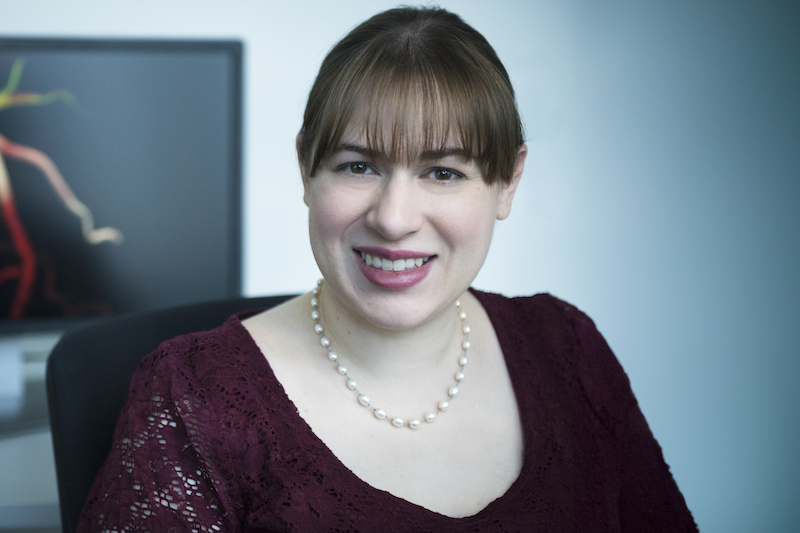
Michelle Borkin is an Assistant Professor in the Khoury College of Computer Sciences at Northeastern University’s Boston campus, where she co-leads the Visualization @ Khoury Lab and co-directs the Northeastern Visualization Consortium (NUVis). She additionally serves as Affiliated Faculty with the NULab for Text, Maps, and Networks and with the Information Design & Data Visualization Program in the College of Arts, Media, and Design. Education PhD, Applied Physics, Harvard University School of Engineering and Applied Sciences (2014) MS, Applied Physics, Harvard University BS, Astronomy & Astrophysics and Physics, Harvard University Research Interests Borkin’s research integrates data visualization and human-computer interaction to create novel techniques that enable discovery across disciplines. Her work spans: Multidimensional brushing-and-linking methodologies 3D data visualization and selection techniques Tree and network visualization Visualization evaluation methodologies and perception/cognition theory Accessibility and visualization for social good Medical and astrophysical visualization applications Publication Trends Across more than 50 peer-reviewed papers, Borkin’s research exhibits three dominant threads: (1) foundational studies on visualization perception and memorability, (2) design and evaluation of novel interactive tools for complex data (medical, astronomical, political, and social media), and (3) methodological contributions such as the Design Study “Lite” Methodology that accelerate visualization pedagogy and community-engaged research. Awards & Honors CHI 2020 Best Paper Award IEEE VIS 2020 Best Poster Honorable Mention IEEE VIS 2018 Best Poster Award NSF Graduate Research Fellowship NDSEG Graduate Fellowship TED Fellow Advising & Grants Borkin currently advises five PhD students—Jane Adams, Mackenzie Creamer, Franc O, Aditeya Pandey, and Laura South—and has previously mentored Michail Schwab and Uzma Haque Syeda. Her research has been supported by NSF, NDSEG, and TED fellowships, as well as internal Northeastern awards. Labs & Teams Co-Lead, Visualization @ Khoury Lab Co-Director & Co-Founder, Northeastern Visualization Consortium (NUVis) Affiliated Faculty, NULab for Text, Maps, and Networks Affiliated Faculty, Information Design & Data Visualization Program, CAMD