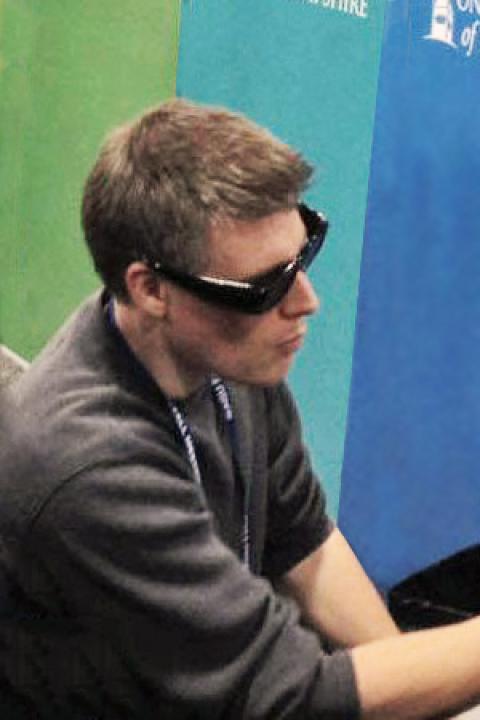
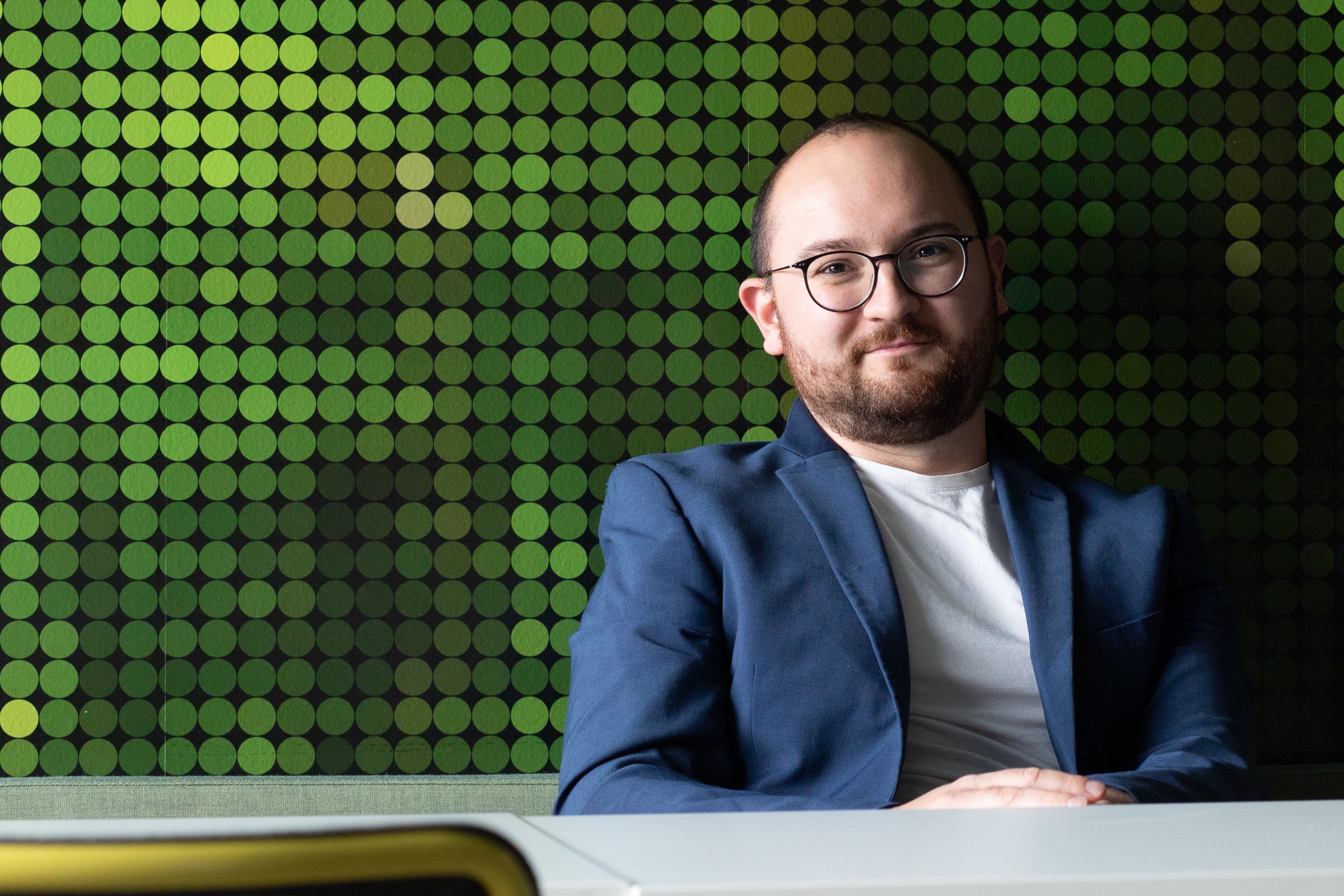
Clifton Forlines is a Research Professor at Northeastern University’s Portland campus, specializing in Human-Computer Interaction (HCI), Data Visualization, and Multi-touch Interfaces. He has extensive experience in user interface design and collaborative computing, holding leadership roles at Tactual Labs and Draper Laboratory. He earned a PhD in Computer Science from the University of Toronto, and dual Masters degrees in Human-Computer Interaction and Entertainment Technology from Carnegie Mellon University. His research focuses on optimizing touch and stylus interfaces, multi-user tabletop systems, and spatial-temporal data visualization. His recent publications explore advancements in low-latency touch sensing, collaborative visual exploration, and tactile feedback efficiency. While no scientific awards are listed, his work includes 15+ patents in multi-user interactive systems and display technology. Clifton currently advises PhD student Timothy Yim and has contributed to projects like Alice—a 3D programming environment for education. He can be contacted via cforlines@gmail.com or c.forlines@northeastern.edu.
Nikita Soni is an Assistant Professor in the Department of Computer Science at the University of Illinois Chicago. She is a Human-Computer Interaction (HCI) researcher whose work intersects natural user interfaces, human-AI interaction, interaction design, creativity-support tools, and learning sciences. B.Tech in Electronics and Communications from Jaypee University of Engineering and Technology (2015) MS in Computer Science from University of Florida (2016) Ph.D. in Human-Centered Computing from University of Florida (2021) Her research focuses on designing natural user interfaces for education and creativity technologies, particularly for children and adults. She investigates mental models and interaction behaviors with novel technologies, developing applications that support learning and creative expression. Key projects include the TIDRC framework for children's touchscreen design and collaborative exploration of geospatial data on spherical displays. The articles highlight her work on spherical display interactions in educational settings (2021) and children's touchscreen design guidelines (2019). Both demonstrate her focus on user-centered design for educational technology and collaborative learning environments. Honorable Mention, ACM CSCW 2021 She actively mentors students across disciplines and has secured funding from NASA (Illinois Space Grant Consortium), Microsoft Research, and Adobe Research. Her lab, the ELiCIT Lab, develops next-generation interaction technologies for education and creativity.
Kovács Viktor is an assistant lecturer in the Department of Automation and Applied Informatics at the Budapest University of Technology and Economics (BME). His office is located in building Q, room B222 on the Magyar tudósok körútja campus in Budapest. Research interests span computer vision and image processing with a strong emphasis on 3-D data analysis, head-mounted projection displays, and robust feature extraction from range images. He also contributes to process automation in pharmaceutical manufacturing and investigates communication-control co-design for connected vehicles in 5G networks. Across 15 recent publications (2012–2022) one observes a clear trajectory from fundamental computer-vision algorithms—edge detection, corner classification, plane segmentation—to applied engineering solutions such as real-time granulation monitoring and immersive 3-D display systems. Medical data analytics and diffusion MRI modeling further diversify his portfolio, illustrating a blend of theoretical depth and practical impact. Contact & Resources E-mail: Kovacs.Viktor@aut.bme.hu Phone: +36 (1) 463-1648 Profiles: BME Publication Registry , ResearcherID , Google Scholar
Benedikt Etzold is a Researcher at the Professorship of Media Informatics , part of the Faculty of Computer Science at Chemnitz University of Technology , Germany. His work focuses on bridging virtual and physical environments through human-computer interaction, with particular emphasis on multi-device systems and collaborative interfaces. Research Interests: Human-Computer Interaction Multi-screen and multi-device applications Visualization and user interfaces Multi-user scenarios Mobile devices Tabletops and public displays Etzold is actively involved in the DFG-funded research training group CrossWorlds , which investigates the integration of virtual and real social worlds. His dissertation project titled "Digital Tangibles – Connecting Multitouch Tabletops to Physical Environments" explores hybrid communication systems.
Vincent Küszter is affiliated with the Chair of Computer Graphics and Visualization at Chemnitz University of Technology. His academic background includes a PhD in Computer Science (2012–2016) under Prof. Dr. Guido Brunnett, supported by the DFG Graduate Program 'Crossworlds,' and prior degrees in Applied Computer Science and Intelligent Media/Virtual Reality. Research Focus: Real-time computer graphics, Virtual Reality (VR), Augmented Reality (AR), and sensomotorics. Key Projects: Investigated multi-user interaction in VR environments with individual views, explored stereoscopic systems, and improved collision handling in clothing simulations. Collaborations: Worked with Dr. Daniel Pietschmann and interdisciplinary teams bridging technology and social sciences.
Thomas Butkiewicz is a Research Associate Professor at the University of New Hampshire (UNH) and Director of the Data Visualization Research Lab. His work focuses on interactive geospatial visualization techniques, augmented reality, and immersive environments for 4D ocean simulations. Education Ph.D. in Computer Science, University of North Carolina at Chapel Hill M.S. in Computer Science, University of North Carolina at Chapel Hill B.S. in Computer Science, Ithaca College Dr. Butkiewicz's research includes designing stereoscopic displays, multi-touch interaction methods, and integrating advanced visualization into electronic navigational chart systems. He explores human visual perception and computer vision for marine navigation and dynamic ocean modeling. At UNH, he leads the Data Visualization Lab and teaches CS 999: Doctoral Research . His academic journey began at Ithaca College (B.S., 2005), followed by graduate studies at UNC Charlotte (M.S., 2007; Ph.D., 2010), and post-doctoral work at the Joint Hydrographic Center before joining UNH faculty in 2012.
Robin Welsch is an Assistant Professor in the Department of Computer Science at Aalto University, specializing in Human-Computer Interaction (HCI) with strong interdisciplinary connections to psychology. Their work bridges computer science and cognitive/clinical psychology, focusing on virtual reality, social robotics, and human augmentation technologies. Affiliated with both the Engineering Psychology (ENGPSYCH) and Human-Computer Interaction and Design (HCID) research areas, Welsch maintains an active international research profile with publications in top-tier venues including CHI, IEEE Transactions, and PLOS One. Research interests center on the psychological and behavioral aspects of emerging technologies. Key areas include interpersonal distance regulation in virtual environments, social dynamics in VR/AR, cognitive and placebo effects of AI augmentation, and ethical considerations in human-robot interaction. Their work frequently examines how psychological factors (social anxiety, psychopathy traits, aging) influence technology interaction, with strong emphasis on experimental methodologies combining physiological sensing, behavioral observation, and computational analysis. Recent publications (2023-2025) reveal three dominant trends: 1) Social VR research exploring proxemics, privacy, and gaze behavior; 2) Investigations into placebo effects and performance expectations in human-AI interaction; 3) Methodological contributions to bias detection in ML annotation and AR social media applications. This work consistently applies rigorous experimental psychology frameworks to HCI problems. Award highlights: CHI PLAY 2023 Honorable Mention for VR locomotion research Welsch actively collaborates across institutions (Germany, Finland, Australia) and disciplines, with notable partnerships in psychology departments and HCI labs. While specific grant details aren't provided, the volume and venue quality of publications suggest sustained research funding. Current work shows increasing focus on generative AI's impact on design processes and ethical implications of emerging interaction paradigms. Research occurs within Aalto University's Engineering Psychology and HCID groups, with emphasis on experimental VR/AR setups and physiological measurement systems. Recent projects involve social VR scenarios, location-based AR applications, and human-robot interaction studies in public spaces.
Trattie Davies serves as Senior Critic at Yale School of Architecture, holding a formal academic position equivalent to Senior Lecturer. She received both her B.A. and M.Arch from Yale University and maintains dual professional roles as founding partner of Davies Toews Architecture in New York City while teaching advanced design studios and seminars. Her academic appointment includes teaching core curriculum courses since 2015, with recent offerings including Animal Houses (Fall 2025), Ad Hoc Trash (Spring 2024), and Space-Time-Form (Fall 2019). Davies' research interests center on architectural representation, material studies, and sustainable design practices. Her work explores unconventional spatial relationships through courses examining animal occupation systems and waste materiality. She develops experimental exhibition spaces including RabbitRabbit in the East Village, focusing on design thinking visualization. Her pedagogical approach emphasizes hands-on material experimentation combined with historical context, particularly evident in her Bauhaus@100 seminar investigating Josef Albers' color theory and textile architecture integration. Her publications manifest through built work rather than traditional academic papers, with Davies Toews Architecture recognized in Architectural Record Design Vanguard (2018) and Architectural League Emerging Voices (2019). Major projects span residential, commercial, and institutional typologies across multiple states, documented in New York Times, Metropolis, and Architect's Newspaper. The firm's research-driven approach investigates material life cycles, spatial representation boundaries, and alternative building methodologies. Architectural Record Design Vanguard (2018) Architectural League Emerging Voices (2019) Professor King-lui Wu Teaching Award (2016) Davies maintains active industry engagement through her practice while contributing to Yale's academic mission. Her teaching integrates real-world design challenges with theoretical frameworks, exemplified by the Frank Gehry studio addressing mass incarceration architecture. She develops curricula that push representational boundaries, requiring students to incorporate process, time, and material transformation into spatial language. Field research components include visits to waste facilities, rare book collections, and Scandinavian correctional models, creating immersive learning experiences that bridge academic and professional practice.
Dr Virginia Calabria is a Research Fellow at Durham University's Department of Sport and Exercise Sciences with cross-affiliation to the Durham Research Methods Centre (DRMC) and Institute for Medical Humanities (IMH). Her work bridges linguistic anthropology and interactional sociology through rigorous multimodal analysis of naturally occurring Italian conversation. Research focuses on collaborative grammar , emotion management , and taboo language in institutional and everyday settings. Key interests include syntactic emergence in real-time interaction, embodied resources for anger expression, swearing as social regulation, and epistemic positioning in collaborative turns. Her methodology integrates conversation analysis with detailed multimodal transcription to expose how grammar, gaze, and gesture co-construct social action. Recent publications (2021-2025) reveal three dominant trends: (1) collaborative clause-combination in Italian talk-in-interaction, (2) linguistic and embodied management of anger/swearing in business contexts, and (3) multimodal construction of taboo topics like religious identity. Work consistently demonstrates how syntax emerges from social coordination rather than pre-existing cognitive structures. Active in interdisciplinary networks through DRMC's methodological innovation and IMH's medical humanities initiatives, Calabria contributes to understanding emotion regulation in professional environments through linguistic lenses. Current projects examine swearing as institutional accountability mechanism and collaborative grammar in high-stakes decision-making.
Prof. Dr. Ernst Kruijff is a Professor of Human-Computer Interaction and Co-Director of the Institute for Visual Computing (IVC) at the Department of Computer Science, Bonn-Rhein-Sieg University of Applied Sciences in Sankt Augustin, Germany. His work bridges academic research and practical applications through leadership roles in multiple interdisciplinary projects. Role: Co-Director, Institute for Visual Computing (IVC) Location: Grantham Avenue 20, Sankt Augustin Contact: ernst.kruijff@h-brs.de Research Interests focus on cutting-edge AR/VR technologies , particularly in multisensory interface design and immersive user experiences . Key areas include: Human-Computer Interaction in virtual environments 3D User Interfaces for locomotion and manipulation Haptic and Multisensory Feedback systems Cybersickness Mitigation in immersive displays Visual Computing for industrial and educational applications Digital Twin development for urban and industrial contexts Recent Publications (2023-2025) demonstrate expertise in VR presence , leaning-based navigation , haptic illusions , and spatial cognition in augmented environments. Articles often address user comfort , depth perception , and novel interaction techniques . Labs and Teams: Leads the 3DMi Group (Human Factors Driven Design of 3D Multi-Sensory Interfaces) and contributes to projects like Sensorium+ , NAkSU , and AR/VR.nrw , focusing on inclusive technology and environmental data analysis.
Benjamin Watson serves as an Associate Professor in the Department of Computer Science at North Carolina State University, leading the Visual Experience Lab which investigates how humans derive meaning from visual information through computer graphics, perception, design, and interaction. His work spans applications in entertainment, security, finance, education, and medicine, with leadership roles in major conferences including Graphics Interface, IEEE Virtual Reality, and ACM I3D. He holds senior membership in IEEE and active membership in ACM. Watson's educational background includes: Ph.D. from Georgia Tech (1997) M.S. from Georgia Tech (1997) B.S. from UC Irvine (1987) His research centers on visual perception and interaction, with core expertise in computer graphics, human-computer interaction, and user experience design. Key investigations include perceptual asymmetries in rendering, display technologies for immersive environments, and human performance optimization in high-stakes contexts like esports. The Visual Experience Lab bridges theoretical computer science with practical applications in healthcare, finance, and entertainment through interdisciplinary collaboration. Analysis of Watson's 2019-2025 publications reveals consistent focus on display technology limitations and human performance metrics. His work demonstrates increasing specialization in esports HCI (7 of 10 recent papers), particularly examining display size, rendering techniques, and frame rate impacts on aiming accuracy. Concurrently, he maintains strong contributions to light field displays and multi-view rendering, developing novel point-based methods that exploit perceptual redundancies for real-time performance. Scientific recognition includes: NVIDIA Professor Partnership Award (2007) National Science Foundation Faculty Early Career Award (2006) Watson actively mentors graduate researchers including Ph.D. graduate Adam Marrs (now at NVIDIA) and Holle Christensen, whose work on experience analytics received workshop acceptance at ACM DIS. His $772k+ in active and recent funding spans NSF grants for adaptive rendering systems ($497k), human-machine collaboration projects with the Laboratory for Analytic Sciences ($180k), and Caterpillar-sponsored AR applications ($20k), demonstrating strong industry-academia translation. The Visual Experience Lab operates as a cross-disciplinary hub connecting computer science, design, and cognitive psychology researchers. Current projects focus on real-time GPU acceleration for multi-view rendering, esports performance optimization, and AR applications for industrial equipment, with active partnerships including Caterpillar, NVIDIA, and the Laboratory for Analytic Sciences.
Chris Harrison is an Associate Professor of Human-Computer Interaction at Carnegie Mellon University , where he directs the Future Interfaces Group . His research focuses on creating novel sensing and interface technologies to enable new modes of human-computer interaction in domains like smart environments , wearable computing , and augmented/virtual reality . Research Interests include: Haptic Feedback Systems Wearable and Ubiquitous Computing Novel Input Modalities Sensor Fusion Techniques Privacy-Preserving Interaction XR (AR/VR) Interface Design Recent Research Trends show strong emphasis on: Mid-air and wearable haptics using synthetic jets (2024) Infrastructure-free tracking in multi-user AR/VR (2023-2025) Electroosmotic pump-based shape-changing interfaces (2023-2024) IMU and UWB sensor fusion for pose estimation (2020-2023) Privacy-respecting sensing techniques (2018-2021) Contact: chris.harrison@cs.cmu.edu | Future Interfaces Group Website
Dr. Birgit Brucker is a Researcher and Deputy Head of the Multimodal Interaction Lab at the Leibniz Institute for Knowledge Media (IWM) in Tübingen. She also serves as Scientific Coordinator for the Mixed Reality Lab and Multi-Touch Lab within the institute's Future Innovation Space. Her research focuses on innovative interaction media such as virtual reality and multi-touch interfaces to enhance learning in scientific, artistic, and movement-related domains. Key interests include the mirror neuron system's role in learning, cognitive impacts of hand proximity to digital interfaces, and AI's potential and risks in educational writing scenarios. Brucker holds a Psychology diploma (2007) and a PhD (2012) from Eberhard Karls University of Tübingen. Her doctoral work investigated static and dynamic visualizations' roles in understanding complex scientific phenomena. She has led projects on AI-supported creative writing, museum digitalization, and immersive educational technologies. Her research spans cognitive psychology, educational technology, and neuroeducational studies. Notable projects include analyzing Nazi propaganda image retention (2025), immersive video learning experiences (2025), and neural mechanisms of spatial perspective-taking (2023). She has published extensively in journals like Computers in Human Behavior and Computers & Education. Brucker collaborates with institutions like the Leibniz Research Alliance on materials safety and teacher education networks (MINT-ProNeD, KuMuS-ProNeD). Her work bridges cognitive science, educational design, and emerging technologies to advance interactive learning environments.
Joseph L. Gabbard is a Professor in the Department of Industrial and Systems Engineering at Virginia Tech's College of Engineering, holding the Grado Faculty Fellowship. His research focuses on Human Factors Engineering, Augmented Reality (AR), Virtual Reality (VR), and Usability Engineering with applications in driver safety, emergency response training, and educational technology. He earned a Ph.D., M.S., and B.S. in Computer Science, along with a B.A. in Sociology. He leads projects on AR interfaces for transportation safety, including studies on HUDs and driver distraction mitigation. His work bridges immersive technologies with practical applications like triage training for emergency responders and classroom behavior management simulations. Notable contributions include winning a Microsoft HoloLens Academic Research Grant (2015) and advancing AR design principles through rigorous human performance evaluations. Key research themes include the cognitive impacts of AR systems, spatial awareness in dynamic environments, and adaptive training methodologies. His publications span AR HUD safety metrics, exergaming design patterns, and AR-driven emergency protocols. Collaborations with industry and government emphasize translating academic insights into real-world solutions for transportation, healthcare, and education sectors.
James J Clark is a Professor at McGill University's Centre for Intelligent Machines (CIM). His research focuses on advancing machine vision, neural networks, and deep learning applications in areas such as visual attention modeling, 3D environments, and edge computing. He specializes in developing efficient neural network architectures and optimization techniques for real-world systems. Key research interests include computer vision, machine learning, and their intersections with fields like image processing and natural language processing. Recent work emphasizes model compression, knowledge distillation, and hardware-aware neural architecture search for resource-constrained devices. His publications span topics such as gaze field modeling in 3D environments, dataset pruning for transformers, and adversarial correction in domain adaptation. Notable contributions include frameworks for efficient BERT inference on multi-core processors and methods for visual attention prediction in retail scenarios. No scientific awards or student advisees are explicitly listed. His research is anchored in the CIM, reflecting a strong focus on interdisciplinary machine intelligence applications.