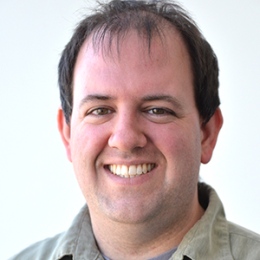
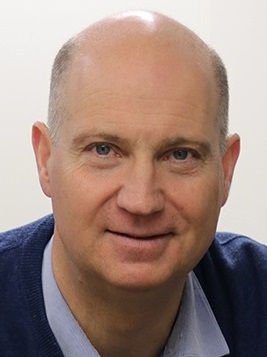
Mikael Johansson is a Professor at Kungliga Tekniska Högskolan (KTH), specializing in Control Technology . He teaches and coordinates courses such as Distributed Optimization (FEL3311) and various advanced-level degree projects in computer science, electrical engineering, and systems engineering. His research spans Control Systems , Machine Learning , and Optimization , with a focus on asynchronous algorithms, federated learning, and applications in energy systems and construction. His work includes 15 recent publications on topics like neural networks, distributed optimization, and battery technology. Notable areas of contribution are in asynchronous learning, federated learning with privacy constraints, and quasi-Newton methods for optimization. His research bridges theoretical advancements with practical applications in urban design, healthcare, and autonomous systems.
Tony Lindgren is an Associate Professor at the Department of Computer and Systems Science, Stockholm University, affiliated with the Data Science Research Group and Natural Language Processing Research Group. His work bridges data science and NLP , focusing on interpretable models, constraint programming, and predictive maintenance systems. Research interests include: Machine Learning for explainability and fairness Constraint Programming in maintenance optimization Natural Language Processing for risk analytics and troubleshooting Recent publications demonstrate trends in multi-objective optimization (2025 satellite scheduling), conformal prediction (2024 CoPAL), and fault detection (2024 Automotive Nowcasting). His work often integrates domain-specific constraints with scalable algorithms across applications like food safety and autonomous vehicles. Software tools developed by Lindgren include: Example-based Feature Tweaking Rule Indexing Frameworks His research groups focus on AI-driven decision support for high-stakes domains, combining technical innovation with societal impact considerations.
Ki Won Sung is an Associate Professor at KTH Royal Institute of Technology, specializing in wireless communication systems and network optimization. His research focuses on 5G/6G technologies, integrated sensing-communication systems, cell-free massive MIMO, and stochastic network modeling. Research interests include: Wireless network architecture design and optimization Resource allocation in multi-user communication systems Integrated sensing and communication (ISAC) Stochastic modeling of ultra-dense networks Energy-efficient communication protocols Millimeter wave and massive MIMO systems His recent publications demonstrate strong emphasis on beyond-5G systems, particularly cell-free massive MIMO deployments and URLLC applications. Research trends show consistent focus on network optimization through advanced signal processing, geometric decomposition methods, and cross-layer protocol design. Teaching activities include course management and examination for multiple degree projects and core courses: Communication Systems (IK2200) Mathematical Statistics (IX1501) Mobile Networks and Services (IK2560) Radio Networks (IK2510) Stochastic Simulation (II2206) Wireless Systems (IK1330)
Amin Jalali is an Associate Professor of Computer and Systems Sciences at Stockholm University, specializing in business process modeling, analysis, and management. He is affiliated with the Department of Computer and Systems Sciences within the Faculty of Social Sciences, where he serves as a board member and manages three graduate courses: Business Process Design and Intelligence, Business Process and Case Management, and Data Warehousing. Institution: Stockholm University Department: Department of Computer and Systems Sciences (DSV) Research Groups: Natural Language Processing Research Group and PRECIS (Process, Requirements, Enterprise, Capability, Information Systems modelling) His research focuses on business process analysis through model-based and data-driven techniques, with particular emphasis on process simulation, process mining, event knowledge graphs, and object-centric process mining. He has led numerous research projects across healthcare, education, and finance domains. His work includes significant contributions to the development of NLP methods involving large language models, with focus on privacy, explainability, and domain adaptation. Jalali's research output shows a strong trend toward practical applications of process mining techniques, particularly in healthcare contexts like drug-drug interaction analysis and elderly care. More recently, his work has expanded into blockchain applications for fraud detection, motor imagery signal classification, and advanced object-centric process mining approaches. His publications span both theoretical contributions to business process management frameworks and practical implementations in real-world settings. He has extensive industry experience in designing and implementing Business Intelligence and Big Data Analytics solutions, which informs his academic work and teaching approach. His research has been published consistently from 2012 through 2024, demonstrating sustained scholarly productivity in his field. Dr. Jalali has contributed significantly to the development of tools and libraries for process mining, including the dfgcompare library for process variant analysis and implementations for object-centric process mining. His work bridges academic research with practical applications, particularly evident in healthcare projects like the DDIs-Graph system for identifying drug-drug interactions.
Evan Patrick O'Connor is an Associate Professor in the Department of Astronomy at Stockholm University. His research focuses on computational astrophysics, particularly core-collapse supernovae, neutrino physics, and black hole formation. He leads research in the Computational Astrophysics group at the Department of Astronomy, where development of computational tools spans research areas from solar physics to cosmology. Dr. O'Connor received his Ph.D. from Caltech in the TAPIR group, following a bachelor's degree in Science (Physics, Honours, Co-op) from the University of Prince Edward Island. He was a postdoctoral fellow at the Canadian Institute of Astrophysics from 2012-2014 and a Hubble Fellow at North Carolina State University from 2014-2017 before joining Stockholm University. His research interests span computational astrophysics with a focus on core-collapse supernovae mechanisms, black hole formation, neutrino physics, gravitational waves, and the nuclear equation of state. He develops and utilizes sophisticated computational models to study the dynamics of compact objects and their connection to detailed microphysics. His work often involves multimessenger approaches, connecting theoretical models with potential observational signatures across neutrino, electromagnetic, and gravitational wave channels. Dr. O'Connor has made significant contributions to open-source scientific software development, creating tools like NuLib, GR1D, and various equation of state resources that have become valuable community resources. Analysis of his recent publications reveals a strong focus on understanding the complex interplay between stellar structure, nuclear physics, and explosion mechanisms in core-collapse supernovae. His research increasingly incorporates multi-dimensional effects, phase transitions in dense matter, and their observational consequences across multiple messenger channels. Recent work shows growing attention to data-driven approaches for connecting simulations with potential observations. Dr. O'Connor has received notable recognition including: Hubble Fellowship (2014-2017) He has developed and maintains several open-source tools including NuLib (neutrino interaction library), GR1D (spherically-symmetric general-relativistic hydrodynamics code), and various equation of state resources. His research group collaborates extensively with international teams studying supernova mechanisms and related phenomena, contributing to projects like SNEWS (Supernova Early Warning System). Dr. O'Connor leads the Computational Astrophysics group at Stockholm University's Department of Astronomy, which develops computational tools spanning research areas from solar physics to cosmology. The group maintains strong connections with international supernova research communities and contributes to global efforts in multi-messenger astronomy.
Stefano Sarao Mannelli is a tenure-track Assistant Professor in the Department of Computer Science and Engineering at Chalmers University of Technology and University of Gothenburg. He also holds a Visiting Lecturer position at the University of the Witwatersrand. His research group focuses on fundamental aspects of learning in biological and artificial systems, with emphasis on bias generation, optimization dynamics, and comparative neuroscience. Education: Ph.D. in Theoretical Physics, Université Paris-Saclay (2020) M.Sc. in Electronic Engineering, Politecnico di Torino (2017) M.Sc. in Physics of Complex Systems, Politecnico di Torino/SISSA (2016) M2 in Physique Théorique, Paris Diderot/UPMC/ENS Cachan (2016) B.Sc. in Mathematics for Engineering, Politecnico di Torino (2014) Research: Dr. Mannelli develops model-based approaches to reduce complex machine learning problems into analytically tractable frameworks. His core interests include: 1) Bias amplification mechanisms in AI systems, 2) Learning differences between biological and artificial neural networks (continual/transfer/curriculum learning), and 3) Optimization in high-dimensional landscapes. His work bridges statistical physics, neuroscience, and deep learning theory. Publication Trends: Recent articles (2024-2025) predominantly analyze curriculum learning dynamics, bias propagation in optimization, and theoretical comparisons between biological and artificial learning systems. Methodologically, they combine statistical physics frameworks with control theory and high-dimensional analysis. Awards: Academic Grant (CM Lerici Foundation, 2025) Travel Grants (Guarantor of Brains, G-Research 2024) UK–IT Trustworthy AI Exchange Programme (Alan Turing Institute, 2023) SCGB Conference Award (Simons Foundation, 2023) Ph.D. Scholarship (CEA, 2017-2020) Team & Funding: Leads a research group with 2 PhD students and 1 postdoc. Secured significant funding for international workshops including Analytical Connectionism (£42K, 2023; $152K, 2024) and High-Dimensional Methods (135,500 SEK, 2025).
Andrés Alayón Glazunov is an ELLIIT Senior Associate Professor at Linköping University's Department of Science and Technology (ITN), specializing in Physics, Electronics, and Mathematics. He holds a Docent (Habilitation) in Antenna Systems from Chalmers University and a PhD from Lund University. His career includes roles at Ericsson Research, Telia, and academic positions at Chalmers, KTH Royal Institute of Technology, and the University of Twente. His research focuses on antenna systems, millimeter-wave technologies, and over-the-air (OTA) characterization, with contributions to 3GPP standards and EU projects like is3DMIMO and WAVECOMBE. Education: Docent (2017): Chalmers University, Antenna Systems PhD (2009): Lund University, Radio Systems MSc (1994): St. Petersburg Polytechnic University, Physical Electronics Research Interests: His work spans MIMO systems, mmWave antennas, electromagnetic theory, OTA testing, and wireless channel modeling. Notable milestones include pioneering 3GPP standardized OTA techniques and developing hybrid multipath-LOS chambers. Publications: Over 175 papers, including foundational works on spherical vector wave expansions and massive MIMO channel measurements. Recent articles focus on GRIN lenses, Rician channel emulation, and automotive radar antenna design. Awards: Marie Curie Senior Research Fellowship (2009-2010). Grants & Collaborations: Led EU projects like is3DMIMO and contributed to ITU/3GPP standardization. Collaborates with industries like Volvo Cars and RISE. Teaching: Oversees the Master's Project Course CDIO at Linköping University.
Slawomir Nowaczyk is a Professor at the School of Information Technology , Halmstad University. His research focuses on Artificial Intelligence , Machine Learning , and Data Mining , particularly for Streaming Big Data and Knowledge Representation with Weakly-Supervised Models . Practical applications: Predictive maintenance, healthcare informatics, smart industry, and energy systems Developing interestingness metrics for distributed data analysis and self-organization in AI systems Publication Trends : Recent work spans Explainable AI , spatiotemporal forecasting , feature selection , and smart city applications. Key areas include healthcare diagnostics , transportation optimization , and industrial fault detection . Academic Leadership : Serves as Research Leader for the School of Information Technology. Supervises six PhD students and co-supervises one additional student across academic and industrial domains.
Jan Dufek is an Associate Professor in the Department of Nuclear Science & Engineering at KTH Royal Institute of Technology. His research focuses on advancing numerical methods for Monte Carlo neutron transport simulations, with applications in nuclear reactor design and safety. Key areas include coupled simulations of thermal-hydraulic feedback, Monte Carlo burnup methods, fission source convergence acceleration, and fission matrix-based techniques. He also develops deterministic nodal nuclear data models using polynomial regression to handle multi-dimensional state variables efficiently. He teaches courses such as Monte Carlo Methods and Simulations in Nuclear Technology and Nuclear Reactor Physics , serving as an examiner and course responsible. His work contributes to projects like the McSAFE initiative, aiming to enhance high-performance Monte Carlo methods for reactor safety. Collaborations include studies on deep learning for nuclear fuel composition prediction and transient analysis using hybrid stochastic-deterministic approaches. His research bridges computational efficiency with practical reactor engineering challenges. Dr. Dufek is affiliated with the NRT (Nuclear Reactor Technology) group at KTH, fostering interdisciplinary advancements in reactor physics and computational methodologies.
Saikat Chatterjee is a Professor in the Department of Information Science and Engineering at the School of Electrical Engineering and Computer Science, Royal Institute of Technology (KTH). He is also a Fellow of Digital Futures and maintains visiting researcher positions at Karolinska Institute, Karolinska Hospital (specializing in 'AI for Health Care'), and Oslo University Hospital in Norway. His primary research interests span Signal Processing and Machine Learning, with specific focus on signal modeling (sparsity, compressive sensing, dynamical systems), statistical signal processing, statistical machine learning, deep learning, speech/audio/image processing, medical data analytics, life science data analysis, perception for autonomous systems, distributed machine learning, and explainable AI (XAI). He particularly emphasizes explainable machine learning, having a strong background in signal processing and statistical machine learning, with growing passion for medical data analysis due to its societal importance. SSF - Swedish Foundation for Strategic Research Region Stockholm European Union Digital Futures Vinnova WASP Companies: Ericsson, Scania, Saab Professor Chatterjee is actively involved in teaching, serving as examiner and course responsible for various degree projects and courses including Machine Learning and Data Science, Pattern Recognition and Machine Learning, and Speech and Audio Processing. His research group has produced significant work across multiple domains, with notable publications in Bioinformatics and smart city applications, demonstrating the breadth of his research impact from healthcare to urban systems.
Mårten Sjöström serves as a Professor at Mid Sweden University and acts as Node Coordinator for the InfraVis project. His academic work centers on advanced signal processing and visualization technologies within the university's research infrastructure. His primary research domains include Multi-Dimensional Signal Processing and System Modelling and Identification, with significant applications in Image and Video Processing and Multi-media Communications. Current investigations focus on Multi-Scopic 3D and Light Field Technology—encompassing capture, processing, coding, and visualization—where he addresses inverse problems through machine and deep learning methodologies. Additional expertise spans Computer Vision, Photogrammetry, Immersive Video Technologies, Quality of Experience (QoE), and Human Visual Perception, demonstrating interdisciplinary integration of signal processing with perceptual modeling. As InfraVis Node Coordinator, he engineered a specialized 3D visualization tool for analyzing halogen crystal structures under extreme pressure conditions. This system enables interactive exploration of incommensurately modulated structures during molecular dissociation in bromine allotropes, providing critical insights into complex atomic transitions and phase changes that conventional methods cannot resolve.
Erik Agrell is a Full Professor in Communication Systems at Chalmers University of Technology, Department of Electrical Engineering. He is a Fellow of the IEEE and co-founder of the Fiber-Optic Communications Research Center (FORCE). His research focuses on information theory, coding theory, and their applications in optical communications, aiming to enhance fiber-optic network efficiency. He also explores lattice theory and sphere packing in engineering and physics contexts. Affiliations: Chalmers University of Technology, FORCE Key Research Areas: Information Theory, Coding Theory, Optical Communications, Lattice Theory Recent work emphasizes geometric shaping in optical systems, phase noise mitigation, and machine learning integration for polarization sensing. His publications span 346 works, including studies on lattice quantizers, probabilistic shaping, and multi-core fiber transmission. Awards: IEEE Fellow Agrell advises on projects involving network optimization, resource allocation, and FPGA implementation of distribution matching. His labs focus on advancing optical communication technologies and interdisciplinary research in FORCE.
Mårten Sjöström is a Professor in Signal Processing at Mid Sweden University, where he serves as the highest representative of the research subject Computer and System Sciences and is part of the managerial group of the Department of Information and Communication Systems (IKS). He leads the Realistic 3D research group and has extensive experience in both academic and industrial settings. His educational background includes a Master of Science from Linköping University (Applied Physics and Electrical Engineering, 1992), a Technical Licentiate degree from the Royal Institute of Technology, Stockholm (Signal Processing, 1998), and a PhD from Ecole Polytechnique Federale de Lausanne (Modelling of Non-linear Systems, 2001). He obtained his Docent degree (Associate Professor) in 2008 and Professor's degree in Signal Processing in 2013. His primary research focuses on Multi-Dimensional Signal Processing with emphasis on System Modelling and Identification. He has successfully applied these techniques to Image and Video Processing, Multi-media Communications, and currently specializes in Multi-Scopic 3D and Light Field Technology including capture, processing, coding, and presentation/visualization. His work spans theoretical foundations to practical implementations across various application domains. His recent publication record demonstrates a clear trajectory toward advanced light field and 3D imaging technologies, with significant contributions to compression algorithms, depth estimation techniques, quality assessment metrics, and telepresence applications. His research bridges theoretical signal processing with practical industrial implementations, particularly in remote operation, mining applications, and immersive visualization systems. Best Paper Award at MMEDIA 2013 Quality Reviewer Award at ICME 2013 Professor Sjöström has supervised an extensive number of doctoral and licentiate students, with numerous current PhD candidates expected to complete their degrees in 2025. His teaching portfolio covers a wide range of subjects including Applied Signal Processing, Automatic Control, Computer Hardware and Architecture, and specialized PhD courses in Video Processing and Realistic 3D. He has led numerous research projects both current and completed, including IMMERSE, PLENOPTIMA, and various initiatives in 3D video technology and visualization. As founder and head of the Realistic 3D research group, he directs activities focused on synthesis and capture of 3D images and video, rendering techniques for virtual perspective views, system modeling for 3D capture and presentation, coding of 3D content, quality metrics and assessments, and remote control and measurement systems. The group maintains strong industrial collaborations across multiple sectors.
Magnus Fontes is an Adjunct Professor at the Department of Automatic Control within the Faculty of Engineering at Lund University , Sweden. He also contributes to the ELLIIT: The Linköping-Lund initiative on IT and mobile communication . His work bridges Computational Biology , Immunology , and Mathematical Modeling , focusing on high-dimensional biological data analysis and immune system dynamics. His research spans Genetics , Systems Biology , and Machine Learning , with recent work on: Sex-based differences in immune responses to infections Statistical methods for single-cell data analysis Viral evolution modeling Genome-wide association studies Dimensionality reduction algorithms Computational immunology frameworks Notable trends include Integration of SDGs in health research, particularly SDG3 (Good Health) and SDG10 (Reduced Inequalities). He has contributed to 36+ publications and participates in cross-disciplinary initiatives like the Engineering Health Crossroads workshop (2023). Key projects include Bioinformatics research (2013-2014) and collaborative work with the Milieu Intérieur Consortium .
Ehsan Miandji is an Assistant Professor and Docent at Linköping University's Department of Science and Technology (ITN), part of the Faculty of Science and Engineering. His research focuses on computer graphics, computer vision, and machine learning, with a particular emphasis on BRDF modeling, light field imaging, compressed sensing, and sparse representation techniques. He is affiliated with the Computer Graphics and Image Processing group and the Wallenberg Autonomous Systems Program (WASP). His work spans both theoretical advancements and applied methodologies in visual data processing. Recent research includes optimizing BRDF acquisition via FROST-BRDF, advancing multidimensional compressed sensing for spectral light fields, and developing sparse representation frameworks for bidirectional texture functions (BTF). Miandji collaborates with interdisciplinary teams within the Media and Information Technology (MIT) division, contributing to projects that bridge computational imaging, algorithm design, and real-world applications. His publications reflect a strong commitment to pushing boundaries in visual data compression, rendering efficiency, and perceptual quality assessment of material models.