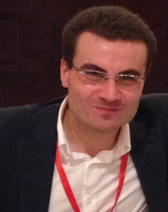
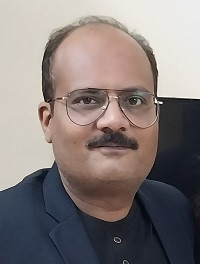
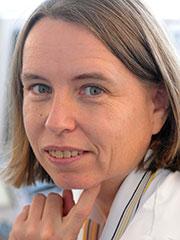
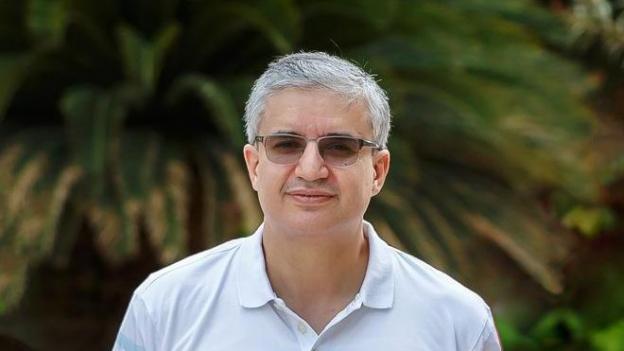
Matteo Maffei is a Full Professor at TU Wien, leading the Security and Privacy group. He joined in 2017 after 11 years at Saarland University's CISPA. He holds a Ph.D. in Computer Science from Ca’ Foscari University of Venice (2006). He coordinates the TU Wien Cybersecurity Center, the SecInt Doctoral School, and the FWF Special Research Program SPyCoDe. His research focuses on formal methods for security and privacy, blockchain technologies, and web security. Roles: Full Professor, Coordinator of TU Wien Cybersecurity Center, Module Head of Christian Doppler Lab for Blockchain Technologies (CDL-BOT), Board Member of Vienna Cybersecurity and Privacy Research Cluster (ViSP). His work emphasizes formal verification of cryptographic protocols, smart contracts, and decentralized systems. Key achievements include ERC Advanced (2024) and Consolidator (2018) Grants, and leadership roles in conferences like IEEE Computer Security Foundations Symposium (CSF). Research Interests: Formal methods, smart contracts, blockchain scalability, web security, privacy-preserving protocols, and decentralized systems. His recent projects include optimizing Lightning Network channels, secure multi-hop payments, and AI-driven robustness verification. Publications: Over 200 publications in top venues like CCS, IEEE S&P, and CRYPTO. Recent work includes advancements in blockchain interoperability (e.g., Alba bridges), light client protocols (Blink), and neural network verification techniques. Grants & Awards: ERC Advanced Grant (2024), ERC Consolidator Grant (2018), DFG Emmy Noether Fellowship (2009). Led projects funded by EU Horizon, FWF, and industry partners like ABC Research GmbH. Advising & Labs: Supervised over 20 PhD/Master theses. Active in the Christian Doppler Lab for Blockchain Technologies and the SPyCoDe SFB. Collaborates with institutions like SBA Research and Stanford University.
Marco Di Renzo is a CNRS Professor (Directeur de Recherche Titulaire) at University of Paris-Saclay, affiliated with CentraleSupelec and the Signals and Systems Laboratory (L2S). He serves as Coordinator of the Communications Networks Area at the DigiCosme Laboratory of Excellence and Editor-in-Chief of IEEE Communications Letters. His academic leadership includes membership in the Ph.D. School on ICT Admission Committee at Paris-Saclay University. His educational background includes a Laurea (cum laude) and Ph.D. in Electrical Engineering from University of L'Aquila, Italy (2003, 2007), and a Habilitation à Diriger des Recherches from University Paris-Sud (2013). Laurea (cum laude), Electrical Engineering, University of L'Aquila (2003) Ph.D., Electrical Engineering, University of L'Aquila (2007) Habilitation à Diriger des Recherches, University Paris-Sud (2013) Di Renzo's research focuses on next-generation wireless communications, particularly reconfigurable intelligent surfaces (RIS), 6G technologies, and stochastic geometry modeling. His work bridges theoretical communication theory with practical implementations in cellular networks, millimeter-wave communications, and ultra-wide band systems. Recent publications demonstrate leadership in holographic metasurfaces, integrated sensing and communication (ISAC), and AI-empowered network design, establishing him as a pioneer in electromagnetic wave manipulation for future networks. His award-winning publications span RIS-aided communications, channel modeling, and security frameworks. Analysis of his recent work reveals consistent focus on three pillars: (1) fundamental electromagnetic theory for wave manipulation, (2) practical RIS implementations across frequency bands, and (3) integration with AI for network optimization. His articles frequently address industrial applications including factory automation and space-air-ground networks. Di Renzo's scientific recognition includes: IEEE Fellow (2020) and IET Fellow (2020) Highly Cited Researcher (Web of Science, 2019) SEE-IEEE Alain Glavieux Award (2017) Multiple Best Paper Awards (IEEE ICC, EURASIP) Nokia Foundation Visiting Professorship (2020) As Principal Investigator for CNRS, he coordinates multiple Horizon 2020 projects including SURFER, PathFinder, and MetaWireless. His leadership extends to serving as Project Coordinator for H2020 5Gwireless, 5Gaura, MAPNET, and REDESIGN. With over 350 publications, 17,000+ citations, and h-index of 66+, his research group maintains strong industry partnerships with Nokia and other telecommunications leaders. Di Renzo directs the Signals and Systems Laboratory (L2S) at Paris-Saclay and coordinates the DigiCosme Excellence Lab's Communications Networks Area. His team specializes in electromagnetic modeling for wireless networks and has pioneered the European Telecommunications Standards Institute (ETSI) Industry Specification Group on RIS. The group maintains active collaborations with Aalto University (Finland), University of Technology Sydney (Australia), and University of L'Aquila (Italy).
Dr. Manav R. Bhatnagar serves as a Professor and Brigadier Bhopinder Singh Chair Professor in the Department of Electrical Engineering at Indian Institute of Technology Delhi. He ranks #517 globally in Networking & Telecommunications among the top 2% scientists worldwide according to Stanford University and is a Fellow of INAE, NASI, IET(UK), IETE, and OSI. His academic credentials include a Ph.D. in Signal Processing for Communications from University of Oslo (2008), M.Tech. in Communications Engineering from IIT Delhi (2005), and B.E. in Electronics from North Maharashtra University (1997). He has held visiting appointments at prestigious institutions including Aalto University (Finland), University of Rennes (France), University of Oslo, Indian Institute of Science Bangalore, and University of Minnesota. Dr. Bhatnagar's research spans cutting-edge domains including 5G/6G communication, optical wireless communication, quantum communication, molecular communication, power line communication, and machine learning applications. His work demonstrates significant interdisciplinary connections between communication theory, signal processing, and emerging technologies. His publication record shows a strong focus on wireless and optical communication systems, with recent work addressing challenges in jamming detection, quantum relay systems, IRS-assisted communication, and game-theoretic approaches to resource allocation. His research consistently bridges theoretical foundations with practical applications in next-generation communication systems. NASI-Scopus Young Scientist Award Shri Om Prakash Bhasin Award (2016) Dr. Vikram Sarabhai Research Award (2017) BASIC RESEARCH AWARD of IIT Delhi (2023) Sir Visvesvaraya Young Faculty Research Fellowship (2016) Senior Member of IEEE As an academic advisor, Dr. Bhatnagar has mentored numerous PhD students who have gone on to successful careers at institutions including IIT Jodhpur, IIT Roorkee, Aalto University, and IIT Kanpur. His editorial roles include current Editor of IEEE Transactions on Communications and former Editor of IEEE Transactions on Wireless Communications (2011-2014). His textbook "Telecommunication Switching Systems and Networks" has become a standard reference in the field.
Anja Feldmann is Director at the Max Planck Institute for Informatics in Saarbrücken and Professor of Internet Network Architectures at Technische Universität Berlin (since 2006). Previously she held a full professorship at Technische Universität München (2002–2006) and conducted research at AT&T Labs Research , Saarland University , and Carnegie Mellon University , where she earned her Ph.D. in 1995. Education Ph.D. in Computer Science, Carnegie Mellon University, 1995 M.Sc. in Computer Science, Carnegie Mellon University, 1991 Diplom in Computer Science, Universität Paderborn, 1990 Research Interests Anja Feldmann’s research centers on measurement-driven understanding of the Internet. She tackles challenges such as software-defined networking , cloud-network interactions , performance debugging , and traffic characterization . A growing focus is the privacy and security of networked systems, evidenced by recent studies on online tracking, DNS security, and disinformation ecosystems. Her group designs scalable measurement platforms that combine passive and active monitoring , programmable data planes , and machine-learning analytics to dissect phenomena ranging from terabit-scale traffic to covert tracking on illegal streaming sites. Recent Publication Themes The 2021-2025 publications reveal a methodological evolution toward large-scale, longitudinal measurement . Topics include: Impact of global events (COVID-19, CrowdStrike outage) on Internet traffic Cross-country tracking ecosystems and privacy leaks DNS root and routing plane stability and security ML-driven real-time monitoring at terabit speeds Disinformation campaigns on encrypted messaging platforms Scientific Awards Gottfried Wilhelm Leibniz Prize (2011) – Germany’s highest research honor Berliner Wissenschaftspreis (2011) Elected Member of the German National Academy of Sciences Leopoldina (2009) Advising & Grants While individual student names are not listed, Prof. Feldmann leads a vibrant team at MPI-INF’s Internet Architecture department. She has supervised numerous doctoral candidates and post-doctoral researchers whose work is reflected in the co-authored papers. Funding sources include the German Research Foundation (DFG) via the Leibniz Prize and EU Horizon projects, although explicit grant numbers are not provided in the source material. Labs & Teams She heads the Internet Architecture department at MPI-INF, located at the Saarland Informatics Campus . The department operates state-of-the-art measurement infrastructure—including programmable switches, honeynets, and global vantage points—to support empirical network science.
Mohamed-Slim Alouini is a Professor of Electrical Engineering and Associate Dean of the Computer, Electrical and Mathematical Science and Engineering (CEMSE) Division at King Abdullah University of Science and Technology (KAUST) in Saudi Arabia. He also serves as the Associate Vice President for Research and holds the UNESCO Chair in Education to Connect the Unconnected. With over 500 journal publications and more than 46,000 citations, he is a world-renowned expert in wireless communications who was elected IEEE Fellow in 2009 at the age of 39. Education: PhD in Electrical Engineering, California Institute of Technology (Caltech), 1998 MS in Electrical Engineering, Georgia Institute of Technology (Georgia Tech), 1995 Diplôme d'Etudes Approfondies (DEA) in Electronics, Université Pierre & Marie Curie (Sorbonne University), 1993 Diplôme d'Ingénieur, École Nationale Supérieure des Télécommunications (Télécom Paris Tech), 1993 Habilitation, Université Pierre & Marie Curie (Sorbonne University), 2003 Dr. Alouini is a world-renowned expert in wireless communication and networking with research interests spanning diversity combining techniques, MIMO systems, multi-hop/cooperative communications, optical wireless systems, cognitive radio, UAV communications, and advanced modulation schemes. His current focus addresses the technical challenges of uneven information and communication technology distribution, particularly targeting rural, low-income, disaster-prone, and hard-to-reach areas through integrated ground-airborne-space networks. His work bridges theoretical foundations with practical implementations to solve real-world connectivity problems. His recent publications (2020-2024) demonstrate a clear research trajectory toward integrated communication networks combining terrestrial, aerial, and space components. There's growing emphasis on UAV communications, satellite systems, optical wireless technologies, and rural connectivity solutions, with increasing integration of machine learning techniques for network optimization. His work shows consistent focus on addressing the digital divide, with several publications specifically targeting 6G challenges for connecting underserved populations and recycling existing infrastructure for enhanced rural connectivity. Scientific Awards: Member of the European Academy of Sciences and Arts (2019) Fellow of the African Academy of Sciences (2018) IEEE Fellow (2009) Abdul Hameed Shoman Award for Arab Researchers (2016) OIC Science & Technology Achievement Award (2017) Multiple recognitions as Highly Cited Researcher NSF CAREER Award (1999) Dr. Alouini has mentored numerous successful students and post-doctoral fellows who have secured positions at top institutions worldwide including Harvard, Caltech, Imperial College, and faculty positions at Korea University, Hanyang University, and universities across the Middle East. His December 2018 PhD graduate Qurrat-Ul-Ain Nadeem received the prestigious Marconi Society Paul Baran Young Scholars award, while post-doctoral fellows have won IEEE ComSoc Young Professionals Best Innovation Award and attended the Lindau Nobel Meeting. His Communication Theory Lab at KAUST drives significant research in wireless communications with funding supporting extensive publication output and innovative projects. Dr. Alouini leads the Communication Theory Lab at KAUST and holds the UNESCO Chair in Education to Connect the Unconnected, focusing specifically on technical solutions for connecting underserved communities. His lab works on integrated ground-airborne-space networks to bridge the digital divide, with particular emphasis on rural, low-income, and hard-to-reach areas. The team develops practical solutions using UAVs, satellite communications, and recycled infrastructure to provide cost-effective connectivity where traditional approaches fail.
Dr. Vincenzo De Maio is a PostDoc Researcher at the Department of Computational Sustainability, Faculty of Informatics, Technische Universität Wien. His research spans quantum computing, edge computing, distributed systems, and sustainable computing, with a focus on hybrid quantum-classical systems and edge AI applications. Current projects: HPQC (2023–2025), ThEMIS FWF (2024–2027), TRITON FWF (2023–2027) Previous projects: RUCON (2016–2023), SWAIN (2021–2024) His research explores the integration of quantum computing with classical systems, particularly in software engineering, workflow decomposition, and hyperparameter optimization. He also works on edge computing for smart cities, environmental monitoring, and traffic safety applications. Recent publications analyze quantum compilation bottlenecks, hybrid quantum-classical workflow orchestration, and quantum neural network optimization. He supervises master's theses on topics like quantum edge benchmarking and hyperparameter tuning. Key collaborations with Prof. Ivona Brandic and others Active in IEEE/ACM conferences and Springer publications
Stefan Rass is a Professor at the Institute of Networks and Security within the Faculty of Engineering & Natural Sciences at Johannes Kepler University Linz (JKU), where he leads the LIT Secure and Correct Systems Lab. As Principal Investigator for FFG-funded projects including reSilienz (digital supply chain resilience, 2023–2025) and ITPUK (AI signature verification, 2022–2024), he bridges theoretical game theory with practical cybersecurity solutions for critical infrastructures and robotics systems. His research spans game-theoretic security models (patrolling games, defense-in-depth strategies), quantum cryptography (QKD network architectures), and cyber deception frameworks like Honeyquest for measuring honeypot effectiveness. Recent work addresses robotics security benchmarking (RobotPerf), cryptographic instruction chaining for control flow protection, and risk assessment methodologies for interdependent infrastructures. His mathematical decision-making approach integrates bounded rationality and stochastic modeling to solve real-world security challenges. Professor Rass actively shapes the field through program committee roles (ARES 2023), peer reviews, and invited talks on security transparency. His current projects focus on cost-benefit-aware monitoring for cyber-physical systems and quantum key distribution standardization, reflecting Austria’s strategic priorities in digital resilience. The LIT Secure and Correct Systems Lab under his direction develops foundational theories while deploying tools for industrial applications, particularly in critical infrastructure protection and secure robotics workflows.
Kristina Harthaller is a Professor of Omnichannel Marketing & Sales at MCI Management Center Innsbruck, leading the Marketing & Sales Department since 2023. She holds a Dr. oec. HSG from the University of St. Gallen (2019) and previously served as an Associated FH Professor (2021–2024) and Senior Lecturer (2021) at MCI. Her academic career includes a postdoc role (2019–2021) at the University of St. Gallen's Research Center for Retail Management. She teaches courses on Consumer Psychology, Digital Transformation, and Omnichannel Commerce, focusing on practical retail innovations. Her research emphasizes customer journey dynamics, multi-channel strategies, and the impact of AI on retail. Notable awards include the 2021 AMA Retail SIG Best Paper Award and the 2020 Journal of Retailing Davidson Award. She advises over 30 students in bachelor and master theses, exploring topics like social commerce, frontline employee inspiration, and impulse buying. Kristina collaborates with industry partners like TIROLER Wirtschaftskammer, delivering workshops on AI in business and retail. She chairs the Bachelor's program in Luxury Hotel Management at Bodensee Campus and contributes to academic associations including the American Marketing Association and European Marketing Academy.
Martin Tschikof is a researcher at the Institute of Hydrobiology and Aquatic Ecosystem Management within the Department of Ecosystem Management, Climate and Biodiversity at the University of Natural Resources and Life Sciences, Vienna (BOKU). He currently coordinates the strategic cooperation between BOKU and the Environment Agency Austria (2024), with prior roles including Research Associate at BOKU (2018), WasserCluster Lunz (2018-2019), and guest researcher at the Leibniz Institute of Freshwater Ecology and Inland Fisheries (IGB) in Germany (2022). His doctoral dissertation (2020-2024) examined floodplain restoration impacts on water purification and multifunctionality in the Danube River Basin. His academic qualifications include: MSc. in Limnology and Wetland Management (2016-2018) from the joint program of BOKU University, IHE Delft, and Egerton University BSc. in Biology (Ecology) (2012-2016) from the University of Vienna Tschikof specializes in floodplain and restoration ecology , biogeochemistry , and ecosystem services multifunctionality , with fieldwork spanning Austria, Germany, and Danube Basin countries. His research integrates hydrological modeling, nutrient cycling analysis (particularly nitrogen and phosphorus retention), and socio-ecological frameworks to evaluate wetland management outcomes. Recent work emphasizes quantifying restoration trade-offs between regulating services (water purification) and cultural services (recreation, biodiversity) using basin-scale assessments. Publication trends (2020-2025) reveal consistent focus on floodplain multifunctionality indicators, denitrification modeling, and EU project applications (Restore4Life, DANUBE4all). Key themes include proxy-based assessment tools for restoration decision-making, socio-ecohydrological system evolution, and transnational prioritization of conservation areas using ecosystem service trade-off analysis. His scientific recognition includes: Reinhard Liepolt-Prize for Danube Research (2024) from the Austrian Committee of the International Association for Danube Research While no formal students or grants are documented, Tschikof has delivered 23 international lectures since 2019 across Austria (8), Germany (7), and six other nations, often as keynote speaker for Danube restoration initiatives. He actively contributes to EU Horizon projects, particularly Restore4Life's citizen science component for wetland assessment. He operates within BOKU's Hydrobiology Institute alongside WasserCluster Lunz and Leibniz IGB collaborators, focusing on the Danube River Basin. Current efforts prioritize upscaling floodplain restoration metrics through EU-funded consortia and developing practical tools for water quality management agencies.
Univ.Prof. Helmut Habersack is a Professor in Hydraulic Engineering at the University of Natural Resources and Life Sciences, Vienna. His research focuses on sediment transport dynamics, river restoration, flood management, and hydropower impacts in large river systems. He leads the Hydraulic Engineering, Hydraulics and River Research department, specializing in fluvial processes and their environmental implications. His work integrates field measurements, laboratory experiments, and computational modeling to address challenges in sustainable water resource management. Key areas include bedload dynamics in glacial catchments, floodplain evaluation, and sediment management strategies for hydropower systems. He collaborates internationally on projects such as DanubeSediment and EFRE initiatives, emphasizing transboundary river management and climate change adaptation. His contributions span over 150 peer-reviewed articles, advancing methodologies in tracer-based sediment tracking and floodplain resilience assessment. Education and qualifications include Dipl.-Ing. (FH), Dr.nat.techn., and Dr.hc honoris causa. Consultation hours are available by appointment. Research highlights include innovative approaches to river restoration in the Thaya border section, critical flood flow analysis during extreme events like the 2024 Wien River flood, and development of the Floodplain Evaluation Matrix (FEM) for multi-criteria river assessments. He also investigates microplastic transport in large rivers and hydraulic infrastructure impacts on aquatic ecosystems. His laboratory facilities support advanced experimental studies on sediment-particle interactions and ecohydraulic modeling.
Andrea M. Tonello is a Full Professor at the Institute of Networked and Embedded Systems, University of Klagenfurt, Austria, where he chairs the Embedded Communication Systems Lab. He previously held positions at the University of Udine, Italy, where he was an Associate Professor and founded the Wireless and Power Line Communication Lab (WiPLi Lab). His research spans power line communications, wireless systems, embedded communications, smart grids, and machine learning applications in signal processing. Doctor of Engineering, University of Padova (1996) Doctor of Research, Telecommunications, University of Padova (2003) His research interests focus on next-generation communication systems, including power line and wireless networks, signal processing, machine learning for communications, UAV systems, and smart grid technologies. He has made significant contributions to PLC channel modeling, full-duplex communications, and information-theoretic learning for communication systems. His work integrates theoretical innovation with practical implementation in real-world networks. The most recent publications highlight a strong trend toward integrating machine learning and information theory into communication systems, particularly in power line and wireless networks. Themes include f-divergence based classification, mutual information estimation, neural decoding (MIND), noise-robust receivers, and topology-aware machine learning for PLC quality prediction. There is also a notable focus on UAV control, full-duplex PLC, and digital pre-distortion techniques for high-speed converters. IET 2016 Premium Award Best Paper Award, ISPLC 2016 Best Student Paper Award, ISPLC 2016 Aerospace Best Paper Award, 2018 Best Paper Award, ISPLC 2021 Best PhD Dissertation Award, 2019 IEEE ComSoc Distinguished Lecturer (2018) Two Awards from IEEE ComSoc TC-PLC (2019) University of Klagenfurt Technology Scholarships (2019) Dr. Tonello has supervised numerous PhD and Master’s students, including notable advisees such as Nunzio A. Letizia, Davide Righini, and Babak Salamat. He has led over 10 institutional and multiple industrial research projects with a total funding exceeding 20 million euros. He played a key role in promoting international academic collaboration, including Erasmus agreements, joint PhD programs with INSA Rennes and Ecole Polytechnique de Grenoble, and a joint master’s program with the University of Klagenfurt. He founded and led the WiPLi Lab at the University of Udine, which received around 3 million euros in funding and involved over 60 researchers and students. He also founded WiTiKee s.r.l., a spin-off company specializing in PLC for smart grids. Currently, he chairs the Embedded Communication Systems Lab at the University of Klagenfurt, focusing on next-generation networked and embedded communication technologies.
Dr. Markus Tatzgern serves as Professor for Mixed Reality and Game Development and Head of Research at the Department for Creative Technologies, Salzburg University of Applied Sciences. He leads the Digital Realities Lab, a multi-disciplinary research group focused on human-centered solutions at the intersection of software, design, and creative engineering for technology interaction. His academic foundation includes a Master of Science and Doctorate with highest distinction from Graz University of Technology. He furthered his expertise through post-doctoral research at the Christian Doppler Laboratory for Handheld Augmented Reality, recognized as a world-leading facility in mobile AR. Tatzgern's research spans Augmented Reality, Virtual Reality, Mixed Reality, and Human-Computer Interaction with emphasis on practical applications. His work addresses critical challenges in view management, haptic feedback systems, industrial procedure visualization, medical imaging interfaces, and game development. Key contributions include novel techniques for eye-perspective rendering, breathing-based VR interaction, and latency compensation in medical robotics. His publication trajectory reveals evolving focus from foundational AR visualization (2010-2016) toward applied XR solutions in healthcare, industrial training, and user experience optimization (2017-2024). Recent work demonstrates increasing integration of physiological inputs, real-world safety applications, and enterprise-grade XR prototyping. Scientific recognition includes: Honorable Mention for Best Paper at CHI 2022 for 'AirRes Mask' breathing interface Honorable Mention for Best Paper at IEEE 3DUI 2017 for adaptive rendering techniques As Head of Research, Tatzgern actively shapes the field through program committee roles and peer review for top venues including ACM CHI and IEEE VR. His four patents in AR visualization demonstrate translational impact from academic research to practical applications. The Digital Realities Lab operates as an innovation hub where software engineers, designers, and creative technologists collaborate on next-generation interaction paradigms. Current projects emphasize medical XR applications, industrial training systems, and accessibility-focused AR solutions for vulnerable populations.
Marcel Georg Liedermann is a researcher at the Institute of Hydraulic Engineering, Hydraulics and River Research, within the Department of Landscape, Water and Infrastructure at the University of Natural Resources and Life Sciences, Vienna (BOKU). He is based in Vienna, Austria, and his research focuses on river hydraulics, sediment transport, and environmental impacts in large rivers, particularly the Danube. His work integrates field measurements, numerical modeling, and monitoring techniques to study morphodynamics and pollution, especially microplastics and macroplastics. His research interests include hydraulic engineering, river morphodynamics, sediment transport, fluvial hydraulics, environmental hydraulics, microplastic and macroplastic transport in rivers, numerical modeling of river systems, gravel-bed rivers, river restoration, bedload monitoring, and ecohydraulics. These areas are central to understanding and managing large river systems under anthropogenic pressures. The recent publications and conference presentations highlight a strong trend toward interdisciplinary research combining environmental monitoring with computational modeling. A significant focus is on plastic pollution in the Danube River, using innovative methods like GPS tracking and multi-level sampling. Another major theme is sediment dynamics and river restoration, including gravel dune characterization, side channel reconnection, and artificial structures for flow regulation. The integration of field data with numerical simulations is a consistent methodological approach across his work. Liedermann actively presents at major international conferences such as the EGU General Assembly, IAHR World Congress, and River Flow. His collaborations with researchers like Helmut Habersack, Michael Tritthart, and Philipp Gmeiner reflect a strong network in river science. While no formal awards or supervised theses are listed in the provided text, his sustained research output and leadership in conference presentations indicate an active and influential academic role. He is involved in transnational projects related to sediment and plastic monitoring along the Danube, contributing to broader environmental management efforts.
Michael Tritthart is an Associate Professor of Hydraulics, Hydrodynamics, and Hydroinformatics at the University of Natural Resources and Life Sciences, Vienna (BOKU), where he is affiliated with the Institute of Hydraulic Engineering, Hydraulics, and River Research. His research spans numerical modeling of sediment transport, river morphodynamics, and ecohydraulic systems, with a focus on the Danube River and reservoir sedimentation. He has held academic positions since 2009 at BOKU, progressing from Senior Scientist to Assistant and then Associate Professor. His research interests include hydraulic engineering, hydrodynamics, sediment transport, numerical modeling (especially 3D CFD), river restoration, and ecohydraulics. His work integrates field measurements with advanced computational models to address challenges in river management, sedimentation in reservoirs, and ecological impacts of engineering interventions. He has contributed to numerous international conferences and collaborative projects, often in partnership with institutions like Deltares and researchers such as Helmut Habersack. The trends in his recent publications highlight a strong focus on sediment management in reservoirs, particularly in tropical and alpine contexts, using integrated physical and numerical modeling. His work emphasizes practical applications in river engineering, including groyne field optimization, side channel reconnection, and the development of technical toolkits like RESSED for reservoir sedimentation. He frequently employs large-eddy simulation (LES) and Euler-Lagrangian approaches to model complex hydrodynamic and sediment transport processes. Scientific Awards: Reinhard Liepolt Prize for Danube Research (2014) Journal of Hydraulic Research Best Reviewer Award (2011) Dr. Tritthart has supervised numerous academic theses and contributed to knowledge transfer in society through lectures and public engagement. He has also been involved in projects related to plastic transport in rivers, self-purification capacity of streams, and climate change impacts on water systems. His work bridges engineering, environmental science, and computational modeling to support sustainable water resource management. He is based in Vienna and maintains active collaboration with European and international research networks in hydro-environmental engineering.
Stefan Mangard is a Professor at the Institute of Information Security at Technische Universität Graz (TU Graz). His primary research focuses on hardware security, cryptographic countermeasures, and mitigating vulnerabilities in computer systems. He specializes in side-channel attacks, fault attacks, and secure processor architectures. Current work includes defending against kernel exploits, memory safety mechanisms, and cryptographic protocol implementations. His research interests span topics such as kernel data structure protection, memory tagging systems, and scalable isolation techniques. He has pioneered defenses against cache attacks, fault-induced control-flow hijacking, and side-channel vulnerabilities in embedded systems. Notable projects include KernelSnitch for kernel data structure analysis and TME-Box for Intel-based memory encryption. Recent work emphasizes practical exploitation of defenses (e.g., TLB side-channels), RISC-V enclave architectures (SPEAR-V), and cross-cache attacks in Linux kernels. His contributions bridge hardware-software co-design for robust security mechanisms, with a focus on real-world exploit scenarios and commodity hardware compatibility.