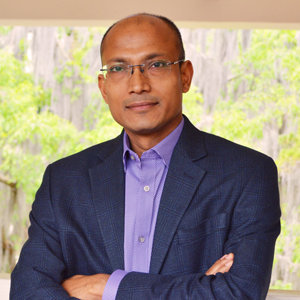
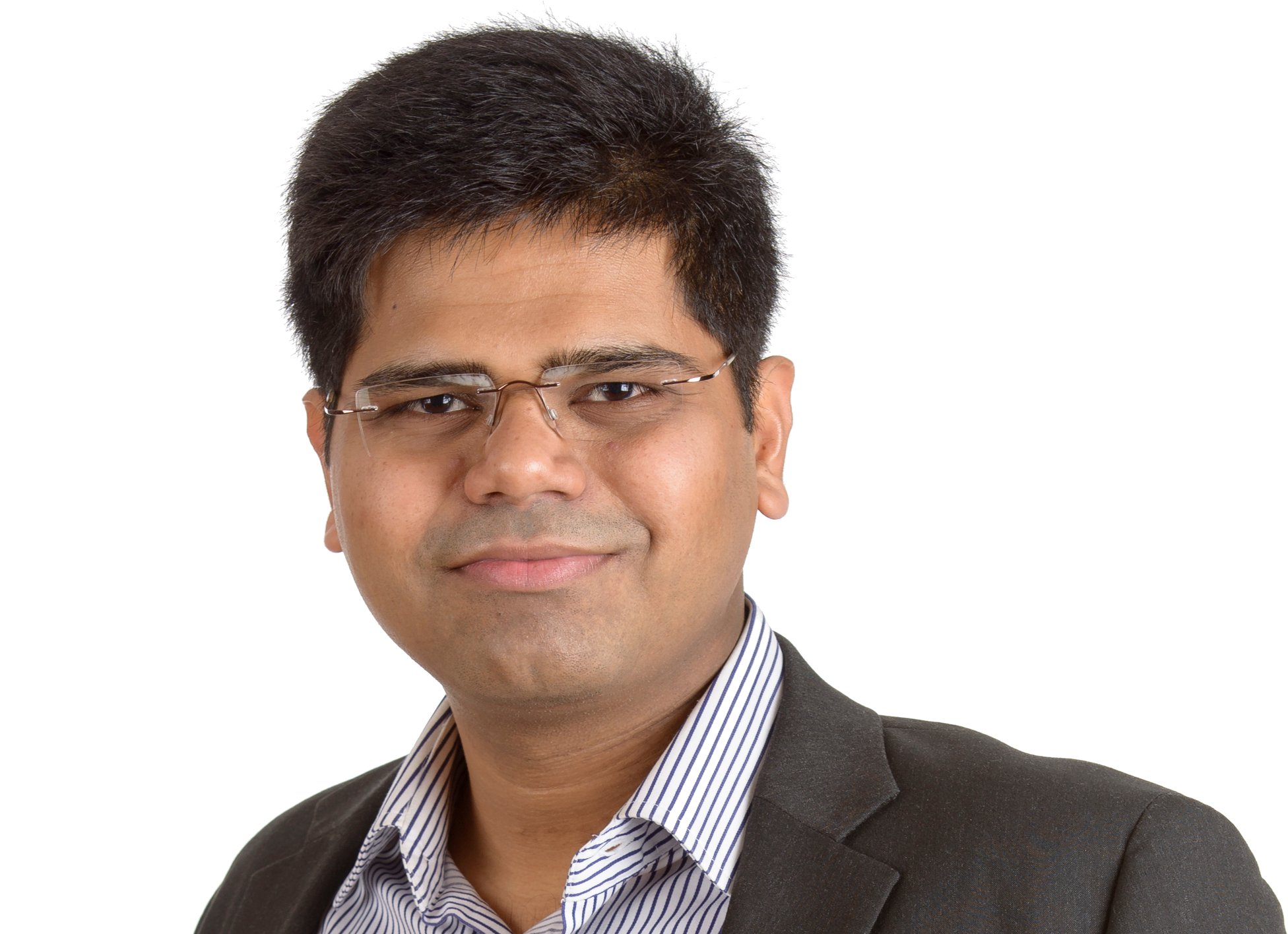
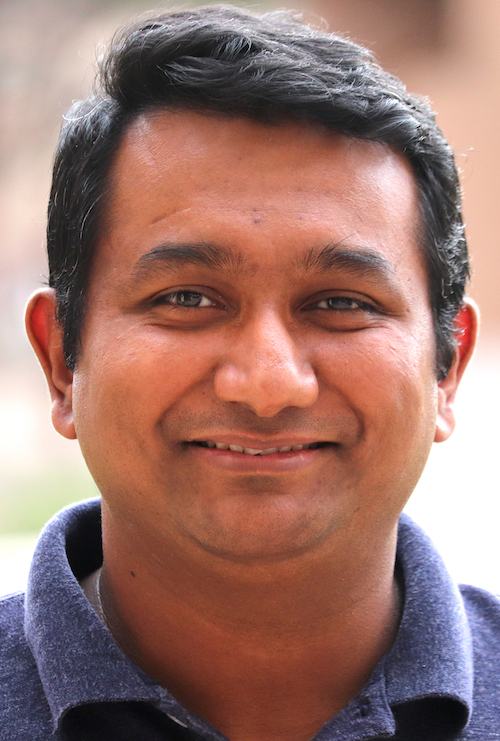
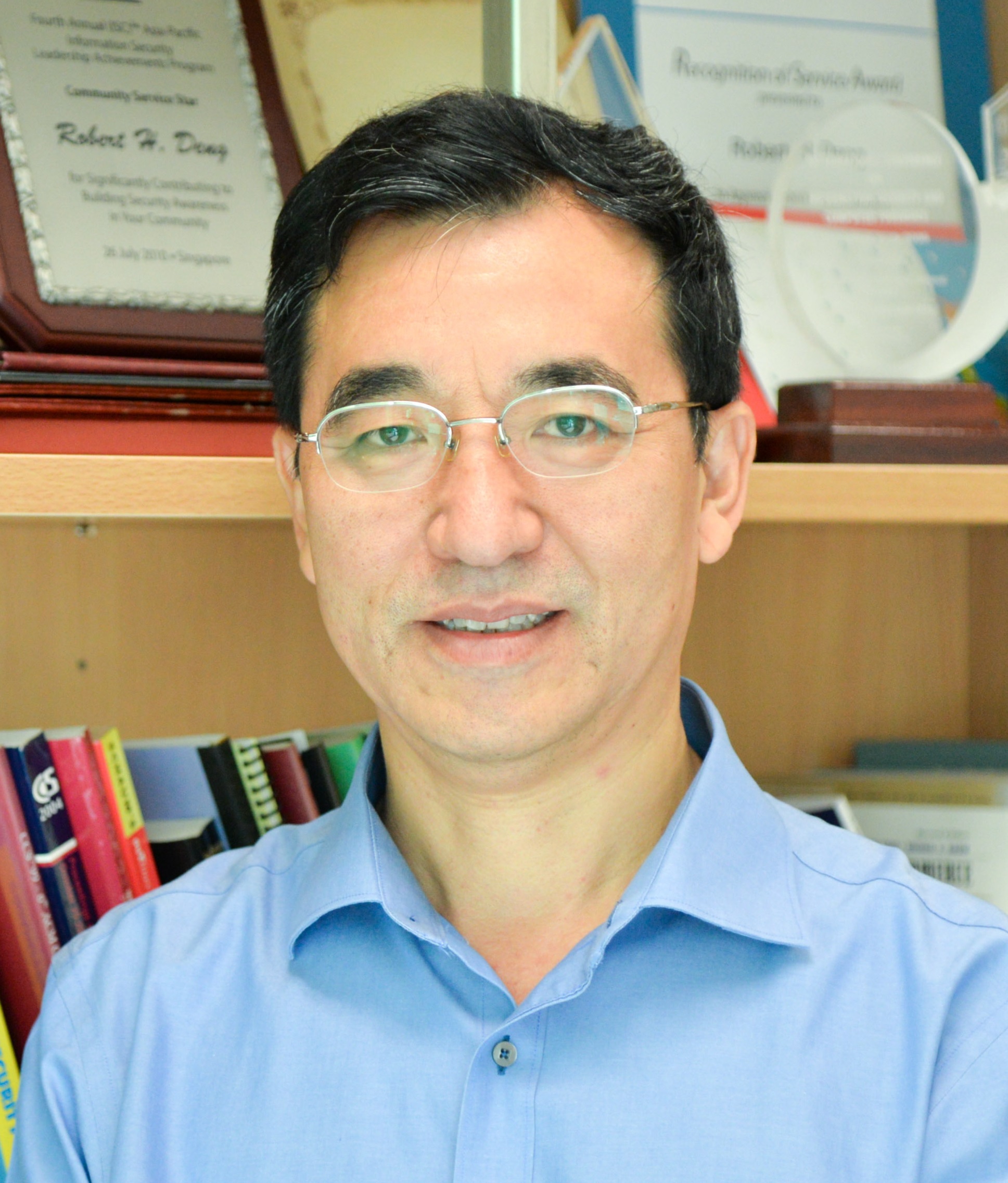
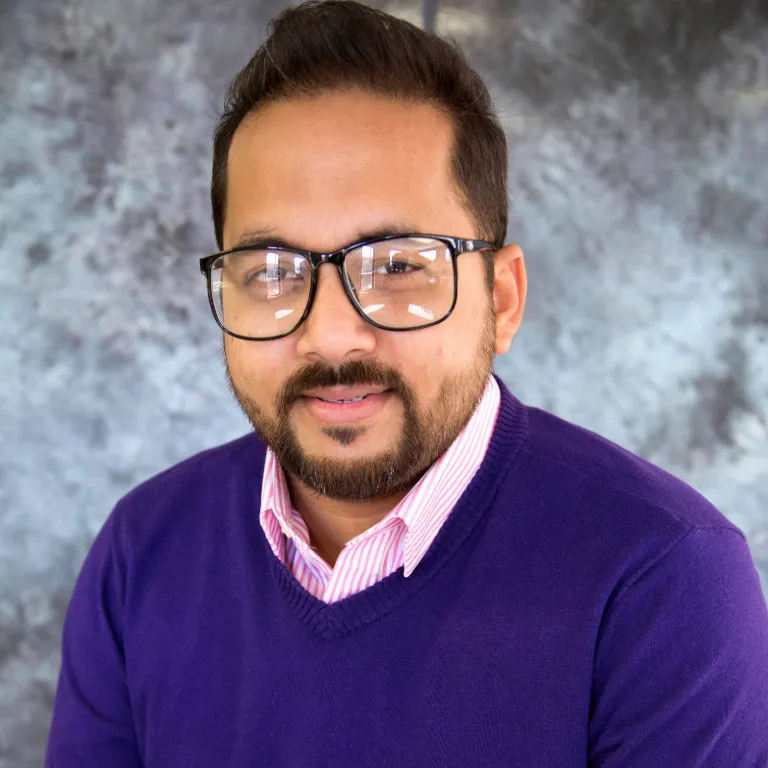
Dr. Sandip Ray is the Warren B. Nelms Endowed Professor in the Department of Electrical and Computer Engineering at the University of Florida. He directs the RISING Lab and serves as Director of Industry Programs at the Warren B. Nelms Institute for the Connected World. His research develops secure systems for automotive, IoT, and industrial applications. Key focus areas include hardware security, post-silicon validation, formal methods for trustworthy computing, and digital twin technologies. He leads initiatives like the Veterans Florida hardware security training program and REU Site on Secure Transportation. Recent work explores wearable health monitors, network-on-chip obfuscation, vehicular platoon security, and digital twin frameworks for medical and environmental systems. His lab integrates physical platforms with virtual simulations for cybersecurity education and resilience testing.
John M. Shea is a Professor and Associate Chair for Faculty Affairs in the Department of Electrical & Computer Engineering at the University of Florida. His research focuses on wireless communication & networking, military & secure communication systems, cross-layer design, and networked autonomous vehicles. He has collaborated with organizations like AFOSR, AFRL, DARPA, and industry partners Harris and Samsung Electromechanics. Education: PhD, MS, and BSEE in Electrical Engineering from Clemson University (1993-1998). Awards include the Summer Faculty Fellow (ONR, 2012/2014), MILCOM Technical Achievement Award (2012), and the Fred W. Ellersick Award (1996). Recent research trends emphasize cybersecurity in autonomous systems, resilient consensus algorithms for multi-agent networks, and privacy-preserving localization techniques. His work on jammer placement strategies and dynamic spectrum sharing has been supported by defense-related grants. Advising and grants: Extensive industry-academic partnerships, with grants from AFOSR, NSF, and DoD. His research group explores cutting-edge applications in military communication systems and autonomous vehicle networks.
Dr. Swarup Bhunia is the Semmoto Endowed Professor and Director of the Warren B. Nelms Institute for the Connected World at the University of Florida's Department of Electrical and Computer Engineering. He leads the Nanoscape Lab, focusing on hardware security, IoT systems, and wearable devices. His research spans adaptive computing, food safety detection using NQR spectroscopy, and AI-driven hardware security frameworks. Education: PhD in Electrical Engineering, Purdue University (2005) MTech in Computer Science, Indian Institute of Technology (1997) BE in Computer Science, Jadavpur University (1995) Research Interests: Hardware and systems security IoT-driven healthcare and environmental monitoring Energy-efficient computing architectures Anti-counterfeiting and authentication systems His lab develops technologies like wearable health sensors, bee behavior monitoring systems, and secure edge devices. Recent projects include the 'SAMURAI' AI protection framework and NQR-based substance authentication. Scientific Awards: 2024 IEEE Fellow & UFRF Professorship 2013 IBM Faculty Award and Schroeder Chair Professorship NSF CAREER Award (2011) Advising & Grants: Mentor to students like Rohan Reddy Kalavakonda (Attributes of a Gator Engineer Award) and Sudipta Paria (Graduate Research Excellence) Recipient of grants from IBM, NSF, and the Semiconductor Research Corporation His work includes collaborative initiatives like the Cade Museum's microelectronics education program and the Nelms IoT Conference. Labs & Teams: Nanoscape Lab: Specializes in secure IoT systems and hardware IP protection Warren B. Nelms Institute: Leads industry-academia partnerships in connected technologies Current projects include drone-based battery charging (D2DC) and 'BoW' mobile battery systems for EVs.
Robert Banks is a Visiting Professor in the Department of Biosciences at Durham University. His research focuses on the neurobiology of mammalian muscle spindles, particularly their structure, function, and role in mechanosensation. He collaborates with researchers such as Dr. M. Hulliger and Dr. Guy Bewick on projects involving sensory innervation, synaptic-like vesicles, and glutamate modulation in proprioceptive systems. His key research interests include neurobiology, muscle spindle dynamics, and the molecular mechanisms underlying mechanotransduction. Recent work explores the evolution of muscle spindles, glutamate receptor roles in sensory terminals, and abnormalities in neuromuscular junctions in ALS models. Publications span mechanoreceptor modeling, comparative analyses of sensory organs, and studies on proprioceptive signaling. Collaborations emphasize interdisciplinary approaches, combining histology, electrophysiology, and molecular techniques. His contributions highlight the interplay between muscle function, neural encoding, and clinical applications in nerve repair and rehabilitation.
Prof. Aniket Kate is an Associate Professor of Computer Science and a University Faculty Scholar at Purdue University. He also serves as Chief Research Officer at Supra, a blockchain technology company. His research focuses on applied cryptography, privacy, and secure distributed systems, with a particular emphasis on blockchain technologies, multi-party computation (MPC), and crypto-economic security. He holds a Ph.D. from the University of Waterloo and a Master's from IIT Bombay. Education: Ph.D. in Computer Science, University of Waterloo, Canada (Advisor: Ian Goldberg) Postdoctoral Fellowship at Max Planck Institute for Software Systems (Germany) M.Tech. in Computer Science, IIT Bombay, India Research Interests: Cryptocurrencies and Blockchain Scalability Privacy-Preserving Technologies (e.g., anonymous communication, metadata privacy) Crypto-Economic Security Mechanisms Multi-Party Computation (MPC) and Threshold Cryptography Secure Distributed Consensus and Ledgers Awards & Honors: NSF CAREER Award (2019) Best Paper Award at COSN 2015 Service & Leadership: Program Committee Member for IEEE S&P, CCS, FC, and others Editorial Board Member at ACM Transactions on Privacy and Security (TOPS) Organizer of Dagstuhl Seminars, 3Rand Workshop, and Decentralized Credit Networks (DCN) Workshop Labs & Teams: Leads the Freedom Lab at Purdue, focusing on decentralized privacy and security systems.
Adam Boyce is an Assistant Professor at the School of Mechanical and Materials Engineering, University College Dublin (UCD). He holds a BSc and ME from UCD, and a PhD in Materials Engineering from the University of Cambridge. Prior to UCD, he was a postdoctoral researcher at University College London and the Faraday Institution. He currently serves as Programme Director for the MEngSc Materials Science and Engineering program. His research focuses on energy storage systems, particularly lithium-ion and solid-state batteries, with an emphasis on microstructural design, electrochemical modeling, and manufacturing processes. Education: BSc, University College Dublin ME (Master of Engineering), University College Dublin PhD, University of Cambridge Research Interests: Adam’s work spans experimental and computational studies of battery materials and devices. Key areas include optimizing electrode structures for thick batteries, analyzing cracking mechanisms (e.g., mud cracking), and developing chemo-mechanical models to predict battery performance. His research integrates advanced imaging (e.g., X-ray tomography) with modeling to address challenges in energy density, cycle life, and manufacturing scalability. Teaching: He coordinates modules such as 'Technical Ceramics', 'Materials Science and Engineering I', and supervises projects for the MEngSc Materials program. Labs/Teams: His research is part of UCD’s broader efforts in sustainable energy technologies, collaborating with institutions like the Faraday Institution and the Electrochemical Innovation Lab.
Mohammad Atiqul Islam is an Assistant Professor in the Department of Computer Science and Engineering at the University of Texas at Arlington. His research spans cloud computing, data center efficiency, cybersecurity, and sustainable computing. He directs projects funded by NSF including developing ultra-low-cost server-level power monitoring using electromagnetic interference analysis. Current research focuses on water sustainability in data centers and voltage-based monitoring of distributed energy resources. His team investigates thermal/voltage side-channel attacks in multi-tenant data centers and develops market-based resource allocation frameworks for HPC systems. Recognized with the ACM E-Energy Best Notes Paper Award (2024), he serves on program committees for top security and systems conferences. Server-Level Power Monitoring (NSF ECCS-2152357) Water Management for Sustainable Data Centers (NSF CCF-2310001) He teaches courses in Data Center Design, Sustainable Computing, and Computer Security.
Elizabeth Varki is an Associate Professor and Graduate Program Coordinator in the Department of Computer Science at the University of New Hampshire's College of Engineering and Physical Sciences. Her research focuses on computer operating systems, simulation/modeling, and systems analysis. She holds a Ph.D. in Computer Science from Vanderbilt University and multiple advanced degrees from the University of Delhi and Villanova University. Her work emphasizes performance evaluation of computing systems, storage optimization, and parallel systems design. Key research contributions include innovative approaches to storage positioning (GPSonflow), RAID systems (RAIDX), and cache prefetching techniques. Her teaching spans courses like Operating System Fundamentals, Database Systems, and Distributed Systems. Varki's publications span ACM Transactions, IEEE journals, and major conferences in performance evaluation and storage systems. Her advising and grants focus on advancing storage and distributed systems research, though specific grant details are not provided here. She is affiliated with the UNH's Computer Science department and contributes to interdisciplinary efforts in computational performance analysis.
Rui Zhang is an Assistant Professor in the Department of Electrical Engineering at the School of Engineering and Applied Sciences , State University of New York at Buffalo. Her research focuses on next-generation communication systems , including fiber-wireless integration , statistical signal processing , integrated communication and sensing , and optical wireless networking . PhD, School of Electrical and Computer Engineering, Georgia Institute of Technology, 2022 BS in Electrical Engineering and BA in Economics, Peking University, 2017 She has made significant contributions to 6G wireless research and hybrid optical-wireless networks . Her recent publications explore integrated communication-sensing systems , high-capacity data center links , and nonlinear signal equalization . Notably, her work on OFDM reference signal design and self-homodyne coherent systems has received recognition at top conferences. Rui Zhang has been honored with the prestigious 2022 Marconi Young Scholar Award and received the Top-scored Paper Award at OFC 2022. She actively mentors students, currently advising Zijun Wang , a PhD candidate. Her industry experience includes a Staff Engineer role at MediaTek USA (2022–2023), where she worked on 6G wireless systems.
Professor Robert H. Deng is a distinguished academic and researcher at Singapore Management University's School of Computing and Information Systems, where he serves as Professor of Computer Science and Deputy Dean for Faculty & Research. With a PhD from Illinois Institute of Technology (1985), he has established himself as a leading authority in cybersecurity, data privacy, and applied cryptography. His research interests span applied cryptography, data security and privacy, mobile and wireless network security, trusted computing, and system security. Professor Deng has published extensively in top-tier security venues, with over 600 publications listed in DBLP. His work bridges theoretical foundations with practical applications, particularly in the domains of IoT security, blockchain systems, and privacy-preserving technologies. Professor Deng has received numerous prestigious awards, including the National Day Award (Public Administration Medal Silver) in 2020, the AXA Chair Professor of Cybersecurity (2017-2025), and the Lee Kuan Yew Fellow for Research Excellence at SMU in 2006. His recent publications demonstrate continued leadership in emerging areas like post-quantum cryptography, federated learning security, and hardware-assisted security systems. His research group has produced significant work on secure authentication protocols, privacy-preserving data analytics, and robust cryptographic systems for real-world applications. National Day Award, Public Administration Medal (Silver), 2020 AXA Chair Professor of Cybersecurity, AXA Research Fund, 2017-2025 Distinguished & Best Paper Awards at NDSS, ESORICS, IEEE ICPADS, etc. Asia-Pacific Information Security Leadership Achievements (ISLA), 2010 Lee Kuan Yew Fellow for Research Excellence, SMU, 2006 University Outstanding Researcher, National University of Singapore, 1999 As a research advisor, Professor Deng has mentored numerous students including SUN Bing. His active participation in the research community is evidenced by recent keynotes at major conferences including DSPP 2024 on post-quantum cryptography and ASIACCS 2024 on client-side encryption. His research group maintains strong industry connections and receives significant funding for cutting-edge security research.
Dr. Abigail McQuatters-Gollop is an Associate Professor of Marine Conservation at the University of Plymouth's School of Biological and Marine Sciences (Faculty of Science and Engineering). Her research focuses on integrating scientific evidence into marine policy, particularly addressing climate change impacts, biodiversity conservation, and ecosystem-based management. She leads UK and OSPAR implementations of marine strategies for pelagic habitats and holds DEFRA's Marine Systems Research Fellowship. Her work bridges natural and social sciences to enable sustainable marine resource use. Educated at the University of Miami (BSc Marine Biology, MSc Marine Affairs), she completed her PhD at Plymouth under Professors Laurence Mee and Martin Attrill, focusing on plankton as biodiversity indicators. She has held NERC Knowledge Exchange Fellowships and a Japanese Society for the Promotion of Science Fellowship. Research interests include climate vs. anthropogenic pressure effects on biodiversity, plankton community dynamics, and science-policy knowledge exchange. She advises UK, EU, and international policymakers and collaborates globally on initiatives like Australia's Great Barrier Reef and Malaysia's coastal resilience projects. Teaching includes leading the MSc Marine Conservation program, emphasizing policy application and fieldwork (e.g., Bali marine conservation trips). She encourages students to link scientific research with practical policy implementation. Key achievements: developed UK-wide pelagic plankton indicators adopted by governments; transformed UK plankton researchers into a collaborative network; contributed to DEFRA's 25 Year Environment Plan and POST horizon scans.
Saptarshi Debroy is an Associate Professor of Computer Science at Hunter College and a member of the Doctoral Faculties at The Graduate Center, CUNY. He leads the Distributed Systems and Security (DiSSect) Lab and co-leads the CoSSMO Lab, focusing on resilient distributed systems, edge computing, and cyber security. His research addresses challenges in disaster response systems, federated cloud workflows, and moving target defense mechanisms. He holds a PhD in Computer Engineering from the University of Central Florida and has held roles including Post-Doctoral Fellow at the University of Missouri. Education: PhD (Computer Engineering, UCF, 2014), MTech (Distributed & Mobile Computing, Jadavpur University, 2008), BTech (Information Technology, West Bengal University of Technology, 2006) Research Interests His work spans distributed systems, edge/AI-driven networks, cyber security, and resource optimization in disaster scenarios. Key areas include fog computing frameworks for real-time video processing (EFFECT), secure federated workflows (ADON), and MTD-based cloud defense strategies. He emphasizes practical applications like disaster response and healthcare data security. Grants & Awards Recipient of NSF CAREER Award (2020), NSF grants totaling over $1.1M, and Google Research Award. Notable projects include a trusted framework for health incident response (NSF), volunteer edge-cloud resource allocation (NSF), and DDoS mitigation strategies (NSF). Teaching & Service Teaches graduate courses on distributed systems, cloud computing, and networks at CUNY. Serves on NSF review panels and as chair for IEEE/ACM conferences. Leads initiatives like the Cyber Security Summer School for Women to promote diversity in tech. Labs & Collaborations Directs the DiSSect Lab, which develops edge-native systems for disaster response and secure AI. Collaborates with FDNY, perfSONAR, and NSF-funded testbeds like PAWR. Partnerships include projects with bioinformatics and high-performance computing communities (CyVerse, XSEDE).
Dr. Nicola Cordeschi is an Assistant Professor in Telecommunications at Polytechnic University of Bari's Department of Electrical and Information Engineering. He earned his Laurea degree (summa cum laude, 2004) and Ph.D. (2008) in Electronic Engineering from Sapienza University of Rome. Contact: +39 080 5963913. Research spans adaptive wireless systems and IoT: Q-learning approaches for wireless energy transfer systems Multi-link optimization in IEEE 802.11be networks Quantum network entanglement distribution strategies Optimized MAC protocols for IoT networks Awarded 2nd Best Paper at ICT-DM 2023 for work on scheduling algorithms in wireless-powered IoT. Teaching includes Internet of Things courses.
Dr. Hlaing Minn is a Professor at the University of Texas at Dallas, affiliated with the Department of Electrical & Computer Engineering within the Erik Jonsson School of Engineering and Computer Science. He holds an IEEE Fellow distinction since 2016. His academic journey includes a B.E. from Yangon Institute of Technology, M.Eng. from Asian Institute of Technology, and Ph.D. from the University of Victoria. Research interests focus on communications systems , signal processing , and wireless technologies , with recent emphasis on mitigating radio frequency interference (RFI) in satellite systems and radio astronomy. He has authored over 170 journal/conference papers and supervised 17 Ph.D. and 3 M.Sc. students. Key Achievements: Editor-at-Large for IEEE Transactions on Communications since 2016 Pioneered spectrum-sharing paradigms between cellular networks and radio astronomy Developed techniques for massive MIMO, millimeter-wave, and Tera-Hertz communications Teaching: Courses include Digital Communications, Random Processes, and Probability Theory. Recent roles include EE 4360 Digital Communications and EESC 6352 Digital Communications Systems. Awards: IEEE Fellow (2016), Green & Orange Award (Fern Yoon, 2025), and multiple best paper nominations. Lab: Information & Communications Systems Lab focuses on next-generation terrestrial/satellite systems, biomedical signal processing, and spectrum-agile designs. Collaborates with industry leaders like Qualcomm, Samsung, and Cisco.
Trung Q. Duong is a Canada Excellence Research Chair and Full Professor at Memorial University of Newfoundland, Canada. He specializes in wireless and quantum communications, with a focus on 5G/6G networks, IoT applications, and quantum machine learning. His research addresses challenges in network optimization, digital twin integration, and UAV-based communication systems. Education: PhD in Telecommunications Systems from Blekinge Institute of Technology, Sweden. Research Interests: Quantum machine learning, real-time optimization for UAVs, integrated satellite-terrestrial networks, and security in communications. His work spans applications in healthcare, disaster management, and smart cities. Key Achievements: Over 500 publications (20,000+ citations, h-index 76), $54M+ in grants, and prestigious awards like the Newton Prize and IEEE Fellowship. He serves as an editor for top journals such as IEEE Trans. on Wireless Communications and IEEE Wireless Communications Letters. Global Collaborations: Visiting Professorships at National Chung Cheng University (Taiwan), Kyung Hee University (South Korea), and Thuyloi University (Vietnam). Active in international grant review panels across 20+ countries.