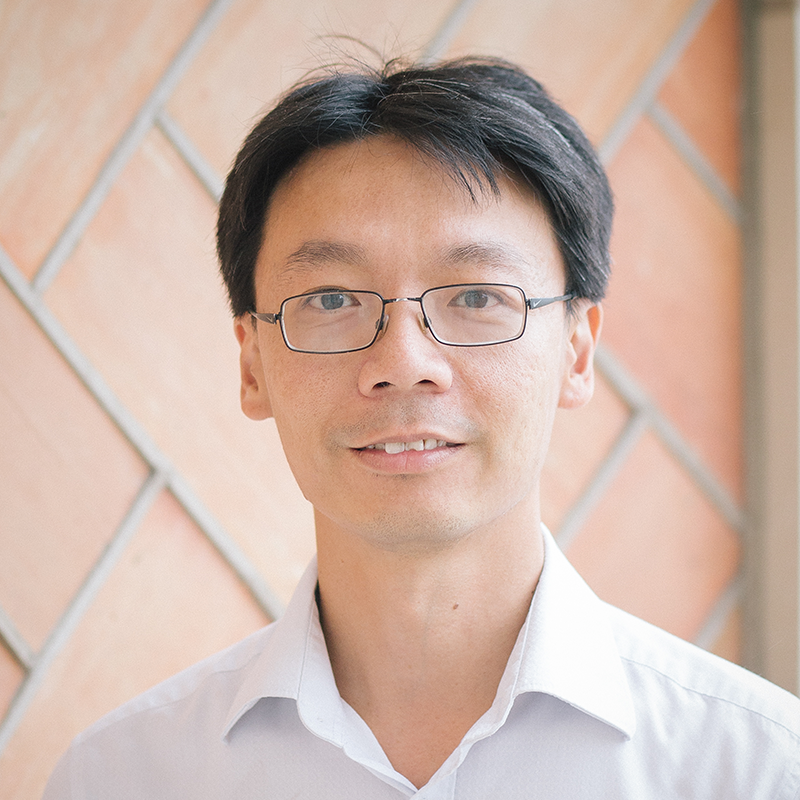
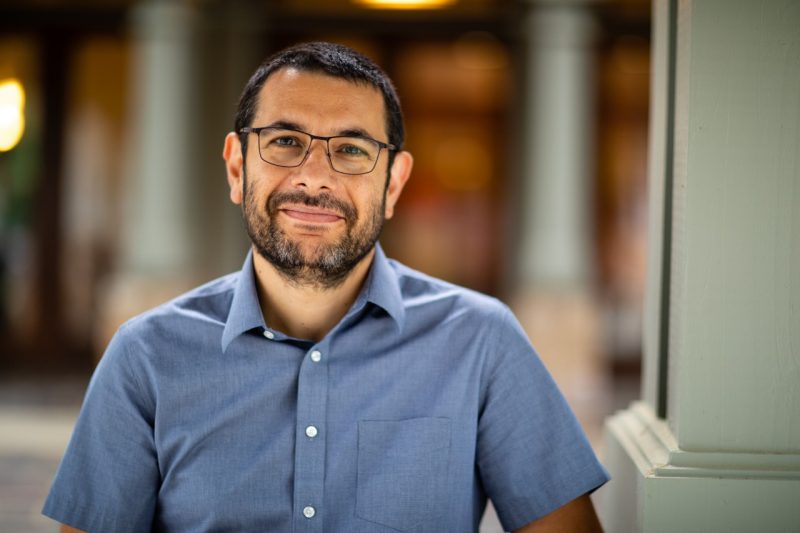
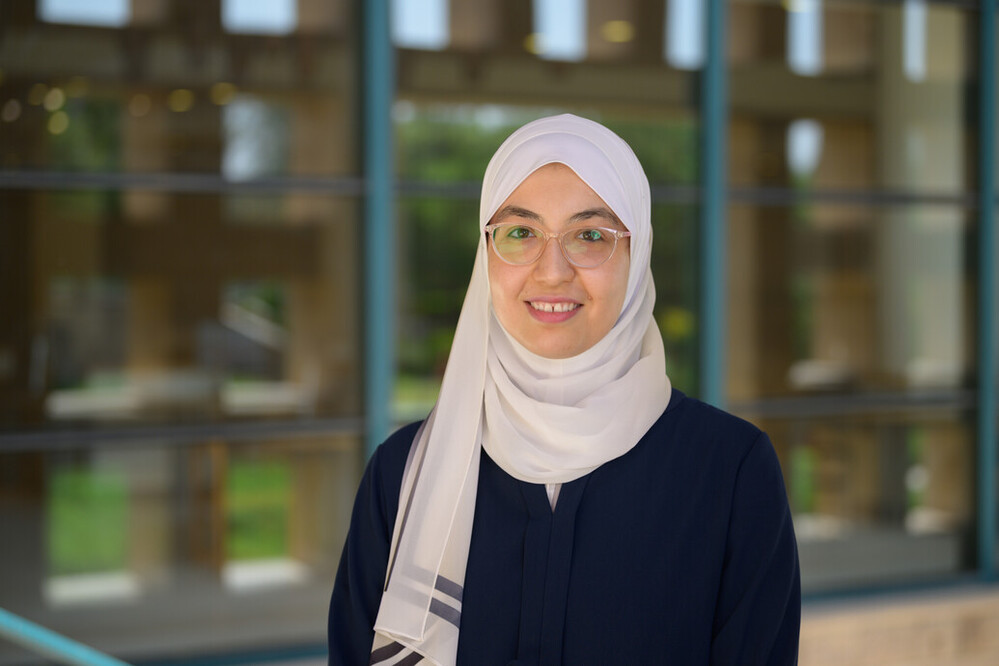
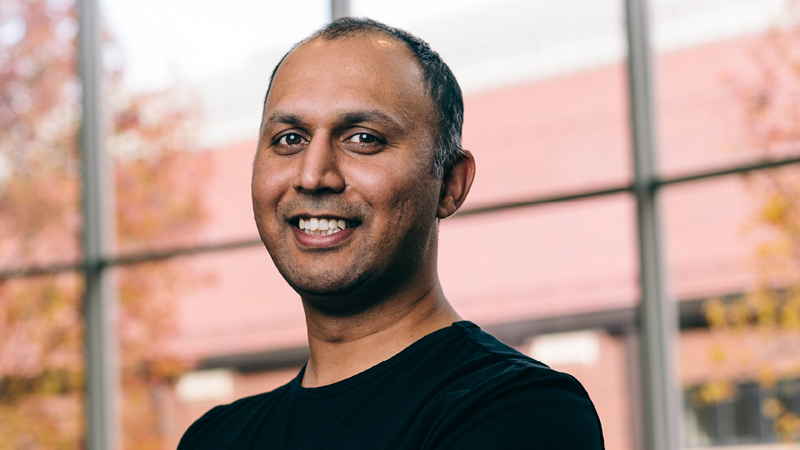
Haakon Bryhni is a Research Professor at Simula Research Laboratory's Center for Resilient Networks and Applications, focusing on telecommunications infrastructure and network resilience. His work spans optical fiber sensing, Cloud-RAN architecture, 5G networks, and network security. Expertise in telecommunications and network infrastructure Contributions to optical fiber sensing and AI-driven network outage classification Active in public outreach and policy analysis for ICT resilience Recent research explores Sagnac loop sensing systems , Cloud-RAN integration , and cybersecurity preparedness in Norway. Collaborations include international conferences and publications in Optics & Laser Technology , Sensors , and IEEE journals. Contact: haakonbryhni@simula.no
Dr. Robert K. Chun is a Professor in the Department of Computer Science at San José State University (SJSU), part of the College of Engineering. He holds a BSEE (1979), MSCS (1981), and Ph.D. (1989) from UCLA. With 20+ years in industry, he joined SJSU as a full-time faculty in 2001. His research focuses on Cloud Computing, parallel processing, high-performance architectures, and AI. He received NASA Faculty Fellowships (2002-2003) and holds a U.S. patent for real-time expert systems integration. Education: Bachelor of Science, Electrical Engineering, UCLA (1979) Master of Science, Computer Science, UCLA (1981) Doctor of Philosophy, Computer Science, UCLA (1989) Research Interests: Cloud Computing architectures and scalability High-performance computing and parallel algorithms Software engineering for distributed systems CAD tools for VLSI design verification Artificial intelligence and neural networks Publications highlight advancements in parallel processing, distributed systems, and compiler optimization. Notable works include adaptive transactional memory algorithms, wireless cluster computing frameworks, and EJB performance measurement tools. His NASA-funded research at Ames Supercomputing Center explored parallel computing applications. Advising and Grants: Advised 16 Master’s theses, including topics like dynamic clusters and intelligent debuggers Contributed to industry-university partnerships through NASA collaborations Labs/Teams: Active in SJSU’s parallel processing and computer architecture research groups, contributing to course development in advanced parallel processing and operating systems.
Tze Meng Low is an Associate Research Professor in the Department of Electrical and Computer Engineering at Carnegie Mellon University (CMU), part of the College of Engineering. His research focuses on high-performance algorithms, formal methods, and hardware-software co-design, with an emphasis on achieving performance portability across architectures. He holds a Ph.D. and M.S. in Computer Science and dual B.A./B.S. degrees in Economics and Computer Science from the University of Texas at Austin. His research interests span parallel computing, graph algorithms, machine learning, and cyber-physical systems. He has contributed to projects like the DARPA BRASS initiative, collaborating on adaptive software systems for resource-challenged environments. His work also involves developing tools such as SMaLL and qLD, which address challenges in machine learning library instantiation and genomic analysis. Low has received the Dean’s Early Career Fellowship (2022) and led the $2.7M DARPA-funded BRASS project (2016–2020), supported by SpiralGen, Inc. and academic collaborators. His contributions include code generation frameworks like SPIRAL and advancements in linear algebra-based graph algorithms, emphasizing analytical models and automated code optimization. His research bridges theoretical formal methods with practical implementations, aiming to enhance software reliability and scalability in emerging domains. Collaborations include work on fault-tolerant coded computing and high-assurance systems for cyber-physical applications.
Mohammad Zubair is a Professor in the Department of Computer Science at Old Dominion University's College of Sciences, specializing in high performance computing, digital libraries, autonomic computing, and peer-to-peer networks. His work bridges scientific computing and information systems with significant federal and industry collaborations. Education: Ph.D. in Computer Science, Indian Institute of Technology Delhi (1987) B.S. in Electrical & Electronics Engineering, University of Delhi (1981) Research Interests: Dr. Zubair's expertise centers on high performance computing for scientific applications and large scale data analytics. He develops scalable algorithms for scientific simulations (e.g., particle physics, structural health monitoring) and advances digital library systems through autonomic computing, collaborative classification, and metadata extraction. His work integrates parallel computing with domain-specific challenges in finance, physics, and digital preservation. Publication Trends: His recent publications (2017-2008) show strong focus on GPU-accelerated scientific computing (particle colliders, structural monitoring) and computational finance (binomial option pricing), while maintaining digital library research in collaborative classification and metadata extraction. The work increasingly addresses energy efficiency in cloud systems and leverages parallel architectures from multicore CPUs to GPUs. Scientific Awards: IBM Faculty Award (2006) IBM Faculty Award (2005) Grants and Funding: Dr. Zubair has secured over $800,000 in research funding since 2004, including projects like 'Design AMD Impl Scalable Opt Kernels for Lrg Sc Simu USN Fund3d On Emer' ($24,890, 2017-2018), 'Graduate Research Award Program On Public Sector Aviation Issues' ($35,519, 2016-2018), and foundational digital library work with the Library of Congress and NASA. He frequently collaborates with K. J. Maly and R. Mukkamala on autonomic systems and metadata extraction. Labs and Teams: His research integrates with ODU's high performance computing initiatives and digital library projects, particularly through collaborations with federal agencies (NASA, Library of Congress) and industry partners like IBM. Current work focuses on GPU-accelerated scientific simulations and energy-efficient cloud management systems.
Dimitrios Nikolopoulos is the John W. Hancock Professor of Engineering at Virginia Tech's College of Engineering, within the Department of Computer Science. His research focuses on high-performance computing, systems runtime systems, memory management, and edge computing. He holds a Chartered Engineer (CEng) certification. Education: M.Eng., University of Patras, Greece (1996) M.Sc., University of Patras, Greece (1997) Ph.D., University of Patras, Greece (2000) Research Interests: His work spans transprecision computing, parallel programming paradigms, efficient inference frameworks for large language models (LLMs), and energy-efficient server ecosystems. Recent efforts emphasize optimizing edge computing systems, GPU resource sharing, and adaptive memory management in cloud-edge environments. Recent Trends in Publications: Recent studies highlight advancements in edge-serving frameworks (e.g., SLED), multi-agent systems for HPC code optimization (MARCO), and novel approaches to GPU and memory resource utilization in constrained settings. Themes include reducing latency, improving scalability, and integrating AI-driven techniques into HPC workflows. Grants & Advising: Details on current grants and advisees are not explicitly listed in the provided materials. Labs/Teams: His research is conducted through collaborative groups within Virginia Tech's Department of Computer Science, focusing on systems, parallel computing, and AI/ML infrastructure.
Dr. Qiang Fu is a Senior Lecturer at RMIT University's School of Computing Technologies, specializing in Cloud, Networked Systems, and Security. He holds a PhD from The University of Queensland and is actively involved in industry collaborations. His research focuses on Internet and Cloud-based systems, including Content Delivery Networks (CDNs), data centre design, Cyber-Physical Systems (CPS)/IoT, virtualization, and SDN/NFV. Recent work emphasizes network telemetry, fault detection, and IoT workflow optimization. He has published extensively in top-tier journals and conferences like IEEE Transactions and IFIP NOMS. Dr. Fu supervises PhD/Master students in areas such as network security, cloud computing, and IoT. His projects are often industry-funded and address real-world challenges like network scalability and blockchain integration. He is open to supervising students in these domains through RMIT's scholarship programs.
Javier Verdu Mula is a Professor at the Departament d'Arquitectura de Computadors (Universitat Politècnica de Catalunya - UPC) and a key researcher at the CRAAX - Centre de Recerca d'Arquitectures Avançades de Xarxes . His work focuses on computer architecture, parallel processing, and networking systems. Fields of Research include RISC-V virtualization, multithreaded processor optimization, and performance analysis of stateful networking applications. Scientific Awards include the BDigital Global Congress (2015) and Wayra Barcelona (2012) recognitions. Collaborations span institutions like Barcelona Supercomputing Center and researchers such as Manuel Alejandro Pajuelo, Mateo Valero Cortes, and Mario Nemirovsky. His recent publications address RISC-V hypervisor extensions, deep packet processing in parallel architectures, and statistical thread assignment models. He also holds patents in hardware virtualization and resource control systems.
Zhenjie Zhang is a Professor in the Department of Computer Science at East China Normal University's School of Computer Science and Software Engineering, with a distinguished research career spanning nearly two decades. His work bridges theoretical computer science with practical industrial applications, maintaining strong international collaborations with researchers from TU Wien, National University of Singapore, and industry partners including ByteDance. Dr. Zhang's research focuses on the intersection of database systems, machine learning, and industrial applications. His early work centered on database privacy and query processing, evolving toward causal inference, fault diagnosis systems, and industrial AI applications. His recent publications demonstrate a strategic shift toward solving real-world engineering problems using advanced machine learning techniques, particularly in manufacturing, transportation, and cloud systems. The consistent publication trajectory across top venues like IEEE TKDE, VLDB, and ACM Transactions shows sustained research excellence and adaptability to emerging technical challenges. His publication record reveals significant contributions to causal inference methods, evidenced by multiple papers on causal discovery and transfer learning. The research demonstrates practical impact through industrial collaborations, particularly in fault diagnosis systems for mechanical equipment and adaptive control for unmanned vehicles. The recent work shows increasing focus on deploying AI models efficiently in resource-constrained environments, reflecting awareness of practical implementation challenges. Dr. Zhang has mentored numerous junior researchers who have become active contributors in the field, including Ruichu Cai and Zining Zhang. His collaborative network spans multiple continents, indicating strong research leadership and international recognition. The consistent flow of publications in top venues suggests successful grant funding and research group management, though specific grant details aren't provided in the source material.
Dina G. Mahmoud is an Assistant Professor at the Department of Computer Science and Engineering at The American University in Cairo (AUC). She earned her Ph.D. in Computer and Communication Sciences from EPFL, Lausanne, Switzerland (2019-2024), where she was a CYD Fellow and collaborated with Dr. Mirjana Stojilović and Dr. Vincent Lenders. Her academic activities include teaching Digital Design, Computer Organization, and Applied Data Structures at AUC. Ph.D. (2019-2024): School of Computer and Communication Sciences, EPFL B.Sc. (2014-2019): Electronics and Communications Engineering with minor in Mathematics, AUC Her research focuses on heterogeneous computing systems , emphasizing security and reliability at the hardware and electrical levels . She investigates fault injection attacks in FPGA systems, particularly in multitenant cloud environments, and has demonstrated the first FPGA-to-CPU fault-injection exploit. Recent publications highlight trends in FPGA security , including power-wasting attacks, hardware Trojans, undervolting exploits, and fault tolerance mechanisms. Her work bridges hardware-software co-design , cloud security , and reconfigurable computing . CYD Fellow (first doctoral recipient) Google Generation Scholarship (2022, EMEA) IC Doctoral Fellowship at EPFL She has served as Head/Teaching Assistant at EPFL for courses like Computer Architecture and Information, Calcul, Communication, and as Head Undergraduate Teaching Assistant at AUC for Digital Logic Design. She contributes to the technical program committee of IEEE Industrial Electronics Society’s ETFA conference.
Dr. Muhammad Shahbaz is the Kevin C. and Suzanne L. Kahn New Frontiers Assistant Professor in Computer Science at Purdue University. He specializes in designing domain-specific abstractions, compilers, and architectures for emerging workloads such as machine learning and self-driving networks. His research bridges networking, machine learning, and computer architecture to create high-performance, scalable systems. Shahbaz holds a Ph.D. and M.A. in Computer Science from Princeton University and a B.E. in Computer Engineering from the National University of Sciences and Technology (NUST). Before joining Purdue, he conducted postdoctoral research at Stanford University and worked as a Research Assistant at Georgia Tech and the University of Cambridge. His research interests include Networking and Operating Systems, Artificial Intelligence, Machine Learning, Computer Architecture, Distributed Systems, and Programming Languages/Compilers. He has developed influential open-source systems like Pisces, SDX, and NetFPGA-10G, which are widely adopted in industry and academia. Shahbaz has received prestigious awards including the Facebook, Google, and Intel Research Awards; IETF/IRTF ANRP Prize; ACM SOSR Systems Award; and APNet Best Paper Award. His work focuses on advancing edge computing, smartNICs, in-network machine learning, and scalable distributed systems. His research portfolio includes contributions to network caching, hardware acceleration, and AI-driven network optimization. He leads projects like CAREER (per-packet AI on heterogeneous data planes) and EdgeScaler (smart auto-scaling for 5G edge networks). His systems address challenges in tail latency, resource harvesting, and scalable multicast in modern networks.
L. Winston Zhang is an Adjunct Lecturer in the Department of Mechanical Science and Engineering at the University of Illinois Urbana-Champaign (2022-present). He holds a PhD in Mechanical Engineering from UIUC (1996), an MBA from Marquette University (2001), and prior degrees from the University of Alaska Fairbanks and Central-South University of Technology. His professional career spans academia, industry, and entrepreneurship, including roles as President of Novark Technologies (Shenzhen, China since 2004), and engineering leadership positions at Modine Manufacturing and Thermacore Taiwan. Dr. Zhang's research focuses on advanced thermal management systems for electronics, heat transfer mechanisms in microfluidic devices, and innovative cooling technologies for high-power electronics. His work emphasizes practical applications in semiconductor cooling, battery thermal management, and high-heat-flux dissipation systems. He has authored over 40 refereed publications and held key industry roles such as Track Co-Chair for ASME InterPACK conferences and Board Member of the Taiwan Thermal Management Association. His recent teaching includes specialized courses on electronics cooling (ME 598 EC1) and applied heat transfer (ME 598 WZ1), recognized for excellence by UIUC students in 2023 and 2024. He maintains active industry connections through advisory roles and has received prestigious recognition including ASME Fellow status (2017).
Rishabh Iyer is an Assistant Professor in the Electrical Engineering and Computer Sciences department at the University of California, Berkeley. His research focuses on developing techniques that enable engineers to build systems with well-understood performance and functionality. Iyer is affiliated with the Networked Systems Lab (NETSYS) at Berkeley and teaches courses such as CS 294-262: Performance Analysis and Optimization of Computer Systems. Dr. Iyer completed his PhD at EPFL in Switzerland and his bachelor's degree at IIT Bombay. His educational background includes: 2023, PhD, Computer Science, EPFL, Switzerland 2017, BTech, Electrical Engineering, IIT Bombay Iyer's research spans multiple areas in computer systems, with a particular focus on performance analysis and optimization. His work draws insights from operating systems, networking, computer architecture, and formal methods. He has developed techniques for creating performance interfaces that allow engineers to reason about system performance before deployment, focusing on areas such as packet processing applications, OS system calls, cryptographic libraries, and specialized hardware accelerators for deep learning. His research also includes work on kernel extensibility through frameworks like KFlex, which improves the flexibility of eBPF extensions in Linux while maintaining negligible performance overheads. Additionally, he has contributed to building reliable and provably correct systems, particularly in the domain of software-defined wide-area networks and network packet-processing applications. Dr. Iyer's publication record demonstrates a consistent focus on performance analysis, system reliability, and network function optimization. His recent work has centered on performance interfaces for various system components, kernel extensions, and validation techniques for software-defined networks. His research has practical applications, with several systems he has helped design being deployed in production at companies such as Meta and Alibaba. Dr. Iyer's contributions to the field have been recognized with several prestigious awards: ACM SIGOPS Dennis M. Ritchie Doctoral Dissertation Award (2023) Eurosys Roger Needham PhD Award Dimitris N. Chorafas Award As an educator, Dr. Iyer teaches courses related to computer systems and performance analysis. He has previously served as a teaching assistant for various computer science courses at EPFL and IIT Bombay. He actively seeks talented and ambitious students to join his research group, encouraging Berkeley students to contact him directly via email and prospective graduate students to mention his name on their Berkeley EECS Graduate Admissions applications.
Prof. Dr. Matthias Rosenthal is a Professor of Multiprocessor and Real-Time Systems at the ZHAW School of Engineering, Zurich University of Applied Sciences (ZHAW), where he also serves as Head of the Research/Focus Area Realtime Platforms. He holds a PhD and MSc in Electrical Engineering from ETH Zurich (1993–1997). His research focuses on multiprocessor systems, hybrid multicore architectures, distributed signal processing, embedded GPU computing, and real-time embedded systems. Key projects include In-Flight GNSS Interference Detection, dAIrector (automated multi-camera live production), and novel AFM techniques for industrial quality control. He has led over 15 industry-focused projects, including collaborations with Innosuisse and companies like Harman International. His work emphasizes real-time systems, FPGA-GPU co-design, and embedded AI solutions. Education: PhD (ETH Zurich, 1997), MSc (ETH Zurich, 1993) Awards: CTI Startup Label (2005) Teaching: Lectures on digital systems, real-time computing, and information theory Notable contributions include advancements in embedded machine learning for food waste management, secure boot concepts for Zynq MPSoC, and low-latency wireless video systems. His research bridges theoretical computer engineering with practical industrial applications.
Zuofu Cheng is a Teaching Associate Professor in the Department of Electrical and Computer Engineering at the University of Illinois at Urbana-Champaign. His research focuses on parallel computing, FPGA-based machine learning acceleration, GPU optimization, and innovative engineering pedagogy. He has contributed to curriculum development in computer engineering education and advanced mesh optimization algorithms for heterogeneous computing systems. Research interests include: Hardware acceleration for AI/ML systems Parallel algorithm design for multi-core architectures Interactive engineering education methodologies Real-time acoustic simulation engines Publications highlight trends in FPGA/GPU optimization, IoT applications of machine learning, and computational thinking integration in undergraduate curricula. Over 75 citations reflect notable impact in hardware-accelerated computing domains. Active collaborations include work with IEEE conferences and HPC training initiatives.
Alexander Wold is an Associate Professor at the University of Oslo, affiliated with the Research Group for Robotics and Intelligent Systems within the Faculty of Mathematics and Natural Sciences. His work focuses on reconfigurable computing, embedded systems, and robotics, with notable contributions to FPGA design, real-time systems, and educational technology. He holds a position at the Institute of Informatics (IFI) and can be contacted at alexawo@ifi.uio.no . Research interests include optimizing hardware-software co-design, thermal management in 3D-IC systems, and developing open-source tools like EasyPR for pattern recognition. His publications span topics such as remote cloud labs for reconfigurable logic education, network traffic management in industrial Ethernet, and constraint programming for module placement in FPGAs. Dr. Wold’s articles reflect a strong emphasis on practical applications of robotics and intelligent systems, with a focus on safety-critical industrial systems and autonomic computing. He has contributed to multi-core system design, thermal-aware FPGA architectures, and self-aware systems.