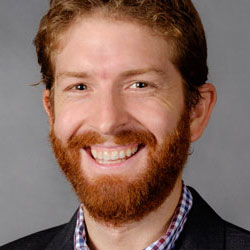
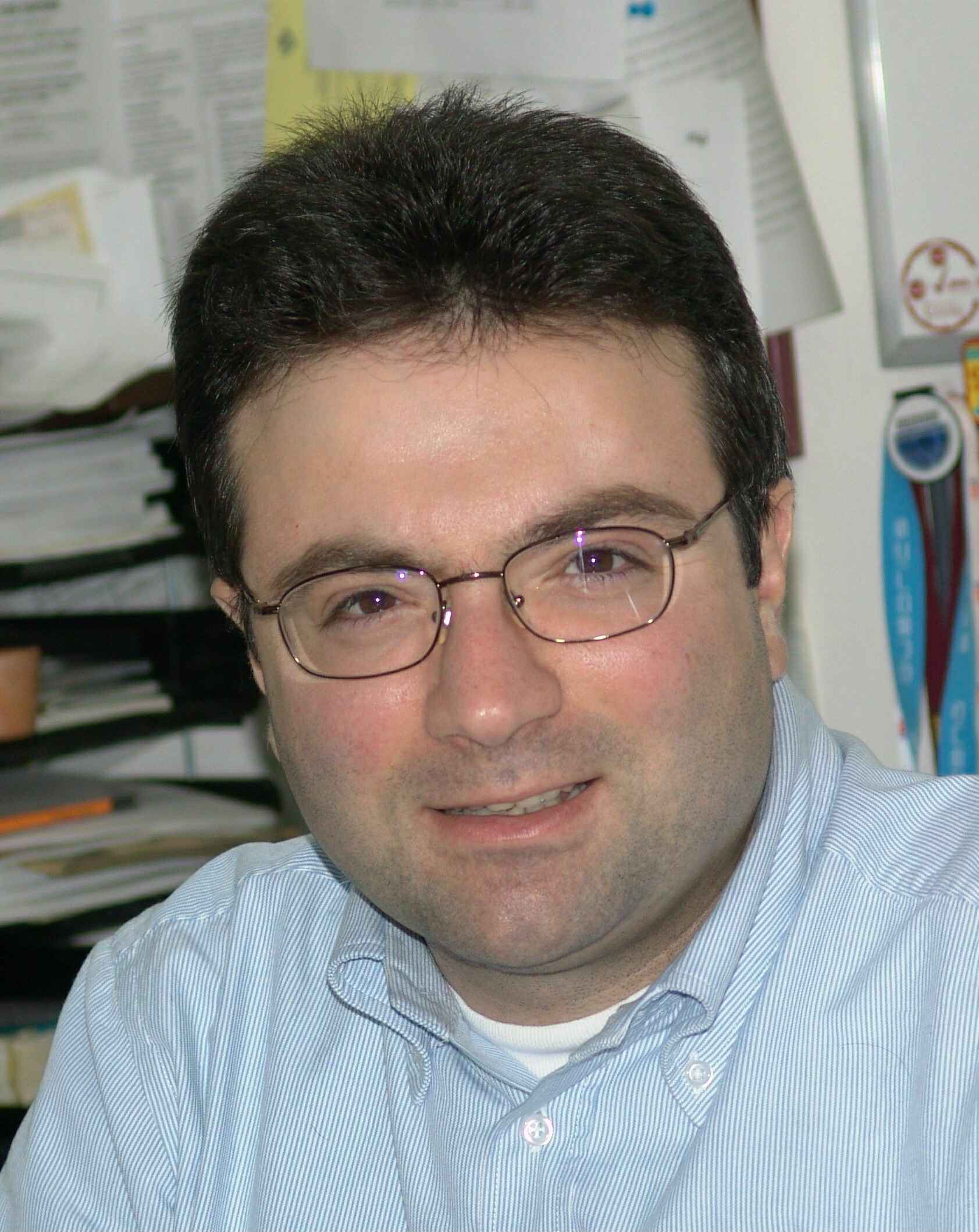
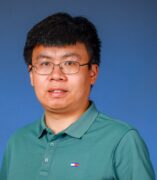
Prof. Dr. rer. nat. Rainer Leupers is a faculty member at RWTH Aachen University, chairing the Department of Software for Systems on Silicon. His research focuses on embedded systems, hardware-software co-design, virtual prototyping, and security in computing-in-memory architectures. He has published extensively on RRAM accelerators, logic locking, and neuromorphic security. Chair of Software for Systems on Silicon Research in hardware security and deep learning accelerators Recent publications on cross-tool virtual frameworks and thermal side-channel attacks His work bridges system-level modeling with practical security implementations, emphasizing reliability and performance in heterogeneous computing environments. Key trends in his 2025-2023 articles include compute-in-memory optimization, neural network inference efficiency, and security vulnerabilities in emerging hardware. Awards and formal recognitions are not explicitly detailed in the provided materials. He has not directly mentioned advising students or research grants in the given text fragments. The chair's contact information includes an office at ICT Cube 1, Electrical Engineering, Aachen, with direct email and website links.
George Bosilca is a Research Professor at the University of Tennessee, Knoxville, affiliated with the Department of Electrical Engineering and Computer Science and the Innovative Computing Laboratory. He holds a PhD in Computer Science (University of Paris XI, 2004) and an MS in Math and Computer Science (University of Paris XI, 1999). His research focuses on distributed algorithms, parallel programming paradigms, performance modeling/optimization, and resilience in programming models. He contributes to exascale computing initiatives through projects like PaRSEC and Open MPI. Key research areas include task-based runtimes, MPI standardization for exascale systems, and fault-tolerant distributed computing. His work emphasizes scalable and portable constructs for high-performance applications. Bosilca is involved with the Innovative Computing Laboratory (ICL) and collaborates on projects like the EPEXA ecosystem and Argobots threading framework. Recent publications highlight advancements in asynchronous many-task systems, GPU-accelerated collective operations, and resilience strategies for HPC platforms. His contributions span theoretical frameworks and practical implementations, bridging algorithmic innovation with real-world HPC challenges.
Dr. Jia Rao is an Associate Professor in the Department of Computer Science and Engineering at the University of Texas at Arlington, College of Engineering. He previously served as an Assistant Professor at the University of Colorado, Colorado Springs from 2012 to 2016. His research spans operating systems, distributed and parallel computing, cloud computing, virtualization, and machine learning. Education: Ph.D., Computer Engineering, Wayne State University, 2011 M.S., Computer Science, Wuhan University, 2006 B.S., Computer Science, Wuhan University, 2004 Dr. Rao's research focuses on building adaptive, scalable, and efficient computer systems for cloud and data center environments. His interests include resource management, performance modeling, adaptive scheduling, and quality-of-service (QoS) guarantees in virtualized and containerized systems. He combines machine learning and feedback control techniques with low-level system design to improve efficiency, fairness, and predictability in heterogeneous and multi-tenant environments. An analysis of his recent publications reveals a strong trend toward memory and resource management innovations in cloud-native systems. His work explores tiered memory architectures, secure container deployment, preemptive multitasking for deep learning, and efficient packet processing in container networks. These efforts reflect a consistent focus on optimizing system-level performance, security, and scalability in modern data centers. Scientific Awards: NSF CAREER Award (2019) Best Paper Award, APSys (2016) Best Paper Award, ICAC (2013) Best Paper Nomination, HPCA (2013) Best Paper Nomination, HPDC (2013) Best Paper Award, Middleware (2021) Researcher of the Year, UCCS (2014) Dr. Rao actively advises students and serves on dissertation and thesis committees for numerous Ph.D. and Master’s candidates. He leads federally funded research projects supported by the National Science Foundation, including a major CAREER grant on virtualized architectures and collaborative big data initiatives. His research has been sponsored by NSF, IEEE, and Intel Corporation, reflecting strong industry and academic collaboration. He leads and contributes to major research labs and teams focused on cloud systems, operating systems, and performance optimization. His team has produced high-impact work in top-tier venues such as OSDI, SOSP, ATC, EuroSys, and ICDCS. Current and future work includes next-generation memory architectures using CXL, intelligent resource provisioning, and resilient container networking.
Dr. Grey Ballard is an Associate Professor in the Department of Computer Science at Wake Forest University . He earned a B.S. in Math and Computer Science (2006), M.A. in Math (2008) from Wake Forest, and PhD in Computer Science (2013) from the University of California, Berkeley. He was a Truman Fellow at Sandia National Laboratories before joining Wake Forest. Research Focus: Ballard develops communication-optimal algorithms for high-performance computing , particularly in tensor decompositions , symmetric matrix computations , and nonnegative matrix factorization . His work combines numerical linear algebra with parallel algorithm design to reduce data movement costs in distributed systems. Publications demonstrate expertise in communication lower bounds , randomized tensor rounding , and visualization tools for parallel algorithms. He has contributed software packages such as TuckerMPI , GentenMPI , and PLANC for large-scale data compression and clustering. Scientific Awards: Wake Forest Excellence in Research Award NSF CAREER Award SIAM Linear Algebra Prize Three Conference Best Paper Awards (SPAA, IPDPS, ICDM) C.V. Ramamoorthy Distinguished Research Award (UC Berkeley) ACM Doctoral Dissertation Award – Honorable Mention Teaching: Courses include Introduction to Computer Science , Numerical Linear Algebra , and Parallel Algorithms . He has developed educational tools using the Thread-Safe Graphics Library to visualize parallel dynamic programming and collective communication.
Riccardo Lancellotti is an Associate Professor at the Department of Engineering 'Enzo Ferrari' of the University of Modena and Reggio Emilia. His research focuses on Edge/Fog/Cloud Computing, Cyber Security, and Resource Management in distributed systems. He has extensive contributions in optimizing infrastructure performance, load balancing, and energy efficiency in cloud and fog environments. His work often combines theoretical models with practical simulations, addressing challenges like stale information in edge systems and heterogeneous resource allocation in smart cities. Key research areas include: Fog/Edge computing infrastructure design and optimization Cloud resource provisioning and SLA compliance Security for Industry 4.0 and automotive systems Genetic algorithms for service placement Scalable VM clustering and resource allocation Publications highlight trends in cloud/fog integration, robust game theory for microservices, and distributed load balancing under dynamic conditions. His work emphasizes practical applications, such as pharmaceutical distribution routing and smart city sensor management. No awards are explicitly listed, but his extensive publication record reflects recognition in the field.
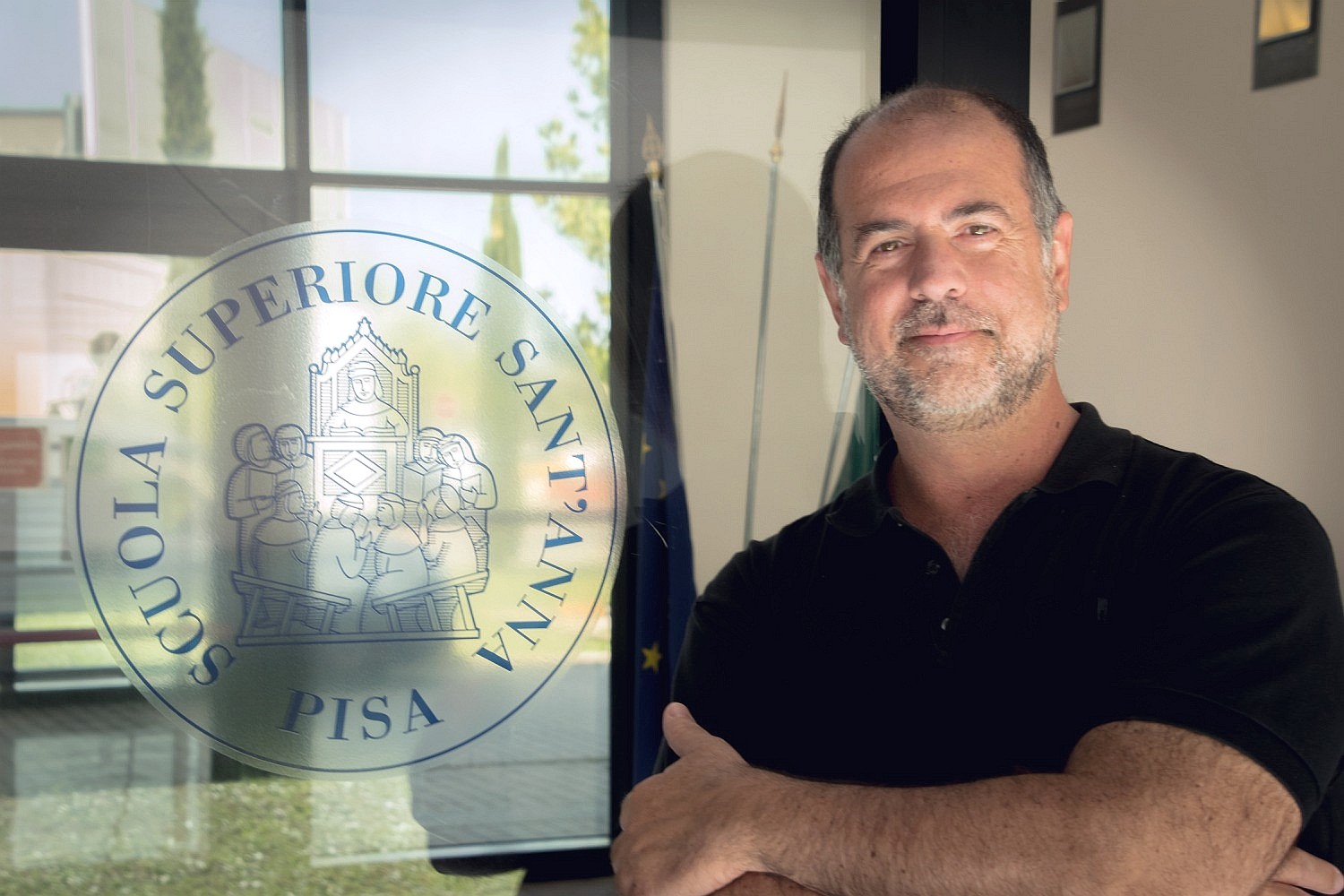
Giorgio C. Buttazzo is a Full Professor of Computer Engineering at the Scuola Superiore Sant'Anna in Pisa, Italy, and founder/director of the RETIS Lab. His career includes roles at the University of Pavia and co-founding Evidence s.r.l. (a real-time embedded systems company). He holds an IEEE Fellowship (2012) and the IEEE TC RTS Outstanding Technical Contributions Award (2013). Education: Electronic Engineering (University of Pisa, 1985), Master in Computer Science (University of Pennsylvania, 1987), PhD in Computer Engineering (Scuola Superiore Sant'Anna, 1991). Affiliations: TeCIP Institute, RETIS Lab, and leadership roles in IEEE Technical Committees. Research focuses on real-time systems, robotics, and AI integration. He has authored 10 books, over 300 papers, and pioneered frameworks like the ERIKA/SHARK kernels. Current projects include RETICULATE, OPERAND, and NANCY (5G networks). Teaching includes Real-Time Systems, Neural Networks, and Jazz Guitar Improvisation. Advised over 150 master and PhD students. Active in conferences like ECRTS, RTSS, and RTAS.
Nectarios Koziris is a Professor at the Department of Computer Science , National Technical University of Athens (NTUA) , and former Dean of the School of Electrical and Computer Engineering . His research focuses on Parallel and Distributed Systems , Computer Architecture , and Cloud Computing . Key Research Themes: Compiler-OS-Architecture Interaction, Datacenter Hyperconvergence, Sparse Matrix Optimization, Quantum Computing, FPGA Virtualization Leadership: Founder of ~okeanos (Europe's largest public Cloud IaaS), Co-founder of GFOSS , Member of IEEE Computer Society Greece, Advisor to Arrikto Inc. His work has led to over 180 publications with 5800+ citations (h-index 33) , including two Best Paper Awards (IPDPS 2001, CCGRID 2013) and Intel Recognition (2015). He has supervised 12 PhD students and participated in 15+ EU projects as coordinator or consortium partner. Scientific Leadership: Program Co-Chair for Europar 2012 , Organizer for IPDPS , ICPP , SC conferences, and active member in Cloud Computing Expert Groups for the European Commission.
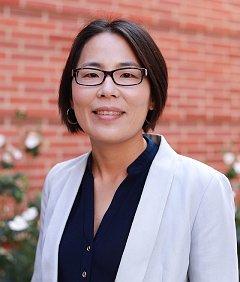
Miryung Kim is a Professor and Vice Chair of Graduate Studies in UCLA's Computer Science Department, where she directs the Software Engineering and Analysis Laboratory. She is renowned for her pioneering work in software evolution, code clone management, and establishing the emerging field of Software Engineering for Data Intensive Computing (SE4DA and SE4ML). Her research focuses on automated testing and debugging for Apache Spark, developer tools for heterogeneous computing, and conducting systematic studies of refactoring practices in industry. She led the first large-scale study of data scientists in industry and developed JDebloat, a Java bytecode debloating tool that made significant tech transfer impact to the Navy. Her recent publications demonstrate strong trends in fuzz testing for big data analytics and heterogeneous computing, with a focus on natural input generation, co-dependence awareness, and leveraging hardware probes for acceleration. Her work bridges software engineering with data-intensive and heterogeneous computing paradigms. ACM SIGSOFT Influential Educator Award (2022) ICSME Most Influential Paper Award (2023 and 2020) NSF CAREER award Google Faculty Research Award Okawa Foundation Research Award Humboldt Fellow ACM Distinguished Member As an academic advisor, she has produced eight tenure-track faculty members at institutions including Columbia, Purdue, and Virginia Tech. Her research has been supported by National Science Foundation, Air Force Research Laboratory, Google, IBM, Intel, Okawa Foundation, Samsung, and Office of Naval Research. She previously served as Program Co-Chair of ESEC/FSE 2022 and has delivered keynotes at ASE 2019 and ISSTA 2022. She maintains active industry collaborations, serving as an Amazon Scholar at Amazon Web Services and having spent time as a visiting researcher at Microsoft Research.
Mark Heinrich is an Associate Professor in the Department of Computer Science at the University of Central Florida (UCF), where he also serves as Undergraduate Coordinator for CS and IT, and Senior Design Coordinator. He previously held roles at Cornell University and has industry experience co-founding companies like Phanfare and Flashbase. His research focuses on parallel computer architecture, heterogeneous systems, cache coherence protocols, and multiprocessor simulation. Heinrich holds a Ph.D. in Electrical Engineering from Stanford University (1998) under John Hennessy, and a B.S. in Electrical Engineering and Computer Science from Duke University (1991). Research Interests His work spans parallel architectures, active memory systems, scalable cache coherence protocols, and hardware/software co-design. Recent efforts include innovations in persistent memory technologies and multiprocessor simulation methodologies. Teaching In Spring 2020, he taught CS Senior Design I and II courses (COP 4934/4935), with office hours focused on senior design and undergraduate coordination. Professional Background Associate Professor at UCF since 2003 Past roles: Director of UCF's School of Computer Science (2005), Associate Director of EECS (2005-2007) Co-founder of the Cornell Computer Systems Laboratory Contributed to the FLASH multiprocessor architecture and its simulation tools Labs & Projects He has been involved in projects like Active Memory Clusters and architectural support for multiprocessor systems. His work often bridges theoretical computer architecture with practical hardware implementations.
Marco Aldinucci is a Full Professor and Head of the Parallel Computing group at the University of Torino's Computer Science Department. He leads the HPC Key Technologies and Tools (HPC-KTT) national lab under CINI, involving 38 Italian universities. His expertise spans parallel programming models, HPC systems, federated learning, and energy-efficient computing. Aldinucci has secured over €10M in EU research funding, contributed to frameworks like Fastflow and Streamflow, and pioneered initiatives like the HPC4AI lab and the CINI HPC-KTT lab. His research focuses on advancing exascale computing, cloud-HPC integration, and AI-driven medical solutions. Notable projects include the Gaia AVU-GSR solver for exascale systems and the DeepHealth Toolkit for medical AI. He has held governance roles in EuroHPC and chairs the Observatory on Trends and Applications of Supercomputing in Italy. Aldinucci’s publications (150+) address parallel algorithms, distributed learning, and sustainable HPC infrastructure. His work has been recognized with awards from HPC Advisory Council, NVIDIA, IBM, and Autodesk. Current initiatives include the Software & Integration lab at the Italian National HPC Centre (ICSC) and leadership in the OpenScience working group at Torino. His advising includes Iacopo Colonelli, whose thesis won CINI’s 2023 best award. He actively engages in EU projects, workflow systems, and standards for hybrid computing environments. Aldinucci’s labs and collaborations drive innovations in HPC portability, energy efficiency, and AI scalability.
Xiaoguang Wang is an Assistant Professor in the Department of Computer Science at the University of Illinois Chicago. His research spans systems and software security, focusing on heterogeneous CPU architectures, secure software systems, and virtualization-based security frameworks. He actively mentors PhD and Master’s students and offers funded research opportunities for UIC students. University of Illinois Chicago, Department of Computer Science Research: Systems & Software Security, Heterogeneous Architectures, Virtualization His work includes projects like sMVX (multi-variant execution), Dapper (live program rewriting), and DynaCut (dynamic program customization). Recent publications address cross-architecture process migration, Linux kernel security, and using large language models (LLMs) for software security. He teaches advanced courses such as CS 487: Building Secure Computer Systems and CS 594/561: Adv. Linux Kernel Programming , emphasizing hands-on kernel development and security techniques. Grants from the U.S. Office of Naval Research and NSF support his work on secure systems and cross-architecture security solutions.
Amanda Bienz serves as an Assistant Professor in the Department of Computer Science at the University of New Mexico (UNM), where she leads the Scalable Solvers Lab and acts as faculty advisor for Women in Computing. Her academic roles include teaching operating systems and parallel computing courses while spearheading efforts to restructure New Mexico's CS4ALL curriculum for statewide computer science education expansion. Her research centers on overcoming communication bottlenecks in high-performance computing systems, specifically targeting the performance gap between emerging exascale hardware and real-world applications. Key focus areas include developing portable communication optimizations, enhancing MPI collective operations, creating topology-aware message passing extensions, and benchmarking heterogeneous architectures. Her work directly addresses critical challenges in scaling parallel applications through innovations in sparse solvers, neighborhood collectives, and node-aware communication strategies for GPU-accelerated systems. Analysis of her 2022-2024 publications reveals consistent emphasis on communication optimization across diverse HPC domains. Her research demonstrates particular expertise in irregular communication patterns, locality-aware algorithms, and performance modeling for heterogeneous architectures. Significant contributions include novel approaches to sparse dynamic data exchange, compressed linear algebra algorithms, and persistent communication techniques that reduce synchronization overhead in large-scale simulations. Scientific Awards: NSF CAREER Award for "Towards Exascale Performance of Parallel Applications" Dr. Bienz actively mentors students through the Scalable Solvers Lab, welcoming new researchers interested in high-performance computing. Her NSF CAREER grant provides substantial research funding supporting both technical innovation and educational initiatives. The CS4ALL curriculum restructuring project demonstrates her commitment to broadening computer science access throughout New Mexico's K-12 education system. The Scalable Solvers Lab develops open-source tools including the Raptor algebraic multigrid solver and MPI-Advance communication library. Current projects focus on benchmarking heterogeneous architectures (Summit/Lassen supercomputers), optimizing FFT implementations, and creating node-aware communication strategies for conjugate gradient methods. The lab maintains active GitHub repositories with substantial community engagement, including contributions to CUDA-aware MPI implementations and halo exchange libraries for multi-GPU systems.
Prof. Dr. Philipp Slusallek serves as Scientific Director and executive board member at the German Research Center for Artificial Intelligence (DFKI), where he leads the Agents and Simulated Reality research area. He holds a Full Professorship in Computer Graphics at Saarland University since 1999, co-founded the European AI initiative CAIRNE as Director of Strategy, and directs research at the Intel Visual Computing Institute. His career spans leadership roles in the Excellence Cluster on Multimodal Computing and Interaction and prior visiting positions at Stanford University and Nvidia Research. His academic foundation includes: 1983-1990: M.Sc. in Physics, University of Tübingen 1992-1995: Ph.D. in Computer Science, University of Erlangen Slusallek's research bridges Artificial Intelligence, Simulated Reality, and Computer Graphics with applications in high-performance computing, motion synthesis, and AI for science. His interdisciplinary work integrates real-time rendering, heterogeneous system programming (CPU/GPU/FPGA), and biomechanical modeling, driving innovations in digital reality frameworks and AI-driven simulation systems across medical, engineering, and autonomous vehicle domains. His 2025 publications reveal a strong focus on graphics compilation (Vulkan SPIR-V), rehabilitation biomechanics, and multi-agent motion simulation, demonstrating consistent integration of computer graphics foundations with emerging AI methodologies for practical real-world applications. Award highlights include the Eurographics Gold Medal (2023), acatech membership (2018), Land of Ideas Awards (2015, 2010), and Eurographics Fellowship (2013), recognizing his transformative contributions to computer graphics and AI. Eurographics Gold Medal (2023) acatech Membership (2018) Land of Ideas Award: Display as a Service (2015) Fellow of Eurographics Association (2013) CeBIT Innovation Award (2013) Land of Ideas Award: DFKI Visualization Center (2010) Slusallek leads major research initiatives including B5GCyberTestV2X (cybersecurity for autonomous driving), ENGAGE (AI computing environments), Carousel+ (digital character interaction), PRIME (predictive rendering), and TAILOR (trustworthy AI). His DFKI research group pioneers virtual environment frameworks while his academic mentorship has shaped generations of computer graphics researchers through Saarland University's programs. He co-founded the Intel Visual Computing Institute and established foundational visualization infrastructure at DFKI, maintaining active leadership in European AI strategy through CAIRNE and prior service on the European Commission's High-Level Expert Group on AI.
Evangelia (Eva) Kalyvianaki is a Senior Lecturer (equivalent to Associate Professor) in the Department of Computer Science and Technology at the University of Cambridge , where she is also a member of the Systems Research Group / netos group . Previously she held faculty positions as Lecturer at City University London and as post-doctoral researcher at Imperial College London. Education Ph.D. in Computer Science, Computer Laboratory (SRG/netos group), University of Cambridge M.Sc. in Computer Science, University of Crete, Greece B.Sc. in Computer Science, University of Crete, Greece Research Interests Her research spans the broad areas of Cloud Computing , Big Data Processing , Autonomic Computing , and Distributed Systems . A central theme is the design and management of next-generation, large-scale cloud applications, with an emphasis on applying mathematical reasoning—particularly control-theoretic techniques such as Kalman and H-infinity filtering—to address the complexity and uncertainty inherent in modern distributed infrastructures. Topics of active investigation include adaptive CPU and resource provisioning for virtualized servers, fairness and overload management in federated stream-processing systems, explicit state management for big-data frameworks, and distributed optimization algorithms for large-scale networked systems. Publications & Research Impact Across more than thirty peer-reviewed papers, her work demonstrates a consistent trajectory toward bridging rigorous control theory with practical systems challenges in the cloud. Signature contributions include the THEMIS framework for fair federated stream processing, dynamic block-sizing algorithms for data-stream engines, and robust resource-provisioning schemes based on advanced filtering techniques. Recent publications extend these ideas to fully distributed, finite-time coordination protocols that operate under quantized communications and time-varying delays, reflecting an expanding scope toward large-scale networked control systems. Scientific Awards No specific awards or fellowships are listed in the provided material. Advising & Funding While individual student names are not disclosed, her extensive publication record with numerous co-authors indicates active supervision of doctoral and master’s researchers. Funding acknowledgements in papers suggest support from UK research councils, EU projects, and industrial partnerships, although explicit grant details are not provided. Labs & Teams She is affiliated with the Systems Research Group (netos) within the Cambridge Computer Laboratory, a leading collective focused on networked and operating systems research, providing a collaborative environment for experimental cloud and distributed-systems work.
Donatella Sciuto is a Full Professor of Computer Science and Engineering at Politecnico di Milano, serving as Executive Vice Rector overseeing research strategies. She holds a PhD from the University of Colorado, Boulder and an MBA from Bocconi University. Her research focuses on embedded systems design, low-power electronics, and cyber-physical systems, with contributions to smart cities and ICT infrastructure. Education: Bachelor's in Electronic Engineering, Politecnico di Milano (1984) PhD in Electrical and Computer Engineering, University of Colorado, Boulder MBA, SDA Bocconi School of Management Research Interests: Embedded systems, multiprocessor architectures, hardware/software co-design, power-efficient computing, and building automation via IoT technologies. She leads the Embedded Systems Design research group at Politecnico di Milano and coordinates EU-funded projects in smart cities and reconfigurable systems. Awards: IBM Women Leaders in AI (2021) IEEE Fellow (2011) EDAA Fellow (2010) Outstanding Contribution Award, IEEE Computer Society (2009) Professional Roles: Board Member: Bank of Italy, Istituto Italiano di Tecnologia, STM, Avio Former President, IEEE Council of Electronic Design Automation (2011-2013) Executive Committee Member, Design Automation and Test in Europe (DATE) conference Labs/Teams: Leads the Embedded Systems Design and Design Methodologies group at Politecnico di Milano, collaborating with CEFRIEL on executive education programs in embedded systems and IoT.