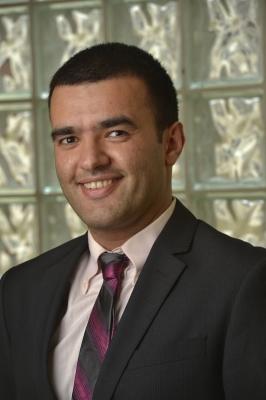
Janusz A. Starzyk is a Professor of Electrical Engineering and Computer Science at Ohio University's Russ College of Engineering and Technology, and holds a concurrent professorship at the University of Information Technology and Management in Rzeszów, Poland. He earned his M.Sc. and Ph.D. in Electrical Engineering from Warsaw University of Technology and a habilitation from Silesian University of Technology. His research focuses on embodied intelligence, machine learning, neural networks, and VLSI design, with notable contributions to self-organizing systems and reinforcement learning. Starzyk has supervised 47 M.Sc. and 16 Ph.D. students, and his work spans over 190 peer-reviewed publications. He leads the Embodied Intelligence Lab at Ohio University and collaborates with institutions worldwide, including Nanyang Technological University and the Institute for Artificial Intelligence in Switzerland. His awards include the Best Research Paper Award from Ohio University and nominations for IEEE Fellow. He has secured $3.8 million in research grants, with projects in GPS signal processing, radar target recognition, and machine learning applications. His patents include innovations in object identification systems and self-organizing learning hardware. Starzyk's expertise bridges academia and industry, with roles as a consultant for companies like Magnolia Broadband and Sarnoff Research.
Dr Miguel Ángel Sanz Bobi is a Professor at the Institute for Research in Technology (IIT) of Comillas Pontifical University, Madrid, Spain. Since joining IIT in 1985 and becoming faculty on 1 September 1986, he has led over 60 research projects for utilities and industry and advised 20 PhD theses to completion, with four more ongoing. He currently holds the Endesa Chair for AI-driven maintenance. Education: PhD in Industrial Engineering, Universidad Politécnica de Madrid, 1992. Thesis: “Metodología de mantenimiento predictivo basada en análisis espectral y temporal de la historia de equipos industriales…” Research Interests: His work integrates artificial intelligence with power and industrial engineering . Key themes include: Condition monitoring and predictive maintenance of complex industrial assets (power plants, wind turbines, trains). AI techniques: expert systems, fuzzy logic, machine learning, reinforcement learning, generative adversarial networks. Digital twins for anomaly detection and prognosis. Reliability, risk assessment and asset management in power systems. Publication Trends: Recent publications (2020-2025) focus on deep reinforcement learning for microgrids, machine-learning-based health indicators for batteries and insulators, ensemble methods for gas-turbine diagnostics, and open-source asset-management toolkits. Earlier work covers neural networks, multi-agent systems, and probabilistic models for maintenance scheduling. Scientific Awards & Fellowships: No specific awards are listed in the supplied text. Grants & Projects: Dr Sanz-Bobi has coordinated or participated in more than 60 projects, including: Horizon 2020: REDREAM (€957837), ATTEST (€864298) Endesa Chair: 2023-2028 and 2026-2028 cycles on AI-driven maintenance EU/UIC: Guidelines for data-driven railway maintenance (2024-2027) Industry: Iberdrola, Gas y Electricidad Generación, SATE s.r.l., Verescence, Repsol, Ford, Robert Bosch, Abengoa, Alstom, Union Fenosa, Canal de Isabel II, etc. Laboratories & Teams: He heads the Intelligent Systems research area at IIT and leads the Endesa Chair laboratory, which develops AI solutions for predictive maintenance and asset management in power generation, transmission and distribution networks.
John Ahmet Erkoyuncu is a Professor of Digital Engineering and Head of the Centre for Digital Engineering and Manufacturing at Cranfield University. His research focuses on digitalization of manufacturing processes, augmented reality (AR) applications in maintenance, and uncertainty management in industrial service contracts. He holds roles such as co-chair of the Through-life Engineering Services Council and is an Associate Member of CIRP. Education: PhD in maintenance cost estimation (collaboration with BAE Systems, Rolls-Royce, and MoD). Current Activities: Leads initiatives in digital twins, AI integration, and AR-driven maintenance solutions. Supervises 8 industry-cofunded PhD projects across aerospace, automotive, and healthcare sectors. Awards: Not explicitly listed in provided texts, though his contributions to digital twin frameworks and AR applications are internationally recognized. Research Interests: Erkoyuncu’s work bridges engineering and data science, emphasizing: - Digital transformation of manufacturing systems, - Human-centric AR tools for maintenance, - Sustainable product-service systems (IPS²), - Uncertainty quantification in industrial contracts. Publications: Over 100 peer-reviewed articles in journals like CIRP Annals, IEEE Access, and Robotics and Computer-Integrated Manufacturing. Recent work includes cognitive digital twin architectures and AI-driven knowledge extraction for degradation analysis. Grants: Actively involved with Innovate UK and EPSRC projects, focusing on autonomous maintenance systems and digital twin applications. Labs/Teams: Oversees the Centre for Digital Engineering, collaborating with industry partners like Airbus, Rolls-Royce, and NHS. Leads the Digital Twin Hub’s Community Council.
Mert Albaba is a joint PhD student at ETH Zurich and the Max Planck Institute for Intelligent Systems (Tübingen), advised by Prof. Andreas Krause, Prof. Otmar Hilliges, and Prof. Michael Black. His research focuses on deep reinforcement learning, computer vision, and language models to model human behavior through generative approaches. He explores integrating vision-language models into imitation learning pipelines to enhance their generative capabilities. Affiliations: Max Planck Institute for Intelligent Systems (Primary), ETH Zurich Advisors: Andreas Krause, Otmar Hilliges, Michael Black Research Interests: Reinforcement learning and game theory for human behavior modeling Generative models for behavior representation Imitation learning with vision-language integration Key Projects: Development of frameworks like GT-DQN (RL + game theory) and SyNet (object detection for UAVs). Active contributor in repositories related to reinforcement learning, vision, and generative models on GitHub.
Athirai Aravazhi Irissappane is an Assistant Professor at Nanyang Technological University's College of Computing and Data Science, School of Computer Science and Engineering. With a PhD in Trust oriented decision making via POMDPs completed in 2016, they have established themselves as a prominent researcher in multi-agent systems and reinforcement learning. Their academic journey shows a clear progression from foundational work in trust management to cutting-edge research in deep reinforcement learning frameworks. Dr. Irissappane's research interests focus on multi-agent systems , reinforcement learning , trust management , and recommender systems . They have made significant contributions to the field of multi-objective reinforcement learning, developing frameworks that address complex policy distributions and cooperative behavior in multi-agent environments. Their work bridges theoretical advances with practical applications, particularly evident in their contributions to the RecSys Challenge 2023. Analysis of their recent publications (2020-2024) reveals a strong emphasis on Advanced reinforcement learning architectures for multi-agent cooperation Privacy-preserving recommendation systems Automated data quality improvement for recommendation tasks Scalable frameworks for reinforcement learning research These works demonstrate increasing sophistication in handling complex decision-making scenarios while addressing practical constraints like computational efficiency and privacy concerns. Dr. Irissappane has been actively involved in major academic initiatives including the RecSys Challenge 2023 and has contributed to comprehensive guides on multi-objective reinforcement learning that have become valuable resources for the research community. Their collaborative work spans multiple institutions and has resulted in publications in top-tier venues including IEEE Transactions, Autonomous Agents and Multi-Agent Systems journal, and conference proceedings of AAAI, IJCAI, and AAMAS.
Pamela Maher, PhD, is a Research Professor at the Salk Institute for Biological Studies, leading the Cellular Neurobiology Laboratory following the passing of her late husband, David Schubert. Her work focuses on Alzheimer's disease and neurodegenerative disorders, with an emphasis on natural product-derived therapies such as CMS121 and J147, now in clinical trials. Dr. Maher's research integrates drug discovery, aging mechanisms, and cellular stress pathways like oxytosis/ferroptosis. Education: BSc in Biochemistry, McGill University, Montreal, Canada PhD in Biochemistry, University of British Columbia, Vancouver, Canada Postdoctoral Training in Cell Biology at University of California, San Diego Research Interests: Dr. Maher pioneers approaches to slow neurodegeneration by targeting aging mechanisms. Her lab screens natural compounds (e.g., from strawberries, turmeric) for neuroprotective effects, discovering geroneuroprotectors that delay aging and dementia. Key innovations include identifying oxytosis/ferroptosis as a disease pathway and advancing drug candidates through clinical trials. Publications: Recent work highlights oxytosis signatures in Alzheimer's, cannabinol's neuroprotective mechanisms, and CMS121's metabolic benefits. These studies reflect a focus on translating basic science discoveries into clinical applications. Awards: Edward N. & Della L. Thome Award (2015) Michael J. Fox Foundation Award (2007) NIH Postdoctoral Fellowship (1982) Grants & Advising: Dr. Maher oversees grants targeting neurodegeneration and aging. While no formal student list exists, her lab trains postdocs and researchers in drug discovery and neurobiology. Collaborations span institutions and disciplines. Labs & Teams: Her lab at Salk employs multiomics and phenotypic screening, emphasizing natural products' untapped potential. Future work includes expanding geroneuroprotective drug pipelines and exploring Alzheimer's heterogeneity.
Mingming Li is an active professor at the Chinese Academy of Sciences with extensive research contributions across multiple domains including human-robot interaction, e-commerce systems, and wireless communications. With over 110 publications spanning from 2007 to 2025, Dr. Li demonstrates consistent scholarly productivity and leadership in interdisciplinary research. Dr. Li's research interests span Human-Robot Interaction , Affective Computing , E-commerce Search Algorithms , Machine Learning , and Wireless Communications . Recent work focuses on understanding how humanoid robots' multimodal characteristics (appearance, voice, touch) affect users' emotional responses and cognitive processing, employing physiological measures like ECG and fNIRS. Simultaneously, Dr. Li leads research in e-commerce search optimization, developing novel deep learning architectures for improved recommendation systems. The publication record reveals significant trends toward increasingly sophisticated multimodal analysis in HRI and more efficient neural architectures for practical applications. Dr. Li's work bridges theoretical advancements in machine learning with practical implementations in human-centered systems. Dr. Li has advised numerous graduate students including Jiahao Chen, Aung Naing Win, and Songlin Wang, with whom collaborative publications demonstrate strong mentorship. Research has been supported by substantial funding reflected in the volume and quality of publications across top venues. Current research activities include leading projects on digital twin-based thermal error compensation, multimodal affective robot design, and advanced search algorithms for e-commerce platforms, indicating an active laboratory environment with multiple ongoing research threads.
Marco Bagatella is a doctoral researcher at the Institute of Machine Learning (ETH Zürich), focusing on advanced machine learning and artificial intelligence research. His work spans reinforcement learning, behavioral cloning, and causal inference, often addressing challenges in generalization, exploration, and policy adaptation. Contact: marco.bagatella@inf.ethz.ch Specializes in Reinforcement Learning (including offline and multi-task settings) Expertise in causal modeling and counterfactual data augmentation Investigates graph neural networks for biological systems Active contributor to AI/ML publications (15+ recent works) His research explores problem space transformations, optimal transport for zero-shot imitation learning, and temporal logic-based exploration. Current projects focus on improving policy robustness and adaptability across diverse domains. Scientific awards: No formal honors listed yet. Collaborates with ETH Zurich's machine learning teams on cutting-edge algorithm development and theoretical analysis.
Christopher Brinton is the Elmore Associate Professor of Electrical and Computer Engineering at Purdue University, where he leads the ION research lab. His work sits at the intersection of networking, communications, and machine learning, investigating contemporary network architectures including Fog computing systems, the Internet of Things (IoT), NextG Wireless, and social learning networks. Dr. Brinton received his PhD in Electrical Engineering from Princeton University in 2016, following a Master's degree in EE from Princeton in 2013 and a BSEE from The College of New Jersey in 2011. Prior to joining Purdue, he served as the Associate Director of the EDGE Lab and a Lecturer of Electrical Engineering at Princeton University. His research focuses on network optimization, machine learning, edge and fog computing, signal processing, wireless networks, distributed computing, communication and information theory, and social learning networks. Dr. Brinton's work employs foundational techniques including convex and non-convex optimization, machine learning, and signal processing to address challenges in emerging network architectures. His research spans from theoretical foundations in information theory to practical implementations in next-generation wireless systems, with an increasing emphasis on distributed learning approaches that maintain privacy while achieving high performance. Dr. Brinton's recent publications demonstrate a strong trajectory toward integrating machine learning with networking challenges, particularly in distributed and edge computing environments. His work shows growing emphasis on federated and decentralized learning approaches that address privacy concerns and communication constraints in real-world network deployments, while also advancing theoretical understanding of network optimization problems. NSF CAREER Award ONR Young Investigator Program (YIP) Award DARPA Young Faculty Award (YFA) AFOSR Young Investigator Program (YIP) Award Intel Rising Star Faculty Award (RSA) Dr. Brinton has been active in teaching across multiple levels, lecturing courses on network principles, signals and systems, and computer communication networks. He is also the co-author of "The Power of Networks: Six Principles That Connect Our Lives," which has been used for introductory college courses worldwide and formed the basis for popular MOOCs that have collectively enrolled over 400,000 students. His teaching spans undergraduate and graduate levels, including specialized courses on wireless communication networks and Python for data science. As leader of the ION research lab, Dr. Brinton oversees a team investigating the theoretical and practical aspects of network optimization, with projects spanning fog computing systems, IoT, NextG Wireless, and social learning networks. His lab collaborates with major industry partners including Qualcomm, Nokia, Intel, Cisco, Dell, and Ericsson on cutting-edge research in next-generation networking technologies.
Saman Zonouz is an Associate Professor at Georgia Institute of Technology with joint appointments in the School of Electrical and Computer Engineering and the School of Cybersecurity and Privacy. He joined Georgia Tech in 2022 after prior roles at Rutgers University and the University of Miami. His research focuses on cybersecurity and privacy in cyber-physical systems, particularly critical infrastructures such as power grids and industrial control systems. Zonouz holds a Ph.D. in Computer Science from the University of Illinois at Urbana-Champaign (2011) and a B.Sc. from Sharif Institute of Technology (2006). His work bridges theoretical computer science with practical engineering challenges, emphasizing resilience, attack detection, and physical-layer security. His research interests include attack detection in cyber-physical systems, embedded systems security, side-channel attacks, and resilient distributed control strategies. Recent trends in his publications highlight advancements in hardware implant detection, stealthy supply chain attacks, and cross-domain resilience frameworks for modern power systems. Zonouz has received prestigious awards including the Presidential Early Career Award for Scientists and Engineers (PECASE), NSF CAREER Award, and NSA Significant Research Recognition. His work often involves collaborations with industry and government agencies to address real-world cybersecurity challenges. He has led projects funded by NSF, AFOSR, and Google, focusing on topics like trustworthy additive manufacturing, privacy-preserving IoT systems, and cyber-informed engineering education. His lab develops tools such as OpenConduit for power system simulation and Guide-Guard for bioengineering applications.
Shafiqul Islam serves as Assistant Professor of Robotics & Mechatronics and Director of Dual Degree Engineering Programs at Xavier University of Louisiana (XULA). His academic home resides within the College of Engineering, where he leads initiatives bridging undergraduate education with partner engineering institutions. His research spans Robotics, Control Systems, and Environmental Monitoring , with recent work shifting toward climate-related applications in Gulf Coast communities. Key interests include: Machine learning for environmental prediction (greenhouse gases, precipitation, air quality) Advanced control systems for robotics and power grids Community-based air quality monitoring using sensor networks Teleoperation and multi-agent coordination protocols Analysis of his 15 most recent publications (2023-2025) reveals a strategic pivot from pure robotics toward environmental applications , particularly Gulf Coast climate challenges. While earlier work focused on quadrotor control and teleoperation, recent papers emphasize deep learning models for pollution monitoring, aerosol analysis, and community engagement in environmental science. This evolution demonstrates interdisciplinary adaptation to regional ecological concerns. No scientific awards or student advisement records are publicly documented. His engineering leadership role drives XULA's dual-degree initiatives, though specific grant details remain undisclosed in available materials. Islam directs the XULA Surface-Based Measurement Initiative , deploying sensor networks for real-time environmental monitoring across New Orleans communities. This program integrates student researchers and local residents in climate data collection, emphasizing environmental justice in Gulf Coast urban settings.
Doris Aschenbrenner is a researcher specializing in human-robot interaction and augmented reality applications for industrial maintenance systems at Julius Maximilians University Würzburg. Her work bridges computer science, engineering, and human factors disciplines to develop practical solutions for Industry 4.0 environments. Her research focuses on Human-Robot Interaction , Augmented and Virtual Reality for industrial applications , Human-in-Command systems , and Industry 4.0 technologies . She has conducted extensive work on AR-assisted maintenance operations, digital twins for production environments, and human factors considerations in collaborative robotics systems. Her research demonstrates how immersive technologies can enhance manufacturing processes while maintaining appropriate human oversight and control. Her publication record shows significant contributions to conferences like ISMAR, VR, and Frontiers in Robotics and AI, with a consistent output from 2013 through 2024. Her recent work has focused on regulatory aspects of AI implementation in manufacturing, particularly regarding the EU AI Act, and developing platforms for digital remote maintenance services. Her research has practical implications for manufacturing industries seeking to implement advanced human-machine collaboration systems while addressing regulatory requirements and human factors considerations.
Professor Antonis Papachristodoulou is a faculty member at the University of Oxford , serving as the Professor of Control Engineering and an Official Fellow at Kellogg College . He previously held roles as a Tutorial Fellow at Worcester College (2010-2024), EPSRC Fellow (2015-2021), and Director of the EPSRC & BBSRC Centre for Doctoral Training in Synthetic Biology (2014-2023). His academic journey includes an MA/MEng in Electrical and Information Sciences from the University of Cambridge (2000) and a PhD in Control and Dynamical Systems at the California Institute of Technology (2005) with a minor in Aeronautics. His research spans Control Engineering , Systems Biology , and Synthetic Biology , focusing on robust analysis of nonlinear networked systems, Sum of Squares optimization, and applications in biological systems, fluid mechanics, and smart grids. His recent publications highlight advancements in Distributed Control , Neural ODE-based Controllers , and Safe Reinforcement Learning . Scientific Awards: European Control Award (2015) O. Hugo Schuck Best Paper Award IEEE Fellow He leads the SYSOS (System of Systems) Group , collaborating with Oxford Biochemistry, Engineering Science, and international institutions. His grants include the EPSRC Programme Grant EEBio and co-I roles in bioengineering and autonomous systems initiatives.
Nicholas Harvey is a Professor of Rheumatology and Clinical Epidemiology at the MRC Lifecourse Epidemiology Centre, University of Southampton, serving as Deputy Director. He leads an MRC-funded program investigating lifecourse epidemiology of osteoporotic fractures and musculoskeletal diseases. His roles include Chair of the International Osteoporosis Foundation's Scientific Advisors Committee and Trustee of the UK Royal Osteoporosis Society (ROS). Trained in medicine at Oxford and Cambridge Universities, his research focuses on lifecourse interventions to prevent fractures, bone-heart-brain interactions, and improving fracture risk assessment tools like FRAX. He has secured over £50M in grants and published >300 articles. Key projects include the MAVIDOS trial follow-up and leadership in UK Biobank Imaging Study's DXA analyses. His recent publications (2025) explore topics such as epigenetic influences on bone development, vitamin D supplementation effects, and cardiovascular-musculoskeletal comorbidities. Notable awards include the IOF Medal of Achievement (2018) and International Publishing Excellence Award (2016). Grants: MRC Programme Grant (2021-2026), Wellcome Collaborative Award (2018-2023) Teaching: BM1/4/5 Locomotor Courses, Academic F2 programs Nicholas co-leads the ROS Bone Research Academy and collaborates internationally on musculoskeletal aging initiatives. His lab integrates epidemiology with clinical translation to address public health strategies for bone and joint diseases.
Esma Aïmeur is a Full Professor at the Université de Montréal's Department of Computer Science and Operations Research (Faculty of Arts and Science). She leads the Laboratoire d'Intelligence Artificielle pour la Cybersécurité and is a member of the Centre de recherche interuniversitaire sur les humanités numériques (CRIHN). Her work bridges computer science, cybersecurity, and education. Research Interests Her research focuses on three pillars: privacy protection (using techniques like k-anonymity and secure multiparty computation), e-commerce personalization (recommender systems and customer profiling), and intelligent tutoring systems (AI-driven learning strategies and learner modeling). She also explores ethical AI, cybersecurity education through serious games, and data-driven approaches to counter misinformation. Grants & Collaborations Recent projects include a CRSNG grant (2024-2030) on privacy in the post-truth era and a FRQSC strategic network (2024-2028) integrating AI into digital humanities. She has led over 50 student theses, demonstrating her mentorship in cybersecurity, AI, and education technology. Affiliations Director: Laboratoire d'Intelligence Artificielle pour la Cybersécurité Member: CRIHN (Interuniversity Centre for Digital Humanities)