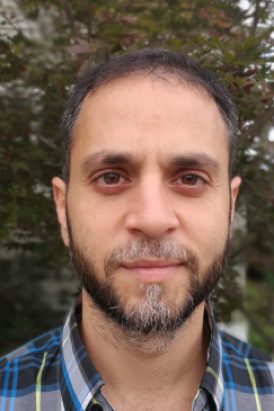
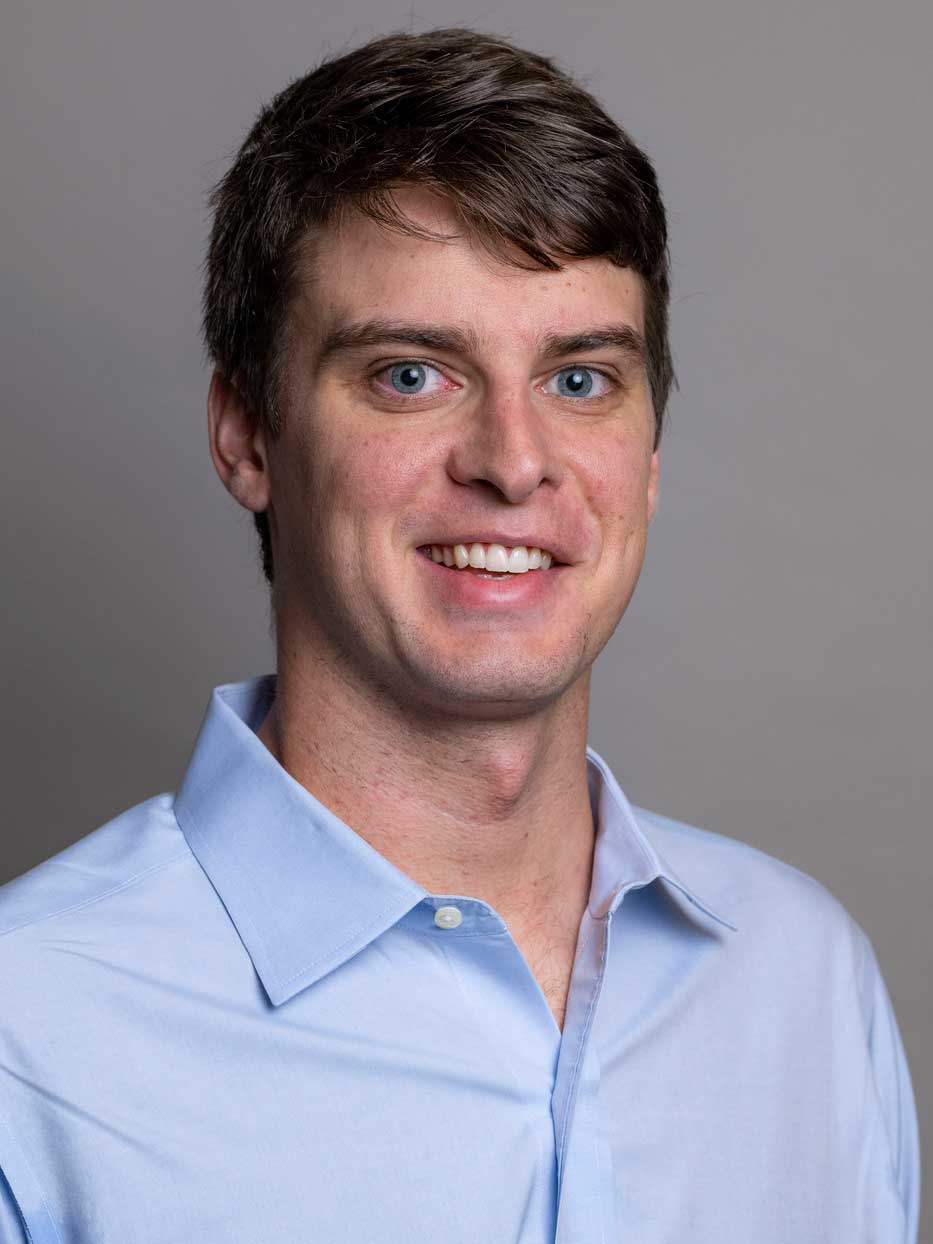
Ozgur S. Oguz is an Assistant Professor at Bilkent University , Faculty of Computer Engineering, and the lead of the Learning for Intelligent Robotic Agents (LiRA) Lab . His research focuses on enhancing autonomous agents' capabilities in learning, reasoning, and planning, particularly for robotics applications. Education : PhD in Computer Science from TU Munich , studies at University of British Columbia (UBC) and Koç University , postdoctoral work at University of Stuttgart and Max Planck Institute for Intelligent Systems . His research explores algorithms for autonomous decision-making, with emphasis on deep learning , reinforcement learning , and robotics . Recent work includes diffusion-based reinforcement learning , hindsight experience prioritization , and hybrid manipulation planning , often addressing challenges in sequential task execution and tactile-based control. Key trends in his publications revolve around robotic manipulation , motion planning , and human-robot interaction . He has contributed to conferences like NeurIPS , ICRA , IROS , and journals such as IEEE TRO and Scientific Reports .
Valerio Pascucci is a Professor at the University of Utah's School of Computing and a DOE Laboratory Fellow at Pacific Northwest National Laboratory. He directs the Center for Extreme Data Management Analysis and Visualization (CEDMAV) and previously led projects at Lawrence Livermore National Laboratory and University of Texas at Austin. PhD in Computer Science (Purdue University, 2000) MSc in Electrical Engineering (University 'La Sapienza', Rome, 1993) As a pioneer in Big Data Management , Scientific Visualization , and Computational Topology , his work connects topological methods with progressive algorithms to enable interactive exploration of petascale datasets. His research spans climate modeling , neuroscience , materials science , and precision agriculture , focusing on multi-resolution techniques and geometric compression . Recent publications show specialization in web-based visualization and AI-driven analytics for climate data, with emphasis on equity in data access and FAIR data principles . His ViSUS project enables real-time data streaming from supercomputers to desktops, while NAPA explores GPU-based architectures for streaming algorithms. Scientific Awards : Best Paper Award, IEEE Pacific Visualization 2011 Best Application Paper Award, IEEE VIS 2006 DOE Laboratory Fellow He advises numerous graduate students and leads collaborations across national laboratories , universities , and industry . Funded by NSF Grant #2127548 , he develops technologies for exascale computing and geospatial intelligence .
Maria Leonilde Rocha Varela is an Associate Professor with Habilitation at the School of Engineering, University of Minho, Portugal, where she also serves as a Senior Researcher at the Algoritmi Research Centre. She has been an integrated member of the Algoritmi Research Centre since 2012 and works in the Department of Production and Systems. Dr. Varela earned her degree in Production Engineering from the University of Minho in 1994, completed a Master's in Computer Integrated Production at DPS-UMinho in 1999, and received her Ph.D. in Production and Systems from the University of Minho in 2007. Her primary research focuses on Manufacturing Management, particularly Production Planning, Control and Optimization, and Collaborative Paradigms, Networks and Decision Making Models. She maintains extensive international collaborations with institutions worldwide including the National Institute of Industrial Engineering, VSB-Technick Univerzita Ostrava, University of Belgrade, and others. Her research spans Web Applications and Services for supporting Engineering and Production Management, with increasing emphasis on Artificial Intelligence, Robotic Process Automation, and Industry 4.0/5.0 applications. She has made significant contributions to scheduling algorithms, optimization techniques, and decision support systems for manufacturing environments. Analysis of her recent publications reveals a strong trend toward integrating Artificial Intelligence with traditional manufacturing processes, particularly in Robotic Process Automation applications. Her research increasingly focuses on sustainable manufacturing practices, with numerous publications addressing energy efficiency, environmental sustainability, and resource optimization. There is a clear emphasis on multi-objective optimization approaches to solve complex manufacturing problems, particularly in distributed job shop scheduling. Her work demonstrates an evolution from traditional production planning methods to more advanced AI-driven approaches for Industry 4.0 and 5.0 environments. Dr. Varela has held significant academic leadership roles, currently serving as the director of the master's course in Engineering and Quality Management at DPS-UMinho. She previously coordinated the industrial management and systems subgroup from 2012 to 2021 and was part of the steering committee for the master's course in systems engineering between 2016 and 2019. She has successfully supervised more than 70 MSc projects, with over 15 currently ongoing, focusing on Production and Systems Engineering. Her supervision encompasses collaborative management models, traditional decision approaches, and web-based platforms incorporating AI techniques. She coordinates research projects including 2 concluded Ph.D. projects and 6 ongoing ones. She collaborates as a research member in several R&D projects with national and international industrial enterprises and institutions, and in international Erasmus projects. Dr. Varela is an active participant in the academic community, serving on editorial boards of several international journals and as a member of organizing and scientific committees for numerous international conferences. She is a member of several prestigious research networks including the Euro Working Group of Decision Support Systems (EWG-DSS), Institute of Electrical and Electronics Engineers (IEEE), Industrial Engineering Network, and the Institute of Industrial and Systems Engineers (IISE).
NAKAJIMA, Tatsuo serves as a Professor at Waseda University's School of Fundamental Science and Engineering, Department of Computer Network Engineering. Holding a Doctor of Engineering from Keio University, he has been affiliated with Waseda since 1999 after positions at Japan Advanced Institute of Science and Technology (1993-1999), Cambridge University, and Carnegie Mellon University. His academic profile shows substantial research output with 433 papers and 3,338 citations on Scopus, and 7,604 citations with an h-index of 42 on Google Scholar. Dr. Nakajima's research focuses on Distributed Systems, Embedded Systems, and Ubiquitous Computing, with particular emphasis on virtualization architectures for embedded environments. His work bridges theoretical computer science with practical applications in information appliances, operating systems, and persuasive computing technologies. He has developed innovative systems including SPUMONE (a composition kernel for multi-OS environments), SIGMA System, and SPLiT (a performance optimization library for multicore processors). Analysis of his 15 most recent publications reveals a consistent research trajectory centered on enhancing reliability, security, and performance of embedded and pervasive computing systems. His work shows increasing integration of human factors, particularly in sustainable behavior applications through persuasive technology. The research spans from low-level system architecture to user-centered applications, demonstrating both technical depth and practical relevance. Nokia Research Center, Visiting Research Fellow (2005.04) Dr. Nakajima's research has produced numerous practical frameworks including SPUMONE for multi-OS environments, SPLiT for performance optimization, and persuasive applications like EcoIsland for sustainable behavior. His work on kernel monitoring, anomaly detection, and self-healing systems demonstrates strong focus on system dependability. Current research appears directed toward integrating human factors with embedded systems, particularly in environmental sustainability applications. His laboratory work centers around the SPUMONE project, a virtualization layer for multi-core embedded systems that enables multiple operating systems to coexist with minimal engineering cost. This research environment supports exploration of resource management, security monitoring, and performance optimization in embedded contexts. The work has practical applications in information appliances, smart homes, and pervasive computing environments.
Qijia Shao is an Assistant Professor at The Hong Kong University of Science and Technology (HKUST), specializing in Mobile Computing, Human-Computer Interaction (HCI), and Ubiquitous Computing. He earned his Ph.D. in Computer Science from Columbia University (2024), advised by Prof. Xia Zhou and Prof. Fred Jiang, with prior degrees from Dartmouth College (M.Sc.) and UESTC (B.Sc.). His research focuses on developing unobtrusive systems for human physical/physiological signal sensing, integrating machine learning, signal processing, and hardware design to address societal challenges in healthcare, education, and human-computer interaction. Educational Background: Ph.D., Computer Science, Columbia University (2024) M.Sc., Dartmouth College B.Sc., UESTC Visiting Student, National Chiao Tung University (EECS) Research Assistant, Missouri S&T Research Interests: Deployable systems for human state analysis via physical/physiological signals (e.g., ECG, movement) Generalizable AI algorithms for low-overhead data interpretation Hardware-software co-design for imperceptible sensing Applications in healthcare (e.g., Kangaroo Mother Care monitoring), education, and consumer electronics Awards & Recognition: MobiSys 2024 Best Paper and Demo Awards NSF Funding & Rising Stars Honors ACM UbiComp Gaetano Borriello Award Finalist Editorial Board Member (ACM IMWUT, since 2024) Lab & Collaborations: Director of the Ubiquitous X Lab at HKUST Industry partnerships with Samsung, Snap, and Philips Research International conference TPC roles (MobiSys, SenSys) and keynote speaking engagements
Professor Annette Byrne is a leading academic at RCSI University of Medicine and Health Sciences , where she serves as Professor of Physiology and Head of the Precision Cancer Medicine (PCM) Group. She has held this position since 2019 after progressing through roles as Lecturer (2008), Senior Lecturer (2013), and Associate Professor (2017). Her research focuses on precision medicine approaches for colorectal and brain cancers , integrating multi-modality molecular imaging , Next Generation Sequencing , and patient-derived xenograft models . PhD in Cell Biology (University of York, 1999) John Kerner Fellowship in Gynaecologic Oncology (UCSF, 1999-2001) Scientist at Pharmacyclics Inc. (2001-2003) Senior Scientist at Angion Biomedica Corp. (2003-2005) Principal Investigator at UCD Conway Institute (2005-2008) Her research interest lies in precision cancer medicine , particularly elucidating predictive biomarkers (genomic, transcriptomic, proteomic) and identifying novel therapeutic targets . Key methodologies include radiomics , fluorescence-guided surgery , and systems modeling of apoptosis pathways. She has pioneered Ireland's first Tumour Xenograft Facility and Translational In Vivo Imaging Centre . Recent publications highlight her work on cross-species radiomics , cell-free DNA analysis , and glioblastoma microenvironment subtyping . Her Marie Curie networks (Gliotrain, Glioresolve) and COLOSSUS project have trained 25+ PhD researchers in brain cancer therapeutics. Over €45M in national/international grants Member of Royal Irish Academy (2025) Highly cited in Cancer Discovery , Annals of Oncology , and Nature journals She supervises multiple PhD candidates and leads the RCSI Precision Cancer Medicine Group , which utilizes computational approaches and molecular imaging to improve cancer treatment outcomes. Her GLIORESOLVE and EDIReX projects focus on tumor microenvironment manipulation and distributed PDX infrastructure.
Tim Rocktaschel is a Professor of Artificial Intelligence in the Department of Computer Science at University College London (UCL), where he has been working since 2018. He was promoted to Professor in October 2023, having previously served as an Associate Professor (2021-2023) and Lecturer (2018-2021) at the same institution. His educational background includes a Doctorat from University College London (2017) and a Diplom Informatiker from Humboldt-Universitat Berlin (2012). Rocktaschel's research focuses on the cutting edge of artificial intelligence, with particular emphasis on reinforcement learning, evolutionary computation, and open-ended learning systems. His work explores how AI systems can learn more efficiently through better exploration strategies, environment design, and the integration of language models with reinforcement learning frameworks. His recent publications reveal a strong trend toward developing more efficient and generalizable AI systems. The research spans unsupervised environment design, prompt engineering for self-improving systems, exploration strategies in reinforcement learning, and the application of language models to enhance policy learning. His work often bridges theoretical AI concepts with practical implementations, as evidenced by tools like GriddlyJS for reinforcement learning development. Rocktaschel maintains an active presence in the AI research community with numerous publications in top venues including NeurIPS, ICML, and the Journal of Artificial Intelligence Research. His work on zero-shot generalization, pragmatic understanding in language models, and open-ended learning environments has garnered significant attention in the field. He is actively involved in developing tools and datasets for the AI community, such as the large-scale NetHack dataset, which provides a complex environment for testing reinforcement learning algorithms. His research continues to push the boundaries of what's possible in artificial intelligence, particularly in creating systems that can learn and adapt in complex, open-ended environments.
Prof. Laura Suter-Dick is a Professor and Team Leader of Cell Biology and In Vitro Toxicology at the University of Applied Sciences and Arts Northwestern Switzerland (FHNW), within the School of Life Sciences and the Institute for Chemistry and Bioanalytics. She also serves as Group Leader for Molecular Toxicology and Node Representative for the Swiss Competence Center for 3Rs (3RCC). Her research focuses on developing in vitro models for toxicology and disease modeling, emphasizing alternatives to animal experimentation. Key technologies include 3D cultures, microfluidic systems, bioprinting, and advanced imaging techniques. She teaches Cell Biology, bioassays, and Toxicology at the university level. Her work integrates cutting-edge methods like single-cell sequencing and functional assays to study substance efficacy and toxicity, particularly in brain medicine and drug discovery. Prof. Suter-Dick leads a team supervising bachelor, master, and PhD students in these areas. Her technical expertise spans liver fibrosis modeling, nephrotoxicity screening (e.g., NephroScreen platform), and blood-brain barrier systems. She collaborates on projects like the reduction-responsive enzyme immobilization and neurotoxicity assessment of organic solvents. Her lab employs advanced analytical tools, including flow cytometry and bioanalytical methods, to address translational challenges in toxicology and regenerative medicine. Prof. Suter-Dick advocates for the 3Rs (Replacement, Reduction, Refinement) in animal research and contributes to standardizing microphysiological systems for reproducibility. Her interdisciplinary approach bridges academic research with industry needs, particularly in developing fit-for-purpose in vitro models for regulatory and safety assessments.
Dr. Fatemeh Golpayegani is an Assistant Professor at the School of Computer Science, University College Dublin. She leads the Multi-agent Systems and Sustainable Solutions lab (MAS3.ucd.ie) and has secured over €1.5M in research grants. Her academic roles include BSc Stage 4 Coordinator and Chair of Women@CS (2012–2023). She holds a PhD from Trinity College Dublin (2018) and professional qualifications in university teaching from UCD. Education: PhD in Computer Science, Trinity College Dublin (2018) Professional Diploma in University Teaching & Learning, University College Dublin (2024) Professional Certificate in University Teaching & Learning, University College Dublin (2023) Research Interests: Focuses on multi-agent systems, sustainability, intelligent transport systems, autonomous decision-making, and edge computing. Her work integrates reinforcement learning, ontology-based models, and adaptive systems to address challenges in smart cities, energy grids, and infrastructure monitoring. Grants & Projects: Principal Investigator for the EU-funded RE-ROUTE project (€multi-million, 2023–2026) on intelligent transport networks. Co-Principal Investigator for the Augmented CCAM project on connected/cooperative autonomous mobility. Funded investigator in SFI centres (I-Form, CONNECT, Biorbic). Awards & Recognition: Researcher of the Year Award (2022) Member of Young Academy of Ireland (2023) Teaching & Mentoring: Coordinates modules in algorithms, Java programming, and operating systems. Supervises PhD students in SFI centres and mentors postdoctoral researchers. Active in promoting EDI as Chair of d-real doctoral training centre. Labs & Collaborations: Leads the MAS3 lab, collaborating on projects like CAPTAIN CARBON (sustainable transport gamification) and ontology-enhanced traffic signal control systems.
Prashant Sankaran is an Assistant Professor in the Department of Industrial and Systems Engineering at the University at Buffalo (School of Engineering and Applied Sciences). He holds a PhD in Mechanical & Industrial Engineering from Rochester Institute of Technology (2023), an MS in Industrial & Systems Engineering from RIT (2020), and a BTech in Mechanical Engineering from Sharda University (2014). His research focuses on artificial intelligence for reasoning under uncertainty, explainable AI, and applications in healthcare, energy management, transportation, and space exploration. He integrates operations research and AI techniques to address complex optimization challenges. Research interests include computational design of bioelectronic materials, kidney exchange optimization via graph machine learning, and solving NP-hard combinatorial problems with hybrid learning-optimization frameworks. His work bridges theoretical advancements (e.g., genetic algorithms) with real-world applications like autonomous logistics systems and renewable energy management. No scientific awards have been mentioned. While no advisees are listed, his publications reflect collaborations across AI, robotics, and healthcare sectors. His research spans topics from deep reinforcement learning in warehouse automation to synthetic data generation for transplant systems.
Supriyo Ghosh is a Senior Researcher at Microsoft Research, India. Prior to this role, he held positions at IBM Research AI Lab (2019–2021) and the Institute of Infocomm Research (I2R), A*STAR. He completed his PhD in Information Systems at Singapore Management University (2017) under Prof. Pradeep Varakantham and conducted postdoctoral research at MIT's SMART and LIDS centers (2016–2017). His research focuses on data-driven decision analytics, including algorithmic optimization, reinforcement learning, urban logistics, and network resilience in cyber-physical systems. His work has addressed cloud incident management, proactive decision-making under uncertainty, and applications of large language models (LLMs) in system reliability. Notable contributions include developing automated root-cause analysis frameworks and improving incident response strategies in large-scale cloud environments. He has also explored reinforcement learning applications in healthcare treatment optimization and air traffic control systems. Award-winning research includes the Best Paper Award at ACM SoCC'22 for an empirical study on high-severity cloud service incidents. He actively serves as a PC member for top conferences like AAAI, NeurIPS, and ICML, demonstrating his leadership in advancing AI and optimization fields. His academic background includes a graduate exchange at Carnegie Mellon University (CMU) and collaborations with MIT faculty like Prof. Patrick Jaillet. His work bridges theoretical foundations with real-world applications in transportation, cybersecurity, and enterprise systems.
Nathan Sturtevant is a Professor at the University of Alberta's Department of Computing Science, an Amii Fellow, and Canada CIFAR Chair. His research spans heuristic and combinatorial search problems, with applications in game AI and pathfinding algorithms. He collaborates with the games industry to implement his research in commercial products. Dr. Sturtevant's research explores search algorithms for single and multiple agents, covering areas such as bidirectional search, meta-learning for game theory, procedural content generation, and multi-agent pathfinding. His work integrates machine learning techniques with classical search algorithms to solve complex problems in game environments. Recent publications demonstrate innovations in search optimization, including novel frameworks for suboptimal bidirectional search, new puzzle difficulty metrics, and applications of transformer models to card game planning. His FarmQuest player telemetry dataset provides resources for studying player behavior in farming simulations.
Dr. Randa Herzallah is an Associate Professor at the University of Warwick with interdisciplinary expertise spanning control systems, quantum engineering, and machine learning. Her research develops probabilistic frameworks for complex systems control. Research interests focus on probabilistic control methods applied to energy grids, quantum systems, and biomedical applications. Recent work integrates machine learning with control theory for smart grid optimization and quantum system management. Publication analysis shows consistent focus on probabilistic control frameworks, with recent expansion into quantum applications and deep learning for industrial applications. Research funding includes EPSRC and Leverhulme Trust grants supporting quantum control and energy systems projects. Leads research in probabilistic control methodologies with industrial applications.
Asaf Cohen is an Associate Professor in the Department of Mathematics at the University of Michigan, Ann Arbor, affiliated with the College of Literature, Science, and the Arts. He holds a B.Sc., M.Sc., and Ph.D. from Tel-Aviv University (2005–2013). His research focuses on applied probability, stochastic processes, and control theory, with emphasis on mean-field games, mathematical finance, actuarial science, diffusion and large deviation analysis, machine learning, and risk-sensitive control. His work also addresses applications in stochastic networks, energy markets, epidemiology, and economics. Key research areas include diffusion approximations, large deviations, queueing theory, and partial differential equations. Dr. Cohen has contributed to the analysis of multiclass queueing systems, optimal dividend strategies, and strategic server behavior in heavy traffic regimes. His methods often involve advanced stochastic control techniques and game-theoretic models. He has published extensively on topics such as mean-field games, SIR models for epidemics, and Bayesian sequential testing. His academic contributions span theoretical advancements and practical applications in finance, insurance, and operations research.
Michael Everett is an Assistant Professor at Northeastern University with a joint appointment in the Department of Electrical & Computer Engineering and the Khoury College of Computer Sciences. He directs the Autonomy & Intelligence Laboratory, focusing on certifiable learning machines at the intersection of robotics, deep learning, and control theory. His research emphasizes safety, reliability, and efficiency in robotics applications like off-road navigation and social environments. Education: PhD in Mechanical Engineering, Massachusetts Institute of Technology (2020) SM in Mechanical Engineering, MIT (2017) SB in Mechanical Engineering, MIT (2015) Research Interests: Robotics and motion planning Control theory and neural network verification Reinforcement learning applications Certifiable safety guarantees for autonomous systems Navigation in dynamic/human environments Awards: Runner-Up: Best Paper Award (ICML 2022) Winner: Best Student Paper (IROS 2017/2023) Editors’ Top 5 Published Articles (IEEE Access 2021) Lab & Contributions: The Autonomy & Intelligence Lab develops algorithms for high-speed off-road autonomy, socially aware navigation, and neural feedback verification. His work includes the RAMP planning pipeline and Evora traversability learning framework. He collaborates with Google’s PAIR team on trustworthy AI.