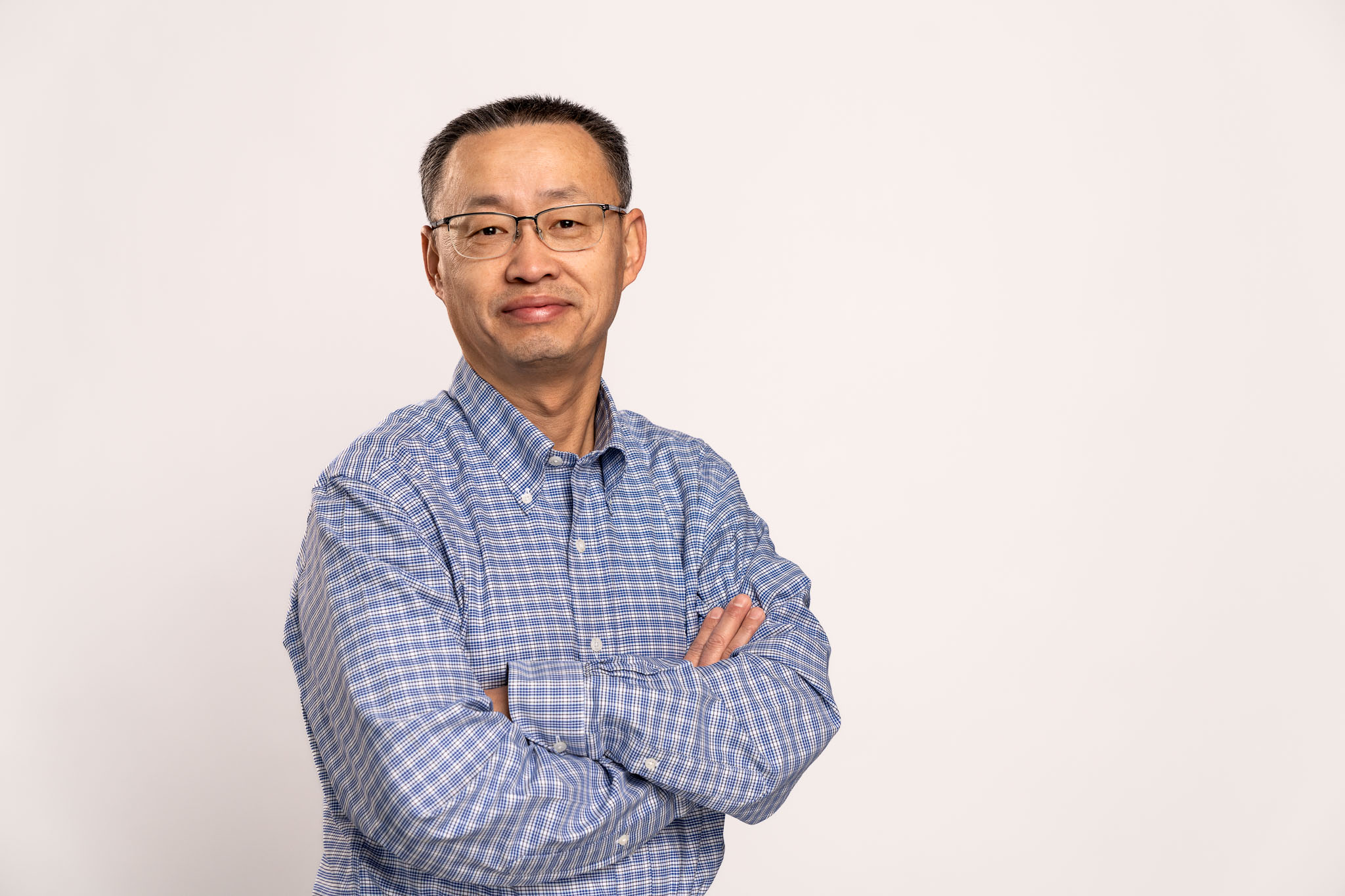
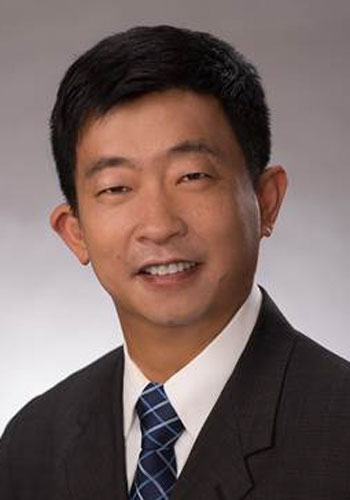
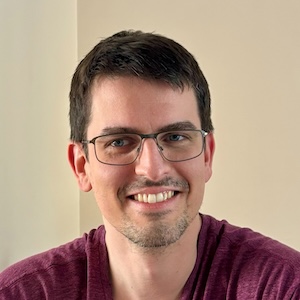
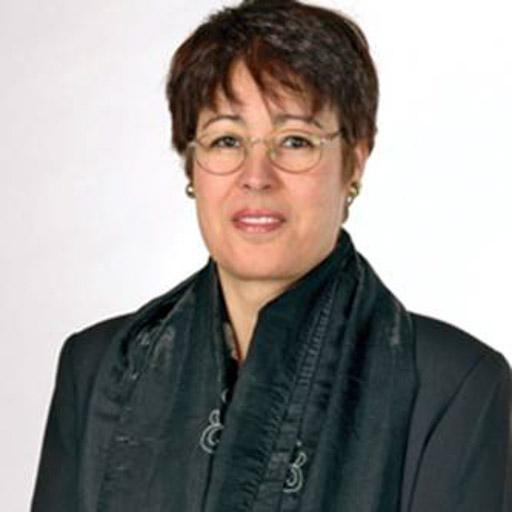
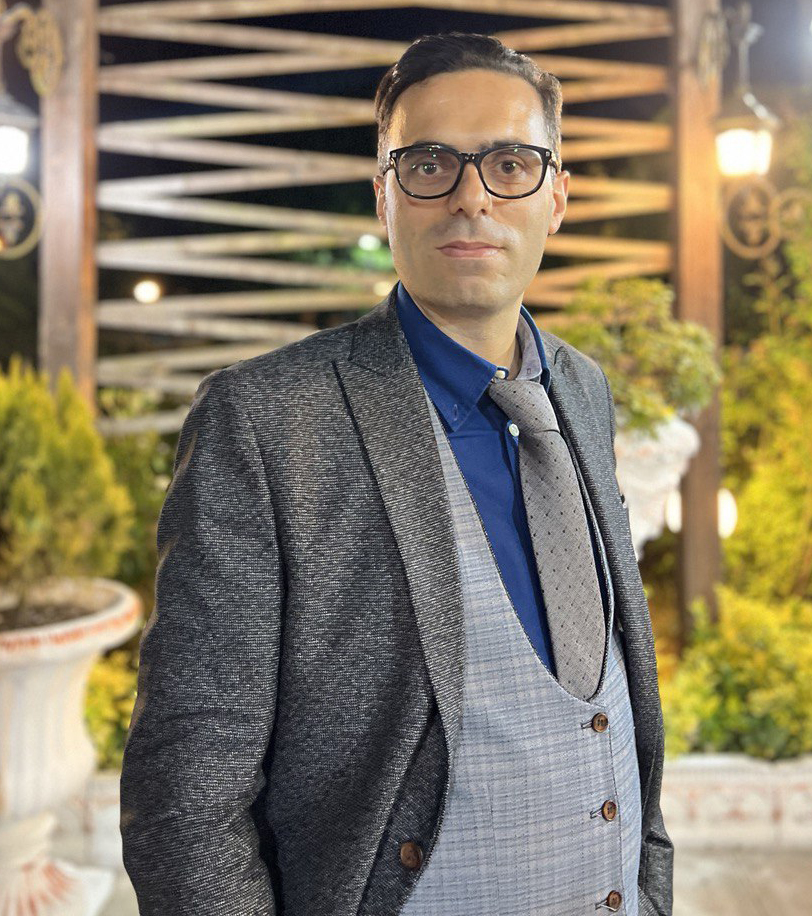
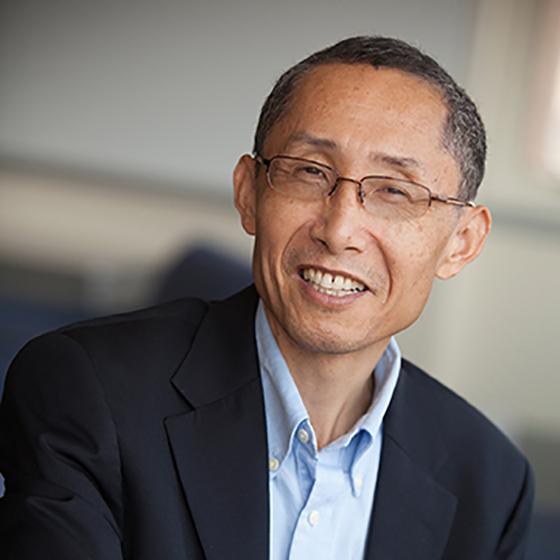
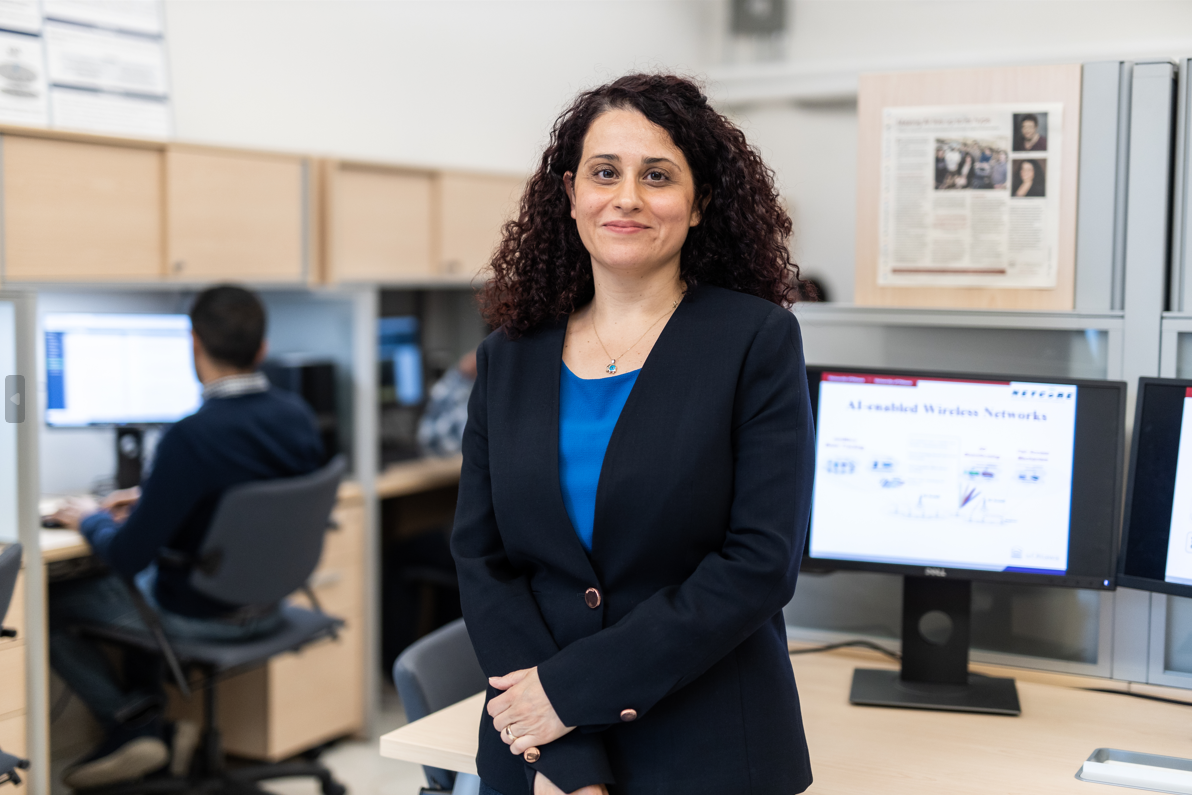
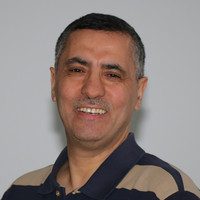
Dr. Frank L Lewis is a Professor and Moncrief-O'Donnell Endowed Chair in Electrical Engineering at The University of Texas at Arlington (UTA), where he has been since 1990. His research focuses on autonomous systems control, optimal control, reinforcement learning, and neural networks. He holds a PhD from Georgia Institute of Technology (1981), an MS in Aeronautical Engineering from the University of West Florida (1977), and a BS/ME in Physics/Electrical Engineering from Rice University (1971). His research has been ranked #1 globally in Optimal Control and Reinforcement Learning, and #2 in Control Theory by ScholarGPS. He has authored 527 journal papers, 30 books, and graduated 65 PhD students. Notable recognitions include the IEEE Neural Networks Pioneer Award (2012), AIAA Intelligent Systems Award (2016), and Texas Regents Outstanding Teaching Award (2013). Dr. Lewis has secured $17M in research grants, including from NSF, ONR, and ARO. He serves on numerous editorial boards and is a Fellow of IEEE, IFAC, and the National Academy of Inventors. His work spans robotics, autonomous systems, and industrial control, with applications in unmanned aerial vehicles (UAVs), distributed control systems, and renewable energy.
Lefteris Doitsidis is an Associate Professor at the School of Production Engineering and Management, Technical University of Crete. He holds a PhD in Production and Management Engineering from the same institution (2008), with prior academic positions at the Department of Electronics, Hellenic Mediterranean University. His professional journey includes visiting scholar roles at the University of South Florida, USA. Research focuses on robotic systems, including autonomous navigation of UAVs/AUVs, multirobot teams, computational intelligence, and educational robotics. He leads the Intelligent Systems and Robotics Laboratory, developing tools like HYDRA for STEM education and frameworks for industry 4.0 applications such as bin-picking and precision agriculture. His work integrates control systems optimization, energy efficiency in manufacturing, and digital twin technologies. Over 65 publications span journals, conferences, and books, emphasizing practical implementations like ROS-based autonomous vehicle testbeds and energy management systems for electric vehicles. Key contributions include UAV path planning algorithms, swarm robotics coordination, and sensor fusion techniques. Current research trends emphasize sustainability in manufacturing, educational robotics platforms, and autonomous systems validation through advanced algorithms like Deep Deterministic Policy Gradient.
Ehsan Esfahani is an Associate Professor and Director of Graduate Studies in the Department of Mechanical and Aerospace Engineering at the University at Buffalo's School of Engineering and Applied Sciences. He is affiliated with the Stephen Still Institute for Sustainable Transportation and Logistics. His research focuses on AI-driven robotics, human-machine interaction, and bio-mechatronics systems. Education: PhD in Mechanical Engineering, University of California, Riverside (2012) MS in Electrical Engineering, University of California, Riverside (2012) MS in Mechanical Engineering, University of Toledo (2007) BS in Mechanical Engineering, Isfahan University of Technology (2004) Research Interests: Brain-computer interfaces for CAD/robotic systems Human-robot collaboration and neuroergonomics Bio-inspired robotics and tactile sensing Swarm intelligence and multi-agent systems Variable stiffness actuators for safe manipulation Key Contributions: Esfahani's work bridges AI with physical systems, emphasizing real-time human-in-the-loop control. Recent trends in his publications focus on scalable swarm robotics, human-swarm interaction dynamics, and adaptive gripper designs for confined environments. His neurophysiological approaches assess cognitive load in collaborative tasks, enhancing system safety and efficiency. Awards: American Power Public Associations DEED Scholarship (2012) UC Riverside Dissertation Year Fellowship (2011–2012) Lung-Wen Tsai Memorial Scholarship (2010) Advising & Labs: Directs the HILS Lab (Human-Inspired Learning Systems), exploring human-centered robotics. Active in grants focusing on AI-driven factories, cognitive modeling in surgery, and variable stiffness mechanisms. Collaborates on projects like SHaSTA (Human-Swarm Team Simulator) and MyoTrack rehabilitation systems. Labs & Teams: HILS Lab: Human-AI collaboration frameworks Stephen Still Institute: Transportation logistics and sustainability
Professor Jinjun Shan is a Full Professor of Space Engineering and former Department Chair (2018-2023) in the Department of Earth and Space Science and Engineering at York University's Lassonde School of Engineering. An internationally recognized expert in dynamics, control and navigation, he joined York University as an Assistant Professor in 2006, was promoted to Associate Professor in 2011, and became a Full Professor in 2016. Dr. Shan received his B.Eng., M.Eng., and Ph.D. degrees from Harbin Institute of Technology, China, in 1997, 1999, and 2002, respectively. Before joining York, he was a Post-Doctoral Fellow at the University of Toronto Institute for Aerospace Studies (2003-2006) and a Research Assistant at City University of Hong Kong (2002-2003). His research focuses on dynamics, control and navigation, autonomous systems, multi-agent systems, smart materials and structures, space instrumentation, active vibration control, and orbit dynamics. Dr. Shan has made significant contributions to national and international space missions including NEOSSat and has attracted over $5 million in research funding from governmental agencies and industry partners. His laboratory, the Spacecraft Dynamics Control and Navigation Laboratory (SDCNLab), which he founded in 2006, conducts cutting-edge research in space engineering. Dr. Shan's extensive publication record includes over 200 peer-reviewed journal and conference papers, with his most recent work focusing on multi-agent formation control, autonomous vehicle decision-making, quadrotor control systems, and smart material applications. His research shows a clear progression from fundamental dynamics and control theory toward increasingly complex multi-agent systems and real-world applications in autonomous vehicles and space engineering. Fellow of Canadian Academy of Engineering (CAE) Fellow of Engineering Institute of Canada (EIC) Fellow of American Astronautical Society (AAS) Associate Fellow of AIAA Alexander von Humboldt Research Fellowship JSPS Fellowship Lassonde Educator of the Year Award (2022) Named in Stanford's list of world's top 2% researchers Dr. Shan has successfully mentored numerous graduate students and post-doctoral fellows, with current advisees working on cutting-edge projects in multi-agent systems, UAV control, and smart materials. His research is supported by substantial funding from NSERC, CSA, and industry partners. As the founding director of SDCNLab, he has built a comprehensive research facility for spacecraft dynamics, control, and navigation, recently expanding to include autonomous unmanned vehicle research through a CFI JELF award. His laboratory continues to make significant contributions to both theoretical advancements and practical applications in space engineering and autonomous systems.
Dr. Shaon Bhatta Shuvo is an Assistant Professor at the University of Windsor's School of Computer Science. He holds a Ph.D. from the University of Windsor (2020–2024), an M.Sc. from South Asian University (2013–2015), and a B.Sc. from Noakhali Science and Technology University, Bangladesh. Research Interests: Deep Learning & Reinforcement Learning: Development and application of advanced algorithms for computer vision and natural language processing. AI-Based Decision Support Systems: Designing AI-driven systems for healthcare and social network analysis. Modelling and Simulation: Multi-agent simulations and mathematical modeling for complex systems, including pandemic preparedness and healthcare optimization. Research Trends in Publications: His work focuses on AI-driven solutions for healthcare (e.g., pandemic modeling, PPE demand prediction), social network analysis (link/node classification, knowledge graphs), and computational epidemiology. He emphasizes hybrid simulation models and data-driven approaches for real-world challenges. Awards: No scientific awards explicitly mentioned. Advising & Grants: No student advisees or grants listed. Labs/Teams: Not specified in available information.
Dr. Zhu Han is the John and Rebecca Moores Professor at the University of Houston's Cullen College of Engineering, Department of Electrical and Computer Engineering. His research focuses on game theory, wireless networking, security, data analysis, and smart grid applications. He holds doctoral and master's degrees from the University of Maryland and a bachelor's from Tsinghua University. Research interests span: Next-generation wireless systems (6G/7G) AI/ML integration in communications Reconfigurable intelligent surfaces Quantum machine learning applications Secure and efficient network architectures His recent publications demonstrate strong focus on generative AI integration in wireless systems, quantum networking, semantic communications, and security frameworks for future networks. Awards and honors include: IEEE/ACM/AAAS Fellow status IEEE Kiyo Tomiyasu Award (2021) Highly Cited Researcher since 2017 IEEE Distinguished Lecturer (2015-2018) Dr. Han leads research in wireless communications and networking, with extensive industry collaboration. His lab focuses on developing theoretical foundations and practical implementations for next-generation communication systems.
Lucas Lehnert is an Assistant Professor in the Department of Computer Science at the University of Saskatchewan, specializing in Artificial Intelligence and Reinforcement Learning (RL). His research focuses on how intelligent systems can learn to solve complex decision-making tasks through representation learning, abstraction mechanisms, and lifelong learning strategies. He also explores applications of AI/RL in scientific and engineering domains. Education: PhD in Computer Science (Brown University, 2021), MSc (McGill University, 2016), BSc (McGill University, 2014). Postdoctoral positions included Meta's FAIR team (2022–2024) and the Mila Quebec AI Institute (2021–2022). Research interests include reinforcement learning fundamentals, generative AI reasoning, exploration strategies, and reward-predictive representations. His work bridges model-based and model-free RL paradigms, emphasizing scalable and generalizable solutions. Awards include the Best Student Workshop Paper Award (2017) and an NIMH training grant in cognitive neuroscience. His research has been published in top conferences like NeurIPS, ICML, and ICLR. He advises graduate students in RL and collaborates on projects involving transformer-based planning, exploration algorithms, and multi-agent systems. Current work includes developing SearchFormer for efficient planning tasks and exploring maximum entropy exploration methods.
Rachida Dssouli is a Professor at the Concordia Institute for Information Systems Engineering (Concordia University). Her research focuses on advanced software engineering methodologies, quality assurance systems, and distributed computing frameworks. She specializes in model-based testing, federated learning optimization, and big data quality management. Her work integrates formal verification techniques with modern machine learning approaches to address challenges in edge computing, IoT, and safety-critical systems. Key research areas include: Development of hybrid swarm intelligence algorithms for optimizing large language model deployment in edge-cloud environments Design of reinforcement learning frameworks for robotics motion planning and IoT device scheduling Creation of interpretable machine learning tools for fault detection in software systems Establishment of holistic big data quality frameworks for continuous monitoring and unstructured data analysis Formal verification methods for avionics systems using multi-agent models Her recent work demonstrates trends toward AI-driven solutions for testing methodologies (e.g., SHAP-Driven fault detection) and edge-cloud integration (e.g., MIMO-based computation offloading optimization). The 2025 publications highlight advancements in federated learning and trust-aware IoT scheduling. Earlier works (2018-2020) emphasize foundational contributions to cloud trust models, big data quality metrics, and safety-critical system testing. Her research also addresses emerging technologies for developing countries through frameworks like neurodegenerative disease monitoring systems and mobile application requirements engineering. She has contributed to service-oriented architectures for healthcare systems and cloud-based resource orchestration strategies.
Dr. Hamid Alinejad-Rokny is a Scientia Senior Lecturer at UNSW Sydney and Adjunct Associate Professor at Concordia University. He leads the UNSW BioMedical Machine Learning (BML) Lab within the Graduate School of Biomedical Engineering. His research focuses on applying machine learning, bioinformatics, and statistical methods to understand genomic mechanisms underlying diseases like cancer and neurodevelopmental disorders. Dr. Rokny holds a PhD in Biostatistical Machine Learning from UNSW and has secured over $13M in grants as a principal or co-investigator. He has published 80+ papers, including 10 as first author and 45 as senior author. Education: Bachelor’s in Software Engineering (2004-2009), Master’s in Artificial Intelligence (2009-2012), PhD in BioMedical Machine Learning (UNSW, 2014-2018), Postdoc at Harry Perkins Institute (2017-2019). Research interests include medical AI, deep learning, genomic data analysis, and systems biology. He actively supervises 20+ PhD/Master’s students and collaborates with industry partners like CSIRO and 23Strands. Awards include the DECRA 2023, NHMRC MERIT, and International Autism Fellowships. He also serves as a keynote speaker at conferences like HUGO and an Honorary Lecturer at Macquarie University. Grants total $2.75M as lead investigator and $10.6M as co-investigator. Industry partnerships include PORSPA Advance ($4.7M) and Australian Digital Domains ($3.6M). His lab develops tools like MaxHiC and DeepGenePrior for genomic analysis. Labs/Teams: Director of UNSW BML Lab, Health Data Theme Leader at UNSW Data Science Hub. Active in mentoring 13 researchers globally and co-supervising international teams.
Dr. Maarouf Saad is a Lecturer in the Department of Electrical Engineering at École de Technologie Supérieure (ÉTS), Université du Québec. He holds a B.Sc.A. and M.Sc.A. from Polytechnique Montréal and a Ph.D. from McGill University. His research spans robotics, control systems, and sustainable energy applications, with a focus on nonlinear control, UAVs, exoskeleton rehabilitation systems, and smart grid technologies. Education: B.Sc.A., M.Sc.A. (Polytechnique Montréal), Ph.D. (McGill) Research Units: GREPCI (Power Electronics), SYNCHROMEDIA (Telepresence), INIT Robots (Haptic Interfaces) His work integrates adaptive control algorithms with artificial intelligence in robotics, particularly for rehabilitation and aerospace systems. He has pioneered fixed-time sliding mode controllers for quadrotors and developed impedance-based methods for distribution system monitoring. In smart grids, he focuses on voltage stability analysis and distributed generation optimization. Key research trends include nonlinear control of electrohydraulic systems, modeling of flexible manipulators, and cooperative control strategies for multi-agent systems. His publications emphasize practical implementations in real-world scenarios, from autonomous airships to exoskeletons for upper-limb rehabilitation. Dr. Saad supervises numerous graduate students across diverse projects, including UAV control, cable robot rehabilitation systems, and energy management in hybrid microgrids. His collaborations extend to institutions like CAE Inc. and laboratories in telepresence and robotics.
Eric Kerrigan is a Professor of Control and Optimization at Imperial College London's Department of Electrical and Electronic Engineering, part of the Faculty of Engineering. He holds a joint appointment in the Department of Aeronautics. His research focuses on Model Predictive Control (MPC), numerical optimization techniques, and their applications in aerospace, renewable energy, and information systems. Key projects include developing real-time optimization algorithms for embedded systems, co-design frameworks for closed-loop systems, and drag reduction in aerodynamics. He has supervised over 30 PhD students and post-doctoral researchers, many of whom have secured academic positions. Education: PhD in Control Engineering from the University of Cambridge and BSc in Electrical Engineering from the University of Cape Town. Research interests emphasize robust control methods, dynamic optimization, and interdisciplinary applications. Notable contributions include the ICLOCS (Imperial College Optimal Control Software) toolbox and frameworks for energy-efficient UAV communication networks. His work is funded by EPSRC, the European Commission, and industry partners like Siemens and ESA. Funding and collaborations include grants from the Royal Academy of Engineering and Royal Society, with consulting roles in industrial control systems. Editorial roles include Associate Editor for IEEE Transactions on Automatic Control and former Senior Editor for IEEE Transactions on Control Systems Technology . Labs and affiliations include the Control and Power Research Group, Energy Futures Lab, and Space Lab at Imperial College.
Jim Dai is the Leon C. Welch Professor of Engineering at Cornell University's School of Operations Research and Information Engineering (ORIE). He previously held the Chandler Family Chair at Georgia Institute of Technology (1990–2012) and serves as a Special Term Professor at Tsinghua University and a Visiting Professor at National University of Singapore. His research focuses on applied probability models for service systems, healthcare operations, and transportation networks. He holds a B.S. and M.S. from Nanjing University and a Ph.D. in Mathematics from Stanford University. Research interests include stochastic models for resource allocation in processing networks, healthcare systems, and ridesharing networks. His work emphasizes fluid and diffusion models, Stein’s method, and reinforcement learning. Awards include the Erlang Prize (1998), ACM SIGMETRICS Achievement Award (2018), and the John von Neumann Theory Prize (2024). He is Editor-in-Chief of Mathematics of Operations Research and a Fellow of INFORMS and the Institute of Mathematical Statistics. Teaching spans Markov chains, stochastic processes (both undergraduate and graduate levels), and optimization. Service roles include editorial positions at journals like Stochastic Systems and advisory roles at Singapore University of Technology and Design.
Professor Wei Xiang holds the Cisco Chair of AI and IoT at La Trobe University, leading the Cisco-La Trobe Centre for AI and IoT and the Australian Centre for AI in Medical Innovation. He previously established Australia's first IoT Engineering degree program at James Cook University, earning recognition in the Pearcy Foundation's Hall of Fame. His expertise spans AI, IoT, wireless communications, and medical AI innovation. As an IEEE Associate Editor for multiple journals, he has published over 450 peer-reviewed papers and books. Key roles include: Director & Chief Scientist: Australian Centre for AI in Medical Innovation Founding Director: Cisco-La Trobe AIoT Centre Adjunct Professor: James Cook University Vice Chair: IEEE Northern Australia Section (2016-2020) Research focuses on AI-driven IoT systems, smart agriculture, and medical applications. Awards include La Trobe Research Excellence Award (2021), Pearcey Entrepreneurship Award (2017), and multiple fellowships. Current grants involve AIoT in smart farming, medical innovation, and satellite IoT. He supervises research students in AIoT and advises on collaborative projects. His labs pioneer technologies like radar-based health monitoring and UAV-enabled environmental sensing. Recent publications highlight advancements in wireless communication systems, deep learning models for remote sensing, and hybrid networks.
Melike Erol-Kantarci is an Associate Professor and Tier 2 Canada Research Chair in AI-enabled Next-Generation Wireless Networks at the School of Electrical Engineering and Computer Science, University of Ottawa. She is the founding director of the Networked Systems and Communications Research (NETCORE) laboratory. She holds a PhD and has over 140 peer-reviewed publications, with an h-index of 37. Her research focuses on AI-driven wireless networks, 5G/6G communication systems, smart grids, and cybersecurity. Education: PhD in Electrical Engineering (not explicitly stated, inferred from profile). Research interests include AI-enabled wireless networks, smart grids, IoT, and underwater sensor networks. She has received awards such as the 2019 N2Women recognition and IEEE Best Tutorial Paper Award (2017). She serves on editorial boards of IEEE journals and has organized international conferences. Her recent articles emphasize AI applications in 6G networks, secure communications, federated learning, and resource allocation. Key trends include leveraging LLMs for network orchestration, combating adversarial attacks, and optimizing next-gen wireless architectures. Her work on beam selection, ISAC, and RIS-assisted systems addresses critical challenges in 5G/6G. Awards include the Canada Research Chair and best paper recognitions. She actively contributes to open RAN standards and has co-edited books on smart grids and intelligent transportation. Her lab, NETCORE, drives innovation in networked systems.
Boualem Djehiche is a Professor of Mathematical Statistics at the Department of Mathematics, KTH Royal Institute of Technology. He is affiliated with the Digital Futures Faculty and the SCI School at KTH. His research focuses on Stochastic Analysis, including Stochastic Control, Insurance Mathematics, Mathematical Finance, and Game Theory. Djehiche holds editorial roles in journals such as Scandinavian Actuarial Journal and Finance and Stochastics . Education details are not explicitly stated in the provided texts. His teaching responsibilities include courses like Game Theory, Probability Theory, and Financial Mathematics. He advises students in these areas, though explicit student names are not listed. His research explores advanced topics such as mean-field games, time-inconsistent optimal control, and applications in finance and economics. Recent publications address topics like zero-sum Dynkin games, generative AI outcomes as Nash equilibria, and commodity futures pricing with regime switching. Research Interests: Stochastic Control, Insurance Mathematics, Mathematical Finance, Mean-Field Games, System Identification. Editorial Duties: Editor-in-Chief of Scandinavian Actuarial Journal , Associate Editor of Finance and Stochastics , and roles in multiple other journals. Grants & Collaborations: Collaborations include work on disability insurance modeling, credit scoring, and energy market dynamics via mean-field-type games. Labs/Teams: Involved in cross-disciplinary initiatives like the Digital Futures research center, focusing on digital technologies and societal challenges.