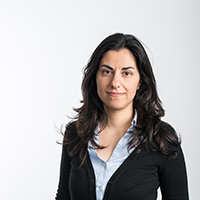
Sahar Abdelnabi is an AI Security Researcher at Microsoft and will join the ELLIS Institute Tübingen as a Faculty/Principal Investigator. She is co-affiliated with the Max-Planck Institute for Intelligent Systems and Tübingen AI Center , leading the COMPASS Research Group focused on safe, aligned, and steerable AI agents with emphasis on security, human-AI interaction, and cooperative systems. Her research spans three pillars: (1) Probing AI failures through biases, emergent risks, and misuse scenarios; (2) Developing defenses like white-box control methods and reasoning enhancements; and (3) Leveraging AI for societal good through scientific discovery. Key contributions include coining indirect prompt injection vulnerabilities (2023), pioneering generative AI watermarking (2020), and receiving the ACL2025 Best Paper Award for work on LLM sampling heuristics. PhD in Computer Science (2019-2024) from CISPA Helmholtz Center , advised by Prof. Dr. Mario Fritz MSc in Computer Science from Saarland University Research Highlights Her work bridges AI security and safety with sociopolitical implications, focusing on prompt injection , cooperative multi-agent systems , and contextual integrity . She has been recognized by policymakers and industry leaders, including NIST , OWASP , and Microsoft's AI Bug Bounty Program . Scientific Awards Best Paper Award at ACL2025 Best Paper Award at AISec'23 Workshop Spotlight Paper at NeurIPS Datasets and Benchmarks 2024 Academic Leadership She actively contributes to the AI and security communities through: Program Committee: IEEE S&P (2026) , SaTML (2024-2026), USENIX Security (2025) Organized IEEE SaTML'25 LLMail-Inject Challenge Reviewed for top conferences: ICLR , NeurIPS , CVPR
Drazen Prelec is a Professor of Management Science and Economics at the MIT Sloan School of Management , with appointments in the Department of Economics and Department of Brain and Cognitive Sciences . His work bridges psychology, neuroscience, and economics to study decision-making mechanisms. Education: AB in Applied Mathematics (Harvard College), PhD in Experimental Psychology (Harvard University) Prelec's research focuses on behavioral economics and neuroeconomics , particularly in areas like risky choice, time discounting, self-control, and consumer behavior. He develops normative decision theory while investigating its empirical limitations using behavioral and fMRI methods. Two major projects include: Self-Signaling : Examines non-causal motivation where individuals favor actions diagnostic of favorable outcomes over causal ones Bayesian Truth Serum : Creates scoring systems to reward honest judgments in domains without objective truth criteria His recent publications span topics in crowd wisdom , temporal discounting , and neuroeconomic modeling , with applications to consumer neuroscience, political forecasting, and behavioral ethics. Guggenheim Fellowship Junior Fellow, Harvard Society of Fellows Prelec contributes to understanding how credit card usage activates brain reward centers to increase spending, and explores honesty biases in social interactions. His work integrates computational models with empirical neuroscience to address foundational questions in decision theory.
Dr. Ayan Mukhopadhyay serves as a Senior Research Scientist in the Department of Electrical Engineering and Computer Science at Vanderbilt University's School of Engineering. Previously, he was a Post-Doctoral Research Fellow at Stanford Intelligent Systems Lab where he received the 2019 CARS post-doctoral fellowship. His academic journey includes a Ph.D. from Vanderbilt University's Computational Economics Research Lab with a doctoral thesis nominated for the Victor Lesser Distinguished Dissertation Award 2020. His research spans critical domains in smart infrastructure systems with particular focus on: Developing robust decision-making frameworks for cyber-physical systems under uncertainty Creating multi-agent solutions for emergency response optimization Designing machine learning approaches for urban mobility and energy management Building proactive incident detection pipelines using heterogeneous data sources Analysis of his recent publications reveals strong thematic continuity in applying artificial intelligence to real-world infrastructure challenges, particularly in transportation systems, emergency response, and energy management. His work consistently bridges theoretical AI advances with practical implementation in smart city contexts, demonstrating expertise in both algorithmic innovation and systems integration. Award highlights include: CARS Post-Doctoral Fellowship (2019) Best Paper Award at ICLR's AI for Social Good Workshop Victor Lesser Distinguished Dissertation Award Nomination (2020) Dr. Mukhopadhyay leads significant research initiatives through ScopeLab, focusing on creating deployable solutions for public transit, emergency response, and energy systems. His work on vehicle-to-building charging, traffic incident localization, and equitable transit network design demonstrates commitment to solving high-impact urban challenges through rigorous computational methods. Current projects involve developing simulation environments for non-stationary environments (NS-Gym) and explainable planning frameworks integrating formal logic with large language models.
Spyros Reveliotis is a Professor at the Stewart School of Industrial & Systems Engineering within the College of Engineering at Georgia Institute of Technology. His work bridges theoretical advancements with practical applications in automation and control systems. Education : PhD in Industrial Engineering (University of Illinois at Urbana-Champaign), B.Sc. in Electrical Engineering (National Technical University of Athens), M.Sc. in Computer Systems Engineering (Northeastern University) Reveliotis focuses on discrete event systems theory , emphasizing control of flexible automation and traffic management for multi-agent systems. His research integrates machine learning and Markov decision processes to optimize scheduling and coordination in complex environments like robotics and manufacturing systems. Recent trends in his publications address deadlock avoidance , min-time coverage in constrained spaces, and liveness enforcement for transport systems. These works often leverage combinatorial optimization and graph theory for scalable solutions. Scientific Awards : IEEE Fellow As a core faculty member of the Institute for Robotics and Intelligent Machines (IRI) , Reveliotis contributes to interdisciplinary robotics research. His affiliations with professional societies like INFORMS reflect his impact on operations research and automation fields.
Dr. Zheng Yuan is a Senior Lecturer (Associate Professor) in Natural Language Processing at the School of Computer Science, University of Sheffield. He holds affiliated positions at the University of Cambridge and King's College London, and is a Fellow of Trinity College, Cambridge. His research focuses on NLP applications in education, healthcare, and multilingual systems. Education: PhD in Natural Language Processing, University of Cambridge MPhil in Advanced Computer Science, University of Cambridge BSc(Eng) from Queen Mary University of London Research: Dr. Yuan's work spans educational NLP, multilingual systems under low-resource conditions, and explainable machine learning. His group develops technologies for grammatical error correction, automated assessment, and cross-lingual applications, with significant contributions to computer-assisted language learning and computational creativity. Publications: Recent works (2023-2025) demonstrate strong focus on educational NLP, multilingual systems, and LLM evaluation. Key themes include grammatical error correction for code-switched languages, creativity assessment frameworks, and robust evaluation methods for large language models across diverse linguistic contexts. Awards: Winning systems at SemEval-2021 and CoNLL-2014 Fellowship at Trinity College Cambridge Fellow of Higher Education Academy Grants & Advising: Principal Investigator for Royal Society grant 'Large Language Models as Agents for Intelligent Language Tutoring' (2025-2027). Actively supervises PhD students in NLP and machine learning, welcoming new research collaborations. Affiliations: Member of Alan Turing Institute (Data-Centric Engineering), King's Institute for AI, and ACL committees. Organizes major NLP workshops including ACL/NAACL BEA workshops and AIED tutorials.
Michael M. Zavlanos is the Yoh Family Professor in the Thomas Lord Department of Mechanical Engineering and Materials Science at Duke University's Pratt School of Engineering. He also holds secondary appointments in the Department of Computer Science and the Department of Electrical and Computer Engineering. Currently serving as the Director of the Healthcare Systems Optimization program with Duke AI Health and as an Amazon Scholar with Amazon Robotics, his academic career spans control theory, optimization, and artificial intelligence with applications across multiple domains. Dr. Zavlanos received his educational foundation from prestigious institutions: Diploma in Mechanical Engineering from the National Technical University of Athens (NTUA), Greece (2002) M.S.E. in Electrical and Systems Engineering from the University of Pennsylvania (2005) Ph.D. in Electrical and Systems Engineering from the University of Pennsylvania (2008) His research program spans multiple interconnected domains, with a strong foundation in control theory, optimization, and learning methodologies . This theoretical work directly enables applications in robotics and autonomous systems , where his team develops algorithms for multi-robot coordination, motion planning under complex constraints, and network connectivity maintenance. A significant portion of his work addresses networked and distributed control systems , focusing on how multiple agents can coordinate effectively with limited communication. More recently, he has expanded his research into cyber-physical systems with healthcare applications, leveraging his expertise to optimize healthcare delivery systems through the Duke AI Health initiative. Dr. Zavlanos' work demonstrates a consistent trajectory from theoretical foundations to real-world applications. His early work established fundamental principles for maintaining connectivity in mobile robot networks, which evolved into more sophisticated approaches for temporal task planning and risk-averse decision making in uncertain environments. The most recent phase of his research integrates machine learning with traditional control theory to address complex healthcare system optimization problems. His significant contributions to the field have been recognized through prestigious awards: Office of Naval Research Young Investigator Program (YIP) Award (2014) National Science Foundation Faculty Early Career Development (CAREER) Award (2012) National Science Foundation Faculty Early Career Development (CAREER) Award (2011) Duke University Distinguished Faculty Rank (2019) Duke University Distinguished Professor designation (2018) As an educator, Dr. Zavlanos has taught courses including ME 627: Linear System Theory, ME 592: Research Independent Study, ECE 391/291: Projects in Electrical and Computer Engineering, and CEE 627: Linear System Theory. His research program has been supported by multiple grants from the National Science Foundation and the Office of Naval Research, enabling him to mentor numerous graduate students and postdoctoral researchers in the development of cutting-edge control and optimization algorithms. Dr. Zavlanos leads research efforts at the intersection of control theory, optimization, and artificial intelligence, with particular focus on translating theoretical advances into practical applications. His recent work with Duke AI Health represents a strategic expansion of his research portfolio into healthcare systems optimization, where he applies his expertise in algorithmic decision making to improve patient scheduling, resource allocation, and operational efficiency in medical settings. Through his Amazon Scholar role, he also contributes to advancing robotics technologies for real-world applications.
Abdelkader Mekhalef Benhafssa serves as a Teacher-Researcher at CESI Engineering School within the Engineering and Digital Tools research team. His work spans industrial engineering, robotics, and sustainable manufacturing systems. Education: Doctorate in Electrical Engineering (2017) Master's degree in Electrical Engineering specializing in Electrical Networks and High Voltage Techniques (2013) His research focuses on optimizing production systems through multi-agent simulations, human-robot collaboration in Industry 5.0 contexts, and energy-efficient manufacturing. Key areas include flow simulation, autonomous vehicle scheduling in logistics, and electrostatic separation techniques for plastic waste recycling. His experimental work examines tribocharging mechanisms and particle behavior in recycling processes. Publications reveal a strong trend toward human-centric manufacturing systems, with recent work (2023-2025) emphasizing collision avoidance algorithms, dynamic scheduling for autonomous vehicles, and energy-conscious production planning. Earlier research (2014-2018) established expertise in electrostatic separation for plastic waste recycling. Supervision & Projects: Supervised Kader Sanogo's 2024 thesis on optimizing transport tasks for collaborative robots in Industry 5.0 Currently supervising Nesrine Hebbadj's research (2024-2027) on human-centered production planning Leading DYNALOG project (2025-2027) on robotic intra-logistics systems His work integrates industrial engineering with environmental sustainability, particularly through advanced recycling technologies for plastic waste and energy-efficient production systems.
Evangelia (Eva) Kalyvianaki is a Senior Lecturer (equivalent to Associate Professor) in the Department of Computer Science and Technology at the University of Cambridge , where she is also a member of the Systems Research Group / netos group . Previously she held faculty positions as Lecturer at City University London and as post-doctoral researcher at Imperial College London. Education Ph.D. in Computer Science, Computer Laboratory (SRG/netos group), University of Cambridge M.Sc. in Computer Science, University of Crete, Greece B.Sc. in Computer Science, University of Crete, Greece Research Interests Her research spans the broad areas of Cloud Computing , Big Data Processing , Autonomic Computing , and Distributed Systems . A central theme is the design and management of next-generation, large-scale cloud applications, with an emphasis on applying mathematical reasoning—particularly control-theoretic techniques such as Kalman and H-infinity filtering—to address the complexity and uncertainty inherent in modern distributed infrastructures. Topics of active investigation include adaptive CPU and resource provisioning for virtualized servers, fairness and overload management in federated stream-processing systems, explicit state management for big-data frameworks, and distributed optimization algorithms for large-scale networked systems. Publications & Research Impact Across more than thirty peer-reviewed papers, her work demonstrates a consistent trajectory toward bridging rigorous control theory with practical systems challenges in the cloud. Signature contributions include the THEMIS framework for fair federated stream processing, dynamic block-sizing algorithms for data-stream engines, and robust resource-provisioning schemes based on advanced filtering techniques. Recent publications extend these ideas to fully distributed, finite-time coordination protocols that operate under quantized communications and time-varying delays, reflecting an expanding scope toward large-scale networked control systems. Scientific Awards No specific awards or fellowships are listed in the provided material. Advising & Funding While individual student names are not disclosed, her extensive publication record with numerous co-authors indicates active supervision of doctoral and master’s researchers. Funding acknowledgements in papers suggest support from UK research councils, EU projects, and industrial partnerships, although explicit grant details are not provided. Labs & Teams She is affiliated with the Systems Research Group (netos) within the Cambridge Computer Laboratory, a leading collective focused on networked and operating systems research, providing a collaborative environment for experimental cloud and distributed-systems work.
Mario Harper is an Assistant Professor in the Department of Computer Science at Utah State University. His research emphasizes Machine Learning, Data Science, Robotics, and their intersections with Finance and Artificial Intelligence. He specializes in autonomous systems, energy-efficient robotics, and AI-driven solutions for transportation and urban sustainability. His work includes developing tools like simulators for electric vehicle systems and stealth-centric navigation algorithms inspired by biological systems. Key research areas include multi-robot coordination, reinforcement learning applications in robotics, and algorithmic approaches to environmental and economic challenges. He has contributed to projects like POSEIDON-SAT for satellite-based fishing vessel detection and electrified transportation equity analysis in urban settings. His publications span topics from trajectory planning in legged robots to AI modeling for economic systems. Beyond research, he designs interactive visualization tools to support policy decisions on sustainable transportation infrastructure. No scientific awards are explicitly listed in the provided information. Mario Harper’s advising and grants focus on robotics, energy systems, and AI applications, though specific student advisees or grant details are not detailed here. He collaborates on projects involving lab tools such as the Unknown Building Exploration Simulator (UBES) and Stealth Centric Autonomous Robot Simulator (SCARS), advancing robotic autonomy in unstructured environments.
Syed Ali Raza is a researcher affiliated with the University of Technology, Sydney (PhD 2018), with a former affiliation at the Institute of Business Administration, Karachi. His work focuses on reinforcement learning, robotics, and human-robot interaction. Key contributions include studies on social robots' question-answering services, human feedback integration in AI systems, and optimization of robotic movements in multi-agent scenarios. He has collaborated extensively with researchers like Mary-Anne Williams and Sajjad Haider. His research spans theoretical advancements in machine learning algorithms and practical applications in robotics competitions (e.g., RoboCup). Research interests emphasize computational reinforcement learning, reward shaping techniques, and ethical design of autonomous systems. Notable projects include privacy-first approaches for social robots and hybrid methods for humanoid robot locomotion. His work bridges theoretical AI advancements with real-world robotic implementations.
Lakhmi C. Jain is a distinguished academic affiliated with the University of South Australia. As a Professor, she has made significant contributions to the fields of Artificial Intelligence, Computational Intelligence, and Fuzzy Systems. Her research spans neural networks, decision support systems, robotics, and data analysis, with a focus on interdisciplinary applications. Her career includes over 445 publications, including books like Complex Networks in Software, Knowledge, and Social Systems (2019) and E-Learning Systems - Intelligent Techniques for Personalization (2017). She has held editorial roles in journals such as the International Journal of Intelligent Decision Technologies (IDT) and the Journal of Intelligent & Fuzzy Systems. Jain's work emphasizes practical applications of computational intelligence, including efforts in software development, biomedical signal processing, and multi-agent systems. She has collaborated extensively with researchers globally, contributing to advancements in AI-driven technologies and decision-making frameworks.
Michael Ferris is a Professor at the University of Wisconsin-Madison, holding the John P. Morgridge Chair in Computer Sciences and a courtesy appointment in Mathematics. His primary affiliation is with the Department of Industrial and Systems Engineering, and he serves as Director of Hub Central at the Wisconsin Institutes for Discovery. He earned his PhD from the University of Cambridge in 1989. His research focuses on algorithms, environments, and applications of optimization, with contributions to complementarity solvers, large-scale variational inequalities, and mathematical programming. Key areas include energy systems, economics, and engineering applications such as radiation therapy and transportation. Ferris has developed influential software tools like the PATH solver for complementarity problems and interfaces for optimization frameworks like AMPL and GAMS. Notable awards include SIAM Fellow, INFORMS Fellow, and the Beale-Orchard-Hays Prize. He has advised numerous PhD students and contributed to significant projects, including optimizing Great Lakes fishery barrier removal and modeling the energy transition. His work bridges theoretical optimization with practical applications, impacting policy, technology, and environmental conservation.
Professor Eduardo Alonso is Director of the Artificial Intelligence Research Centre (CitAI) and Department Research Director at City St George's, University of London. His research bridges novel AI techniques with Explainable AI and Artificial General Intelligence, with significant focus on legal and ethical implications. Research spans: Computational neuroscience and evolutionary biology modeling Deep learning architectures for reinforcement learning Mathematical models of emergence in complex systems Industrial AI applications with societal impact Professor Alonso has secured over £1M in funding from Innovate UK, EU EIT-Digital, and US NSF grants. He currently supervises 13 PhD students working on ethical AI, reinforcement learning, and cybersecurity. Recent publications focus on transformer architectures for multi-agent systems, power grid optimization via GNNs, and adversarial robustness in security systems. Awarded the IEEE Computational Intelligence Society Spotlight Paper Award in 2013.
Dr. Katie McConky is a Professor and Department Head of Industrial and Systems Engineering at Rochester Institute of Technology (RIT). She holds a Ph.D. in Industrial Engineering from SUNY Buffalo and prior experience as a research scientist at CUBRC Inc., where she worked on military and data mining projects. Her research focuses on operations research, machine learning, and energy systems optimization, addressing challenges in combinatorial optimization, cyberattack forecasting, and sustainable energy management. She has secured funding from agencies like ONR, AFRL, NASA, and NYSERDA. Education: BS and MS (RIT), Ph.D. (SUNY Buffalo) Key Roles: Department Head, Faculty Member, Research Scientist (CUBRC) Her work spans applications such as kidney exchange optimization, rover mission planning, and energy demand forecasting. She emphasizes interdisciplinary collaboration in her research, integrating machine learning with traditional optimization techniques. Dr. McConky’s publications highlight advancements in forecasting methodologies for cyber threats, energy systems, and transportation logistics. She teaches courses including Operations Research and Forecasting Methods, emphasizing practical software tools like Gurobi. Her contributions include patents on remote activity detection and energy storage optimization. Her research is supported by grants from federal agencies and industry partners, reflecting her expertise in both academic and applied domains.
William Pan is the Elizabeth Brooks Reid and Whitelaw Reid Professor of Population Studies and Global Environmental Health at Duke University, holding joint appointments at the Duke Global Health Institute (DGHI) and the Nicholas School of Environment. He also serves as Adjunct Professor in the Department of International Health at Johns Hopkins Bloomberg School of Public Health. With over 20 years of experience, Pan leads large, multi-institutional research teams focused on human-environment dynamics affecting health in low- and middle-income countries, primarily in Latin America's Amazon region. His research spans several critical areas: mercury and chemical exposures from artisanal gold mining; forecasting vector-borne disease risks using climate, land use, and surveillance data; migration's role in infectious disease transmission; lead exposure among hunters; and nature-based solutions for agroforestry, climate resilience, and disease mitigation. Pan received his DrPH from UNC-Chapel Hill with a focus on biostatistics, demography, and spatial analysis, and holds an MPH from Emory University. Pan's laboratory has produced significant research on malaria forecasting systems now adopted by two countries, mercury pollution impacts in gold mining communities, and environmental health in the Amazon. His team has secured major grants from NIH, NASA, and Conservation International for projects including ELIMINAR-Malaria and satellite-informed malaria early warning systems. NASA: Developing an Early Warning System for Malaria Risk in the Amazon Amarakaeri Reserve: Impacts on Human Health and the Environment from Resource Extraction Mercury Pollution & the Madre de Dios watershed research Pan has mentored numerous doctoral students, post-doctoral fellows, and master's students who have gone on to positions at institutions including Johns Hopkins University, CDC, and various public health organizations. His work bridges academic research with practical applications, serving on expert panels including the MINAMATA Effectiveness Evaluation Panel and Technical Advisory Group for the Tripartite One Health initiative.